2026 Map of Startup Communities on Reddit, Discord & Slack
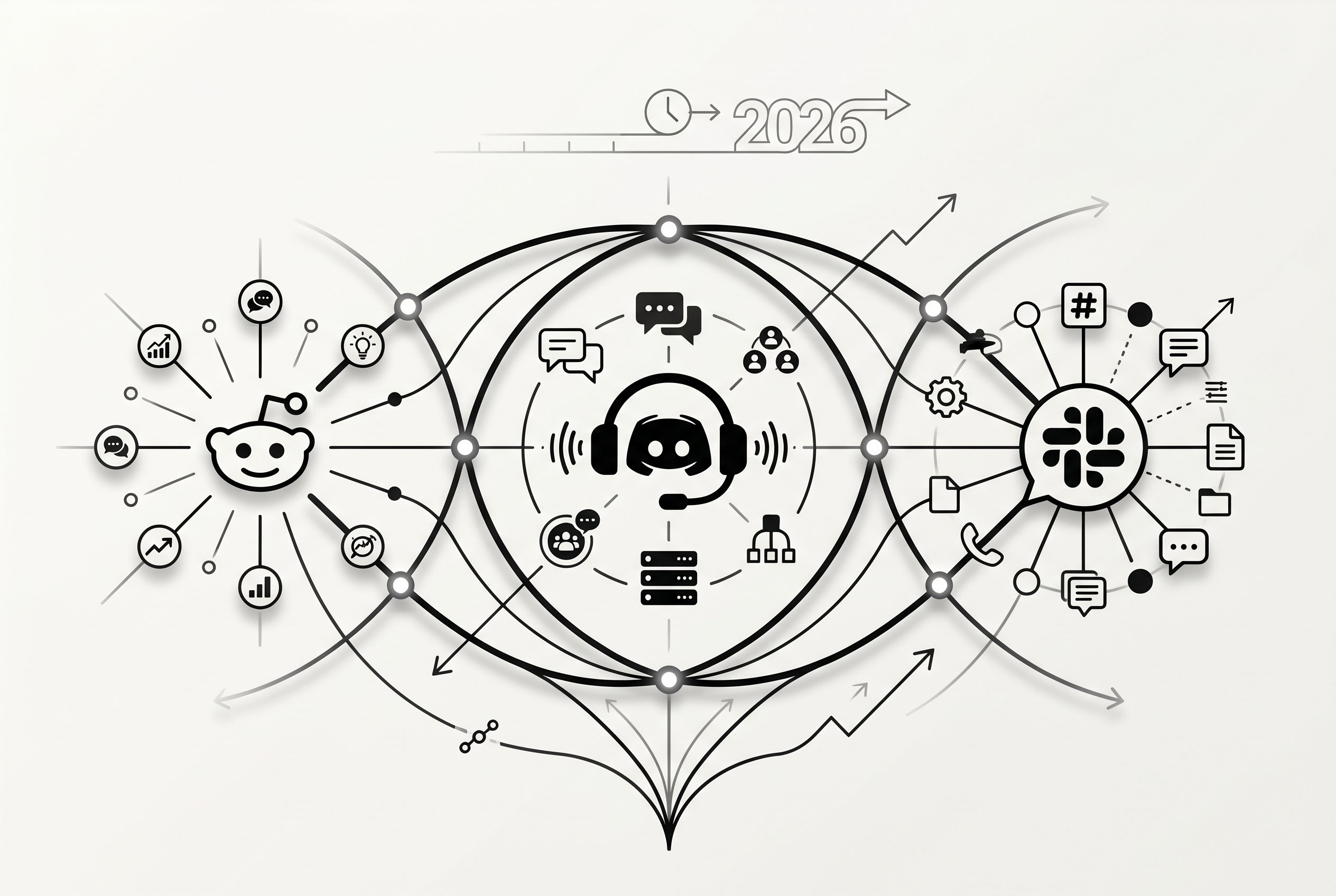
Building a company from scratch isolates you. Finding the exact right peers changes your trajectory entirely. In 2026, the ecosystem of digital networking has shifted dramatically away from massive, noisy public forums. Founders now gravitate toward high-signal, verified micro-communities that protect their time and attention.
Searching for the most valuable startup communities Reddit Discord Slack and similar platforms host requires understanding this shift. The modern entrepreneur does not want generic business advice. They want specific, actionable feedback from peers who are currently building in the same trenches.
Startup OG highlights the most relevant spaces where indie hackers and founders can connect meaningfully. By tracking these platform evolutions, early-stage builders can bypass the noise. You can find the exact technical, strategic, and emotional support required to scale a sustainable business today.
Current State of Startup Communities
The most significant trend in digital networking is the migration to "Dark Social." Professional interactions and resource sharing now occur primarily in private channels and direct messages that search engines cannot index. Public timelines act as discovery engines, but the actual relationship-building happens behind closed digital doors.
Adults currently average 4 hours and 30 minutes of daily online time. A massive portion of that attention goes to private messaging and closed groups. With 97.3% of connected adults using at least one social network monthly, the sheer volume of internet traffic makes public business forums overwhelmingly noisy. Founders simply cannot afford to sift through thousands of beginner questions to find one peer at their level.
This reality forces communities to adapt. The global "startup scaling gap" is no longer solved by generic Silicon Valley advice. Instead, regional ecosystems address specific growth hurdles through country-specific market factors and localized peer groups. You see this clearly in how founders organize themselves online. They group by revenue stage, by specific technology stacks, and by highly specific geographic markets.
Key Developments on Reddit
Reddit remains a massive top-of-funnel discovery platform for entrepreneurs. It hosts established subreddits with incredibly high engagement rates. But the platform's utility for founders looks very different now than it did five years ago.
Broad business subreddits often suffer from a terrible signal-to-noise ratio. The proportion of valuable, actionable information gets drowned out by promotional content and repetitive beginner questions. To combat this, specialized subreddits focused strictly on indie hacking, bootstrapping, and specific SaaS metrics have surged in popularity.
While Reddit usage among U.S. adults continues to grow, it remains secondary to visual platforms for broad consumer reach. However, for deep, text-based technical advice, it remains unparalleled. Subreddit moderators have implemented strict automated filters to block low-effort posts. They require specific formatting for feedback requests.
Integration of verified Ask Me Anything (AMA) sessions with successful startup founders provides direct value. These sessions strip away the PR polish. Founders share raw revenue numbers, exact tech stacks, and specific failure points. For an early-stage builder, dissecting a successful founder's AMA on a niche subreddit offers more practical value than reading a dozen traditional business books.
Key Developments on Discord and Slack
The shift toward private, real-time communication platforms defines the modern founder experience. Discord long ago shed its reputation as just a gaming app. The platform recently hit 200 million monthly active users, driven heavily by professional and technical communities adopting its voice channels and structured servers.
The most important development here is the "Proof of Work" entry barrier. The best new invite-only servers require founders to link their GitHub, active LinkedIn, or live product URL before granting access. This creates incredibly high-signal micro-communities for deep tech founders. When everyone in the room has actually shipped a product, the conversation instantly elevates. You stop discussing whether an idea is good and start discussing how to optimize the database architecture for it.
Slack workspaces follow a similar trajectory but lean heavily into AI integration. Managing a busy Slack community previously required dozens of human hours weekly. Now, Slack communities adopt AI bots for heavy lifting. These bots summarize 500-message threads into three bullet points. They automatically match founders for weekly coffee chats based on current business challenges. They instantly surface old resources when a new member asks a frequently repeated question.
Founders frequently migrate across these platforms seeking better organization. A group might meet on Reddit, form a temporary Discord for a weekend hackathon, and eventually settle into a paid, private Slack workspace as their companies mature and generate revenue.
What This Means for Early-Stage Founders
Your go-to-market strategy must include community participation. Building in isolation simply takes too long and costs too much. Direct access to peer feedback accelerates product validation by months.
Community-Led Growth (CLG) has become a primary customer acquisition strategy. This happens when a highly engaged user base drives customer acquisition, retention, and product feedback loops organically. Implementing CLG correctly reduces acquisition costs drastically. It also directly increases customer lifetime value through peer-driven advocacy. When your early users defend and promote your product in their own private Slack groups, your growth compounds.
Consider the scale of the digital audience. With 72.5% of the U.S. population active on social media, paying for broad ad reach burns through startup capital instantly. Online reach is essentially rented space, but real-life trust compounds over time. Focus on regional fellowships and high-vibe peer groups to build a zero-CAC growth engine that survives algorithm changes.
Communities also enforce accountability. Seeing peers ship features weekly pushes you to work faster. Platforms like Startup OG complement these groups perfectly by providing structured resources and deeper learning materials that back up the rapid-fire advice found in daily chat channels.
What's Next for Startup Communities
The next phase of digital networking hyper-focuses on specific verticals and regions. The days of the "global startup group" are ending. Founders want to talk to people dealing with their exact tax laws, their exact hiring markets, and their exact technical constraints.
India provides the perfect example of this hyper-local community boom. The country's tech startup funding recently reached $9.1 Bn, fueled heavily by deep tech investments. The ecosystem now supports over 31,000 active startups, with Bengaluru securing its place as a top global innovation hub.
This growth creates massive demand for highly technical micro-groups. The Indian GenAI startup landscape specifically saw explosive growth, creating an immediate need for niche technical communities where engineers can trade API limits and model-training secrets without corporate oversight.
Furthermore, these groups are becoming operational assets. Communities now act as predictive engines that connect real-time sentiment signals directly to AI-driven commerce and product development. You don't guess what features to build; your Discord server tells you exactly what they will pay for today. This explains why 72% of high-growth startups now invest in community initiatives as their primary defensive moat.
Finally, expect a massive shift toward founder mental health. The burnout rate among early-stage builders remains dangerously high. New private servers dedicate specific, highly moderated channels purely to psychological resilience. Having a safe, un-indexed space to admit you are failing is just as important as having a channel to celebrate your funding round.
Navigating these evolving startup communities on Reddit, Discord, and Slack positions founders for stronger connections and sustainable success in 2026. Find your specific micro-community. Prove your work. Contribute heavily. The return on that time investment will outpace almost any other early-stage marketing effort.
Loved this? Get more in your inbox.
Founder reads, weekly. Curated tools and growth tactics.
Get your tool featured in Growth & Marketing.
Sponsor a pillar block, get listed in the directory, or write a guest post. Pricing by inquiry.
Work with us →