Free vs Paid Startup Directories: What's Actually Worth It
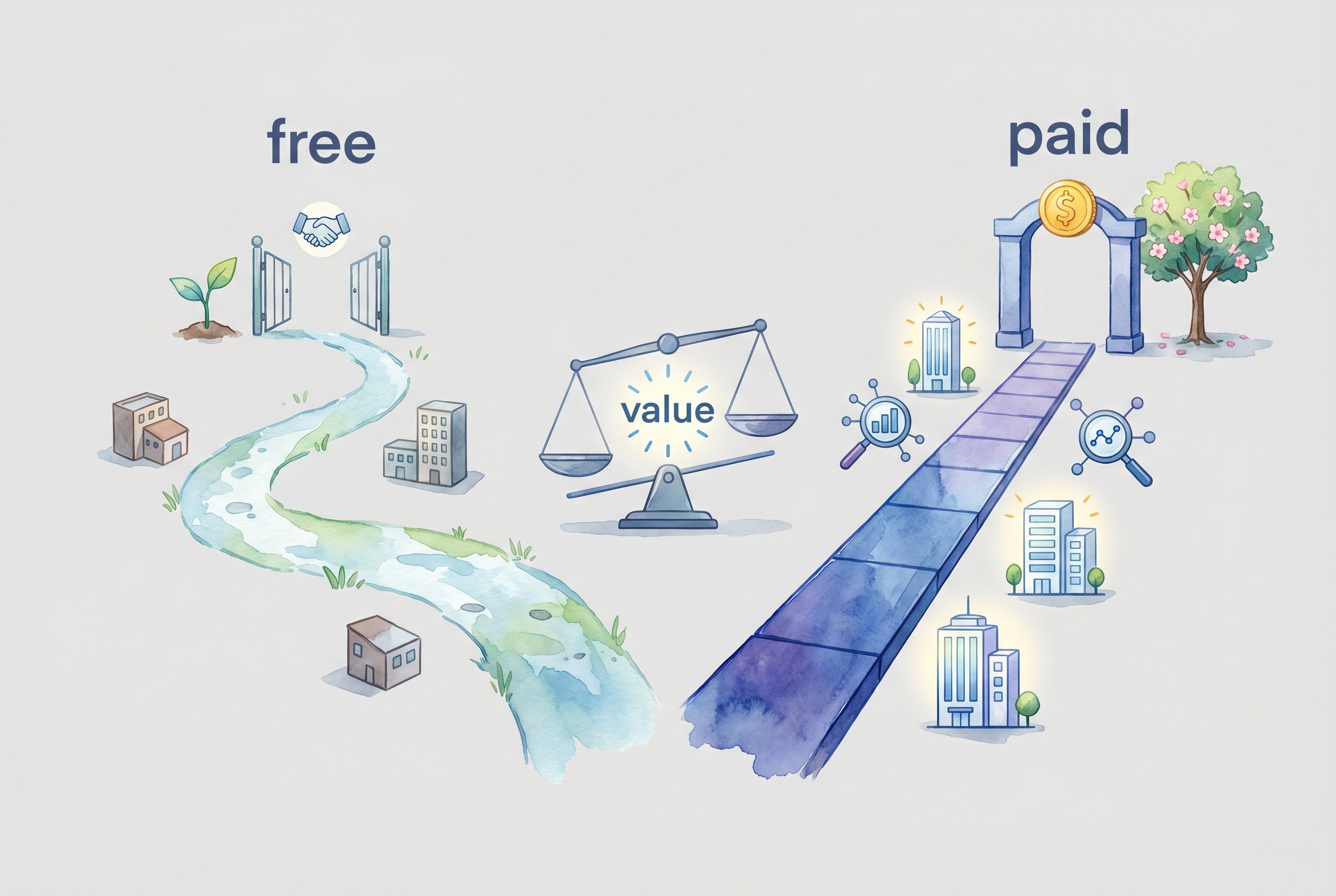
Founders face a vital decision right after launching: where to list the company. Choosing between free vs paid startup directories directly impacts early visibility and resource allocation. The traditional view treats these platforms simply as places to get backlinks. But search engines and investor behaviors have shifted dramatically. Today, directories act as foundational data nodes that feed AI search tools and investor discovery algorithms.
At Startup OG, we see founders constantly debating whether to spend their limited capital on premium listings or spend hours manually submitting to unpaid ones. Understanding the hidden costs and real-world returns of each path is essential. You need to know exactly what delivers value, rather than wasting time on platforms that offer zero traction. The right strategy ensures your startup gets found by the people who actually matter to your growth.
Quick Verdict
Bootstrapped founders testing initial visibility should start with high-quality free options to validate their ideas. Conversely, funded startups looking to scale quickly see a much stronger return on investment from premium platforms. The best choice ultimately depends on your current stage, budget constraints, and target audience.
Relying entirely on unpaid listings limits your reach. Startups adopting a hybrid approach—combining five key paid placements with twenty high-authority free options—secure three times more referral traffic than those sticking strictly to zero-cost routes.
Time is your most valuable asset. A free submission isn't truly free when you factor in the hourly cost of your labor. Paid options eliminate this friction, offering immediate verification that signals credibility to both algorithms and human investors. If you have the budget, paying for a curated listing accelerates your market entry. If you are pre-revenue, carefully selected free platforms provide the necessary initial spark without draining your runway.
Key Comparison Criteria
Evaluating directory platforms requires looking beyond the price tag. You must analyze the exposure quality, credibility signals, and ease of maintenance.
Cost and value for money sit at the top of the list. You have to weigh the upfront fee against the time-to-value of manual data entry. Next, consider exposure and audience quality. Broad reach means little if the traffic consists entirely of bots.
Credibility and backlink benefits are heavily debated. The technical reality is that 92% of top-ranking platforms apply "nofollow" tags to unpaid submissions. This means they pass zero direct SEO equity to your domain. You also need to look at Domain Rating (DR), a metric predicting search performance based on backlink profiles. High DR sites pass significantly more trust.
Long-term impact matters most. The startup ecosystem moves fast. Roughly 65% of unpaid directories are completely abandoned by their creators within 24 months. This abandonment creates dead links that drag down your brand's digital footprint. Evaluating these criteria ensures you invest time and money into platforms built to last.
Free Startup Directories
Zero upfront cost makes unpaid directories highly attractive for indie hackers and early-stage founders. You can get your name out there without touching your operational budget. But this accessibility comes with severe limitations.
Unmoderated platforms suffer from directory fatigue. Investors and search algorithms actively ignore sites that accept every submission without a filter. These platforms often become link graveyards. Search engines eventually devalue the entire domain when quality control drops, as noted by industry experts.
The manual labor involved is staggering. Completing manual submissions to the top fifty unpaid platforms takes an average of 18.5 hours. That is half a workweek spent filling out repetitive forms.
Furthermore, these links degrade over time. Nearly 40% of unpaid directory links turn toxic within three years as domain owners sell their sites to link farm operators. This decay can trigger site reputation abuse flags in modern search algorithms. You get basic exposure initially, but the lack of premium features and targeted traffic severely limits the long-term effectiveness of this strategy.
Paid Startup Directories
Premium platforms offset their entry fees by providing better placement, verified audiences, and stronger SEO value. You are paying for curation and trust.
These directories act as a first-pass due diligence layer for busy angel investors. Verified badges carry significant weight. In fact, premium profiles with verification checkmarks see a 40% higher click-through rate from institutional investors. The upfront cost filters out spam, ensuring your company sits alongside other legitimate businesses.
Conversion rates also spike on premium platforms. Featured placements on specialized directories generate a 5.2% conversion rate for sign-ups, compared to just 0.8% for general unpaid listings.
You must also consider Answer Engine Optimization (AEO). This is the process of optimizing content so AI-powered search tools can easily read it. Premium directories serve as high-quality training data. Ensuring your startup's facts are correctly indexed by LLM crawlers requires placement on authoritative sites. However, these platforms require careful budget planning. Ongoing maintenance and annual renewal fees add up quickly.
Side-by-Side Comparison Table
Breaking down the differences reveals stark contrasts in value delivery.
Cost Structure: Unpaid options cost $0 upfront but require heavy time investments. A standard hourly rate calculation quickly proves that a "free" 30-minute form submission carries a real financial weight. Premium listings typically range from $49 to $299 for a lifetime or annual spot. Featured homepage placements often cost an additional $100 to $500 monthly.
Audience Reach: Zero-cost platforms offer broad but shallow exposure. You might get thousands of impressions from bots and other founders looking for backlinks. Premium platforms deliver targeted, high-intent audiences actively looking to buy software or invest capital.
SEO and Technical Benefits: The technical authority gap is massive. The average Domain Rating for top-tier premium platforms sits at 82, compared to a mere 34 for niche unpaid sites. Premium options frequently offer "dofollow" backlinks, detailed analytics dashboards, and promotional tools that basic listings completely lack.
When Free Directories Make Sense
Bootstrapped companies in the early validation phase should absolutely use zero-cost platforms. When your budget is tight and you need quick market feedback, these sites serve a distinct purpose.
Focus on broad awareness rather than expecting highly qualified leads. A successful launch on an unpaid platform can generate massive initial spikes in traffic. For example, a well-executed launch can drive up to 10,000 unique visitors in a single 24-hour period. This influx is perfect for stress-testing your servers and gathering initial user feedback.
Use these platforms to supplement your broader marketing efforts. They should never be your primary traffic source. Treat them as stepping stones. Once you validate the product and secure a few early customers, you can reinvest that revenue into more stable, authoritative channels. Unpaid directories work best when you have more time than money and need to build a foundational digital footprint from scratch.
When Paid Directories Are Worth It
Funded startups seeking investor visibility must prioritize premium platforms. When you have capital to deploy, spending hours manually filling out forms is a massive waste of resources.
Premium listings build long-term brand positioning within established ecosystems. Investors actively monitor these curated lists to find their next deal. Furthermore, the technical benefits align perfectly with modern search requirements. AI search crawlers now prioritize structured data from high-trust, curated sources over noisy, unmoderated sites.
You also secure high-quality backlinks that actually move the needle for your own organic search rankings. The trust signals generated by these platforms cannot be replicated by automated spam bots. This makes your backlink profile much more resilient to search engine spam updates. If you need measurable referral traffic, investor attention, and guaranteed indexing by emerging AI search engines, the premium route is the only logical choice.
Final Recommendation
Start with a select group of high-authority free directories to build your foundational presence. Test the market response and gather initial user feedback. Once your traction or funding justifies the investment, aggressively upgrade to paid listings.
The data clearly supports community engagement. Companies listed in curated, community-driven platforms experience a 15% lower failure rate than those operating in isolation. This highlights the importance of choosing platforms that offer real connection rather than just a static link.
A combined approach works best. Secure your necessary data nodes for AI crawlers through premium sites, while selectively using top-tier unpaid platforms for launch visibility. As you build your company, lean on the resources at Startup OG to connect with peers and share insights on which specific platforms are currently driving the best results. The right directory strategy balances your immediate budget with the need for meaningful, long-term exposure.
Loved this? Get more in your inbox.
Founder reads, weekly. Curated tools and growth tactics.
Get your tool featured in Distribution & Directories.
Sponsor a pillar block, get listed in the directory, or write a guest post. Pricing by inquiry.
Work with us →