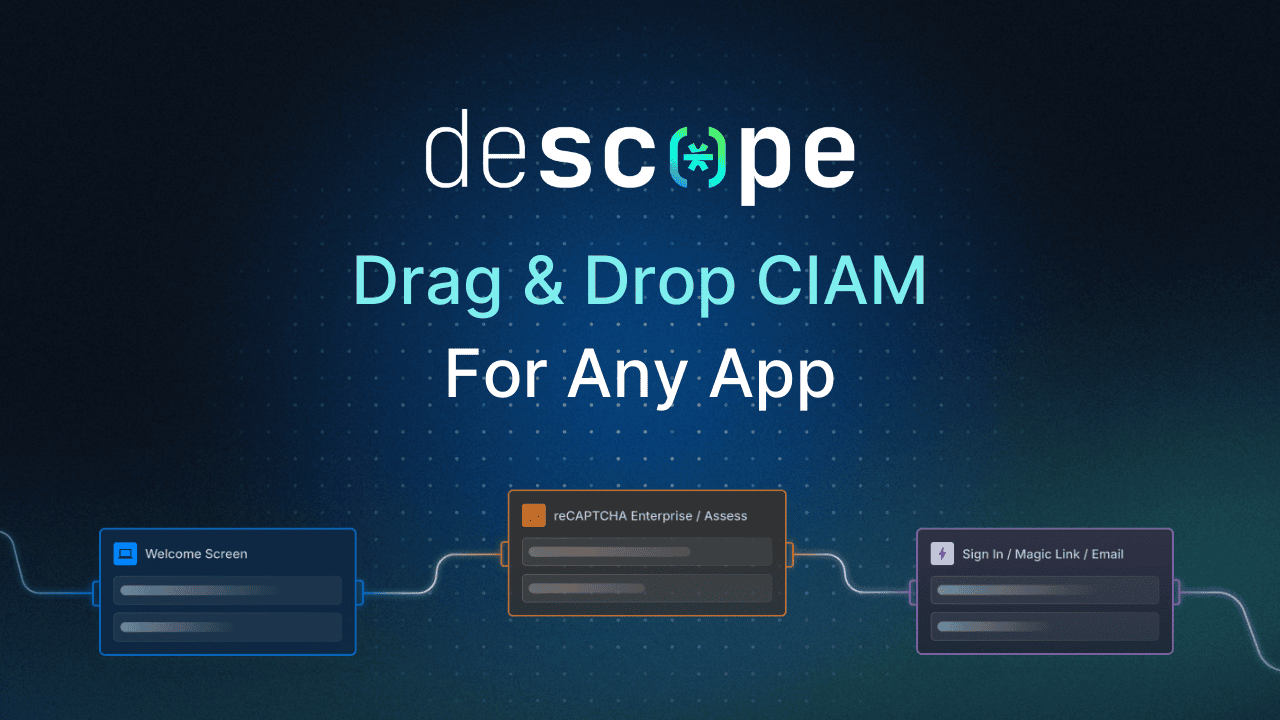
Descope alternatives
7 products to explore · 2026
Your shortlist, at a glance.
Read the comparisons ↓| Product | Pricing | Explore |
|---|---|---|
 authzedCloud Infrastructure for Authorization authzedCloud Infrastructure for Authorization | See website | Compare |
 AsertoFine-grained authorization service for applications and APIs AsertoFine-grained authorization service for applications and APIs | See website | Compare |
 CerbosAuthorization for Enterprise Software and AI CerbosAuthorization for Enterprise Software and AI | See website | Compare |
| FFusionAuthCIAM platform for full control, self-hosting, and scalable identity anywhere. | See website | Compare |
 Open Policy AgentSecurity Open Policy AgentSecurity | See website | Compare |
 OryComposable, scalable IAM for agents, customers, and B2B with full infrastructure control. OryComposable, scalable IAM for agents, customers, and B2B with full infrastructure control. | See website | Compare |
 Permit.ioSecurity Permit.ioSecurity | See website | Compare |
Check each product’s website for current pricing and features. A verified badge indicates a verified listing, not a ranking.
About Descope and its alternatives
Teams evaluating Descope alternatives usually need a CIAM solution that combines visual workflow builders with strong support for both human users and AI agents. Descope stands out for its no-code journey editor, rapid migration timelines, and native handling of agentic identity use cases such as consent, token management, and DCR security. When comparing options, buyers typically weigh factors like pricing transparency, depth of B2B features such as delegated admin and SCIM, ease of A/B testing auth flows, and the ability to add risk signals without heavy custom code. The strongest Descope alternatives deliver comparable visual orchestration or SDK flexibility while differing in enterprise readiness, AI-agent tooling, or total cost of ownership. This page examines the leading competitors across B2C onboarding speed, B2B multi-tenancy, and agentic IAM capabilities so you can choose the platform that best matches your scale and use case.
Explore the alternatives
1.authzed
SecurityCloud Infrastructure for Authorization
2.Aserto
SecurityFine-grained authorization service for applications and APIs
3.Cerbos
SecurityAuthorization for Enterprise Software and AI
- F
4.FusionAuth
SecurityCIAM platform for full control, self-hosting, and scalable identity anywhere.
5.Open Policy Agent
Security6.Ory
SecurityComposable, scalable IAM for agents, customers, and B2B with full infrastructure control.
7.Permit.io
Security
See more comparisons in Security alternatives.
Questions about Descope alternatives
What are the best Descope alternatives for B2B SaaS companies needing delegated admin and SCIM?
Companies replacing Descope for complex B2B requirements often choose platforms with mature self-service SSO portals, SCIM provisioning, and delegated administration. Leading options provide deeper out-of-the-box enterprise governance but may require more developer time to customize flows compared with Descope's visual workflows.
How does Descope compare to Auth0 for teams wanting no-code auth changes?
Descope's workflow builder allows non-developers to modify journeys without redeploying code, whereas Auth0 relies more on Actions and rules. Teams prioritizing speed of iteration and lower maintenance often prefer Descope, while those needing the broadest third-party integration ecosystem lean toward Auth0.
Which Descope alternatives offer native support for AI agent and MCP server identities?
Most traditional CIAM vendors lack Descope's built-in primitives for agent authorization, scope management, and DCR security. A few emerging platforms are adding agentic features, but Descope currently provides the most complete standards-based infrastructure for securing AI agents and MCP servers.
Is there a cheaper Descope alternative for startups focused on passwordless login?
Startups seeking lower entry costs sometimes evaluate open-source or usage-based platforms. These options can reduce upfront spend but frequently require more engineering effort to reach the same level of visual orchestration and risk-based MFA that Descope delivers out of the box.
What Descope alternatives excel at preventing account takeover with adaptive MFA?
Descope uses native and third-party risk signals to trigger step-up authentication only when needed. Competing solutions vary in signal quality and ease of adding custom risk engines; some offer broader device fingerprinting while others integrate more seamlessly with existing fraud tools.
Can I migrate from Descope to another CIAM without rebuilding all my auth flows?
Migration effort depends on how heavily a team uses Descope Flows. Platforms with similar visual builders reduce rework, while SDK-heavy alternatives may require translating workflows into code, increasing timeline and testing overhead.