
Substack alternatives
12 products compared · Updated October 15, 2026
The short answer
For professional publishers wanting full design control and no transaction fees, Ghost is the strongest alternative. Creators who need to monetize diverse content types with built-in payment handling should consider Patreon. Newsletter creators seeking a broader toolkit with ads, podcasts, and community features will find Beehiiv compelling.
Your shortlist, at a glance
Read the comparisons ↓ GhostFrom $9/mo (yearly)Professional publishers and creators who want a self-hosted or fully managed platform with custom design and no transaction fees on subscriptions.
- MMediumSee websiteOther
 BeehiivFree / $49/mo / $95/moNewsletter creators and media brands that want to grow and monetize beyond subscriptions, with built-in ads, podcasts, and community features.
 ButtondownFree up to 100 subsIndependent writers and small teams who want a straightforward, affordable newsletter tool with free migration support.
 Patreon10% of income + feesCreators who want to build a paid community around diverse content types, from podcasts to art, with recurring memberships and digital products.
 ConvertKitNot publishedCreator business owners who want to automate email sequences, segment audiences, and sell digital products alongside their newsletter.
 BeaconsSee websiteAn AI-powered, all-in-one business platform for content creators
 Buy Me a CoffeeSee websiteHelping creators monetize
 HashnodeNot publishedDevelopers and tech teams who want a technical blog on their own domain with Markdown support and headless capabilities.
 SvbtleSee websiteA publishing platform.
 Write.asSee websiteA place for focused writing.
 BloggerSee websiteCreate a unique and beautiful blog easily with templates, domains, and AdSense monetization.
About Substack and its alternatives
Substack is a platform for independent writers to publish newsletters and monetize through paid subscriptions. It is known for its simplicity, editorial freedom, and built-in audience tools, but it takes a 10% cut of subscription revenue and offers limited design customization.
When comparing alternatives, weigh pricing structure (flat fees vs. revenue share), regional availability, integrations with other tools, support quality, and contract terms like cancellation policies. Some platforms charge per subscriber, others take a percentage, and some offer free tiers with limitations. Consider whether you need advanced automation, custom domains, or multimedia support.
Explore the alternatives
- From $9/mo (yearly)
1.Ghost
Best for: Professional publishers and creators who want a self-hosted or fully managed platform with custom design and no transaction fees on subscriptions.
- Pricing
- From $9/mo (yearly)
- Category
- Media & Entertainment
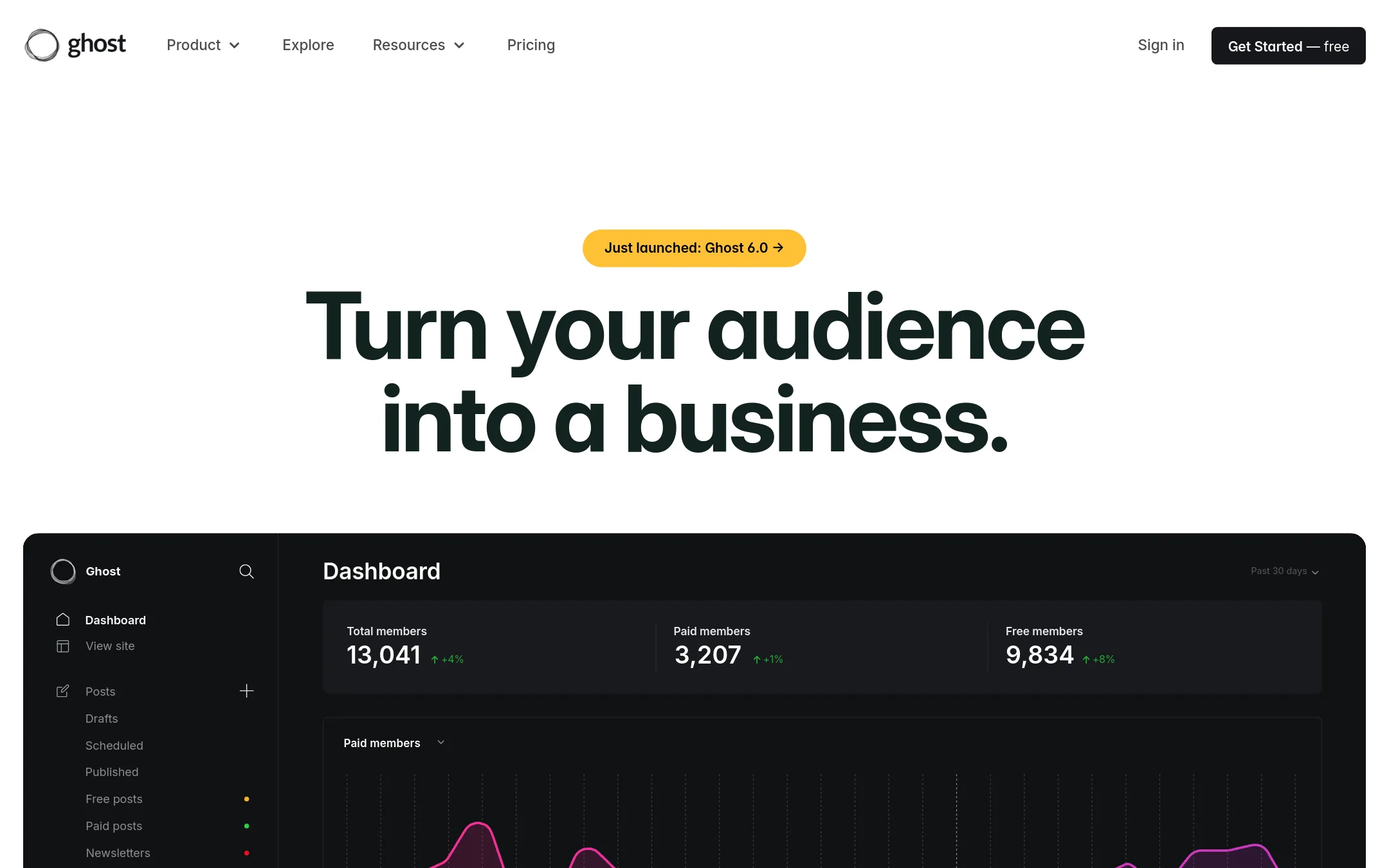
Ghost is an open source publishing platform that gives you full control over your website, branding, and member relationships, with paid subscriptions built in. Choose it over Substack when you want to own your stack, customize your site with themes, and avoid platform fees on payments.
Where it is strong
- Open source with no payment fees on subscriptions
- Custom themes and full design control
- Built-in analytics and member management
Where it falls short
- Starter plan limits you to 1,000 members and no custom themes
- Requires more setup and technical know-how than Substack
- Pricing:
- Starter is $9/mo billed yearly, Publisher is $25/mo, Business is $199/mo, and Custom is quoted individually.
- Switching from Substack:
- Moving from Substack involves exporting your subscriber list and posts, then importing them into Ghost, which supports CSV import and standard migration tools.
- MSee website
2.Medium
Other
A popular platform for writers to publish and earn money, though with less direct subscriber control.
- Free / $49/mo / $95/mo
3.Beehiiv
Best for: Newsletter creators and media brands that want to grow and monetize beyond subscriptions, with built-in ads, podcasts, and community features.
- Pricing
- Free / $49/mo / $95/mo
- Category
- Other
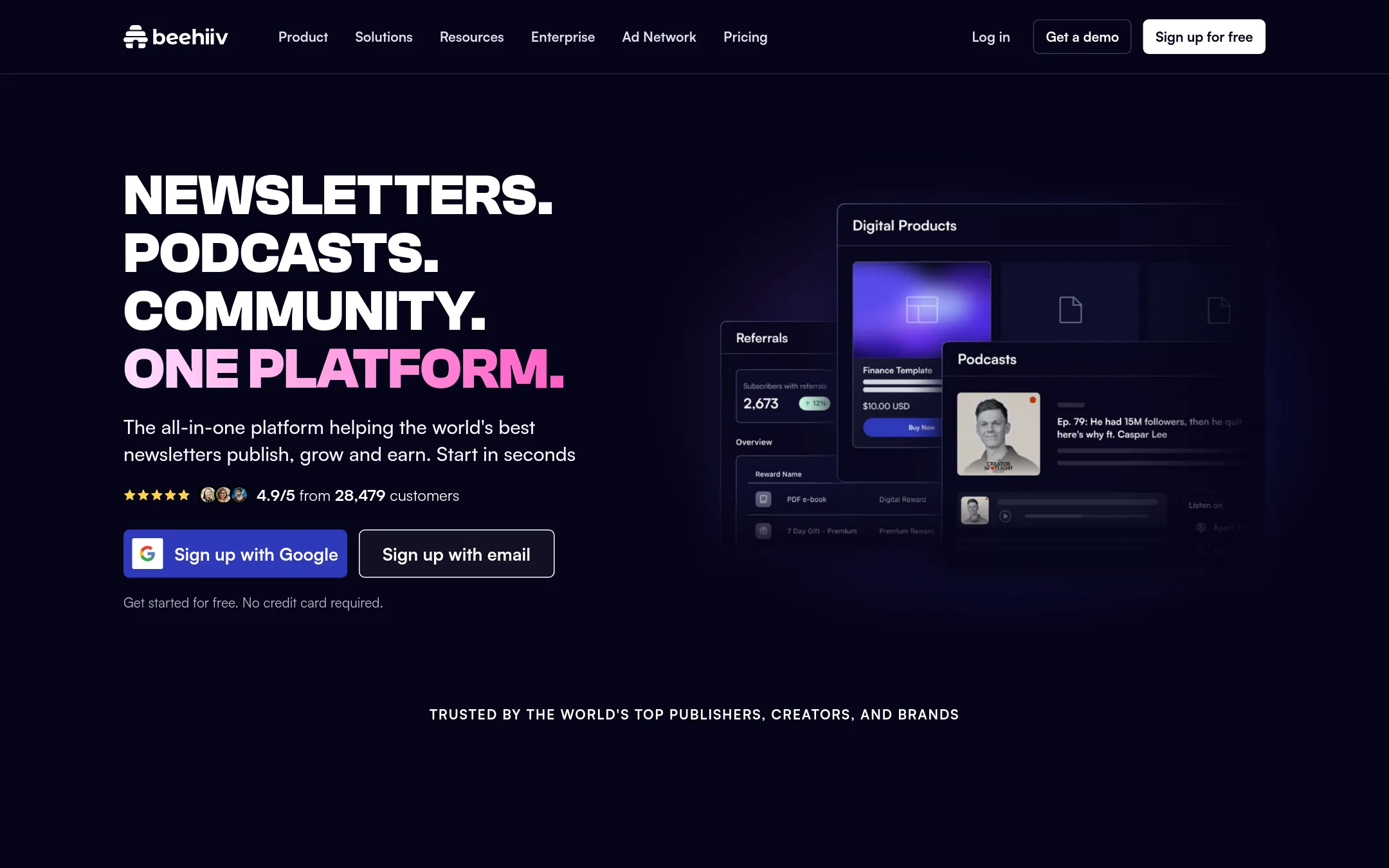
Beehiiv is a newsletter platform that bundles publishing, growth tools, monetization, podcasts, and community features into one product. You would choose it over Substack if you want a broader set of built-in tools, including an ad network and digital product sales, without needing to integrate separate services.
Where it is strong
- 0% commission on paid subscriptions and digital products on paid plans
- Built-in ad network and sponsorship tools for additional revenue
- Includes podcast hosting, community spaces, and website builder on all plans
Where it falls short
- Free plan limited to 2,500 subscribers and 1 team seat
- Advanced features like removing branding and priority support require Pro plan
- Pricing:
- Free plan available. Lite at $49/mo (yearly billing) with 0% take rate on paid subscriptions. Pro at $95/mo. Enterprise custom pricing.
- Switching from Substack:
- Migrating from Substack is possible, with beehiiv claiming 2M+ subscribers migrated with zero downtime, but you'll need to export your subscriber list and content from Substack first.
- Free up to 100 subs
4.Buttondown
Best for: Independent writers and small teams who want a straightforward, affordable newsletter tool with free migration support.
- Pricing
- Free up to 100 subs
- Category
- Other
Buttondown is a newsletter platform focused on simplicity and long-term stability, with a pricing model that charges only for active subscribers. You'd choose it over Substack if you want a dependable, no-frills email tool that doesn't push extra features or fees.
Where it is strong
- Free for first 100 subscribers
- Charges only for active subscribers, not all contacts
- One-click concierge migration for any list size
Where it falls short
- Exact pricing tiers not published on the site
- Limits to one email per day on standard plans
- Pricing:
- Pricing is free for the first 100 subscribers, then scales based on active subscriber count. Exact numbers are not published on the site.
- Switching from Substack:
- Buttondown offers a one-click concierge migration service that moves your entire list within one business day.
- 10% of income + fees
5.Patreon
Best for: Creators who want to build a paid community around diverse content types, from podcasts to art, with recurring memberships and digital products.
- Pricing
- 10% of income + fees
- Category
- E-commerce
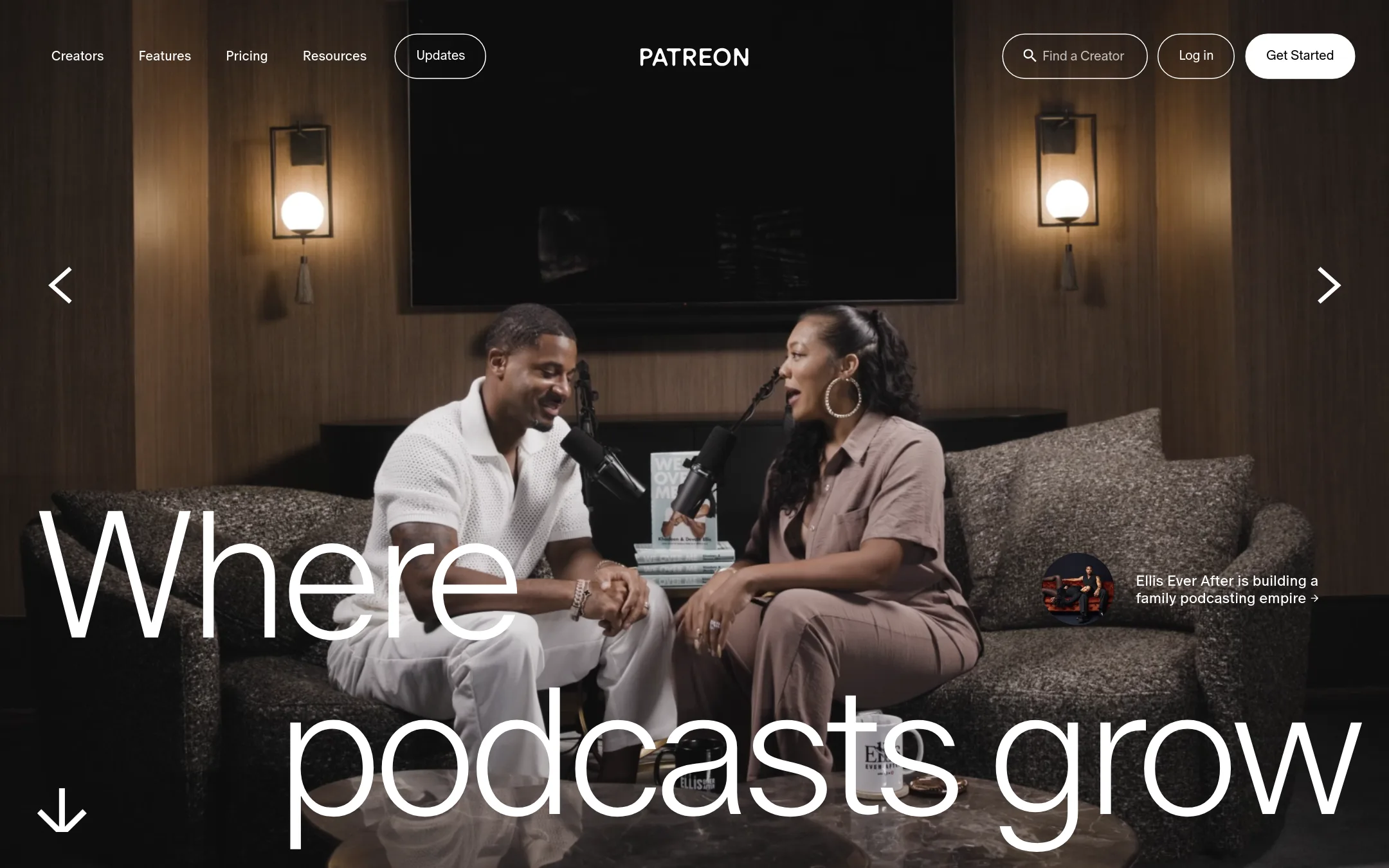
Patreon is a membership platform where creators earn from subscriptions, one-time payments, and digital sales, with tools for community chats, DMs, and newsletters. Choose it over Substack if you want to monetize multiple content formats (video, podcast, art) through tiered memberships and need built-in payment handling without setting up Stripe.
Where it is strong
- Supports monthly and annual subscriptions, membership tiers, and one-time payments.
- Includes native video, livestreaming, audio, and rich text editing for varied content.
- Handles payments, chargebacks, and tax collection for you, with 16+ currencies supported.
Where it falls short
- Takes a 10% cut of earnings, which is higher than Substack's 10% (but Substack also has processing fees).
- Less focused on long-form writing and editorial control compared to Substack's newsletter-first approach.
- Pricing:
- Patreon is free to start. You pay 10% of the income you earn, plus payment processing, currency conversion, payout fees, and applicable taxes.
- Switching from Substack:
- Moving from Substack to Patreon means rebuilding your subscriber base and migrating your content, since Patreon does not import Substack posts or email lists automatically.
- Not published
6.ConvertKit
Best for: Creator business owners who want to automate email sequences, segment audiences, and sell digital products alongside their newsletter.
- Pricing
- Not published
- Category
- Marketing & Sales
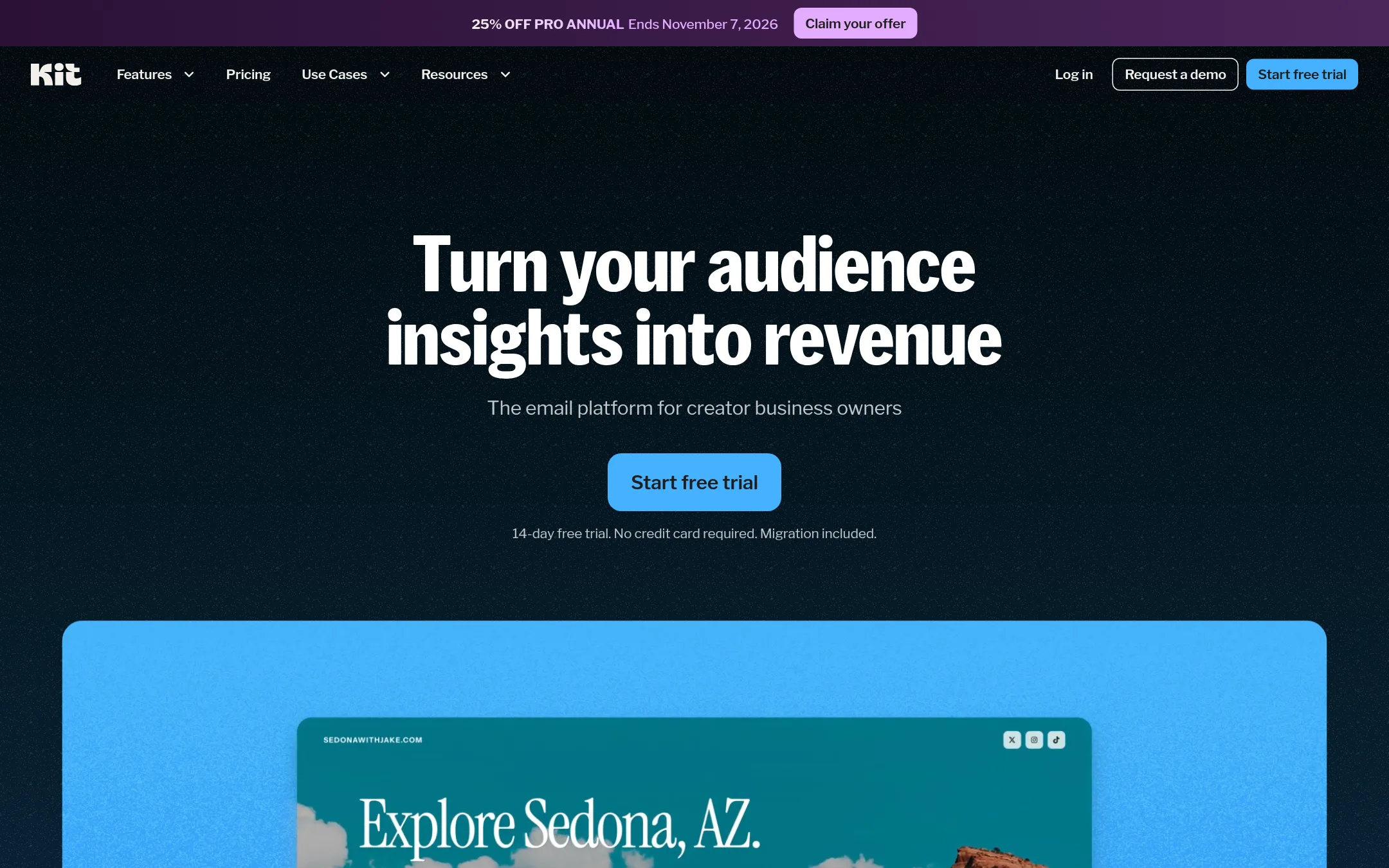
ConvertKit (now Kit) is an email marketing and automation platform built for creators who want to grow their newsletter and sell products. You would choose it over Substack if you need advanced email automation, subscriber segmentation, and a full marketing toolkit rather than a simple publishing feed.
Where it is strong
- Visual automation builder for email sequences and subscriber journeys
- Subscriber Signals provides demographics and social data for monetization
- Migration included with every paid plan, so switching is handled for you
Where it falls short
- Pricing details are not transparent on the site, requiring a trial or contact
- Lacks Substack's built-in social feed and discovery features
- Pricing:
- Pricing is not published on the site. Plans are shown as Free, Creator, and Creator Pro with a 14-day free trial and no credit card required.
- Switching from Substack:
- Moving from Substack involves migrating your subscriber list, which Kit includes with paid plans, but you will need to rebuild your publication structure and any paid subscriptions.
- See website
7.Beacons
Marketing & Sales
An AI-powered, all-in-one business platform for content creators
- See website
8.Buy Me a Coffee
E-commerce
Helping creators monetize
- Not published
9.Hashnode
Best for: Developers and tech teams who want a technical blog on their own domain with Markdown support and headless capabilities.
- Pricing
- Not published
- Category
- Media & Entertainment
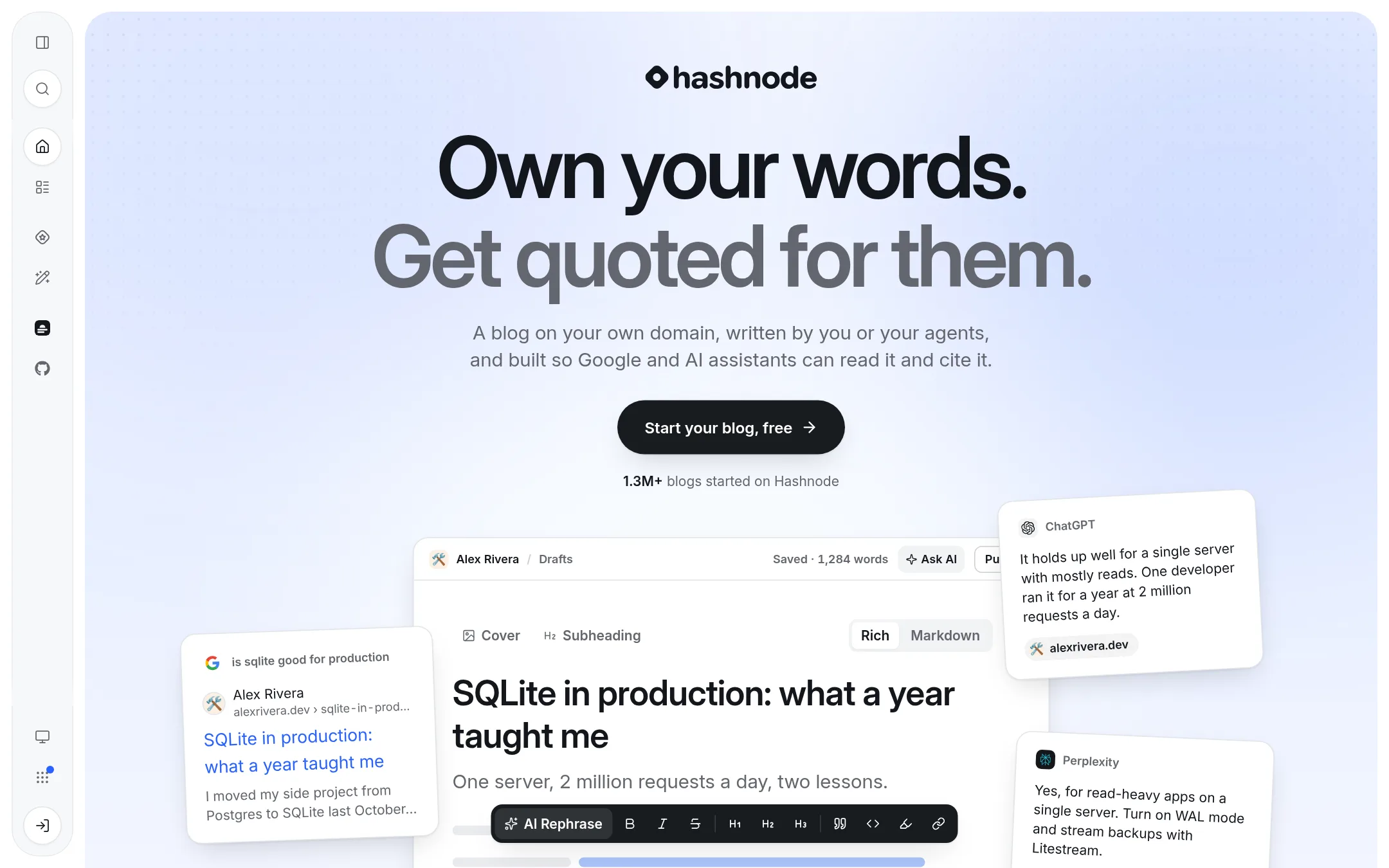
Hashnode is a blogging platform built for developers and technical writers. You would choose it over Substack if your writing is code-heavy and you want a domain that search engines and AI assistants trust, plus a GraphQL API and GitHub mirroring.
Where it is strong
- Custom domain with automatic SSL certificate
- Markdown editor with syntax highlighting for 25 languages and LaTeX support
- GraphQL API allows headless use with your own frontend
Where it falls short
- No built-in monetization features like paid subscriptions or newsletters
- Audience is developer-focused, so less suitable for general-interest writing
- Pricing:
- Pricing is not published on the site.
- Switching from Substack:
- You can import Markdown posts with tags, dates, and canonical URLs intact, and redirects keep old links alive.
- See website
10.Svbtle
Media & Entertainment
A publishing platform.
- See website
11.Write.as
Media & Entertainment
A place for focused writing.
- See website
12.Blogger
Media & Entertainment
Create a unique and beautiful blog easily with templates, domains, and AdSense monetization.
See more comparisons in Media & Entertainment alternatives.
FAQ
Questions about Substack alternatives
Which alternative has the lowest upfront cost?
Tumblr is free to use with no paywall or subscription requirements. WordPress.com offers a free plan with unlimited subscribers, and Beehiiv has a free plan limited to 2,500 subscribers. Buttondown is free for the first 100 subscribers.
Which platform takes the smallest cut of my subscription revenue?
Beehiiv charges 0% commission on paid subscriptions and digital products on its paid plans. Ghost has no payment fees on subscriptions, but you pay a monthly subscription fee. Substack takes 10% of earnings, and Patreon also takes 10% plus processing fees.
Can I use my own domain with these alternatives?
Yes, Hashnode offers a custom domain with automatic SSL certificate. WordPress.com allows custom domains on paid plans, and Ghost gives you full control over your site, including domain. Beehiiv and Buttondown also support custom domains, though specifics are not detailed in the provided facts.
Which platform is best for developers writing technical content?
Hashnode is built for developers, with Markdown support, syntax highlighting for 25 languages, and a GraphQL API. It also offers a custom domain and GitHub mirroring, making it ideal for code-heavy writing. Other platforms like Ghost and WordPress.com are more general-purpose.
Do any of these alternatives offer built-in monetization tools?
Yes, Patreon supports subscriptions, membership tiers, and one-time payments, with built-in payment handling. Beehiiv includes an ad network and digital product sales. Ghost has paid subscriptions built in, and ConvertKit allows selling digital products alongside newsletters. WordPress.com and Tumblr lack built-in monetization tools.
Last updated October 15, 2026.