
Tappity alternatives
7 products compared · Updated October 19, 2026
The short answer
For personalized math and coding tutoring from grade 5 through college, Brilliant is the strongest alternative. For classroom teachers needing standards-aligned K-5 science lessons, Mystery Science and Generation Genius are the top picks. Homeschooling families wanting a full multi-subject curriculum for PreK-12 should consider Time4Learning or SchoolhouseTeachers.
Your shortlist, at a glance
Read the comparisons ↓ Mystery ScienceQuote requiredK-5 teachers and schools that need a TEKS-aligned science curriculum with ready-to-teach lessons and activities
Generation GeniusFrom $11/moTeachers and schools in the US that need standards-aligned science and math video lessons with ready-to-use classroom resources.
 CK-12See websiteFree K-12 learning resources from CK12-Foundation
 Time4LearningNot publishedHomeschooling families with children from PreK through 12th grade who want a structured, multi-subject curriculum with scheduling and transcript tools.
 Science4UsNot publishedK-2 classroom teachers and schools that want a literacy-infused science curriculum with 10-minute activities and standards alignment.
 BrilliantNot publishedStudents from 5th grade through college who want personalized, visual tutoring in math and coding, and parents seeking a tutor that adapts to their child's pace.
 SchoolhouseTeachersNot publishedChristian homeschooling families with kids across multiple grade levels who want one membership covering all subjects plus recordkeeping.
About Tappity and its alternatives
Tappity is an interactive science curriculum for K-5 homeschoolers, offering 500+ hours of guided lessons, hands-on activities, and physical workbooks. It is known for combining structured grade-level courses with interest-based topics like space and dinosaurs, plus parent guides and progress tracking.
When comparing alternatives, weigh the pricing structure, whether it is transparent or quote-based, and the target age range. Consider if the product is built for classroom teachers or homeschool families, and whether it covers multiple subjects or just science. Check for integrations with school systems, support options, and contract terms like free trials or money-back guarantees.
Explore the alternatives
- Quote required
1.Mystery Science
Best for: K-5 teachers and schools that need a TEKS-aligned science curriculum with ready-to-teach lessons and activities
- Pricing
- Quote required
- Category
- Education
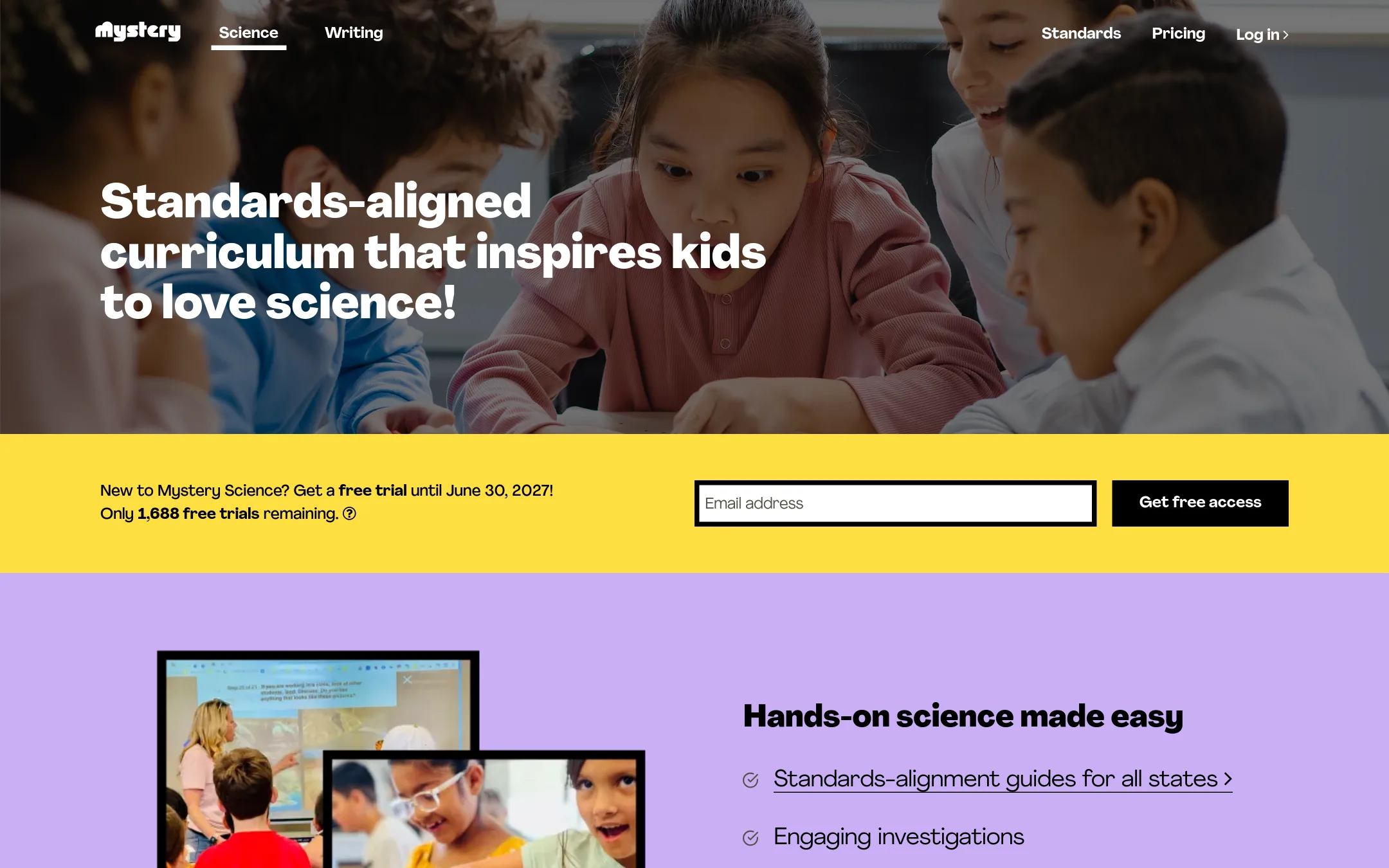
Mystery Science is a K-5 science curriculum built for classroom teachers, with TEKS-aligned lessons and hands-on activities. Choose it over Tappity if you teach in a school or district and need a curriculum that matches state standards and is designed for whole-class use.
Where it is strong
- TEKS-aligned lessons for Texas schools
- Hands-on activities and mini-lessons for K-5
- Free year-long membership for new users through June 30, 2027
Where it falls short
- Pricing is not transparent. Requires a quote
- Designed for classroom use, not individual homeschoolers
- Pricing:
- Pricing is not published on the site. It requires a quote and is available through school or district memberships, with homeschool memberships available.
- Switching from Tappity:
- Moving from Tappity to Mystery Science means shifting from a homeschool-focused, interest-based library to a school-oriented, standards-aligned curriculum, and you'll need to request a quote to get access.
- From $11/mo
2.Generation Genius
Best for: Teachers and schools in the US that need standards-aligned science and math video lessons with ready-to-use classroom resources.
- Pricing
- From $11/mo
- Category
- Education
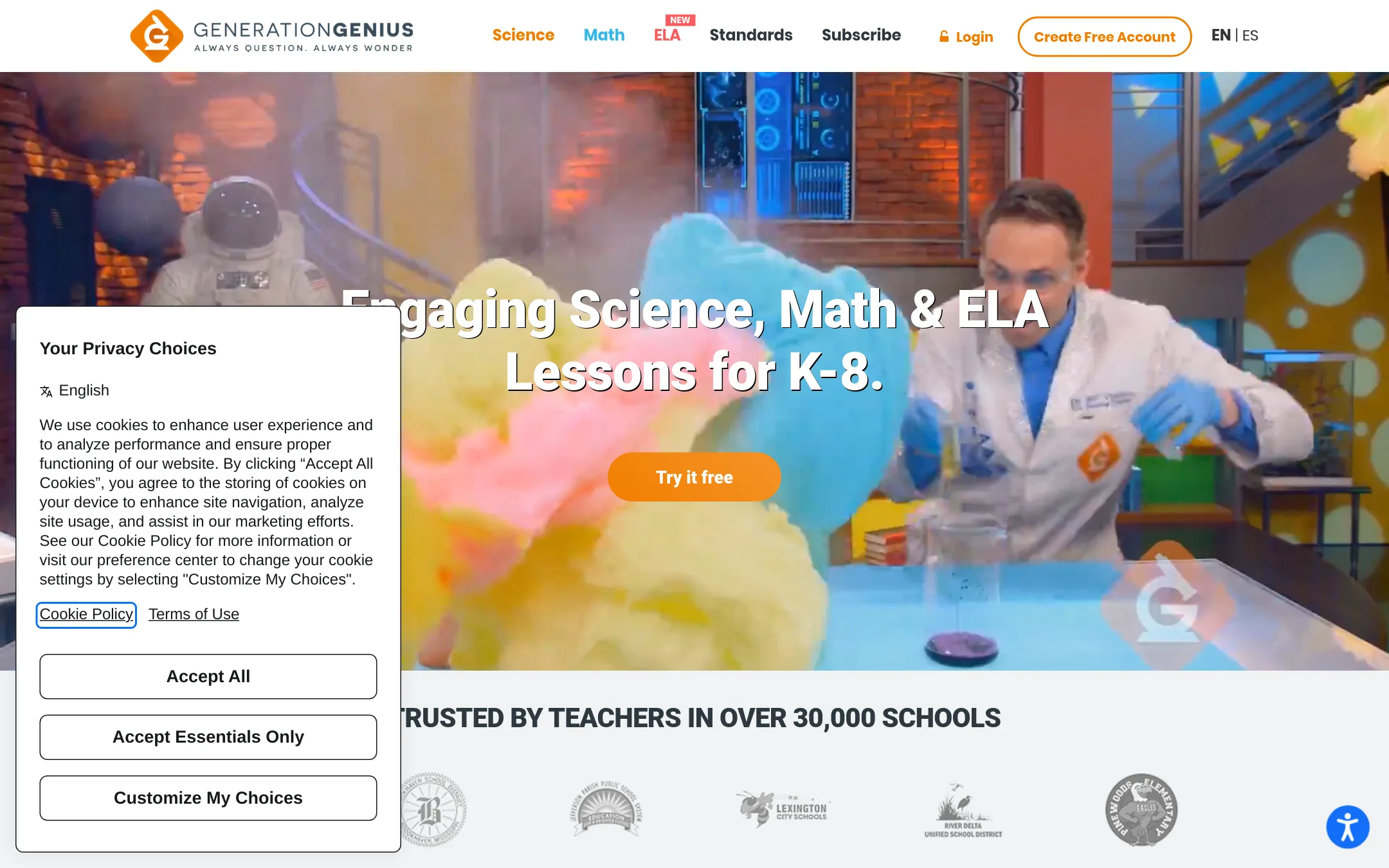
Generation Genius offers K-8 science and math video lessons with teacher guides, quizzes, and DIY activities, aligned to state standards. Choose it over Tappity if you're a teacher or school looking for classroom-ready, standards-aligned video content rather than a self-paced homeschool curriculum.
Where it is strong
- Aligned to science and math standards in all 50 states
- Includes lesson plans, quizzes, DIY activities, and teacher guides
- Trusted by teachers in over 30,000 schools
Where it falls short
- Focuses on video lessons for classroom use, not a full homeschool curriculum
- No mention of physical workbooks or parent progress tracking tools
- Pricing:
- Starting as low as $11/mo, with a 30-day money-back guarantee and a free trial that requires no credit card.
- Switching from Tappity:
- Moving from Tappity means shifting from a self-paced homeschool program with workbooks to a video-based classroom resource, so you'll need to adapt your lesson planning approach.
- See website
3.CK-12
Education
CK-12 offers free customizable digital textbooks, simulations, and practice problems covering middle and high school science. It functions as a Tappity alternative for budget-conscious homeschoolers needing flexible content they can remix. Unlike Tappity's curated elementary focus, CK-12 spans advanced topics and supports offline PDF downloads. The platform's flexibility is its main advantage, but it requires more parent curation to create weekly lesson plans comparable to Tappity's structure.
- Not published
4.Time4Learning
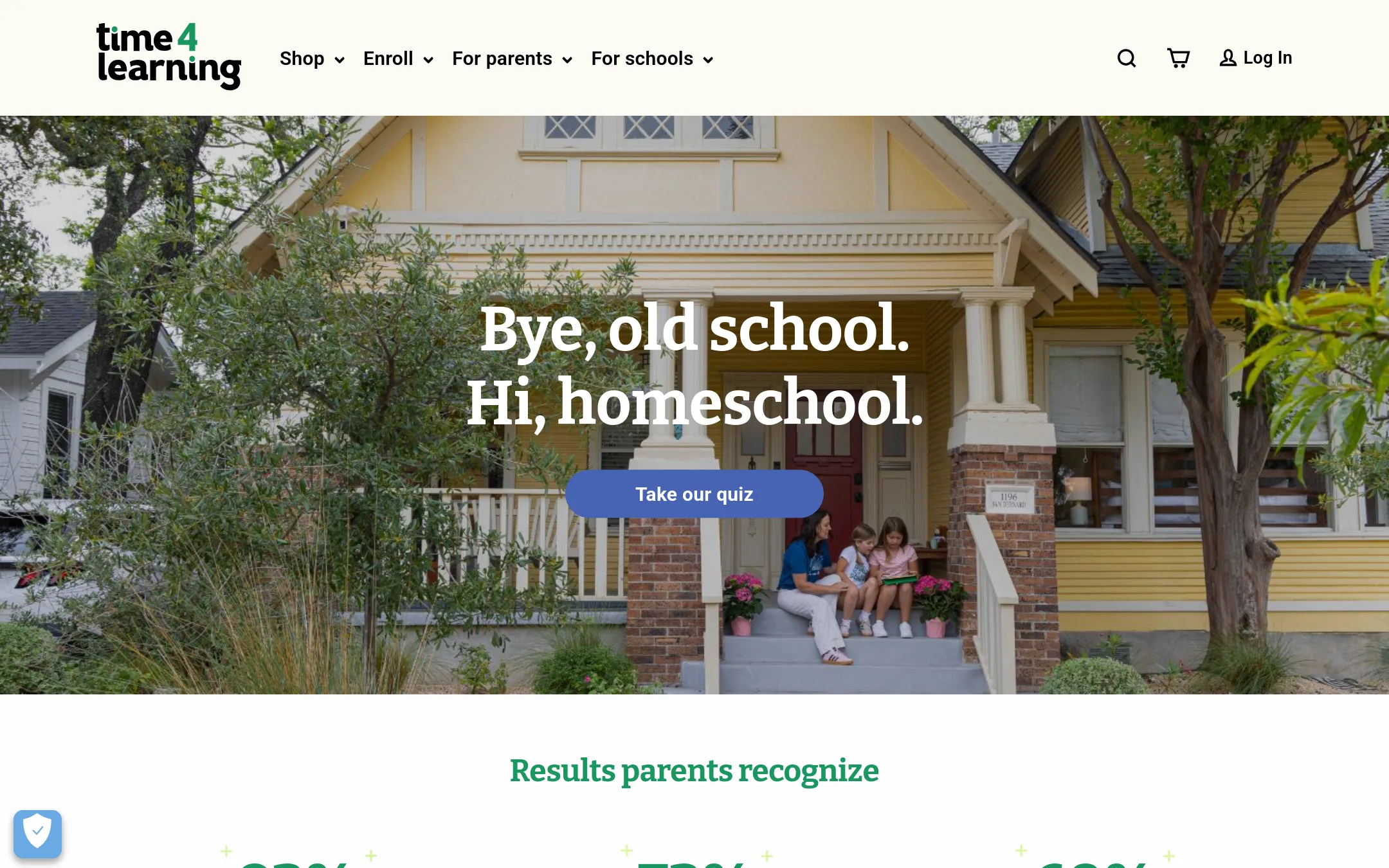
Best for: Homeschooling families with children from PreK through 12th grade who want a structured, multi-subject curriculum with scheduling and transcript tools.
- Pricing
- Not published
- Category
- Education
Time4Learning is a full PreK-12 online homeschool curriculum covering language arts, math, social studies, science, and electives, with parent planning and reporting tools. Choose it over Tappity if you need a complete multi-subject curriculum for older kids, not just K-5 science enrichment.
Where it is strong
- Covers PreK-12 across multiple subjects, not just science.
- Includes parent activity planner and reporting tools.
- Provides templates for transcripts, grades, and diplomas.
Where it falls short
- No pricing listed on the site, so you must contact them.
- Not ADA compliant, and Amazon Fire tablets are not supported.
- Pricing:
- Pricing is not published on the site.
- Not published
5.Science4Us
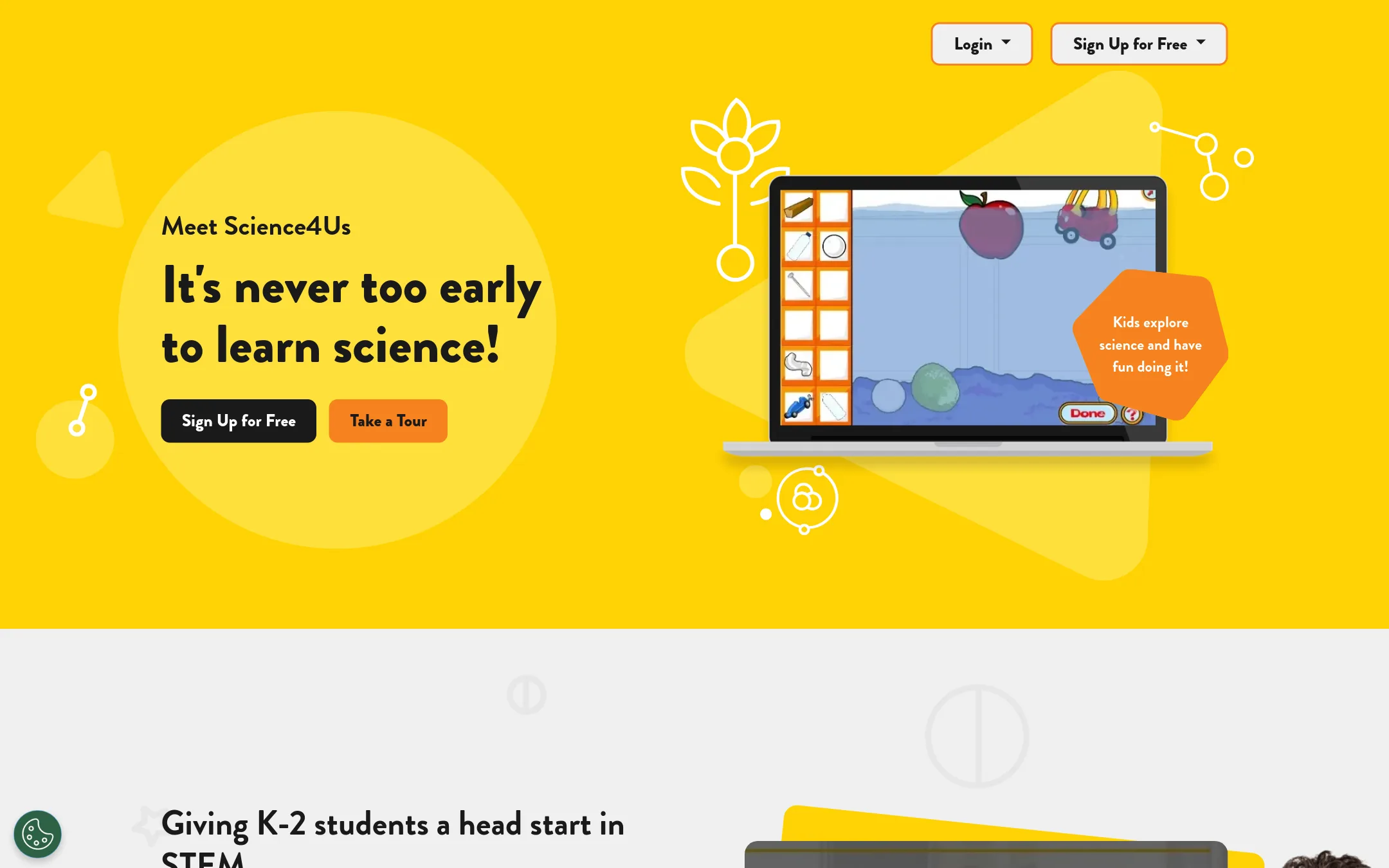
Best for: K-2 classroom teachers and schools that want a literacy-infused science curriculum with 10-minute activities and standards alignment.
- Pricing
- Not published
- Category
- Education
Science4Us is an interactive K-2 science curriculum with 28 modules covering physical, life, earth/space, and inquiry science. It is built for classroom teachers who need standards-aligned lessons that fit into daily instruction, so it suits schools and districts rather than homeschool families.
Where it is strong
- 28 modules across physical, life, earth/space, and inquiry science
- Literacy-infused lessons that reinforce reading and writing
- Third-party study shows improved student engagement and content knowledge
Where it falls short
- Targets K-2 only, so it does not cover grades 3-5 like Tappity
- Designed for classroom use, not homeschool families
- Pricing:
- Pricing is not published on the site.
- Not published
6.Brilliant
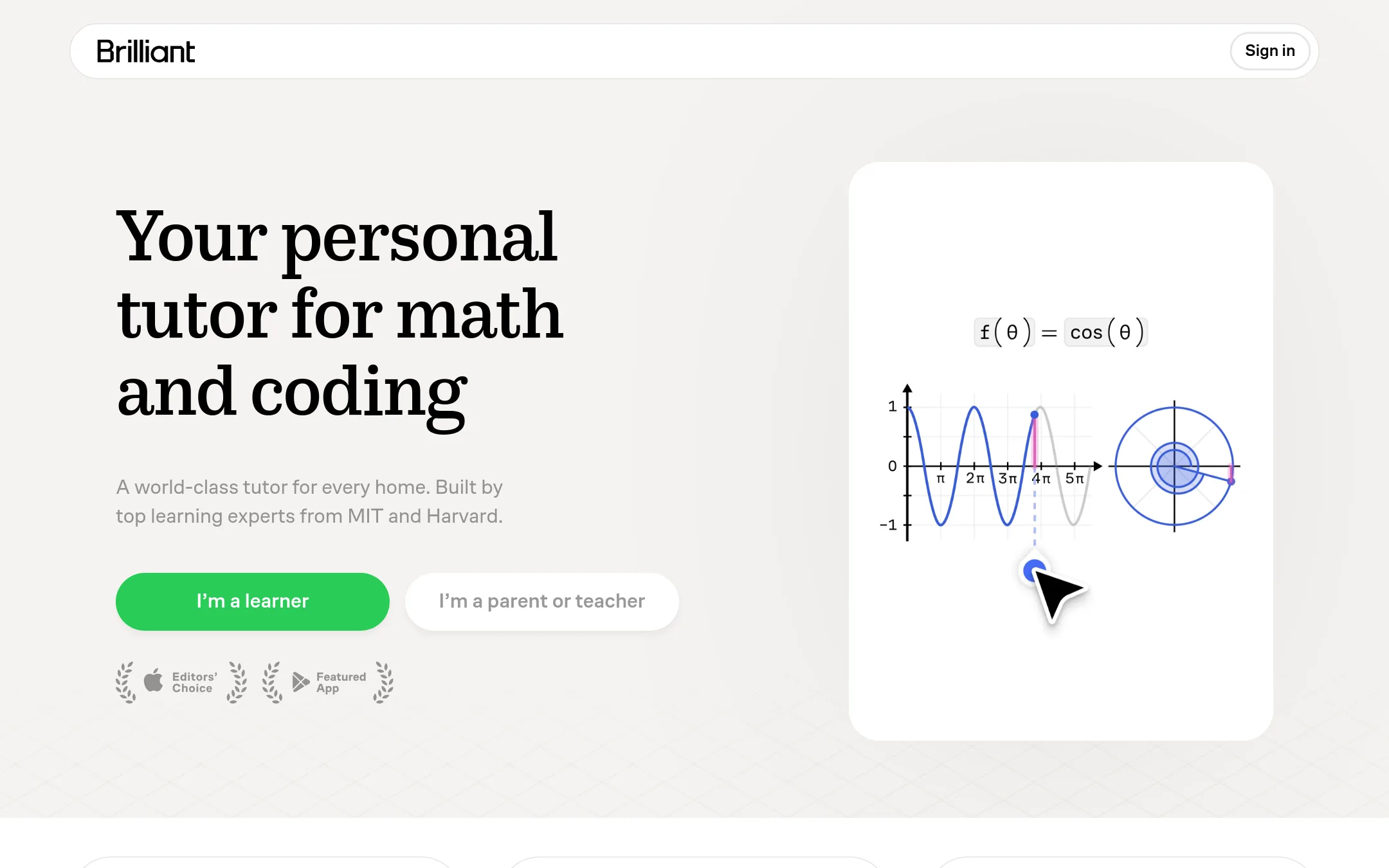
Best for: Students from 5th grade through college who want personalized, visual tutoring in math and coding, and parents seeking a tutor that adapts to their child's pace.
- Pricing
- Not published
- Category
- Education
Brilliant is an interactive learning platform with an adaptive AI tutor for math, coding, and science, covering grades 5 through college. Choose it over Tappity if you need a tutor that adapts to each learner's gaps and provides real-time help, rather than a structured K-5 science curriculum with workbooks.
Where it is strong
- Adaptive AI tutor that personalizes learning plans based on mastery
- Covers math, coding, and science from grade 5 to college level
- KidSAFE certified and accredited by ACS WASC
Where it falls short
- No physical workbooks or hands-on activities like Tappity
- Pricing is not transparent on the site
- Pricing:
- Pricing is not published on the site.
- Not published
7.SchoolhouseTeachers
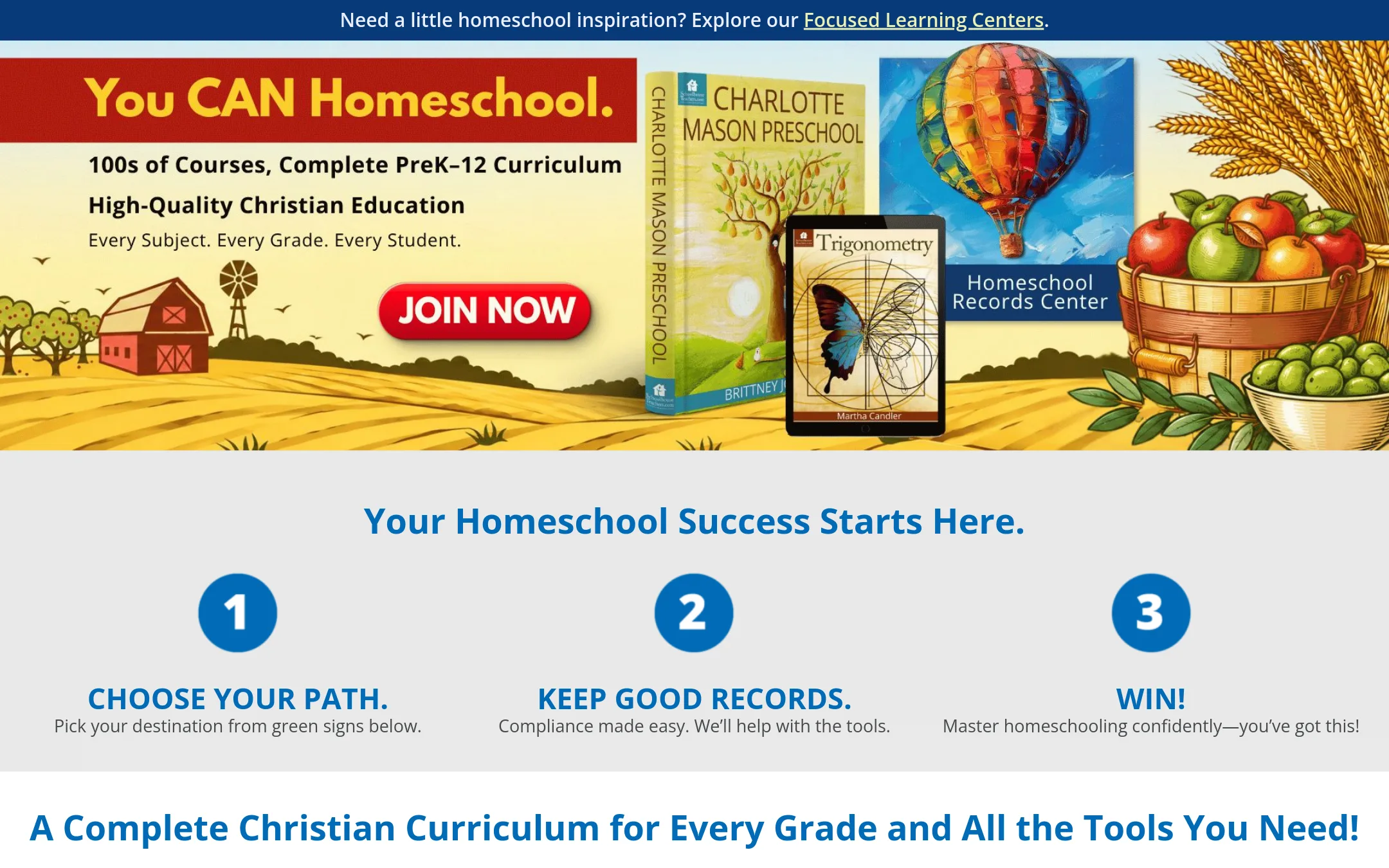
Best for: Christian homeschooling families with kids across multiple grade levels who want one membership covering all subjects plus recordkeeping.
- Pricing
- Not published
- Category
- Education
SchoolhouseTeachers is a Christian homeschool curriculum covering Pre-K through 12th grade, with courses, recordkeeping tools, planners, and videos. Choose it over Tappity if you need a full multi-subject curriculum for multiple children, not just K-5 science.
Where it is strong
- Covers Pre-K through 12th grade, all subjects
- Includes recordkeeping, planners, and transcripts
- One membership covers the entire family
Where it falls short
- No science-specific interactive lessons like Tappity
- Christian focus may not suit secular homeschoolers
- Pricing:
- Pricing is not published on the site.
See more comparisons in Education alternatives.
FAQ
Questions about Tappity alternatives
Which alternative is best for a homeschool family with kids in grades K-5?
Time4Learning is a full PreK-12 curriculum with scheduling and reporting tools, so it suits families wanting structure across subjects. Mystery Science offers a free year-long membership for new users through June 30, 2027, but it is designed for classroom use. SchoolhouseTeachers covers all grades and subjects with one family membership.
Are there alternatives with transparent pricing?
Generation Genius lists pricing starting as low as $11/mo with a 30-day money-back guarantee. Brilliant, Mystery Science, Time4Learning, Science4Us, and SchoolhouseTeachers do not publish pricing on their sites, so you must contact them for quotes.
Which alternative is best for classroom teachers?
Mystery Science is built for K-5 teachers with TEKS-aligned lessons and hands-on activities. Generation Genius offers standards-aligned video lessons for K-8 with teacher guides and quizzes. Science4Us targets K-2 teachers with literacy-infused lessons.
Do any alternatives cover subjects beyond science?
Time4Learning covers language arts, math, social studies, science, and electives for PreK-12. SchoolhouseTeachers covers all subjects for PreK-12. Brilliant focuses on math, coding, and science for grades 5 through college.
Which alternative is best for older students or advanced learners?
Brilliant is designed for students from 5th grade through college, with an adaptive AI tutor for math and coding. Time4Learning and SchoolhouseTeachers both extend to 12th grade, covering multiple subjects. Mystery Science, Generation Genius, and Science4Us are limited to K-8 or K-2.
Last updated October 19, 2026.