
Dun & Bradstreet alternatives
6 products to explore · 2026
Your shortlist, at a glance.
Read the comparisons ↓| Product | Pricing | Explore |
|---|---|---|
 PANADATAWe run background checks on businesses using data from public records… PANADATAWe run background checks on businesses using data from public records… | See website | Compare |
 CrunchbaseDiscover and act on private market activity with predictive company intelligence CrunchbaseDiscover and act on private market activity with predictive company intelligence | See website | Compare |
 LexisNexisLegal, government and risk information solutions for professionals LexisNexisLegal, government and risk information solutions for professionals | See website | Compare |
 OpenCorporatesWorld's largest open database of legal entities from 140+ jurisdictions OpenCorporatesWorld's largest open database of legal entities from 140+ jurisdictions | See website | Compare |
 Orbis by Bureau van DijkThe world’s most powerful comparable data resource on private companies Orbis by Bureau van DijkThe world’s most powerful comparable data resource on private companies | See website | Compare |
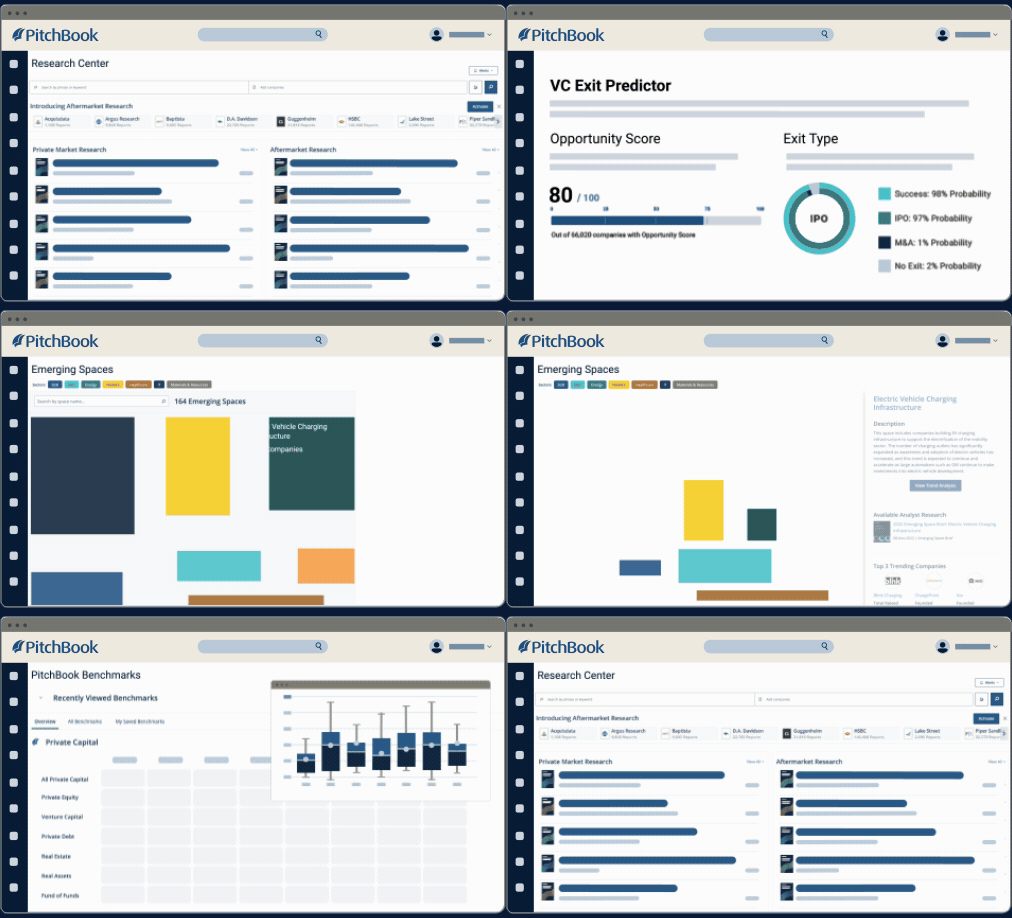 PitchBookPrivate Market Data, Research & Tools PitchBookPrivate Market Data, Research & Tools | See website | Compare |
Check each product’s website for current pricing and features. A verified badge indicates a verified listing, not a ranking.
About Dun & Bradstreet and its alternatives
Businesses searching for Dun & Bradstreet alternatives often need robust data solutions for credit decisions, supply chain visibility, and targeted sales outreach without relying on a single legacy provider. Dun & Bradstreet has long dominated with its extensive historical business database and risk analytics, yet many organizations now evaluate modern platforms that integrate real-time signals, broader global coverage, or more flexible APIs. Common motivations include reducing costs, accessing fresher datasets, or combining firmographic data with intent signals for marketing. Alternatives range from credit bureaus offering similar risk tools to sales intelligence suites that layer intent data on top of basic firmographics. Evaluating these options requires comparing data depth, update frequency, integration ease, and total cost of ownership against D&B's established but sometimes rigid enterprise contracts.
Explore the alternatives
1.PANADATA
Analytics & DataWe run background checks on businesses using data from public records…
2.Crunchbase
Analytics & DataDiscover and act on private market activity with predictive company intelligence
3.LexisNexis
Analytics & DataLegal, government and risk information solutions for professionals
4.OpenCorporates
Analytics & DataWorld's largest open database of legal entities from 140+ jurisdictions
5.Orbis by Bureau van Dijk
Analytics & DataThe world’s most powerful comparable data resource on private companies
6.PitchBook
Analytics & DataPrivate Market Data, Research & Tools
See more comparisons in Analytics & Data alternatives.
Questions about Dun & Bradstreet alternatives
What are the best Dun & Bradstreet alternatives for small business credit checks?
Teams needing affordable credit insights often compare D&B to Experian Business or Equifax because these bureaus provide similar risk scores with lower entry barriers and quicker onboarding for SMBs that do not require D&B's full historical depth.
How do Dun & Bradstreet alternatives handle global supply chain data differently?
While D&B emphasizes nearly two centuries of records, competitors like S&P Global or Bloomberg deliver real-time shipment and financial signals that some procurement teams find more actionable for dynamic supplier monitoring.
Can I replace Dun & Bradstreet with a sales intelligence platform?
ZoomInfo and Apollo.io combine firmographic data with buyer intent, allowing marketing teams to move beyond D&B's core risk focus toward outbound prospecting without separate contracts for each use case.
What pricing differences exist versus Dun & Bradstreet?
D&B typically uses custom enterprise agreements, whereas Clearbit or RocketReach offer usage-based or subscription tiers that scale with team size and reduce the need for lengthy procurement cycles.
Which Dun & Bradstreet alternatives best support marketing workflows?
Platforms such as ZoomInfo integrate directly with CRMs and ad platforms, giving marketers more immediate activation of data compared with D&B's heavier analytics orientation.
Are there free or low-cost Dun & Bradstreet alternatives?
Some users start with limited free tiers from providers like Apollo or Clearbit before committing to paid plans, contrasting with D&B's predominantly contact-sales model.