
OpenCorporates alternatives
6 products to explore · 2026
Your shortlist, at a glance.
Read the comparisons ↓| Product | Pricing | Explore |
|---|---|---|
 PANADATAWe run background checks on businesses using data from public records… PANADATAWe run background checks on businesses using data from public records… | See website | Compare |
 CrunchbaseDiscover and act on private market activity with predictive company intelligence CrunchbaseDiscover and act on private market activity with predictive company intelligence | See website | Compare |
 Dun & BradstreetIntelligent Data for Business Performance Dun & BradstreetIntelligent Data for Business Performance | See website | Compare |
 LexisNexisLegal, government and risk information solutions for professionals LexisNexisLegal, government and risk information solutions for professionals | See website | Compare |
 Orbis by Bureau van DijkThe world’s most powerful comparable data resource on private companies Orbis by Bureau van DijkThe world’s most powerful comparable data resource on private companies | See website | Compare |
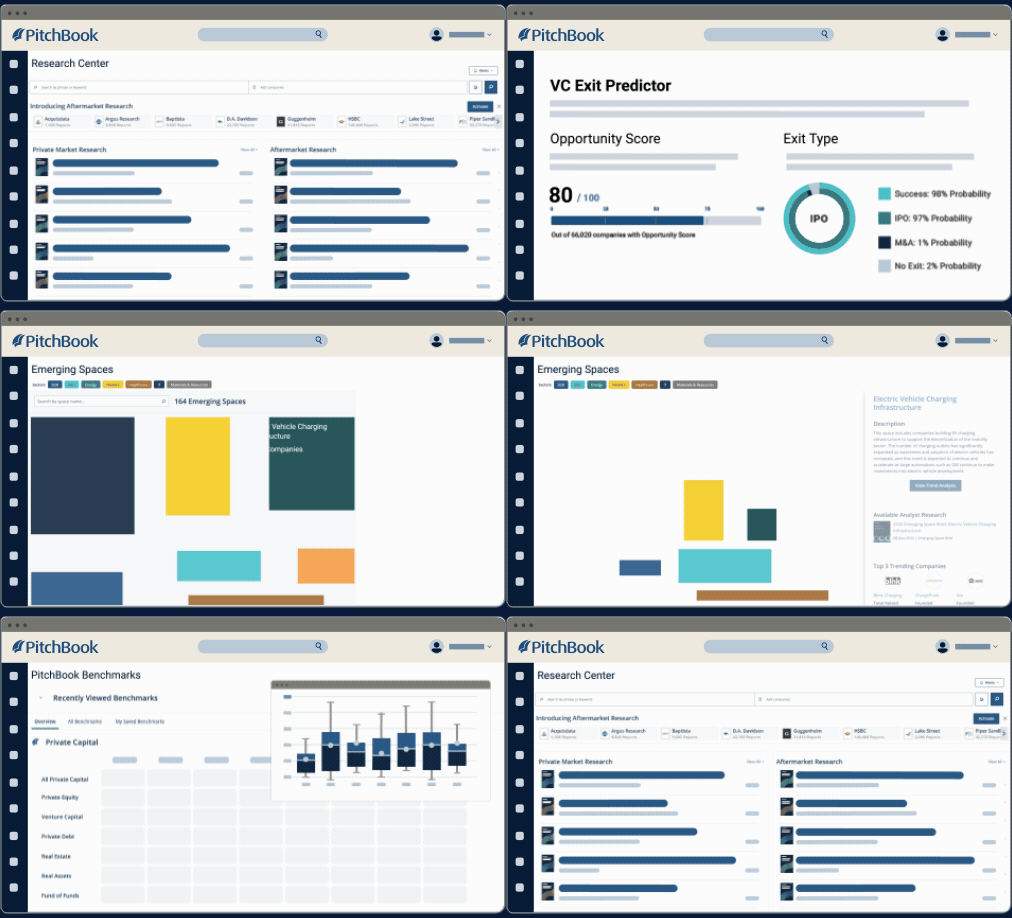 PitchBookPrivate Market Data, Research & Tools PitchBookPrivate Market Data, Research & Tools | See website | Compare |
Check each product’s website for current pricing and features. A verified badge indicates a verified listing, not a ranking.
About OpenCorporates and its alternatives
Users searching for OpenCorporates alternatives are usually looking for equally broad, official-source company data that supports compliance, investigations and data enrichment without relying on opaque aggregators. OpenCorporates stands out by sourcing records directly from 140+ government registries, applying transparent Legal-Entity Data Principles, and offering both a public search interface and developer-friendly API access. Alternatives often differ in coverage depth, pricing transparency, update frequency or willingness to expose raw registry identifiers. Teams evaluating replacements typically need comparable support for KYC, third-party risk, AML and ESG workflows while seeking lower costs, easier bulk exports or additional analytics layers. This page compares established competitors on jurisdiction breadth, data provenance, integration options and suitability for high-stakes due-diligence work.
Explore the alternatives
1.PANADATA
Analytics & DataWe run background checks on businesses using data from public records…
2.Crunchbase
Analytics & DataDiscover and act on private market activity with predictive company intelligence
3.Dun & Bradstreet
Analytics & DataIntelligent Data for Business Performance
4.LexisNexis
Analytics & DataLegal, government and risk information solutions for professionals
5.Orbis by Bureau van Dijk
Analytics & DataThe world’s most powerful comparable data resource on private companies
6.PitchBook
Analytics & DataPrivate Market Data, Research & Tools
See more comparisons in Analytics & Data alternatives.
Questions about OpenCorporates alternatives
What are the best OpenCorporates alternatives for bulk legal entity data exports?
Teams needing large-scale exports often compare OpenCorporates bulk delivery against providers that offer similar primary-source feeds but different licensing terms or faster refresh cycles.
How does OpenCorporates jurisdiction coverage compare with paid company data platforms?
OpenCorporates aggregates 140+ jurisdictions directly from official registers; many commercial alternatives add secondary sources or analytics but may reduce transparency on original registry identifiers.
Is there a free OpenCorporates alternative for basic company searches?
Several government portals and limited free tiers exist, yet they rarely match OpenCorporates unified global search and officer linkage in a single interface.
Which OpenCorporates alternatives are strongest for AML and sanctions screening?
Platforms focused on compliance workflows sometimes layer watchlists and network analysis on top of core registry data, offering different strengths than OpenCorporates raw legal-entity focus.
Can I replace OpenCorporates API with another provider for KYC automation?
Developers evaluate alternative APIs on uptime, response schema consistency and licensing costs, especially when scaling beyond OpenCorporates free usage limits.
What OpenCorporates alternatives provide ESG or beneficial ownership data?
Some competitors combine registry filings with additional disclosures or third-party ESG signals, giving richer context than OpenCorporates core legal-entity records alone.