
Pulley alternatives
11 products compared · Updated October 19, 2026
The short answer
Carta is the strongest alternative for companies and funds that want an end-to-end private capital platform with fund administration and tax support. Cake Equity suits startups currently on Pulley that want a lower-cost cap table tool with free migration and transparent pricing. Ledgy is best for international companies preparing for IPO that need to manage equity, deferred comp, and carried interest in one place.
Your shortlist, at a glance
Read the comparisons ↓ CartaCustom quoteCompanies and funds that want an end-to-end private capital platform with fund administration and tax support.
- SShareworksSee websiteFinance & Accounting
 Cake EquityFrom $1,200/yrStartups currently on Pulley that want a lower-cost cap table tool with free migration and transparent pricing.
 LedgyNot publishedInternational companies preparing for IPO that need to manage equity, deferred comp, and carried interest in one place.
- CCapshareNot publishedTeams that already use Capshare and need a straightforward cap table tool, provided the site becomes accessible again.
- SStockOpterSee websiteStock option planning and compensation management platform
- LLendtableSee websiteWe give employees cash advances for their 401k match and ESPP
EquityBeeNot publishedStartup employees who need funding to exercise their stock options without risking their own savings
 Forge GlobalNot publishedShareholders and investors in late-stage private companies who want to trade pre-IPO shares and access market pricing data.
 PipeNot publishedPlatforms and marketplaces that want to embed capital and cash-flow products for their users.
 SecfiNot publishedEmployees and shareholders of private tech companies who want to sell pre-IPO shares or get personalized equity and tax planning.
About Pulley and its alternatives
Pulley is a cap table management platform for founders and finance teams. It helps manage equity and tokens, with tools for fundraising, 409A valuations, compliance, and liquidity. Pulley is known for a simple user interface, transparent pricing, and support from in-house experts.
When comparing alternatives, weigh pricing structure, including whether plans are annual-only or per-stakeholder. Consider regions, especially if you have international employees or need IFRS reporting. Check integrations with HRIS and accounting systems. Evaluate support quality and contract terms, such as free tiers or migration assistance.
Explore the alternatives
- Custom quote
1.Carta
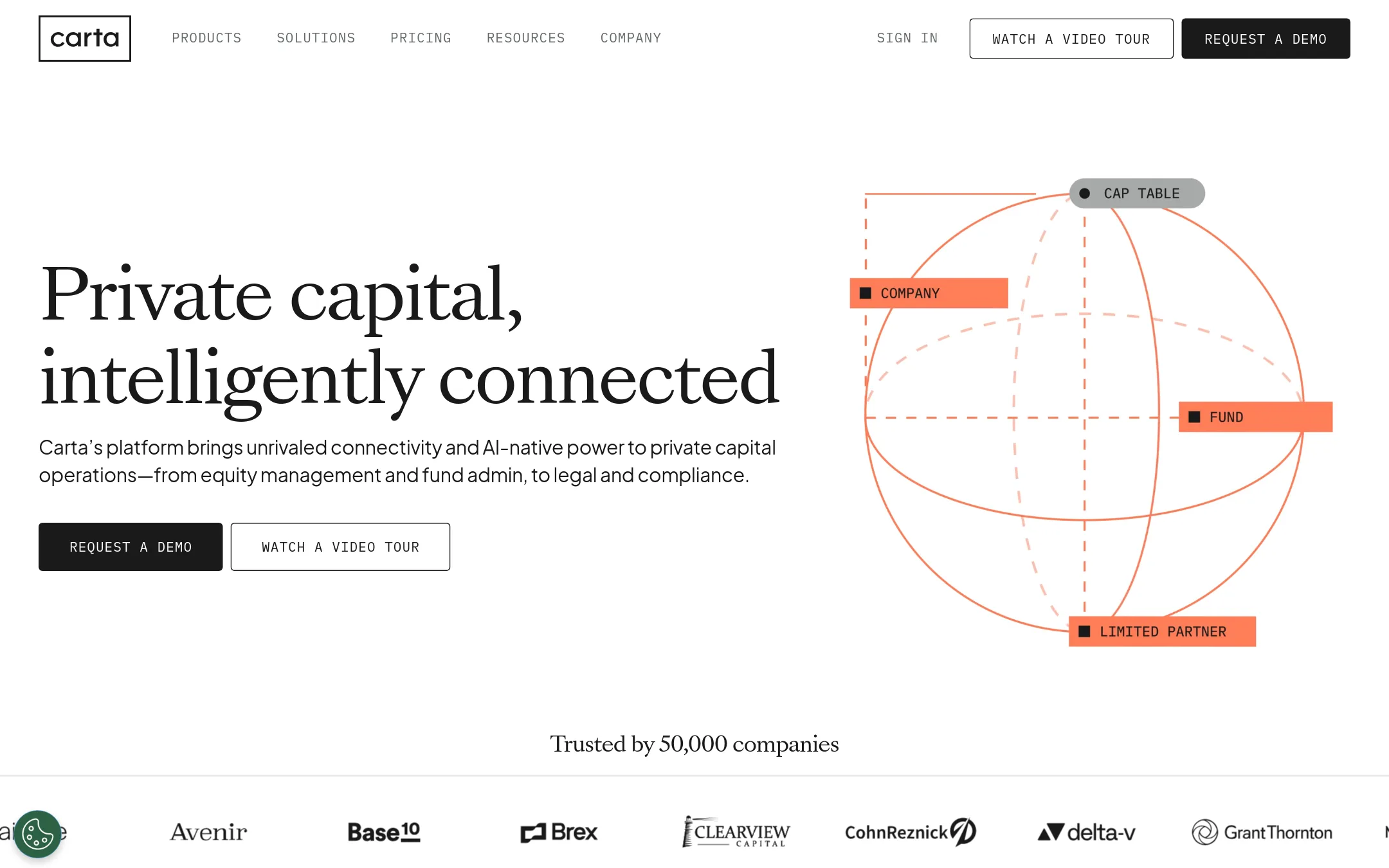
Best for: Companies and funds that want an end-to-end private capital platform with fund administration and tax support.
- Pricing
- Custom quote
- Category
- Finance & Accounting
Carta is a full private capital platform covering equity, fund administration, and portfolio management. Choose it over Pulley if you need fund admin, tax, and compliance tools alongside cap table management, especially as a fund or a company with complex equity needs.
Where it is strong
- Free tier for early startups
- Covers fund admin and tax
- Large network of investors and companies
Where it falls short
- Pricing not transparent
- May be overkill for simple cap tables
- Pricing:
- Pricing is not published on the site. Plans are Launch (free for under 25 stakeholders and up to $1M raised), Build, Grow, and Scale, with price per stakeholder and add-ons.
- From $1,200/yr
3.Cake Equity
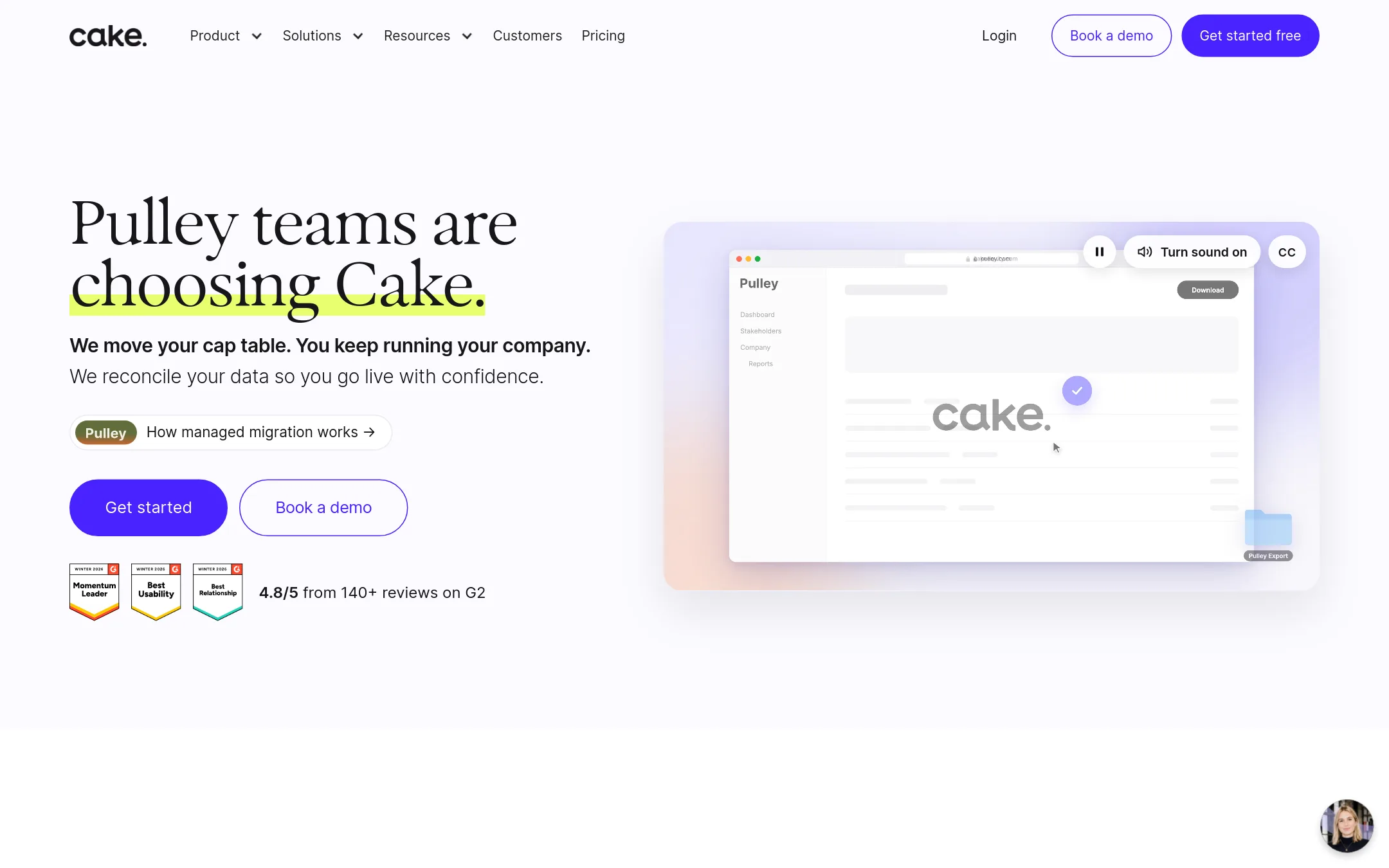
Best for: Startups currently on Pulley that want a lower-cost cap table tool with free migration and transparent pricing.
- Pricing
- From $1,200/yr
- Category
- Finance & Accounting
Cake Equity is a cap table and equity management platform that positions itself as a direct alternative to Pulley, with a free managed migration from Pulley. It's a good fit if you're already on Pulley and want a simpler, more affordable option with built-in 409A valuations and stock-based compensation reporting.
Where it is strong
- Free managed migration from Pulley, with data reconciliation before you pay.
- Two 409A valuations included on Team and Pro plans.
- Transparent annual pricing with no hidden fees.
Where it falls short
- Annual billing only. No monthly option.
- Add-ons like SPV and stock-based compensation cost extra on lower plans.
- Pricing:
- Pricing is annual only: Build starts at $1,200/year, Team at $2,400/year, and Pro at $4,800/year. Add-ons include 409A valuation ($1,500/year), QSBS ($500), SPV ($500), and stock-based compensation ($500).
- Switching from Pulley:
- Moving from Pulley is free and managed by Cake, with most migrations finished in 2 to 5 business days.
- Not published
4.Ledgy
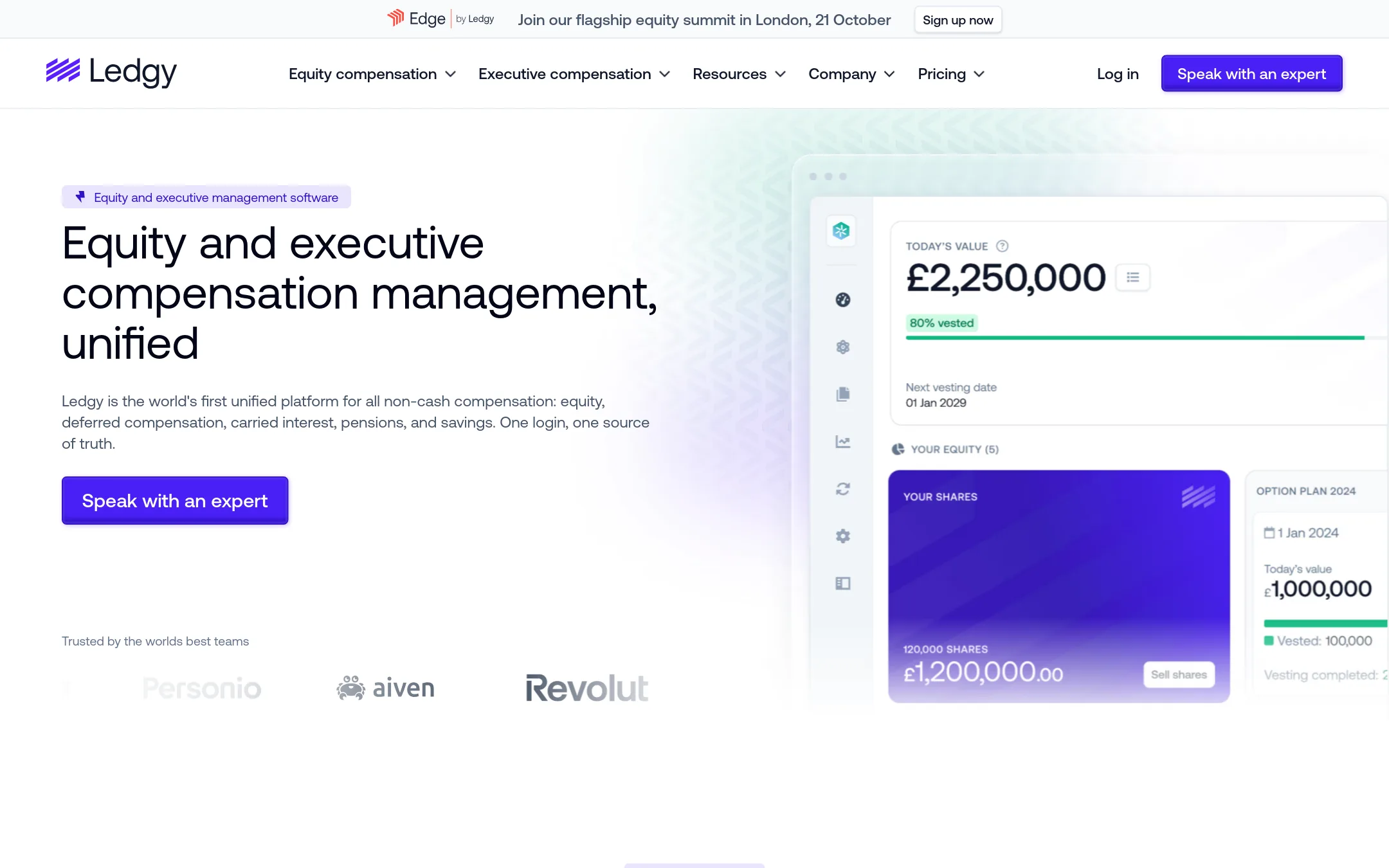
Best for: International companies preparing for IPO that need to manage equity, deferred comp, and carried interest in one place.
- Pricing
- Not published
- Category
- Finance & Accounting
Ledgy is a unified platform for equity, deferred compensation, carried interest, pensions, and savings. Choose it if you need to manage complex executive compensation alongside your cap table, especially as you approach IPO.
Where it is strong
- Unified platform for equity, deferred comp, and carried interest
- 70+ HRIS integrations for automation
- Global compliance with country-specific reports and IFRS 2
Where it falls short
- Pricing not published, likely enterprise-focused
- May be more complex than needed for early-stage startups
- Pricing:
- Pricing is not published on the site.
- CNot published
5.Capshare
Best for: Teams that already use Capshare and need a straightforward cap table tool, provided the site becomes accessible again.

- Pricing
- Not published
- Category
- Finance & Accounting
Capshare is a cap table management platform that helps companies track equity and manage workflows. It's a reasonable choice if you want a dedicated equity tool, but its website is currently unreachable, so verifying features and pricing is difficult. Choose it only if you're already familiar with Capshare or can access it through other channels.
Where it is strong
- Simplifies equity and cap table workflows.
- Dedicated to finance and accounting needs.
- Likely offers standard cap table features.
Where it falls short
- Website is currently unreachable, raising reliability concerns.
- No pricing or feature details available without access.
- Pricing:
- Pricing is not published on the site.
- SSee website
6.StockOpter
Finance & Accounting
StockOpter focuses on equity compensation planning and scenario analysis for finance teams. It offers detailed modeling but lacks full cap table management and token features. Pulley surpasses it with end-to-end equity infrastructure, compliance automation, and liquidity integration that StockOpter does not provide.
- LSee website
7.Lendtable
Finance & Accounting
We give employees cash advances for their 401k match and ESPP
- Not published
8.EquityBee
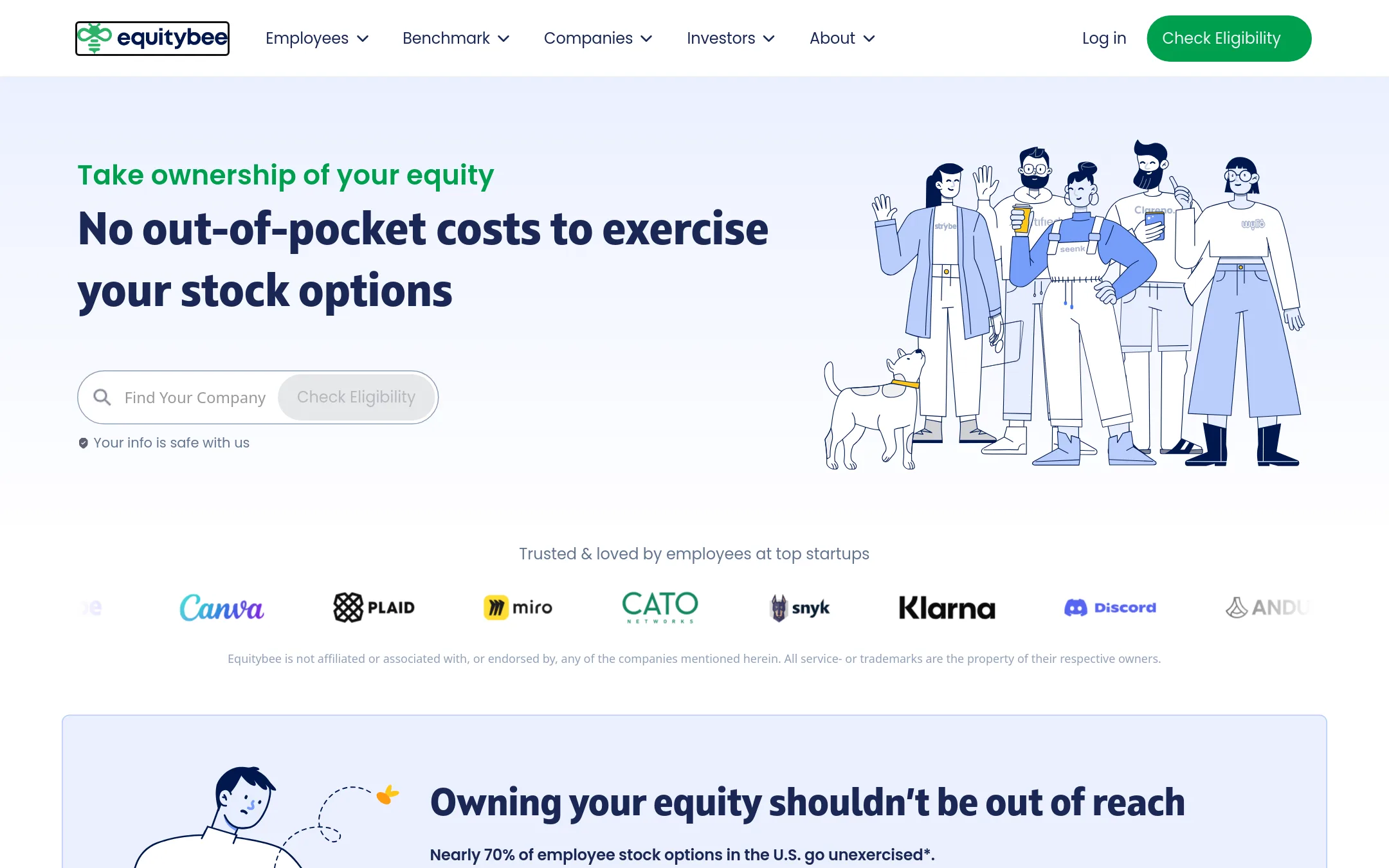
Best for: Startup employees who need funding to exercise their stock options without risking their own savings
- Pricing
- Not published
- Category
- Finance & Accounting
EquityBee funds the exercise of employee stock options, covering exercise and tax costs with no out-of-pocket expense and no repayment if there's no exit. Choose it instead of Pulley when you're an employee with options at a private startup and need capital to exercise, not a founder managing a cap table.
Where it is strong
- No out-of-pocket costs for exercising options
- No repayment if there's no successful exit
- Direct integration with Carta for a smooth process
Where it falls short
- Pricing is not transparent on the site
- Only available in the United States
- Pricing:
- Pricing is not published on the site. The service appears to be funded by a share of future gains, but no specific figures are given.
- Not published
9.Forge Global
Best for: Shareholders and investors in late-stage private companies who want to trade pre-IPO shares and access market pricing data.
- Pricing
- Not published
- Category
- Finance & Accounting
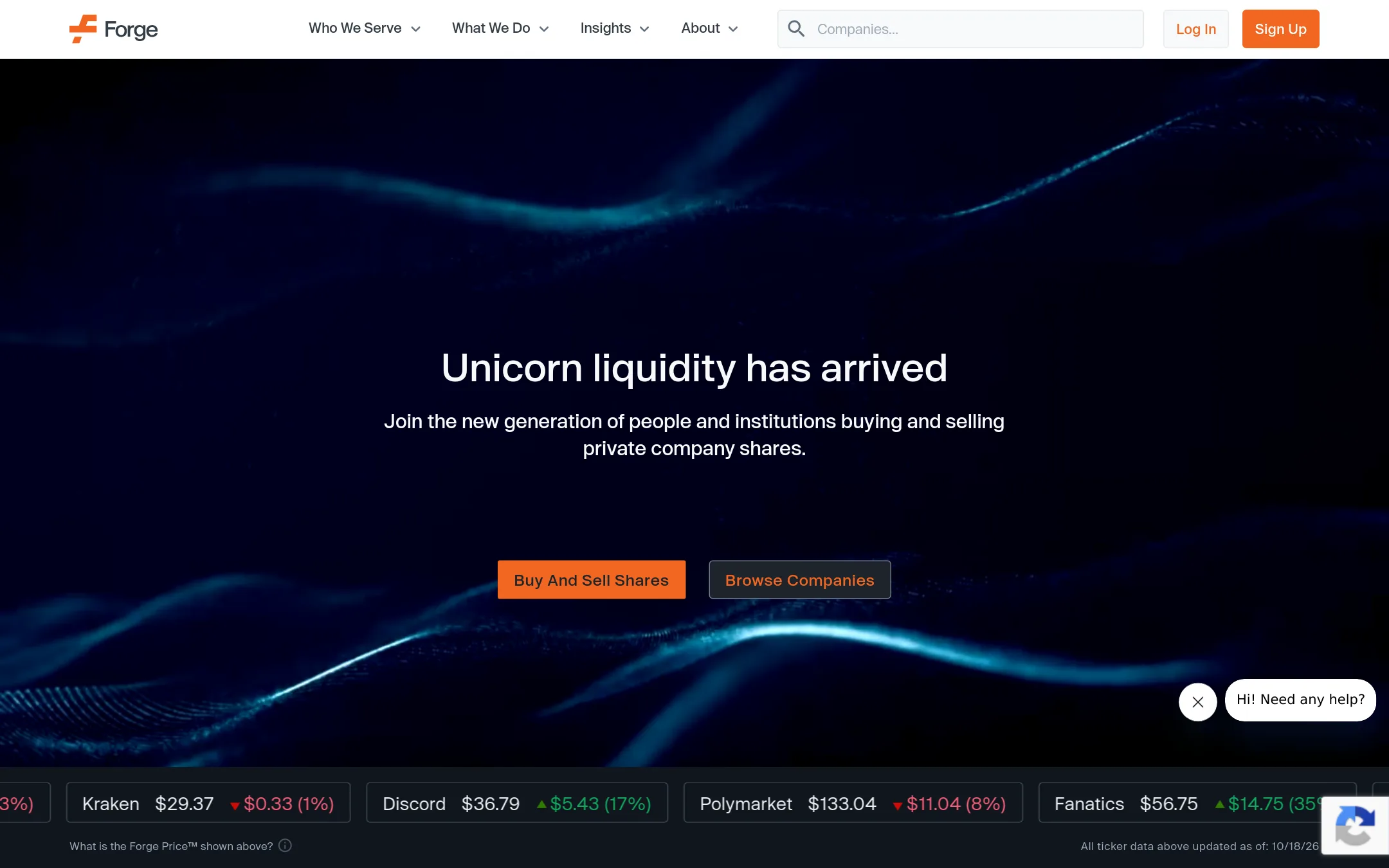
Forge Global is a secondary marketplace for buying and selling pre-IPO shares, not a cap table manager. You would use it when you need liquidity for private company shares, either as a shareholder looking to sell or an investor looking to buy. It provides pricing signals and market data that Pulley does not offer.
Where it is strong
- Access to a leading secondary marketplace for private shares
- Real-time pricing signals like Forge Price™ and market data
- Free account registration for accredited investors
Where it falls short
- Not a cap table management tool, so it doesn't replace Pulley for equity administration
- Requires accredited investor status, which limits who can use it
- Pricing:
- Pricing is not published on the site.
- Not published
10.Pipe
Best for: Platforms and marketplaces that want to embed capital and cash-flow products for their users.
- Pricing
- Not published
- Category
- Finance & Accounting
Pipe is an embedded financial operating system that lets platforms offer capital and cash-flow tools to their customers. Choose Pipe instead of Pulley if you run a vertical SaaS, marketplace, or payment facilitator and want to add financing features to your product, not manage your own cap table.
Where it is strong
- Single integration to offer financial tools globally
- Industry-specific risk models for vertical SaaS and marketplaces
- No-code or low-code implementation with expert support
Where it falls short
- Pricing is not public, so you need to contact sales
- Focus is on embedded finance, not equity management
- Pricing:
- Pricing is not published on the site.
- Not published
11.Secfi
Best for: Employees and shareholders of private tech companies who want to sell pre-IPO shares or get personalized equity and tax planning.

- Pricing
- Not published
- Category
- Finance & Accounting
Secfi is a financial advisory and liquidity platform for employees and shareholders of private tech companies, offering secondary sales, non-recourse financing, and personalized financial planning. You would choose Secfi instead of Pulley if you are an individual looking to monetize pre-IPO equity or get tax-optimized wealth management, rather than a founder managing a company's cap table.
Where it is strong
- Provides liquidity solutions like secondary sales and non-recourse financing for pre-IPO shares.
- Offers personalized financial planning and investment management from experienced advisors.
- Includes AI-powered tools (Maeve) to help with equity and tax calculations.
Where it falls short
- No published pricing, so costs are opaque.
- Focuses on individual employees, not company-wide cap table management like Pulley.
- Pricing:
- Pricing is not published on the site.
See more comparisons in Finance & Accounting alternatives.
FAQ
Questions about Pulley alternatives
What is the cheapest alternative to Pulley?
Cake Equity has transparent annual pricing starting at $1,200/year for its Build plan, which matches Pulley's Startup plan price. Carta offers a free Launch plan for under 25 stakeholders and up to $1M raised, but pricing beyond that is not published.
Which alternative is best for a startup currently using Pulley?
Cake Equity is the strongest choice because it offers a free managed migration from Pulley, including data reconciliation before you pay. It also includes two 409A valuations on Team and Pro plans, which can save costs.
Are there alternatives that cover fund administration or tax?
Carta covers fund administration and tax alongside cap table management. Ledgy also handles deferred compensation, carried interest, and pensions, with global compliance and IFRS 2 reporting.
Can I use any of these to sell pre-IPO shares?
Forge Global is a secondary marketplace for buying and selling pre-IPO shares, but it is not a cap table manager. Secfi offers secondary sales and non-recourse financing for employees and shareholders of private tech companies.
Which alternative has the most transparent pricing?
Cake Equity publishes its annual pricing clearly, with plans starting at $1,200/year and add-ons like 409A valuations at $1,500/year. Pulley also publishes pricing, but Carta, Ledgy, and others do not.
Last updated October 19, 2026.