
Seam alternatives
10 products compared · Updated October 16, 2026
The short answer
For most founders, the strongest alternatives to Seam are Zapier for broad software workflow automation without IoT device control, IFTTT for simple no-code smart home and app integrations, and Particle for teams building custom IoT hardware fleets. Zapier suits teams automating web app workflows, IFTTT fits individuals and small teams needing quick consumer-grade automations, and Particle is best for those developing their own connected devices.
Your shortlist, at a glance
Read the comparisons ↓ ParticleFrom $299/moTeams building custom IoT products or fleets that need device management, OTA updates, and data processing across multiple radio types.
 LosantCustom quoteEnterprises and industrial teams that need a full IoT application platform with data collection, visualization, and custom workflows across millions of devices.
 KisiFrom $99/moSMBs and enterprises that want a turnkey cloud access control system with hardware, mobile credentials, and video integrations.
 AWS ParallelClusterPay-as-you-goResearch teams and enterprises running HPC workloads on AWS who need to manage compute clusters.
 IFTTTFree, $2.99/mo, $8.99/Individuals and small teams who want to automate everyday tasks across apps and smart home devices without writing code.
- SSmartThingsNot publishedHomeowners with Samsung or Matter-compatible devices who want a single app to control and automate their smart home.
 BrivoNot publishedEnterprises and property managers that want a unified physical security platform with access control, video, and visitor management in one login.
 Home AssistantNot publishedDIY enthusiasts and homeowners who want to automate their own spaces with local control and privacy, not for teams building commercial IoT products.
 ZapierNot publishedTeams that want to automate workflows across a wide range of web apps and services without writing custom code.
 Salto KSNot publishedSmall to large businesses and multi-site organizations that need a scalable, cloud-based access control solution with real-time monitoring and digital key management.
About Seam and its alternatives
Seam is an API for IoT devices that lets platforms and AI agents connect to locks, thermostats, sensors, and cameras across hundreds of brands with one integration. It is known for simplifying device connectivity, offering a free tier, and providing tools like a CLI and MCP support for coding agents.
When comparing alternatives, weigh pricing structure (flat monthly vs. usage-based vs. custom quotes), device coverage (consumer smart home vs. industrial IoT), integration depth (API vs. no-code applets), and support options (SLA, dedicated channels, community). Also consider whether you need a full product with hardware or just an API to build your own.
Explore the alternatives
- From $299/mo
1.Particle
Best for: Teams building custom IoT products or fleets that need device management, OTA updates, and data processing across multiple radio types.
- Pricing
- From $299/mo
- Category
- Developer Tools
Particle is an integrated IoT platform-as-a-service for building and managing connected devices, from microcontrollers to edge computers. Choose it over Seam when you need to develop and deploy your own hardware fleet with cellular, Wi-Fi, or satellite connectivity, rather than integrating existing smart devices like locks or thermostats.
Where it is strong
- Includes OTA software updates and edge computing runtime across plans
- Supports multiple radios: LTE, 5G, Wi-Fi, satellite, and LoRaWAN
- Free plan for up to 100 devices and 100K Data Operations
Where it falls short
- Pricing is based on Data Operations, which can be complex to estimate
- Not focused on smart home device APIs like locks or thermostats. Requires building your own hardware
- Pricing:
- Pricing starts at $299/month for Basic (720K Data Operations) and $599/month for Plus (5M Data Operations), with Free and custom Professional/Enterprise plans.
- Switching from Seam:
- Moving from Seam to Particle means building your own device integration layer, as Particle does not provide pre-built APIs for third-party smart devices.
- Custom quote
2.Losant
Best for: Enterprises and industrial teams that need a full IoT application platform with data collection, visualization, and custom workflows across millions of devices.
- Pricing
- Custom quote
- Category
- Other
Losant is an enterprise IoT platform for building and scaling connected solutions, with a low-code workflow engine, edge agent, and multi-tenancy. Choose it over Seam when you need to manage and visualize data from industrial or custom devices at scale, not just control consumer smart locks and thermostats.
Where it is strong
- Low-code workflow engine for building automations without deep programming
- Edge agent integrates with PLCs, CRMs, Azure/AWS, and more
- Handles millions of data points per second for large-scale deployments
Where it falls short
- Pricing is not transparent and requires a sales conversation
- Focused on enterprise IoT, so it may be overkill for simple device control like locks or thermostats
- Pricing:
- Pricing is not published on the site. It is customized to your business needs after contacting sales.
- Switching from Seam:
- Moving from Seam to Losant means shifting from a device-control API to a broader IoT platform, so you would need to rebuild integrations and workflows around Losant's edge agent and data model.
- From $99/mo
3.Kisi
Best for: SMBs and enterprises that want a turnkey cloud access control system with hardware, mobile credentials, and video integrations.
- Pricing
- From $99/mo
- Category
- Security & Privacy
Kisi is a full access control platform with its own hardware, mobile app, and admin dashboard, so it suits organizations that want to manage doors, visitors, and video in one system. Choose it over Seam when you need a complete security product rather than an API to connect various IoT devices.
Where it is strong
- Includes hardware, mobile app, and admin dashboard in one product.
- Integrates with SSO, cameras, and industry apps like coworking and fitness.
- Offers visitor management, video surveillance, and intrusion detection in the OSP plan.
Where it falls short
- Hardware and add-ons may be required, adding to the base cost.
- Enterprise features like custom analytics and event retention require contacting sales.
- Pricing:
- Pricing starts at $99 per month for the One Security Platform, with enterprise plans available on a custom quote basis.
- Switching from Seam:
- Moving from Seam to Kisi means adopting a full access control system with its own hardware and dashboard, rather than just an API layer over existing devices.
- Pay-as-you-go
4.AWS ParallelCluster
Best for: Research teams and enterprises running HPC workloads on AWS who need to manage compute clusters.
- Pricing
- Pay-as-you-go
- Category
- Developer Tools
AWS ParallelCluster is a cloud HPC service for running high-performance computing workloads, not a device API. Choose it when you need to manage and scale compute clusters on AWS, not when you need to control physical IoT devices.
Where it is strong
- Scales compute clusters on AWS
- Supports multiple HPC schedulers
- Integrates with AWS services
Where it falls short
- No IoT device control
- Requires AWS expertise
- Pricing:
- Pricing is not published on the site. AWS charges pay-as-you-go for underlying services.
- Free, $2.99/mo, $8.99/
5.IFTTT
Best for: Individuals and small teams who want to automate everyday tasks across apps and smart home devices without writing code.
- Pricing
- Free, $2.99/mo, $8.99/
- Category
- Productivity & Project Management
IFTTT is a no-code automation platform that connects apps and devices through simple trigger-action Applets. Choose it instead of Seam when you need quick, consumer-grade integrations for personal or small business workflows without building custom code.
Where it is strong
- No-code Applets connect 1,000+ services and devices
- Free plan available with unlimited runs
- AI-powered automation creation via Chat Create
Where it falls short
- Limited to 2 Applets on the free plan
- Not designed for deep device-level control like Seam
- Pricing:
- Free plan with 2 Applets. Pro at $2.99/month billed annually. Pro+ at $8.99/month billed annually.
- Switching from Seam:
- Moving from Seam to IFTTT means replacing API-based integrations with no-code Applets, which may not support the same granular device controls.
- SNot published
6.SmartThings
Best for: Homeowners with Samsung or Matter-compatible devices who want a single app to control and automate their smart home.
- Pricing
- Not published
- Category
- Security & Privacy
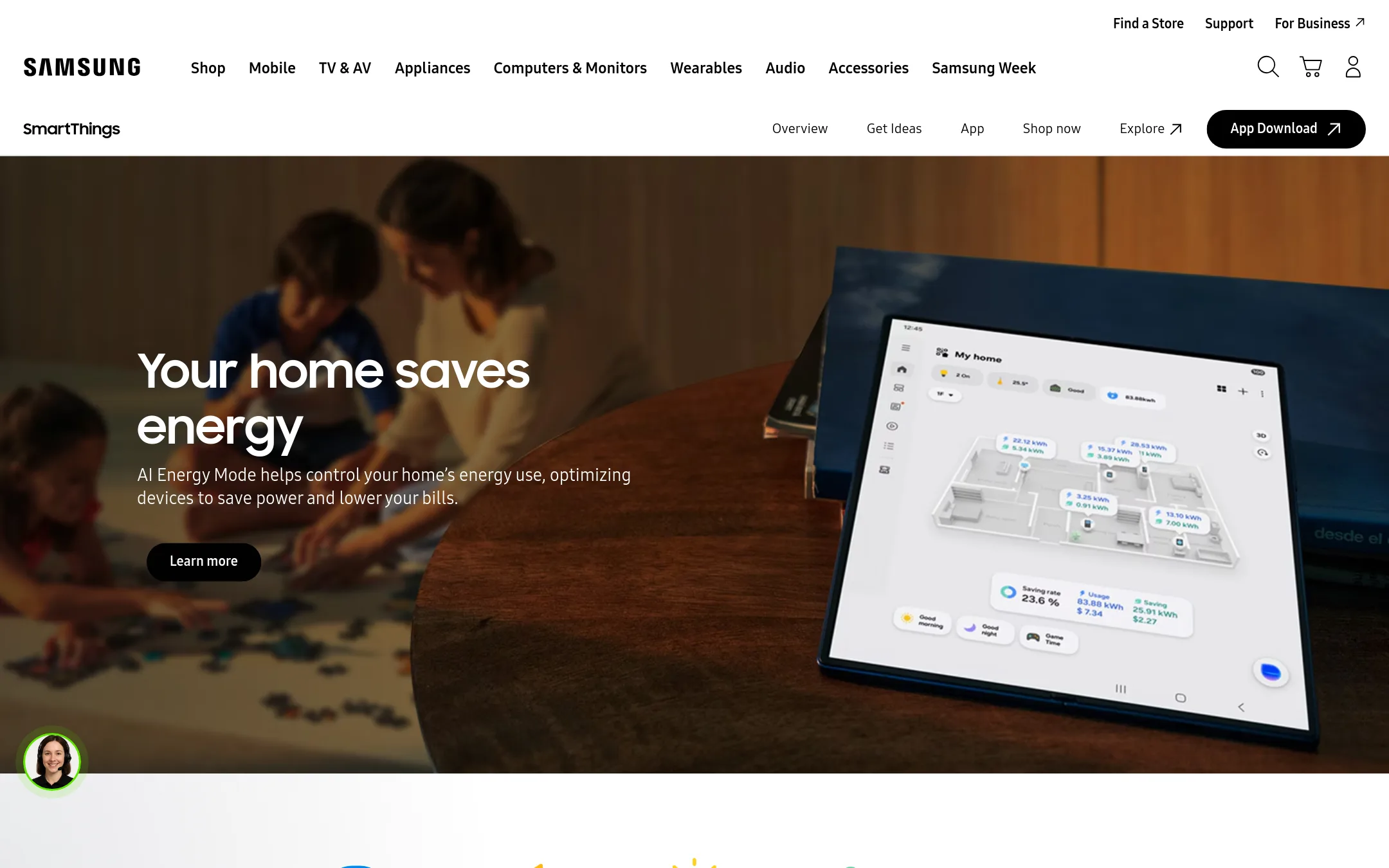
SmartThings is a consumer-focused smart home platform from Samsung, not a developer API for building IoT products. You would choose it if you are a homeowner wanting to control and automate your own devices through a single app, rather than a company integrating devices into your software.
Where it is strong
- Works with hundreds of devices and brands, including Matter support.
- AI Energy Mode helps reduce energy consumption on compatible Samsung appliances.
- Built-in hub on select Samsung TVs eliminates the need for a separate hub.
Where it falls short
- Designed for consumer use, not for developers building product integrations.
- Limited to 300 devices per location and 10 locations per account.
- Pricing:
- Pricing is not published on the site.
- Not published
7.Brivo
Best for: Enterprises and property managers that want a unified physical security platform with access control, video, and visitor management in one login.
- Pricing
- Not published
- Category
- Security & Privacy
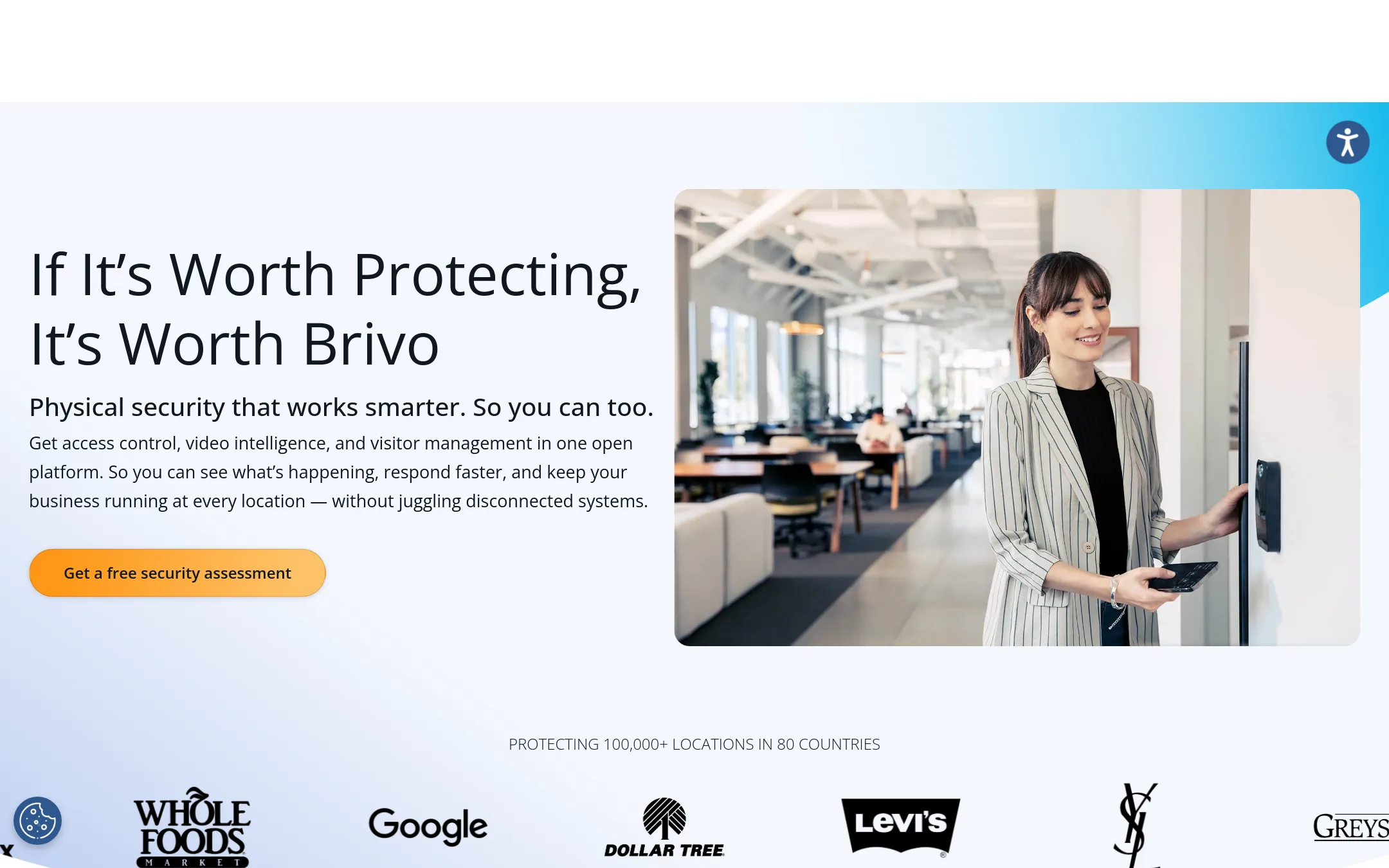
Brivo is a cloud-based physical security platform that combines access control, video intelligence, and visitor management into one system. Choose it instead of Seam if you are an enterprise or property manager that needs a complete security suite with built-in hardware and software, rather than a developer API for connecting to various IoT devices.
Where it is strong
- Unified platform for doors, cameras, and visitors in one dashboard.
- Hardware and software built to work together from day one.
- Open API connects to over 400 partner systems.
Where it falls short
- Pricing is not transparent. Requires contacting sales.
- More of a full security suite than a developer-focused API, so less flexible for custom IoT integrations.
- Pricing:
- Pricing is not published on the site.
- Not published
8.Home Assistant
Best for: DIY enthusiasts and homeowners who want to automate their own spaces with local control and privacy, not for teams building commercial IoT products.
- Pricing
- Not published
- Category
- Security & Privacy
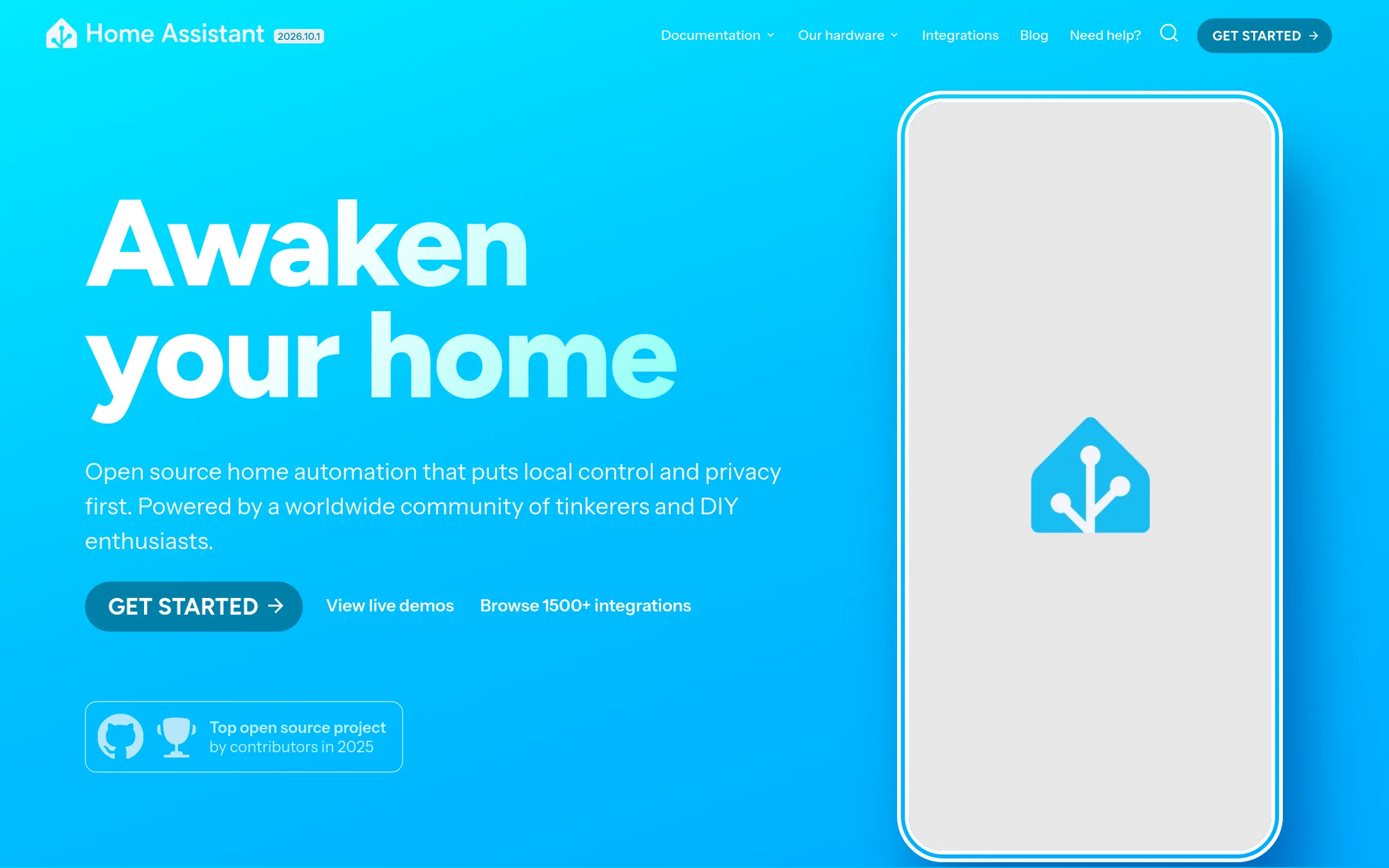
Home Assistant is an open-source platform for local-first home automation, connecting over a thousand devices and services without relying on a cloud. Choose it over Seam if you want full control, privacy, and customization for your own home or small property, rather than building a commercial product on a hosted API.
Where it is strong
- Open source and free to use, with no per-device or per-action fees.
- Local control and privacy: data stays on your network, no cloud dependency.
- Huge community and thousands of integrations, plus a non-profit foundation backing it.
Where it falls short
- Requires self-hosting and technical setup, not a plug-and-play API.
- No commercial support or SLA. You rely on community and DIY troubleshooting.
- Pricing:
- Pricing is not published on the site.
- Not published
9.Zapier
Best for: Teams that want to automate workflows across a wide range of web apps and services without writing custom code.
- Pricing
- Not published
- Category
- Productivity & Project Management
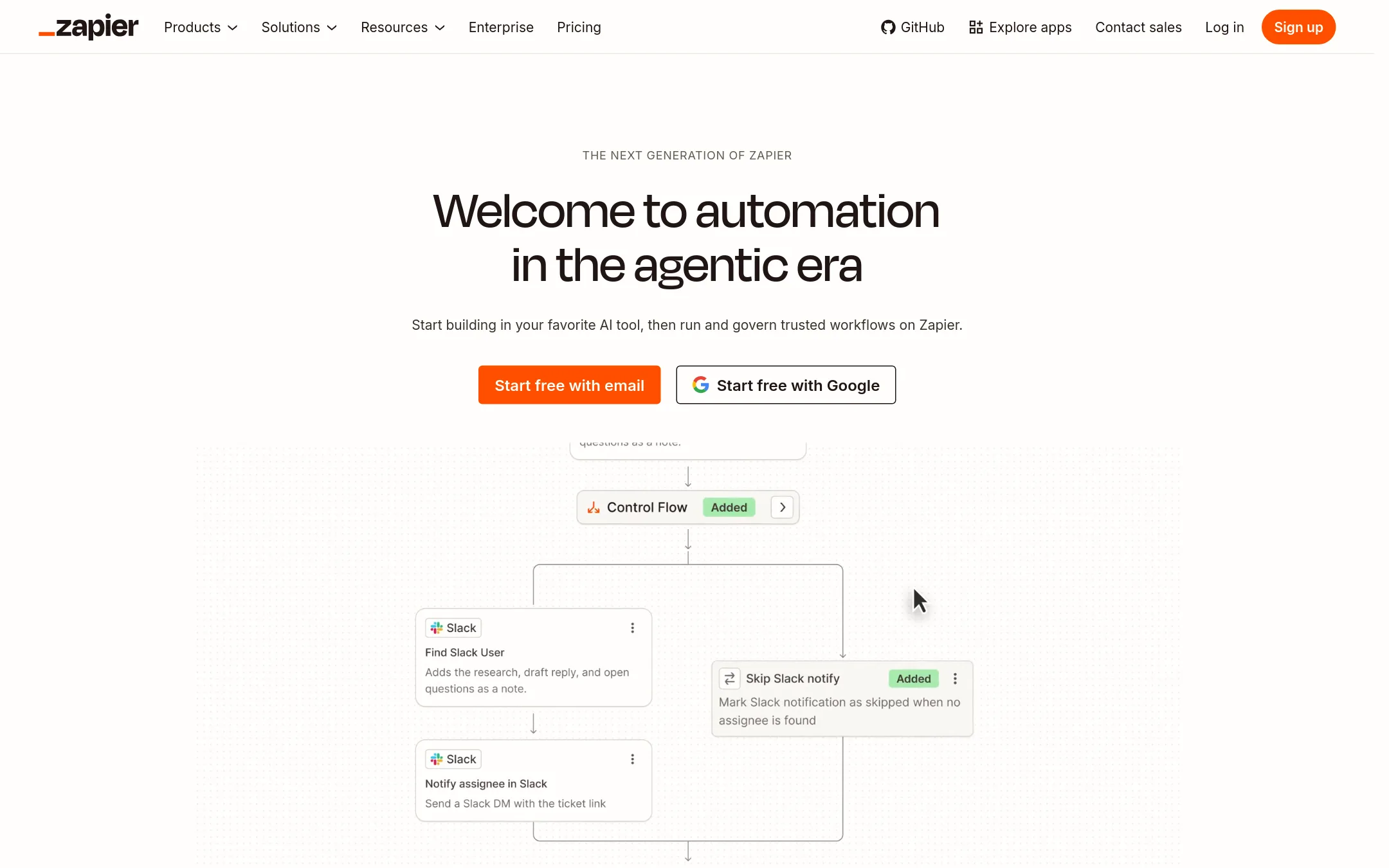
Zapier is a general-purpose automation platform that connects thousands of apps and services, not a specialized IoT device API. You would choose it over Seam when your automation needs are primarily about software workflows and you don't need to control physical devices like locks or thermostats.
Where it is strong
- Connects to 9,000+ apps and services
- Free plan includes 100 tasks per month
- Supports deterministic and AI-powered workflows
Where it falls short
- No native support for IoT devices like locks or thermostats
- Pricing details not shown on the pricing page
- Pricing:
- Pricing is not published on the site. The page shows plan tiers (Free, Professional, Team, Enterprise) but no dollar amounts.
- Not published
10.Salto KS
Best for: Small to large businesses and multi-site organizations that need a scalable, cloud-based access control solution with real-time monitoring and digital key management.
- Pricing
- Not published
- Category
- Security & Privacy
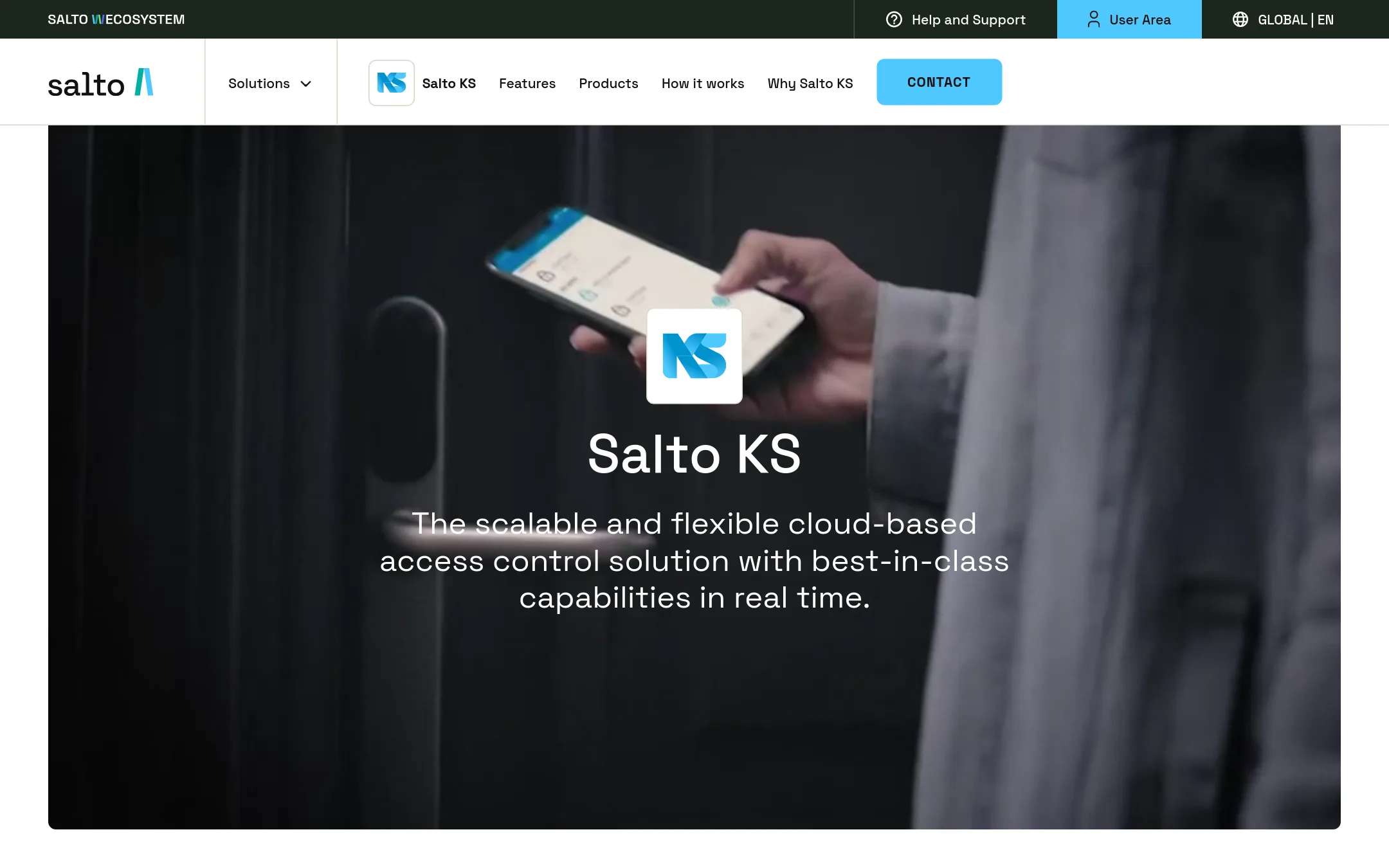
Salto KS is a cloud-based access control platform for managing physical doors and keys, not a general IoT device API. Choose it if you need a complete access control system with real-time monitoring and digital keys, rather than connecting various device brands through one API.
Where it is strong
- Real-time monitoring and event notifications for all access points
- Supports multiple keyless access methods including digital keys and PIN codes
- Cloud-based platform with unlimited locations from one dashboard
Where it falls short
- Limited to access control, not a general IoT device API
- Pricing not publicly available, likely requires sales contact
- Pricing:
- Pricing is not published on the site.
See more comparisons in Other alternatives.
FAQ
Questions about Seam alternatives
What is the best alternative to Seam for controlling smart locks and thermostats?
If you need a turnkey access control system with hardware, Kisi is a strong choice, starting at $99 per month. For a developer API to integrate various device brands, Seam itself is the primary option, but alternatives like Salto KS focus on access control only. For consumer home automation, SmartThings or Home Assistant work well for personal use.
Which alternative is best for a startup with limited engineering resources?
IFTTT is ideal for no-code automation with a free plan and simple Applets, though it's limited to 2 Applets on free. Zapier offers a free tier with 100 tasks per month and connects to 9,000+ apps, but it doesn't handle IoT devices. For building custom IoT products, Particle has a free plan for up to 100 devices, but requires more technical effort.
Are there any alternatives with transparent, published pricing?
Yes, IFTTT publishes pricing starting at $2.99/month for Pro, and Particle starts at $299/month for Basic. Kisi starts at $99 per month for its One Security Platform. Other alternatives like Zapier, AWS ParallelCluster, Losant, Brivo, and Salto KS do not show pricing on their sites and require contacting sales.
Which alternative is best for enterprise-scale IoT deployments?
Losant is designed for enterprise IoT with a low-code workflow engine and handles millions of data points per second, but pricing is custom. AWS ParallelCluster is for HPC workloads, not IoT devices. Brivo offers a unified security platform for enterprises, but it's more of a full suite than a developer API. Particle's Plus plan at $599/month supports up to 5M Data Operations for larger fleets.
Can I use these alternatives to build a commercial product like Seam?
Yes, but it depends on the alternative. Particle is a platform-as-a-service for building custom IoT products with OTA updates and edge computing. Losant provides an enterprise IoT platform for building connected solutions. Home Assistant is open-source and free, but it's not designed for commercial products and lacks support. Kisi and Brivo are complete security products, not APIs for building your own.
Last updated October 16, 2026.