Shuttle alternatives
8 products compared · Updated October 19, 2026
The short answer
For most teams, Supabase is the strongest alternative if you need a managed Postgres database with auth and realtime features. Fly.io is best for multi-region apps and agent workloads that need fast, hardware-isolated VMs. Heroku suits teams wanting a battle-tested, multi-language platform with a rich add-on ecosystem.
Your shortlist, at a glance
Read the comparisons ↓ HerokuFrom $25/mo per dynoTeams building web apps in languages like Node.js, Ruby, Python, or Java who want managed hosting with a rich ecosystem of add-ons.
 Vercel Image OptimizationFrom $0.05/1K transforFrontend teams on Vercel that need automatic image resizing, compression, and caching without managing infrastructure.
 BioRenderNot publishedResearch teams and scientists who need to build editable, publication-ready figures and graphs without coding.
 RailwayFrom $1/mo + usageTeams that want a flexible, usage-based cloud for deploying web apps, databases, and services in any language without managing infrastructure.
 Fly.ioFrom $0.0030/hrTeams building agent-based products or multi-region apps that need fast, hardware-isolated VMs and per-second billing.
 DigitalOcean App PlatformNot publishedTeams that want a fully managed platform for deploying web apps in any language, with predictable pricing and access to DigitalOcean's broader cloud services.
 Google Cloud HPCNot publishedTeams running AI or scientific workloads that need scalable GPU and TPU infrastructure on Google Cloud.
 SupabaseFrom $25/mo + usageTeams building web or mobile apps that need a Postgres database, auth, and realtime features without managing servers.
About Shuttle and its alternatives
Shuttle is a backend deployment platform built specifically for Rust. It lets you provision cloud resources like databases and secrets directly in your Rust code, with zero infrastructure setup. Shuttle is known for its code-driven provisioning, fast redeploys, and support for all major Rust frameworks.
When comparing alternatives, weigh how each platform handles pricing structure, region availability, integrations, support, and contract terms. Some platforms charge per second, others per month, and some have free tiers. Consider whether you need multi-language support, managed databases, or specific compliance features.
Explore the alternatives
- From $25/mo per dyno
1.Heroku
Best for: Teams building web apps in languages like Node.js, Ruby, Python, or Java who want managed hosting with a rich ecosystem of add-ons.
- Pricing
- From $25/mo per dyno
- Category
- Developer Tools
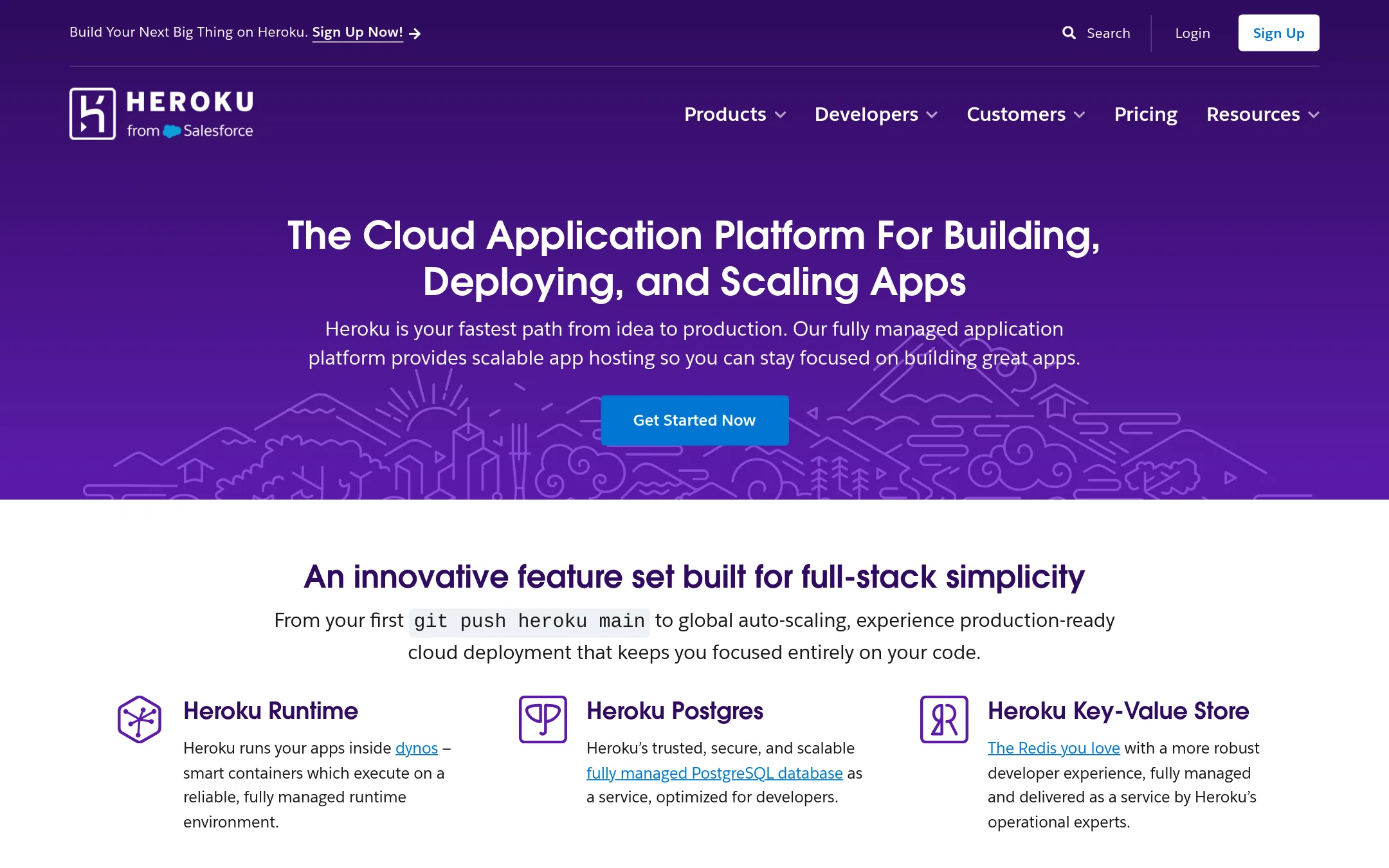
Heroku is a fully managed platform that runs apps in dynos and supports many languages via buildpacks. Choose it over Shuttle if you need a battle-tested, multi-language platform with add-ons and enterprise compliance features, rather than a Rust-specific deployment tool.
Where it is strong
- Supports many languages via official and third-party buildpacks
- Managed Postgres and Redis services with one-click provisioning
- Enterprise features like Private Spaces, Shield, and SSO
Where it falls short
- No code-driven infrastructure provisioning like Shuttle's annotations
- Rust support relies on third-party buildpacks, not first-class
- Pricing:
- Dynos start at $25/month for Standard-1X, with Eco and Basic tiers available at lower or no cost. Data services and AI pricing are listed separately.
- From $0.05/1K transfor
2.Vercel Image Optimization
Best for: Frontend teams on Vercel that need automatic image resizing, compression, and caching without managing infrastructure.
- Pricing
- From $0.05/1K transfor
- Category
- Media & Entertainment
Vercel Image Optimization is a service for optimizing and delivering images through Vercel's global CDN. Choose it instead of Shuttle when you need fast, scalable image delivery for a frontend or media-heavy app, not a Rust backend.
Where it is strong
- Automatic image resizing and compression via URL parameters
- Global CDN with caching included
- Pay only for actual transformations, with a free monthly allowance
Where it falls short
- Only works with images served through Vercel's infrastructure
- No backend or database provisioning, unlike Shuttle
- Pricing:
- Image Optimization Transformation starts at $0.05 per 1K, with 5K transformations included per month. Cache reads and writes are included up to 300K and 100K per month respectively.
- Not published
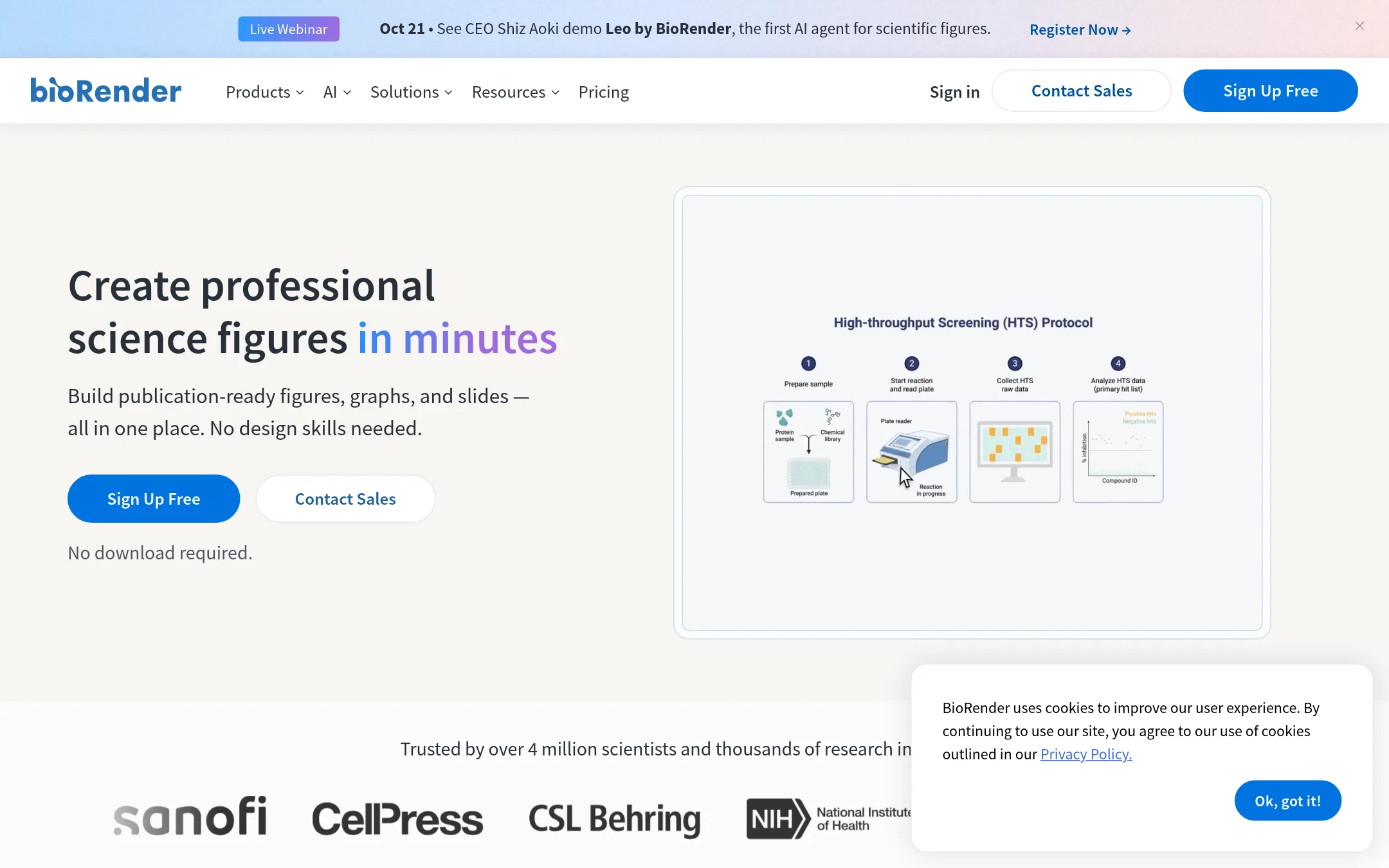
3.BioRender
Best for: Research teams and scientists who need to build editable, publication-ready figures and graphs without coding.
- Pricing
- Not published
- Category
- Design & Creative
BioRender is a scientific figure and illustration tool for researchers, not a backend deployment platform. Choose it when you need to create publication-quality diagrams, graphs, and presentations for grants, journals, or lab communication, and you don't need Shuttle's Rust-based cloud infrastructure.
Where it is strong
- Expert-vetted icon library and templates for scientific accuracy
- AI agent (Leo) generates editable figures from sketches or uploads
- Built-in graphing from CSV, Excel, or Prism data with real-time collaboration
Where it falls short
- Free plan figures cannot be used for publications or commercial use
- No backend or deployment capabilities, unlike Shuttle
- Pricing:
- Pricing is not published on the site. Plans include Free, Individual, Lab, and Institution, with add-ons for graphing and AI-assisted figure generation.
- From $1/mo + usage
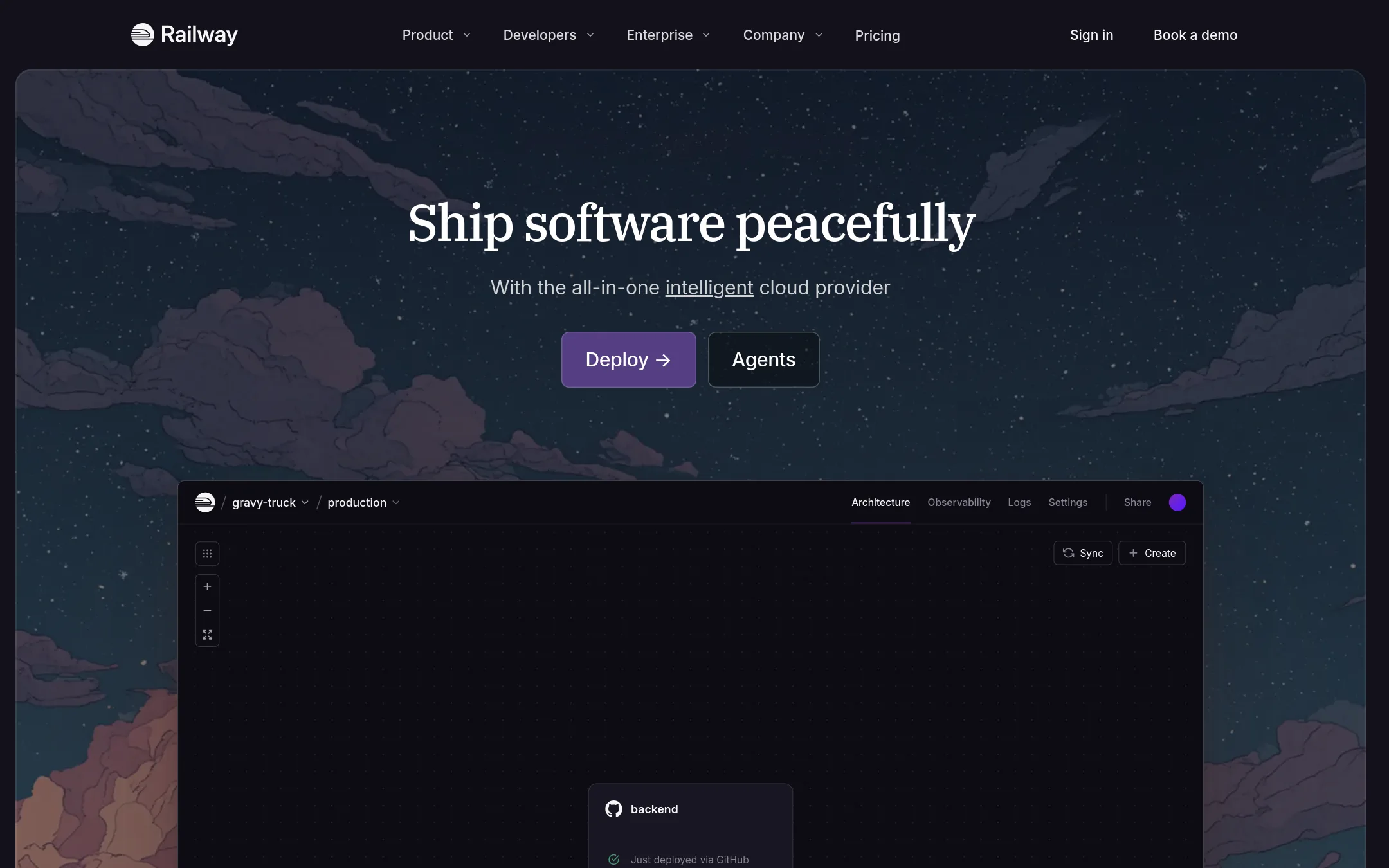
4.Railway
Best for: Teams that want a flexible, usage-based cloud for deploying web apps, databases, and services in any language without managing infrastructure.
- Pricing
- From $1/mo + usage
- Category
- Developer Tools
Railway is a general-purpose cloud platform that deploys any repo with auto-config, networking, scaling, and monitoring built in. Choose it over Shuttle if you work in a language other than Rust or want a broader platform that isn't tied to a single ecosystem.
Where it is strong
- Deploys any repo with auto-config and instant previews
- Usage-based billing by the second, no overprovisioning
- Built-in networking, scaling, logs, metrics, and traces
Where it falls short
- No code-driven resource provisioning like Shuttle's annotations
- Pricing can be complex with many separate usage charges
- Pricing:
- Start with a 30-day free trial with $5 credits, then $1 per month. Usage is billed per second: memory $0.00000386 per GB/sec, CPU $0.00000772 per vCPU/sec, volumes $0.00000006 per GB/sec, egress $0.05 per GB.
- From $0.0030/hr
5.Fly.io
Best for: Teams building agent-based products or multi-region apps that need fast, hardware-isolated VMs and per-second billing.
- Pricing
- From $0.0030/hr
- Category
- Developer Tools
Fly.io runs full-stack apps and agent workloads on hardware-isolated VMs that boot in under a second. Choose it over Shuttle when you need to deploy any language or framework, not just Rust, and want fine-grained control over regions and scaling.
Where it is strong
- Boots VMs in under a second and deploys in about 500ms.
- Bills per second, so costs drop to zero when machines stop.
- Runs any language or framework, not just Rust.
Where it falls short
- Requires manual infrastructure configuration compared to Shuttle's code-driven provisioning.
- Egress costs extra and vary by region, up to $0.12/GB in Africa and India.
- Pricing:
- Machines start at $0.0030/hour ($2.19/month) for shared-cpu-1x with 256MB RAM. Sprites are metered at $0.0385 per CPU-hour and $0.021875 per GB-hour. Managed Postgres starts at $38/month.
- Switching from Shuttle:
- Moving from Shuttle means replacing Rust annotations with Fly.io's CLI and config files, and manually wiring databases and secrets.
- Not published
6.DigitalOcean App Platform
Best for: Teams that want a fully managed platform for deploying web apps in any language, with predictable pricing and access to DigitalOcean's broader cloud services.
- Pricing
- Not published
- Category
- Developer Tools
DigitalOcean App Platform is a managed platform for deploying and scaling web apps on DigitalOcean's cloud. Choose it instead of Shuttle if you want to deploy apps in languages other than Rust, or if you prefer a broader cloud ecosystem with managed databases, Kubernetes, and object storage.
Where it is strong
- Deploy apps without managing infrastructure
- Supports multiple languages and frameworks
- Integrates with DigitalOcean's managed databases and storage
Where it falls short
- Pricing details are not listed on the site
- Less focused on Rust-specific workflows compared to Shuttle
- Pricing:
- Pricing is not published on the site.
- Not published
7.Google Cloud HPC
Best for: Teams running AI or scientific workloads that need scalable GPU and TPU infrastructure on Google Cloud.
- Pricing
- Not published
- Category
- Developer Tools
Google Cloud HPC is a full cloud platform for running high-performance computing workloads on GPUs and TPUs. Choose it over Shuttle when you need raw compute power for AI training or scientific simulations, not a Rust backend deployment service.
Where it is strong
- Access to GPUs and TPUs for high-performance workloads
- Scalable infrastructure for large AI and scientific jobs
- Part of the Google Cloud ecosystem
Where it falls short
- Requires manual infrastructure configuration
- Not designed for Rust backend deployment like Shuttle
- Pricing:
- Pricing is not published on the site.
- From $25/mo + usage
8.Supabase
Best for: Teams building web or mobile apps that need a Postgres database, auth, and realtime features without managing servers.
- Pricing
- From $25/mo + usage
- Category
- Developer Tools
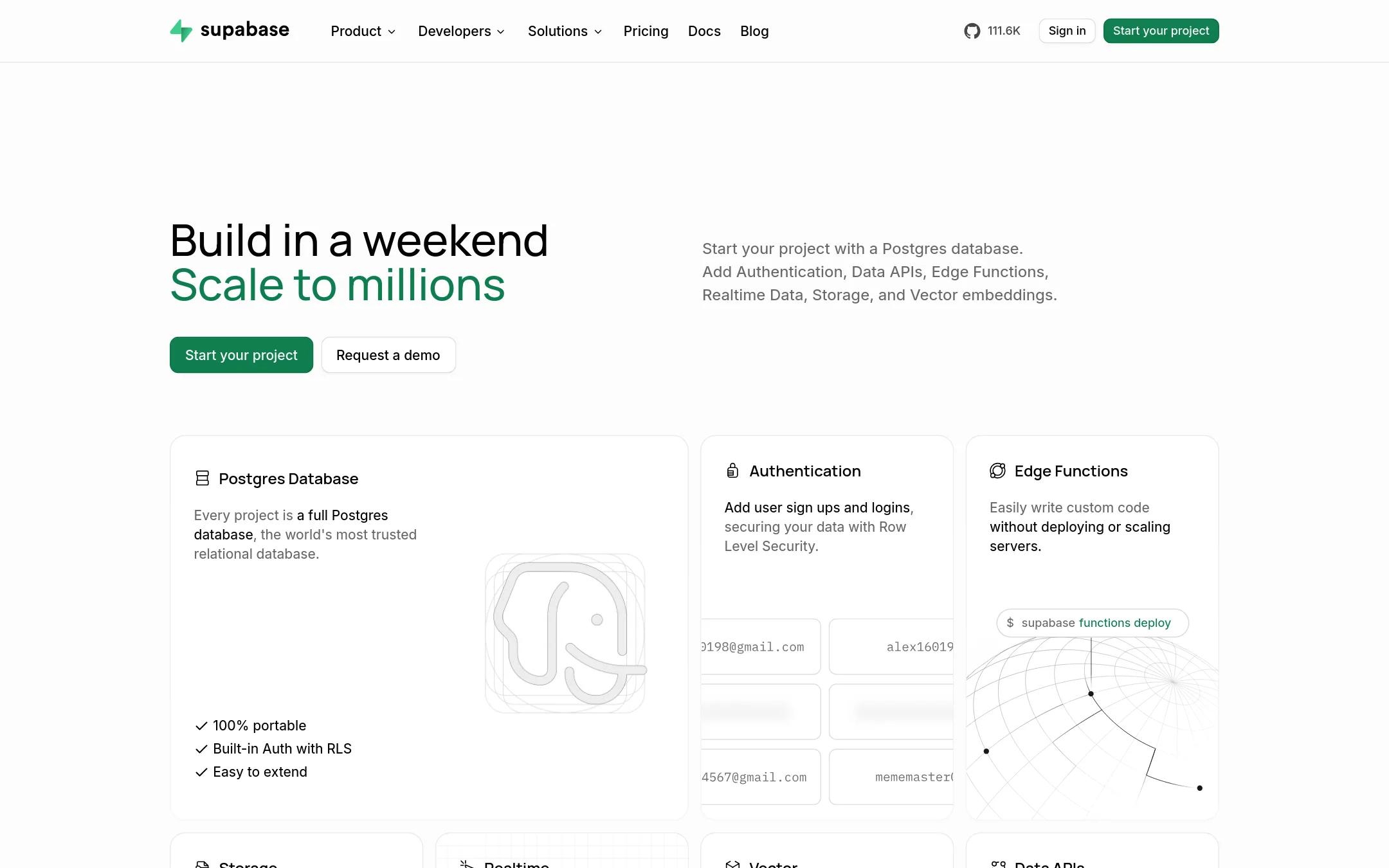
Supabase gives you a Postgres database, auth, storage, and realtime APIs out of the box, so you can build a full backend without writing infrastructure code. Choose it instead of Shuttle if you want a managed Postgres-centric platform with a broad feature set and a free tier, rather than a Rust-specific deployment tool.
Where it is strong
- Full Postgres database with built-in auth and Row Level Security
- Instant REST and realtime APIs without writing backend code
- Free tier with 500 MB database and 50,000 monthly active users
Where it falls short
- Not Rust-specific. You write SQL and use their APIs instead of code-driven provisioning
- Free projects pause after 1 week of inactivity, and only 2 active projects allowed
- Pricing:
- Free plan includes 500 MB database, 5 GB egress, and 50,000 MAU. Pro starts at $25/month plus $10/month compute credit, with usage-based overages.
See more comparisons in Developer Tools alternatives.
FAQ
Questions about Shuttle alternatives
Which alternative is best if I need a managed database with auth?
Supabase is the strongest choice. It gives you a full Postgres database, built-in auth, and realtime APIs out of the box. You get a free tier with 500 MB database and 50,000 monthly active users.
What if I need to deploy apps in languages other than Rust?
Fly.io and Heroku both support any language. Fly.io runs hardware-isolated VMs that boot in under a second, while Heroku uses buildpacks for many languages. Railway also deploys any repo with auto-config.
Which platform has the most predictable pricing?
Fly.io bills per second, so costs drop to zero when machines stop. Heroku has simple tiered pricing starting at $25/month for Standard-1X. DigitalOcean App Platform does not publish pricing on its site.
Can I use these alternatives for AI or high-performance workloads?
Google Cloud HPC is designed for GPU and TPU workloads. Fly.io can run agent workloads on fast VMs. Shuttle itself is not built for raw compute, so choose these if you need heavy processing.
Do any of these alternatives offer a free tier?
Supabase has a free plan with 500 MB database and 50,000 MAU. Heroku has Eco and Basic tiers at lower or no cost. Railway offers a 30-day free trial with $5 credits. Others like Fly.io have no free tier listed.
Last updated October 19, 2026.