Adyen alternatives
12 products compared · 1 verified · Updated October 9, 2026
The short answer
For most businesses, Stripe is the strongest all-around alternative to Adyen, especially for startups and SaaS companies that want a developer-friendly platform. GoCardless is the best choice if you need automated bank debit payments for subscriptions or invoices at lower fees than cards. Checkout.com suits enterprises and marketplaces that want local acquiring in many countries and flexible pricing models.
Your shortlist, at a glance.
Read the comparisons ↓| Product | Best for | Pricing |
|---|---|---|
 WhopPayments infrastructure for checkout, subscription billing, embedded payments and global payouts. WhopPayments infrastructure for checkout, subscription billing, embedded payments and global payouts. | SaaS teams, agencies, ecommerce brands and platforms that want self-serve checkout, subscription billing and global payouts on published, per-transaction pricing. | From 2.7% + $0.30 |
 StripeEconomic infrastructure for the internet. StripeEconomic infrastructure for the internet. | Startups and SaaS companies that want to launch quickly with flexible billing models and a large set of payment methods. | From 2% + ₹200 cap |
 Checkout.comUnified payments platform for enterprises and marketplaces. Checkout.comUnified payments platform for enterprises and marketplaces. | Enterprise merchants and marketplaces that need flexible pricing models and local acquiring across Europe, North America, the Middle East, and Asia-Pacific. | Custom quote |
 BraintreePayments infrastructure for online businesses BraintreePayments infrastructure for online businesses | Online businesses in the US that want PayPal, Venmo, and card payments from a single platform. | Not published |
 WorldpayUnleash Your Payments Potential with global commerce technology WorldpayUnleash Your Payments Potential with global commerce technology | Small to enterprise businesses that want a well-established processor with transparent card pricing and strong fraud and optimization features. | Custom quote |
 MollieOnline and in-person payments built for businesses of every size MollieOnline and in-person payments built for businesses of every size | Small to mid-sized European e-commerce businesses that want straightforward payment processing with no lock-in contracts. | From 1.80% + €0.25 |
 SquarePayments, point of sale and online checkout for businesses of every size. SquarePayments, point of sale and online checkout for businesses of every size. | Small to mid-sized businesses, especially retailers and restaurants, that need a simple, integrated payments and point-of-sale solution. | Not published |
 RazorpayIndia's only full-stack financial solutions company for businesses. RazorpayIndia's only full-stack financial solutions company for businesses. | Indian and US startups and growing businesses that want pay-as-you-go card processing with no setup fees and quick go-live. | From 2.7% + $0.30 |
 GoCardlessWe’re building the world’s bank payment network. GoCardlessWe’re building the world’s bank payment network. | Subscription businesses and invoice-based companies in the US and UK that want automated bank debit payments at lower fees than cards. | From 0.5% + $0.05 |
 PaddleMerchant of Record for SaaS subscriptions, payments and global tax compliance PaddleMerchant of Record for SaaS subscriptions, payments and global tax compliance | SaaS and digital product businesses that want a merchant of record to manage global tax compliance and payments without building a finance operations team. | 5% + 50¢ per checkout |
 PayPalThe smarter way to pay, send money and earn rewards securely PayPalThe smarter way to pay, send money and earn rewards securely | Small businesses and individuals in India who need a straightforward way to send, request, and accept payments online. | Not published |
 Authorize.netFinance & Accounting Authorize.netFinance & Accounting | Small U.S.-based businesses that need straightforward credit card, eCheck, and recurring billing without complex global payment needs. | $25/mo + 2.9% + 30¢ |
- WhopFrom 2.7% + $0.30SaaS teams, agencies, ecommerce brands and platforms that want self-serve checkout, subscription billing and global payouts on published, per-transaction pricing.
- StripeFrom 2% + ₹200 capStartups and SaaS companies that want to launch quickly with flexible billing models and a large set of payment methods.
- Checkout.comCustom quoteEnterprise merchants and marketplaces that need flexible pricing models and local acquiring across Europe, North America, the Middle East, and Asia-Pacific.
- BraintreeNot publishedOnline businesses in the US that want PayPal, Venmo, and card payments from a single platform.
- WorldpayCustom quoteSmall to enterprise businesses that want a well-established processor with transparent card pricing and strong fraud and optimization features.
- MollieFrom 1.80% + €0.25Small to mid-sized European e-commerce businesses that want straightforward payment processing with no lock-in contracts.
- RazorpayFrom 2.7% + $0.30Indian and US startups and growing businesses that want pay-as-you-go card processing with no setup fees and quick go-live.
- GoCardlessFrom 0.5% + $0.05Subscription businesses and invoice-based companies in the US and UK that want automated bank debit payments at lower fees than cards.
- Paddle5% + 50¢ per checkoutSaaS and digital product businesses that want a merchant of record to manage global tax compliance and payments without building a finance operations team.
- PayPalNot publishedSmall businesses and individuals in India who need a straightforward way to send, request, and accept payments online.
- Authorize.net$25/mo + 2.9% + 30¢Small U.S.-based businesses that need straightforward credit card, eCheck, and recurring billing without complex global payment needs.
Pricing is a snapshot from each product’s website on the date shown; check the site before you decide. A verified badge means a verified listing, not a ranking.
About Adyen and its alternatives
Adyen is an enterprise fintech platform for unified payments, data, and financial products. It is known for its global scale, 99.999% uptime, and support for 150+ currencies and 200+ local payment methods. Adyen charges per transaction with no setup or monthly fees, and pricing is based on interchange++ for transparency.
When comparing alternatives, weigh the pricing structure: some charge flat rates, others use interchange++ or quote-based models. Consider the regions and currencies each provider supports, the integrations and developer tools available, and the level of support offered. Also check contract terms: some require no lock-in, while others may have minimums or setup fees.
Explore the alternatives
1.WhopVerified
Best for: SaaS teams, agencies, ecommerce brands and platforms that want self-serve checkout, subscription billing and global payouts on published, per-transaction pricing.
- Pricing
- From 2.7% + $0.30
- Category
- Finance & Accounting
Whop is payments infrastructure for starting and running an online business, covering checkout, subscription billing, embedded payments for platforms and global payouts, with a payments API, CLI and SDKs in TypeScript, Python and Ruby. Choose it over Adyen if you want self-serve onboarding and published per-transaction pricing, with no minimum invoice threshold or enterprise sales process before you go live.
Where it is strong
- Published pricing from 2.7% + $0.30 per domestic card payment, with no monthly platform fee
- 100+ payment methods across 195 countries and 135+ currencies, with payouts to 200+ countries
- Embedded payments for platforms, with connected accounts, KYC and split payouts built in
Where it falls short
- Billing (0.5%), orchestration (0.8%) and tax (2%) are charged on top of the base card rate when enabled
- International cards (+1.5%) and currency conversion (+1%) add to the base rate
- Pricing:
- From 2.7% + $0.30 per domestic card payment, with no monthly platform fee. Billing (0.5%), orchestration (0.8%) and tax (2%) are charged on top when enabled; international cards add 1.5% and currency conversion 1%.
2.Stripe
Best for: Startups and SaaS companies that want to launch quickly with flexible billing models and a large set of payment methods.
- Pricing
- From 2% + ₹200 cap
- Category
- Finance & Accounting
Stripe is a broad payments platform that handles online and in-person payments, billing, card issuing, and embedded finance. You would choose it over Adyen when you want a more developer-friendly API, a wider range of no-code tools, and a pricing model that starts with a simple per-transaction rate without enterprise minimums.
Where it is strong
- Developer-friendly APIs and extensive documentation
- Built-in billing, card issuing, and embedded finance tools
- No setup or monthly fees for standard pricing
Where it falls short
- Pricing varies by region and card type, so costs are less predictable
- Dispute fees apply per chargeback, with extra costs for manual responses
- Pricing:
- In India, cards issued domestically cost 2% per transaction for Mastercard and Visa, with domestic debit cards at 0.4% capped to ₹200. International cards cost 3% plus currency conversion fees when applicable.
- Switching from Adyen:
- Moving from Adyen to Stripe requires re-integrating your payment flows and migrating any stored payment methods, but Stripe provides migration guides and consulting partners to help.
3.Checkout.com
Best for: Enterprise merchants and marketplaces that need flexible pricing models and local acquiring across Europe, North America, the Middle East, and Asia-Pacific.
- Pricing
- Custom quote
- Category
- Finance & Accounting
Checkout.com is a unified payments platform for enterprises and marketplaces, offering local acquiring in 45+ countries and 150+ currencies. Choose it over Adyen if you want tailored pricing based on your business profile, with options for flat-rate or interchange++ structures, and a focus on intelligent acceptance and fraud tools.
Where it is strong
- Local acquiring in 45+ countries reduces cross-border fees.
- Intelligent Acceptance AI engine aims to boost conversion.
- No setup or account maintenance fees, with data migration assistance.
Where it falls short
- Pricing requires a sales conversation. No public rates.
- Free processing only for registered charities, not general users.
- Pricing:
- Pricing is not published on the site. It is tailored based on your business profile and risk category, with options for flat-rate or interchange++ fees.
4.Braintree
Best for: Online businesses in the US that want PayPal, Venmo, and card payments from a single platform.
- Pricing
- Not published
- Category
- Finance & Accounting
Braintree is a PayPal-owned payment platform for online businesses that need to accept cards, PayPal, Venmo, and local methods through one integration. Choose it over Adyen if you want tighter PayPal ecosystem ties, including Pay Later and Venmo, and don't need Adyen's broader financial products like issuing or capital.
Where it is strong
- Native PayPal and Venmo support
- Level 1 PCI DSS compliant with SAQ-A checkout
- Sandbox for testing before applying
Where it falls short
- No published pricing, so you must contact sales
- Fewer financial products than Adyen (no issuing or capital)
- Pricing:
- Pricing is not published on the site.
5.Worldpay
Best for: Small to enterprise businesses that want a well-established processor with transparent card pricing and strong fraud and optimization features.
- Pricing
- Custom quote
- Category
- Finance & Accounting
Worldpay is a global payment processor that handles card payments, fraud screening, and payouts for businesses of all sizes. You might choose it over Adyen if you want a simpler, quote-based pricing model and a provider that emphasizes 24/7 support and optimization tools like smart routing and retries.
Where it is strong
- Transparent card payment cost summary before you sign up
- 24/7 customer support included
- Optimization tools like smart routing and intelligent retries
Where it falls short
- No published flat fees, so you must request a quote
- Pricing varies by card type and may include minimum monthly charges
- Pricing:
- Pricing is quote-based and depends on your annual card turnover and average transaction value. The site provides an indicative summary but no fixed rates.
6.Mollie
Best for: Small to mid-sized European e-commerce businesses that want straightforward payment processing with no lock-in contracts.
- Pricing
- From 1.80% + €0.25
- Category
- Finance & Accounting
Mollie is a payment platform for online and in-person payments, aimed at businesses of every size. You would choose it over Adyen if you want simpler, transparent per-transaction pricing without monthly fees and don't need Adyen's broader enterprise financial products like card issuing or capital.
Where it is strong
- No monthly fees or lock-in contracts
- Clear per-transaction pricing for popular European methods
- Volume discounts for high-volume businesses
Where it falls short
- Fewer global payment methods and currencies than Adyen
- No embedded financial products like card issuing or capital
- Pricing:
- Pricing is pay-per-transaction with no monthly fees: EEA consumer Mastercard is 1.80% + €0.25, SEPA Direct Debit is €0.35, and volume pricing is available for processing over €100,000 a month.
- Switching from Adyen:
- Switching from Adyen means re-integrating payment APIs and migrating your transaction history, but Mollie offers standard APIs and checkout components that should cover most use cases.
7.Square
Best for: Small to mid-sized businesses, especially retailers and restaurants, that need a simple, integrated payments and point-of-sale solution.

- Pricing
- Not published
- Category
- Finance & Accounting
Square is a payments and point-of-sale platform for businesses of every size, from small retailers to larger operations. Choose it over Adyen if you want an easy-to-use system that combines card processing, online checkout, and physical POS hardware without the enterprise-level complexity.
Where it is strong
- Simple setup and use for in-person and online payments
- Integrated POS hardware and software
- No monthly fees for basic processing
Where it falls short
- Less suited for complex global enterprise needs
- Pricing details not transparent on the site
- Pricing:
- Pricing is not published on the site.
8.Razorpay
Best for: Indian and US startups and growing businesses that want pay-as-you-go card processing with no setup fees and quick go-live.
- Pricing
- From 2.7% + $0.30
- Category
- Finance & Accounting
Razorpay is a full-stack payment platform built for businesses operating in India and the US, offering payment processing, links, and pages. Choose it over Adyen if you need a simpler, faster-to-integrate solution focused on these markets rather than Adyen's global enterprise scale.
Where it is strong
- No setup or monthly fees. Pay only for successful transactions.
- Volume-based discounts available on custom and enterprise plans.
- Includes payment links and payment pages for quick collection.
Where it falls short
- Limited to US and India, not a global solution like Adyen.
- No published pricing for enterprise or custom plans. Requires sales contact.
- Pricing:
- In the US, card transactions are 2.70% + $0.30, with international cards at +1.2% and ACH at 0.5% capped at $5.
9.GoCardless
Best for: Subscription businesses and invoice-based companies in the US and UK that want automated bank debit payments at lower fees than cards.
- Pricing
- From 0.5% + $0.05
- Category
- Finance & Accounting
GoCardless handles bank-to-bank payments, not card payments. It is a good fit if you collect recurring invoices, subscriptions, or instalments and want lower fees than cards. Choose it over Adyen when you don't need card processing and want to automate Direct Debit or ACH pulls.
Where it is strong
- Lower fees than card payments, with a per-transaction cap.
- Automates recurring billing and reduces failed payments with Success+.
- Integrates with 350+ tools like Xero, Sage, and Salesforce.
Where it falls short
- No card processing. Only bank debits and instant bank payments.
- International coverage limited to 30+ countries and 8 currencies.
- Pricing:
- In the US, Standard is 0.5% + $0.05 per transaction with a $5 cap, Advanced is 0.75% + $0.05 with a $6.25 cap, and Pro is 0.9% + $0.05 with a $7 cap. International fees are 1.5% to 1.9% + $0.05.
- Switching from Adyen:
- Switching from Adyen means moving from card-based payments to bank debits, so you'll need to update your checkout flow and customer payment methods.
10.Paddle
Best for: SaaS and digital product businesses that want a merchant of record to manage global tax compliance and payments without building a finance operations team.
- Pricing
- 5% + 50¢ per checkout
- Category
- Finance & Accounting
Paddle is a merchant of record that handles payments, tax, and compliance for digital products, so you don't have to deal with sales tax or VAT filings yourself. Choose it over Adyen if you sell SaaS or digital goods globally and want to offload tax and regulatory burdens rather than manage them in-house.
Where it is strong
- Handles global sales tax and VAT compliance for you
- All-inclusive pricing with no monthly or migration fees
- Includes fraud protection and buyer support
Where it falls short
- Only for digital products, not physical goods or in-person payments
- Higher percentage fee than Adyen's interchange++ pricing
- Pricing:
- Pricing is 5% + 50¢ per Checkout transaction, with custom pricing for high-volume or low-value transactions.
- Switching from Adyen:
- Moving from Adyen to Paddle means migrating your subscription billing and payment data, but Paddle offers migration support and no lock-in periods.
11.PayPal
Best for: Small businesses and individuals in India who need a straightforward way to send, request, and accept payments online.
- Pricing
- Not published
- Category
- Finance & Accounting
PayPal is a widely recognized payment platform for sending and requesting money, shopping online, and managing transactions in one app. Choose it over Adyen if you're a small business or individual that wants a simple, consumer-friendly payment tool without enterprise-level customization.
Where it is strong
- Buyer Protection for eligible purchases
- Encrypted transactions, no full financial info shared with merchants
- Send and request payments by name, email, or phone
Where it falls short
- No published pricing or transparent fee structure
- Less suited for complex enterprise payment orchestration
- Pricing:
- Pricing is not published on the site.
12.Authorize.net
Best for: Small U.S.-based businesses that need straightforward credit card, eCheck, and recurring billing without complex global payment needs.
- Pricing
- $25/mo + 2.9% + 30¢
- Category
- Finance & Accounting
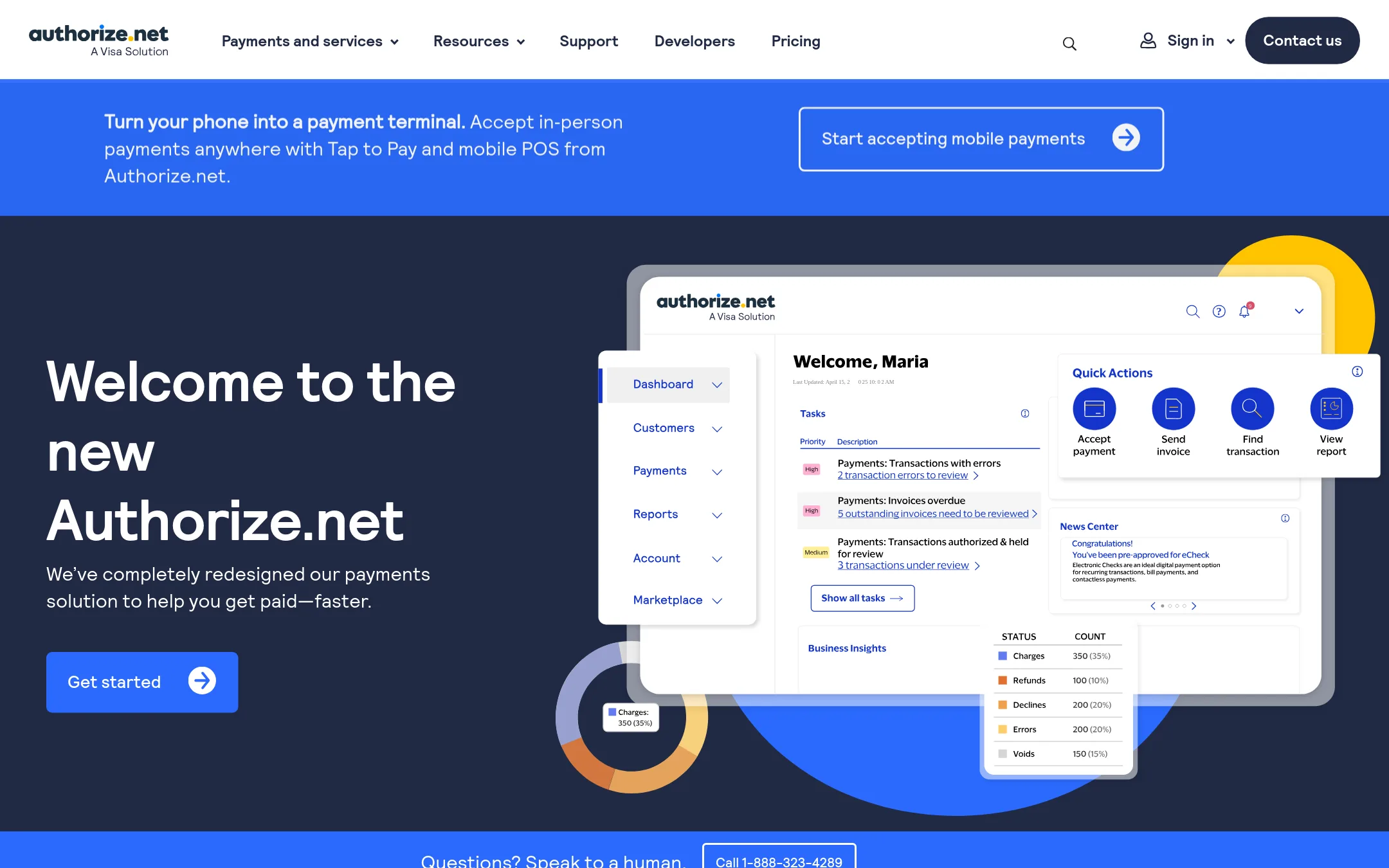
Authorize.net is a payment gateway and merchant account provider aimed at small businesses. Choose it over Adyen if you want a simple, U.S.-focused setup with transparent flat-rate pricing and don't need Adyen's global scale or embedded finance products.
Where it is strong
- Flat-rate pricing with no setup or termination fees.
- Built-in fraud detection tools and 24/7 live support.
- Supports credit cards, debit cards, eChecks, and digital wallets like Apple Pay and Google Pay.
Where it falls short
- eCheck only available for U.S.-based businesses.
- No global acquiring or multi-currency settlement like Adyen offers.
- Pricing:
- The all-in-one plan is $25 per month plus 2.9% + 30¢ per transaction. Gateway-only is 10¢ per transaction plus a 10¢ daily batch fee. ECheck is 0.75%.
- Switching from Adyen:
- Switching from Adyen involves setting up a new merchant account and integrating the Authorize.net API, but you can keep your existing payment methods.
How we chose and when this was updated
Each entry is written from the product's published site and pricing pages, using only the facts provided. Verified listings are marked, and sponsored placements are labelled and do not change the write-up. Last updated October 9, 2026.
See more comparisons in Finance & Accounting alternatives.
Questions about Adyen alternatives
What are the main differences between Adyen and Stripe?
Stripe is more developer-friendly with extensive APIs and built-in billing tools, while Adyen offers a broader enterprise platform with financial products like card issuing and capital. Stripe has a larger ecosystem of integrations and is often easier to start with, but pricing can be complex with add-on fees. Adyen uses interchange++ pricing for transparency and has no setup or monthly fees.
Which alternative is best for subscription businesses?
GoCardless is the best fit for subscription businesses because it automates bank debit payments at lower fees than cards. It supports recurring invoices and instalments, and integrates with tools like Xero and Salesforce. Stripe also has strong subscription billing tools, but GoCardless is more cost-effective for bank-to-bank payments.
Are there alternatives with transparent pricing?
Yes, GoCardless publishes clear per-transaction fees with caps, and Mollie offers simple per-transaction rates without monthly fees. Authorize.net has a flat-rate plan at $25 per month plus 2.9% + 30¢ per transaction. Stripe and Razorpay also show standard rates, but some advanced features require custom pricing.
Which provider is best for global payments?
Checkout.com offers local acquiring in 45+ countries and supports 150+ currencies, making it strong for global enterprises. Stripe also has global reach with 135+ currencies and payment methods. Adyen itself supports 150+ currencies and 200+ local payment methods, but if you want an alternative, Checkout.com is the closest in scale.
Do any alternatives handle tax compliance for digital products?
Paddle is a merchant of record that handles global sales tax and VAT compliance for you, so you don't have to file taxes yourself. It charges 5% + 50¢ per transaction and is only for digital products. This is a key advantage if you sell SaaS or digital goods and want to offload tax burdens.