
Sumo Logic alternatives
12 products compared · Updated October 31, 2026
The short answer
For log management and observability, Datadog and New Relic are strong alternatives, with Datadog best for engineering teams wanting a unified metrics, traces, and logs platform, and New Relic offering a generous free tier and transparent per-GB pricing. For security-focused SIEM, Splunk suits large enterprises needing petabyte-scale log management and flexible deployment, while Graylog is a cost-effective self-managed option for lean teams. Choose based on whether you prioritize observability breadth, security depth, or budget transparency.
Your shortlist, at a glance
Read the comparisons ↓ SplunkFrom $15/host/moLarge enterprises that need petabyte-scale log management, advanced SIEM/SOAR capabilities, and flexible deployment options including on-prem or air-gapped environments.
 DatadogNot publishedEngineering teams that want a single platform for metrics, traces, logs, and security across cloud and on-premises environments.
 ElasticsearchNot publishedTeams that want a self-managed or hosted search database for log analytics and are comfortable assembling their own SIEM features.
 New RelicFrom $10/mo + $0.40/GBEngineering teams that want full-stack observability with APM, infrastructure monitoring, and AI-assisted troubleshooting.
 DynatraceFrom $7/mo per hostTeams that need unified application and infrastructure observability with AI-powered root cause analysis, not just log management.
- LLogz.ioNot publishedTeams already using open-source tools like ELK Stack or Prometheus who want a fully managed alternative with built-in AI.
- GGraylogFrom $15k/yrLean security and operations teams that want a self-managed or cloud SIEM with transparent annual pricing and data lake capabilities.
 Rapid7Custom quoteSecurity teams that need a full XDR and SIEM platform with managed detection and response services.
 IBM watsonxNot publishedLarge enterprises that need governed AI agent lifecycle management across hybrid cloud environments.
Microsoft Azure CycleCloudConsumption-basedTeams running HPC workloads on Azure that need automated cluster deployment and scaling.
 CrowdStrikePer endpoint, customSecurity teams that need endpoint protection, threat intelligence, and AI-driven incident response across a unified platform.
- LLogRhythmNot publishedSecurity operations teams that need UEBA and agent behavior analytics to catch insider threats and AI-driven attacks.
About Sumo Logic and its alternatives
Sumo Logic is a cloud-native log management and observability platform with AI-powered Cloud SIEM. It is known for log analytics, monitoring, and security features like Cloud SIEM and SOAR, with flexible licensing and over 450 integrations.
When comparing alternatives, weigh pricing structure (per-host, per-GB, or annual contracts), deployment options (cloud, self-managed, or on-prem), integration breadth, and support for security features like SIEM and SOAR. Also consider contract terms, such as monthly versus annual commitments, and whether you need a managed service or are comfortable self-hosting.
Explore the alternatives
- From $15/host/mo
1.Splunk
Best for: Large enterprises that need petabyte-scale log management, advanced SIEM/SOAR capabilities, and flexible deployment options including on-prem or air-gapped environments.
- Pricing
- From $15/host/mo
- Category
- Analytics & Data
Splunk is a mature enterprise platform for security and observability that can handle petabyte-scale data across cloud, on-prem, and air-gapped environments. Choose it over Sumo Logic if you need deep customization, a broad integration ecosystem, or the ability to run in private clouds with strict data residency requirements.
Where it is strong
- Handles petabyte-scale data with federated search and tiered storage to control costs
- Over 2,000 integrations on Splunkbase for cloud, SaaS, OT, and IoT data
- Flexible deployment: SaaS, self-managed, or on-prem, including air-gapped environments
Where it falls short
- Pricing is complex with multiple models (activity, workload, ingest) that can be hard to estimate
- Advanced security features like SOAR and UEBA are only in higher-tier editions, requiring quotes
- Pricing:
- Splunk offers activity-based, workload, or ingest pricing for the platform, with Observability Cloud starting at $15 per host per month billed annually. Security editions (Essentials and Premier) require a quote.
- Switching from Sumo Logic:
- Moving from Sumo Logic to Splunk means re-architecting your log pipelines and rewriting queries in SPL, plus a significant learning curve for your team.
- Not published
2.Datadog
Best for: Engineering teams that want a single platform for metrics, traces, logs, and security across cloud and on-premises environments.
- Pricing
- Not published
- Category
- Analytics & Data
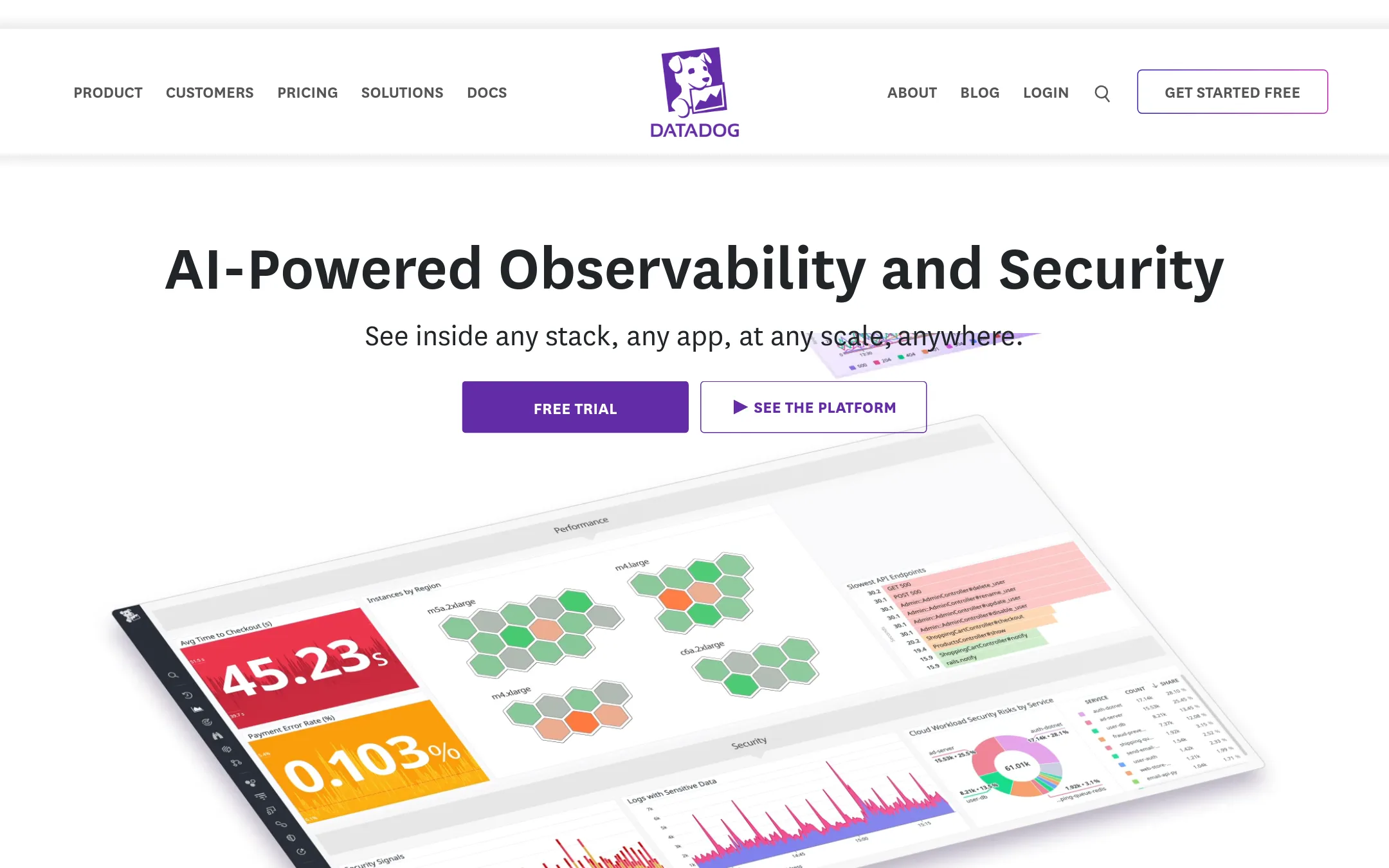
Datadog is a broad observability platform that covers infrastructure, applications, logs, and security in one place. Choose it over Sumo Logic if you need deep infrastructure monitoring, APM, and real user monitoring alongside log management, rather than a logs-first SIEM focus.
Where it is strong
- Unified view of metrics, traces, logs, and security events
- Strong integrations with major cloud providers and Kubernetes
- Advanced AI features like Bits AI for investigation and chat
Where it falls short
- Pricing can get complex with per-host and per-volume charges
- Some products are unavailable on the US-FED site
- Pricing:
- Pricing is not published on the site.
- Not published
3.Elasticsearch
Best for: Teams that want a self-managed or hosted search database for log analytics and are comfortable assembling their own SIEM features.
- Pricing
- Not published
- Category
- Analytics & Data
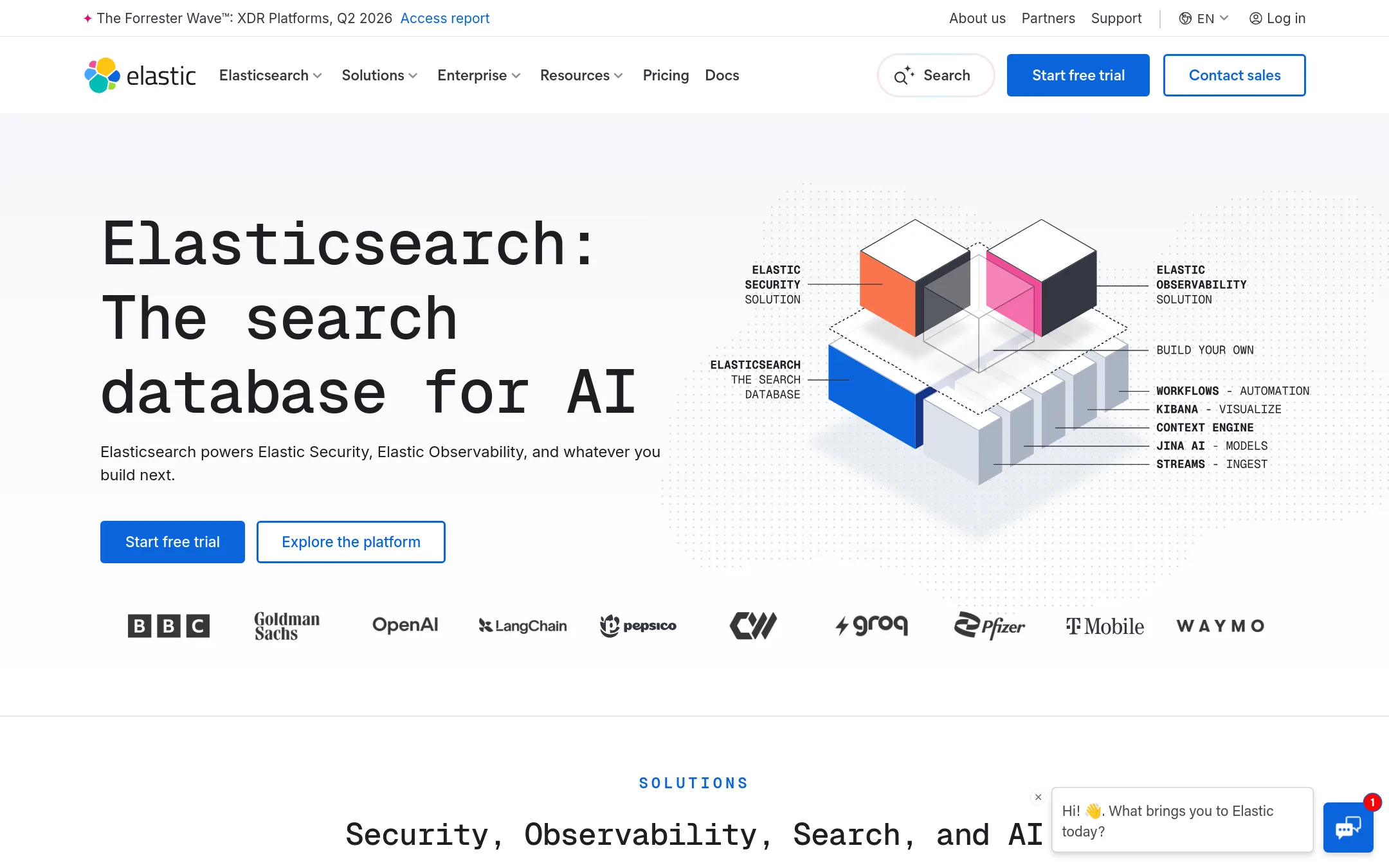
Elasticsearch is a general-purpose search and analytics database that you can run yourself or use as a hosted service. It handles logs, metrics, and security data, but it is not a dedicated SIEM like Sumo Logic. Choose it if you want to build your own logging pipeline and already have the engineering capacity to manage it.
Where it is strong
- Open source and self-managed options give full control over deployment.
- Can handle search, observability, and security in one platform.
- Strong vector search capabilities for AI applications.
Where it falls short
- Not a turnkey SIEM. You must configure detection rules and workflows yourself.
- Requires significant setup and maintenance compared to Sumo Logic's managed service.
- Pricing:
- Pricing is not published on the site. You must contact sales or start a trial.
- Switching from Sumo Logic:
- Moving from Sumo Logic means rebuilding your log ingestion, alerting, and dashboards in Elasticsearch, and you will need to manage the infrastructure yourself.
- From $10/mo + $0.40/GB
4.New Relic
Best for: Engineering teams that want full-stack observability with APM, infrastructure monitoring, and AI-assisted troubleshooting.

- Pricing
- From $10/mo + $0.40/GB
- Category
- Analytics & Data
New Relic is an AI-powered observability platform that correlates telemetry across your entire stack, including logs, metrics, and traces. Choose it over Sumo Logic if you need deep application performance monitoring and AI-driven incident remediation, not just log management and SIEM.
Where it is strong
- Generous free tier with 100 GB of data ingest per month.
- Unified platform for logs, metrics, and traces with AI-powered insights.
- Transparent per-GB pricing with no user limits on Pro and Enterprise.
Where it falls short
- Core user permissions cost extra, and full platform users are limited to 5 on Standard.
- SIEM capabilities are not as central as Sumo Logic's Cloud SIEM offering.
- Pricing:
- Free tier includes 100 GB of data ingest per month. Paid plans start at $0.40/GB beyond the free limit, with full platform users from $10 for the first user and $99 per additional user on Standard, or $349/user on Pro with annual commitment.
- Switching from Sumo Logic:
- Moving from Sumo Logic involves migrating your log ingestion pipelines and dashboards to New Relic's telemetry model, which may require reconfiguring agents and queries.
- From $7/mo per host
5.Dynatrace
Best for: Teams that need unified application and infrastructure observability with AI-powered root cause analysis, not just log management.
- Pricing
- From $7/mo per host
- Category
- Analytics & Data
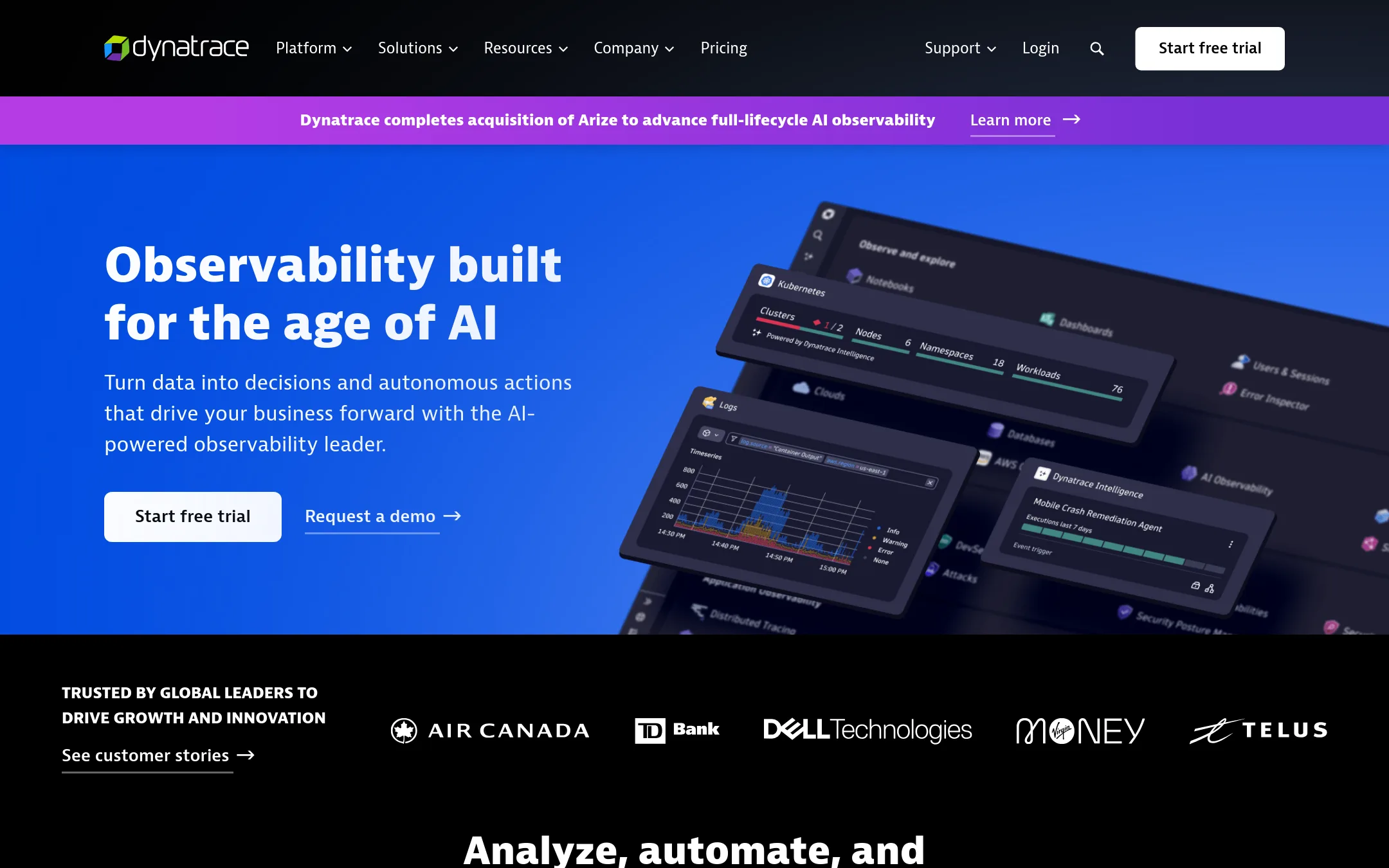
Dynatrace is a full-stack observability platform that combines application monitoring, infrastructure monitoring, and log analytics with AI-driven root cause analysis. You would choose it over Sumo Logic if you need deep application performance monitoring and tracing alongside log management, rather than a logs-first SIEM approach.
Where it is strong
- Full-stack observability: APM, infrastructure, logs, and digital experience in one platform.
- AI-powered root cause analysis with deterministic insights, not just log correlation.
- Flexible commitment-based pricing with no overage premiums and real-time usage controls.
Where it falls short
- Pricing is more complex than Sumo Logic's, with multiple per-host and per-GiB components.
- Log analytics features are an add-on, not the core focus, so it may be overkill for pure log management needs.
- Pricing:
- Pricing is commitment-based: Foundation & Discovery at $7/mo per host, Infrastructure Monitoring at $29/mo per host, Full-Stack Monitoring at $58/mo per 8 GiB host, and Log Analytics at $0.20 per GiB ingested plus additional retention and query costs.
- Switching from Sumo Logic:
- Moving from Sumo Logic involves reconfiguring log ingestion and queries to Dynatrace's DQL, and you'll need to map your SIEM workflows to Dynatrace's security capabilities, which are less prominent.
- LNot published
6.Logz.io
Best for: Teams already using open-source tools like ELK Stack or Prometheus who want a fully managed alternative with built-in AI.
- Pricing
- Not published
- Category
- Other
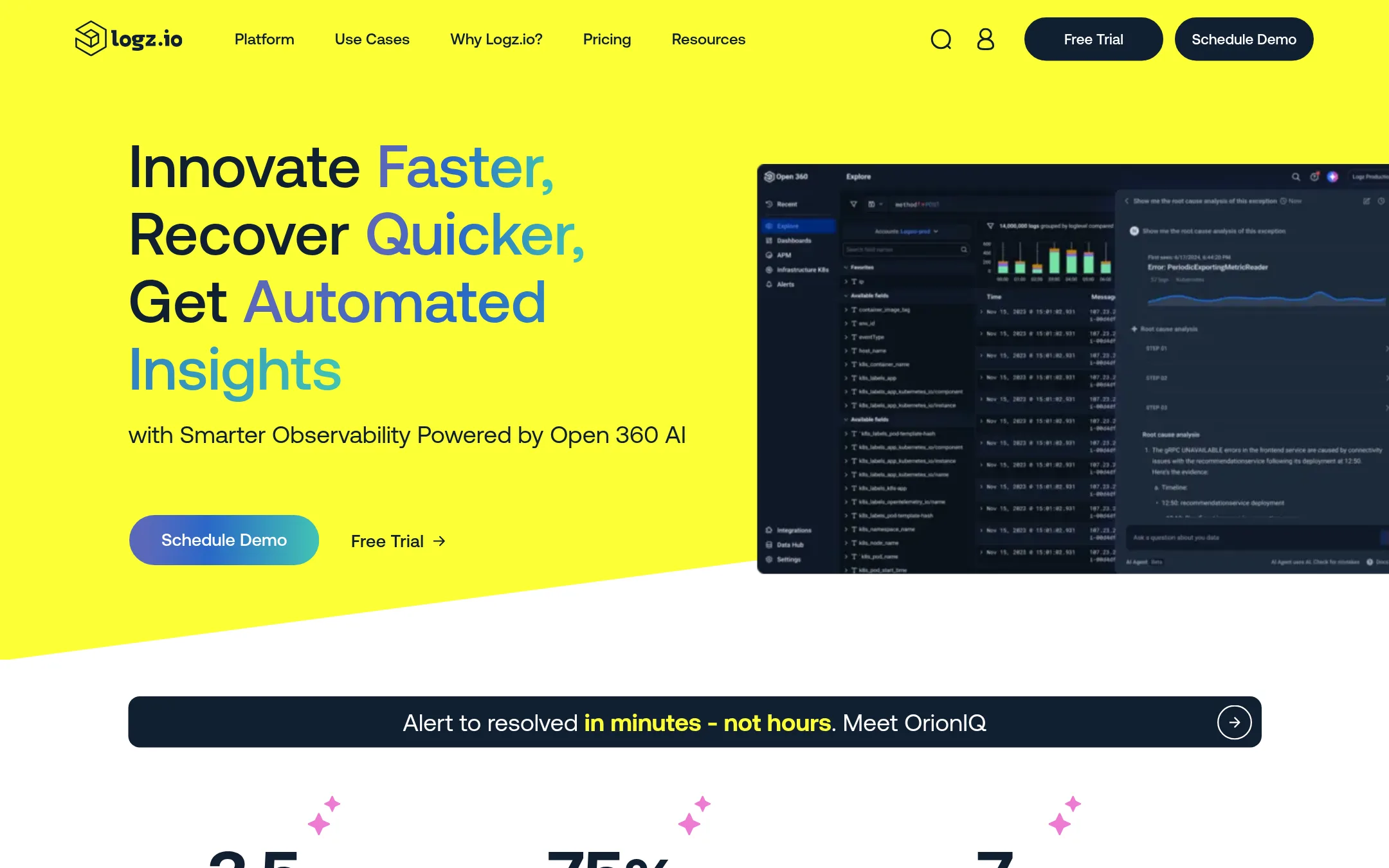
Logz.io is a managed observability platform that unifies logs, metrics, and traces with AI-powered insights. Choose it over Sumo Logic if you want a platform that feels familiar to ELK Stack or Prometheus users and emphasizes AI-assisted root cause analysis.
Where it is strong
- Unified logs, metrics, and traces in one platform
- AI Agent for natural language queries and root cause analysis
- Easy migration from ELK Stack or Prometheus
Where it falls short
- Pricing details are not transparent without contacting sales
- May lack some advanced SIEM features that Sumo Logic offers
- Pricing:
- Pricing is not published on the site. Only add-on retention costs are shown, such as $0.03 per additional day for hot retention.
- GFrom $15k/yr
7.Graylog
Best for: Lean security and operations teams that want a self-managed or cloud SIEM with transparent annual pricing and data lake capabilities.
- Pricing
- From $15k/yr
- Category
- Other
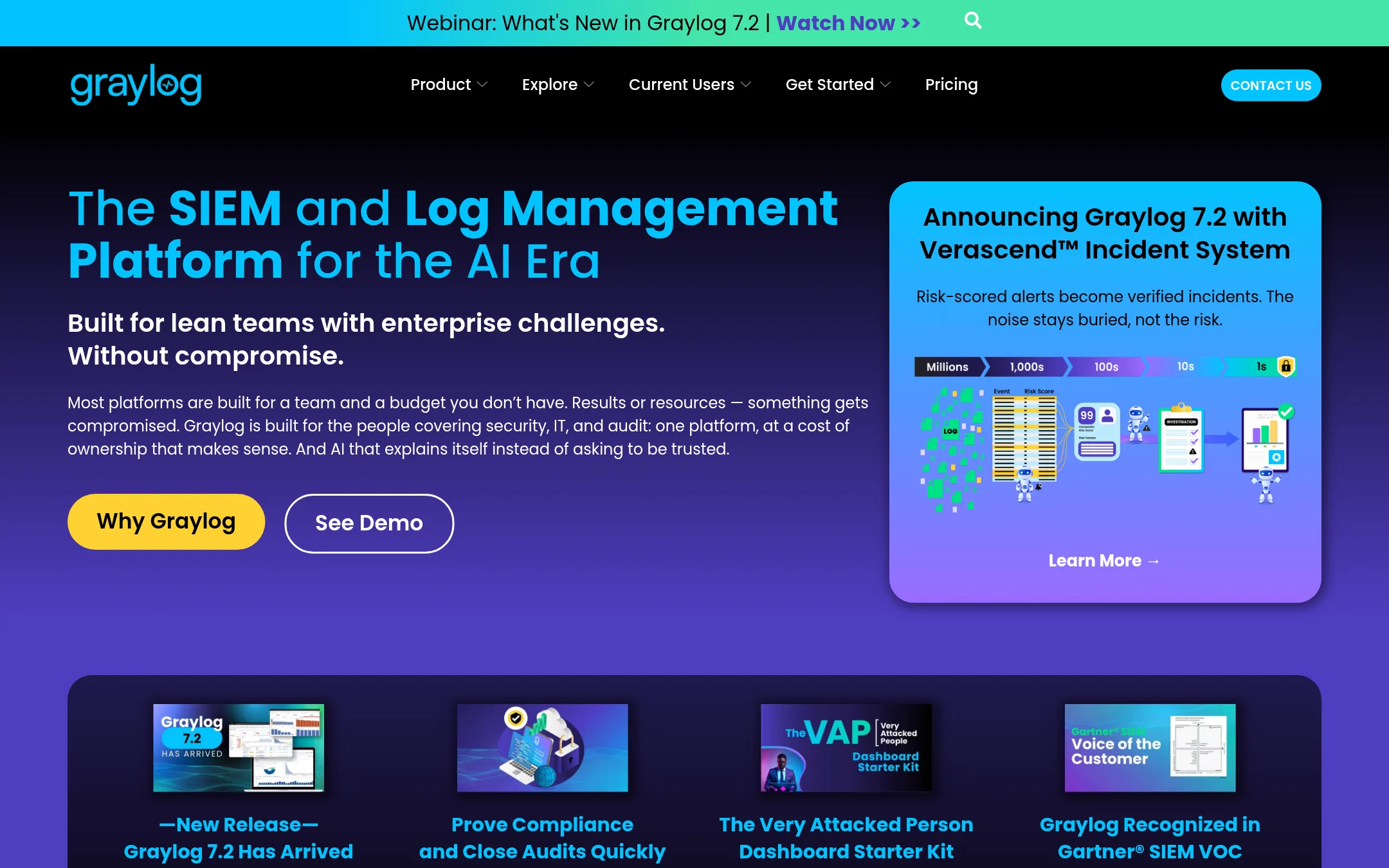
Graylog is an open-source-based log management and SIEM platform that combines log collection, search, alerting, and security analytics in one system. You would choose it over Sumo Logic if you need a self-managed option with predictable yearly pricing, or if you want to avoid per-ingest costs by routing data to a built-in data lake.
Where it is strong
- Open-source core with no volume restrictions in the free tier
- Built-in data lake routing to control licensing costs
- AI features show evidence and reasoning, not just verdicts
Where it falls short
- Enterprise and Security editions require annual contracts, not monthly
- Self-managed deployment requires your own infrastructure and maintenance
- Pricing:
- Graylog Open is free. Enterprise starts at $15,000/year for 10 GB/day. Security starts at $18,000/year.
- Switching from Sumo Logic:
- Moving from Sumo Logic involves exporting your log data and re-creating dashboards and alerts in Graylog, which supports common ingestion formats like Syslog and GELF.
- Custom quote
8.Rapid7
Best for: Security teams that need a full XDR and SIEM platform with managed detection and response services.
- Pricing
- Custom quote
- Category
- Security & Privacy
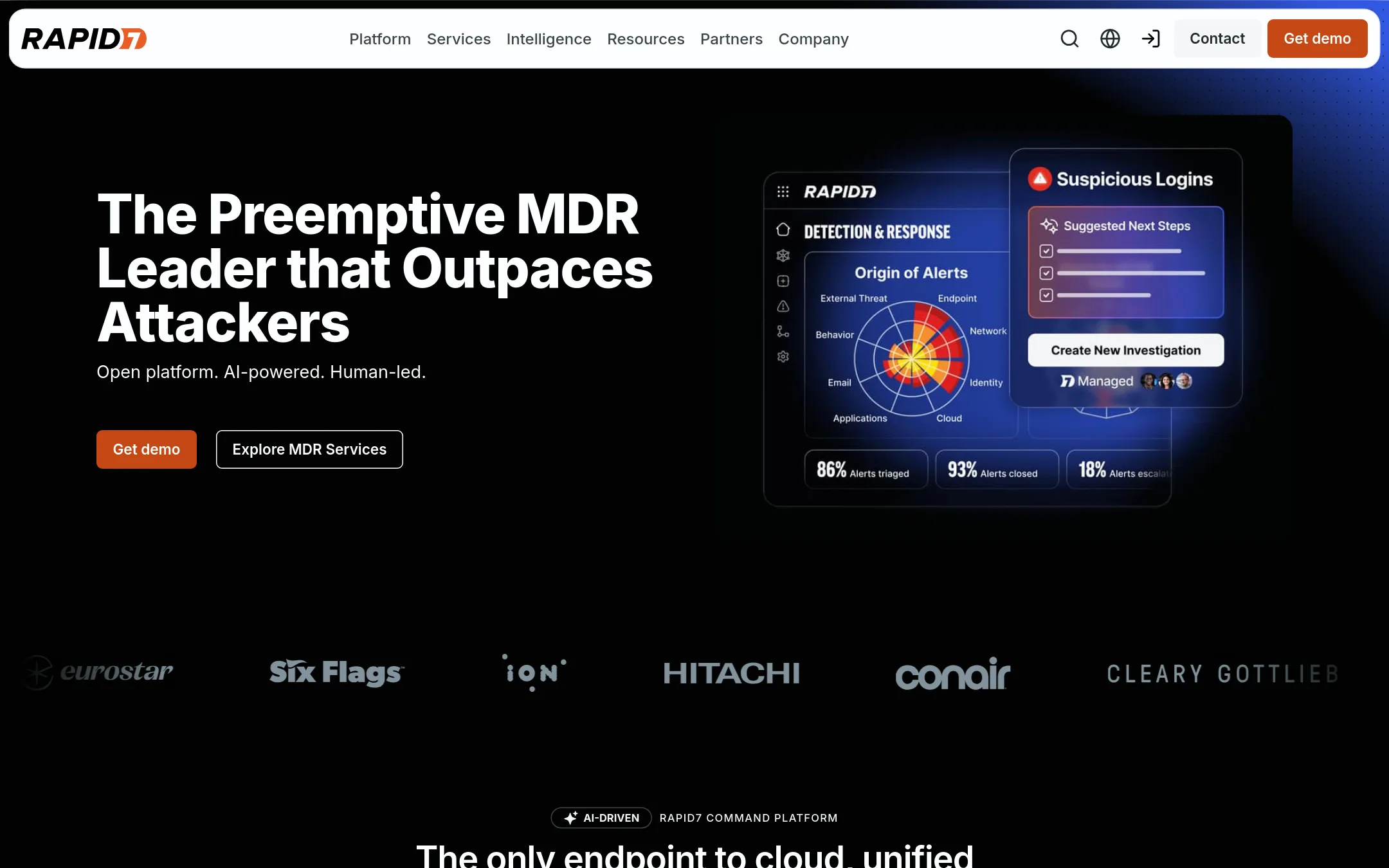
Rapid7 is a unified cybersecurity platform that covers MDR, SIEM, vulnerability management, and cloud security. Choose it over Sumo Logic if you want a security-first tool with 24/7 managed detection and response, not just log analytics.
Where it is strong
- 24/7 MDR with unlimited incident response
- Unified view from endpoint to cloud
- Recognized as a leader in multiple analyst reports
Where it falls short
- Pricing not transparent. Requires sales contact
- May be overkill for teams that only need log management
- Pricing:
- Pricing is not published on the site. Contact sales for quotes.
- Switching from Sumo Logic:
- Moving from Sumo Logic involves migrating your log sources and SIEM rules to Rapid7's platform, which may require professional services.
- Not published
9.IBM watsonx
Best for: Large enterprises that need governed AI agent lifecycle management across hybrid cloud environments.
- Pricing
- Not published
- Category
- AI & Machine Learning
IBM watsonx is an enterprise AI platform for building, running, and governing AI agents and workloads across hybrid environments. Choose it over Sumo Logic if your priority is AI orchestration and governance rather than log analytics and SIEM.
Where it is strong
- Governs AI agents across their full lifecycle, regardless of where they're built or run.
- Integrates with existing data architecture to provide real-time data for AI decisions.
- Reduces development timelines by up to 40% with AI-assisted automation.
Where it falls short
- No log management or SIEM capabilities like Sumo Logic offers.
- Pricing is not transparent. Requires contacting sales.
- Pricing:
- Pricing is not published on the site.
- Consumption-based
10.Microsoft Azure CycleCloud
Best for: Teams running HPC workloads on Azure that need automated cluster deployment and scaling.
- Pricing
- Consumption-based
- Category
- Developer Tools
Microsoft Azure CycleCloud is an HPC orchestration tool for managing and scaling compute clusters in Azure. Choose it over Sumo Logic when you need to run large-scale simulations, rendering, or other high-performance computing workloads, not log analysis or security monitoring.
Where it is strong
- Integrates natively with Azure services like Virtual Machines and Batch.
- Automates cluster provisioning and scaling based on workload demands.
- Supports popular schedulers such as Slurm and PBS Pro.
Where it falls short
- Requires Azure expertise to set up and manage effectively.
- No built-in log analytics or SIEM capabilities like Sumo Logic.
- Pricing:
- Pricing is not published on the site. Azure uses a consumption-based model where you pay only for the cloud resources you use.
- Per endpoint, custom
11.CrowdStrike
Best for: Security teams that need endpoint protection, threat intelligence, and AI-driven incident response across a unified platform.

- Pricing
- Per endpoint, custom
- Category
- Security & Privacy
CrowdStrike is an AI-native security platform focused on stopping breaches across endpoints, cloud, identity, and data. Choose it over Sumo Logic if your priority is proactive threat prevention and response rather than log management and observability.
Where it is strong
- AI-native platform with real-time threat detection and response
- Unified coverage across endpoints, cloud, identity, and data
- Strong threat intelligence backed by elite research and hunting
Where it falls short
- Pricing not transparently published, requires contact
- Not a dedicated log management tool like Sumo Logic for deep observability
- Pricing:
- In the United States, pricing is per endpoint per year or per month, with plans like Falcon Go, Falcon Pro, and Falcon Enterprise. Exact prices are not listed on the page.
- LNot published
12.LogRhythm
Best for: Security operations teams that need UEBA and agent behavior analytics to catch insider threats and AI-driven attacks.
- Pricing
- Not published
- Category
- Other
LogRhythm, now part of Exabeam, is a security-focused SIEM platform that uses behavioral analytics to detect threats from both human users and AI agents. Choose it over Sumo Logic if your priority is insider threat detection and AI-driven investigation rather than general log management and observability.
Where it is strong
- Behavioral analytics for humans and AI agents
- Machine-built timelines speed up investigations
- Open platform avoids vendor lock-in
Where it falls short
- No pricing details available publicly
- Focused on security, not general log management or app monitoring
- Pricing:
- Pricing is not published on the site.
- Switching from Sumo Logic:
- Moving from Sumo Logic to LogRhythm means shifting from a log analytics platform to a dedicated SIEM, so you'll need to re-evaluate your data ingestion and detection workflows.
See more comparisons in Security & Privacy alternatives.
FAQ
Questions about Sumo Logic alternatives
Which alternative has the most transparent pricing?
New Relic publishes per-GB pricing starting at $0.40/GB beyond a 100 GB free tier, and Dynatrace lists per-host and per-GiB rates. Graylog shows annual prices starting at $15,000/year for Enterprise. Others like Datadog, Splunk, and CrowdStrike require contacting sales.
Can I self-host any of these alternatives?
Yes. Elasticsearch and Graylog offer self-managed options, and Splunk supports self-managed or on-prem deployment, including air-gapped environments. Others like Datadog and New Relic are cloud-only managed services.
Which alternative is best for security-focused teams?
Splunk offers advanced SIEM and SOAR with petabyte-scale data handling and over 2,000 integrations. Rapid7 provides 24/7 MDR and a unified XDR platform. LogRhythm focuses on UEBA and insider threat detection. Graylog is a budget-friendly SIEM for lean teams.
Which alternative has the most generous free tier?
New Relic includes 100 GB of data ingest per month for free. Graylog Open is free with no volume restrictions, though it requires self-hosting. Other platforms like Datadog and Splunk do not advertise free tiers on their pricing pages.
Are there alternatives with AI-powered features?
Yes. Datadog has Bits AI for investigation and chat, Logz.io offers an AI Agent for natural language queries, and Graylog includes AI features that show evidence and reasoning. IBM watsonx focuses on AI agent lifecycle management but lacks log analytics.
Last updated October 31, 2026.