
Splunk alternatives
12 products compared · Updated October 31, 2026
The short answer
For most teams, the strongest Splunk alternatives are Datadog for cloud-native engineering teams that want unified monitoring without running infrastructure, New Relic for teams that want transparent usage-based pricing and a generous free tier, and Grafana Labs for teams that prioritize open standards and cost control. Each fits a different need: Datadog for deep cloud integrations, New Relic for simplicity and AI-assisted troubleshooting, and Grafana Labs for avoiding vendor lock-in.
Your shortlist, at a glance
Read the comparisons ↓ ElasticsearchNot publishedTeams that need a unified platform for search, observability, and security with flexible cloud or self-managed deployment
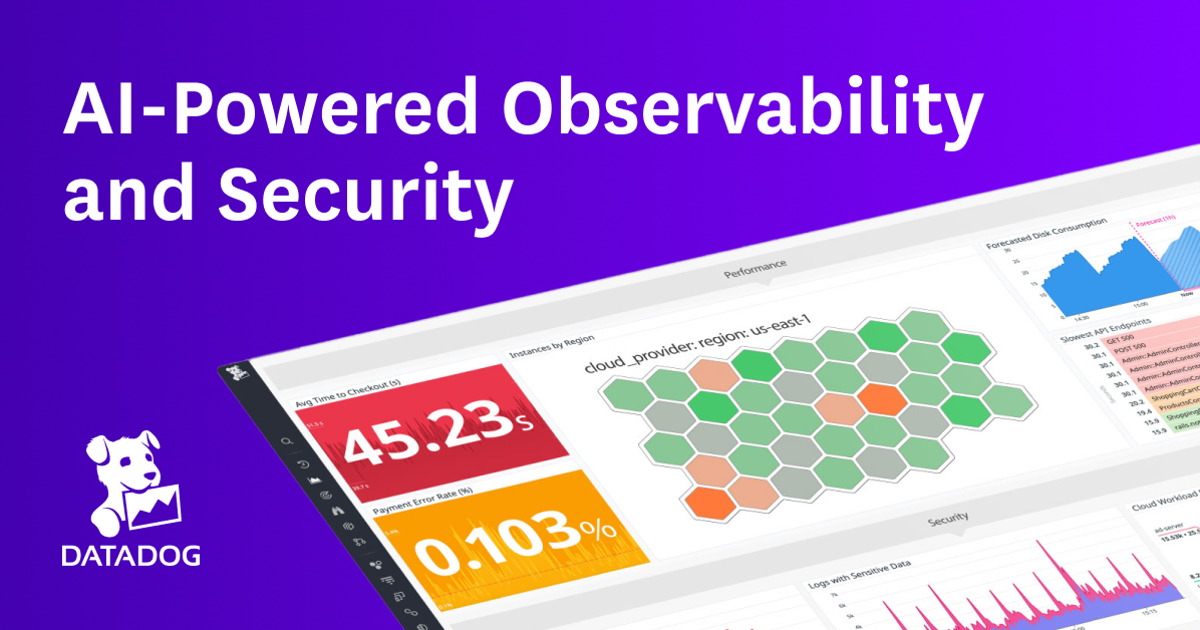 DatadogCustom quoteEngineering teams in cloud-native environments that need unified monitoring, APM, and log management without running their own infrastructure.
 DynatraceFrom $7/host/moTeams that need full-stack observability with AI-driven root cause analysis and automated remediation
 New RelicFree tier. $0.40/GBEngineering teams that want a single observability platform for APM, infrastructure, and logs with AI-assisted troubleshooting
 Sumo LogicCustom quoteCloud-first teams that need log analytics, monitoring, and SIEM in one platform with flexible licensing and no self-managed infrastructure.
- LLogz.ioNot publishedTeams that want a managed, AI-assisted observability platform with a familiar open-source feel and predictable pricing.
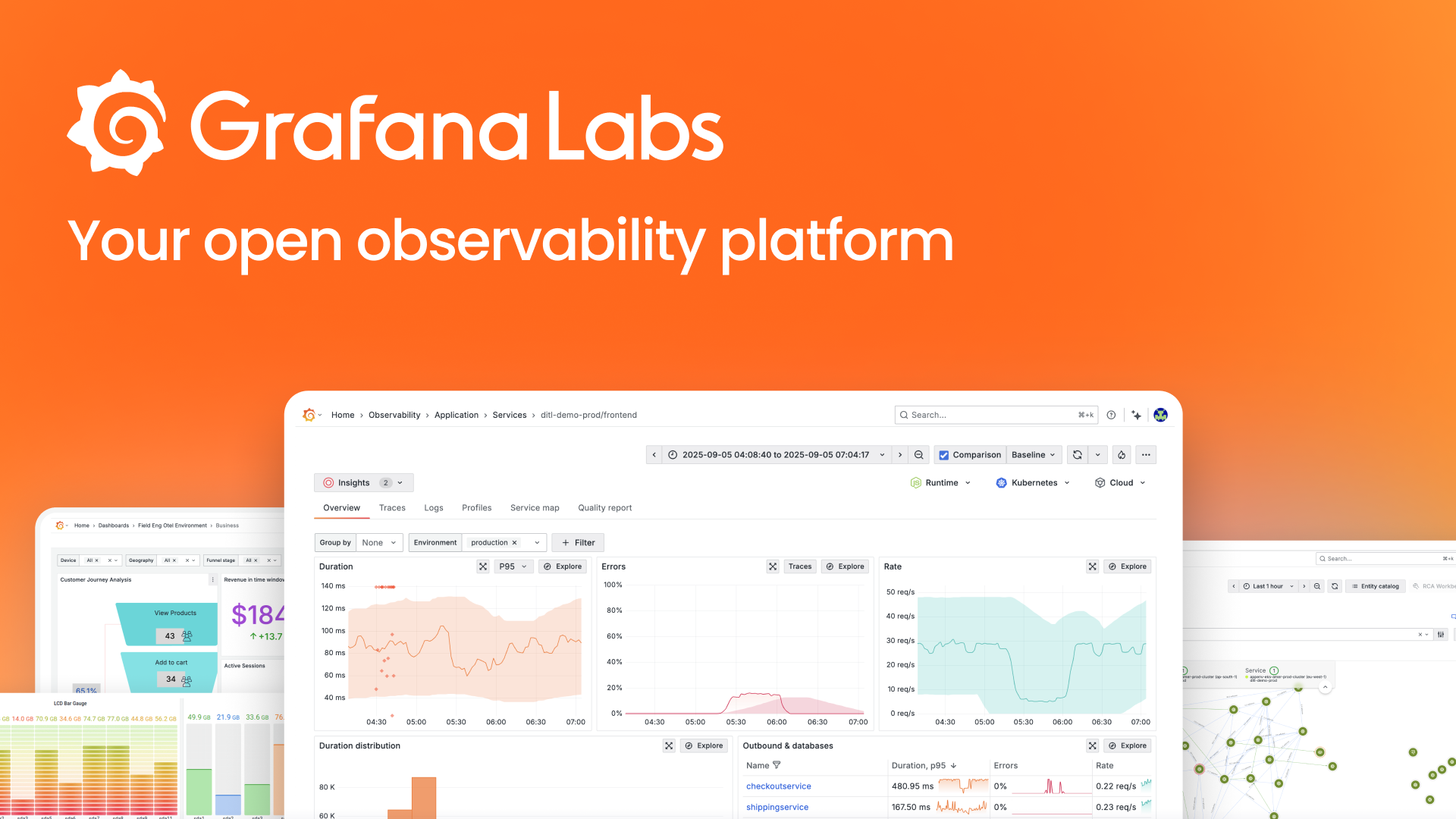 Grafana LabsFree tier + usage-baseTeams that want open standards, flexible deployment, and granular control over telemetry costs.
- CCriblConsumption-based credTeams that need to manage telemetry pipelines and cut down on observability costs before data hits their existing tools.
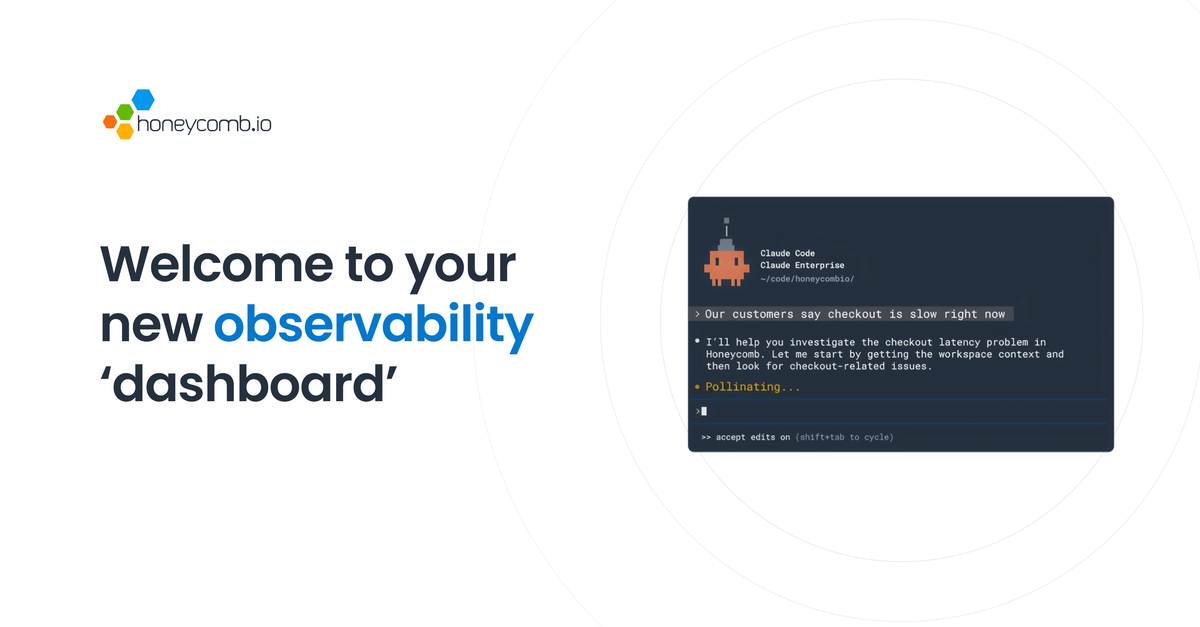 HoneycombFrom $150/moEngineering teams that want event-based tracing and fast root-cause analysis for distributed services and AI workflows
- LLogicMonitorNot publishedITOps and CloudOps teams in enterprises that need unified observability across hybrid infrastructure with AI-driven incident response
- SSolarWinds ObservabilityFrom $8/node/moIT teams that want a single tool for infrastructure, application, and database monitoring across hybrid environments, with self-hosted or SaaS deployment options.
- PPapertrailNot publishedSmall to mid-sized teams that want fast, frustration-free log search and alerts without heavy infrastructure.
About Splunk and its alternatives
Splunk is a data platform for security and observability. It unifies machine data at petabyte scale for threat detection, downtime prevention, and AI operations. It is known for enterprise-grade SIEM, SOAR, and full-stack observability, with 2000+ integrations and flexible pricing models.
When comparing alternatives, weigh pricing structure (per host, per GB, or usage-based), deployment options (SaaS, self-managed, or on-prem), and the depth of security features. Consider whether you need SIEM, APM, or just log management. Check if the tool supports your cloud providers and open standards like OpenTelemetry. Review contract terms, especially for enterprise plans that require contacting sales.
Explore the alternatives
- Not published
1.Elasticsearch
Best for: Teams that need a unified platform for search, observability, and security with flexible cloud or self-managed deployment
- Pricing
- Not published
- Category
- Analytics & Data
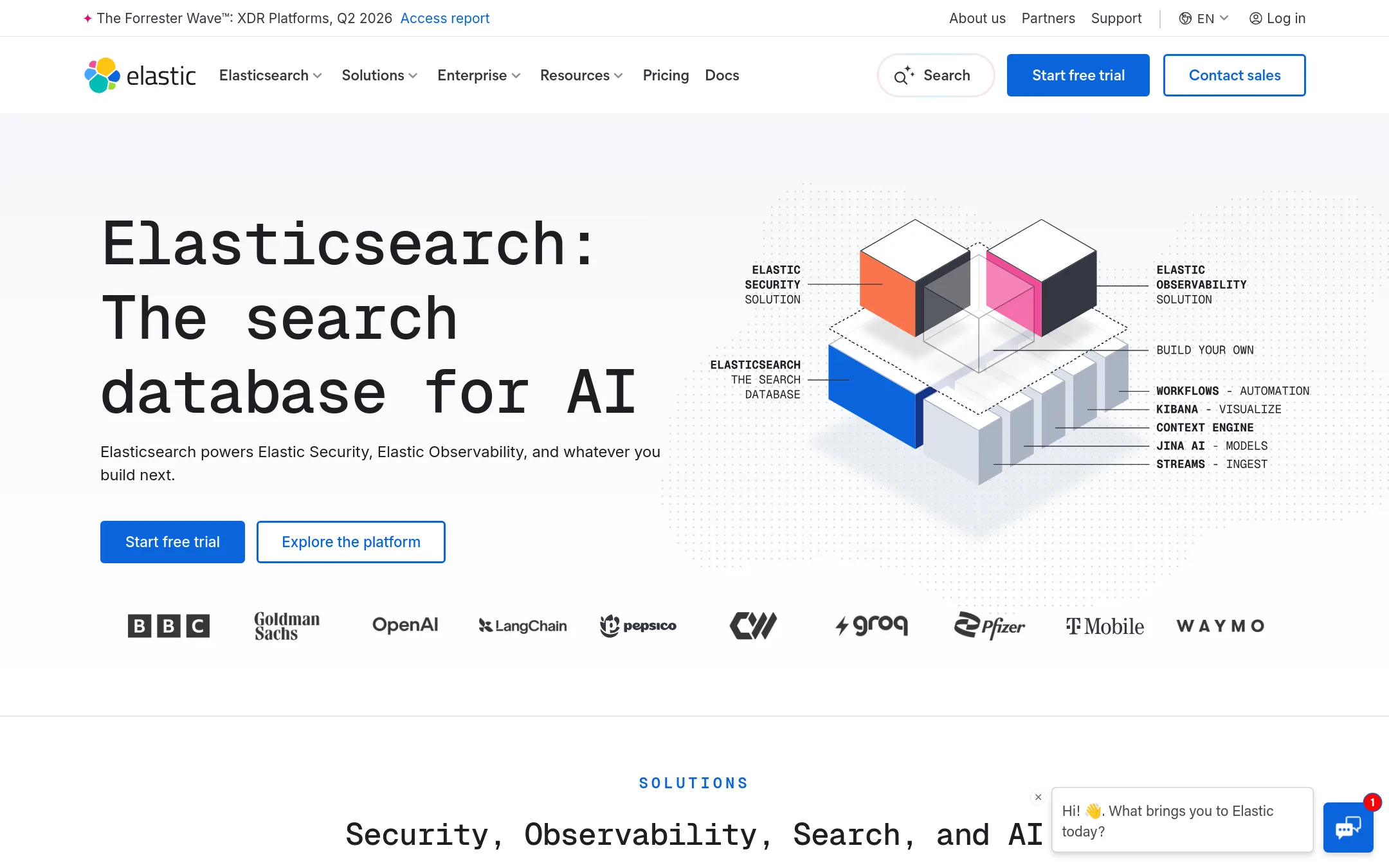
Elasticsearch is a search database that also powers security and observability solutions. You would choose it over Splunk if you want one platform for search, AI, observability, and security, with flexible deployment options including serverless. It's a good fit if you're already using Elasticsearch or want open-source flexibility.
Where it is strong
- Unified platform for search, observability, and security
- Flexible deployment: serverless, hosted, or self-managed
- Open-source foundation with strong community
Where it falls short
- Pricing not transparent on the site
- May require more setup and tuning compared to Splunk's managed offerings
- Pricing:
- Pricing is not published on the site.
- Custom quote
2.Datadog
Best for: Engineering teams in cloud-native environments that need unified monitoring, APM, and log management without running their own infrastructure.
- Pricing
- Custom quote
- Category
- Analytics & Data
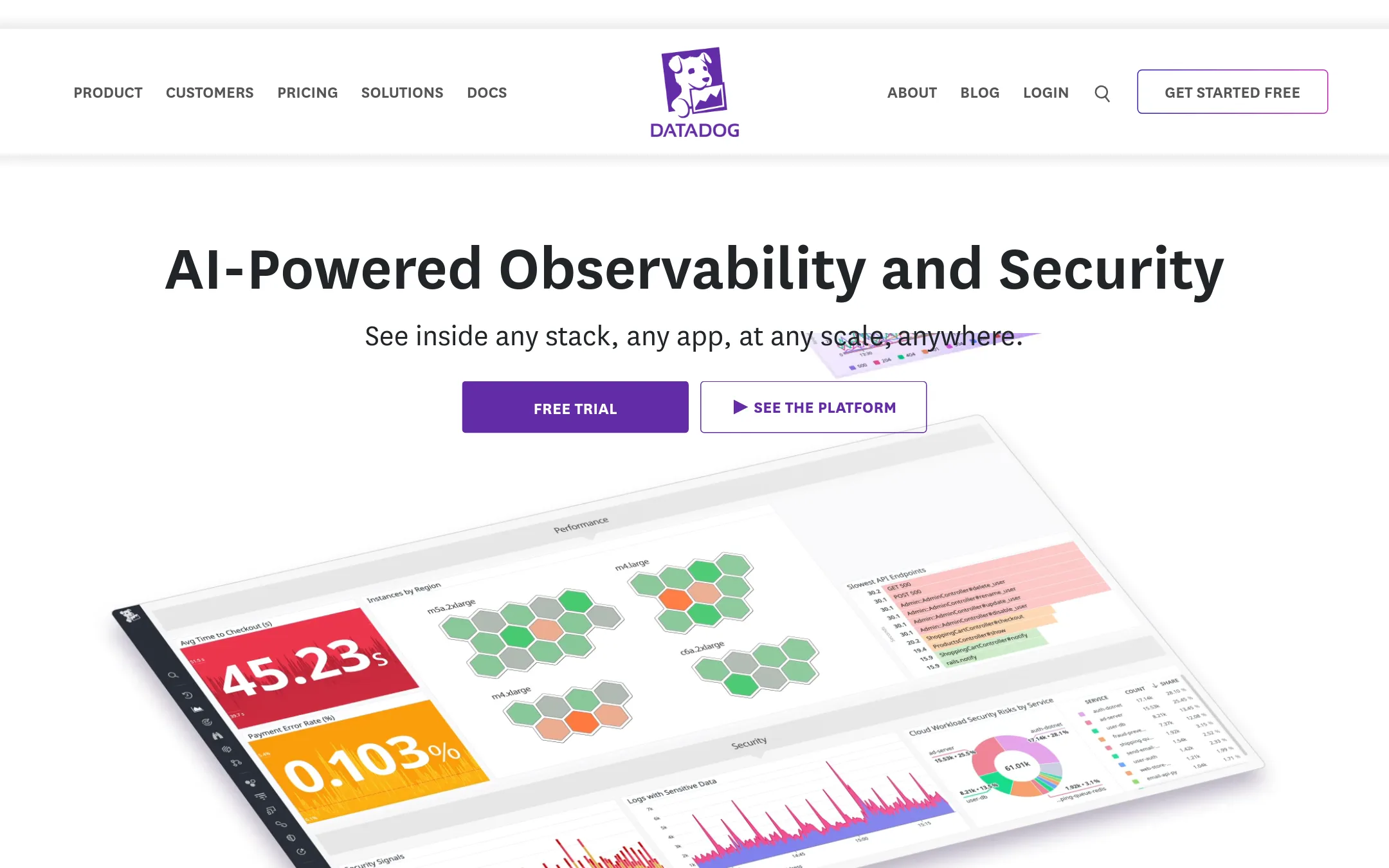
Datadog is a cloud monitoring platform that brings together metrics, traces, logs, and security into one interface. Choose it over Splunk if you run most of your infrastructure on cloud services and want a SaaS tool that starts fast without managing your own data platform.
Where it is strong
- Unified view of metrics, traces, logs, and security in one product
- Deep integrations with AWS, Azure, GCP, and Kubernetes
- Strong APM and real user monitoring for application performance
Where it falls short
- Pricing scales with usage and can get expensive at high volume
- Not designed for on-prem or air-gapped deployments like Splunk
- Pricing:
- Pricing is not published on the site. You must contact sales for a quote.
- From $7/host/mo
3.Dynatrace
Best for: Teams that need full-stack observability with AI-driven root cause analysis and automated remediation
- Pricing
- From $7/host/mo
- Category
- Analytics & Data
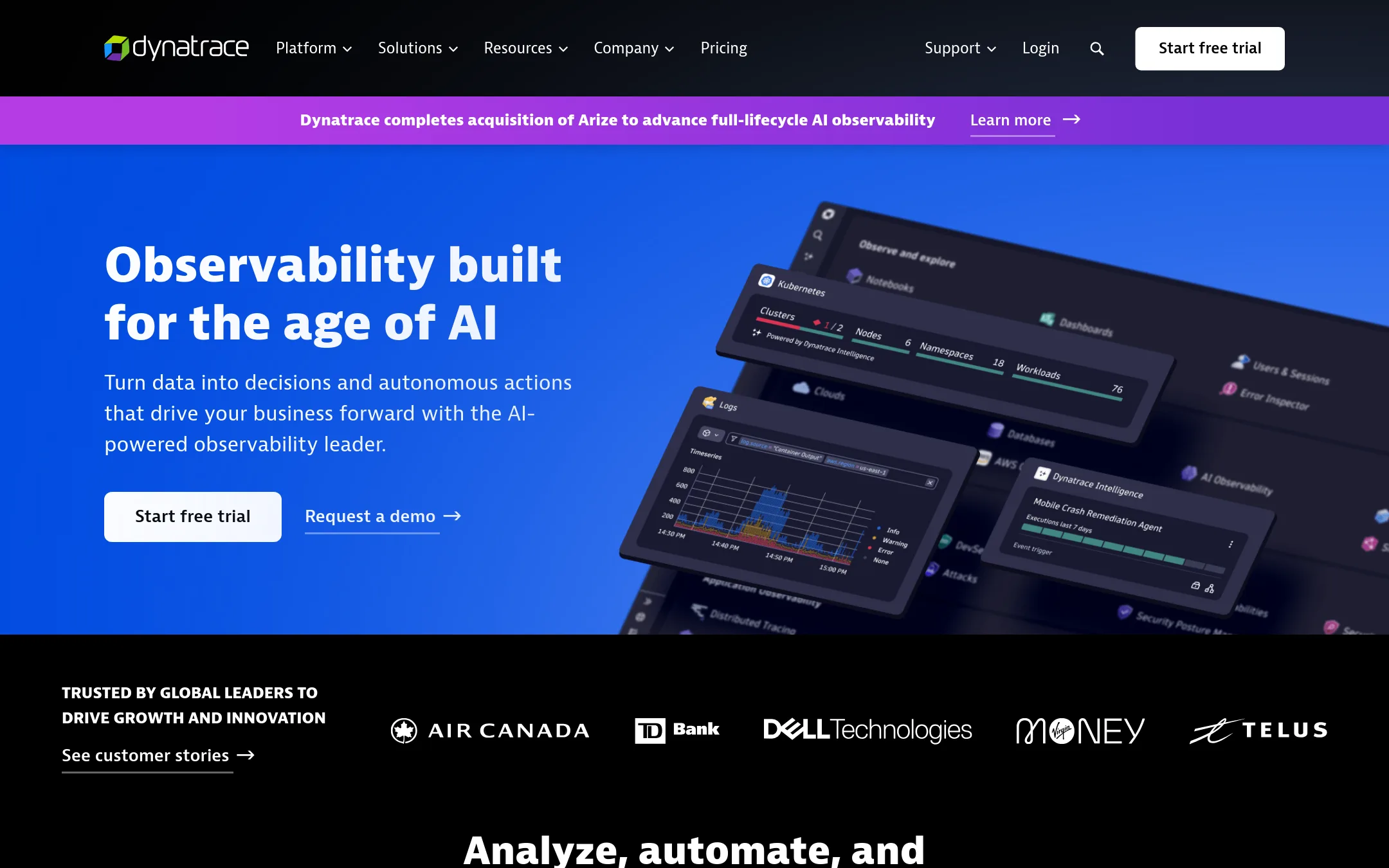
Dynatrace is an AI-powered observability platform that unifies monitoring, security, and automation in one place. Choose it over Splunk when you need deep application and infrastructure monitoring with built-in AI root cause analysis, rather than a general-purpose data platform for security and observability.
Where it is strong
- AI-powered root cause analysis and anomaly detection
- Unified platform for metrics, logs, traces, and security
- Transparent usage-based pricing with no overage surprises
Where it falls short
- Pricing is per host, which can get expensive at scale
- Less focused on security information and event management (SIEM) compared to Splunk
- Pricing:
- Pricing starts at $7 per host per month for Foundation & Discovery, $29 per host per month for Infrastructure Monitoring, and $58 per host per month for Full-Stack Monitoring, billed annually.
- Switching from Splunk:
- Moving from Splunk to Dynatrace involves reconfiguring your data ingestion and alerting workflows, as Dynatrace uses a different query language and agent-based architecture.
- Free tier. $0.40/GB
4.New Relic
Best for: Engineering teams that want a single observability platform for APM, infrastructure, and logs with AI-assisted troubleshooting

- Pricing
- Free tier. $0.40/GB
- Category
- Analytics & Data
New Relic is an AI-powered observability platform that correlates metrics, logs, and traces across your entire stack. Choose it over Splunk if you want a simpler, usage-based pricing model and a generous free tier instead of Splunk's enterprise-focused quote-based pricing. It is especially strong for teams that want AI-driven incident investigation and remediation built into the platform.
Where it is strong
- Free tier includes 100 GB of data ingest per month
- Unlimited basic users at no cost
- AI agents can detect, investigate, and resolve issues automatically
Where it falls short
- Full platform user limits on lower tiers (max 5 on Standard)
- Enterprise plan requires contacting sales for pricing
- Pricing:
- Free tier includes 100 GB of data ingest per month. Paid plans start at $0.40/GB beyond the free limit, with full platform users at $10 for the first user and $99 per additional user on the Standard plan.
- Switching from Splunk:
- Moving from Splunk means reconfiguring data ingestion and dashboards, but New Relic supports OpenTelemetry so you can keep existing instrumentation.
- Custom quote
5.Sumo Logic
Best for: Cloud-first teams that need log analytics, monitoring, and SIEM in one platform with flexible licensing and no self-managed infrastructure.
- Pricing
- Custom quote
- Category
- Security & Privacy
Sumo Logic is a cloud-native log management and SIEM platform that ingests and analyzes machine data from cloud and on-premises systems. Choose it over Splunk if you want a SaaS-only tool with AI-guided investigation and a logs-first approach to security, without the operational overhead of running your own Splunk deployment.
Where it is strong
- Cloud-native SaaS with no infrastructure to manage
- Flex licensing lets you pay for data actually used
- 900+ out-of-the-box SIEM rules and MITRE ATT&CK coverage
Where it falls short
- No on-prem or air-gapped deployment option
- Pricing requires contacting sales. No transparent self-serve tiers
- Pricing:
- Pricing is not published on the site. Plans require contacting sales, though a free trial is available without a credit card.
- Switching from Splunk:
- Moving from Splunk involves reconfiguring data ingestion and rewriting search queries, as Sumo Logic uses its own query language and dashboards.
- LNot published
6.Logz.io
Best for: Teams that want a managed, AI-assisted observability platform with a familiar open-source feel and predictable pricing.
- Pricing
- Not published
- Category
- Other
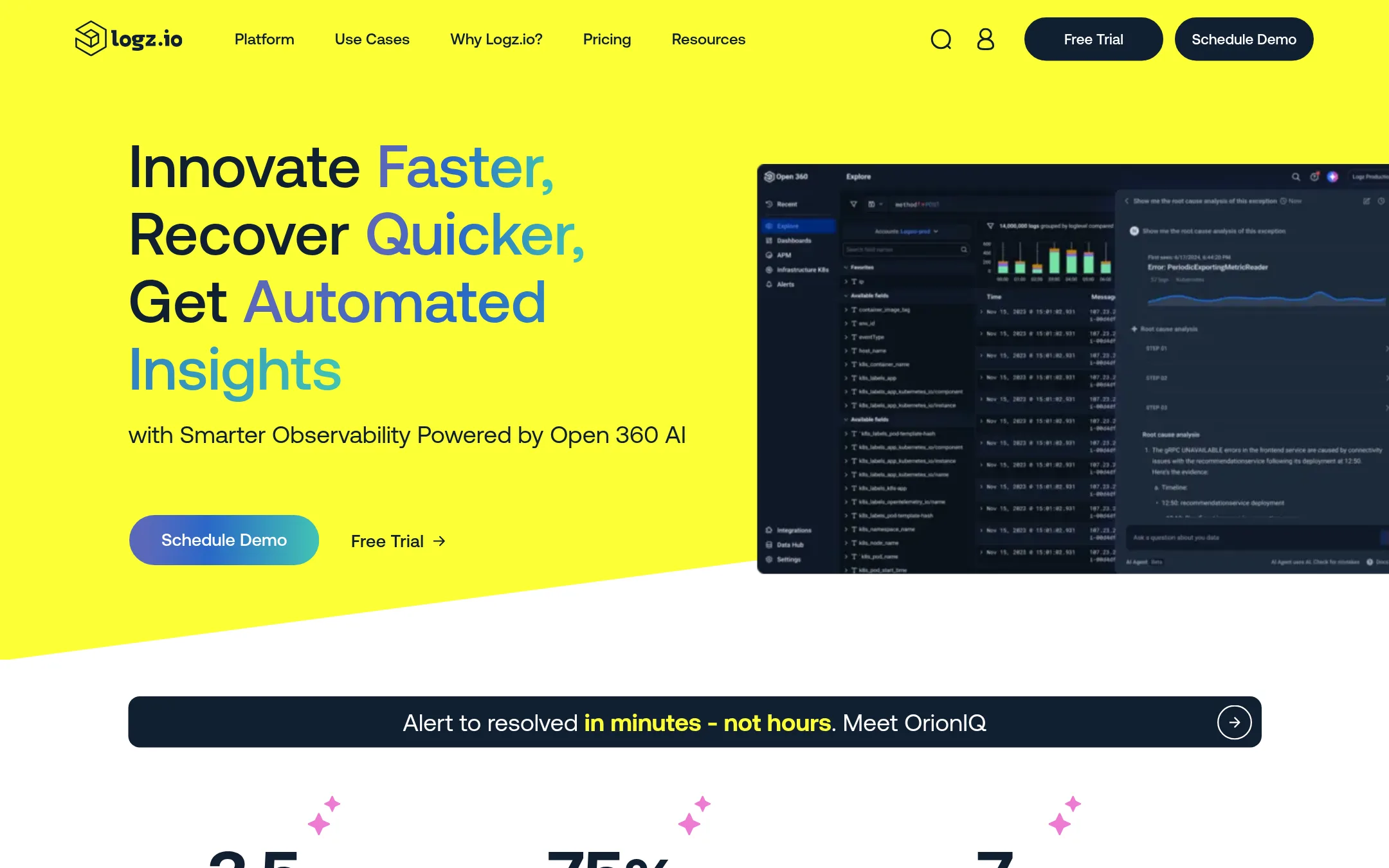
Logz.io is a fully managed observability platform that unifies logs, metrics, and traces with AI-powered insights. It's a good fit if you're coming from open-source tools like ELK or Prometheus and want a managed service with automated root cause analysis, without the operational overhead of Splunk.
Where it is strong
- Unified logs, metrics, and traces in one platform
- AI agent for root cause analysis and natural language queries
- Easy migration from ELK Stack or Prometheus
Where it falls short
- Pricing not transparent on the website
- May lack the depth of Splunk's security analytics and SIEM features
- Pricing:
- Pricing is not published on the site. Only add-on retention costs are shown (e.g., hot retention extension at $0.03 per day).
- Switching from Splunk:
- Moving from Splunk involves re-indexing your data and adapting your queries to Logz.io's OpenSearch-based backend, but the platform offers guided workflows to ease the transition.
- Free tier + usage-base
7.Grafana Labs
Best for: Teams that want open standards, flexible deployment, and granular control over telemetry costs.
- Pricing
- Free tier + usage-base
- Category
- Analytics & Data
Grafana Labs is an open-source observability platform that unifies metrics, logs, traces, and profiles. You would choose it over Splunk if you want to avoid vendor lock-in, prefer OpenTelemetry and Prometheus standards, and need a cost-effective solution with a generous free tier.
Where it is strong
- Open source and open standards (OpenTelemetry, Prometheus) avoid lock-in.
- Adaptive Telemetry cuts telemetry costs by 30-50% on average.
- Generous free tier for personal projects and early-stage startups.
Where it falls short
- Self-managed setup requires more operational effort than Splunk's managed SaaS.
- Security features (SIEM, SOAR) are not as mature as Splunk's dedicated offerings.
- Pricing:
- Pricing is usage-based with a free tier: metrics start at 10k active series per month, logs at 50 GB ingested per month, and traces and profiles are pay-as-you-go. Paid plans include 13 months retention for metrics and 30 days for logs, traces, and profiles.
- Switching from Splunk:
- Moving from Splunk involves reconfiguring data pipelines and dashboards, but Grafana's plugin ecosystem supports many common data sources.
- CConsumption-based cred
8.Cribl
Best for: Teams that need to manage telemetry pipelines and cut down on observability costs before data hits their existing tools.
- Pricing
- Consumption-based cred
- Category
- Other
Cribl is a telemetry pipeline that routes, filter, and enrich data before it reaches tools like Splunk. Choose it when you want to reduce Splunk ingest costs, avoid vendor lock-in, or gain more control over your data flow.
Where it is strong
- Reduces data volume and costs before it reaches Splunk
- Vendor-neutral, works with many tools
- Free tier processes up to 1TB/day
Where it falls short
- Pricing is complex and usage-based
- Requires setup and management of pipelines
- Pricing:
- Cribl Cloud uses a consumption-based model where $1 equals 1 credit. Additional Workspaces cost 250 credits per month, and static egress is metered per region (e.g., 0.18 credits/hour and 0.06 credits/GB in US East).
- Switching from Splunk:
- Moving from Splunk means adding Cribl as an intermediary layer to filter and route data, not replacing Splunk entirely.
- From $150/mo
9.Honeycomb
Best for: Engineering teams that want event-based tracing and fast root-cause analysis for distributed services and AI workflows
- Pricing
- From $150/mo
- Category
- Analytics & Data
Honeycomb is an observability platform built for debugging modern, high-cardinality production systems with fast queries and distributed tracing. Choose it over Splunk when your team needs deep, real-time investigation of application behavior, especially for LLM and AI agent workloads, without Splunk's heavier security and data-management focus.
Where it is strong
- High-cardinality data with unlimited attributes and users at no extra cost
- Sub-10 second queries and BubbleUp for quick root-cause analysis
- OpenTelemetry-native with no vendor lock-in
Where it falls short
- Pricing based on event volume can get costly at high scale
- No built-in SIEM or security analytics features like Splunk Enterprise Security
- Pricing:
- Free plan up to 20M events/month. Pro starts at $150/month for up to 750M events. Enterprise custom quotes with volume discounts.
- Switching from Splunk:
- Moving from Splunk means adopting an event-based tracing model and OpenTelemetry instrumentation, which is a different paradigm from Splunk's log-centric search.
- LNot published
10.LogicMonitor
Best for: ITOps and CloudOps teams in enterprises that need unified observability across hybrid infrastructure with AI-driven incident response
- Pricing
- Not published
- Category
- Other
LogicMonitor is an AI-first observability platform that combines infrastructure, cloud, log, and digital experience monitoring with agentic AIOps. Choose it over Splunk when you want a single platform for hybrid infrastructure monitoring with built-in automation, rather than Splunk's broader security and data analytics focus.
Where it is strong
- Agentic AIOps with Edwin AI for autonomous detection and remediation
- Covers infrastructure, cloud, logs, and digital experience in one platform
- Includes cloud cost optimization and internet performance monitoring
Where it falls short
- No SIEM or security analytics capabilities like Splunk Enterprise Security
- Pricing not transparent. Requires contacting sales for quotes
- Pricing:
- Pricing is not published on the site.
- SFrom $8/node/mo
11.SolarWinds Observability
Best for: IT teams that want a single tool for infrastructure, application, and database monitoring across hybrid environments, with self-hosted or SaaS deployment options.
- Pricing
- From $8/node/mo
- Category
- Other
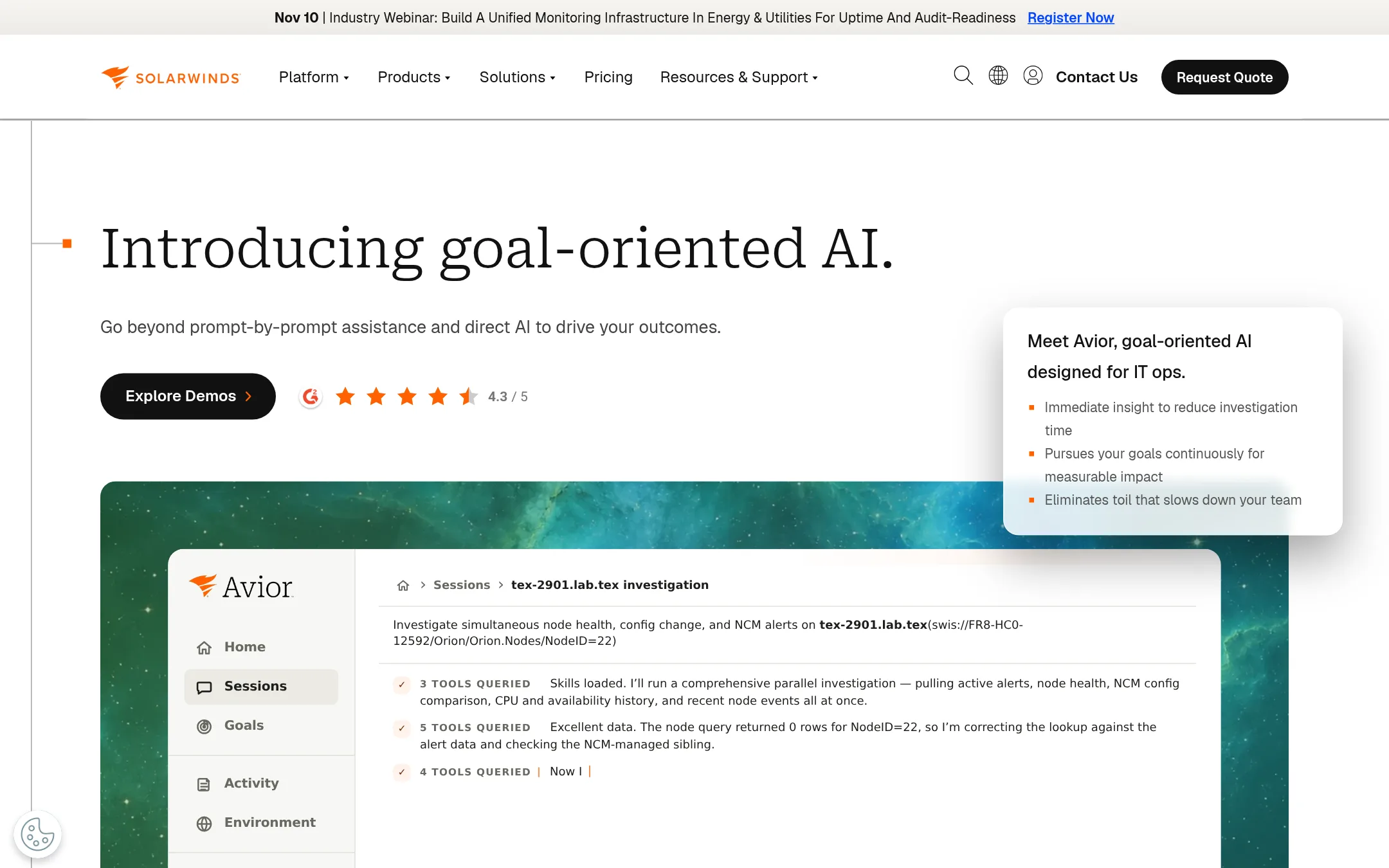
SolarWinds Observability is a hybrid IT monitoring platform that combines metrics, traces, logs, and user experience with AI-powered insights. Choose it over Splunk when you need straightforward, cost-effective observability for on-prem and cloud environments without Splunk's complexity or data-pricing model.
Where it is strong
- Self-hosted option starts at $8 per node per month, which is lower than Splunk's typical pricing.
- Monitors a wide range of databases (SQL Server, Oracle, MySQL, PostgreSQL, MongoDB, Redis) with AI-assisted query tuning.
- Includes incident response and ITSM features, so you can manage alerts and tickets in one platform.
Where it falls short
- Pricing is per node or per database, which may get costly as your environment scales.
- Lacks Splunk's extensive security analytics (SIEM, SOAR, UEBA) and petabyte-scale data lake capabilities.
- Pricing:
- In the United States, SolarWinds Observability self-hosted starts at $8 per node per month, and the SaaS version is available with a 30-day free trial. Volume discounts are available.
- Switching from Splunk:
- Moving from Splunk involves migrating your monitoring data and dashboards, but SolarWinds offers a 30-day trial to test compatibility.
- PNot published
12.Papertrail
Best for: Small to mid-sized teams that want fast, frustration-free log search and alerts without heavy infrastructure.
- Pricing
- Not published
- Category
- Other
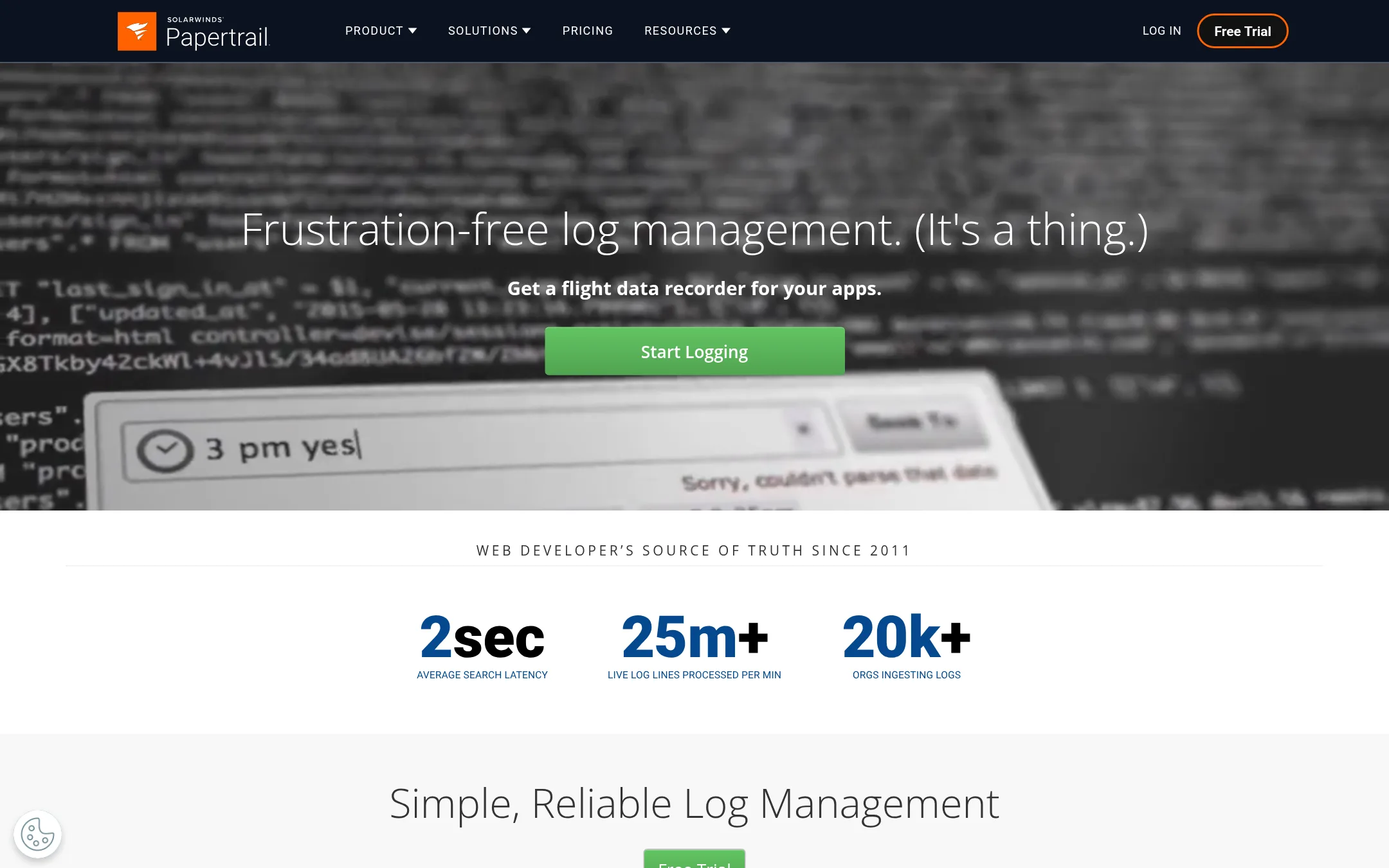
Papertrail is a lightweight log management service that centralizes logs from multiple sources into a searchable viewer with live tailing and alerts. Choose it over Splunk when you need quick, simple log troubleshooting without the cost and complexity of a full security and observability platform.
Where it is strong
- Live tailing and instant search make debugging fast
- Simple setup with multi-source ingestion in minutes
- Alerts and archives are easy to configure
Where it falls short
- No built-in security analytics or SIEM features
- Limited to log management, not full observability
- Pricing:
- Pricing is not published on the site.
See more comparisons in Analytics & Data alternatives.
FAQ
Questions about Splunk alternatives
What is the cheapest Splunk alternative?
SolarWinds Observability self-hosted starts at $8 per node per month, which is the lowest published entry price. New Relic offers a free tier with 100 GB of data ingest per month. Grafana Labs also has a free tier with 10k active series and 50 GB logs per month.
Which alternative is best for cloud-native teams?
Datadog is built for cloud-native environments with deep integrations for AWS, Azure, GCP, and Kubernetes. It provides unified metrics, traces, logs, and security in one SaaS platform. New Relic is also strong for cloud-native teams with AI-assisted troubleshooting and a simple pricing model.
Can I avoid vendor lock-in with these alternatives?
Grafana Labs is the best choice for avoiding lock-in because it is open source and supports OpenTelemetry and Prometheus standards. Honeycomb is OpenTelemetry-native as well. Cribl is vendor-neutral and can route data to multiple tools, reducing dependency on any single platform.
Which alternative has the most transparent pricing?
New Relic publishes a free tier and per-GB pricing starting at $0.40/GB. Dynatrace lists per-host prices starting at $7 per month. Grafana Labs shows usage-based pricing for metrics, logs, traces, and profiles. Others like Datadog and Sumo Logic require contacting sales for quotes.
Do any alternatives offer on-prem or air-gapped deployment?
Elasticsearch supports self-managed deployment, including air-gapped environments. Grafana Labs offers self-managed options. SolarWinds Observability has a self-hosted version. Datadog, New Relic, and Sumo Logic are SaaS-only and do not support on-prem deployment.
Last updated October 31, 2026.