
Jaeger alternatives
12 products compared · Updated November 2, 2026
The short answer
For teams that want a single OpenTelemetry-native observability stack with tracing, logs, and metrics, SigNoz is the strongest alternative. If you need a managed, full-stack platform with AI assistance and a free tier, New Relic is a solid choice. For those who prefer a lightweight, self-hosted tracing backend, Zipkin offers a simpler option.
Your shortlist, at a glance
Read the comparisons ↓- ZZipkinNot publishedTeams that want a simple, open-source distributed tracing system with flexible storage backends and multiple ingestion options.
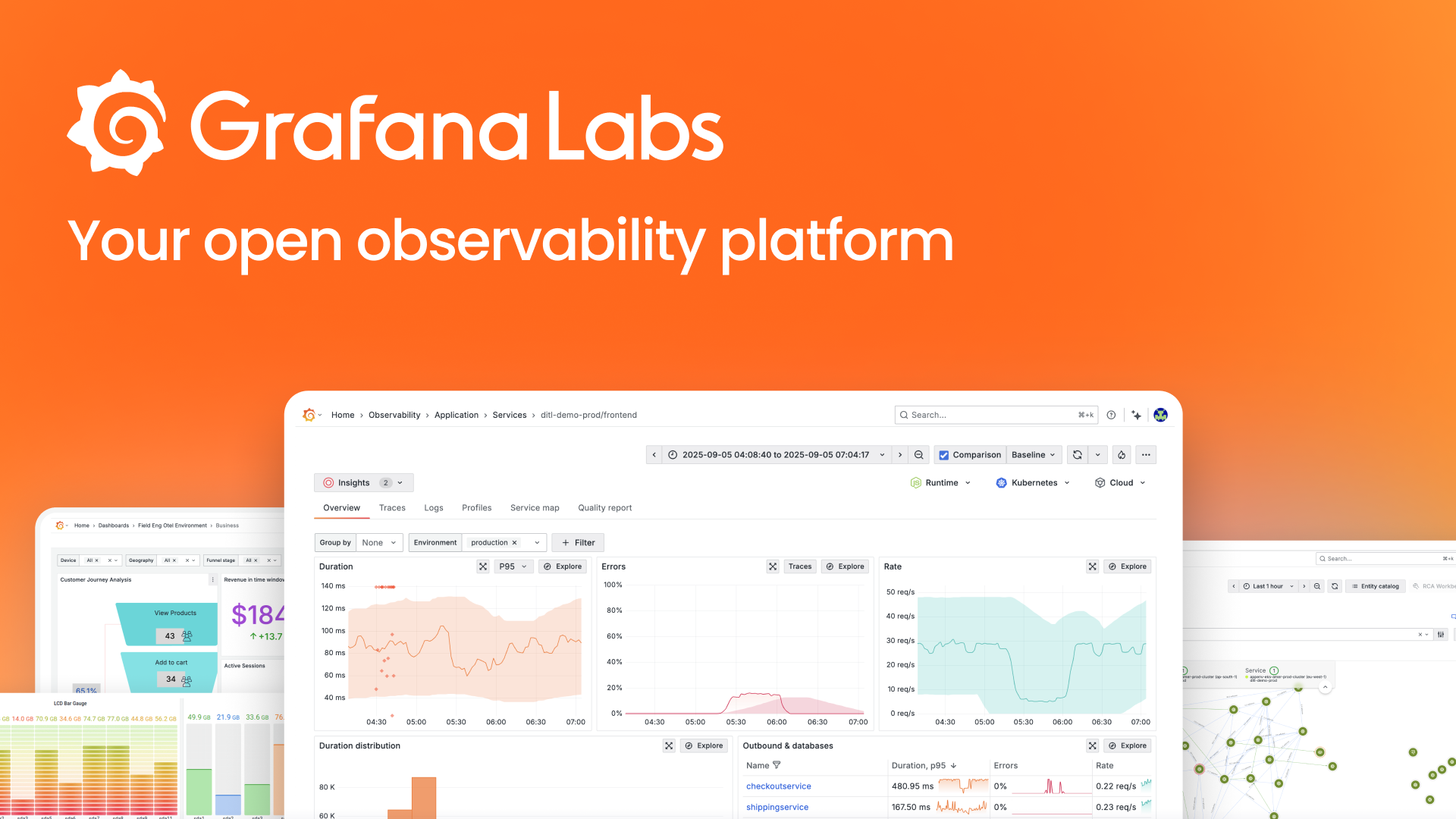 Grafana LabsNot publishedTeams that want a managed, full-stack observability platform with built-in AI and cost controls, instead of self-hosting Jaeger.
- OOpenTelemetryNot publishedTeams building cloud native applications that want a single instrumentation standard with the flexibility to switch backends without rewriting code.
 SigNozFrom $49/mo + usageTeams that want a single OpenTelemetry-native observability stack with tracing, logs, and metrics, especially those moving from Datadog.
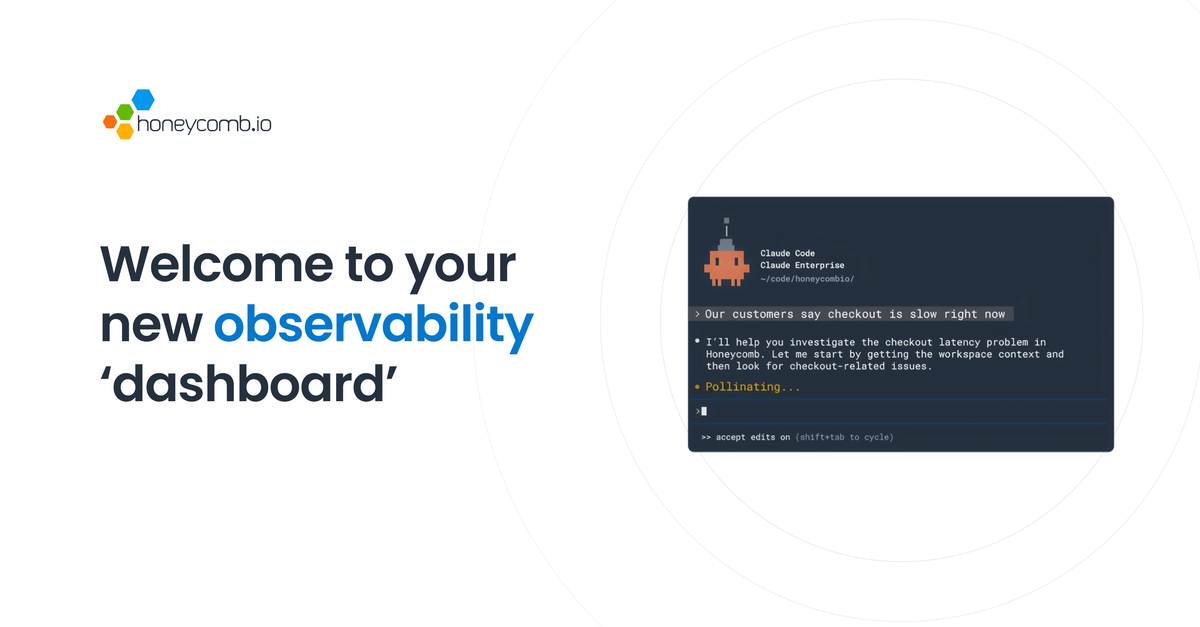 HoneycombFrom $150/moEngineering teams that need a managed, AI-ready observability platform with fast querying and built-in SLOs, especially those debugging distributed services or LLM workflows.
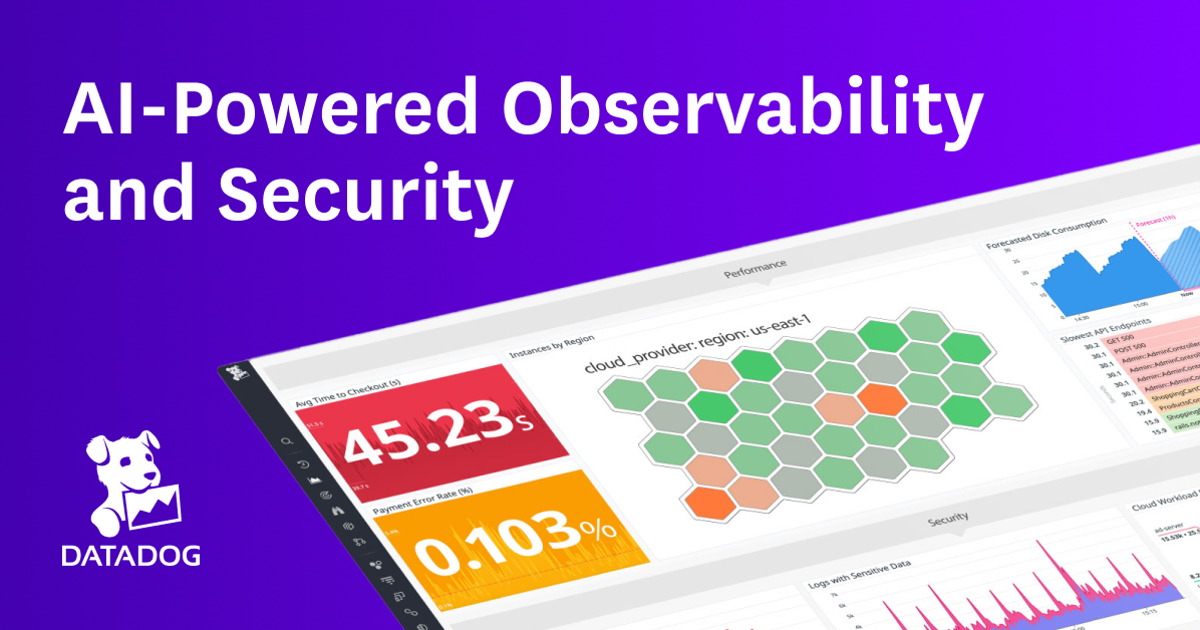 DatadogNot publishedTeams that need a unified monitoring platform covering traces, metrics, logs, and security across cloud infrastructure and applications.
 New RelicFree tier. $0.40/GBTeams that want a hosted observability platform with APM, infrastructure monitoring, and AI assistance beyond just distributed tracing.
 Amazon BusinessNot publishedOrganizations that want to centralize purchasing of business supplies with approval workflows and spend reporting
- LLightstepSee websiteOther
 Apache AirflowNot publishedData engineering teams that need to author, schedule, and monitor batch workflows in Python.
 AppDynamicsFrom $15/host/moITOps and engineering teams in enterprises running hybrid or on-prem three-tier applications who need APM linked to business KPIs
 SentryFree, then $26/moDevelopment teams that want a single tool for error tracking, tracing, and performance monitoring without managing their own infrastructure.
About Jaeger and its alternatives
Jaeger is an open source, distributed tracing platform for monitoring and troubleshooting microservices. It maps the flow of requests across services, helping identify bottlenecks and errors. Jaeger is known for being cloud native, infinitely scalable, and 100% open source, with a strong community and support from the CNCF.
When comparing alternatives, weigh pricing structure, regions, integrations, support, and contract terms. Some tools are open source and self-hosted, while others are managed services with usage-based pricing. Consider whether you need just tracing or a full observability stack with logs and metrics. Check if the tool integrates with your existing stack and offers support options that match your team's needs.
Explore the alternatives
- ZNot published
1.Zipkin
Best for: Teams that want a simple, open-source distributed tracing system with flexible storage backends and multiple ingestion options.
- Pricing
- Not published
- Category
- Other
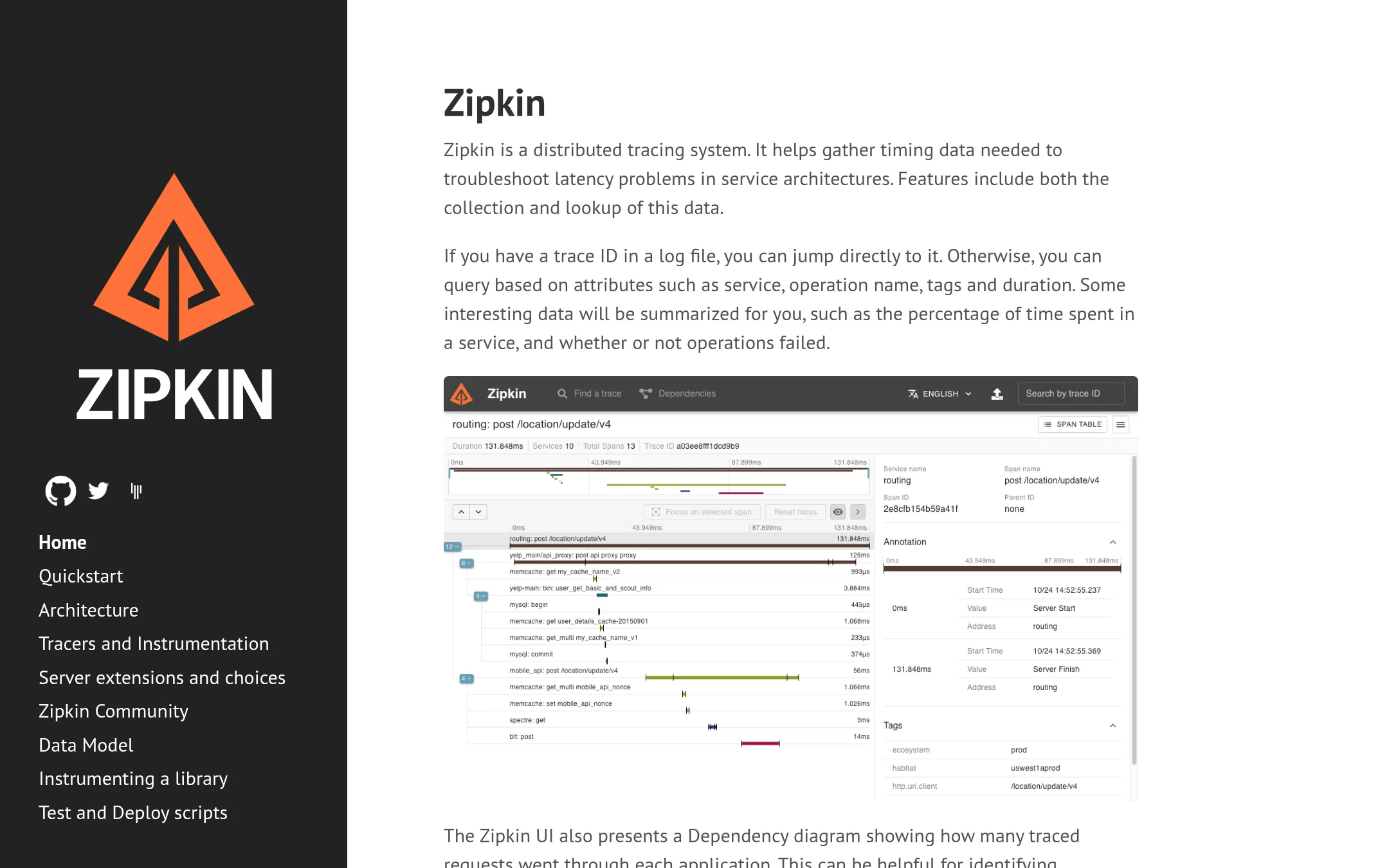
Zipkin is a distributed tracing system that collects and looks up timing data to troubleshoot latency in service architectures. Choose it over Jaeger if you need a lighter-weight, self-hosted tracing backend that stores data in-memory or in Cassandra/Elasticsearch and can ingest traces via HTTP, Kafka, or other transports.
Where it is strong
- Open source and free to self-host.
- Supports multiple storage backends: in-memory, Cassandra, Elasticsearch.
- Ingest traces via HTTP, Kafka, ActiveMQ, gRPC, or RabbitMQ.
Where it falls short
- No native support for ClickHouse as a storage backend.
- UI and features are more basic compared to Jaeger's advanced querying and dependency analysis.
- Pricing:
- Pricing is not published on the site.
- Not published
2.Grafana Labs
Best for: Teams that want a managed, full-stack observability platform with built-in AI and cost controls, instead of self-hosting Jaeger.
- Pricing
- Not published
- Category
- Analytics & Data
Grafana Labs is a full-stack observability platform that unifies metrics, logs, traces, profiles, and business data. Choose it over Jaeger if you need a managed, integrated solution with AI-assisted troubleshooting and cost optimization, rather than running your own open-source tracing backend.
Where it is strong
- Unifies traces with metrics, logs, and profiles in one platform.
- Free tier with 14 days retention for traces and other signals.
- Built on OpenTelemetry and Prometheus, avoiding vendor lock-in.
Where it falls short
- Pricing details are not listed on the site. You must contact sales.
- More complex than Jaeger if you only need distributed tracing.
- Pricing:
- Pricing is not published on the site.
- Switching from Jaeger:
- Moving from Jaeger involves exporting your trace data and configuring Grafana Cloud as the new backend, which may require reworking your instrumentation to use OpenTelemetry.
- ONot published
3.OpenTelemetry
Best for: Teams building cloud native applications that want a single instrumentation standard with the flexibility to switch backends without rewriting code.
- Pricing
- Not published
- Category
- Other
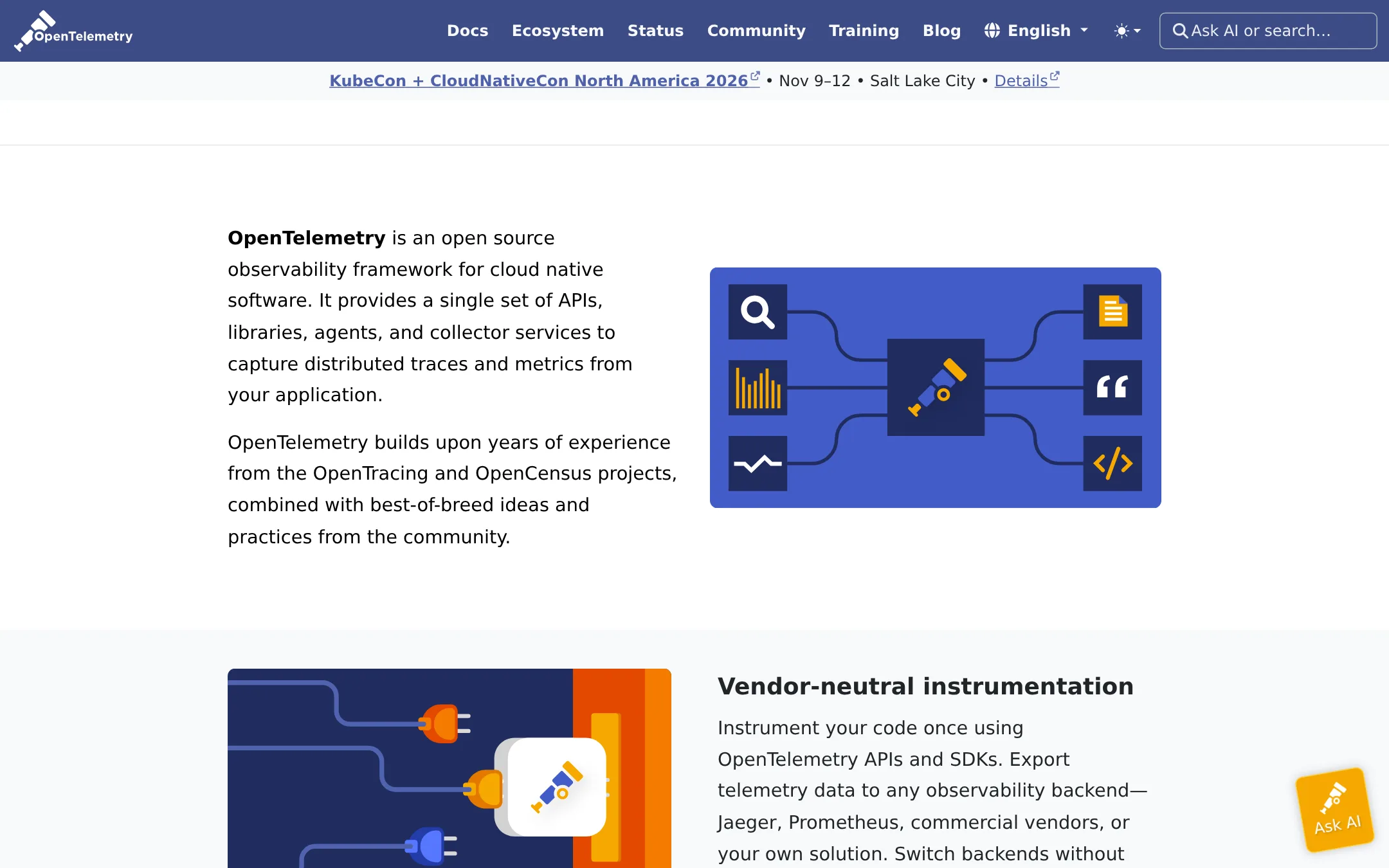
OpenTelemetry is an open source observability framework that provides APIs, SDKs, and a collector to capture traces and metrics. You would choose it instead of Jaeger when you want vendor-neutral instrumentation that can export to Jaeger or other backends, and when you need to unify traces, metrics, and logs.
Where it is strong
- Vendor-neutral: export to Jaeger, Prometheus, or commercial backends
- Unified signals: traces, metrics, and logs share context
- Runs anywhere: on-prem, hybrid, or multi-cloud with no lock-in
Where it falls short
- No built-in tracing UI or storage backend
- Requires separate backend like Jaeger for visualization and querying
- Pricing:
- Pricing is not published on the site.
- Switching from Jaeger:
- Moving from Jaeger to OpenTelemetry involves instrumenting your services with OTel SDKs and configuring the collector to export to your existing Jaeger backend, so you can keep using Jaeger for storage and UI.
- From $49/mo + usage
4.SigNoz
Best for: Teams that want a single OpenTelemetry-native observability stack with tracing, logs, and metrics, especially those moving from Datadog.
- Pricing
- From $49/mo + usage
- Category
- Analytics & Data
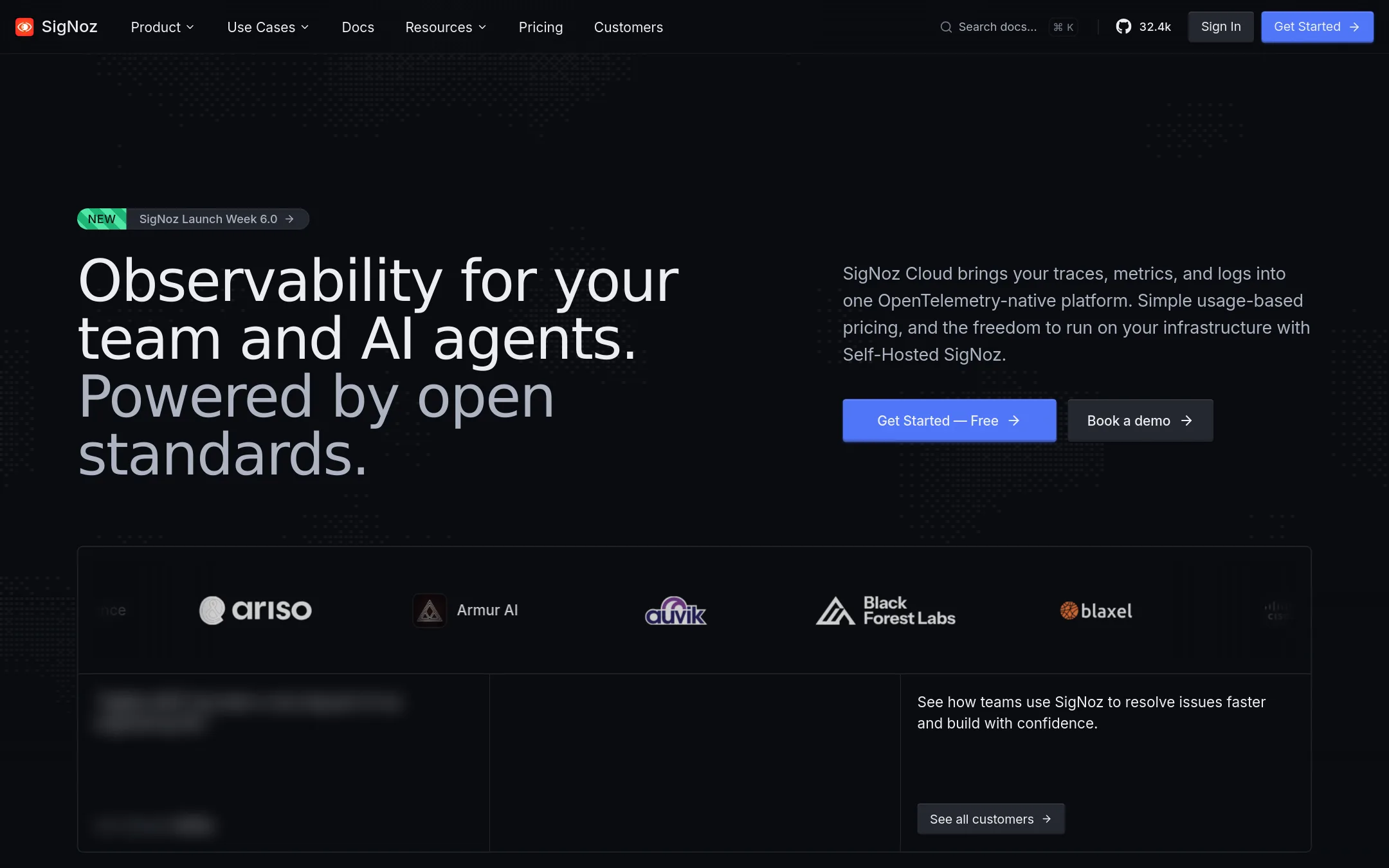
SigNoz is a full observability platform that combines APM, logs, traces, metrics, and alerts in one tool, built on OpenTelemetry. You would choose it over Jaeger when you need tracing plus correlated logs and metrics, or when you want a managed cloud service instead of running your own tracing infrastructure.
Where it is strong
- Combines traces, logs, metrics, and alerts in one tool
- OpenTelemetry-native, so instrumentation is portable
- Usage-based pricing with no per-host or per-user fees
Where it falls short
- Requires sending data to SigNoz Cloud or self-hosting, unlike Jaeger's simple standalone tracing
- Pricing is usage-based, so costs can grow with high telemetry volume
- Pricing:
- Starts at $49/month, which includes $49 of usage. Additional usage is $0.3 per GB ingested and $0.1 per million samples. Enterprise plans start at $4,000/month.
- Switching from Jaeger:
- Moving from Jaeger means sending OpenTelemetry trace data to SigNoz instead of Jaeger's storage, then rebuilding dashboards and alerts in SigNoz.
- From $150/mo
5.Honeycomb
Best for: Engineering teams that need a managed, AI-ready observability platform with fast querying and built-in SLOs, especially those debugging distributed services or LLM workflows.
- Pricing
- From $150/mo
- Category
- Analytics & Data
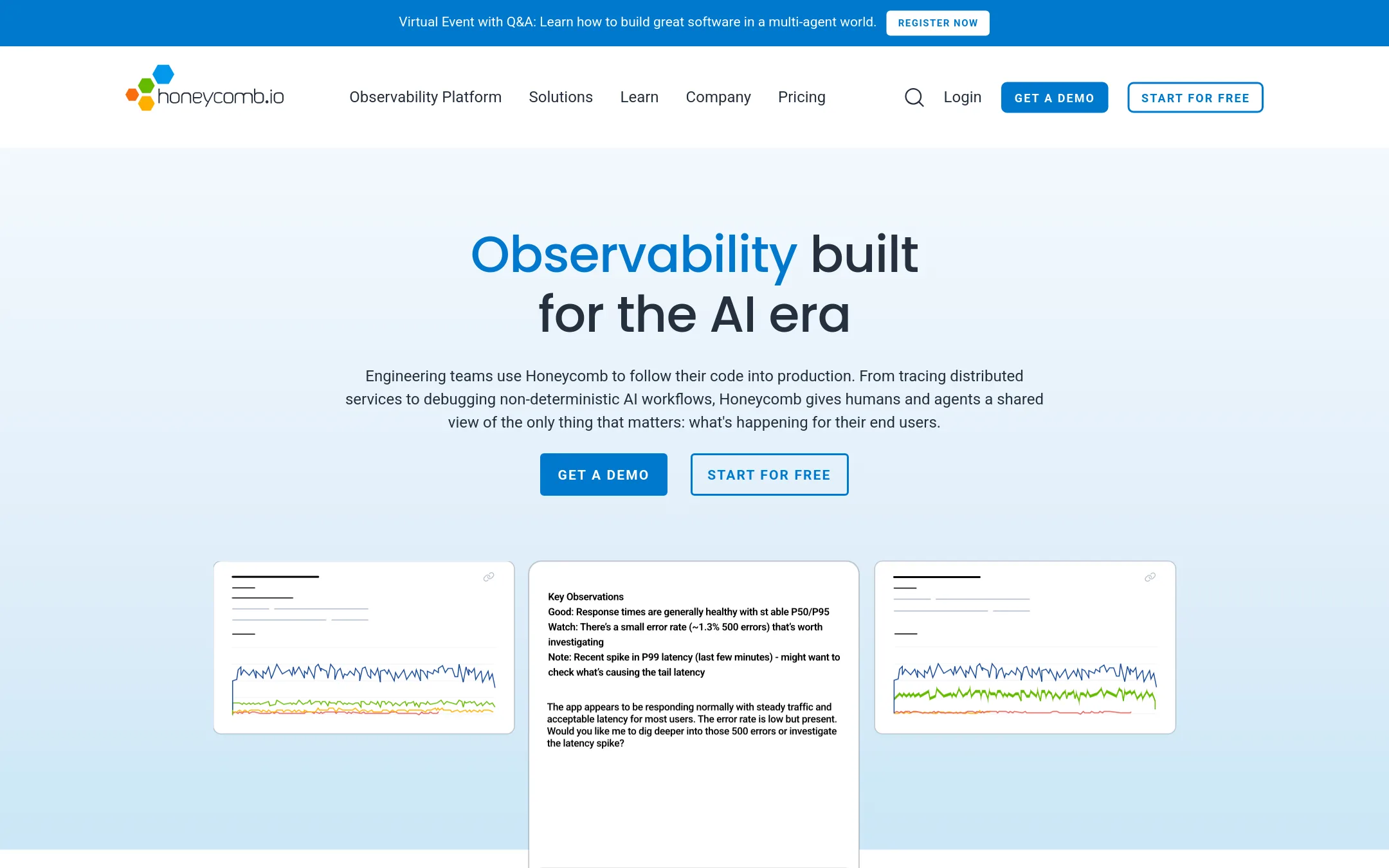
Honeycomb is a hosted observability platform that combines tracing, metrics, and log analytics with fast queries on high-cardinality data. Choose it over Jaeger if you want a managed service with built-in SLOs, LLM observability, and AI-assisted debugging, without running your own tracing infrastructure.
Where it is strong
- Unlimited seats and querying on all plans
- Sub-10 second queries and BubbleUp for fast root cause analysis
- OpenTelemetry-native with no vendor lock-in
Where it falls short
- Free plan has limited event volume (20M/month)
- SLOs are capped on Pro (2 SLOs) and require Enterprise for more
- Pricing:
- Free plan includes up to 20M events and 100M metrics data points per month. Pro starts at $150 per month for up to 750M events and 3.75B data points. Enterprise plans are custom, starting with 10 billion events per year.
- Switching from Jaeger:
- Moving from Jaeger involves exporting traces via OpenTelemetry to Honeycomb, which supports OTLP ingestion, and adapting to Honeycomb's query model and pricing based on event volume.
- Not published
6.Datadog
Best for: Teams that need a unified monitoring platform covering traces, metrics, logs, and security across cloud infrastructure and applications.
- Pricing
- Not published
- Category
- Analytics & Data
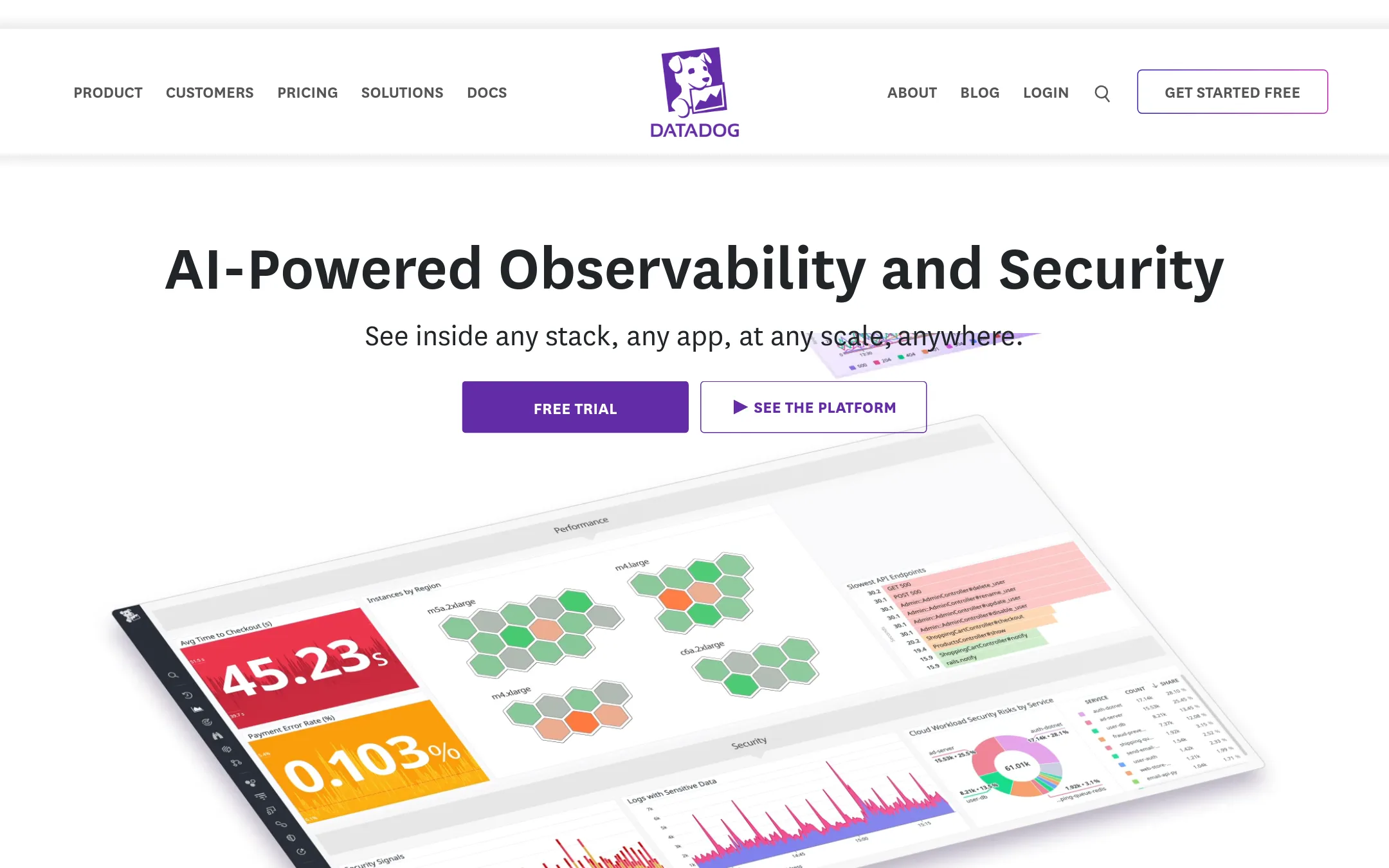
Datadog is a commercial observability platform that combines distributed tracing with metrics, logs, and security monitoring in one service. Choose it instead of Jaeger when you want a managed, full-stack monitoring solution with built-in alerting, dashboards, and incident management, rather than running and scaling your own open-source tracing backend.
Where it is strong
- Combines tracing with metrics, logs, and security in one platform
- Managed service, no need to operate your own tracing backend
- Broad integrations with cloud providers and common services
Where it falls short
- Pricing is not transparent and can scale with usage
- Closed source, so you cannot self-host or customize the core
- Pricing:
- Pricing is not published on the site.
- Switching from Jaeger:
- Moving from Jaeger means adopting Datadog's APM agent and sending traces via its SDK or OpenTelemetry, then re-creating dashboards and alerts in Datadog.
- Free tier. $0.40/GB
7.New Relic
Best for: Teams that want a hosted observability platform with APM, infrastructure monitoring, and AI assistance beyond just distributed tracing.

- Pricing
- Free tier. $0.40/GB
- Category
- Analytics & Data
New Relic is a full observability platform that combines tracing with metrics, logs, and AI-powered analysis. Choose it over Jaeger if you want a commercial product with a free tier, broader monitoring capabilities, and support rather than running your own open-source tracing infrastructure.
Where it is strong
- Free tier includes 100 GB data ingest and one full platform user
- Combines traces, metrics, logs, and AI in one platform
- Unlimited basic users at no cost
Where it falls short
- Full platform user costs add up quickly for larger teams
- More complex than Jaeger if you only need tracing
- Pricing:
- Pricing is usage-based: 100 GB free data ingest per month, then $0.40/GB for original data or $0.60/GB for Data Plus. Full platform users start at $10 for the first user and $99 per additional user (Standard) or $349/user (Pro annual).
- Switching from Jaeger:
- Moving from Jaeger means migrating your tracing data and instrumentation to New Relic's platform, which supports OpenTelemetry for easier data collection.
- Not published
8.Amazon Business
Best for: Organizations that want to centralize purchasing of business supplies with approval workflows and spend reporting
- Pricing
- Not published
- Category
- E-commerce
Amazon Business is a procurement platform for buying supplies and equipment, not a tracing tool. Choose it instead of Jaeger when you need to manage purchasing, approvals, and spend analytics for your organization, not monitor microservices.
Where it is strong
- Wide selection of business supplies with quantity discounts
- Approval workflows and purchasing guardrails
- Spend analytics and custom reports
Where it falls short
- Not a tracing or observability tool
- Pricing not published. Requires contacting sales
- Pricing:
- Pricing is not published on the site.
- LSee website
9.Lightstep
Other
A commercial observability platform focused on distributed tracing, now part of ServiceNow.
- Not published
10.Apache Airflow
Best for: Data engineering teams that need to author, schedule, and monitor batch workflows in Python.
- Pricing
- Not published
- Category
- Analytics & Data
Apache Airflow is a workflow orchestration platform for scheduling and monitoring data pipelines, not a tracing tool. Choose it over Jaeger when your main need is managing complex, Python-defined workflows rather than tracing requests across microservices.
Where it is strong
- Pipelines are defined in pure Python, giving full flexibility.
- UI provides clear status and logs for tasks.
- Extensible with custom operators and many integrations.
Where it falls short
- Not designed for distributed tracing, so it won't replace Jaeger for that use case.
- Requires Python knowledge to build workflows.
- Pricing:
- Pricing is not published on the site.
- From $15/host/mo
11.AppDynamics
Best for: ITOps and engineering teams in enterprises running hybrid or on-prem three-tier applications who need APM linked to business KPIs
- Pricing
- From $15/host/mo
- Category
- Other
AppDynamics is a commercial full-stack observability platform that ties application performance to business metrics, with monitoring for SAP, network, and digital experience. Choose it over Jaeger when you need APM for hybrid or on-prem three-tier applications and want business impact visibility, not just distributed tracing.
Where it is strong
- Monitors application performance tied to business metrics
- Includes SAP monitoring and digital experience monitoring
- Part of Splunk portfolio with log analytics integration
Where it falls short
- Commercial product, not open source like Jaeger
- Pricing is host-based and may be costly for large fleets
- Pricing:
- Pricing is not published on the site. Splunk Observability Cloud starts at $15 per host per month billed annually for Infrastructure, $60 for App & Infra, and $75 for End-to-End.
- Switching from Jaeger:
- Moving from Jaeger to AppDynamics means adopting a commercial APM platform with agent-based instrumentation, which is a different setup from Jaeger's open-source tracing pipeline.
- Free, then $26/mo
12.Sentry
Best for: Development teams that want a single tool for error tracking, tracing, and performance monitoring without managing their own infrastructure.
- Pricing
- Free, then $26/mo
- Category
- Other
Sentry is an application performance monitoring and error tracking platform that connects errors, logs, traces, and session replays in one place. Choose it over Jaeger when you need a broader observability tool that goes beyond distributed tracing to include error monitoring, performance insights, and AI debugging assistance.
Where it is strong
- One-line SDK setup for many languages and frameworks
- Connects errors, logs, traces, and replays in a single trace
- Includes AI debugging agent (Seer) on paid plans
Where it falls short
- Free plan limited to one user and 10 custom dashboards
- Advanced features like SAML/SCIM require business plan or higher
- Pricing:
- Pricing starts free for one user, then $26/mo per team plan (annual billing), $80/mo for business, and custom for enterprise.
- Switching from Jaeger:
- Moving from Jaeger involves adopting Sentry's SDKs and sending traces via OpenTelemetry, which Sentry supports, but you'll need to reconfigure your tracing pipeline.
See more comparisons in Other alternatives.
FAQ
Questions about Jaeger alternatives
What is the main difference between Jaeger and SigNoz?
SigNoz is a full observability platform that combines tracing, logs, metrics, and alerts in one tool, built on OpenTelemetry. Jaeger is focused solely on distributed tracing. Choose SigNoz if you need correlated logs and metrics alongside tracing, or if you want a managed cloud service instead of running your own tracing infrastructure.
Is there a free tier for any of these alternatives?
Yes, New Relic offers a free tier with 100 GB data ingest per month and one full platform user. Honeycomb has a free plan with up to 20M events and 100M metrics data points per month. Grafana Labs also has a free tier with 14 days retention for traces and other signals.
Which alternative is best for a small team that only needs tracing?
Zipkin is a lightweight, open source distributed tracing system that is free to self-host. It supports multiple storage backends and ingestion via HTTP, Kafka, or gRPC. However, its UI and features are more basic compared to Jaeger's advanced querying and dependency analysis.
Do any of these alternatives offer a managed service with no self-hosting?
Yes, several are hosted services. SigNoz Cloud, Datadog, New Relic, Honeycomb, and Grafana Labs all offer managed observability platforms. These remove the need to operate your own tracing backend, but pricing is typically usage-based and can scale with volume.
Which alternative is best for teams already using OpenTelemetry?
SigNoz and Honeycomb are both OpenTelemetry-native, meaning they can ingest traces, metrics, and logs directly via OTLP. This makes instrumentation portable and avoids vendor lock-in. Grafana Labs also builds on OpenTelemetry and Prometheus, so it integrates well with existing OpenTelemetry setups.
Last updated November 2, 2026.