SumUp alternatives
8 products compared · Updated November 25, 2026
The short answer
The three strongest SumUp alternatives depend on what the business needs. Shopify suits merchants who want a full online store that also sells in person and through AI chat channels. Clover suits restaurants and cafés that need kitchen display screens, a self-service kiosk, and commission-free online ordering. Square suits small and mid-sized US businesses that want payments, point of sale, and online checkout from one provider.
Your shortlist, at a glance
Read the comparisons ↓SquarePricing on siteSmall and mid-sized businesses in the United States that want payments, POS and online checkout under one provider
 Stripe2.9% + 30¢Online businesses and software teams that need custom billing, subscriptions, or payments built into their own product
- ZZettle by PayPalNot publishedSmall retailers and service businesses already using PayPal who want in-person payments without a monthly subscription.
- IIzettleNot publishedRetail and service businesses in the US already using PayPal that want in-person sales tied to inventory and accounting
 ShopifyFrom $29/mo + 2.9%Merchants who want a full online store with in-person and AI-channel selling, plus international shipping and staff permissions as they grow
 PayPalNot publishedOnline sellers and consumers who want checkout through a widely recognised wallet, plus person-to-person transfers in one app.
- DDojoNot publishedUK hospitality, retail and enterprise businesses that need card payments integrated with an existing EPOS system
 CloverNot publishedRestaurants and cafés that need kitchen displays, kiosks and commission-free online ordering on one system
About SumUp and its alternatives
SumUp is a payments and point-of-sale company used by millions of merchants, most of them small businesses. Its site says it offers card readers, a POS system, a customer loyalty tool called SumUp Connect, and a free business app, with a headline in-person transaction fee of 2.6% + 10¢. It also highlights next-day payouts and says it serves over 4 million merchants.
When comparing alternatives, weigh the pricing structure first: some tools charge a monthly subscription on top of card fees, while others make money only from transactions. Check which regions each product serves, whether it connects to the accounting, inventory, and delivery tools you already use, how support is delivered, and what contract terms apply, including whether a subscription can be cancelled.
Explore the alternatives
- Pricing on site
1.Square
Best for: Small and mid-sized businesses in the United States that want payments, POS and online checkout under one provider

- Pricing
- Pricing on site
- Category
- Finance & Accounting
Square is a payments, point of sale and online checkout provider for businesses of every size. Someone would pick it over SumUp when they need a broader set of tools for running the business, such as more advanced POS and checkout options beyond card acceptance and basic loyalty.
Where it is strong
- Payments, point of sale and online checkout are offered under one provider
- Covers businesses of every size, from single sellers to larger operations
- Publishes its processing fees and plans on a dedicated pricing page
Where it falls short
- The specific fee figures were not available in the text reviewed, so costs need checking directly
- Some software features may sit in paid plans on top of processing fees
- Pricing:
- In the United States, Square's pricing page lists processing fees and plans, but the exact figures were not captured in the text available here, so check the pricing page for current rates.
- 2.9% + 30¢
2.Stripe
Best for: Online businesses and software teams that need custom billing, subscriptions, or payments built into their own product
- Pricing
- 2.9% + 30¢
- Category
- Finance & Accounting
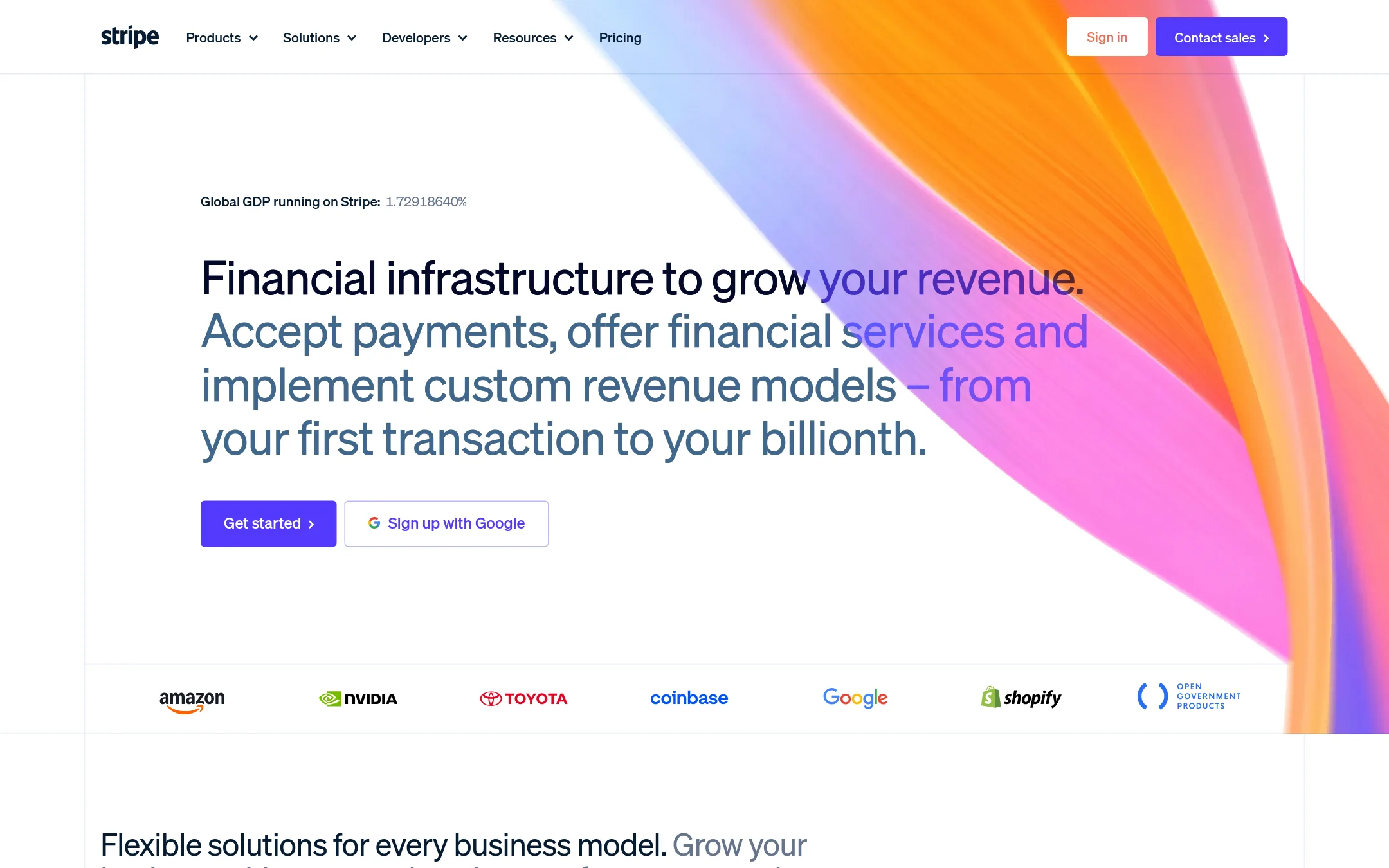
Stripe is a payments and financial infrastructure platform built for developers and businesses that need custom billing, global payment methods, and deep API control. Someone would pick it over SumUp when they run online sales, subscriptions, or a platform that needs to embed payments, rather than mainly taking card payments in person at a shop counter.
Where it is strong
- Supports 135+ currencies and payment methods and handles subscriptions and usage-based billing
- Offers APIs, SDKs, and a dashboard for building custom checkout and payment flows
- Provides fraud protection tools such as Radar and dispute management options
Where it falls short
- Setting up the more advanced features usually needs a developer, which SumUp's shop-counter setup does not
- Costs stack up across add-ons like disputes, currency conversion, and international cards, so the headline rate is not the full picture
- Pricing:
- Stripe's standard rate is 2.9% + 30¢ per successful domestic card transaction, with separate published rates for manually entered cards, international cards, currency conversion, and add-ons such as disputes and Instant Payouts.
- Switching from SumUp:
- Moving from SumUp to Stripe would mean building or integrating a payment flow with Stripe's APIs or a supported platform, which is more work than setting up a SumUp card reader.
- ZNot published
3.Zettle by PayPal
Best for: Small retailers and service businesses already using PayPal who want in-person payments without a monthly subscription.
- Pricing
- Not published
- Category
- Other
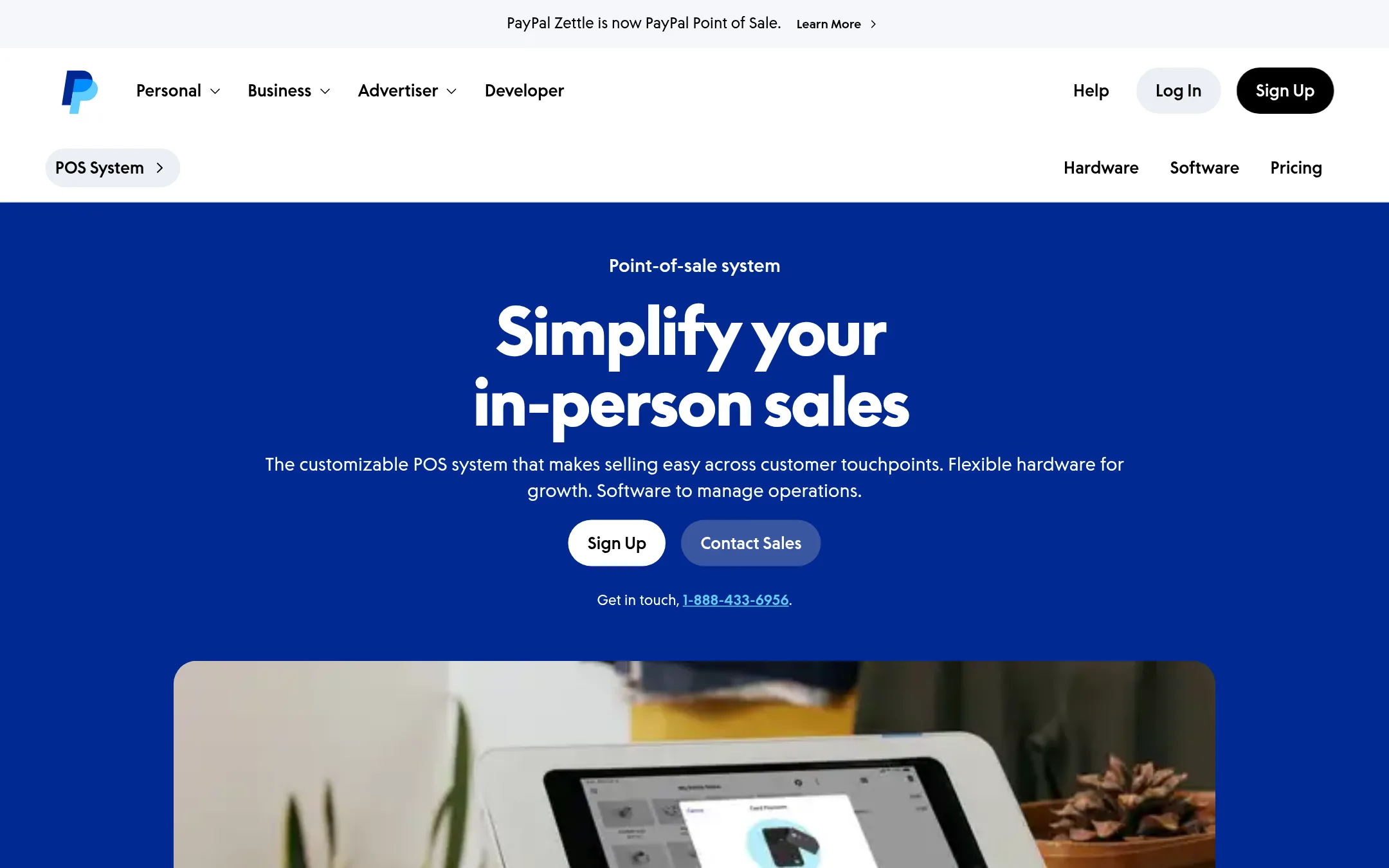
Zettle by PayPal, now branded PayPal Point of Sale, is a point-of-sale system for in-person sales. It runs on a free app and offers a card reader, a terminal with the app built in, or Tap to Pay on a phone with no extra hardware. Someone would pick it over SumUp if they already hold a PayPal business account and want payouts and inventory tools tied to that account.
Where it is strong
- No monthly fees, startup fees, or long-term commitments, according to the FAQ.
- Hardware options include a card reader, a terminal with the app built in, and Tap to Pay on a phone.
- Inventory, staff accounts, and sales reports come with the free POS app, and it syncs with QuickBooks, Xero, and Shopify.
Where it falls short
- The POS works only with the PayPal payment infrastructure, so it does not accept other processors.
- Enterprise in-person payments run through a separate Verifone partnership rather than the standard plan.
- Pricing:
- Pricing is not published on the site.
- Switching from SumUp:
- Moving from SumUp means downloading the PayPal POS app, signing up for or logging into a PayPal business account, and choosing a hardware option.
- INot published
4.Izettle
Best for: Retail and service businesses in the US already using PayPal that want in-person sales tied to inventory and accounting
- Pricing
- Not published
- Category
- Other
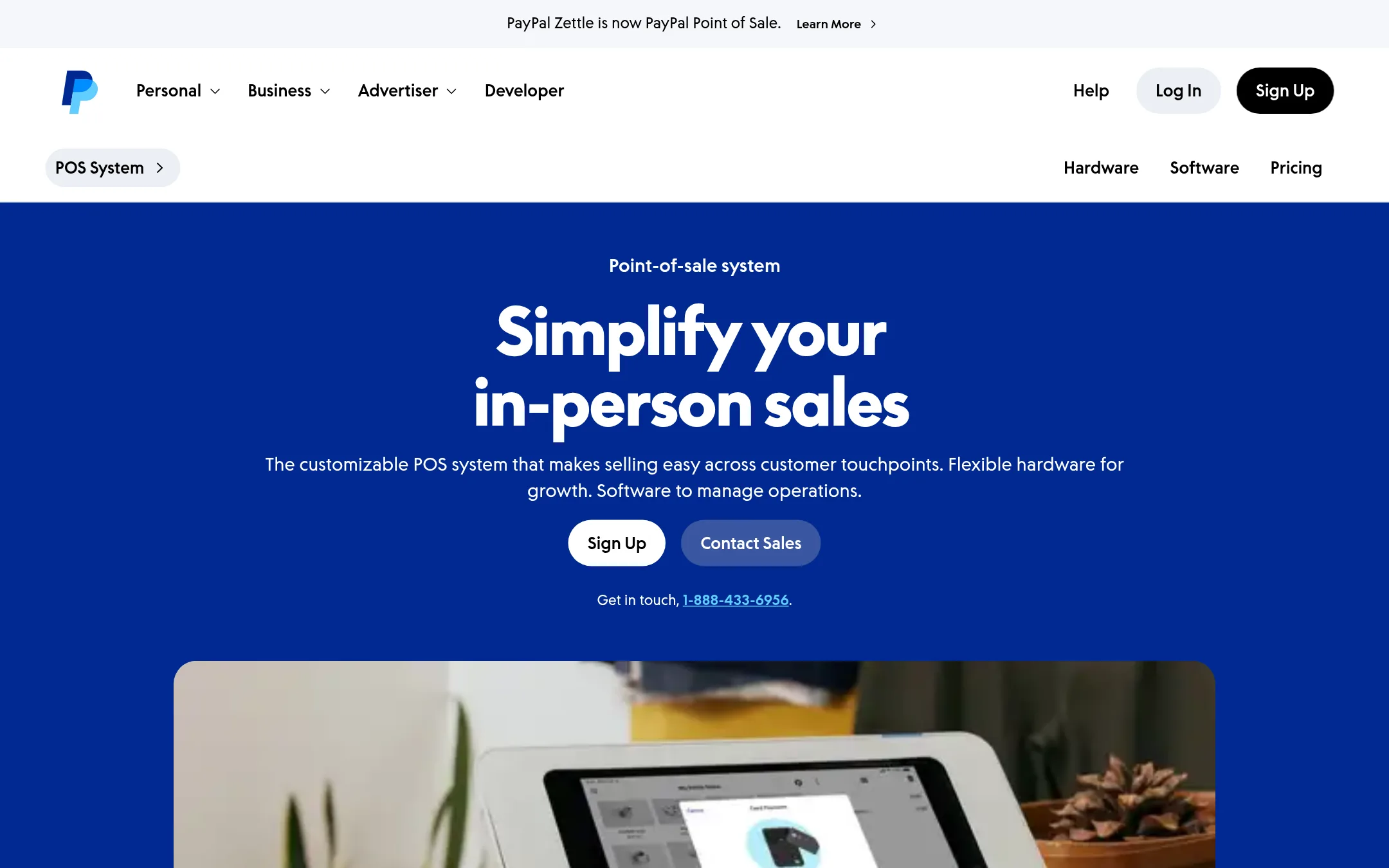
PayPal Point of Sale, formerly PayPal Zettle, runs in-person payments on a phone, a Card Reader, or a Terminal, with inventory, staff accounts, and sync with QuickBooks, Xero and Shopify. Choose it over SumUp if you already use PayPal for payments or need inventory tracking and accounting integrations, and you do not need SumUp's loyalty and SMS tools.
Where it is strong
- Tap to Pay on a phone needs no extra hardware
- Inventory alerts and sales reports come with the free POS app
- Syncs with QuickBooks, Xero and Shopify
Where it falls short
- Only works with the PayPal payment infrastructure
- No loyalty or SMS marketing tools comparable to SumUp Connect
- Pricing:
- Pricing is not published on the site.
- From $29/mo + 2.9%
5.Shopify
Best for: Merchants who want a full online store with in-person and AI-channel selling, plus international shipping and staff permissions as they grow

- Pricing
- From $29/mo + 2.9%
- Category
- E-commerce
Shopify is an online store platform that handles the storefront, checkout, inventory, shipping and in-person sales in one system. Someone would pick it over SumUp when they are building a real online shop with its own catalog, international sales, or a brand that wants to sell through AI chat channels, rather than mainly taking card payments with a reader.
Where it is strong
- Built-in online store with themes, AI store design and a large app store of 21,000+ apps
- Sell online, in person and in AI chats from the same product catalog
- Shopify Markets and built-in shipping tools support selling to customers in other countries
Where it falls short
- Monthly subscription plus card fees, so the total cost is higher than SumUp's free tier for simple card taking
- Advanced in-store features such as POS Pro are a paid add-on
- Pricing:
- Shopify's Basic plan is $29/month with card rates from 2.9% + 30¢ USD, rising to Plus from $2,300/month with card rates from 2.25% + 30¢ USD.
- Switching from SumUp:
- The site does not describe a migration process for moving from SumUp, so the steps for transferring products or customer data are not covered here.
- Not published
6.PayPal
Best for: Online sellers and consumers who want checkout through a widely recognised wallet, plus person-to-person transfers in one app.

- Pricing
- Not published
- Category
- Finance & Accounting
PayPal is a digital wallet and payments platform that lets people pay online, send money to friends, and earn cash back through its app and debit card. A founder might pick it over SumUp when the main need is online checkout and peer-to-peer payments rather than taking card payments in person at a counter.
Where it is strong
- Pay now or pay over time, with the buyer choosing how to pay.
- Send and request money between people, and pool money for group gifts.
- Offers a PayPal Debit Card with rewards and a savings account at 3.75% APY.
Where it falls short
- The homepage focuses on consumer payments and rewards, so it says little about point-of-sale hardware for in-person sales.
- Pricing for merchant fees is not shown in the supplied material, so costs have to be checked directly.
- Pricing:
- Pricing is not published on the site.
- DNot published
7.Dojo
Best for: UK hospitality, retail and enterprise businesses that need card payments integrated with an existing EPOS system
- Pricing
- Not published
- Category
- Other
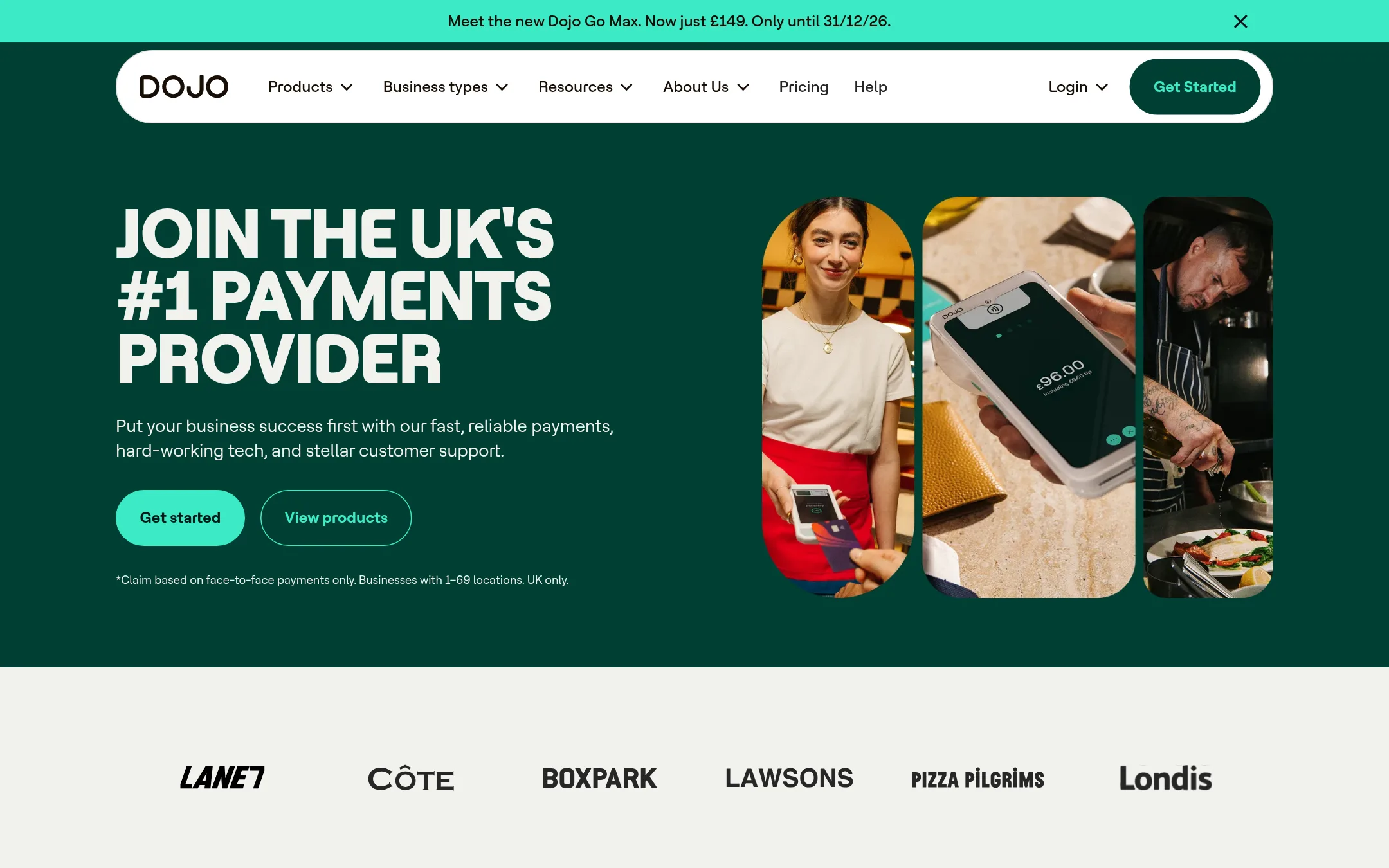
Dojo is a UK payments provider that sells card machines, a mobile app for taking contactless payments on an iPhone, and enterprise payment integrations with more than 450 EPOS systems. Someone would pick Dojo over SumUp if they run a UK business, especially in hospitality or retail, and need connections to an existing till system or 4G backup for card machines.
Where it is strong
- Integrates with more than 450 EPOS systems
- Card machines have built-in 4G, so payments continue if Wi-Fi drops
- Offers an iPhone app for contactless payments without extra hardware
Where it falls short
- Built for the UK market, so it is a poor fit for US businesses
- Lacks SumUp's built-in loyalty and customer messaging tools
- Pricing:
- Pricing is not published on the site.
- Switching from SumUp:
- Dojo says sign-up has no fixed contracts and that it could cover exit fees up to £3,000, subject to annual card turnover.
- Not published
8.Clover
Best for: Restaurants and cafés that need kitchen displays, kiosks and commission-free online ordering on one system
- Pricing
- Not published
- Category
- E-commerce
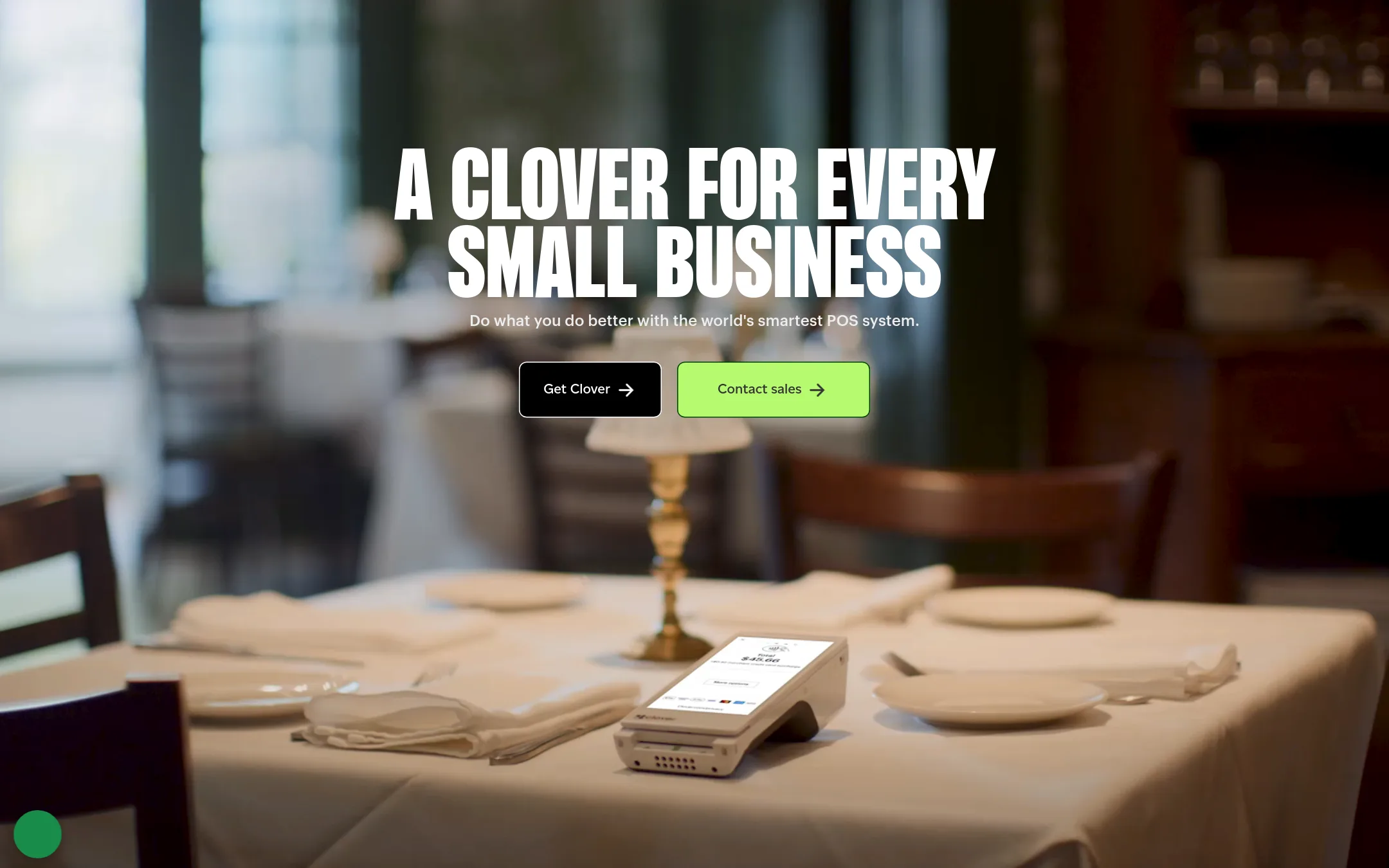
Clover is a point-of-sale system built around restaurants, with hardware such as a countertop Mini, kitchen display screens and a self-service kiosk. It also includes online ordering with commission-free ordering and delivery management. Choose Clover over SumUp if you run a full-service or quick-service restaurant and need kitchen and front-of-house hardware, not just a card reader or a basic POS.
Where it is strong
- Hardware built for restaurants, including kitchen display screens and a self-service kiosk
- Online ordering with menu management and direct checkout, without commission on orders
- Connects to third-party delivery apps and a large app market for business tools
Where it falls short
- Clover's prices are set through sales and subscriptions, so comparing its costs with SumUp's published rates is harder
- Its equipment and subscription terms are more involved than a simple card reader, and the subscription cannot be cancelled
- Pricing:
- Pricing is not published on the site.
- Switching from SumUp:
- Clover's subscriptions are non-cancelable and not refundable, so check the equipment and contract terms before moving from SumUp.
See more comparisons in Other alternatives.
FAQ
Questions about SumUp alternatives
What is the cheapest SumUp alternative for simple card payments?
Zettle by PayPal, now PayPal Point of Sale, charges no monthly, startup, or long-term fees, according to its FAQ. Its free POS app works with a card reader, a terminal, or Tap to Pay on a phone. It only works with PayPal's payment infrastructure, so it suits businesses already on PayPal.
Which alternative is best for a restaurant or café?
Clover is built around restaurants, with a countertop Mini, kitchen display screens, a self-service kiosk, and commission-free online ordering. Its pricing is set through sales and subscriptions and is harder to compare with SumUp's published rates. Its subscription terms are more involved than a simple card reader.
Which SumUp alternative works for an online store?
Shopify is an online store platform that handles storefront, checkout, inventory, shipping, and in-person sales in one system. Its Basic plan starts at $29 a month with card rates from 2.9% + 30¢. Costs are higher than SumUp's free tier for simple card taking, but it suits merchants building a full online shop.
Which alternative should a UK business consider?
Dojo is a UK payments provider with card machines, an iPhone app for contactless payments, and integrations with more than 450 EPOS systems. Its card machines have built-in 4G, so payments continue if Wi-Fi drops. It is built for the UK market, so it is a poor fit for US businesses.
What should I check before switching from SumUp?
Compare the full cost, not just the headline rate, since add-ons, international card fees, and monthly subscriptions change the total. Confirm that the new tool connects to your accounting, inventory, and delivery software, and that it serves your country. Check the contract terms and whether any subscription can be cancelled.
Last updated November 25, 2026.