
Activeloop alternatives
7 products compared · Updated November 15, 2026
The short answer
The three strongest alternatives to Activeloop are Langfuse, Weaviate and Pinecone. Langfuse suits engineering teams running production LLM apps that need tracing, evals and prompt management under an open source license. Weaviate suits AI product teams that need vector search and RAG in production and want the option to self-host. Pinecone suits production teams building semantic search, recommendations or RAG apps that need managed vector retrieval at scale.
Your shortlist, at a glance
Read the comparisons ↓ PineconeNot publishedProduction teams building semantic search, recommendations, or RAG apps that need managed vector retrieval at scale
- WWeaviateFrom $45/moAI product teams that need vector search and RAG in production and want open source with the option to self-host
- QQdrantFree tier + customEngineering teams building retrieval features on embeddings who want self-hosted, on-prem, or edge deployment options
 LanceDBNot publishedAI and robotics teams that want an open-source, serverless vector database to curate and search multimodal training data at dataset scale
 Zep AI$125/mo + $25/10k crEnterprise teams in regulated industries that need governed company knowledge for internal agents
 Langfuse$8 per 100k unitsEngineering teams running production LLM apps that need tracing, evals, and prompt management under an open source license
- AArize AIFrom $0 / $50 per moAI engineering teams running production agents or LLM apps that need tracing, evals and debugging
About Activeloop and its alternatives
Activeloop is the company behind Deeplake, a GPU database for agents. According to its site, it offers three surfaces, Deeplake for data, Hivemind for shared agent memory that turns traces into team skills, and Refinery for turning feedback into continuous learning. Its stated aim is to run a verified improvement loop across data, memory and software.
When comparing alternatives in this category, weigh the pricing structure first, since some vendors publish plans and others require a sales conversation. Check which regions and deployment options are available, including self-hosting or your own VPC. Look at the integrations you already run, the level of support included, and the contract terms on the tier you would actually buy.
Explore the alternatives
- Not published
1.Pinecone
Best for: Production teams building semantic search, recommendations, or RAG apps that need managed vector retrieval at scale
- Pricing
- Not published
- Category
- AI & Machine Learning
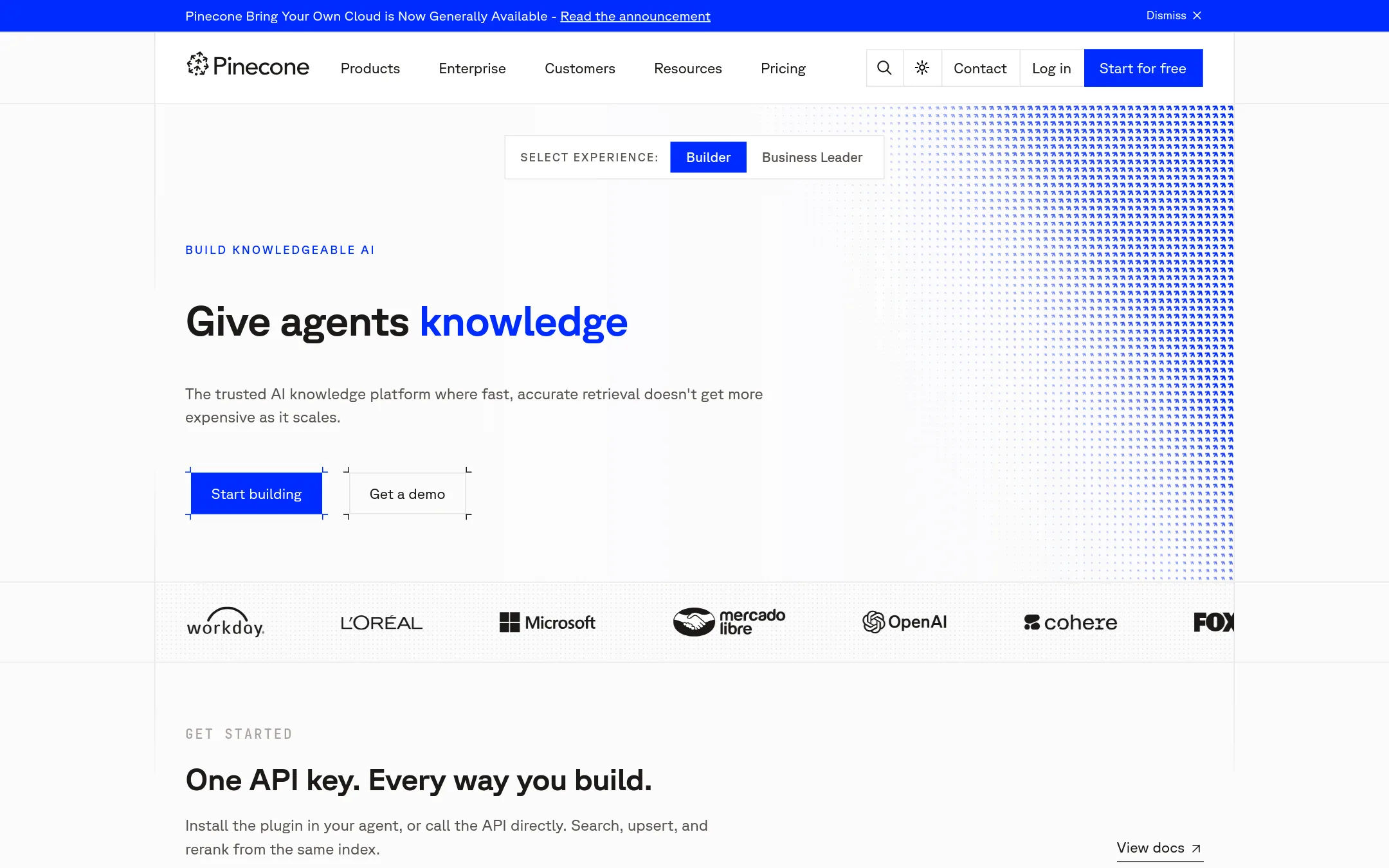
Pinecone is a fully managed vector database for AI apps, with Nexus added as a knowledge layer that compiles enterprise data and serves it through a single query. Teams pick it over Activeloop when their main need is fast, managed retrieval for search, recommendations, or RAG rather than a GPU-native data engine with versioning and shared agent memory.
Where it is strong
- Writes are searchable within seconds, and indexing needs no manual tuning.
- Offers a free Starter tier and a Standard plan with usage-based pricing.
- Holds SOC 2 Type II, HIPAA, GDPR and ISO 27001 certifications, with SSO and RBAC.
Where it falls short
- Enterprise features such as BYOC, SCIM and the 99.95% uptime SLA sit on the top tier.
- Its focus is retrieval, so it does not cover the continuous-learning loop and shared agent skills that Activeloop describes.
- Pricing:
- Pricing is not published on the site.
- WFrom $45/mo
2.Weaviate
Best for: AI product teams that need vector search and RAG in production and want open source with the option to self-host

- Pricing
- From $45/mo
- Category
- Other
Weaviate is an open-source vector database that also covers embeddings and a natural-language Query Agent, so search and RAG can run in one system. A team would pick it over Activeloop when the job is vector search and retrieval for an AI app, and it wants the option to self-host or run its own cloud cluster. Activeloop's focus is on Deeplake data, shared agent memory, and continuous learning loops.
Where it is strong
- Open source with over 20M downloads, and you can run it in Weaviate's cloud or your own
- Embeddings and a Query Agent are built in, so you need fewer separate services
- Multi-tenancy supports tens of thousands of segmented indexes in one cluster, per a customer quote on the site
Where it falls short
- Its core strength is vector search, so teams wanting Activeloop's shared agent memory or continuous learning loop would need to build that l
- The Free tier is capped at 100,000 objects and 1 GB of memory, and the lower-tier cloud plans offer only a few regions
- Pricing:
- Pricing is not published on the site in a single country-specific form, but Weaviate Cloud has a Free plan, a Flex plan with pay-as-you-go billing and a $45 monthly minimum, and a Premium plan with prepaid contracts starting from $400 a month.
- QFree tier + custom
3.Qdrant
Best for: Engineering teams building retrieval features on embeddings who want self-hosted, on-prem, or edge deployment options
- Pricing
- Free tier + custom
- Category
- Other
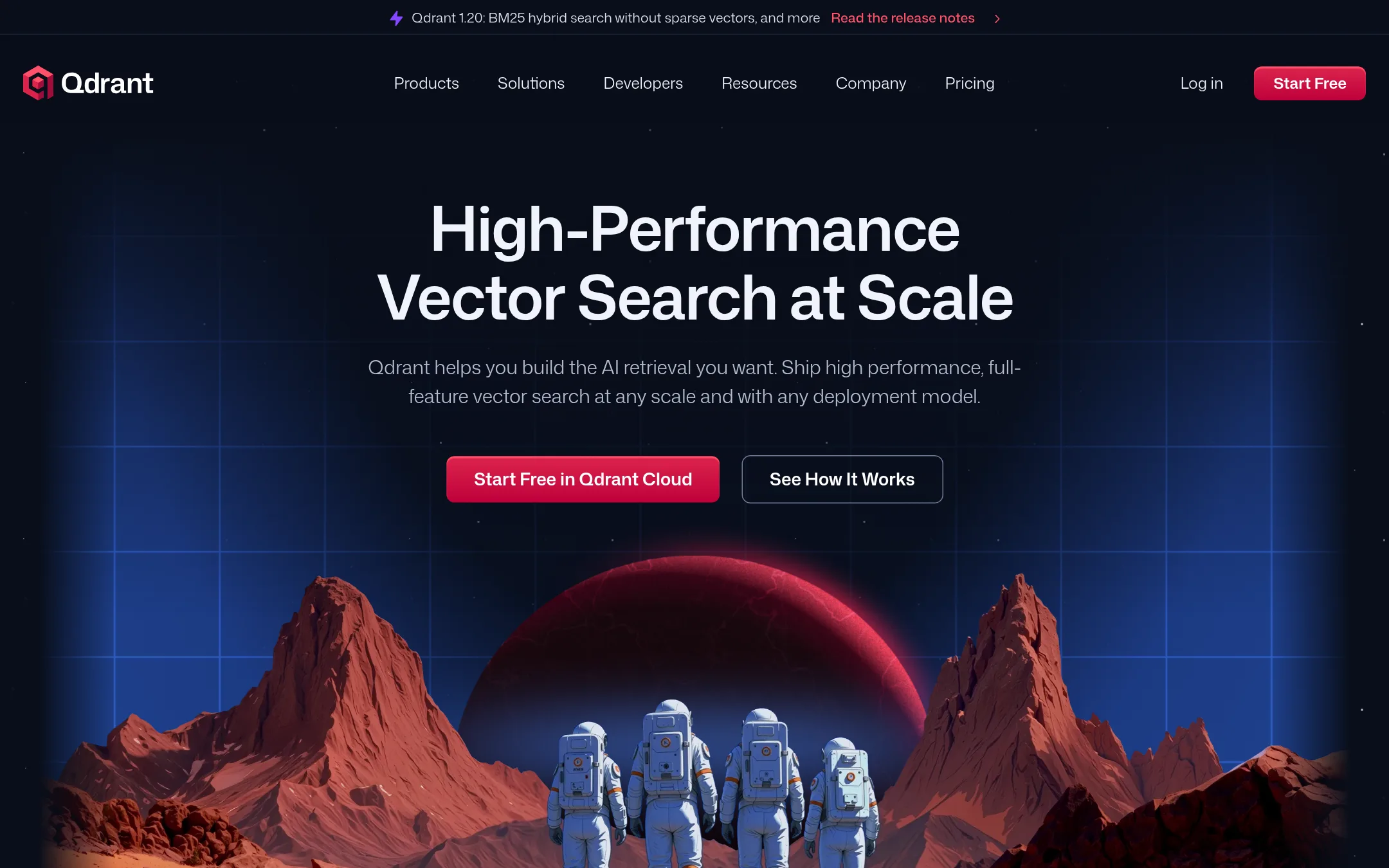
Qdrant is an open-source vector search engine written in Rust. It handles similarity search with metadata filters, hybrid dense and sparse search, and reranking. Teams pick it over Activeloop when their core need is fast retrieval over embeddings they already manage, rather than a versioned data engine with shared agent memory.
Where it is strong
- Open-source engine written in Rust, with self-hosting possible
- Metadata filters applied during HNSW traversal, not before or after
- Deployment options from managed cloud to air-gapped private cloud
Where it falls short
- Focused on vector search, so it lacks Activeloop's shared agent memory and continual-learning loop
- Hybrid and Private Cloud pricing is not published as figures and requires contacting sales
- Pricing:
- Qdrant Cloud has a free tier with a single node of 0.5 vCPU, 1GB RAM and 4GB disk, a Standard tier for production workloads, a Premium tier with SSO and a 99.9% uptime SLA, and custom pricing for Hybrid and Private Cloud.
- Not published
4.LanceDB
Best for: AI and robotics teams that want an open-source, serverless vector database to curate and search multimodal training data at dataset scale
- Pricing
- Not published
- Category
- AI & Machine Learning
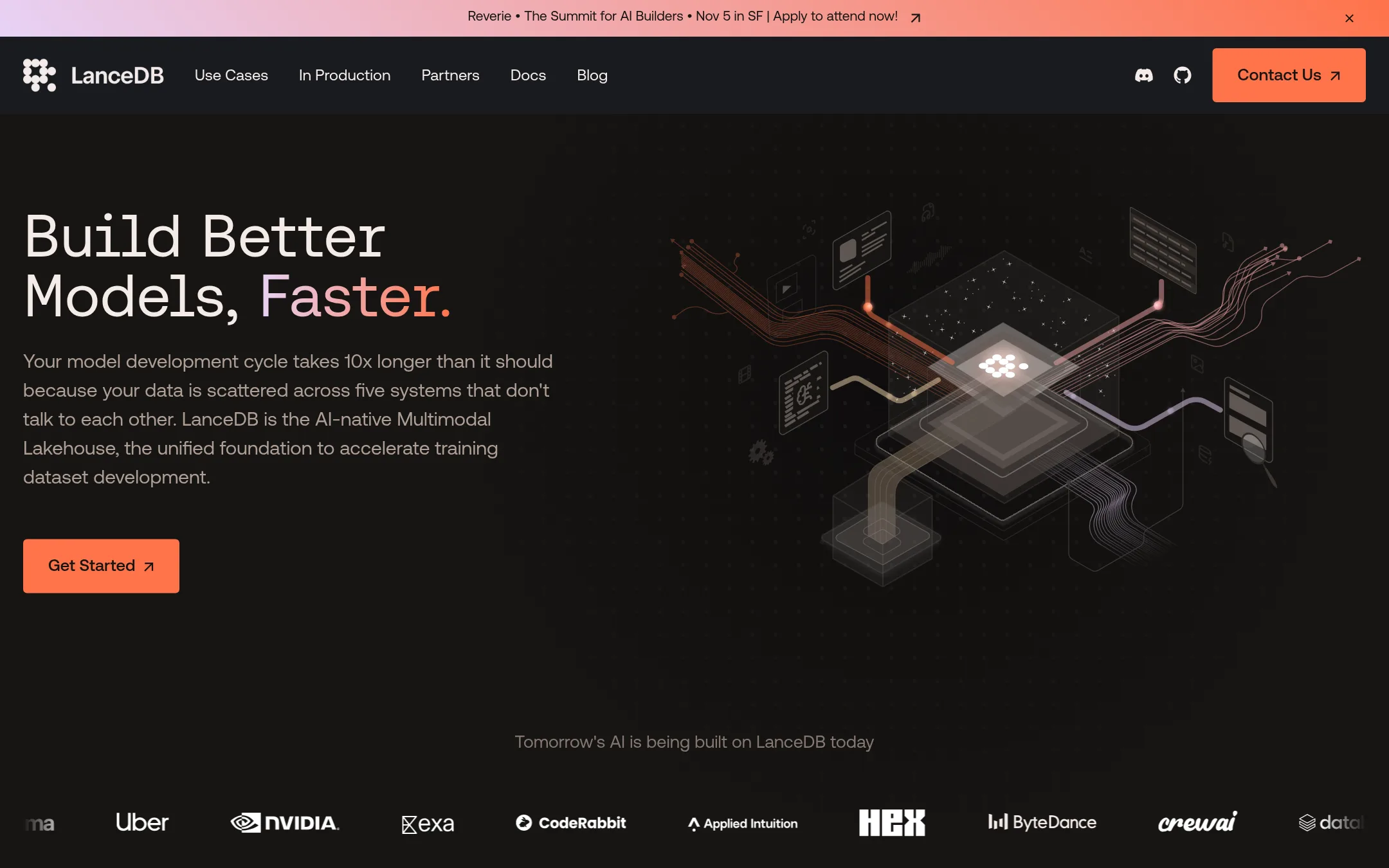
LanceDB is an open-source, serverless vector database built for AI workloads, with one table holding curated training data, embeddings and search. Teams pick it over Activeloop when they want to run the data layer themselves and keep multimodal data in one place for model research and training.
Where it is strong
- Open source, so the core engine can be inspected and self-hosted
- One table covers curation, enrichment, search and training data prep
- Serverless design, with search that scales from millions to billions of vectors
Where it falls short
- Pricing is not published, so cost comparison needs a sales conversation
- Its public material focuses on training data and vector search, so it may not cover agent traces or team skill sharing the way Activeloop's
- Pricing:
- Pricing is not published on the site.
- Switching from Activeloop:
- Moving from Activeloop to LanceDB is not covered in the supplied material, so no migration steps can be stated.
- $125/mo + $25/10k cr
5.Zep AI
Best for: Enterprise teams in regulated industries that need governed company knowledge for internal agents
- Pricing
- $125/mo + $25/10k cr
- Category
- Customer Support
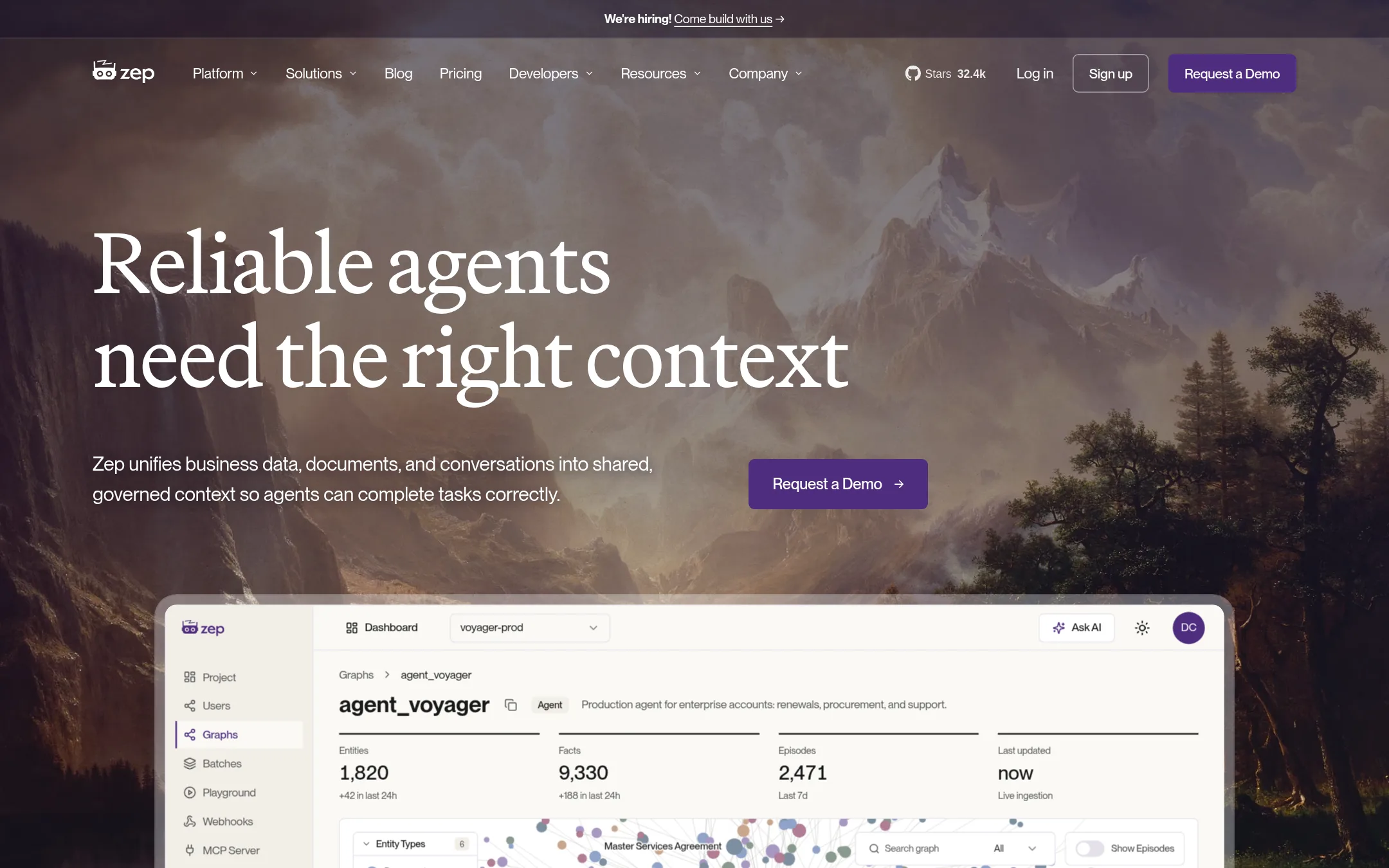
Zep is an enterprise context layer for agents. It gives agents governed access to company knowledge through a temporal context graph, and it builds reusable skills from agent runs. Teams pick it over Activeloop when the problem is business context and access control rather than GPU-native vector data, for example a company brain that must respect per-user and per-agent permissions.
Where it is strong
- Attribute-based access control decides what context each agent can retrieve, and every request is logged
- Connectors sync Slack, Google Drive, Notion, SharePoint and warehouses like Snowflake and BigQuery into context graphs
- Deployment choice of Zep Cloud, Cloud with your own keys, or your own VPC
Where it falls short
- Pricing is credit based, so costs depend on how many Episodes you send and their size
- Memory, retrieval and storage are unmetered, but the per-Episode credit model takes some working out before you can forecast a bill
- Pricing:
- Flex is $125 per month with 50,000 credits included and $25 per 10,000 extra credits, Flex Plus is $375 per month with 200,000 credits, and Enterprise is custom.
- $8 per 100k units
6.Langfuse
Best for: Engineering teams running production LLM apps that need tracing, evals, and prompt management under an open source license
- Pricing
- $8 per 100k units
- Category
- AI & Machine Learning
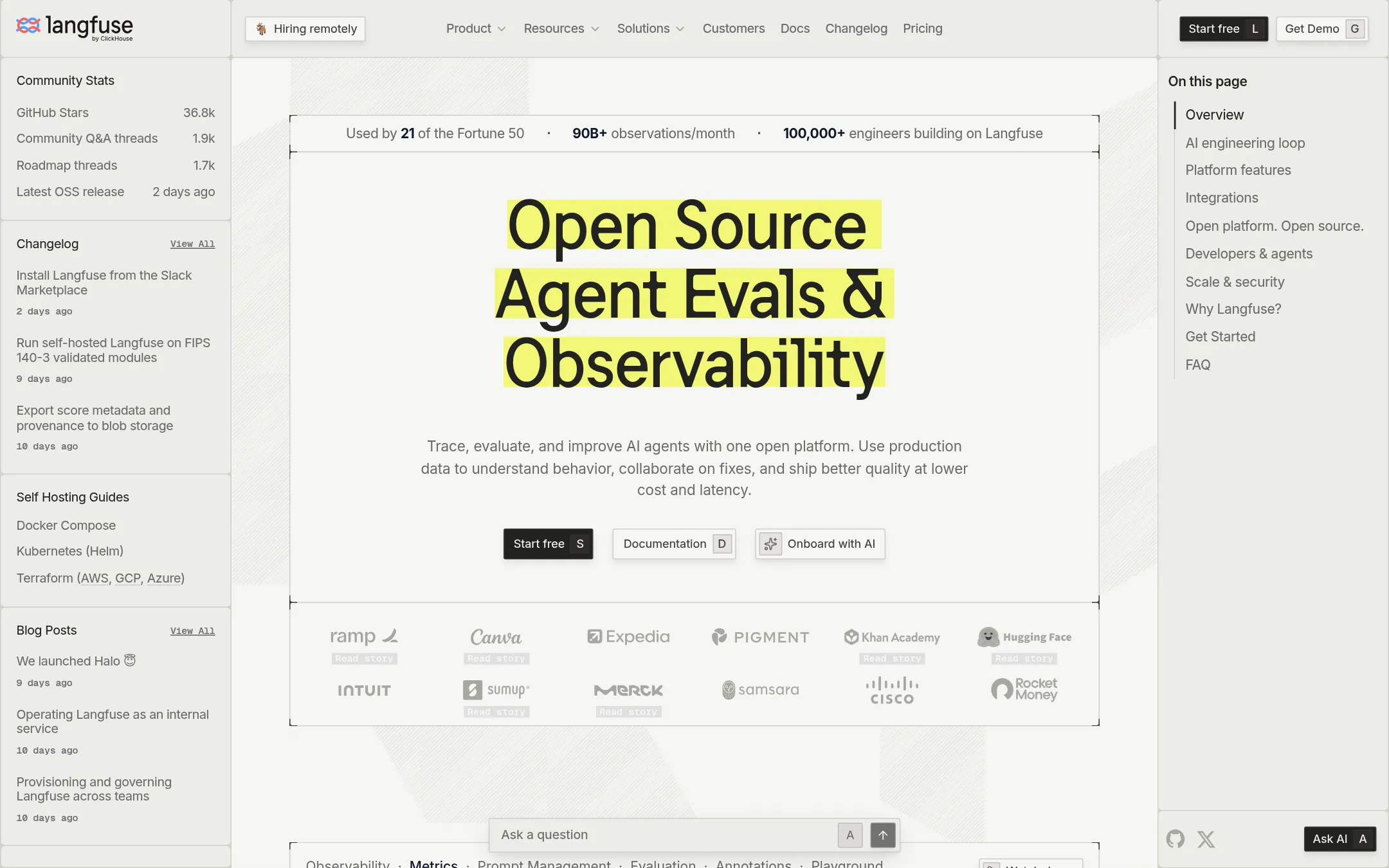
Langfuse is an open source platform for tracing, evaluating, and managing prompts for LLM apps and agents. Teams pick it over Activeloop when they want observability and evals for production AI calls, self-hosting under an MIT license, or OpenTelemetry-native instrumentation. Activeloop's seed material centers on Deeplake, a GPU data and memory database, so the two solve different problems.
Where it is strong
- Open source under the MIT license, with self-hosting available
- Built on OpenTelemetry, so existing instrumentation can feed it
- Covers tracing, evals, prompt management, and human annotation in one platform
Where it falls short
- Its core focus is observability and evals rather than a data or vector database
- Enterprise features such as SSO and SCIM sit on higher-tier plans, and pricing for those is custom
- Pricing:
- Langfuse's Hobby plan is free with 50k units per month, and the Core plan includes 100k units per month with additional usage at $8 per 100k units.
- AFrom $0 / $50 per mo
7.Arize AI
Best for: AI engineering teams running production agents or LLM apps that need tracing, evals and debugging
- Pricing
- From $0 / $50 per mo
- Category
- Other
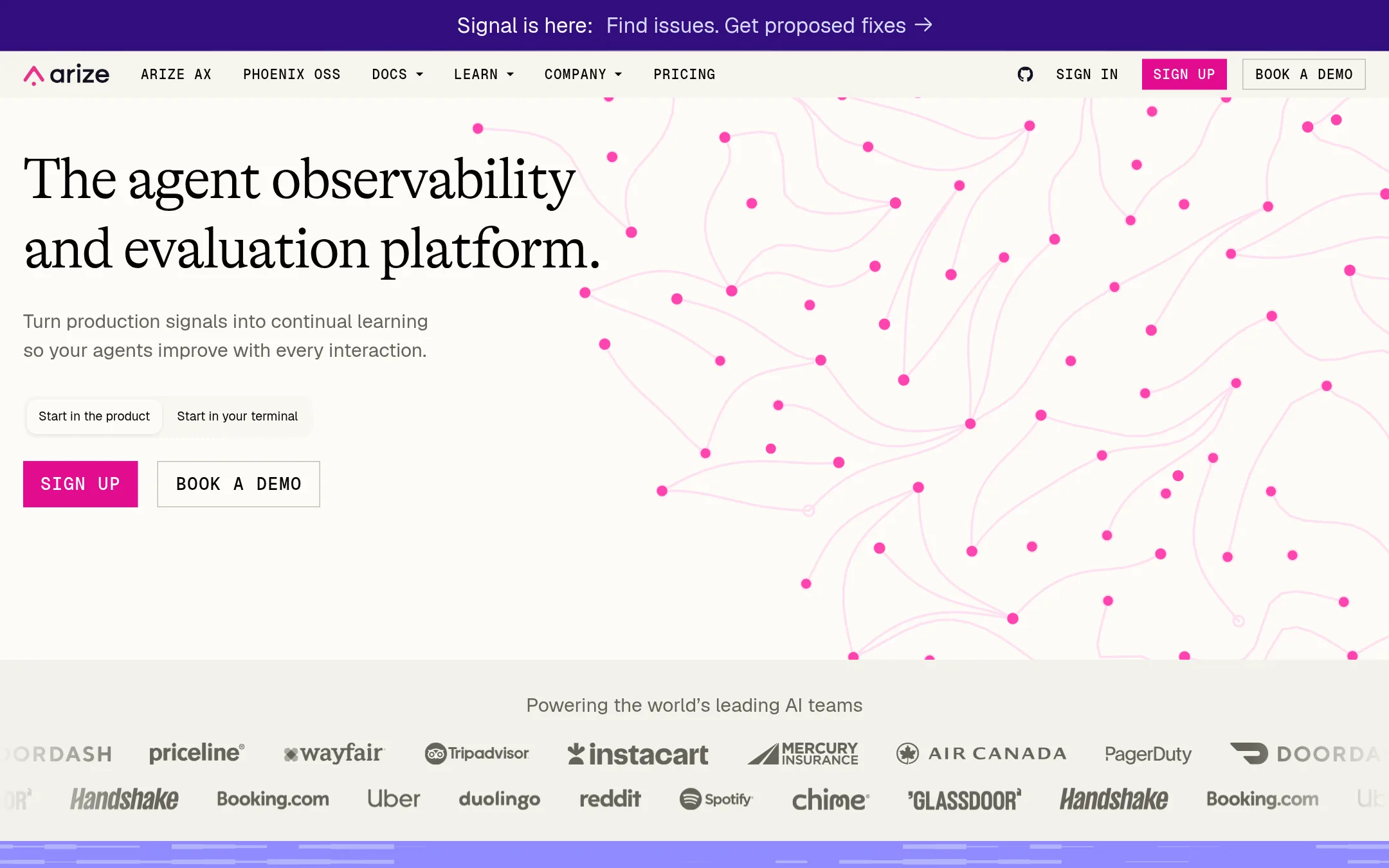
Arize AI is an observability and evaluation platform for AI agents. It traces what an agent did on each request, runs evals at scale, and helps teams test fixes before they reach production. Teams pick it over Activeloop when their main problem is debugging and measuring agent behavior, not storing or querying the underlying data.
Where it is strong
- Traces every LLM call, with OpenInference and OpenTelemetry as open standards
- Phoenix is open source and can run locally or be self-hosted
- Evals run on spans, traces and sessions, with online evals in production
Where it falls short
- The free tier keeps only 15 days of retention and 25k spans per month
- Enterprise pricing requires a custom quote
- Pricing:
- The AX Free plan is $0 with 25k spans and 1 GB ingestion per month, the AX Pro plan is $50 per month with 50k spans and 10 GB ingestion, and Enterprise is custom.
See more comparisons in AI & Machine Learning alternatives.
FAQ
Questions about Activeloop alternatives
What is Activeloop known for?
According to its site, Activeloop is the company behind Deeplake, a GPU database for agents. It also offers Hivemind for shared agent memory and Refinery for continuous learning from feedback. Its positioning centers on running a verified improvement loop across data, memory and software.
Which alternative should I consider if I mainly need observability and evals?
Langfuse is built for tracing, evaluating and managing prompts for LLM apps and agents. It is open source under the MIT license and can be self-hosted. Arize AI is another option for tracing and evals, with a free tier that includes 25k spans per month.
Which alternative fits teams that want open source vector search they can self-host?
Weaviate and Qdrant are both open-source vector databases that can be self-hosted. Weaviate also includes embeddings and a natural-language Query Agent. Qdrant is written in Rust and offers deployment options from managed cloud to private cloud.
Which alternative works for enterprises that need governed access to company knowledge?
Zep AI is an enterprise context layer that uses attribute-based access control to decide what context each agent can retrieve, and it logs every request. It can be deployed in Zep Cloud, in cloud with your own keys, or in your own VPC. Its pricing is credit based, so forecasting a bill takes some work.
How do I compare pricing across these alternatives?
Some vendors publish concrete plans, such as Langfuse's Hobby plan at no cost with 50k units per month or Arize AI's Pro plan at $50 per month. Others, including LanceDB and Pinecone, do not publish pricing on their sites and need a sales conversation. Compare the usage units each vendor meters, since they differ between traces, spans, units, credits and vectors.
Last updated November 15, 2026.