
Alloy Automation alternatives
10 products compared · Updated October 16, 2026
The short answer
For most teams, the strongest alternatives are Zapier, Make, and n8n. Zapier suits small teams and non-developers who want broad app coverage without code. Make suits teams that want a visual, no-code tool for internal workflows and AI agents. n8n suits technical teams that want code-level control and the option to self-host.
Your shortlist, at a glance
Read the comparisons ↓WorkatoCustom quoteLarge enterprises that need to govern and scale AI agents alongside traditional integrations across thousands of apps.
 BoomiNot publishedLarge enterprises that need a single platform for API management, data integration, and AI agent governance across hundreds of systems.
- MMuleSoftSee websiteEnterprise integration and API platform
 ZapierFrom $19.99/moSmall teams and non-developers who want to automate everyday tasks across many apps without writing code.
 MakeNot publishedTeams that want a visual, no-code automation tool for internal workflows and AI agents, from startups to enterprises.
 Tray.ioCustom quoteEnterprises that need governed AI agents, MCP management, and broad integration across departments.
 JitterbitCustom quoteEnterprises that need deep ERP and EDI integrations with low-code app development and AI agents.
 CeligoCustom quoteEnterprise teams that need governed, scalable automation across many departments and systems, including EDI and API management.
 n8nFrom $24/moTechnical teams that want to build AI agents and workflows with code-level control and the option to self-host.
 Apache AirflowNot publishedData engineering teams that need a self-hosted, code-first orchestrator for complex pipelines across cloud services.
About Alloy Automation and its alternatives
Alloy Automation is a platform for building and managing SaaS integrations. It is known for helping companies create integration marketplaces inside their products and for enabling secure autonomous AI agents. Its site positions it as enterprise-grade integration infrastructure for the age of AI.
When comparing alternatives, weigh pricing structure (per task, per execution, per credit, or custom), regions supported, the number and depth of integrations, the level of support, and contract terms. Some tools publish transparent pricing, while others require sales conversations. Some are built for internal workflows, while others focus on embedding integrations into your product.
Explore the alternatives
- Custom quote
1.Workato
Best for: Large enterprises that need to govern and scale AI agents alongside traditional integrations across thousands of apps.
- Pricing
- Custom quote
- Category
- AI & Machine Learning
Workato is an enterprise integration platform that connects apps, data, and AI agents with governance and orchestration. Choose it over Alloy Automation if you need a broader iPaaS with agentic AI capabilities, centralized control, and support for complex enterprise workflows.
Where it is strong
- Connects to 17,000+ apps and APIs out of the box
- Includes governance, security, and observability for AI agents
- Offers multiple editions from Standard to Workato ONE for scaling needs
Where it falls short
- Pricing is not transparent and likely enterprise-focused
- May be overkill for startups needing simple SaaS integrations
- Pricing:
- Pricing is not published on the site. Editions start at Standard and scale to Workato ONE with custom contract terms.
- Switching from Alloy Automation:
- Moving from Alloy Automation to Workato involves re-architecting integrations on a new platform, which may require significant migration effort.
- Not published
2.Boomi
Best for: Large enterprises that need a single platform for API management, data integration, and AI agent governance across hundreds of systems.
- Pricing
- Not published
- Category
- E-commerce
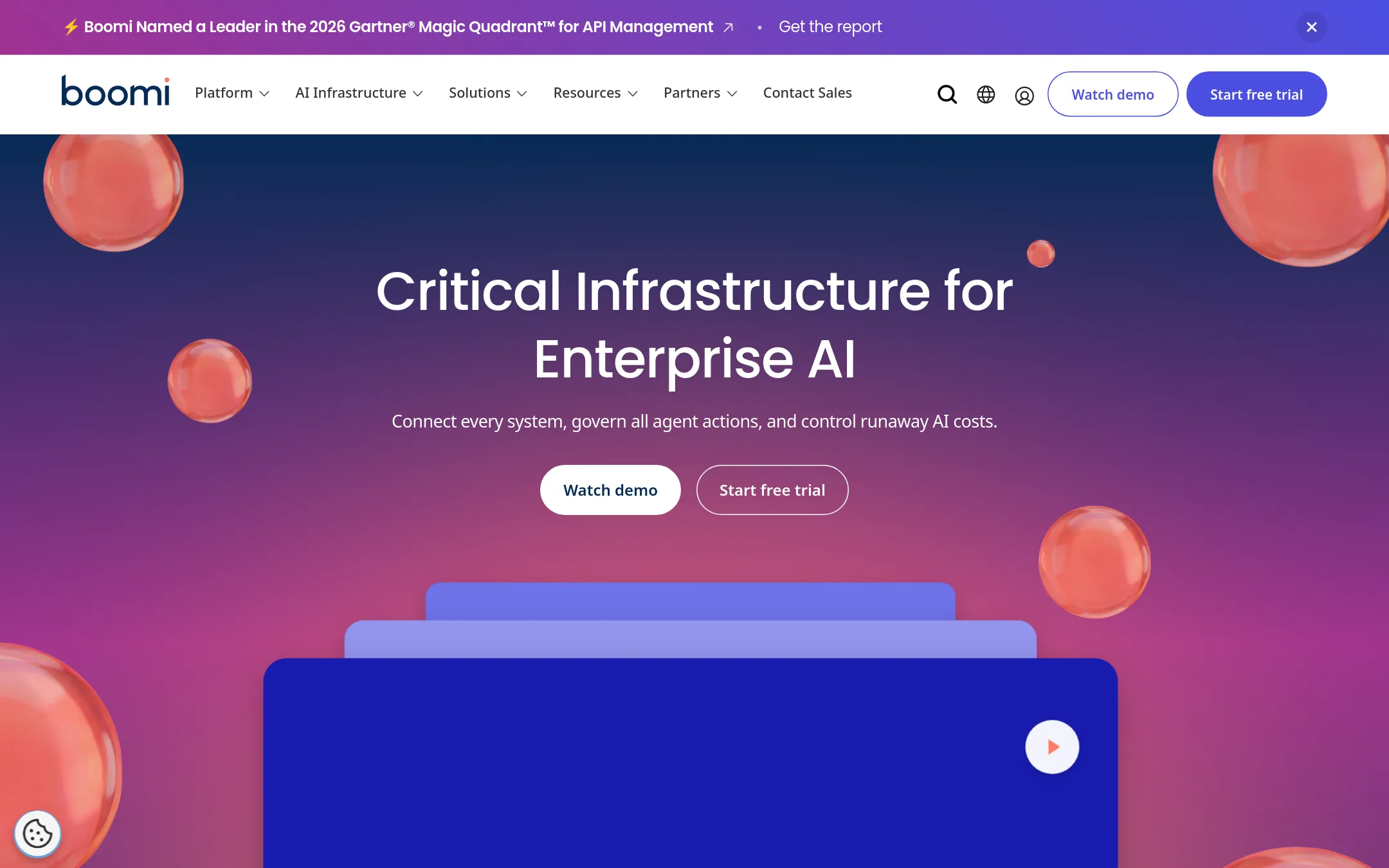
Boomi is an enterprise integration platform that connects applications, APIs, data, and AI agents. Choose it over Alloy Automation when you need a broad, governed integration platform for large organizations, especially for API management, data pipelines, and AI agent orchestration, rather than a product-focused integration marketplace builder.
Where it is strong
- Covers API management, data integration, B2B/EDI, and AI agent governance in one platform
- Runs agents and integrations behind your firewall for data sovereignty
- Named a Leader in Gartner Magic Quadrant for API Management and iPaaS
Where it falls short
- Pricing is not public, so you must contact sales for a quote
- Heavy enterprise focus may be overkill for startups building a simple integration marketplace
- Pricing:
- Pricing is not published on the site.
- MSee website
3.MuleSoft
Developer Tools
MuleSoft, an Salesforce company, delivers API-led connectivity and Anypoint Platform for large-scale integrations. It matches Alloy's enterprise scalability and governance but carries higher licensing costs and focuses more on APIs than AI agents or embedded marketplaces.
- From $19.99/mo
4.Zapier
Best for: Small teams and non-developers who want to automate everyday tasks across many apps without writing code.
- Pricing
- From $19.99/mo
- Category
- Productivity & Project Management
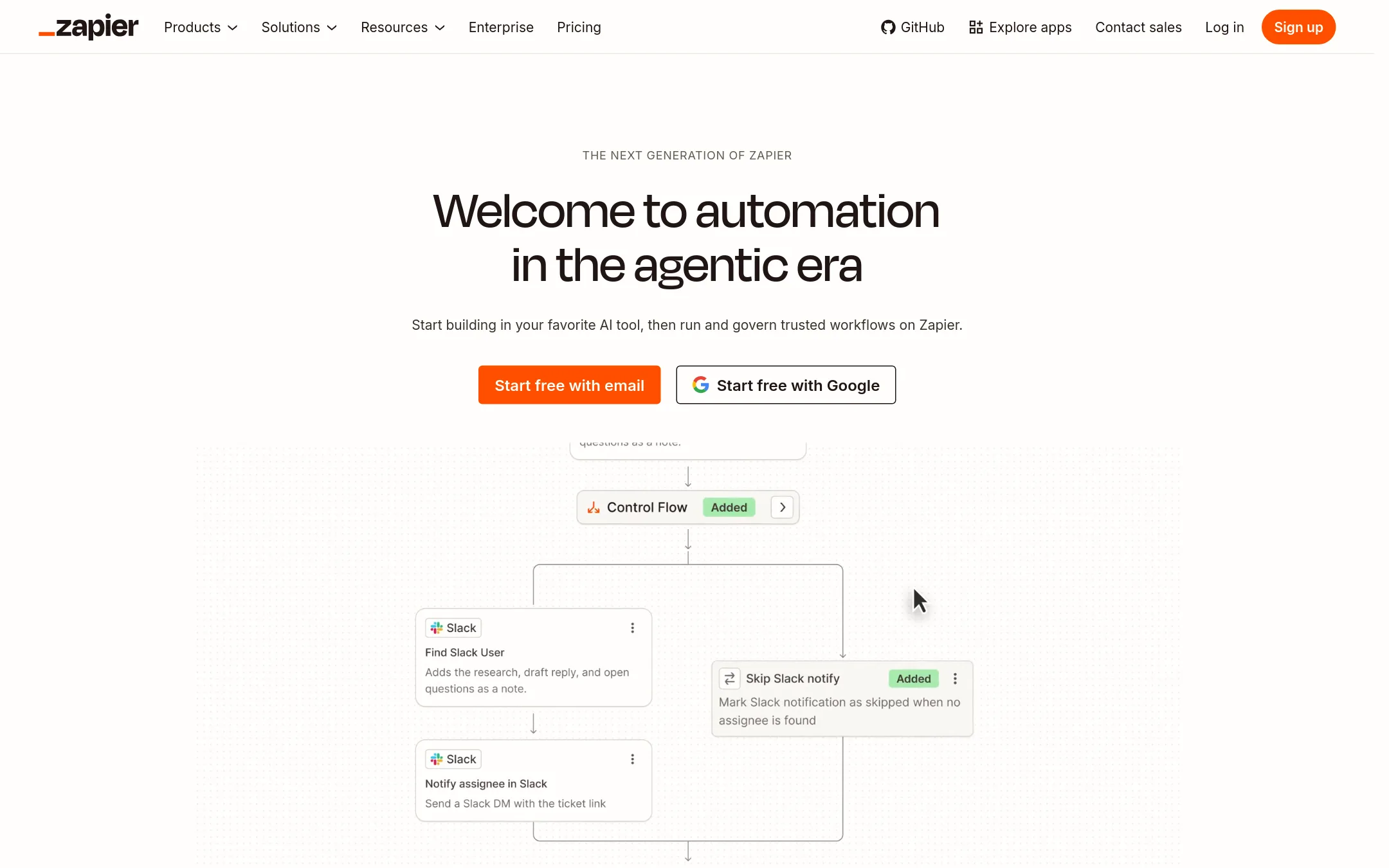
Zapier is a general-purpose automation platform that connects thousands of apps with simple triggers and actions. Choose it over Alloy Automation when you need broad app coverage and a low-code tool for internal workflows, rather than building customer-facing integrations into your product.
Where it is strong
- Connects to 9,000+ apps, far more than Alloy's catalog
- Free tier lets you test workflows without paying
- Visual editor makes automation accessible to non-developers
Where it falls short
- Not designed for embedding integrations into your own product
- Per-task pricing can get expensive at high volume
- Pricing:
- Free plan includes 100 tasks per month. Paid plans start at $19.99 per month for Professional, $49 per month for Team, and custom pricing for Enterprise.
- Switching from Alloy Automation:
- Moving from Alloy means rebuilding your workflows in Zapier's trigger-and-action model, which is simpler but less flexible for product-native integrations.
- Not published
5.Make
Best for: Teams that want a visual, no-code automation tool for internal workflows and AI agents, from startups to enterprises.
- Pricing
- Not published
- Category
- Productivity & Project Management
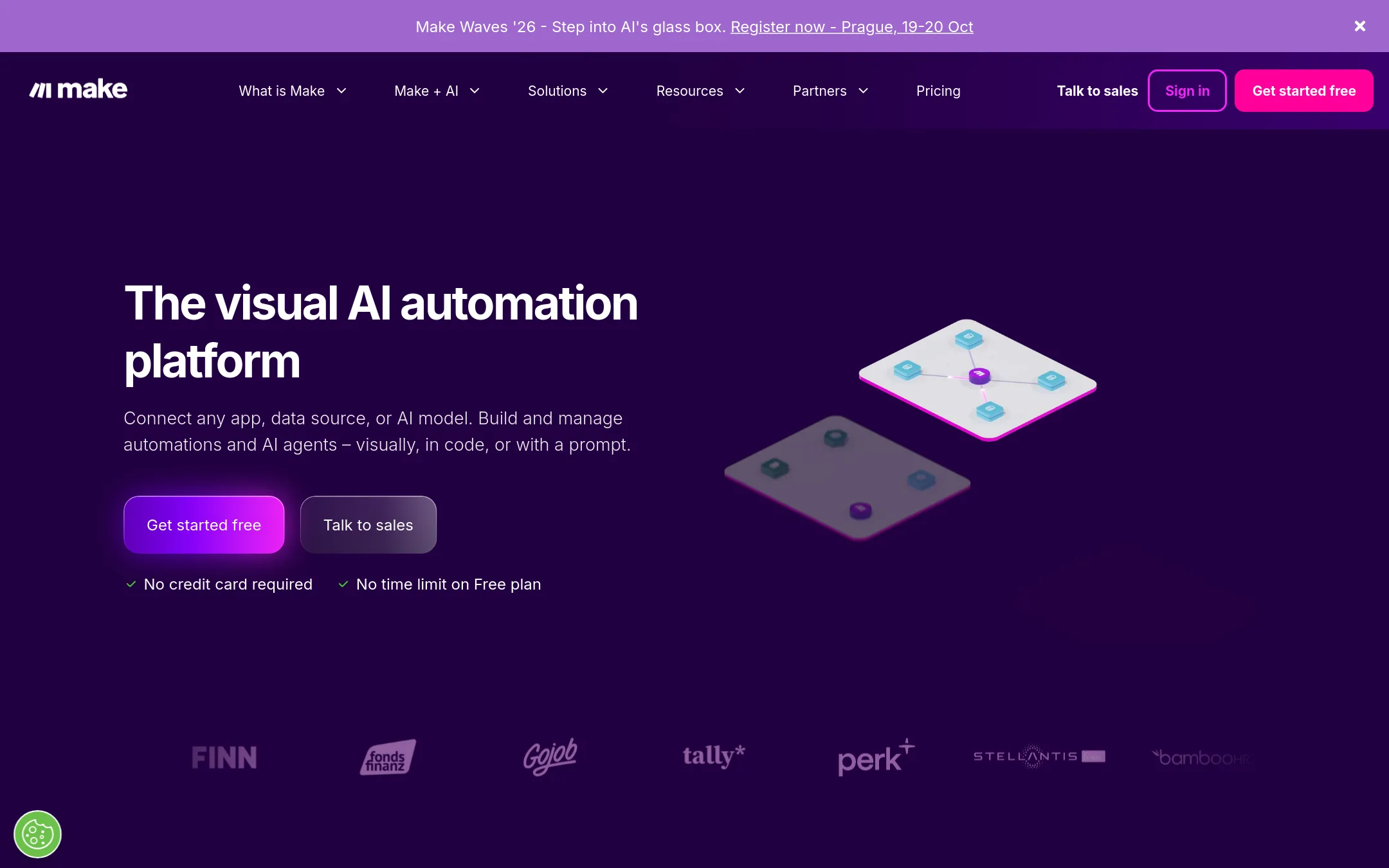
Make is a visual automation platform where you build workflows and AI agents by dragging, dropping, or prompting. Choose it instead of Alloy Automation when you want a broad, self-serve tool for connecting 3,500+ apps across your whole team, not just for embedding integrations into your product.
Where it is strong
- Visual drag-and-drop builder with prompt-based creation
- 3,500+ pre-built integrations plus custom API connections
- Free plan with no credit card required and no time limit
Where it falls short
- Pricing is not transparent on the site. You must contact sales
- Credit-based billing can be complex to estimate for high-volume workflows
- Pricing:
- Pricing is not published on the site. The free plan includes credits and active scenarios. Paid plans start with credits as the billing unit, and most actions consume 1 credit.
- Custom quote
6.Tray.io
Best for: Enterprises that need governed AI agents, MCP management, and broad integration across departments.
- Pricing
- Custom quote
- Category
- Developer Tools
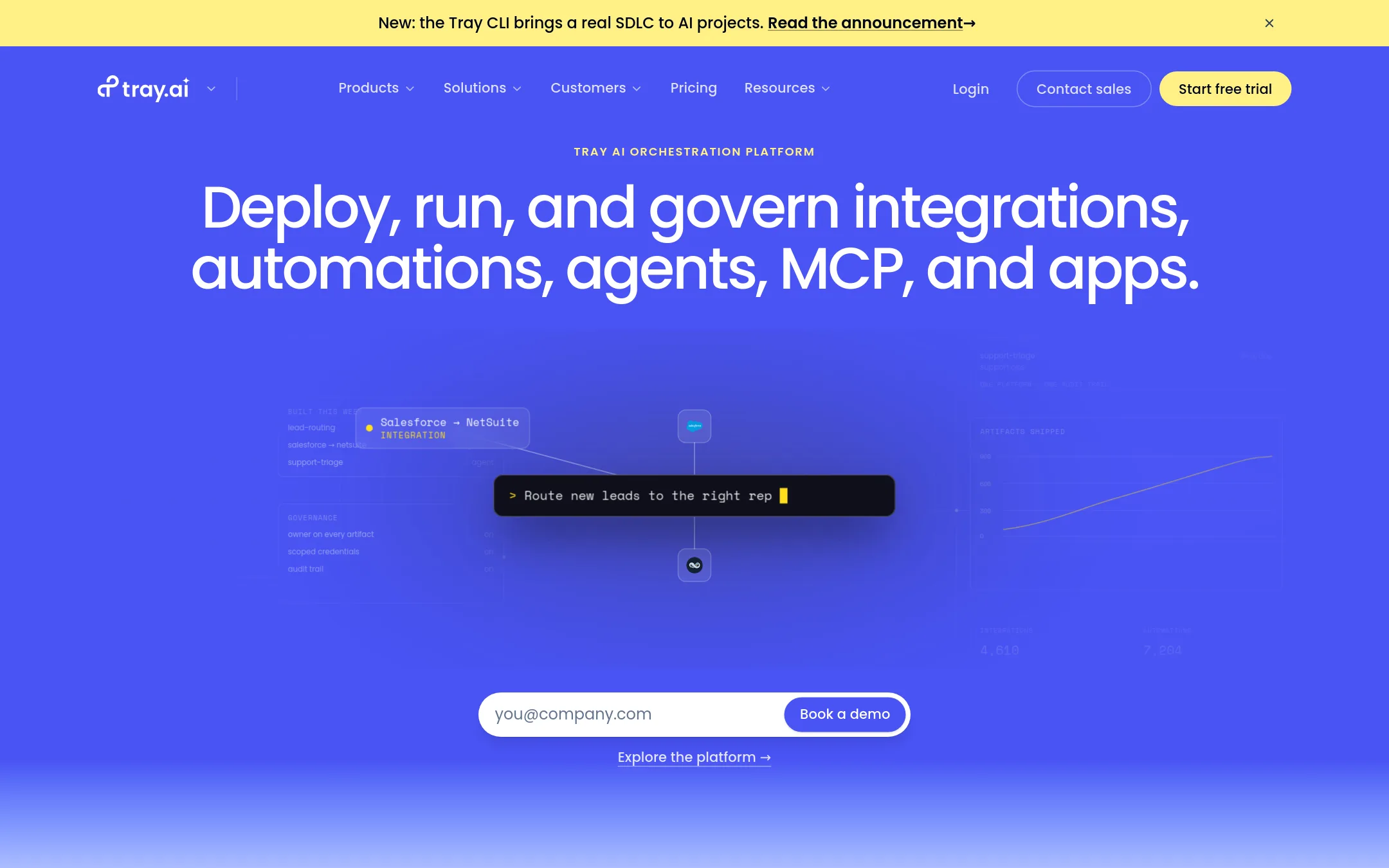
Tray.ai is an enterprise iPaaS for building AI agents, governing MCP, and integrating 700+ apps. Choose it over Alloy Automation if you need deep governance, MCP support, and a platform that handles both low-code and code-first development.
Where it is strong
- 700+ connectors for broad integration
- Built-in MCP gateway and agent builder
- Strong governance with audit trails and RBAC
Where it falls short
- Pricing requires a sales conversation
- May be overkill for small teams needing simple automations
- Pricing:
- Pricing is not published on the site.
- Custom quote
7.Jitterbit
Best for: Enterprises that need deep ERP and EDI integrations with low-code app development and AI agents.
- Pricing
- Custom quote
- Category
- E-commerce
Jitterbit is a full enterprise integration platform with iPaaS, EDI, API management, and low-code app building. You would choose it over Alloy Automation when you need broad system-to-system integration across ERP, EDI, and legacy systems, not just SaaS-to-SaaS automation.
Where it is strong
- Covers iPaaS, EDI, API management, and app building in one platform
- Includes AI agents and assistants for sales, HR, and knowledge tasks
- Offers private agents and on-premises deployment options
Where it falls short
- Pricing is not transparent and requires contacting sales
- Annual contracts may be heavy for small teams or startups
- Pricing:
- Pricing is not published on the site. All products require an annual contract and custom pricing based on requirements.
- Custom quote
8.Celigo
Best for: Enterprise teams that need governed, scalable automation across many departments and systems, including EDI and API management.
- Pricing
- Custom quote
- Category
- E-commerce
Celigo is an enterprise iPaaS that connects apps, data, and AI workflows on one governed platform. Choose it over Alloy Automation if you need broader integration coverage, EDI, API management, and AI agents with centralized governance, rather than a product-focused integration marketplace.
Where it is strong
- Pricing based on endpoints and flows, not per task, avoids usage spikes
- Includes API Builder, Lookup Cache, and sandbox in Professional edition
- AI capabilities available on all editions, including Agent Builder and MCP Server
Where it falls short
- No published pricing. Requires contacting sales for a quote
- Enterprise edition needed for unlimited endpoints and maximum performance
- Pricing:
- Pricing is based on endpoints and flows, not per task or transaction. Specific prices are not published on the site.
- Switching from Alloy Automation:
- Moving from Alloy Automation means re-mapping your integrations and workflows into Celigo's platform, which may require rebuilding custom connectors and adjusting to a different governance model.
- From $24/mo
9.n8n
Best for: Technical teams that want to build AI agents and workflows with code-level control and the option to self-host.
- Pricing
- From $24/mo
- Category
- AI & Machine Learning
n8n is an open-source workflow automation platform that combines AI capabilities with business process automation. It's a good fit for technical teams that want code-level flexibility (JavaScript or Python) alongside a visual builder, and who prefer a self-hosted option or a pay-per-execution model rather than Alloy's enterprise integration platform.
Where it is strong
- Open-source with a large community (207.5k GitHub stars)
- Write JavaScript or Python anywhere in workflows
- Self-hostable with Docker or use cloud version
Where it falls short
- Pricing is per execution, not per step, which may be less predictable for high-volume workflows
- Enterprise features like SSO and log streaming are only on higher tiers
- Pricing:
- Pricing starts at $24/month for the Starter plan (2.5K executions), $60/month for Pro (10K executions), and $120/month for Business (40K executions). A free Community Edition is available for self-hosting.
- Switching from Alloy Automation:
- Moving from Alloy Automation to n8n would involve rebuilding your integrations as n8n workflows, since n8n is a general-purpose automation tool rather than a dedicated integration platform.
- Not published
10.Apache Airflow
Best for: Data engineering teams that need a self-hosted, code-first orchestrator for complex pipelines across cloud services.
- Pricing
- Not published
- Category
- Analytics & Data
Apache Airflow is an open-source workflow orchestration platform where you define pipelines in Python. Choose it instead of Alloy Automation when you need full control over complex, code-defined data workflows and already have Python expertise in your team.
Where it is strong
- Open source with an active community and no vendor lock-in.
- Pipelines are pure Python, giving full flexibility for dynamic task generation.
- Built-in UI for monitoring, scheduling, and inspecting task logs.
Where it falls short
- Requires significant setup and maintenance compared to managed integration platforms.
- No pre-built SaaS integration marketplace like Alloy Automation offers.
- Pricing:
- Pricing is not published on the site.
- Switching from Alloy Automation:
- Moving from Alloy Automation means rewriting your integrations as Python DAGs and managing your own Airflow infrastructure.
See more comparisons in Developer Tools alternatives.
FAQ
Questions about Alloy Automation alternatives
What is the best alternative to Alloy Automation for a small team without developers?
Zapier is the strongest fit. It connects to 9,000+ apps, has a free tier, and uses a visual editor. You can automate everyday tasks without writing code.
Which alternative is best for building AI agents?
Make and n8n both support AI agents. Make offers a visual builder with prompt-based creation. n8n lets you write JavaScript or Python and can self-host.
Which alternative has the most transparent pricing?
Zapier and n8n publish clear pricing. Zapier starts at $19.99 per month. n8n starts at $24 per month. Make and enterprise tools like Workato and Boomi do not publish prices.
Can I embed integrations into my own product with these alternatives?
Alloy Automation is built for embedding. Most alternatives are not. Zapier, Make, and n8n focus on internal workflows. For embedding, you may need a dedicated iPaaS like Workato or Celigo, but those require sales conversations.
Which alternative is best for enterprises with complex governance needs?
Workato, Boomi, and Tray.io are built for enterprise governance. They offer audit trails, RBAC, and AI agent management. Pricing is custom and likely high, so they suit large organizations, not startups.
Last updated October 16, 2026.