
Alteryx alternatives
12 products compared · Updated October 31, 2026
The short answer
For most buyers, the strongest Alteryx alternatives are KNIME for teams wanting a free, open-source visual workflow builder with no per-seat fees. Dbt Cloud for SQL-first data engineering teams that need governed, testable pipelines. And Dataiku for enterprises focused on governed AI and machine learning projects. PiinPoint is a niche pick for retail site selection, and Mito suits Jupyter users who want spreadsheet-style automation.
Your shortlist, at a glance
Read the comparisons ↓- TTableauSee websiteData visualization and analytics platform
Microsoft Azure CycleCloudPay-as-you-goTeams that need to orchestrate and scale HPC clusters on Azure for compute-intensive workloads.
 KNIMECustom quoteTeams that want an open, code-friendly analytics platform with flexible deployment and no per-user fees
- RRapidMinerSee websiteOther
- DDataikuNot publishedEnterprises that need a governed platform for building and running AI models and agents across the business.
 Qlik SenseNot publishedTeams that require on-premises analytics with strong multi-system data integration, such as regulated industries or those with strict data residency rules.
 InformaticaNot publishedEnterprises that need heavy data integration, governance, and MDM across complex cloud and on-premises environments
 TalendNot publishedData engineering teams that need governed, large-scale data integration across hybrid cloud and on-premises systems.
- PPandasFree (open source)Data teams that prefer coding in Python and need a free, flexible library for data wrangling and analysis.
 dbt CloudFrom $100/mo/seatData engineering and analytics engineering teams that prefer SQL and need governed, testable pipelines in the cloud.
 MitoFrom $20/user/moData analysts and scientists using Jupyter who want to automate spreadsheet tasks and build Python scripts without starting from scratch.
 PiinPointCustom quoteRetailers, restaurant chains, and commercial real estate teams in North America that need data-driven site selection and sales forecasting.
About Alteryx and its alternatives
Alteryx is a visual analytics platform that automates data workflows and delivers AI-powered insights. It is known for drag-and-drop data preparation, blending, and governed automation used by business teams and enterprises.
When comparing alternatives, weigh pricing structure (per-seat vs. capacity-based), deployment options (cloud, on-prem, hybrid), integration depth, support and governance features, and contract terms like annual billing or free tiers. Many alternatives do not publish pricing, so budget for sales conversations.
Explore the alternatives
- TSee website
1.Tableau
Analytics & Data
A leading data visualization and analytics platform that competes for self-service analytics and business intelligence workflows.
- Pay-as-you-go
2.Microsoft Azure CycleCloud
Best for: Teams that need to orchestrate and scale HPC clusters on Azure for compute-intensive workloads.
- Pricing
- Pay-as-you-go
- Category
- Developer Tools
Azure CycleCloud is a tool for creating and managing high-performance computing clusters on Azure. It is a developer-focused alternative to Alteryx for teams that need to run large-scale simulations or data processing jobs on Azure infrastructure, rather than building visual data workflows.
Where it is strong
- Deep integration with Azure services and infrastructure.
- Supports a wide range of HPC workloads and schedulers.
- Scales clusters automatically based on job requirements.
Where it falls short
- Requires Azure expertise and is not a no-code analytics tool.
- No built-in data preparation or visualization features.
- Pricing:
- Azure pricing is consumption-based. You pay only for the cloud resources you use, with options like reservations and savings plans for committed usage.
- Switching from Alteryx:
- Moving from Alteryx to Azure CycleCloud means replacing visual workflows with cluster configuration and job scripts, which is a significant shift for business analysts.
- Custom quote
3.KNIME
Best for: Teams that want an open, code-friendly analytics platform with flexible deployment and no per-user fees
- Pricing
- Custom quote
- Category
- Analytics & Data
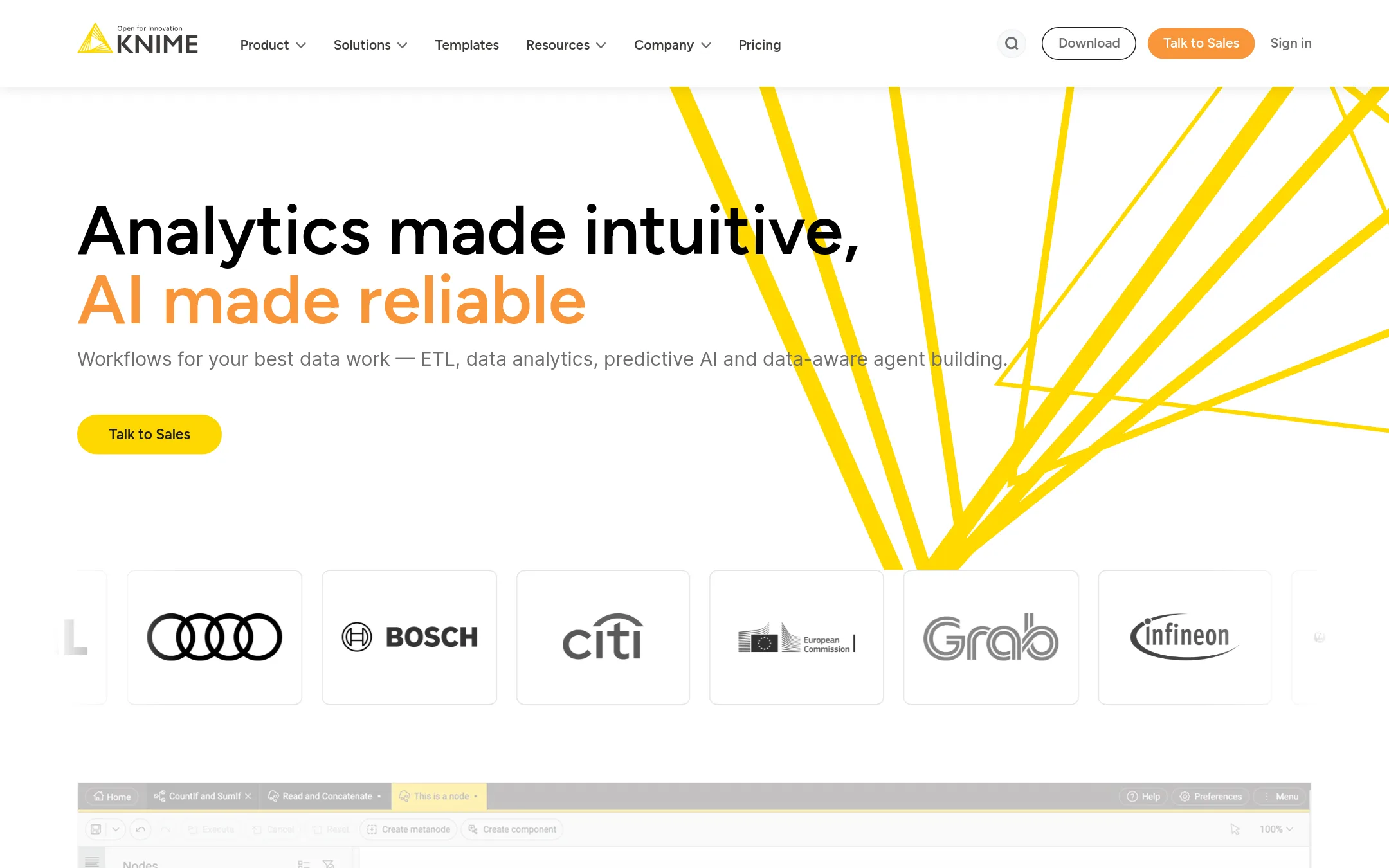
KNIME is a free and open-source visual workflow builder for data analytics, ETL, and AI model building. Choose it over Alteryx if you want a no-cost starting point, prefer an open ecosystem with 300+ connectors, and need to deploy on-prem or in the cloud without per-seat licensing.
Where it is strong
- Free and open source, with a large community
- 300+ connectors to various data sources
- No per-seat licensing. Scale by capacity
Where it falls short
- Pricing is opaque, requiring a sales conversation
- May require more technical setup than Alteryx for non-experts
- Pricing:
- Pricing is not published on the site. KNIME asks you to contact sales for a quote based on capacity.
- Switching from Alteryx:
- Moving from Alteryx involves rebuilding workflows in KNIME's node-based interface, which is conceptually similar but requires re-implementing logic.
- RSee website
4.RapidMiner
Other
A data science platform with visual workflow design for data prep, machine learning, and predictive analytics, competing in the same space.
- DNot published
5.Dataiku
Best for: Enterprises that need a governed platform for building and running AI models and agents across the business.
- Pricing
- Not published
- Category
- Other
Dataiku is a platform for building, deploying, and governing AI models and agents at enterprise scale. Choose it instead of Alteryx when your focus is on machine learning and generative AI projects that need deep collaboration between data scientists and business teams.
Where it is strong
- Strong governance built into every step of the AI lifecycle.
- Supports both business experts and data scientists in one place.
- Runs on your existing clouds, data platforms, and models.
Where it falls short
- Pricing is not public, so you need to contact sales for a quote.
- Heavier focus on AI/ML than on traditional data preparation and blending.
- Pricing:
- Pricing is not published on the site.
- Not published
6.Qlik Sense
Best for: Teams that require on-premises analytics with strong multi-system data integration, such as regulated industries or those with strict data residency rules.
- Pricing
- Not published
- Category
- Analytics & Data
Qlik Sense is an on-prem analytics platform that combines data integration and visualization. Choose it when you need to keep analytics in your own data center and connect multiple systems without moving data to the cloud.
Where it is strong
- On-prem deployment keeps data in your control
- Built-in data integration from Talend for multi-system connectivity
- Associative model lets you explore data freely without predefined queries
Where it falls short
- No published pricing, so budgeting requires a sales call
- Steeper learning curve for non-technical users compared to Alteryx's drag-and-drop workflows
- Pricing:
- Pricing is not published on the site.
- Not published
7.Informatica
Best for: Enterprises that need heavy data integration, governance, and MDM across complex cloud and on-premises environments
- Pricing
- Not published
- Category
- Analytics & Data
Informatica is an enterprise data management platform that connects, cleans, and governs data across 50,000+ sources. Choose it over Alteryx when your priority is large-scale data governance, master data management, and integration across many systems, rather than self-service analytics workflows.
Where it is strong
- 300+ connectors for broad data source coverage
- Strong data governance and MDM capabilities
- Recognized as a leader in multiple Gartner Magic Quadrants
Where it falls short
- Pricing is not transparent, requires contacting sales
- Heavier and more complex than Alteryx for simple analytics workflows
- Pricing:
- Pricing is not published on the site. The pricing page returns a 404 error.
- Not published
8.Talend
Best for: Data engineering teams that need governed, large-scale data integration across hybrid cloud and on-premises systems.
- Pricing
- Not published
- Category
- Analytics & Data
Talend is a data integration and quality platform now owned by Qlik. It focuses on moving and transforming data across cloud and on-premises environments, with a strong emphasis on governance. Choose it over Alteryx when your priority is enterprise-scale data integration and quality management rather than analyst-led workflow automation.
Where it is strong
- Strong data integration and quality capabilities
- Part of Qlik, with access to broader analytics ecosystem
- Designed for hybrid cloud and on-premises environments
Where it falls short
- Less focused on no-code analyst workflows than Alteryx
- Pricing requires contacting sales
- Pricing:
- Pricing is not published on the site.
- PFree (open source)
9.Pandas
Best for: Data teams that prefer coding in Python and need a free, flexible library for data wrangling and analysis.
- Pricing
- Free (open source)
- Category
- Other
Pandas is an open-source Python library for data manipulation and analysis. Choose it over Alteryx if your team already works in Python and needs a flexible, code-based tool for data cleaning, transformation, and exploration without a visual workflow interface.
Where it is strong
- Free and open source with a large community.
- Flexible and expressive for custom data transformations.
- Integrates naturally with the Python data ecosystem (NumPy, scikit-learn, Jupyter).
Where it falls short
- Requires programming knowledge. No visual drag-and-drop interface.
- No built-in workflow scheduling, governance, or enterprise support.
- Pricing:
- Pricing is not published on the site.
- Switching from Alteryx:
- Moving from Alteryx to Pandas means rewriting visual workflows as Python code, which can be time-consuming for complex logic.
- From $100/mo/seat
10.dbt Cloud
Best for: Data engineering and analytics engineering teams that prefer SQL and need governed, testable pipelines in the cloud.
- Pricing
- From $100/mo/seat
- Category
- Analytics & Data
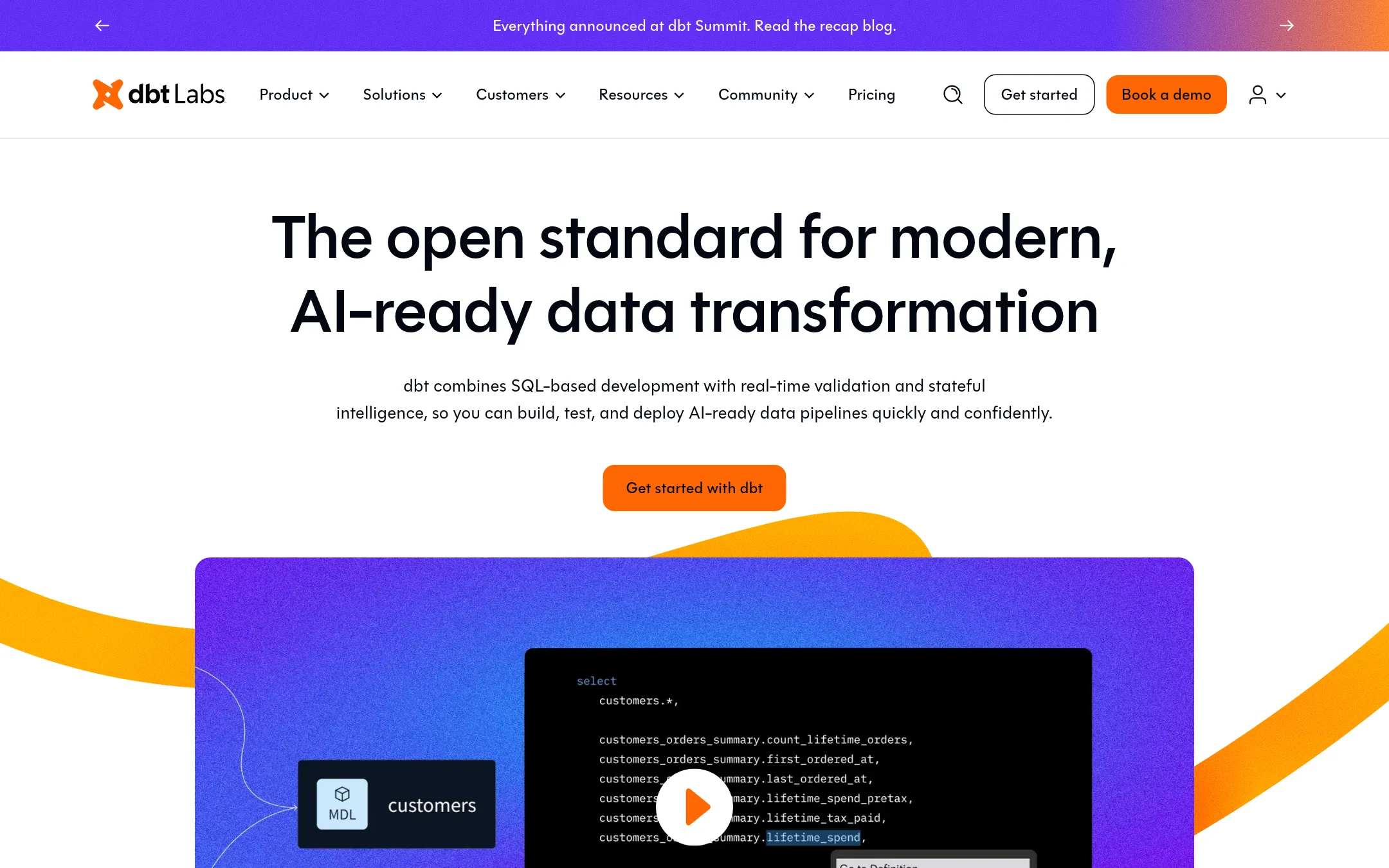
dbt Cloud is a transformation layer that lets data teams build, test, and version-control SQL models in a warehouse. Choose it over Alteryx when your team is comfortable writing SQL and wants a code-first, Git-based workflow with lineage and CI checks, rather than a visual drag-and-drop interface.
Where it is strong
- Native SQL with local validation before hitting the warehouse
- Interactive column-level lineage across projects
- State-based orchestration builds only changed models, saving compute
Where it falls short
- Requires SQL proficiency. No visual drag-and-drop for non-coders
- No built-in data ingestion. You need a separate tool like Fivetran
- Pricing:
- Developer is free for one seat and 3,000 models per month. Starter is $100 per seat per month. Enterprise and Enterprise+ are custom-priced.
- Switching from Alteryx:
- Moving from Alteryx means rewriting visual workflows as SQL models and adopting Git-based version control, which is a significant shift for analysts used to no-code interfaces.
- From $20/user/mo
11.Mito
Best for: Data analysts and scientists using Jupyter who want to automate spreadsheet tasks and build Python scripts without starting from scratch.
- Pricing
- From $20/user/mo
- Category
- Analytics & Data
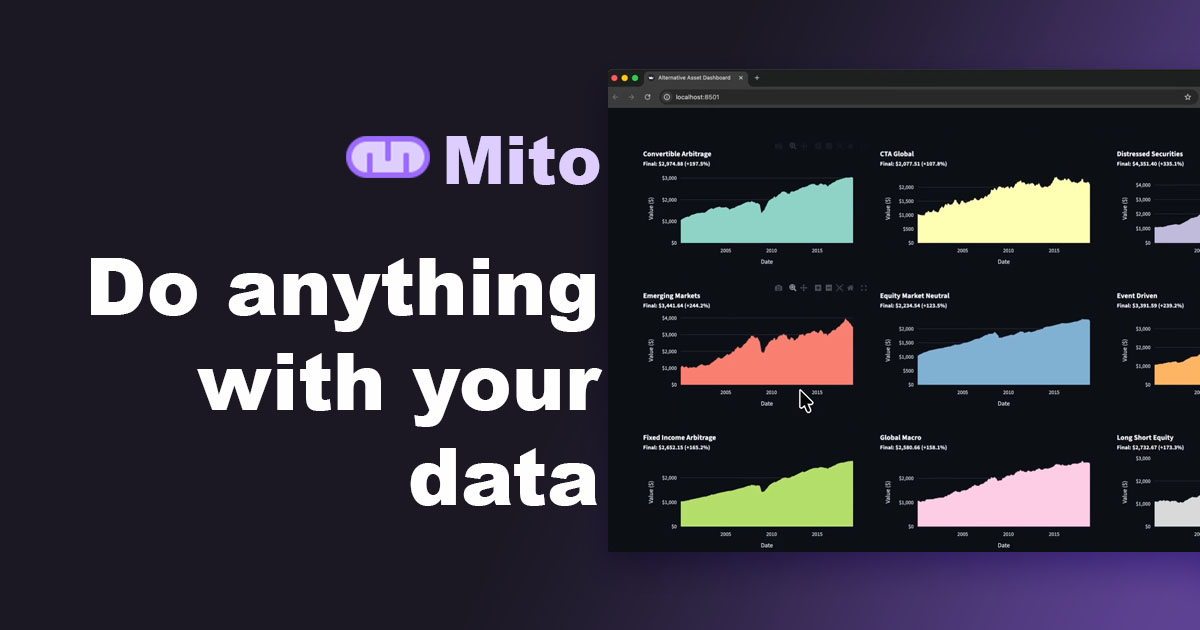
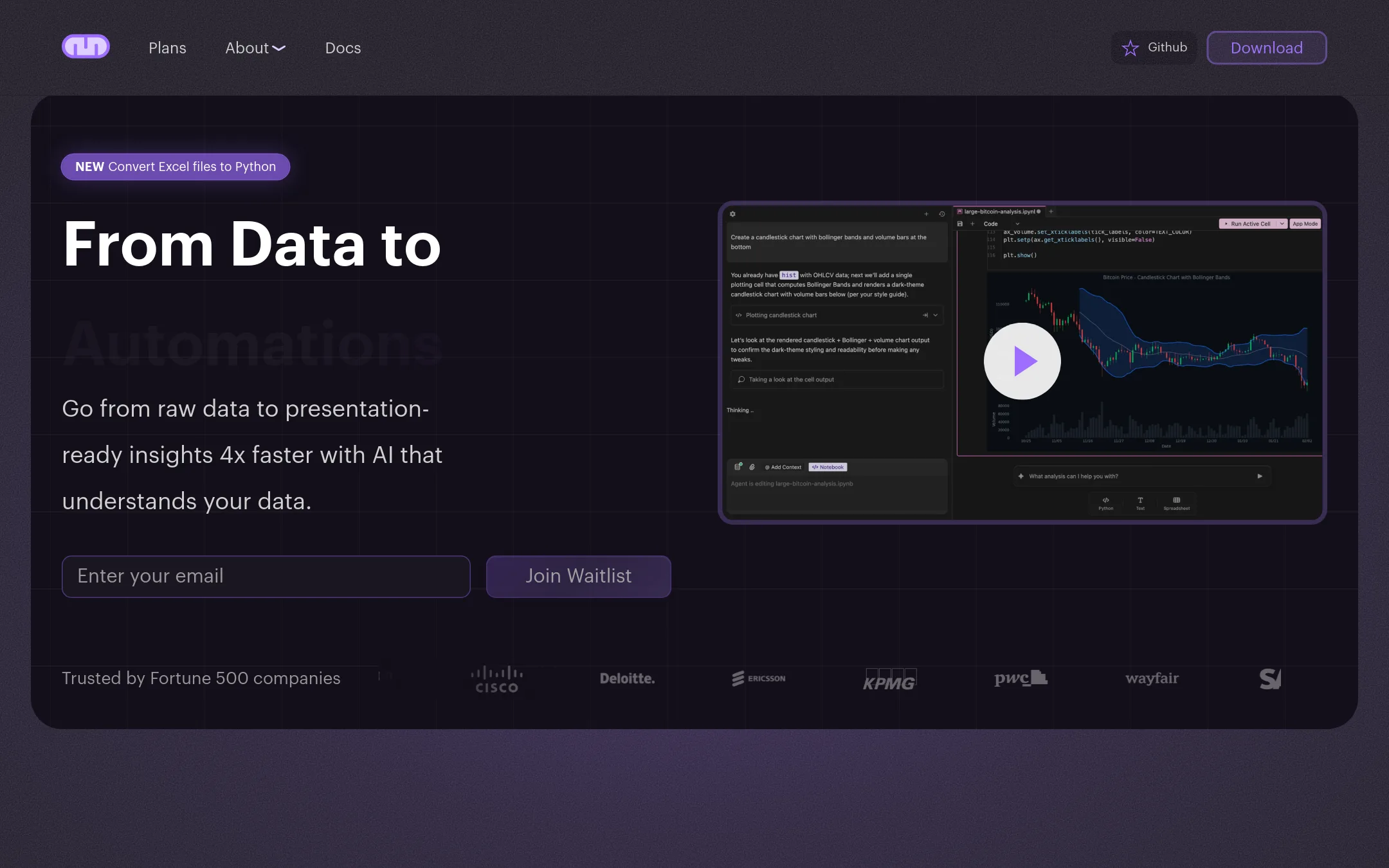
Mito is a Jupyter extension that adds an Excel-like spreadsheet interface and AI assistance for data analysis. It's a good fit for teams already working in Jupyter who want to speed up data prep and reporting without leaving their notebook environment. Choose it over Alteryx if you prefer a code-centric workflow and need tight integration with Python.
Where it is strong
- Runs entirely on your infrastructure, so no data leaves your environment.
- Compatible with existing Jupyter extensions and workflows.
- AI features work with any LLM provider, including Azure and AWS.
Where it falls short
- Requires Jupyter environment, not a standalone platform.
- Enterprise features like database integrations and admin controls are only in the paid tier.
- Pricing:
- Open Source is free with 150 AI completions per month. Pro is $20/user per month with unlimited AI completions. Enterprise pricing is by contact.
- Switching from Alteryx:
- Moving from Alteryx means rebuilding workflows as Python scripts, but Mito's spreadsheet interface can generate the code for you.
- Custom quote
12.PiinPoint
Best for: Retailers, restaurant chains, and commercial real estate teams in North America that need data-driven site selection and sales forecasting.
- Pricing
- Custom quote
- Category
- Other
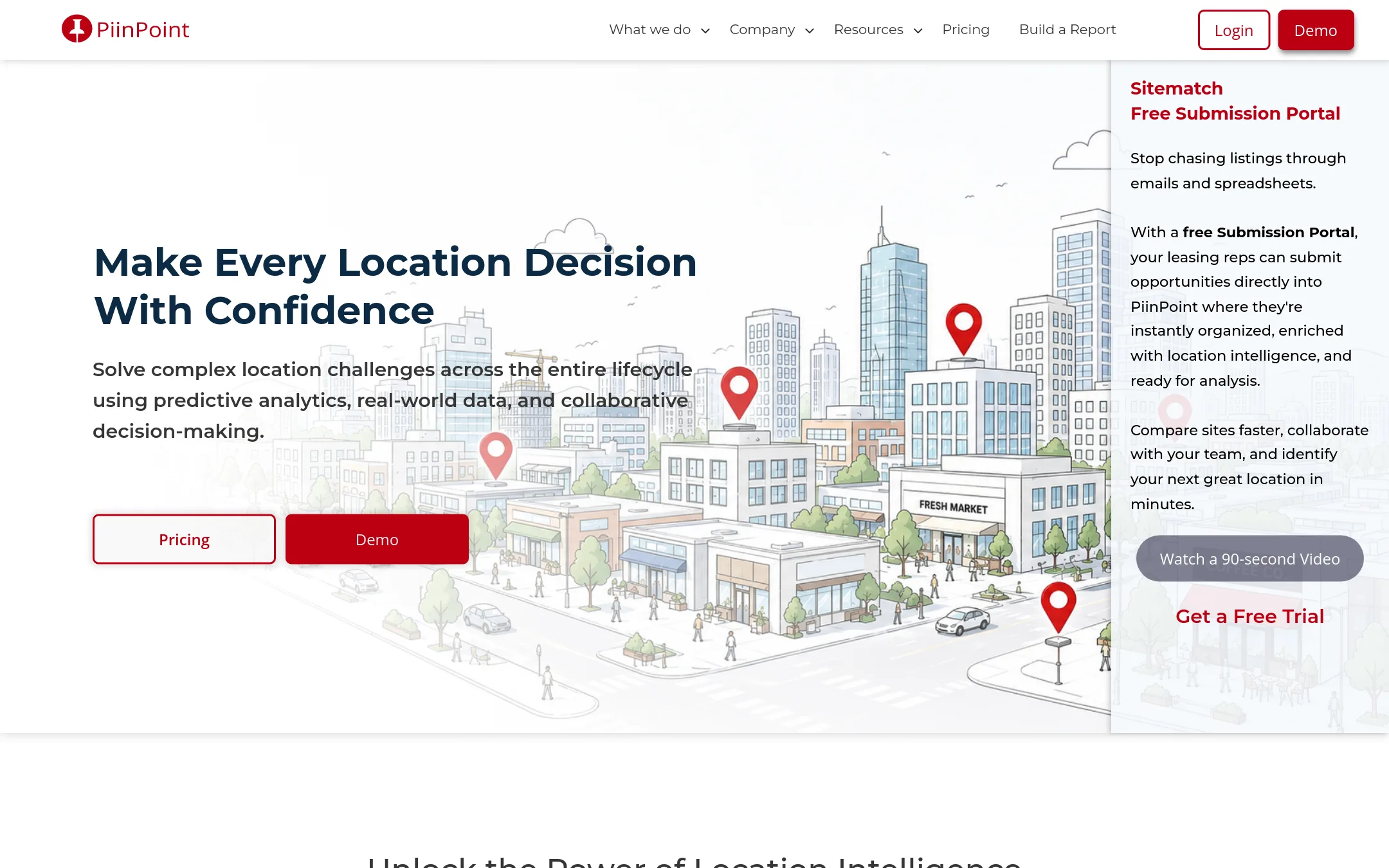
PiinPoint is a location intelligence platform that helps retail and real estate teams evaluate sites using demographic, traffic, and mobile data. It includes sales forecasting, cannibalization modeling, and site scoring. Choose it over Alteryx when your primary need is site selection and market expansion, not general data workflow automation.
Where it is strong
- Purpose-built for location decisions with site scoring and cannibalization modeling
- Includes mobile, traffic, and demographic datasets for trade area analysis
- Sitematch lets realtors upload listings directly for quick comparison
Where it falls short
- Limited to location analytics, not a general data preparation tool
- Pricing requires a sales conversation, no self-serve tiers
- Pricing:
- Pricing is not published on the site. It is tailored per customer after a demo.
See more comparisons in Analytics & Data alternatives.
FAQ
Questions about Alteryx alternatives
Which Alteryx alternative is free or open-source?
KNIME is free and open-source with no per-seat licensing. Mito's Open Source tier is free with 150 AI completions per month, and Pandas is a free Python library. dbt Cloud has a free Developer tier for one seat.
Which alternative is best for non-technical users?
KNIME offers a visual drag-and-drop interface similar to Alteryx, making it accessible for non-coders. PiinPoint is purpose-built for retail teams and requires no coding. Qlik Sense has a steeper learning curve but still offers visual workflows.
Which alternative is best for SQL-heavy teams?
dbt Cloud is designed for SQL-first workflows with version control, testing, and lineage. It requires SQL proficiency but is ideal for analytics engineers. Pandas is also code-centric but uses Python, not SQL.
Which alternative has the most transparent pricing?
dbt Cloud publishes pricing: Developer is free, Starter is $100 per seat per month, and Enterprise is custom. Mito publishes Pro at $20 per user per month. Most others, including PiinPoint, Informatica, Talend, Qlik, KNIME, and Dataiku, require contacting sales.
Which alternative is best for enterprise AI and governance?
Dataiku is built for governed AI model and agent deployment, with strong governance at every step. Informatica offers heavy data governance and MDM across 300+ connectors. Both are enterprise-focused but require sales for pricing.
Last updated October 31, 2026.