
Apache Airflow alternatives
12 products compared · Updated October 31, 2026
The short answer
Apache Airflow is a community platform for programmatically authoring, scheduling, and monitoring workflows. For teams that want to avoid hosting their own scheduler and prefer plain Python, Prefect is the strongest alternative. For asset-centric data pipelines with built-in lineage and data quality, Dagster is the best fit. For long-running, event-driven applications that need durable execution, Temporal is the strongest choice.
Your shortlist, at a glance
Read the comparisons ↓- PPrefectNot publishedData and ML teams that want managed orchestration with minimal infrastructure and prefer writing plain Python over DAGs.
- DDagsterFrom $10/mo + $0.040/cData teams that want asset-level lineage, data quality checks, and native dbt or Snowflake integration without custom glue code.
- SSarusFrom $50/moEngineering and docs teams that want managed documentation hosting with pull request previews and SSO.
 Argo CDNot publishedKubernetes-native teams that want GitOps-driven continuous delivery with a UI for managing deployments.
- TTemporalUsage-based, from $0.0Teams building AI agents, order fulfillment, or other stateful applications that need guaranteed execution and built-in retries.
 Amazon BusinessNot publishedCompanies that need to centralize purchasing, enforce procurement compliance, and analyze business spend on Amazon's marketplace.
- RRecordBookNot publishedSmall business owners who want a lightweight, mobile-first database and workflow tool without coding.
Microsoft Azure CycleCloudUsage-basedTeams running HPC simulations, batch jobs, or large-scale compute workloads on Azure that need automated cluster provisioning and scaling.
- KKestraNot publishedTeams that want a single orchestrator for data pipelines, infrastructure automation, and AI workflows, especially those standardizing on YAML and Git-driven CI/CD.
- WWindmillFrom $20/mo/builderTeams that want to build internal apps and data pipelines from the same scripts, especially those needing a self-hosted, fast orchestration engine.
 n8nFree tier. Custom quotTeams that want to build AI-powered workflows and automations with a visual builder, especially those needing human-in-the-loop approvals and self-hosting options.
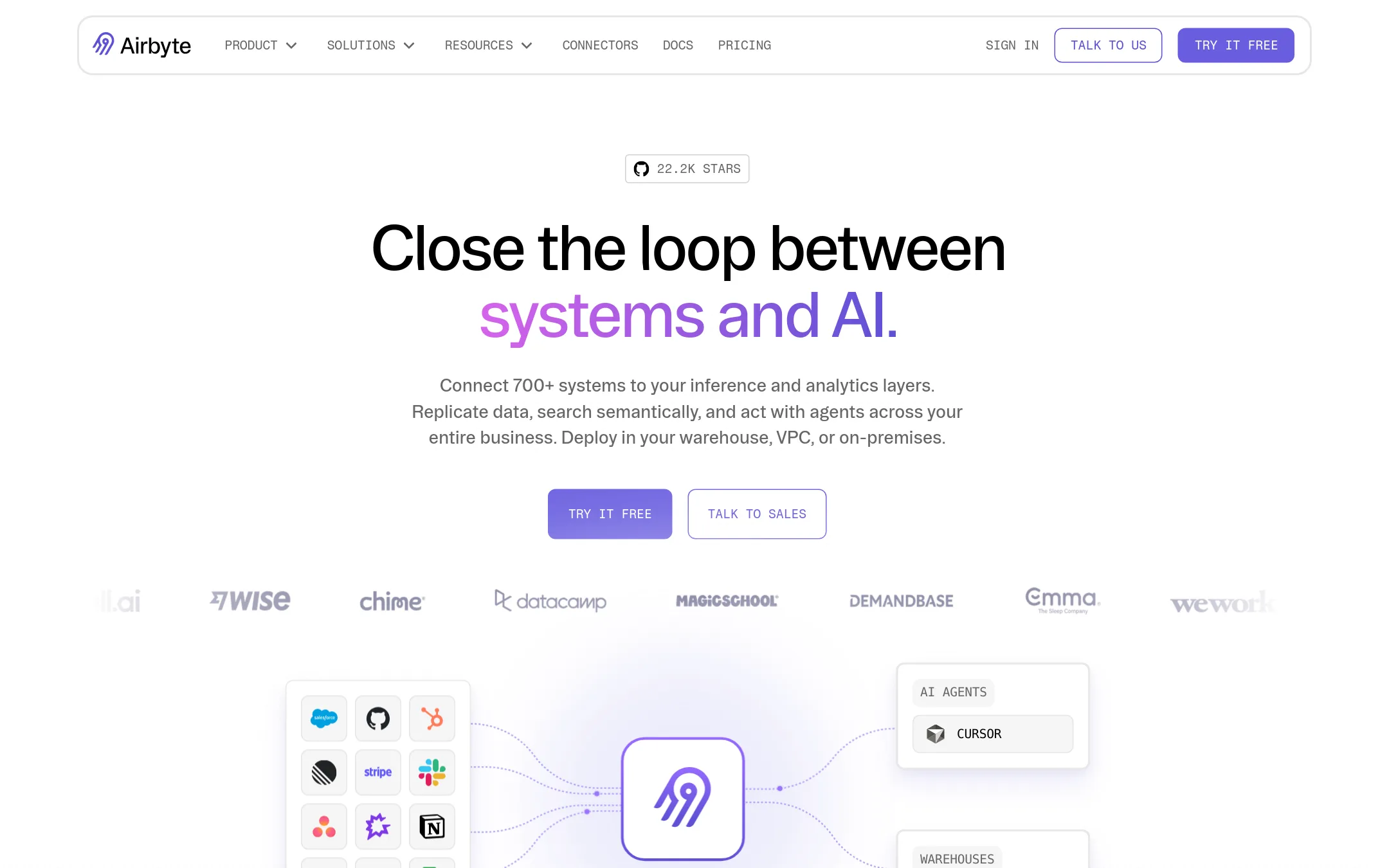
 AirbyteCustom quoteTeams that need to move data from many sources to a warehouse without building custom pipelines, especially those wanting a managed or hybrid deployment.
About Apache Airflow and its alternatives
Apache Airflow is a community platform to programmatically author, schedule, and monitor workflows. It is known for its Python-based pipeline definitions, dynamic and extensible architecture, and a UI for monitoring tasks. It integrates with major cloud providers and many third-party services.
When comparing alternatives, weigh pricing structure (free tiers, per-credit, per-worker, or custom quotes), deployment options (self-hosted, managed, or hybrid), integration coverage, support levels, and contract terms. Some tools are code-first, others are no-code or YAML-based. Consider whether you need batch data pipelines, event-driven workflows, or internal app building.
Explore the alternatives
- PNot published
1.Prefect
Best for: Data and ML teams that want managed orchestration with minimal infrastructure and prefer writing plain Python over DAGs.
- Pricing
- Not published
- Category
- Other
Prefect turns Python functions into durable workflows with a decorator, handling retries, scheduling, and state automatically. Teams that want to avoid hosting their own scheduler and prefer plain Python over DAG definitions would choose Prefect over Airflow.
Where it is strong
- Plain Python with @flow decorator, no DAG syntax to learn
- Durable execution with built-in retries and recovery
- Managed control plane with optional serverless compute
Where it falls short
- Pricing details not publicly listed
- Enterprise features like SSO and audit logs require paid plans
- Pricing:
- Pricing is not published on the site. Plans include Hobby (free), Starter, Team, and Enterprise with custom pricing.
- Switching from Apache Airflow:
- Moving from Airflow means rewriting DAGs as Python functions with @flow decorators, but the core logic can often be reused.
- DFrom $10/mo + $0.040/c
2.Dagster
Best for: Data teams that want asset-level lineage, data quality checks, and native dbt or Snowflake integration without custom glue code.
- Pricing
- From $10/mo + $0.040/c
- Category
- Other
Dagster is an asset-centric data orchestrator that tracks lineage, data health, and dependencies across your pipelines. Choose it over Airflow when you need built-in observability and asset-based workflows rather than task-centric DAGs.
Where it is strong
- Asset-centric model with automatic lineage and dependency tracking
- Native dbt and Snowflake integrations, no custom connectors
- Hybrid deployment: run compute in your own infrastructure
Where it falls short
- Pricing based on credits can be unpredictable for high-volume pipelines
- Smaller community and fewer third-party operators than Airflow
- Pricing:
- Solo is $10/month plus $0.040 per credit, Starter is $100/month plus $0.035 per credit, and serverless compute is $0.010 per minute. Pro is custom.
- Switching from Apache Airflow:
- Moving from Airflow means redefining pipelines as assets rather than task sequences, which requires rewriting DAGs and learning Dagster's asset APIs.
- SFrom $50/mo
3.Sarus
Best for: Engineering and docs teams that want managed documentation hosting with pull request previews and SSO.
- Pricing
- From $50/mo
- Category
- Other
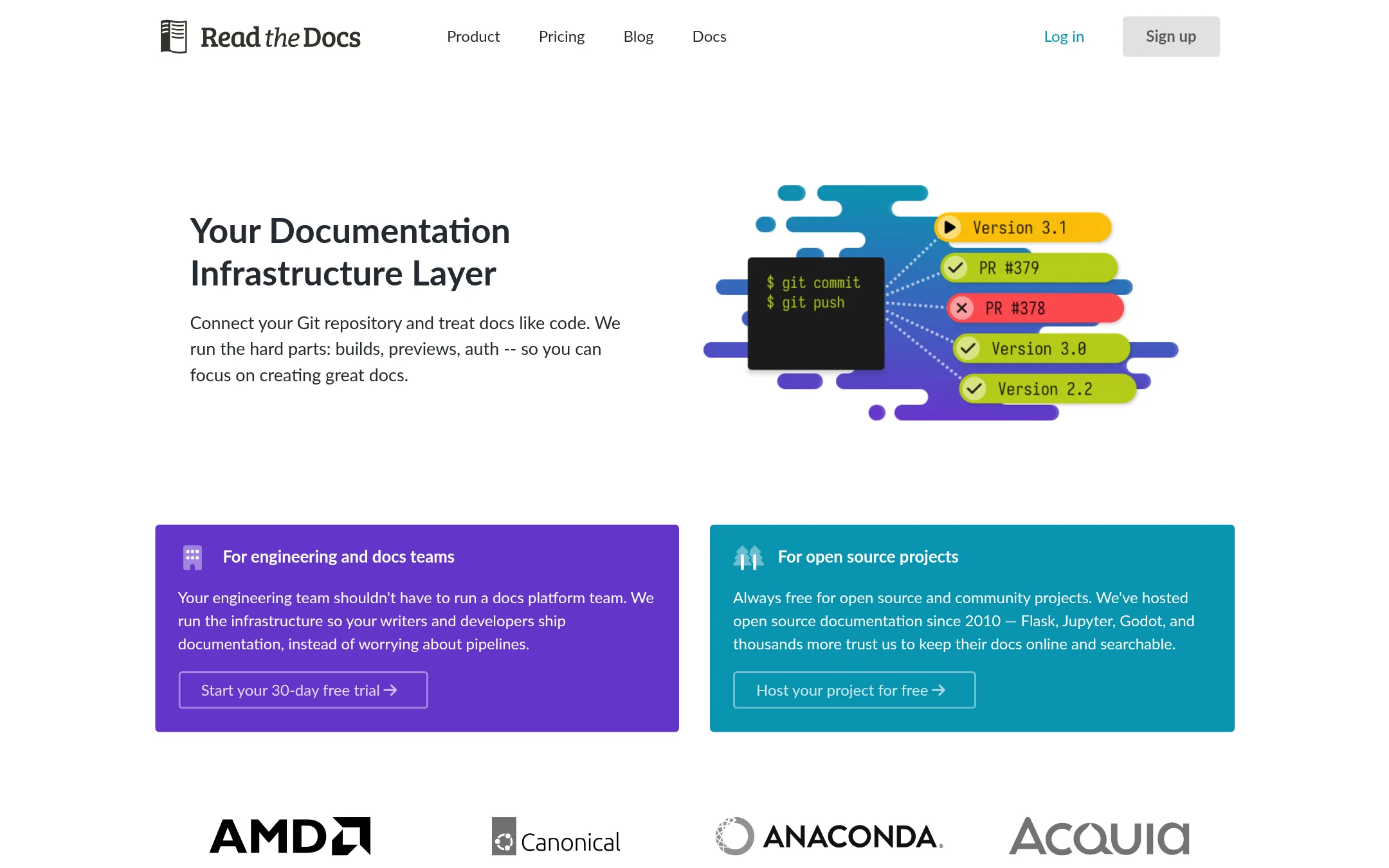
Sarus is a documentation hosting platform that builds, versions, and serves docs from your Git repo. You would choose it instead of Apache Airflow when your problem is publishing and securing documentation, not orchestrating data pipelines.
Where it is strong
- Free for open source projects
- Pull request previews with visual diffs
- Supports Sphinx, MkDocs, Docusaurus
Where it falls short
- Not a workflow orchestrator, so no task scheduling or data pipeline features
- Advanced features like SSO and private repos are paid-only
- Pricing:
- Plans start at $50/month, with Basic at $50, Advanced at $150, and Pro at $250 per month. Enterprise starts at $10,000 per year.
- Not published
4.Argo CD
Best for: Kubernetes-native teams that want GitOps-driven continuous delivery with a UI for managing deployments.
- Pricing
- Not published
- Category
- Developer Tools
Argo CD is a declarative GitOps tool for Kubernetes that continuously syncs your cluster state with the desired state in Git. Choose it over Apache Airflow when your primary need is continuous delivery and deployment automation on Kubernetes, not data pipeline orchestration.
Where it is strong
- Declarative GitOps: desired state is defined in Git, and Argo CD syncs it automatically.
- Fully-loaded UI for visualizing and managing application deployments.
- Kubernetes-native, integrates tightly with the cluster ecosystem.
Where it falls short
- Focused on CD, not general-purpose workflow orchestration like Airflow.
- Requires Kubernetes. No support for non-Kubernetes environments.
- Pricing:
- Pricing is not published on the site.
- TUsage-based, from $0.0
5.Temporal
Best for: Teams building AI agents, order fulfillment, or other stateful applications that need guaranteed execution and built-in retries.
- Pricing
- Usage-based, from $0.0
- Category
- Other
Temporal is a durable execution platform that keeps the full state of your workflows and retries failed steps automatically. Choose it over Airflow when your work is long-running, event-driven, or needs to survive crashes without manual recovery. It is a better fit for application-level orchestration than for batch data pipelines.
Where it is strong
- Durable execution: workflows pick up exactly where they left off after failures.
- Built-in retries, timers, signals, and saga compensation.
- SDKs in Go, Java, Python, TypeScript.NET, PHP, Ruby, Rust.
Where it falls short
- Not designed for batch scheduling or DAG-based data pipelines like Airflow.
- Pricing is usage-based and can be unpredictable for high-volume workloads.
- Pricing:
- Temporal Cloud starts with $150 in free credits for 90 days, no base monthly fee, then $0.042/GBhr for active storage and $0.00105/GBhr for retained storage. Business support add-on is $500/month or 10% of usage, whichever is greater.
- Switching from Apache Airflow:
- Moving from Airflow means rewriting your pipelines as Temporal workflows and activities, and learning a different execution model focused on durability rather than scheduling.
- Not published
6.Amazon Business
Best for: Companies that need to centralize purchasing, enforce procurement compliance, and analyze business spend on Amazon's marketplace.
- Pricing
- Not published
- Category
- E-commerce
Amazon Business is a procurement and purchasing platform, not a workflow orchestrator. You would choose it instead of Apache Airflow only if your actual need is buying supplies and managing spend, not scheduling data pipelines. It offers approval flows, spend analytics, and bulk discounts for business purchasing.
Where it is strong
- Approval workflows and purchasing guardrails for compliance
- Spend analytics with pre-built and custom reports
- Quantity discounts and bulk buying options
Where it falls short
- No workflow scheduling or data pipeline capabilities
- Tied to Amazon's marketplace and product selection
- Pricing:
- Pricing is not published on the site.
- RNot published
7.RecordBook
Best for: Small business owners who want a lightweight, mobile-first database and workflow tool without coding.
- Pricing
- Not published
- Category
- Productivity & Project Management
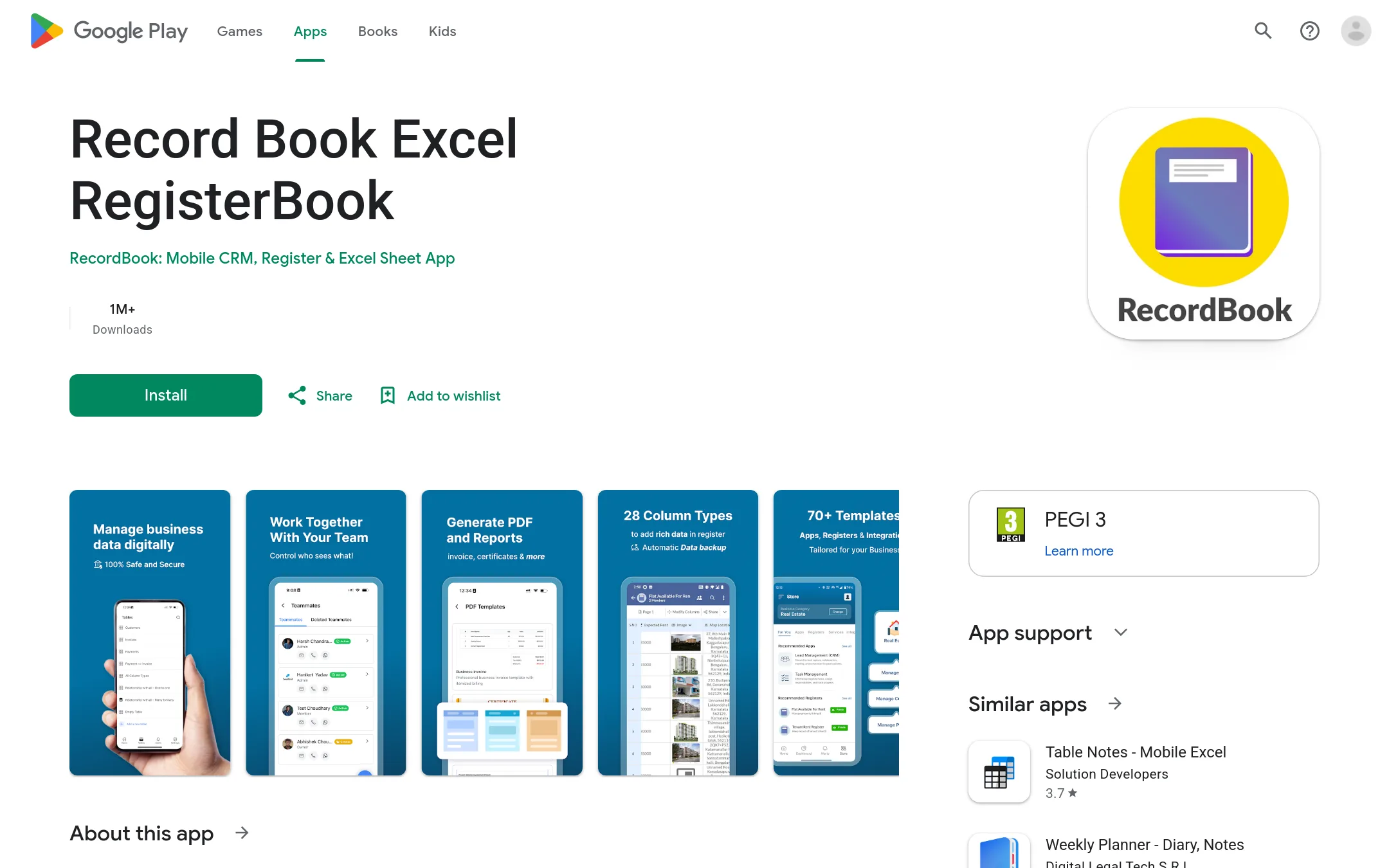
RecordBook is a mobile app that positions itself as an Airtable-like tool for small and medium businesses. You would choose it over Apache Airflow if you need a simple, no-code way to organize data and workflows on a phone, rather than building Python-based pipelines.
Where it is strong
- Mobile-first design for on-the-go data management
- No-code interface, accessible to non-technical users
- Targets SMBs, so it is simpler than enterprise tools
Where it falls short
- Not designed for complex, multi-step data pipelines
- No evidence of integrations with cloud data services or scheduling
- Pricing:
- Pricing is not published on the site.
- Usage-based
8.Microsoft Azure CycleCloud
Best for: Teams running HPC simulations, batch jobs, or large-scale compute workloads on Azure that need automated cluster provisioning and scaling.
- Pricing
- Usage-based
- Category
- Developer Tools
Microsoft Azure CycleCloud is an HPC orchestration tool for managing and scaling compute clusters on Azure. Choose it over Apache Airflow when your primary need is cluster lifecycle management for high-performance computing workloads, not general-purpose workflow orchestration.
Where it is strong
- Native integration with Azure services and HPC hardware
- Automates cluster creation, scaling, and teardown
- Supports a wide range of schedulers and HPC workloads
Where it falls short
- Limited to Azure, so no multi-cloud or on-premises support
- Not designed for data pipeline orchestration like Airflow's DAGs
- Pricing:
- Pricing is not published on the site. Azure services are billed based on usage, and CycleCloud itself is free, but you pay for underlying compute resources.
- KNot published
9.Kestra
Best for: Teams that want a single orchestrator for data pipelines, infrastructure automation, and AI workflows, especially those standardizing on YAML and Git-driven CI/CD.
- Pricing
- Not published
- Category
- Other
Kestra is a declarative orchestration platform where workflows are defined in YAML, not Python. It is a good fit if you want a language-agnostic, event-driven orchestrator with a strong UI and 2,400+ plugins, and you prefer infrastructure-as-code over writing code.
Where it is strong
- Declarative YAML workflows with code and no-code editors in sync
- 2,400+ plugins covering cloud, data, infra, and SaaS tools
- Event-driven scheduling with batch and real-time triggers
Where it falls short
- Enterprise features like SSO, RBAC, and task runners require the paid edition
- YAML-based approach may feel limiting if you need complex Python logic in workflows
- Pricing:
- Pricing is not published on the site. The page shows Open Source and Enterprise editions with a 'Contact Sales' for Enterprise.
- Switching from Apache Airflow:
- Moving from Airflow means rewriting DAGs as YAML flows and adapting to Kestra's event-driven model, but the UI and plugin library can ease the transition.
- WFrom $20/mo/builder
10.Windmill
Best for: Teams that want to build internal apps and data pipelines from the same scripts, especially those needing a self-hosted, fast orchestration engine.
- Pricing
- From $20/mo/builder
- Category
- Developer Tools
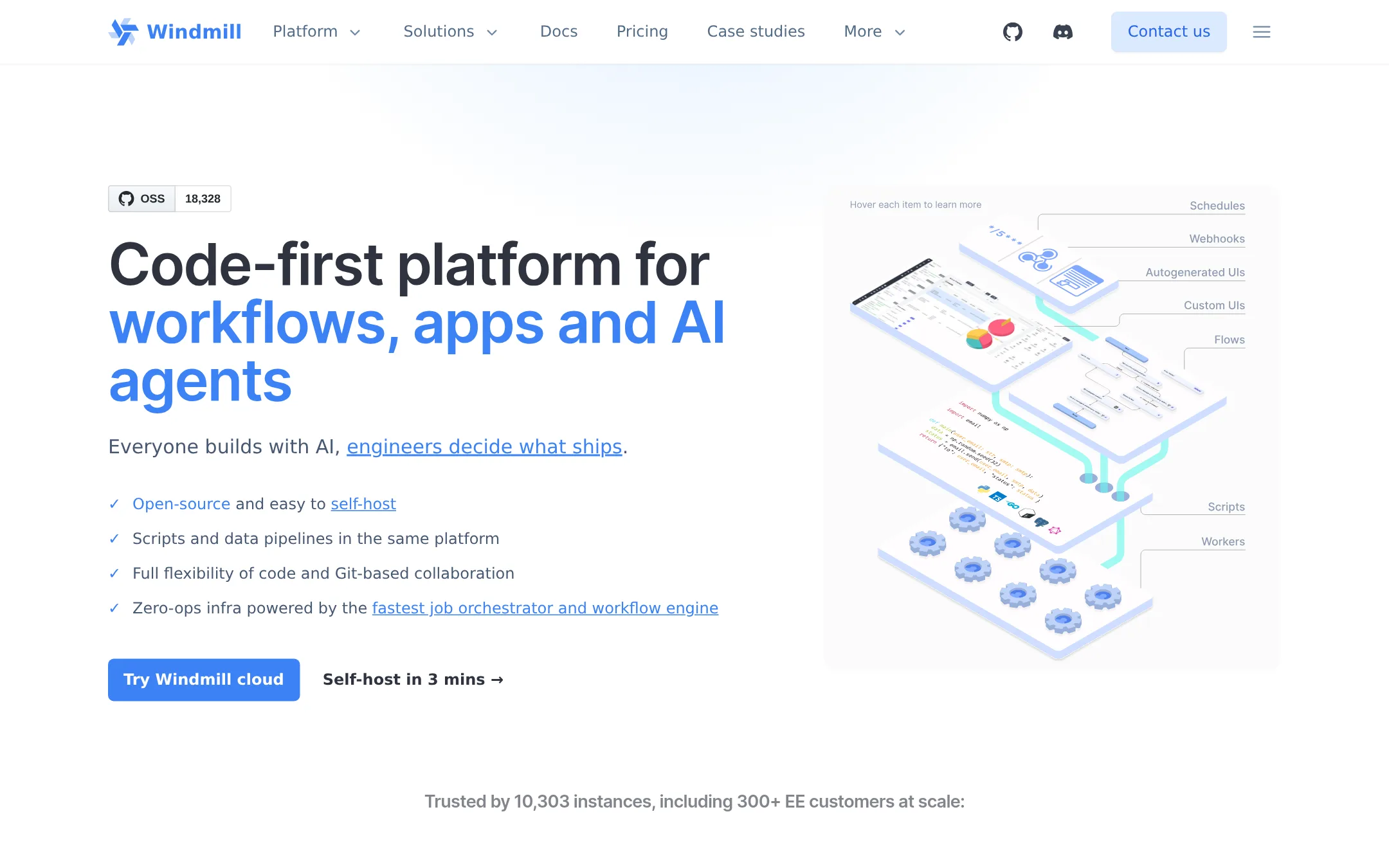
Windmill is a code-first platform that turns scripts into internal apps, workflows, and AI agents. You would choose it over Apache Airflow if you want a single tool for both data pipelines and internal tools, with a faster, self-hostable engine and built-in app building.
Where it is strong
- Scripts in 20+ languages become API endpoints and forms
- Built-in app builder (React/Svelte) and AI agents
- Self-hostable with Docker/Kubernetes and fast engine
Where it falls short
- Pricing for Pro/Enterprise can add up with workers and seats
- Less mature for complex DAGs compared to Airflow's ecosystem
- Pricing:
- Free Community Edition for up to 10 users with SSO. Pro starts at $20/mo per builder, $10/mo per non-builder, and $50/worker/mo. Enterprise from $120/mo.
- Switching from Apache Airflow:
- Moving from Airflow means rewriting workflows as Windmill scripts or flows, but you can import dbt projects and run them on Windmill workers.
- Free tier. Custom quot
11.n8n
Best for: Teams that want to build AI-powered workflows and automations with a visual builder, especially those needing human-in-the-loop approvals and self-hosting options.
- Pricing
- Free tier. Custom quot
- Category
- AI & Machine Learning
n8n is a visual workflow automation platform that combines no-code building with code steps when needed. It is a good fit for teams that want to build AI agents and automate business processes with human approval steps, without writing Python DAGs. Choose it over Airflow when you need faster iteration and built-in AI features rather than heavy data pipeline orchestration.
Where it is strong
- Visual builder with code steps in JS/Python for flexibility
- Built-in AI agents, MCP support, and human approval for tool calls
- Self-hostable with Community Edition on GitHub
Where it falls short
- Not designed for large-scale data pipeline scheduling like Airflow
- Advanced features like SSO and queue mode are limited to Business and Enterprise plans
- Pricing:
- Pricing is not published on the site. Plans start with a free Starter tier, then Pro, Business, and Enterprise with custom quotes.
- Switching from Apache Airflow:
- Moving from Airflow means rethinking workflows as visual graphs rather than Python DAGs, but you can still use code steps for complex logic.
- Custom quote
12.Airbyte
Best for: Teams that need to move data from many sources to a warehouse without building custom pipelines, especially those wanting a managed or hybrid deployment.
- Pricing
- Custom quote
- Category
- Analytics & Data
Airbyte is a data movement platform focused on replicating data from 700+ sources into destinations like warehouses, with a UI and connectors that don't require writing code. Choose it over Airflow when your main need is syncing data between systems rather than orchestrating complex, custom workflows.
Where it is strong
- 700+ pre-built connectors for sources and destinations
- UI-based setup, no code required for most syncs
- Hybrid deployment option keeps data in your environment
Where it falls short
- Less flexible for custom orchestration logic compared to Airflow's Python-based DAGs
- Pricing details are not transparent without contacting sales
- Pricing:
- Pricing is not published on the site. Plans include Standard (volume-based), Plus (credit packages), Pro and Enterprise Flex (capacity-based on Data Workers).
- Switching from Apache Airflow:
- Moving from Airflow to Airbyte means replacing custom Python DAGs with configured connections, which is simpler for data replication but may require rethinking complex task dependencies.
See more comparisons in Analytics & Data alternatives.
FAQ
Questions about Apache Airflow alternatives
What is the best alternative to Apache Airflow for teams that want to avoid managing infrastructure?
Prefect offers a managed control plane with optional serverless compute, so you don't have to host your own scheduler. It uses plain Python with a @flow decorator, making it easier to adopt for Python developers. Pricing is not published, but plans include a free Hobby tier.
Which alternative is best for data teams that need asset-level lineage and data quality checks?
Dagster is asset-centric and tracks lineage, data health, and dependencies automatically. It has native dbt and Snowflake integrations, so you don't need custom glue code. Pricing is credit-based, starting at $10 per month for Solo.
Can I use an alternative for long-running, event-driven workflows that need to survive failures?
Temporal is a durable execution platform that keeps the full state of your workflows and retries failed steps automatically. It is ideal for AI agents, order fulfillment, and other stateful applications. Pricing starts with $150 in free credits, then usage-based.
Are there no-code alternatives to Airflow for non-technical users?
Airbyte and n8n offer visual builders. Airbyte focuses on data replication with 700+ connectors and no code required for most syncs. n8n provides a visual workflow builder with code steps in JavaScript or Python, plus built-in AI agents. Both have free tiers, but pricing details are not fully public.
What should I consider when choosing between Airflow and a YAML-based orchestrator like Kestra?
Kestra defines workflows in YAML, which is language-agnostic and fits Git-driven CI/CD. It has 2,400+ plugins and event-driven scheduling. However, enterprise features like SSO and RBAC require the paid edition, and complex Python logic may be harder to express in YAML.
Last updated October 31, 2026.