Apache Superset alternatives
12 products compared · Updated October 31, 2026
The short answer
For product teams embedding analytics, Quill keeps data on your server and reuses your auth, while Cube.js offers a governed semantic layer for embedded dashboards and AI chat. For dbt users, Lightdash reads your existing metric definitions and offers unlimited users at a flat price. For internal self-serve analytics with minimal overhead, Metabase provides a friendly interface and AI natural language queries on all plans.
Your shortlist, at a glance
Read the comparisons ↓ MetabaseFree, paid from $0.01/Startups and internal teams that want self-serve analytics with minimal engineering overhead and a friendly interface.
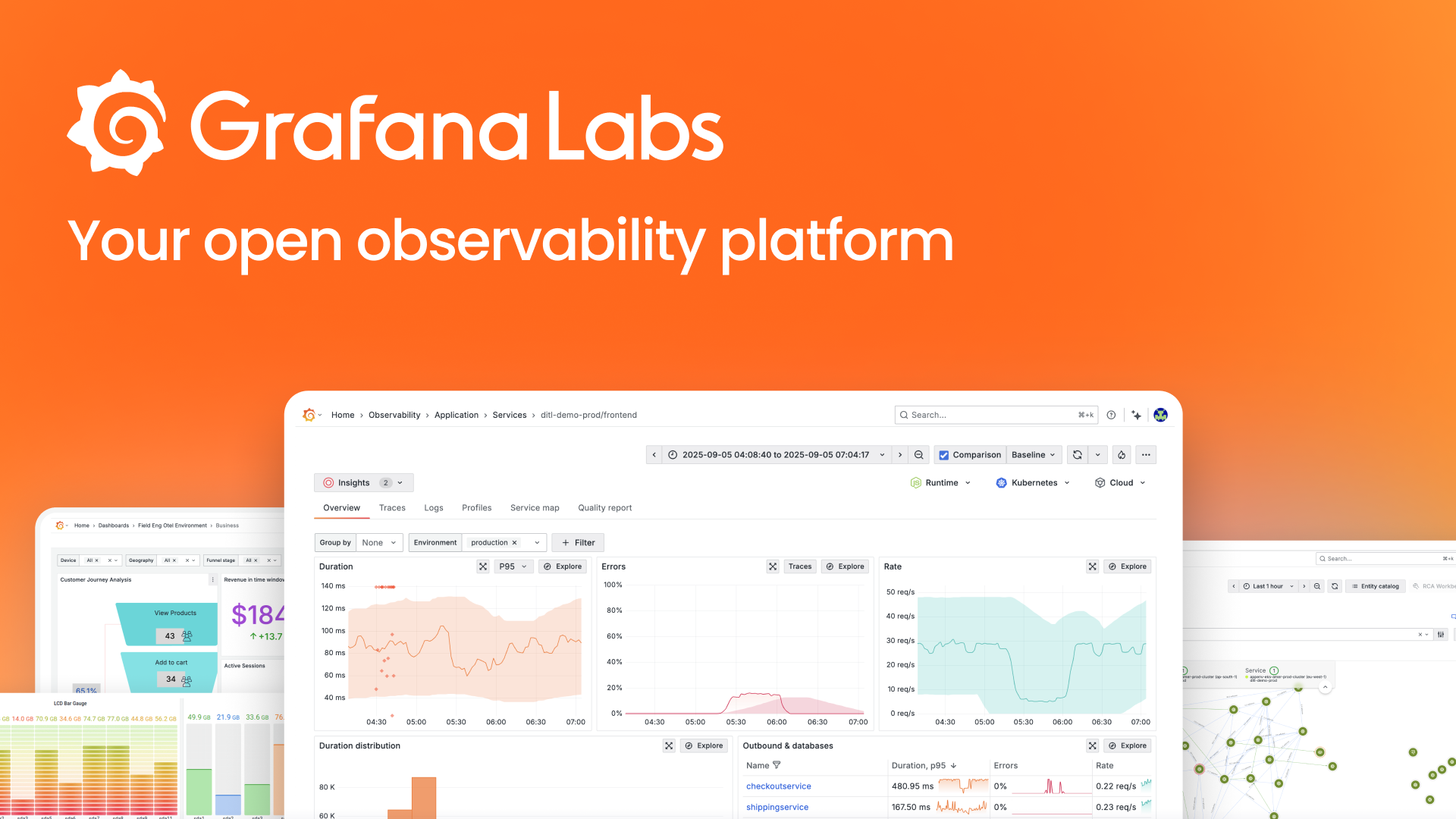 Grafana LabsFree tier. Usage-basedSRE and DevOps teams that need real-time observability across their entire stack, with AI-driven root cause analysis and cost optimization.
 RedashNot publishedData-savvy teams that prefer writing SQL and need quick, collaborative dashboards without heavy configuration.
- TTableauSee websiteData visualization and analytics platform
 LookerNot publishedEnterprises on Google Cloud that need a governed semantic layer and embedded analytics with AI assistance.
Microsoft Azure CycleCloudNot publishedResearch and engineering teams that run high-performance computing workloads on Azure and need automated cluster orchestration, not self-serve analytics dashboards.
 LightdashFrom $3000/moData teams using dbt who want a BI tool that reads their existing metric definitions and offers unlimited users at a flat price.
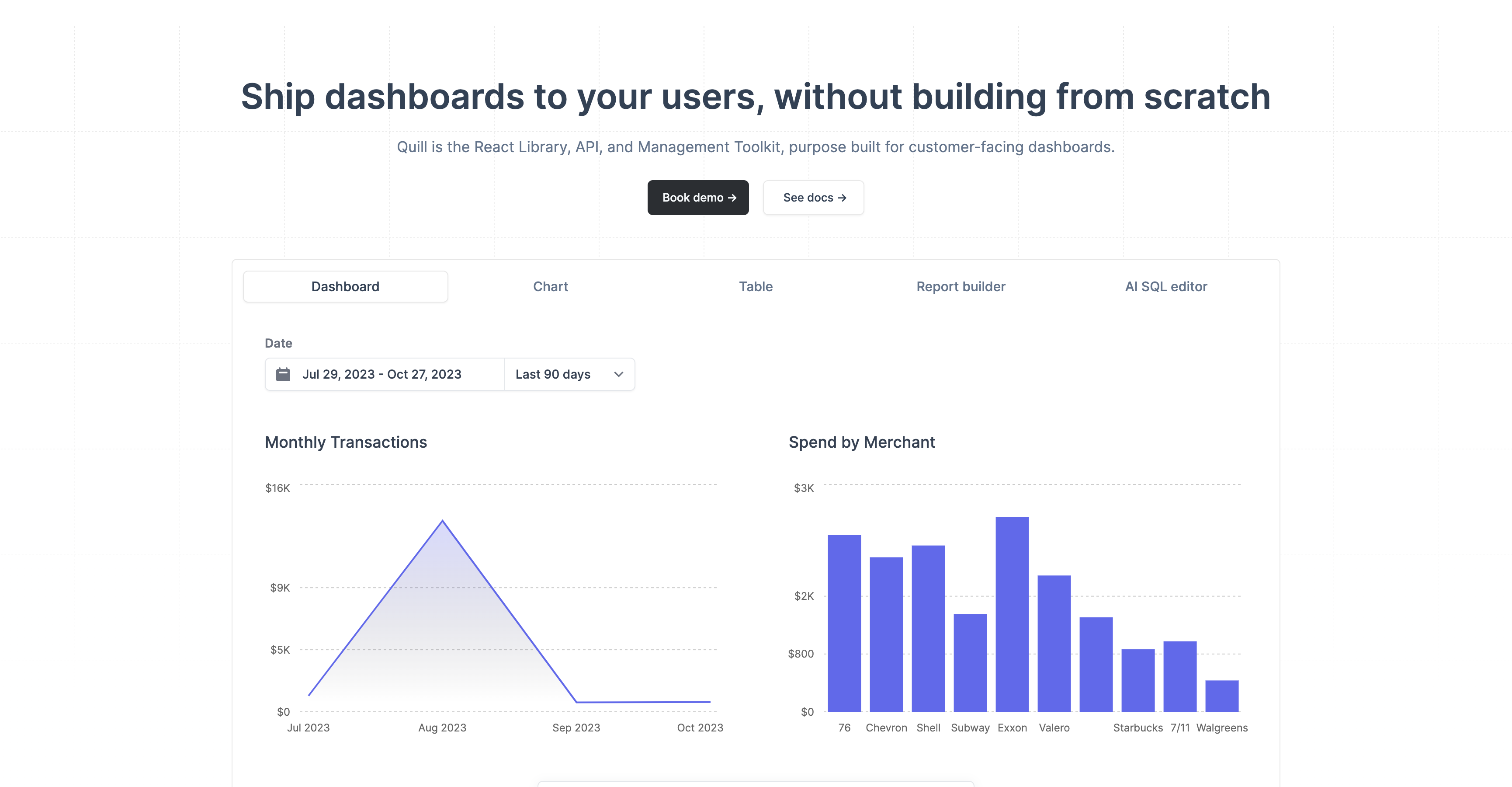 QuillNot publishedProduct teams building embedded analytics or AI reporting features into their SaaS application who want to reuse their existing auth and database stack.
 Cube.jsNot publishedProduct teams that want to embed governed, multi-tenant analytics or AI chat into their own application.
 HolisticsNot publishedData teams that want a governed semantic layer with AI-assisted self-service and version-controlled analytics as code.
 Microsoft Power BINot publishedTeams already using Microsoft 365 that need a managed BI tool with AI-assisted data exploration.
 ModeNot publishedData teams that want a hosted BI platform combining SQL, Python, and R with self-service dashboards for the rest of the company.
About Apache Superset and its alternatives
Apache Superset is an open-source platform for data exploration and visualization. It is known for self-serve analytics, a wide range of supported databases, and a strong community. Teams use it to build charts and dashboards without writing code.
When comparing alternatives, weigh pricing structure (flat vs. usage-based vs. custom), deployment options (self-hosted vs. managed), integration with your existing stack (dbt, Microsoft 365, Google Cloud), and support for embedding or AI features. Check whether pricing is public or requires a sales call, and whether the tool fits your team's technical level.
Explore the alternatives
- Free, paid from $0.01/
1.Metabase
Best for: Startups and internal teams that want self-serve analytics with minimal engineering overhead and a friendly interface.
- Pricing
- Free, paid from $0.01/
- Category
- Analytics & Data
Metabase is an open-source BI tool that focuses on making analytics accessible to non-technical users through a visual query builder and AI-powered natural language questions. It's a good fit if you want a simpler, more opinionated alternative to Apache Superset that still supports self-hosting and embedding. Choose it when your team values ease of use and quick setup over Superset's broader customization and database support.
Where it is strong
- AI-powered natural language queries on all plans
- Simple visual query builder for non-technical users
- Self-hostable with a quick setup script
Where it falls short
- Fewer supported data sources than Superset (20+ vs. Superset's broader list)
- Advanced embedding and SSO features are locked behind Pro/Enterprise plans
- Pricing:
- Open Source plan is free. Starter and Pro plans have usage-based pricing for AI ($3.75 per 1M tokens) and transforms ($0.01 per run after 1,000 included), with storage starting at $2 per 1M rows. Enterprise is custom.
- Switching from Apache Superset:
- Moving from Superset to Metabase is straightforward if you're comfortable rebuilding dashboards in a new tool. Both support SQL and visual querying, but you'll need to recreate your charts and set up your data connections again.
- Free tier. Usage-based
2.Grafana Labs
Best for: SRE and DevOps teams that need real-time observability across their entire stack, with AI-driven root cause analysis and cost optimization.
- Pricing
- Free tier. Usage-based
- Category
- Analytics & Data
Grafana Labs is a full-stack observability platform that unifies metrics, logs, traces, and profiles, with AI-assisted analysis. Choose it over Apache Superset when your primary need is monitoring production systems and troubleshooting, not ad-hoc business analytics or dashboarding for non-technical users.
Where it is strong
- Native OpenTelemetry and Prometheus support, avoiding vendor lock-in.
- Adaptive Telemetry cuts telemetry costs by 30-50% on average.
- AI Assistant and Investigations speed up root cause analysis.
Where it falls short
- Focused on telemetry, not general-purpose BI or SQL querying like Superset.
- Free tier retention is short (14 days), requiring paid plans for long-term analysis.
- Pricing:
- Free tier includes 10k active series, 50 GB logs, and 14-day retention. Paid plans start with usage-based pricing above free limits, with volume discounts and 13-month retention for metrics.
- Switching from Apache Superset:
- Moving from Apache Superset to Grafana Labs means shifting from SQL-based dashboards to metric/log-centric panels, and reworking data sources to fit Prometheus or Loki.
- Not published
3.Redash
Best for: Data-savvy teams that prefer writing SQL and need quick, collaborative dashboards without heavy configuration.
- Pricing
- Not published
- Category
- Analytics & Data
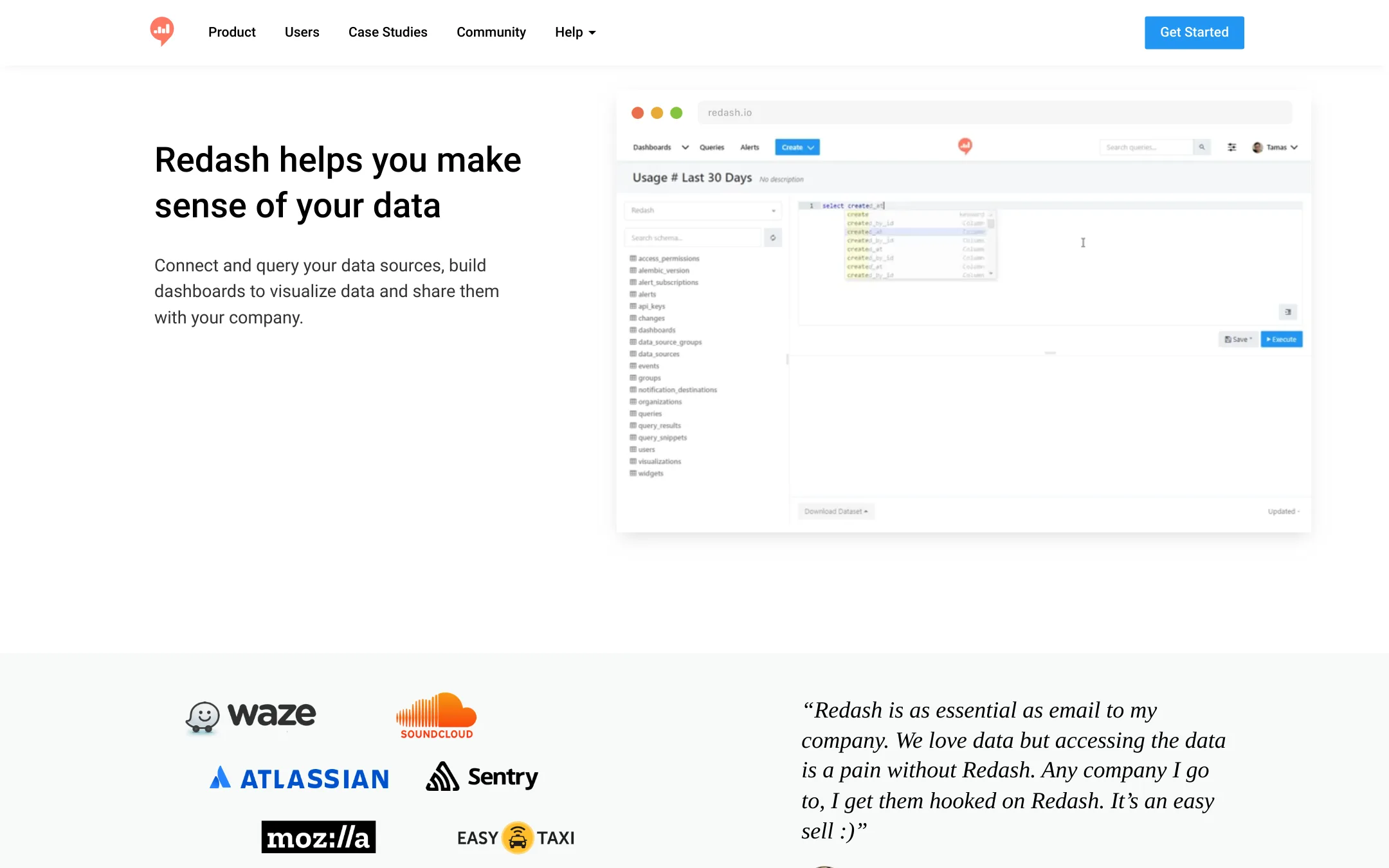
Redash is an open-source tool for writing SQL queries, building dashboards, and sharing them across a team. It is a good fit if your team lives in SQL and wants a lightweight alternative to Superset's more visual, chart-first workflow.
Where it is strong
- Powerful online SQL editor with schema browsing and click-to-insert.
- Supports SQL, NoSQL, Big Data, and API data sources.
- Open source with no lock-in and community contributions.
Where it falls short
- Less visual chart-building compared to Superset's drag-and-drop interface.
- No built-in user management or permissions as granular as Superset's.
- Pricing:
- Pricing is not published on the site.
- Switching from Apache Superset:
- Moving from Superset means rewriting dashboards as SQL queries and re-creating visualizations manually, as Redash has no import from Superset.
- TSee website
4.Tableau
Analytics & Data
Commercial BI platform with powerful visualization and dashboarding capabilities.
- Not published
5.Looker
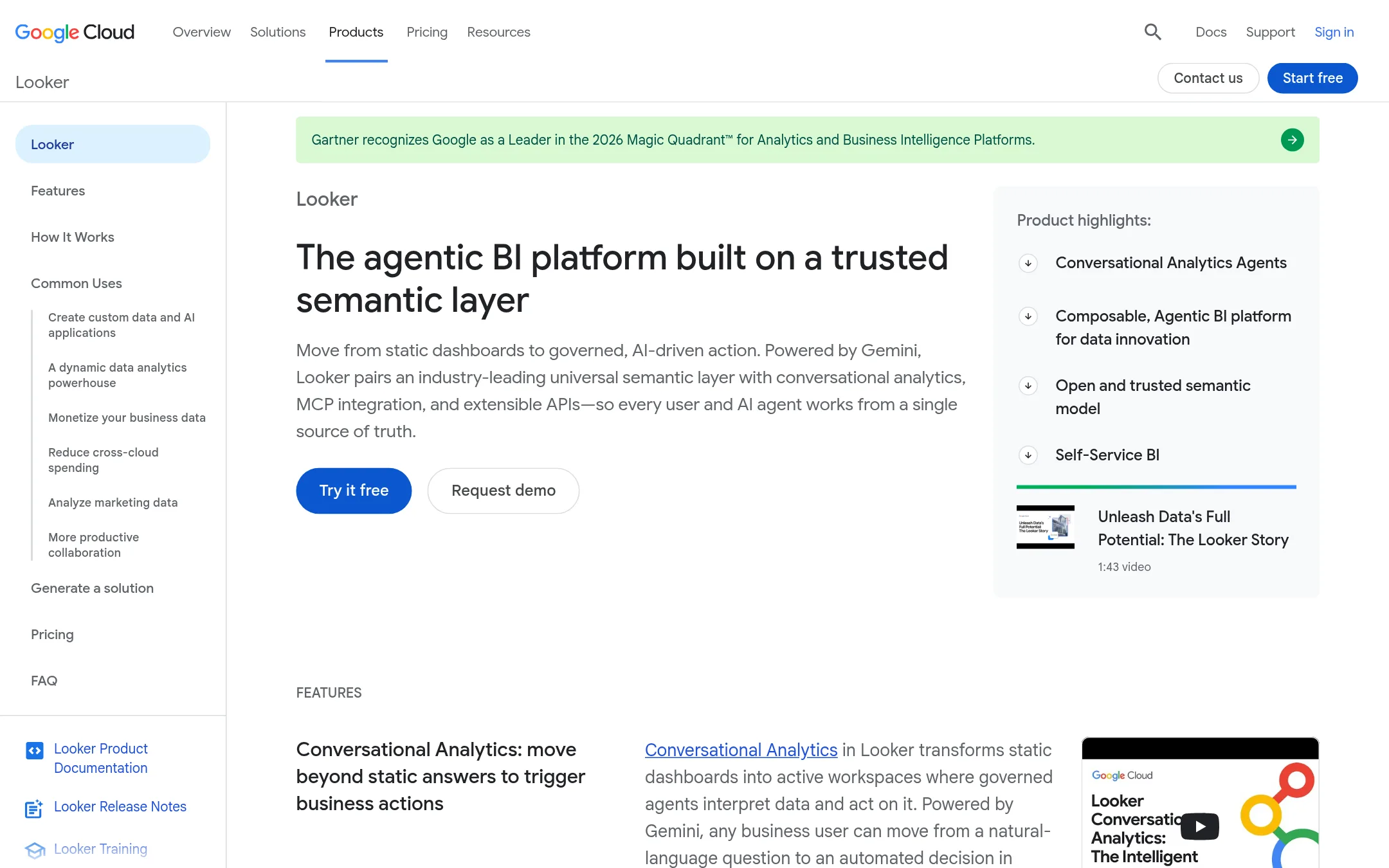
Best for: Enterprises on Google Cloud that need a governed semantic layer and embedded analytics with AI assistance.
- Pricing
- Not published
- Category
- Analytics & Data
Looker is a managed enterprise BI platform with a semantic layer that keeps metrics consistent across dashboards and embedded analytics. Choose it over Apache Superset when you need governed, company-wide metrics and AI-assisted exploration without running your own infrastructure.
Where it is strong
- Semantic layer centralizes metric definitions for consistency
- Native integration with Google Cloud and Gemini AI agents
- Embedded analytics supported for product use cases
Where it falls short
- No self-hosted option. Requires Google Cloud subscription
- Pricing not transparent. Likely higher cost than open-source Superset
- Pricing:
- Pricing is not published on the site. The pricing page returns a 404 error.
- Switching from Apache Superset:
- Moving from Superset means rebuilding dashboards and charts in Looker, and redefining your metrics in its semantic layer.
- Not published
6.Microsoft Azure CycleCloud
Best for: Research and engineering teams that run high-performance computing workloads on Azure and need automated cluster orchestration, not self-serve analytics dashboards.
- Pricing
- Not published
- Category
- Developer Tools
Azure CycleCloud is an HPC orchestration tool for managing and scaling compute clusters, not a data visualization platform. You would choose it over Apache Superset if your core need is running large-scale simulations or batch workloads on Azure, and you handle analytics elsewhere. It is a different category of tool, so the comparison only makes sense for teams that need both cluster management and are evaluating whether Superset's built-in analytics can replace a separate HPC setup.
Where it is strong
- Orchestrates HPC clusters with schedulers like Slurm and PBS, which Superset does not do.
- Integrates with Azure services for storage, networking, and identity.
- Supports autoscaling of compute nodes based on workload demand.
Where it falls short
- No built-in data visualization or dashboarding, so you still need a separate analytics tool.
- Tied to the Azure ecosystem, so it is not useful for teams on other clouds or on-premises.
- Pricing:
- Pricing is not published on the site. Azure lists per-resource costs for virtual machines, storage, and other services, but no specific CycleCloud price is shown.
- Switching from Apache Superset:
- Moving from Superset to CycleCloud means replacing your analytics layer entirely, since CycleCloud does not provide charting or SQL exploration. You would need to pair it with a BI tool.
- From $3000/mo
7.Lightdash
Best for: Data teams using dbt who want a BI tool that reads their existing metric definitions and offers unlimited users at a flat price.

- Pricing
- From $3000/mo
- Category
- Analytics & Data
Lightdash is an open-source BI platform built around dbt, so you define metrics once in your dbt project and explore them in a governed self-serve UI. Choose it over Apache Superset if your team already uses dbt and wants consistent metrics without maintaining a separate semantic layer.
Where it is strong
- Native dbt integration with an open semantic layer
- Unlimited users and visualizations on Cloud Pro
- Scheduled reports, alerting, and charts as code
Where it falls short
- Cloud Pro requires a dbt project to be useful
- Embedding and Data Apps are paid add-ons
- Pricing:
- Open Source is free to self-host, Cloud Pro is $3000 per month with unlimited users, and Enterprise is custom with add-ons like HIPAA BAA at $490 per month.
- Switching from Apache Superset:
- Moving from Apache Superset to Lightdash means connecting your dbt project and re-creating dashboards, but you can automate migration from your current BI provider with their tools.
- Not published
8.Quill
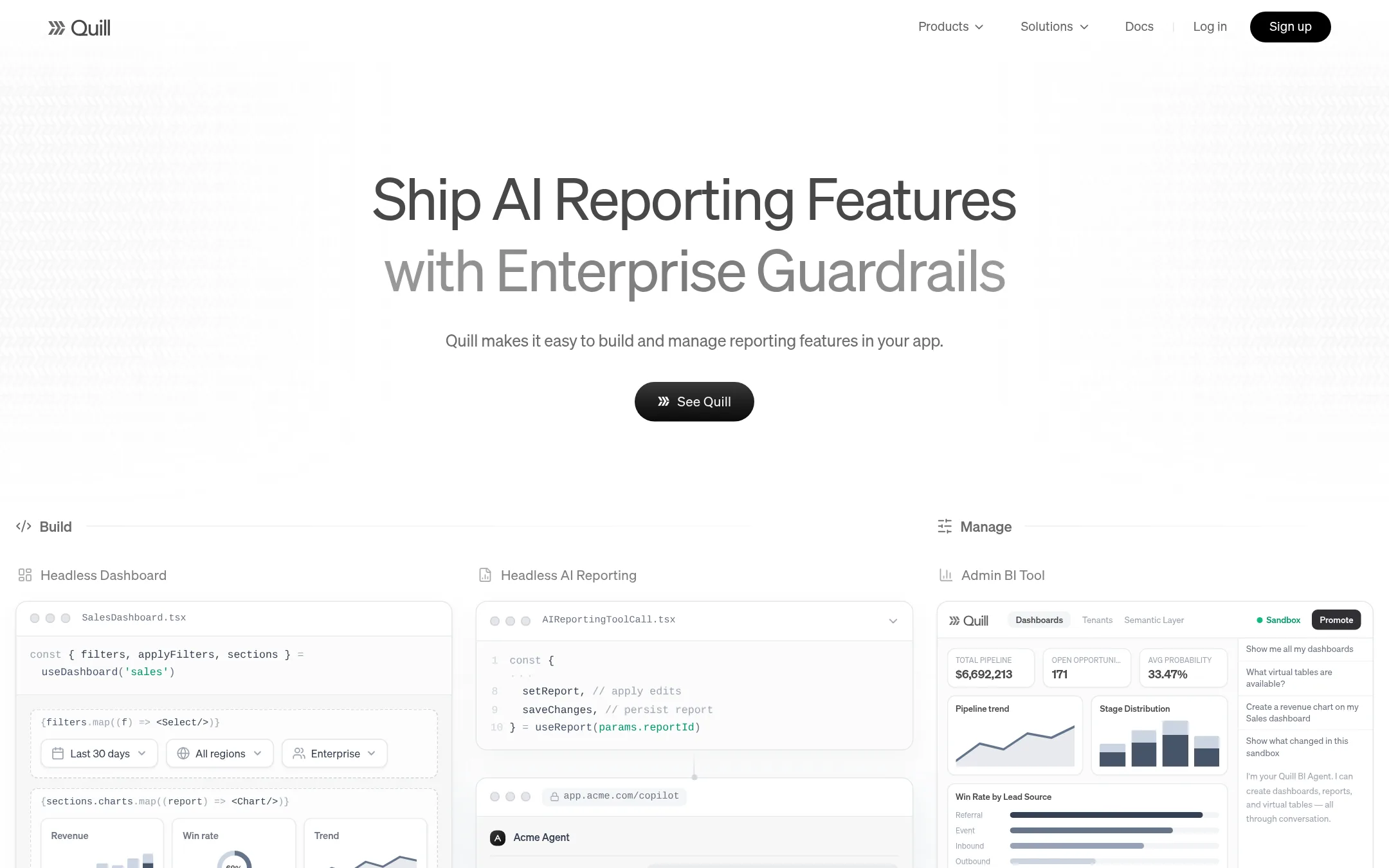
Best for: Product teams building embedded analytics or AI reporting features into their SaaS application who want to reuse their existing auth and database stack.
- Pricing
- Not published
- Category
- Analytics & Data
Quill is a headless BI platform that embeds dashboards and AI-generated reports directly into your product, keeping the database connection on your server. Choose it over Apache Superset when you need to ship reporting features inside your own app with tenant-scoped security and a semantic layer, rather than managing a separate BI tool.
Where it is strong
- Keeps sensitive data on your server with a lightweight SDK that reuses your existing database connection.
- AI-generated queries are validated against your database's syntax tree, so the UI matches what actually runs.
- Tenant-scoped semantic layer and dashboards work without rebuilding your permission model.
Where it falls short
- Pricing is not public, so you need to contact sales for a quote.
- Requires engineering effort to integrate the SDK and manage dashboards via code, unlike Superset's self-serve UI.
- Pricing:
- Pricing is not published on the site.
- Switching from Apache Superset:
- Moving from Apache Superset means replacing a standalone analytics UI with an embedded SDK, so you'll need to rebuild dashboards in Quill's headless framework and connect it to your app's existing auth.
- Not published
9.Cube.js
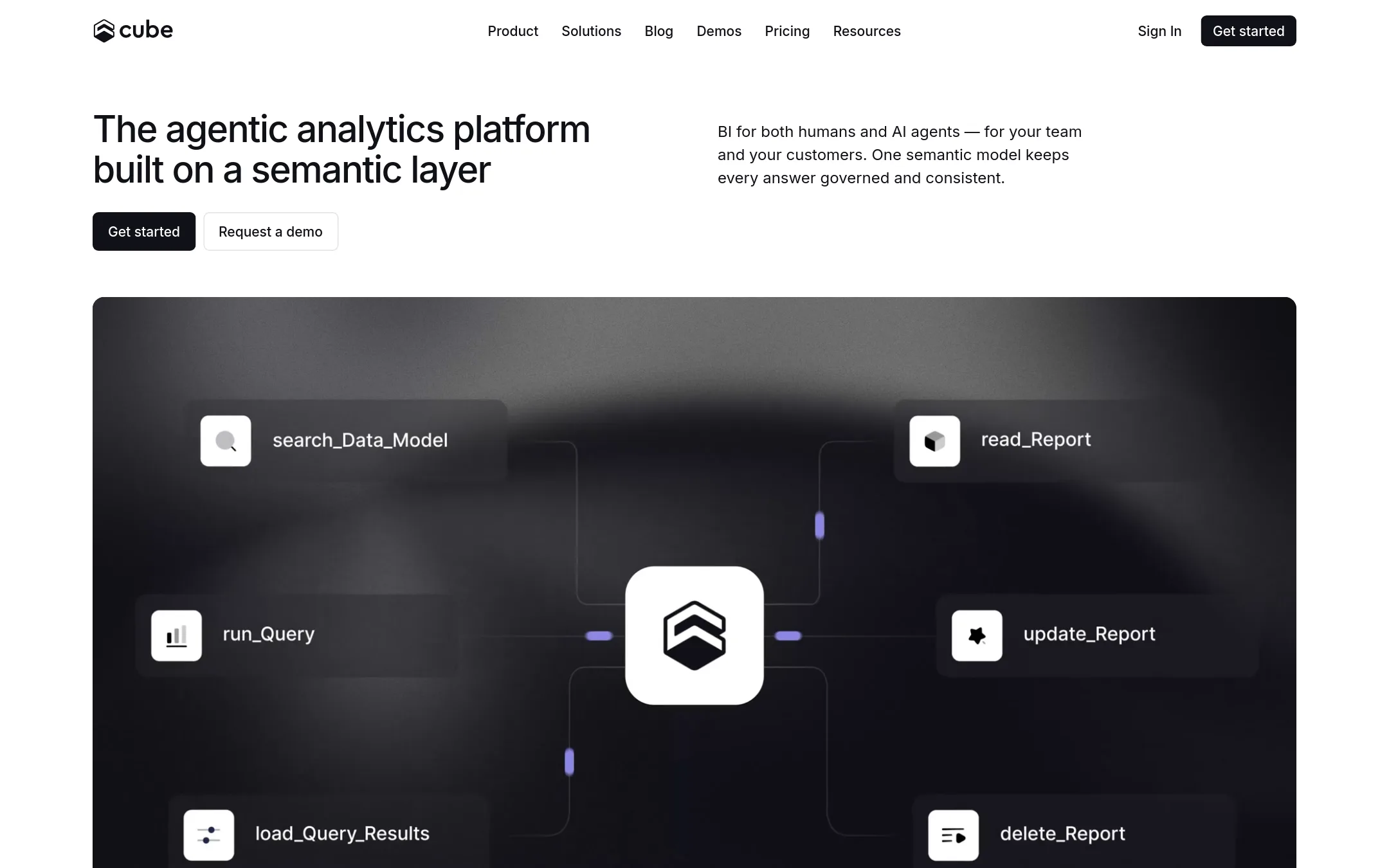
Best for: Product teams that want to embed governed, multi-tenant analytics or AI chat into their own application.
- Pricing
- Not published
- Category
- Analytics & Data
Cube.js is a semantic layer that sits between your data and the tools that query it, so every dashboard and AI agent uses the same governed metric definitions. Choose it over Apache Superset when you need to embed analytics inside your product or give AI agents governed access to your data, not just build internal dashboards.
Where it is strong
- Semantic layer keeps metric definitions consistent across all surfaces
- Built for embedding with iframes, APIs, and a chat interface
- MCP server lets AI agents query your data through the same governed model
Where it falls short
- Pricing is not transparent. You must contact sales for actual plan costs
- Requires modeling your data in Cube's semantic layer before use, unlike Superset's direct SQL exploration
- Pricing:
- Pricing is not published on the site. The page lists plan tiers (Free, Starter, Premium, Enterprise) but no dollar amounts, only per-hour compute costs like $0.60/hour for dedicated deployment.
- Switching from Apache Superset:
- Moving from Apache Superset means defining your metrics in Cube's semantic layer first, then rebuilding dashboards or embedding them in your app.
- Not published
10.Holistics
Best for: Data teams that want a governed semantic layer with AI-assisted self-service and version-controlled analytics as code.
- Pricing
- Not published
- Category
- Analytics & Data
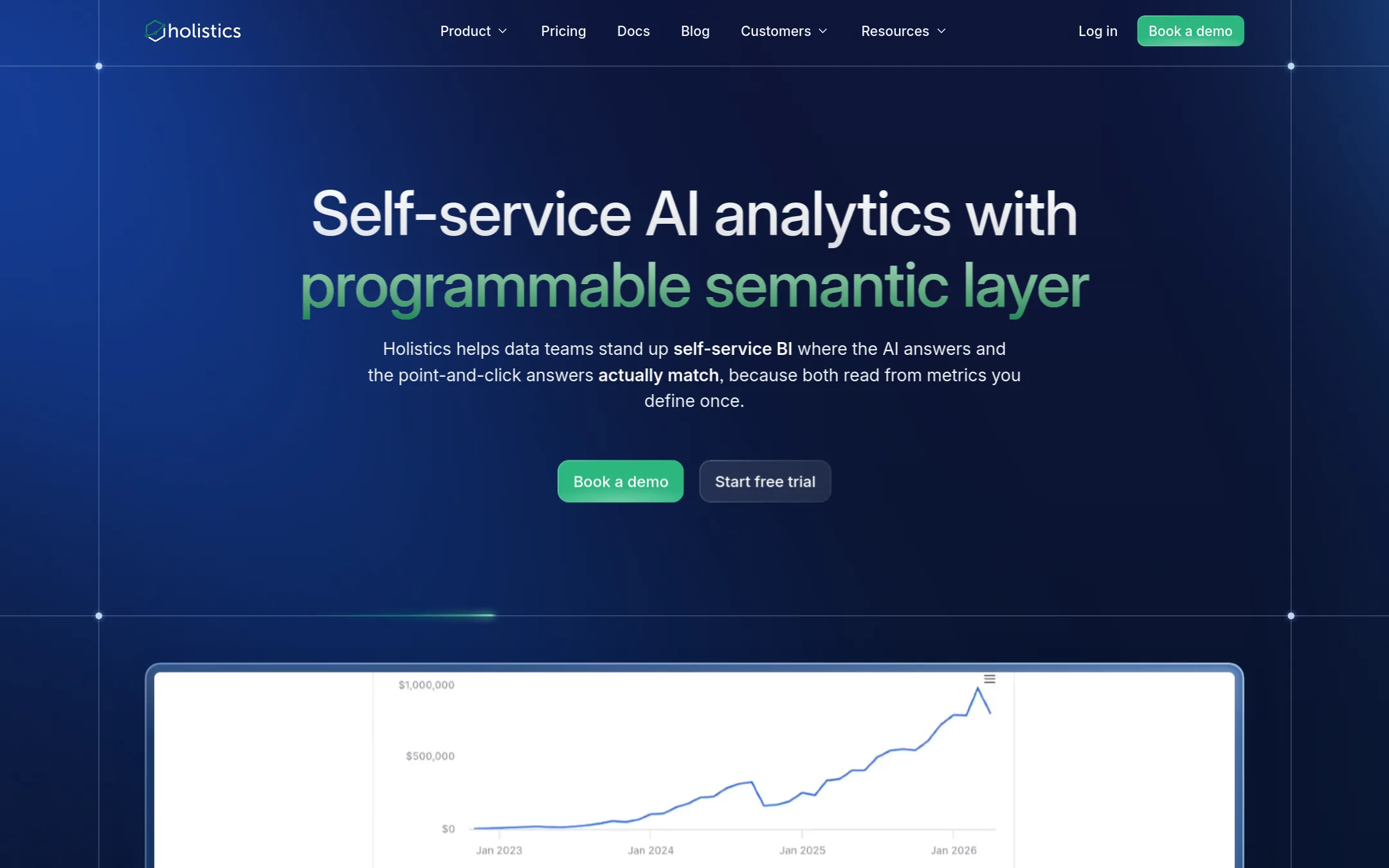
Holistics is a self-service BI platform with a programmable semantic layer and AI-powered analytics. Choose it over Apache Superset when you need governed, code-defined metrics that keep AI answers and dashboards consistent, or when you want to embed white-labeled analytics in your product.
Where it is strong
- Semantic layer defined once, used by dashboards, AI, and embedded analytics
- Everything as code with Git version control and pull-request review
- AI answers ask clarifying questions and trace back to governed metrics
Where it falls short
- Pricing not transparent, requires contacting sales
- Heavier setup than Superset for simple ad-hoc exploration
- Pricing:
- Pricing is not published on the site.
- Switching from Apache Superset:
- Moving from Apache Superset means redefining your metrics and dashboards in Holistics' AML, which is a significant upfront effort but gives you a single governed source of truth.
- Not published
11.Microsoft Power BI
Best for: Teams already using Microsoft 365 that need a managed BI tool with AI-assisted data exploration.
- Pricing
- Not published
- Category
- Analytics & Data
Microsoft Power BI is a managed business intelligence platform that connects to a wide range of data sources and publishes reports through Microsoft 365. You would choose it over Apache Superset if you are already in the Microsoft ecosystem and want a hosted solution with built-in AI features, rather than running and maintaining your own open-source stack.
Where it is strong
- Managed service, no infrastructure to run
- Native integration with Microsoft 365 apps
- Copilot AI for exploring and explaining data
Where it falls short
- Proprietary, not open source
- May require Microsoft ecosystem for full value
- Pricing:
- Pricing is not published on the site.
- Switching from Apache Superset:
- Moving from Apache Superset means migrating your dashboards and data connections to Power BI's model, which may require reworking visualizations and learning a new interface.
- Not published
12.Mode
Best for: Data teams that want a hosted BI platform combining SQL, Python, and R with self-service dashboards for the rest of the company.
- Pricing
- Not published
- Category
- Analytics & Data
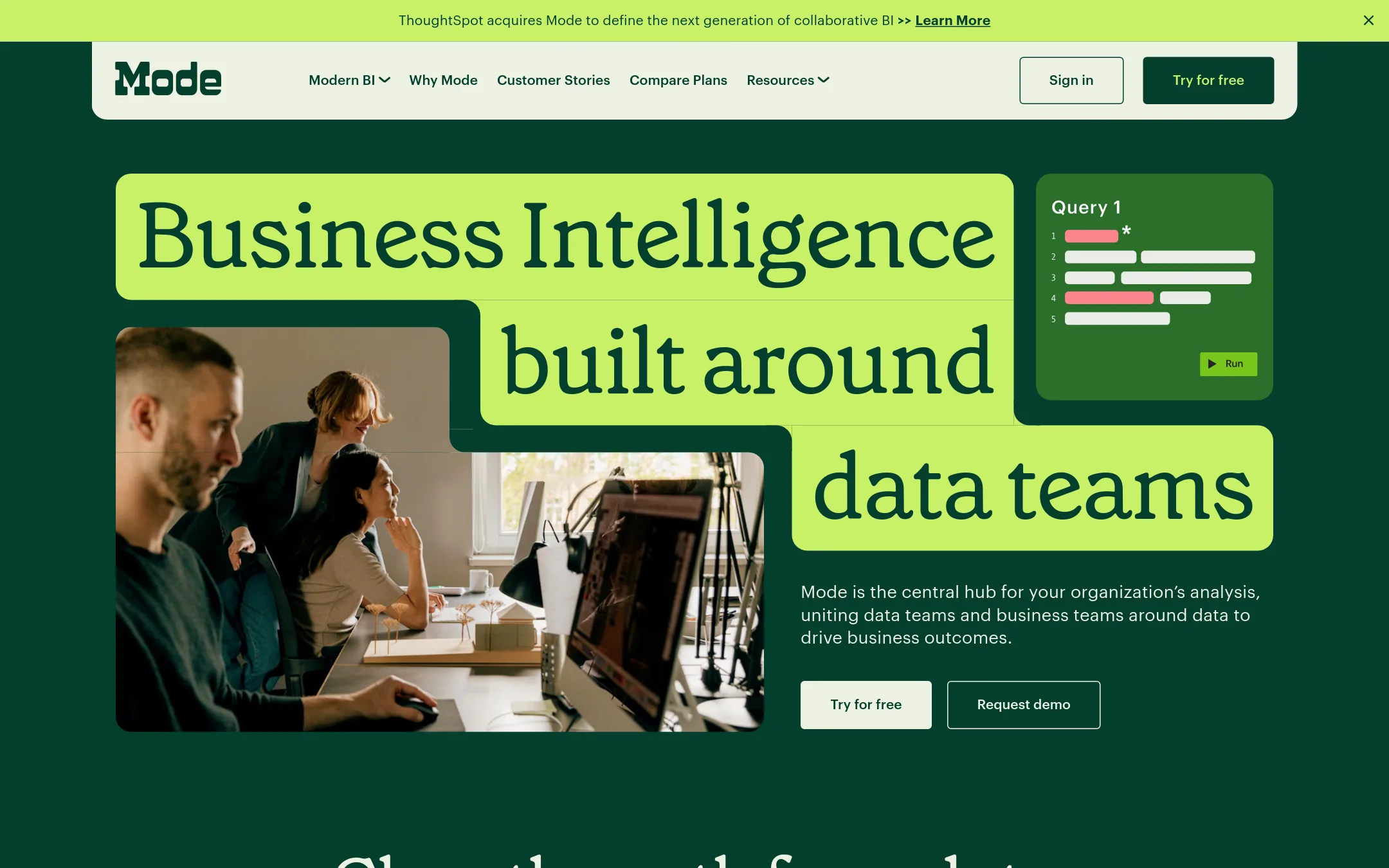
Mode is a collaborative analytics platform that lets data teams write SQL, R, and Python in one place and then share dashboards with business users. Choose it over Apache Superset if you need a hosted tool with a strong focus on ad hoc analysis and self-service reporting, without managing your own infrastructure.
Where it is strong
- Supports SQL, R, and Python in one workflow
- Fast setup, up and running in 30 minutes or less
- Built for collaboration between analysts and business users
Where it falls short
- Pricing is not public, so you must contact sales
- Hosted only, so you lose the self-hosting flexibility of Apache Superset
- Pricing:
- Pricing is not published on the site.
- Switching from Apache Superset:
- Moving from Apache Superset to Mode means re-creating your dashboards and charts in Mode's interface, and your SQL queries can likely be reused, but Python and R scripts may need adaptation.
See more comparisons in Analytics & Data alternatives.
FAQ
Questions about Apache Superset alternatives
Which alternative is best for embedding analytics into my product?
Quill and Cube.js are both built for embedding. Quill keeps the database connection on your server and reuses your auth, while Cube.js provides a semantic layer for consistent metrics across dashboards and AI chat. Both require engineering effort to integrate.
Which tool is easiest for non-technical users?
Metabase focuses on simplicity with a visual query builder and AI natural language questions. It is self-hostable and has a quick setup script. Superset offers more customization but has a steeper learning curve.
Which alternatives have transparent pricing?
Lightdash publishes its pricing: Open Source is free, Cloud Pro is $3000 per month with unlimited users, and Enterprise is custom. Grafana Labs has a free tier and usage-based paid plans. Most other tools, like Quill, Looker, and Mode, do not publish pricing.
Which tool works best if I already use dbt?
Lightdash is built around dbt and reads your existing metric definitions, so you avoid maintaining a separate semantic layer. It offers unlimited users on Cloud Pro. Cube.js also provides a semantic layer but requires modeling your data in its own format.
Which alternative is best for monitoring production systems?
Grafana Labs is an observability platform for metrics, logs, and traces, with AI-assisted root cause analysis. It is not for general BI or SQL querying. Choose it if your primary need is real-time monitoring, not business dashboards.
Last updated October 31, 2026.