
Artificial Societies alternatives
6 products compared · Updated November 26, 2026
The short answer
The three strongest alternatives to Artificial Societies are Synthetic Users, Remesh and Conjointly. Synthetic Users suits product and marketing teams that want to pressure-test a concept or message with interview-style depth before spending on research. Remesh suits research and people teams that want AI-moderated focus groups with real customers or employees. Conjointly suits product and pricing teams that want to run conjoint and pricing studies on real respondents themselves.
Your shortlist, at a glance
Read the comparisons ↓ Qualtrics XMCustom quoteCustomer experience and employee experience teams in large organisations that need feedback surveys, contact centre analytics and frontline action plans
 SurveyMonkeyNot publishedHR, customer experience and research teams that need to gather real responses from employees, customers or attendees on an ongoing basis
- TTypeformFrom 266 USD/moMarketing and sales teams that need lead capture forms with automated follow-up and no simulation of public opinion
- RRemeshNot publishedResearch and people teams that want AI-moderated focus groups with real customers or employees
- SSynthetic UsersFrom $12,500/yearProduct and marketing teams that want to pressure-test concepts and messaging with interview-style depth before committing to organic research.
- CConjointlyFree Basic + per respoProduct and pricing teams that want to run conjoint, Van Westendorp or concept tests on real respondents themselves
About Artificial Societies and its alternatives
Artificial Societies helps organisations simulate how customers, citizens, investors and other high-value audiences would respond to a decision before they act. Its site says it uses AI to model human societies, combining behavioural science with mixed-method surveys, focus groups, multiverse experiments and scenario cascades. It lists use cases in strategic communications, crisis and issues management, market expansion, investor relations and government affairs.
When comparing alternatives in this category, weigh the pricing structure first, since some tools publish plans while others require a sales conversation and some charge per response on top of a licence. Check which regions the product serves and where data is hosted, and whether it connects to the systems you already use. Look at the level of support included and the contract terms, especially any annual commitments or usage pools.
Explore the alternatives
- Custom quote
1.Qualtrics XM
Best for: Customer experience and employee experience teams in large organisations that need feedback surveys, contact centre analytics and frontline action plans
- Pricing
- Custom quote
- Category
- HR & Recruiting
Qualtrics XM is an experience management platform that collects and analyses customer and employee feedback across channels, with AI features for simulating decisions and predicting outcomes. Teams pick it over Artificial Societies when they want experience data from real customers and staff tied to daily operations, not simulated audiences built for stress-testing messages and stakeholder reactions.
Where it is strong
- Covers surveys, contact centre analytics, digital feedback and employee engagement in one platform
- Turns feedback into follow-up actions and recommendations for managers at each location
- Publishes customer references and security and compliance commitments
Where it falls short
- Its simulation features use synthetic audiences built on language models, not the societal network modelling Artificial Societies offers
- Pricing requires a sales conversation before you can see any figures
- Pricing:
- Pricing is not published on the site. The pricing page asks for a request and describes plans based on planned usage and employee count.
- Switching from Artificial Societies:
- Moving from Artificial Societies would mean rebuilding your research programme around surveys and feedback data rather than simulated personas, so expect a new setup period.
- Not published
2.SurveyMonkey
Best for: HR, customer experience and research teams that need to gather real responses from employees, customers or attendees on an ongoing basis
- Pricing
- Not published
- Category
- Productivity & Project Management
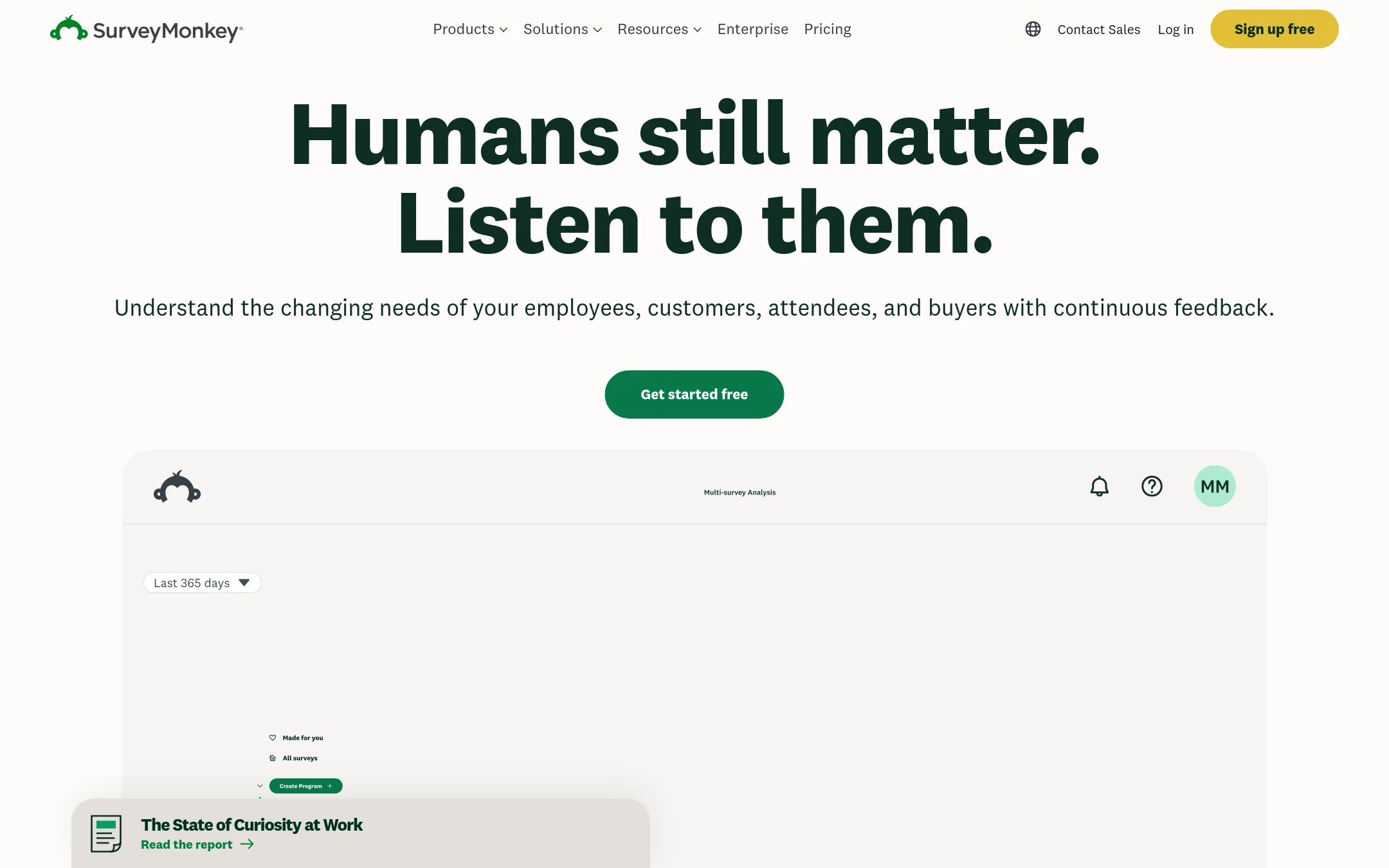
SurveyMonkey is a survey platform for collecting and analysing feedback from employees, customers, attendees and buyers. Teams pick it over Artificial Societies when they need to ask real people directly rather than simulate how audiences might react. It fits ongoing feedback programmes and standard market research.
Where it is strong
- Built for collecting real human responses at scale, including ongoing employee and customer feedback.
- Offers AI-assisted survey creation, thematic analysis and multi-survey analysis on paid plans.
- Has templates for common uses such as event feedback, course evaluation and Net Promoter Score surveys.
Where it falls short
- It gathers opinions from real people rather than simulating how societies or stakeholders would react to a scenario that has not happened ye
- Paid plans charge extra per response above the plan limit, which can add cost for large samples.
- Pricing:
- Pricing is not published on the site.
- TFrom 266 USD/mo
3.Typeform
Best for: Marketing and sales teams that need lead capture forms with automated follow-up and no simulation of public opinion
- Pricing
- From 266 USD/mo
- Category
- Other
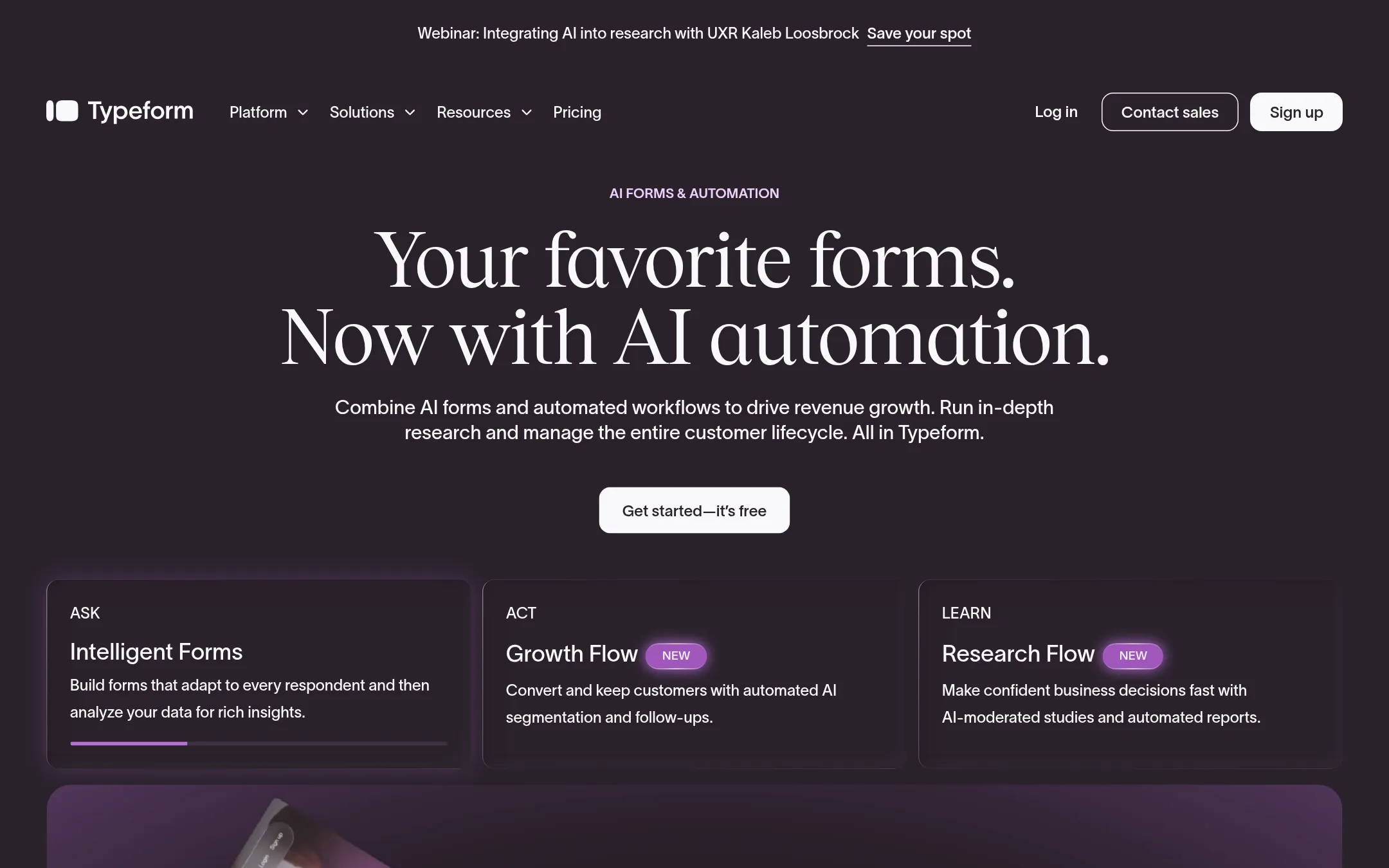
Typeform builds conversational forms and surveys, then adds automations that act on the responses, such as enriching leads, sending follow-ups, and collecting payments. It also offers AI-moderated research interviews with recruited panels. Someone would pick it over Artificial Societies when they need to collect answers from real people and follow up on them, rather than simulate how a population would react before a decision.
Where it is strong
- Forms are built from a text prompt, and the site claims they collect more data than standard forms.
- Lead capture links to e-signatures, calendar booking, and Stripe or PayPal payments.
- AI-moderated interviews can recruit from a verified panel with targeting criteria.
Where it falls short
- It does not simulate how audiences like regulators or investors would react to a decision before it is made, which is the core of Artificial
- Enterprise pricing and security details, such as the data residency options, require a custom quote.
- Pricing:
- Plans listed on the site include a Plus tier at 266 USD per month after 14 days and a Growth tier at 379 USD per month after 14 days, with a custom Enterprise plan. A free plan is also offered.
- RNot published
4.Remesh
Best for: Research and people teams that want AI-moderated focus groups with real customers or employees
- Pricing
- Not published
- Category
- Other
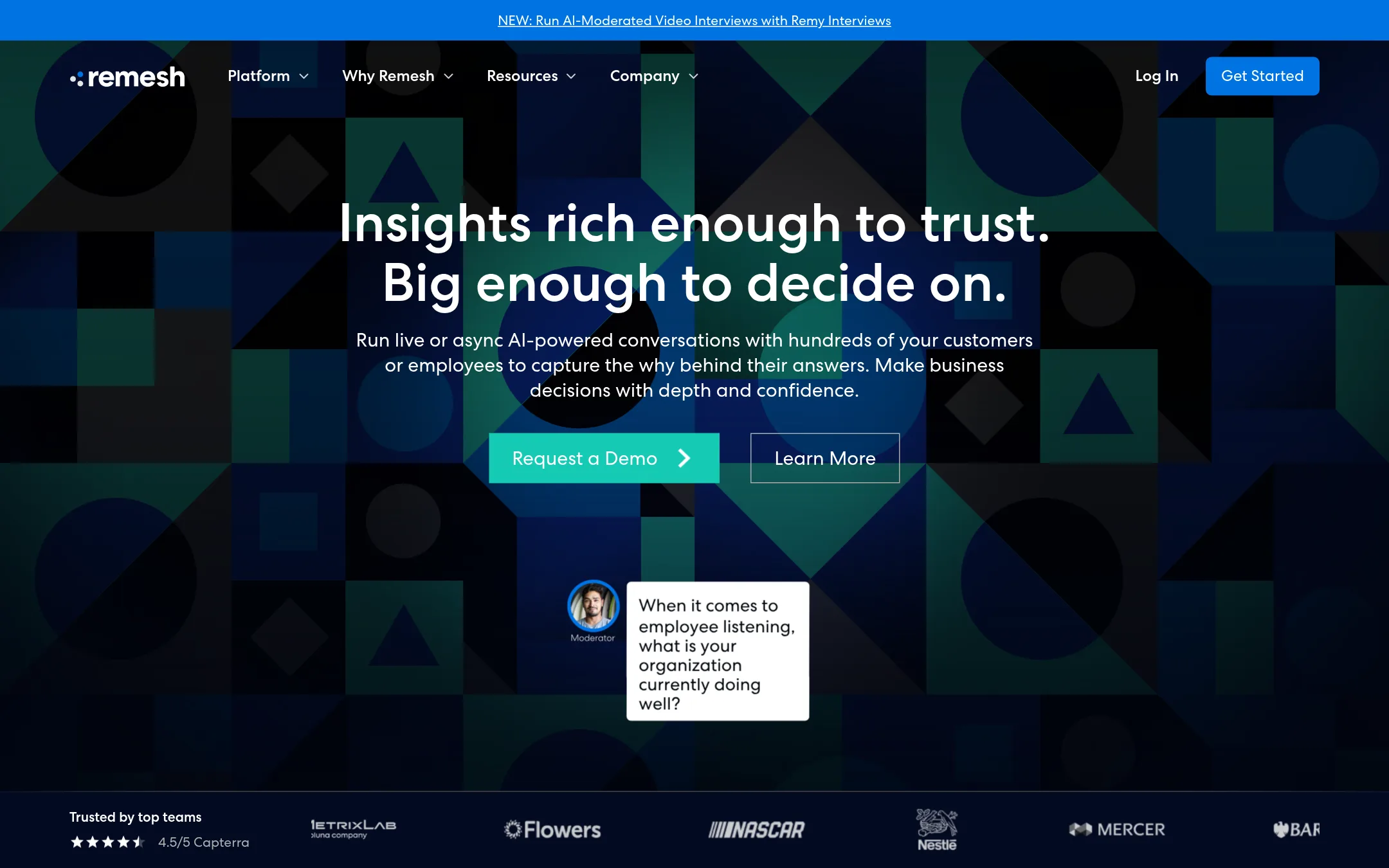
Remesh runs live and async AI-moderated conversations with customers or employees, so teams can hear from hundreds of people and see the reasoning behind their answers. It is built around research and listening rather than simulation. Choose it instead of Artificial Societies when you want to ask real people questions directly and get defensible findings, not model how a population would react before you act.
Where it is strong
- Runs live AI-moderated focus groups with real participants, surfacing themes in real time
- Covers both customer research and employee listening on one platform
- Offers an AI assistant, Remy, to help build discussion guides and surface insights
Where it falls short
- Works with real participants, so it does not simulate untested scenarios the way Artificial Societies does
- No simulation, multiverse experiments or second and third order modelling are described on the site
- Pricing:
- Pricing is not published on the site.
- SFrom $12,500/year
5.Synthetic Users
Best for: Product and marketing teams that want to pressure-test concepts and messaging with interview-style depth before committing to organic research.
- Pricing
- From $12,500/year
- Category
- Other
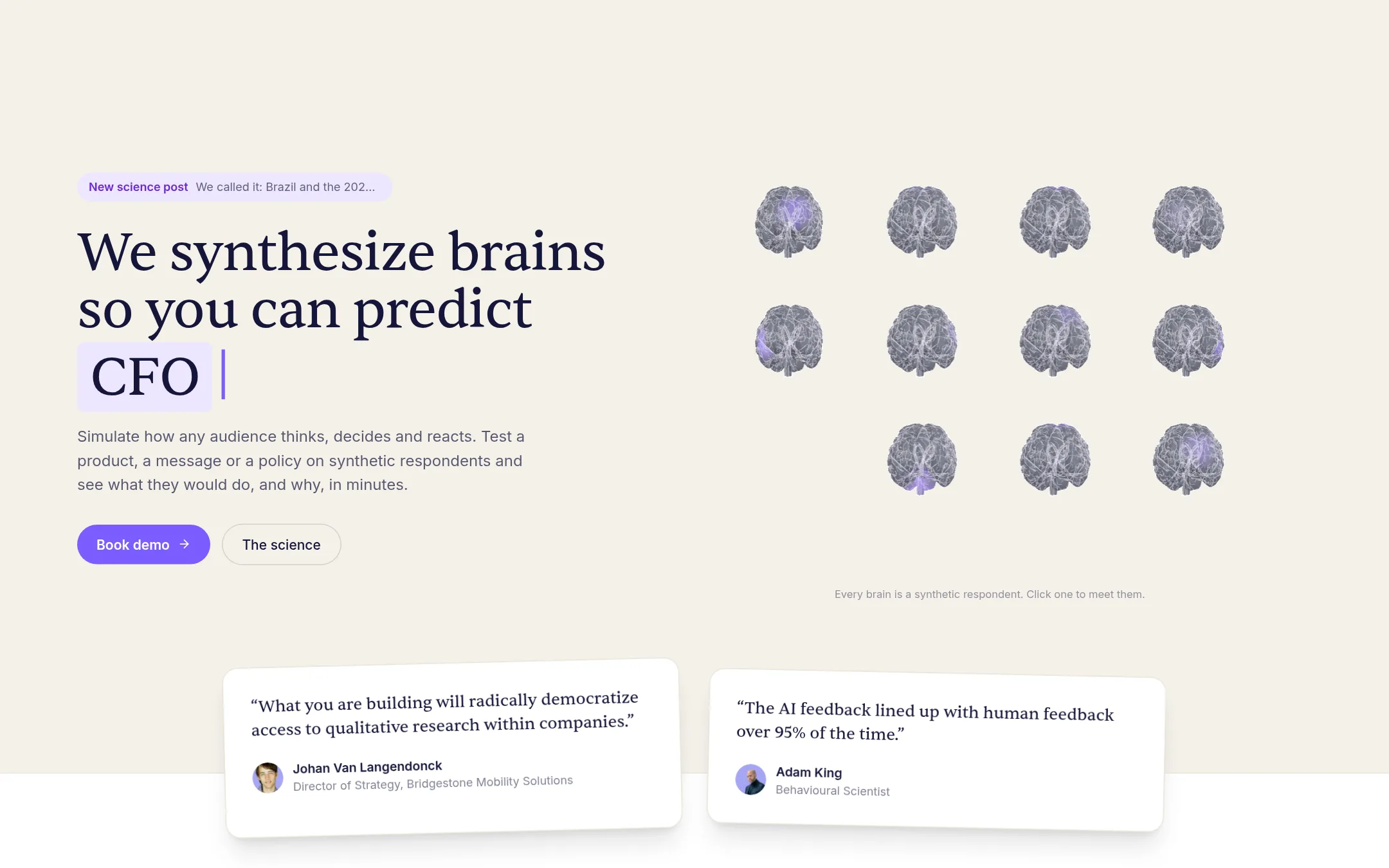
Synthetic Users runs AI-simulated interviews with distinct synthetic participants, so a team can test ideas and messages in minutes before spending on real research. Choose it over Artificial Societies when the question is about one audience's reaction to a product, message or concept and you need interview-style depth rather than simulating how opinions spread through a whole population.
Where it is strong
- Interviews take minutes, not weeks, and avoid recruitment and scheduling.
- Each synthetic participant is a distinct individual with continuity across questions.
- Uploading your own data lets you ground studies in your customer conversations.
Where it falls short
- It is positioned as a discovery co-pilot, so it does not replace organic research for validation.
- It focuses on individual interviews and quant surveys, not large-scale societal network simulation.
- Pricing:
- Plans start at $12,500 per year and run on a shared annual pool of Research Tokens, with a typical 10-question interview costing 1,250 tokens.
- CFree Basic + per respo
6.Conjointly
Best for: Product and pricing teams that want to run conjoint, Van Westendorp or concept tests on real respondents themselves
- Pricing
- Free Basic + per respo
- Category
- Other
Conjointly is a survey platform for teams that want to run their own consumer research, including conjoint analysis, pricing studies and concept tests. Someone would pick it over Artificial Societies when they want to field real surveys to real respondents rather than simulate how a population might react.
Where it is strong
- Free Basic tier with no limits on surveys, questions or team members
- Advanced methods such as conjoint analysis, MaxDiff and Kano are included in the Professional tier
- Real human panel respondents can be sourced on the platform, with expert support on request
Where it falls short
- It runs surveys with real respondents rather than simulating how populations will respond
- Panel costs are billed per response on top of the software licence
- Pricing:
- Pricing is listed in USD with a free Basic tier, a Professional licence, and an Ultimate tier for procurement and support, plus per-response panel costs such as an average of USD 1.55 per complete.
See more comparisons in AI & Machine Learning alternatives.
FAQ
Questions about Artificial Societies alternatives
What does Artificial Societies do that most survey tools do not?
Artificial Societies simulates how audiences would react to scenarios that have not happened yet, using personas built from observed behaviour and networks of connected personas. Most survey tools such as SurveyMonkey and Typeform only collect responses from real people. The entries here describe that difference directly.
Which alternative is best if I want to test a message before a launch?
Synthetic Users is written up as suited to pressure-testing concepts and messaging with interview-style depth before committing to organic research. Its plans start at $12,500 per year on a shared pool of research tokens. It focuses on individual interviews rather than large-scale societal simulation.
Which option works if I need real human feedback rather than simulation?
Remesh runs AI-moderated focus groups and listening sessions with real customers or employees, and Qualtrics XM collects and analyses customer and employee feedback across channels. SurveyMonkey is a survey platform for ongoing employee, customer and attendee feedback. None of these simulate untested scenarios the way Artificial Societies does.
Can I see pricing before talking to a sales team?
It depends on the product. Typeform lists a Plus tier at 266 USD per month and a Growth tier at 379 USD per month after a 14-day trial, plus a free plan. Conjointly publishes a free Basic tier and Professional licence pricing, with per-response panel costs. Qualtrics XM and Remesh do not publish pricing, and SurveyMonkey does not publish it either.
Which alternative is best for running pricing and conjoint studies myself?
Conjointly is the entry written for product and pricing teams that want to run conjoint, Van Westendorp and concept tests on real respondents. Its Professional tier includes conjoint analysis, MaxDiff and Kano methods, and panel respondents can be sourced on the platform. Artificial Societies is a better fit only when you want to simulate how a population would respond rather than field a survey.
Last updated November 26, 2026.