
Artillery alternatives
6 products compared · Updated November 6, 2026
The short answer
The three strongest alternatives to Artillery are k6, Gatling and Locust. k6 suits teams that want JavaScript load tests they can run locally, distributed or in the cloud. Gatling suits teams that want load tests written as code and run from CI/CD, especially larger organizations. Locust suits Python-heavy teams that want open source load tests on their own machines.
Your shortlist, at a glance
Read the comparisons ↓- kk6Not publishedBackend and frontend engineering teams that want JavaScript load tests shared across local, distributed and cloud runs
- LLocustNot publishedPython-heavy engineering teams that want open source load tests written as plain code and run on their own machines
- GGatlingNot publishedEngineering teams that want load tests written as code and run from CI/CD, especially larger organizations with many testers.
 Apache AirflowNot publishedData and engineering teams that need open source Python workflow scheduling across cloud services
 Grafana LabsUsage-based, free tierEngineering teams that want one observability platform on open standards to monitor production metrics, logs and traces.
- BBlazeMeterFrom $79/mo (API plan)Engineering teams already running JMeter or Selenium scripts who want to keep them and add API monitoring and service virtualization
About Artillery and its alternatives
Artillery is a testing platform for performance and reliability. According to its site, it covers load testing for APIs and web apps, scalable Playwright end-to-end testing, and production monitoring with alerts, all in one toolkit. Its pricing is organized into Free, Team and Business plans, with enterprise add-ons available.
When comparing alternatives in this category, weigh how each product is priced, since some publish plan prices and others only describe usage-based or quote-based pricing. Check which regions and cloud environments a tool can run tests from, and which integrations it offers with CI/CD and monitoring systems. Also look at the support options and contract terms, especially if you need enterprise single sign-on, audit logs or a custom agreement.
Explore the alternatives
- kNot published
1.k6
Best for: Backend and frontend engineering teams that want JavaScript load tests shared across local, distributed and cloud runs
- Pricing
- Not published
- Category
- Other
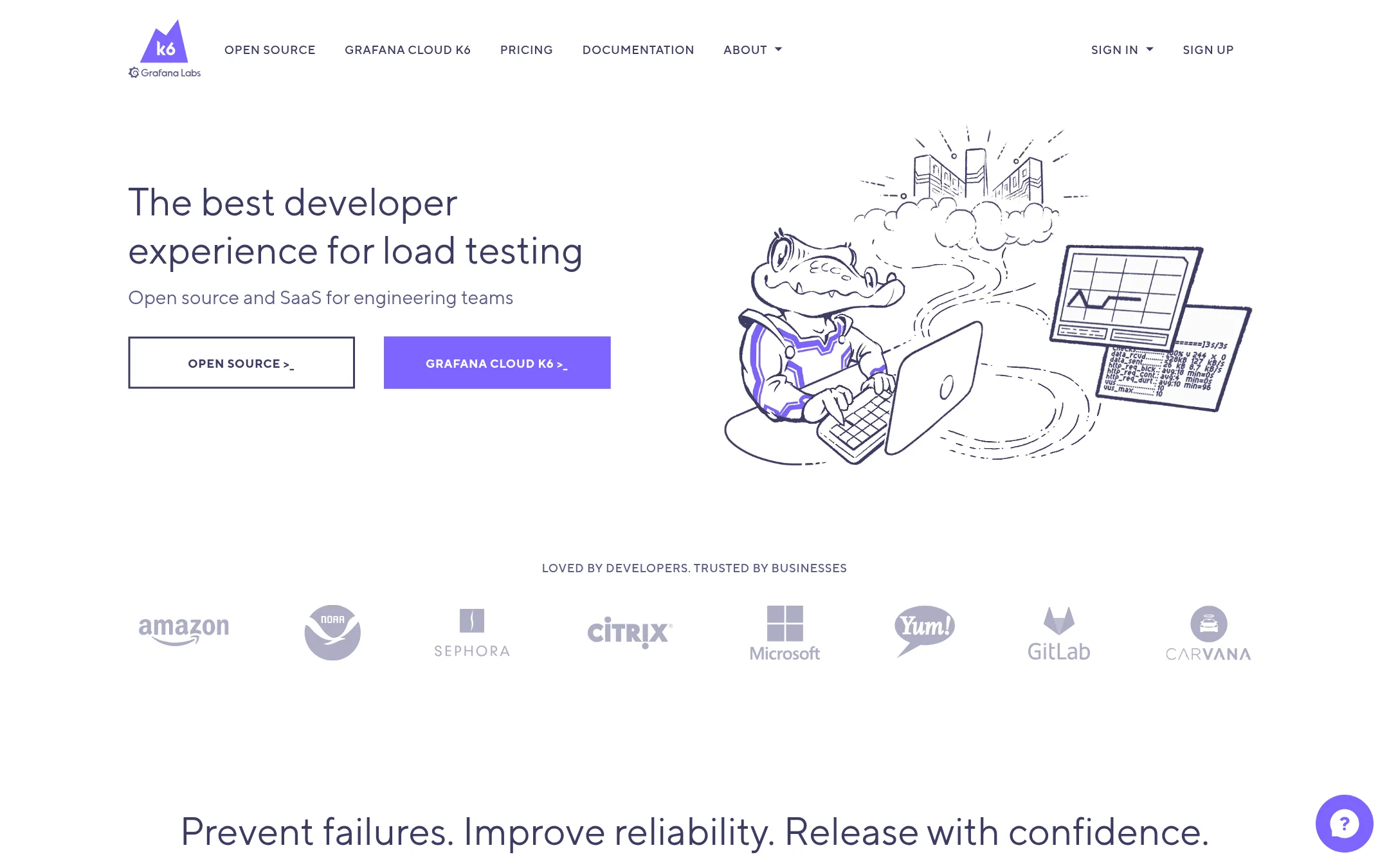
k6 is an open-source load testing tool where tests are written in JavaScript, and it can also run distributed and cloud tests from the same script. Teams pick it over Artillery when they want a code-first tool with a large open-source ecosystem and integrations with monitoring tools like Grafana, Datadog and Prometheus. It is also a fit for engineers who want load tests to run continuously in CI.
Where it is strong
- Open source core that teams can run themselves
- Same script runs locally, distributed or in the cloud
- Integrations with Grafana, Datadog, Prometheus and OpenTelemetry
Where it falls short
- Browser-based E2E testing and dashboards are secondary to the load testing focus
- No built-in Playwright test reuse or PR-linked test reporting like Artillery offers
- Pricing:
- Pricing is not published on the site.
- LNot published
2.Locust
Best for: Python-heavy engineering teams that want open source load tests written as plain code and run on their own machines
- Pricing
- Not published
- Category
- Other
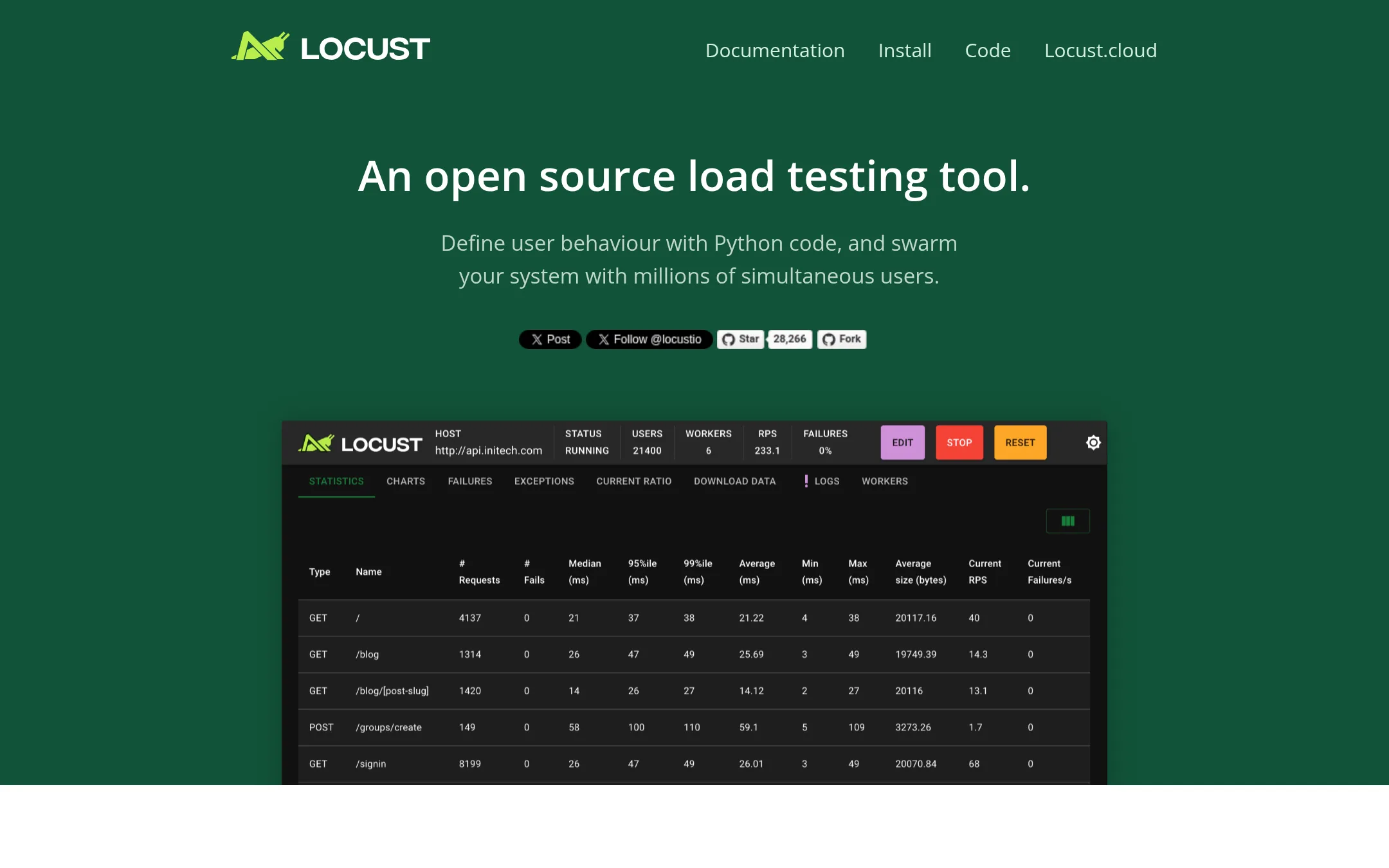
Locust is an open source load testing framework where you describe user behaviour in plain Python code instead of a UI or XML. It can distribute a test across multiple machines to simulate very large numbers of simultaneous users. Someone would pick it over Artillery if they want load tests written in Python and run on their own infrastructure, without a hosted platform.
Where it is strong
- Tests are plain Python code, so no UI or XML to learn
- Distributes load across multiple machines for very large simulations
- Open source and free to install from PyPI
Where it falls short
- Documentation for non-HTTP protocols is thinner, according to a testimonial on the site
- No built-in Playwright-based browser testing or production monitoring like Artillery offers
- Pricing:
- Pricing is not published on the site.
- Switching from Artillery:
- Moving from Artillery would mean rewriting your load scenarios in Python, since Locust does not read Artillery's test files.
- GNot published
3.Gatling
Best for: Engineering teams that want load tests written as code and run from CI/CD, especially larger organizations with many testers.
- Pricing
- Not published
- Category
- Other
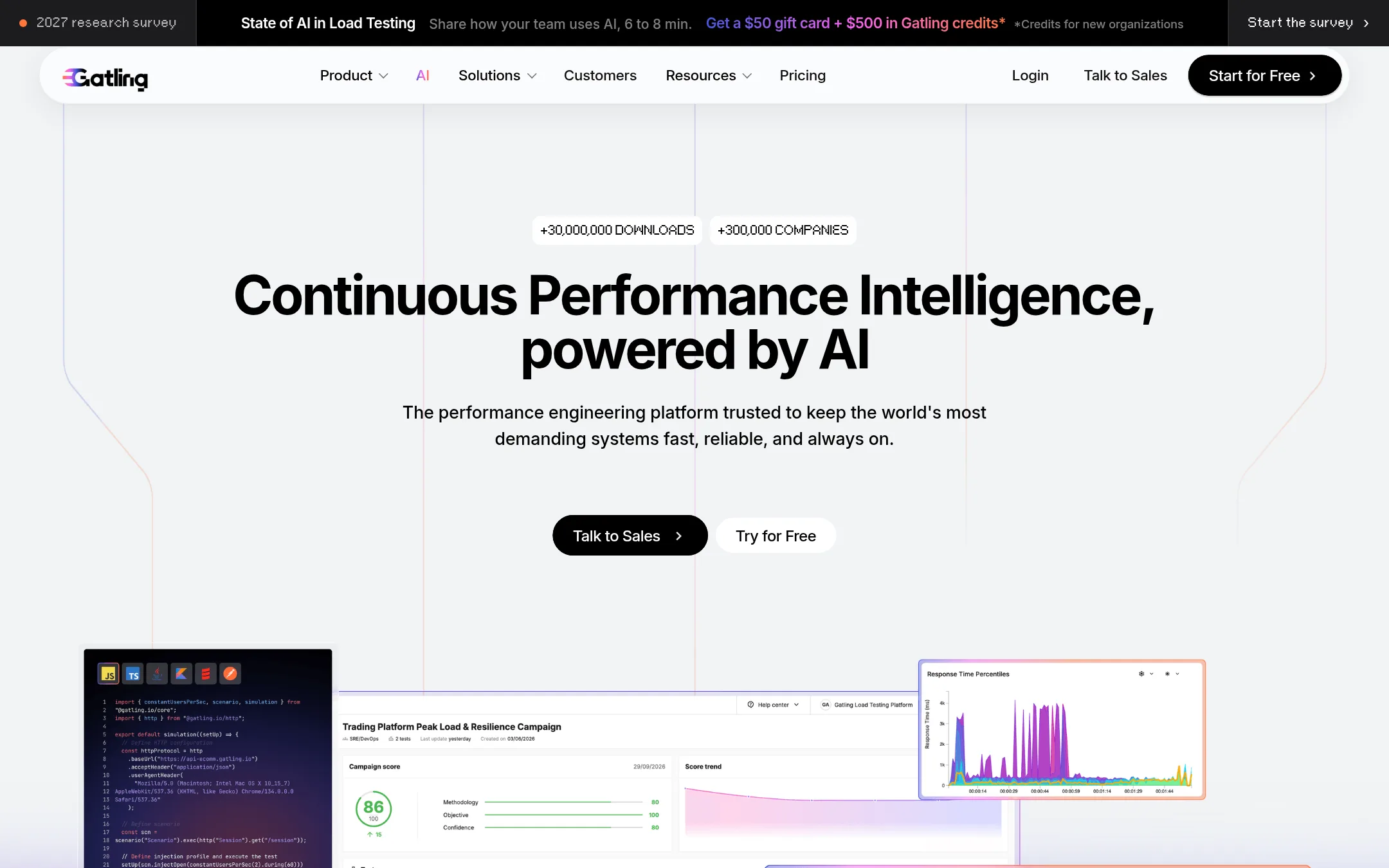
Gatling is a load testing tool built around code, with a no-code option and Postman imports, so teams can write tests in their own language and run them from CI pipelines. Pick it over Artillery if your team wants load tests defined as code with an SDK and runs distributed across managed zones, your cloud, or your own servers. It is also the choice for teams that need a free community edition for local use before buying an enterprise plan.
Where it is strong
- Load tests can be written as code with an SDK, and a no-code generator is also available.
- Tests can be imported from Postman and JMeter scripts can be converted to Gatling.
- Distributed load can run from managed zones, your own cloud, or your own servers, with private locations and dedicated IPs.
Where it falls short
- Artillery bundles end-to-end Playwright testing and production monitoring, which Gatling's listed features do not cover.
- The free Community Edition is limited to local use, so running at scale needs an enterprise plan.
- Pricing:
- Pricing is not published on the site.
- Not published
4.Apache Airflow
Best for: Data and engineering teams that need open source Python workflow scheduling across cloud services
- Pricing
- Not published
- Category
- Analytics & Data
Apache Airflow is an open source platform for writing, scheduling and monitoring workflows in Python. It suits data and infrastructure teams that need pipelines for moving data, training models or managing jobs, rather than load or end-to-end testing. Pick it over Artillery when the work is orchestration, not performance testing.
Where it is strong
- Pipelines are plain Python, so existing Python skills carry over
- Ships with many ready-made operators for Google Cloud, AWS, Azure and other services
- Open source with an active community and a web UI for monitoring runs and logs
Where it falls short
- It does not do load testing, browser testing or uptime monitoring the way Artillery does
- Being a general workflow engine, it takes more setup than a testing tool for performance checks
- Pricing:
- Pricing is not published on the site.
- Switching from Artillery:
- Moving from Artillery to Airflow is not a direct swap, since the two tools solve different problems and Airflow would replace your test scripts with workflow code.
- Usage-based, free tier
5.Grafana Labs
Best for: Engineering teams that want one observability platform on open standards to monitor production metrics, logs and traces.

- Pricing
- Usage-based, free tier
- Category
- Analytics & Data
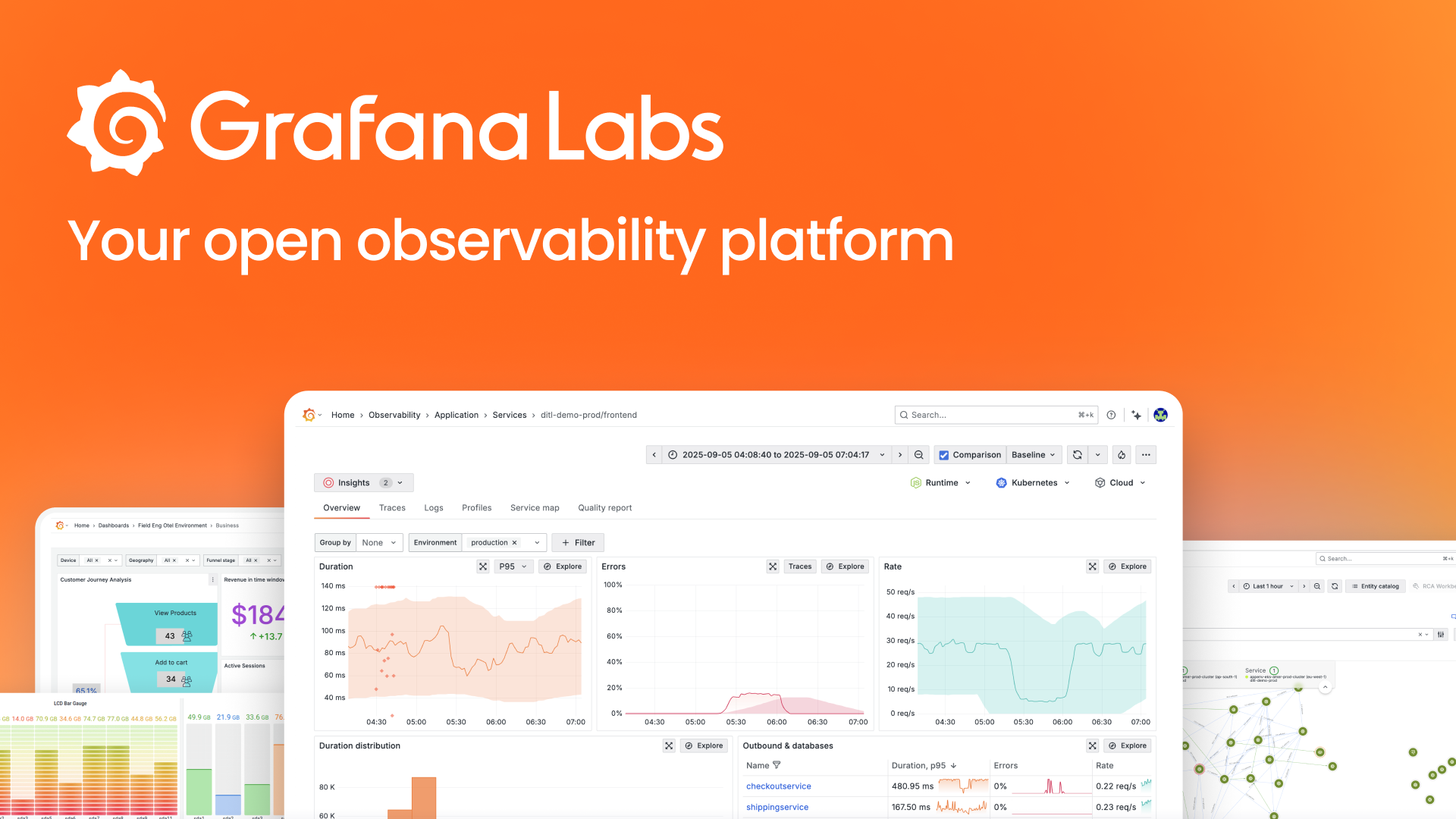
Grafana Cloud is an observability platform covering metrics, logs, traces, profiles and dashboards, built on open standards like OpenTelemetry and Prometheus. Choose it over Artillery when the main need is watching production systems and telemetry rather than generating load or running E2E tests. It also suits teams that want to keep their existing tools and data sources connected.
Where it is strong
- Built on OpenTelemetry and Prometheus, so existing instrumentation can be reused.
- Covers metrics, logs, traces, profiles and Kubernetes monitoring in one place.
- Adaptive Telemetry tools help cut spending on data that goes unused.
Where it falls short
- Does not provide load testing or Playwright E2E testing like Artillery does.
- Costs can be harder to predict because pricing is volume-based and tiered.
- Pricing:
- Grafana Cloud has a free tier with 10k active series for metrics and 50 GB of logs per month, and paid tiers are usage-based with volume discounts, though the page does not list a flat monthly figure for each tier.
- BFrom $79/mo (API plan)
6.BlazeMeter
Best for: Engineering teams already running JMeter or Selenium scripts who want to keep them and add API monitoring and service virtualization
- Pricing
- From $79/mo (API plan)
- Category
- Other
BlazeMeter is a performance and continuous testing platform that covers load testing, API testing and monitoring, service virtualization and AI-generated test data. It runs open-source frameworks like JMeter, Selenium and Playwright without rewrites, so teams keep their existing scripts. Teams pick it over Artillery when they want one vendor for load testing, API monitoring and test data across many open-source tools.
Where it is strong
- Runs over 20 open-source frameworks, including JMeter, Selenium and Playwright, with no rewrites
- Covers service virtualization and AI-driven test data alongside load testing
- Supports on-premise agents and private locations for teams with internal network needs
Where it falls short
- Feature tiers and concurrent-user limits vary a lot between plans, so costs are harder to predict
- The site describes a JMeter-centred history, so teams not using those frameworks may get less from it
- Pricing:
- Pricing for BlazeMeter is shown per plan on the site: a Basic annual plan at $1188 billed once per year, a Pro plan at $5988, and a Small API plan at $79 billed monthly, with Unleashed plans quoted on request.
See more comparisons in Developer Tools alternatives.
FAQ
Questions about Artillery alternatives
Is there a free alternative to Artillery for load testing?
k6 and Locust are both open source and can be run without a paid subscription. k6 has an open source core that teams can run themselves, and Locust is free to install from PyPI. Both require you to supply your own machines for large runs.
Which alternative is best if my tests are written in Python?
Locust is the closest fit, since its tests are plain Python code with no UI or XML to learn. It can distribute a test across multiple machines to simulate large numbers of users. It does not include the browser-based Playwright testing or production monitoring that Artillery offers.
Which alternatives include browser-based or Playwright testing?
BlazeMeter runs open-source frameworks including Selenium and Playwright without rewrites, so existing scripts can be kept. Artillery is the entry that bundles scalable Playwright E2E testing with load testing and monitoring. k6, Locust and Gatling focus on load testing rather than browser-based end-to-end testing.
What should I pick if I mainly need production monitoring rather than load testing?
Grafana Cloud is built for observability, covering metrics, logs, traces and dashboards on open standards like OpenTelemetry and Prometheus. It does not provide load testing or Playwright E2E testing like Artillery does. Pick it when watching production systems matters more than generating load.
How do I compare costs across these tools?
Artillery lists plans from $0 to $499 per month and enterprise add-ons from $1199 per month. BlazeMeter shows per-plan prices, while Grafana Cloud is usage-based with a free tier and volume discounts, so its costs are harder to predict. Gatling, k6 and Locust do not publish pricing on their pages in this listing, so check their sites for current terms.
Last updated November 6, 2026.