
Athelas alternatives
8 products compared · Updated November 14, 2026
The short answer
The three strongest alternatives to Athelas are eClinicalWorks, Kareo (now Tebra), and Suki. eClinicalWorks suits independent practices and new clinics that want an established cloud EHR with practice management and published pricing. Kareo suits private practices that want one EHR with built-in billing, scheduling and reputation tools. Suki suits clinicians and health systems on Epic, Oracle Health, athenahealth, or MEDITECH that want ambient documentation without replacing their EHR.
Your shortlist, at a glance
Read the comparisons ↓- AAbridgeNot publishedHealth systems and large clinical groups that want ambient documentation and pre-bill review without replacing their existing EHR
- NNuance CommunicationsNot publishedPhysicians and radiology teams that already have an EHR and mainly need accurate voice dictation
- SSukiNot publishedClinicians and health systems on Epic, Oracle Health, athenahealth, or MEDITECH that want ambient documentation without moving to a new EHR.
- AAmbience HealthcareNot publishedHealth systems with complex, multi-site operations that want AI documentation and coding tied to measurable financial outcomes
 EpicNot publishedHospitals and multi-site health systems that need one enterprise EHR across inpatient and outpatient care
 AthenahealthSee websiteHealthcare technology for medical practices and providers.
 eClinicalWorks$499/mo per providerIndependent practices and new clinics that want a established cloud EHR with practice management and patient self-scheduling
 KareoNot publishedPrivate practices that want one EHR with built-in billing, scheduling and reputation tools
About Athelas and its alternatives
Athelas is a healthcare platform that its site describes as an AI operating system for a clinic. It bundles an AI scribe for documentation, coding and querying, revenue cycle automation, an AI-powered EHR, and AI agents that handle scheduling, call routing and outbound reminders. The site highlights time saved on documentation and a high share of claims processed without manual work.
When comparing alternatives in this category, weigh pricing structure first, since many vendors do not publish prices and some charge per provider or as a share of collections. Check which regions and EHRs each product supports, what it integrates with, how much support is included, and what the contract terms require. Decide whether you need a full EHR and billing suite or a narrower tool that plugs into the system you already run.
Explore the alternatives
- ANot published
1.Abridge
Best for: Health systems and large clinical groups that want ambient documentation and pre-bill review without replacing their existing EHR

- Pricing
- Not published
- Category
- Other
Abridge is an AI platform built around clinical conversations. It turns patient visits into documentation, prepares clinicians before the encounter, and handles follow-up work afterward, with coding and pre-bill review for CDI teams. Choose it over Athelas if your main problem is the note and the visit itself, and you want an ambient documentation layer that sits across a large health system rather than a full EHR and billing suite.
Where it is strong
- Built around ambient capture of clinical conversations, with documentation completed during the visit
- Covers prep before the encounter, the visit itself, and follow-up tasks in one intelligence layer
- Includes pre-bill review for coding and CDI teams at partner health systems
Where it falls short
- The homepage does not describe an EHR, scheduling, or patient messaging, so you would need other software for those functions Athelas bundle
- Enterprise-focused customer references suggest it fits large organizations more than small practices
- Pricing:
- Pricing is not published on the site.
- NNot published
2.Nuance Communications
Best for: Physicians and radiology teams that already have an EHR and mainly need accurate voice dictation
- Pricing
- Not published
- Category
- Other
Nuance is a speech recognition and clinical documentation company, now part of Microsoft. Its Dragon products turn voice into text for physicians and radiologists, which makes it a fit for teams that mainly want dictation rather than a full practice platform. Choose it over Athelas when you only need voice documentation and already run another EHR or billing system.
Where it is strong
- Speech recognition built for clinical and radiology dictation
- Backed by Microsoft's infrastructure and security
- Targets physicians and radiologists directly
Where it falls short
- Covers documentation, not billing, scheduling, or revenue cycle work like Athelas
- Pricing and plan details are not published on the site
- Pricing:
- Pricing is not published on the site.
- SNot published
3.Suki
Best for: Clinicians and health systems on Epic, Oracle Health, athenahealth, or MEDITECH that want ambient documentation without moving to a new EHR.

- Pricing
- Not published
- Category
- Other
Suki is an ambient AI assistant for clinicians. It captures the patient conversation and produces clinical notes, patient instructions, orders, and coding support, then syncs notes into the EHR. Choose Suki over Athelas if you want a focused documentation and clinical reasoning tool that plugs into an existing EHR rather than replacing it.
Where it is strong
- Integrates with four major EHRs: Epic, Oracle Health, athenahealth, and MEDITECH
- Works on desktop and mobile across iOS and Android for 100+ specialties
- Site cites SOC2 Type 2 certification and HIPAA compliance
Where it falls short
- Does not appear to offer its own EHR, scheduling, or AI voice agents for front-desk calls the way Athelas does
- Pricing and contract terms require a sales conversation
- Pricing:
- Pricing is not published on the site.
- ANot published
4.Ambience Healthcare
Best for: Health systems with complex, multi-site operations that want AI documentation and coding tied to measurable financial outcomes

- Pricing
- Not published
- Category
- Other
Ambience Healthcare is an AI partner aimed at health systems, with clinician-facing tools for documentation, coding, and clinical workflow. Its pitch centers on measurable financial return and coding accuracy, and it is positioned for large enterprise deployments. A team would pick it over Athelas if their main need is ambient documentation and coding inside a complex health system rather than a full EHR and practice-management platform.
Where it is strong
- Built specifically for enterprise health systems rather than small practices
- Publishes third-party validation, including AAPC-verified 95% coding compliance
- Works with a forward-deployed team and ties its promised outcomes to fees
Where it falls short
- Appears aimed at large health systems, so smaller clinics may not be the target buyer
- The site does not list an EHR or scheduling product the way Athelas does
- Pricing:
- Pricing is not published on the site.
- Not published
5.Epic
Best for: Hospitals and multi-site health systems that need one enterprise EHR across inpatient and outpatient care
- Pricing
- Not published
- Category
- Healthcare
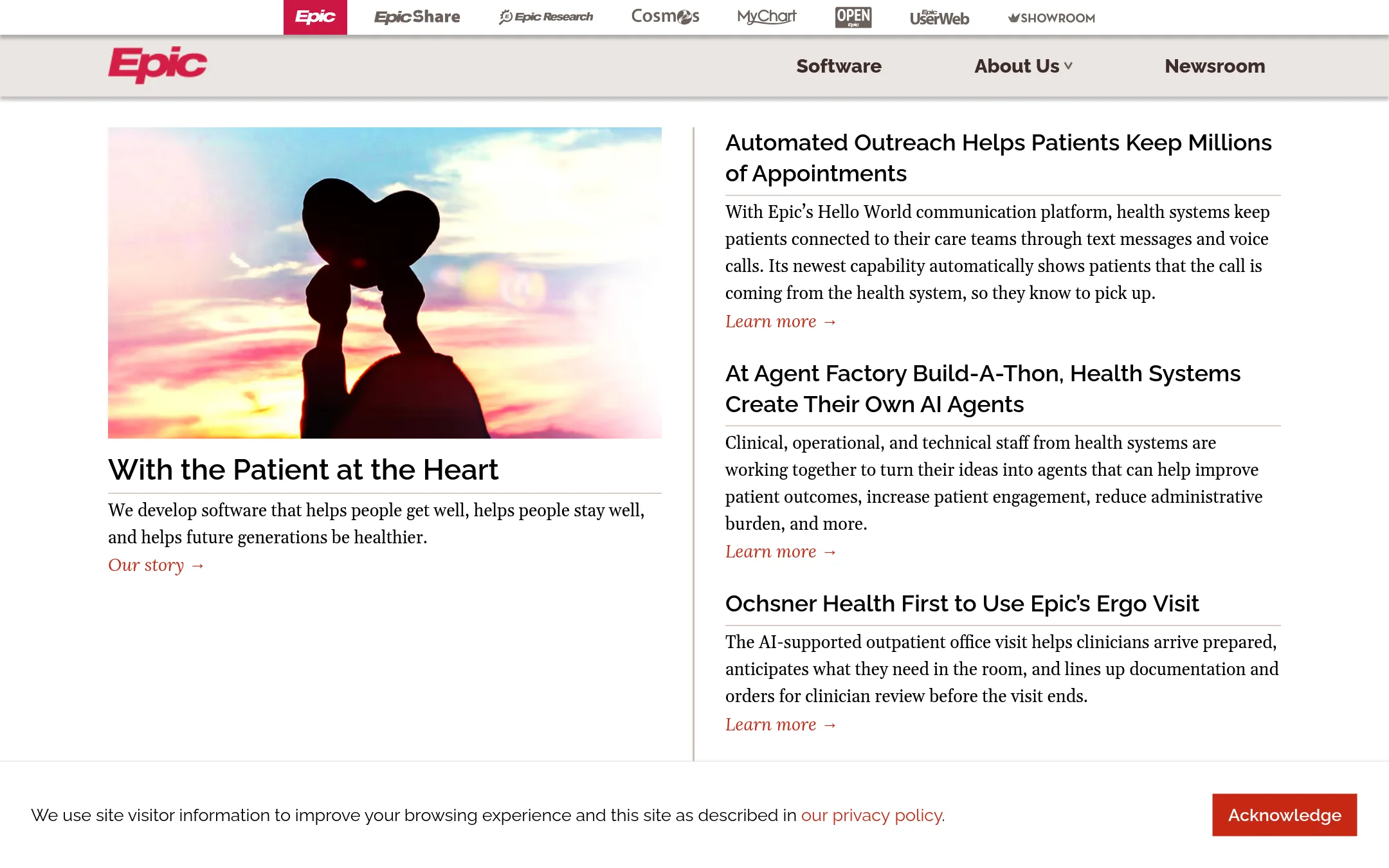
Epic is a large electronic health record system used by health systems and hospitals, with patient portal, clinical, and billing modules across the enterprise. Teams choose Epic over Athelas when they run a multi-site hospital or health system that needs one deep EHR across inpatient, outpatient, and specialty care. Athelas is built for smaller practices that want an AI scribe, billing automation, and voice agents in one lighter platform.
Where it is strong
- Covers inpatient, outpatient, and specialty care in one system
- Patient portal MyChart for messaging, results, and appointments
- Recent work on connecting outside apps and the VA with its platform
Where it falls short
- Built for large organizations, so it is a heavy fit for a small practice
- Does not list the same AI scribe, voice agent, and RCM bundle as Athelas on its homepage
- Pricing:
- Pricing is not published on the site.
- See website
6.Athenahealth
Healthcare
A cloud-based EHR and revenue cycle management platform covering the same billing, documentation and practice operations.
- $499/mo per provider
7.eClinicalWorks
Best for: Independent practices and new clinics that want a established cloud EHR with practice management and patient self-scheduling
- Pricing
- $499/mo per provider
- Category
- Other
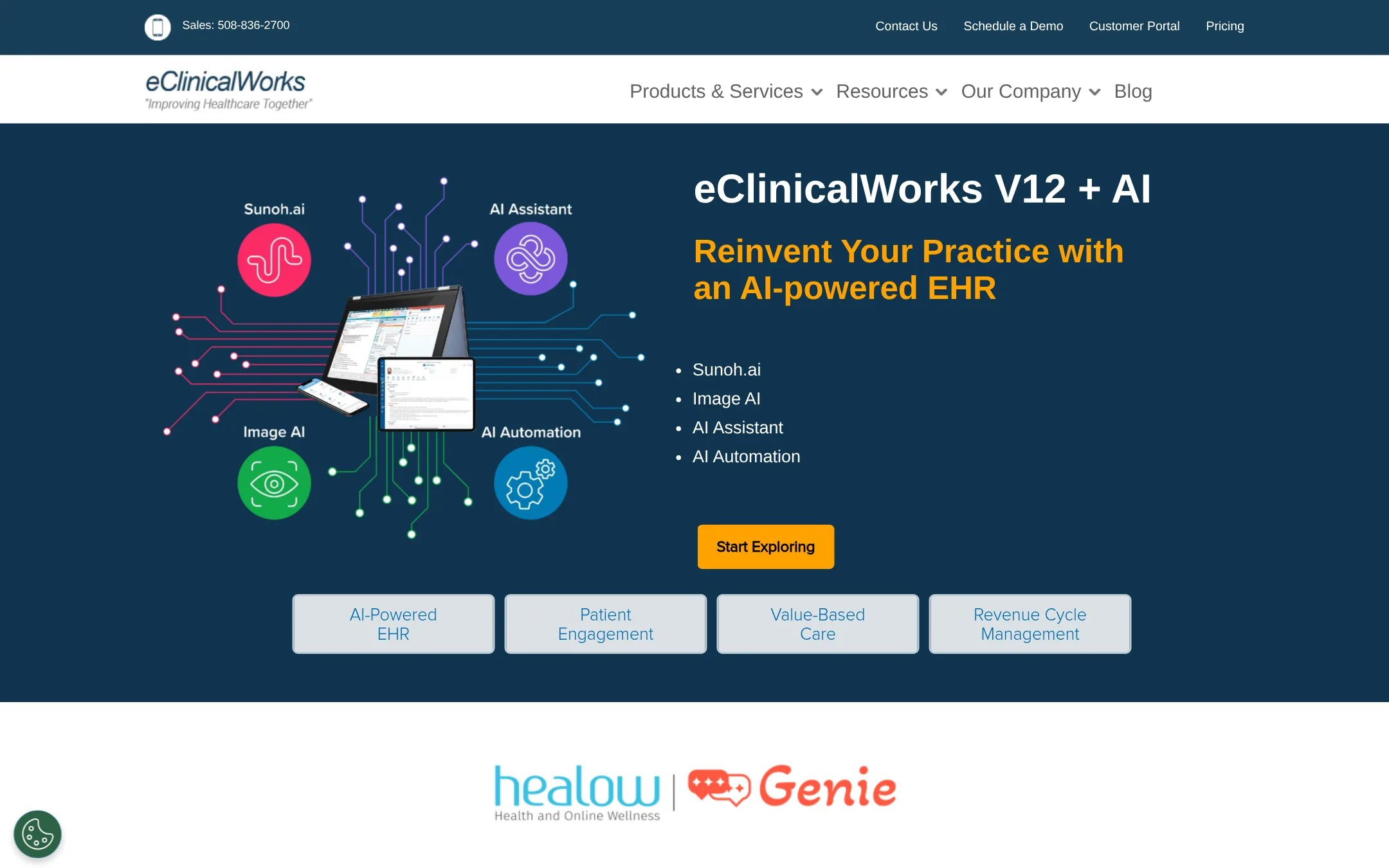
eClinicalWorks is a cloud EHR with practice management, patient portal, telehealth and a revenue cycle service, serving a large base of physicians and facilities. Someone would pick it over Athelas if they want a mature, established EHR with broad patient engagement tools and an RCM option billed as a percentage of collections rather than a platform built around AI agents and ambient scribing.
Where it is strong
- Established EHR with 180,000+ physicians and NPs using it, per the site
- Pricing tiers are published openly, including a 2.9% of collections RCM option
- Includes patient self-scheduling, check-in, telehealth and secure messaging
Where it falls short
- Its AI features are described as part of V12 and healow Genie, which the site does not detail as deeply as Athelas's agent and scribe offeri
- Practice management and billing are priced as add-on tiers, and training fees apply for practices with more than nine providers
- Pricing:
- Pricing is published as $499 per provider per month for EHR only, $599 per provider per month with practice management, or RCM as a service at 2.9% of practice collections, with no start-up costs listed.
- Switching from Athelas:
- eClinicalWorks says it will migrate data from an existing EHR to its system for free, and that thousands of providers switch to it every year.
- Not published
8.Kareo
Best for: Private practices that want one EHR with built-in billing, scheduling and reputation tools
- Pricing
- Not published
- Category
- Healthcare
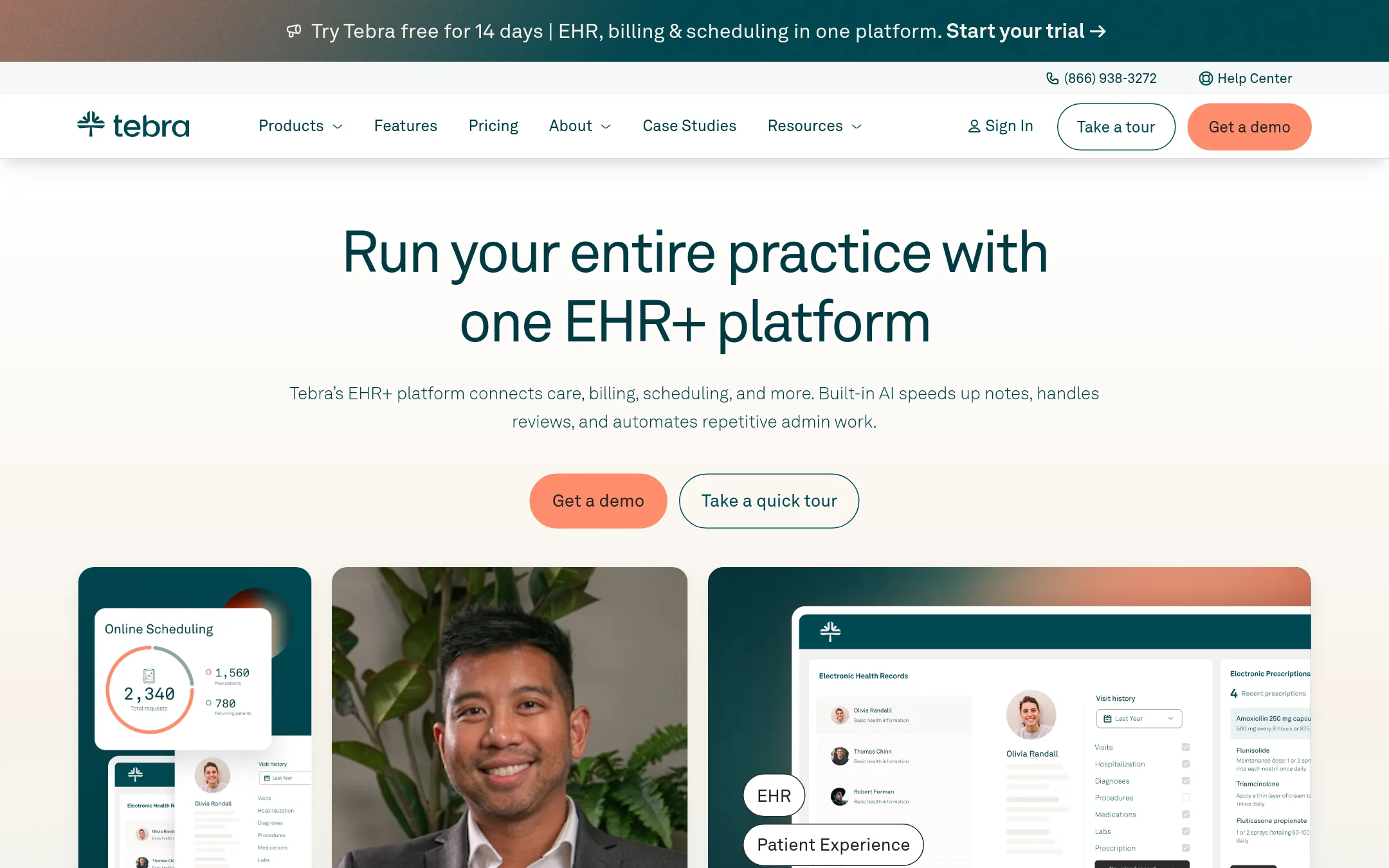
Kareo now operates as Tebra, an EHR and practice management platform built for private practices. It combines clinical notes, billing and claims, online scheduling, and reputation tools in one login. Choose it over Athelas if you run a private practice that wants billing, scheduling and patient communication tied to the EHR without an AI-first, agentic platform.
Where it is strong
- Covers EHR, billing, scheduling and patient messaging in one platform
- AI Note Assist and AI review replies are included in the feature list
- Real-time insurance eligibility and claims management are built in
Where it falls short
- Athelas advertises a broader AI agent setup for scheduling and call routing, which Tebra's listed features do not describe
- The homepage does not list specific integrations or regional availability
- Pricing:
- Pricing is not published on the site.
See more comparisons in Healthcare alternatives.
FAQ
Questions about Athelas alternatives
What is Athelas best known for?
According to its site, Athelas is known for an AI scribe, revenue cycle automation, an AI-powered EHR, and AI agents for scheduling and call routing in one platform. The site cites an 80% reduction in documentation time and 90%+ of claims needing no human touch. Its pitch is aimed at small practices that want these tools together.
Which alternative is the best fit for a small private practice?
Kareo, now operating as Tebra, suits private practices that want one EHR with billing, scheduling and reputation tools in a single login. eClinicalWorks also fits independent practices and new clinics that want an established cloud EHR. Both are simpler to adopt than enterprise platforms.
Do I need to replace my EHR to use an alternative?
Not always. Suki and Abridge are built to sit on top of an existing EHR, with Suki syncing notes into systems like Epic, Oracle Health, athenahealth and MEDITECH. Epic, Kareo and eClinicalWorks are full EHR platforms that would replace or be the system of record for your practice.
How does pricing compare across these alternatives?
eClinicalWorks publishes its prices: $499 per provider per month for EHR only, $599 per provider per month with practice management, or RCM as a service at 2.9% of practice collections. Most other alternatives, including Epic, Kareo, Nuance, Abridge, Suki and Ambience, do not publish pricing on their sites, so you will need to request a quote.
Which alternative is aimed at large health systems rather than small clinics?
Epic, Abridge and Ambience Healthcare are built for hospitals and multi-site health systems. Epic runs as an enterprise EHR across inpatient and outpatient care, while Ambience focuses on documentation and coding tied to financial outcomes for complex systems. Smaller clinics may find these heavier than they need.
Last updated November 14, 2026.