
AutoGen alternatives
12 products compared · Updated November 2, 2026
The short answer
For teams that need shared AI access with cost controls, MindsDB is the strongest alternative to AutoGen. For production observability and evaluation of LLM applications, Langfuse offers an open-source platform with self-hosting. For enterprises requiring governed multi-agent workflows, CrewAI provides enterprise-grade features like RBAC and audit trails.
Your shortlist, at a glance
Read the comparisons ↓- LLangChainFrom free tierTeams building agentic applications that need tracing, evaluation, and deployment infrastructure in one place.
 CrewAINot publishedEnterprises that need governed, observable multi-agent workflows with no-code and code-first options.
Microsoft Azure CycleCloudNot publishedResearch and engineering teams running HPC workloads on Azure that need automated cluster provisioning and scaling.
- MMetaGPTNot publishedTeams that want to buy a domain name for an AI product, not teams looking for a working framework.
 GitHub ProjectsFree. Team $4/user/moSoftware teams on GitHub that want issue tracking and project boards integrated with their repos, not an AI agent orchestration tool.
 Haystack$20/member/moProduct and engineering leaders who want data-driven delivery insights and reports from Git and JIRA.
- AAgentic FabriqSee websiteOkta for Agents.
 MindsDBFree tier. PAYG per usTeams that need shared AI access with per-model budgets, role-based permissions, and spend visibility across multiple providers.
 FlowiseNot publishedTeams that prefer visual development and need to quickly build and deploy AI agents with APIs, SDKs, and embedded chat widgets.
 Hugging FaceNot publishedTeams that want to host, share, and deploy open-source models and datasets with built-in collaboration and GPU compute.
 LangfuseFree tier. $8/100k uniTeams building LLM applications that need end-to-end observability, evaluation, and prompt management with open-source flexibility.
 LlamaIndexFrom $1.25/1K creditsTeams in finance, insurance, healthcare, and manufacturing that need accurate parsing of complex documents for AI workflows.
About AutoGen and its alternatives
AutoGen is a Microsoft open-source framework for building multi-agent AI systems. It is known for its flexible, collaborative approach to orchestrating conversations between AI agents.
When comparing alternatives, weigh pricing structure (free tiers, per-seat, usage-based), regional availability, integrations with your existing stack, support options, and contract terms like annual commitments or self-hosting capabilities.
Explore the alternatives
- LFrom free tier
1.LangChain
Best for: Teams building agentic applications that need tracing, evaluation, and deployment infrastructure in one place.
- Pricing
- From free tier
- Category
- AI & Machine Learning
LangChain is a platform for building, testing, deploying, and monitoring AI agents, with open source frameworks and a managed service called LangSmith. Choose it over AutoGen if you need production-grade observability, evaluation, and deployment tooling for agents, not just a framework for building them.
Where it is strong
- Includes tracing, evaluation, and monitoring for agent runs
- Open source frameworks with managed deployment options
- Supports self-hosted and hybrid deployment for enterprise
Where it falls short
- Pricing for higher usage is usage-based and not fully transparent
- Tuned Evaluators are only available in the US for Plus and Cloud Enterprise plans
- Pricing:
- Pricing is not published on the site. The Developer plan includes 5k base traces per month, the Plus plan includes 10k base traces per month, and Enterprise is custom.
- Switching from AutoGen:
- Moving from AutoGen means adopting LangChain's frameworks and LangSmith for observability, which may require rewriting agent logic to fit LangChain's abstractions.
- Not published
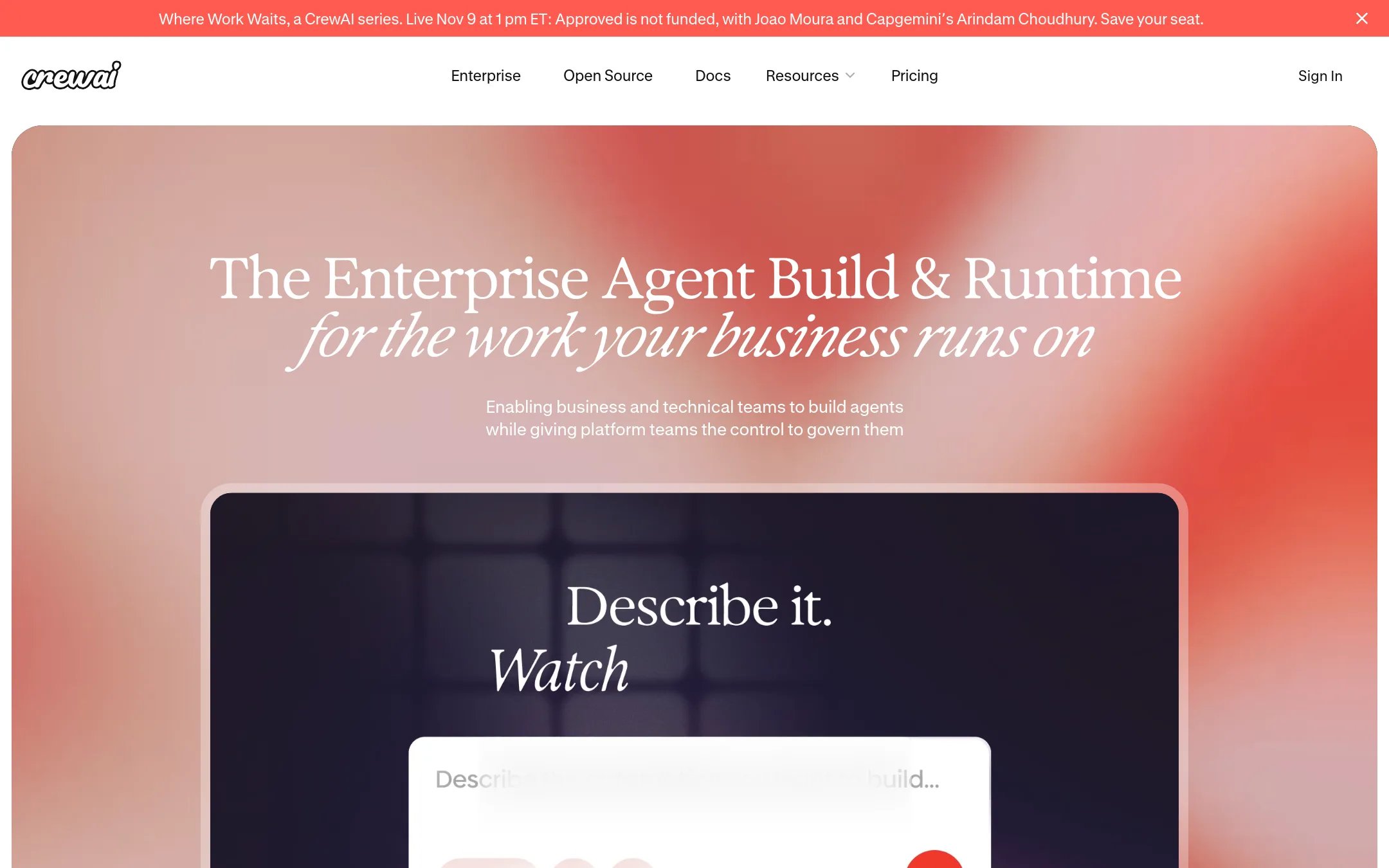
2.CrewAI
Best for: Enterprises that need governed, observable multi-agent workflows with no-code and code-first options.
- Pricing
- Not published
- Category
- AI & Machine Learning
CrewAI is a multi-agent platform for building and running agents in production, with a visual editor, governance controls, and training from production runs. Choose it over AutoGen when you need enterprise-grade observability, RBAC, and human-in-the-loop approval gates.
Where it is strong
- Visual editor and AI copilot for building agents
- Real-time tracing of every LLM and tool call with cost accounting
- RBAC, audit trails, and PII redaction for governance
Where it falls short
- Free plan limited to 50 workflow executions per month
- Enterprise features require custom pricing and onboarding
- Pricing:
- Pricing is not published on the site.
- Switching from AutoGen:
- Moving from AutoGen to CrewAI means adopting its visual builder and control plane, which may require rearchitecting existing agent workflows.
- Not published
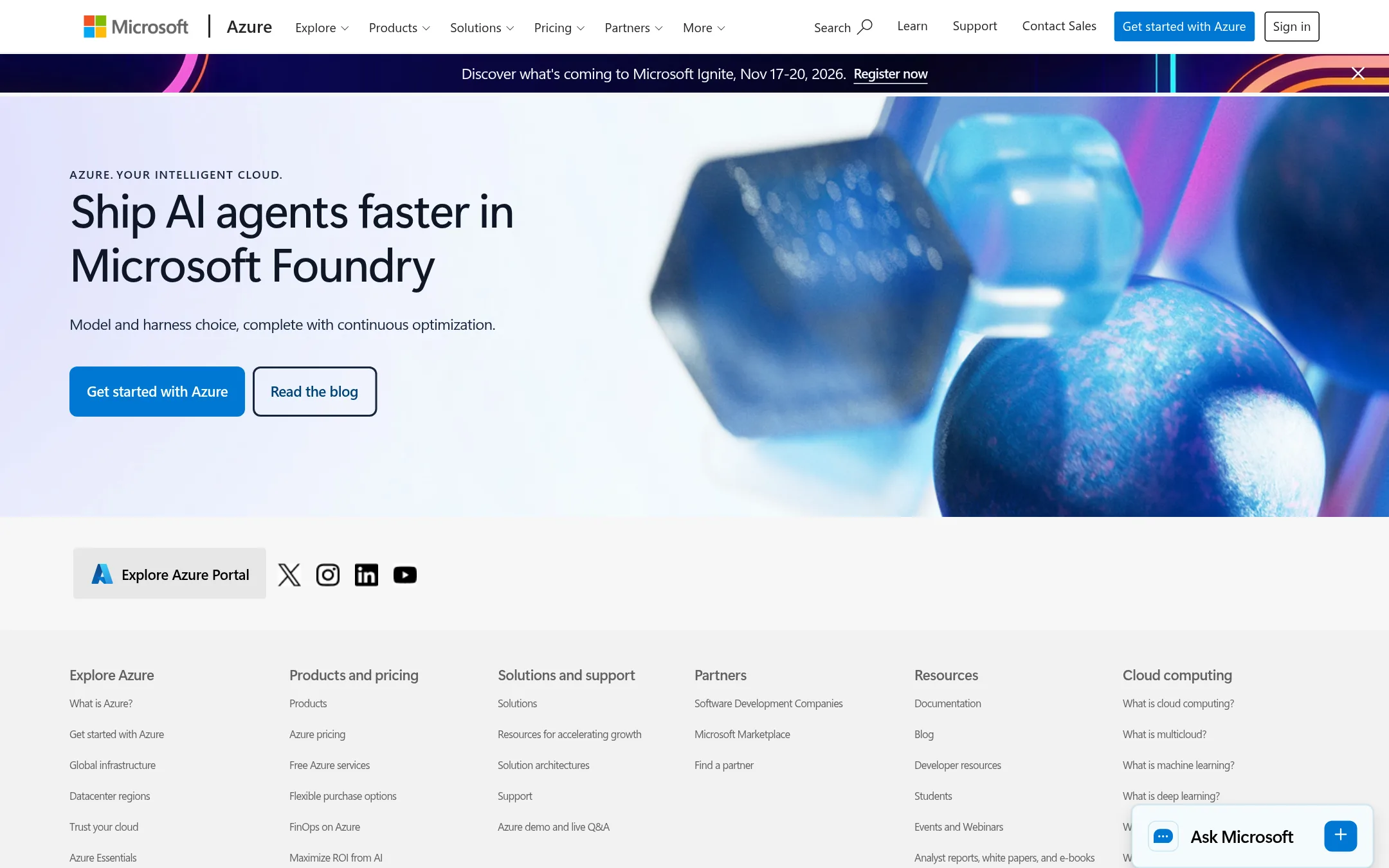
3.Microsoft Azure CycleCloud
Best for: Research and engineering teams running HPC workloads on Azure that need automated cluster provisioning and scaling.
- Pricing
- Not published
- Category
- Developer Tools
Azure CycleCloud is an HPC orchestration tool for creating, managing, and scaling compute clusters on Azure. Choose it over AutoGen when your work is centered on running large-scale simulations, rendering, or other high-performance computing jobs that need tight integration with Azure infrastructure.
Where it is strong
- Automates cluster creation and scaling for HPC workloads
- Integrates with Azure services like VM scale sets and Batch
- Supports common schedulers like Slurm and PBS
Where it falls short
- Requires Azure infrastructure, so it's not a general-purpose agent framework
- No built-in support for AI agent orchestration or multi-agent workflows
- Pricing:
- Pricing is not published on the site.
- MNot published
4.MetaGPT
Best for: Teams that want to buy a domain name for an AI product, not teams looking for a working framework.
- Pricing
- Not published
- Category
- Other
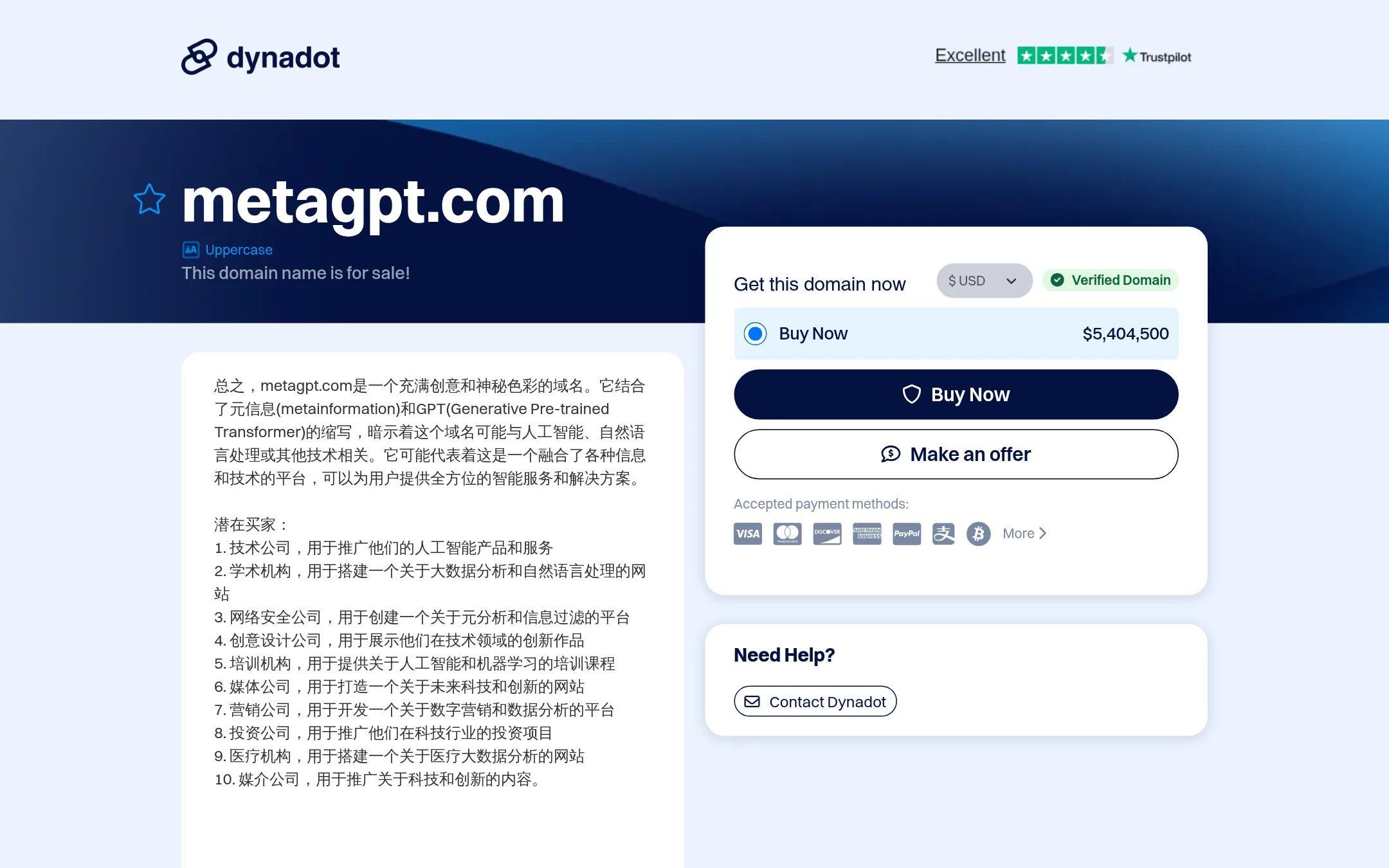
MetaGPT is a multi-agent framework for complex software development tasks, but the domain metagpt.com is currently for sale. If you need a working product today, this is not it. You would choose AutoGen, which is actively maintained by Microsoft.
Where it is strong
- Domain name is available for purchase.
- Clear asking price of $5,404,500.
- Secure transfer and customer service offered.
Where it falls short
- No actual software or documentation available.
- Not a functional alternative to AutoGen.
- Pricing:
- Pricing is not published on the site.
- Free. Team $4/user/mo
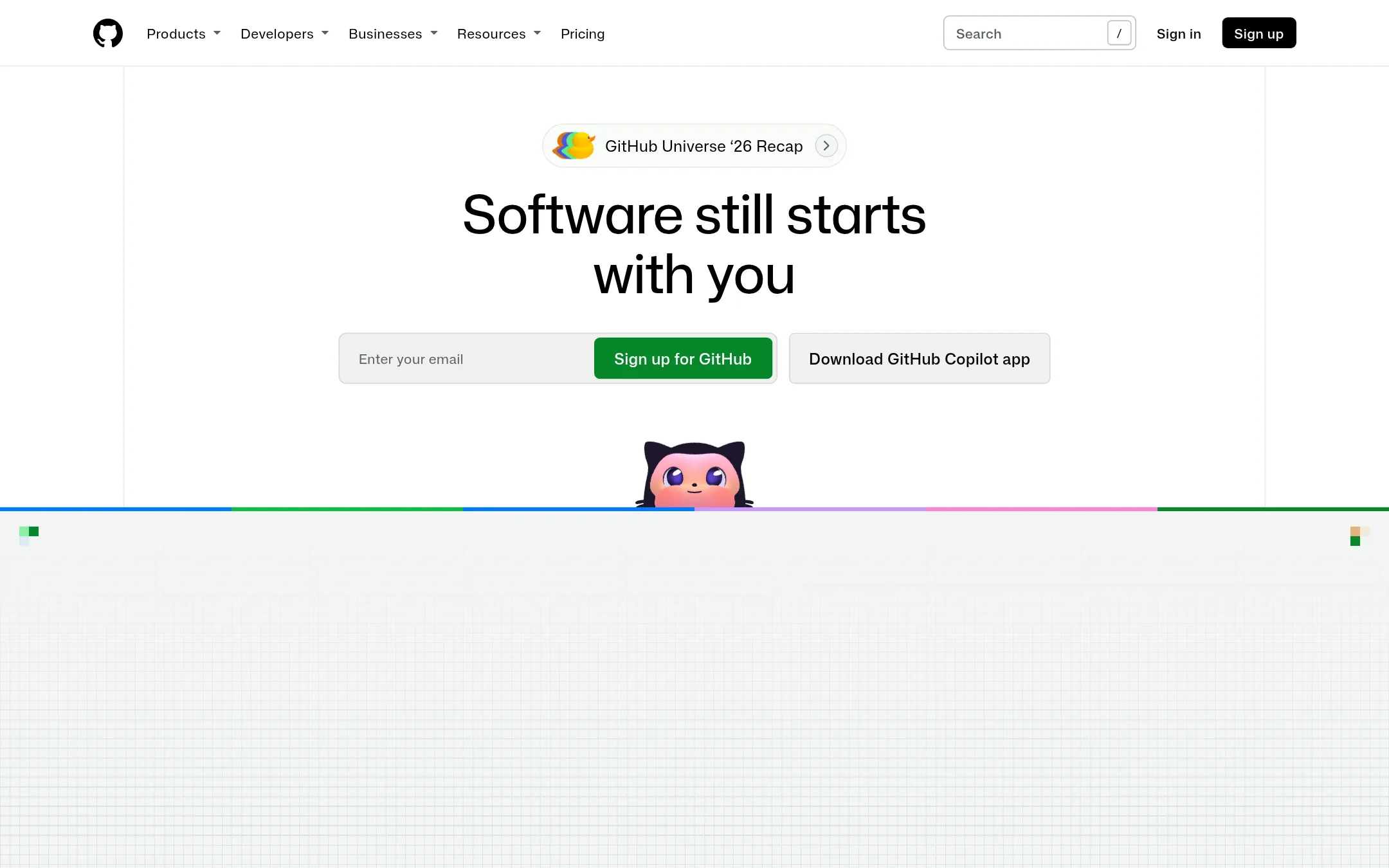
5.GitHub Projects
Best for: Software teams on GitHub that want issue tracking and project boards integrated with their repos, not an AI agent orchestration tool.
- Pricing
- Free. Team $4/user/mo
- Category
- Productivity & Project Management
GitHub Projects is a project management layer built into GitHub, so it tracks issues, pull requests, and tasks right next to the code. Choose it over AutoGen when your team already lives in GitHub and needs lightweight planning without a separate AI agent framework.
Where it is strong
- Native integration with pull requests and issues
- Free tier includes unlimited public/private repos
- Copilot included in Enterprise plan
Where it falls short
- No AI agent orchestration or multi-agent workflows
- Project management features are basic compared to dedicated tools
- Pricing:
- Free for individuals and organizations. Team is $4 per user per month. Enterprise is $21 per user per month and includes Copilot access.
- $20/member/mo
6.Haystack
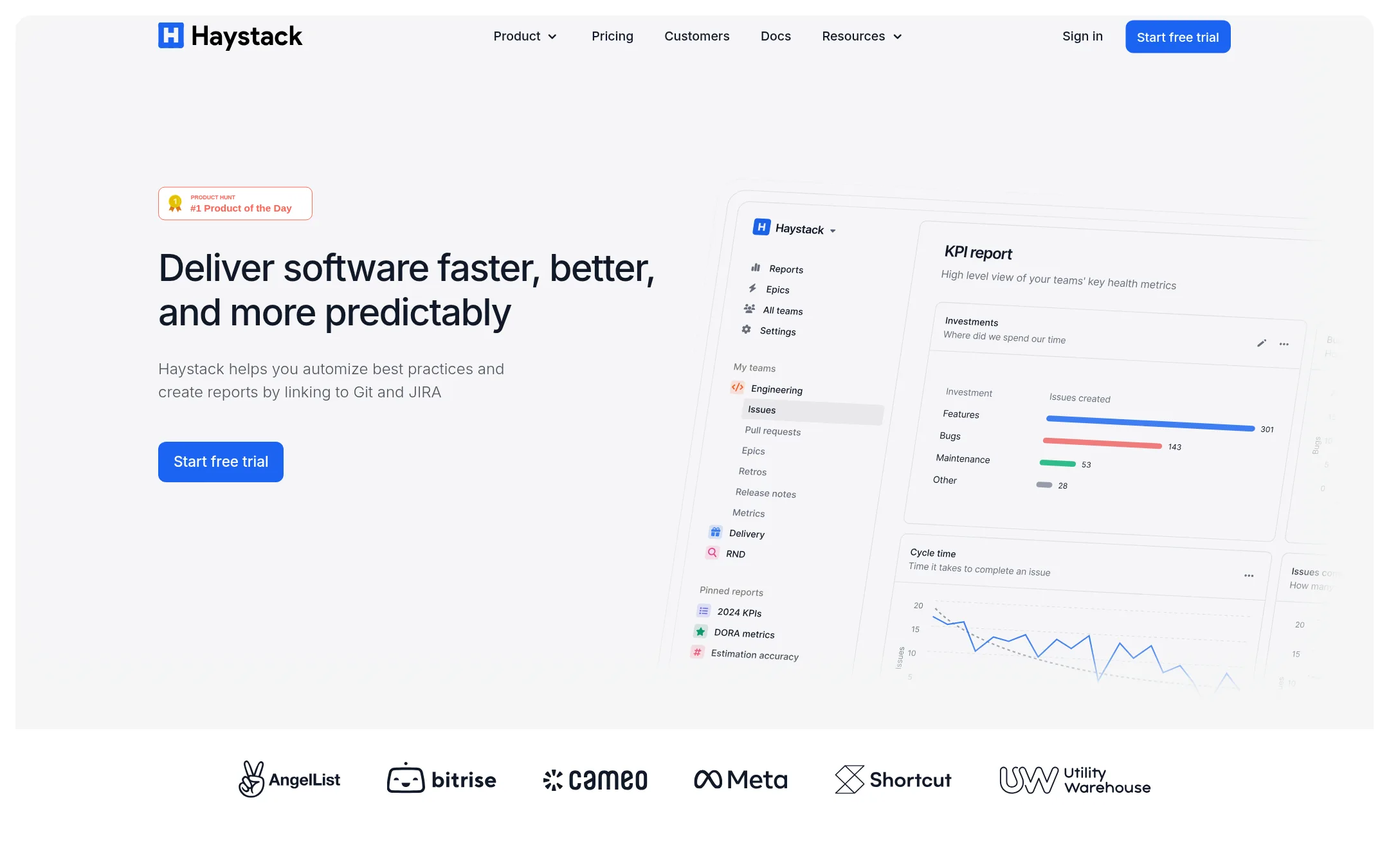
Best for: Product and engineering leaders who want data-driven delivery insights and reports from Git and JIRA.
- Pricing
- $20/member/mo
- Category
- Analytics & Data
Haystack is a delivery analytics tool that connects to Git and JIRA to help engineering leaders plan, track, and report on software delivery. Choose it over AutoGen when your focus is on improving delivery processes and team transparency, not on building AI agents.
Where it is strong
- Unlimited alerts and 12 months of historical data on Growth plan
- Works with GitHub, Bitbucket, and GitLab, including self-hosted versions on Enterprise
- Does not store or read source code, only metadata from APIs
Where it falls short
- Pricing is per member, which can add up for larger teams
- No AI agent orchestration capabilities like AutoGen
- Pricing:
- Growth plan is $20 per member per month with annual commitment. Enterprise plan has custom pricing.
- ASee website
7.Agentic Fabriq
Security & Privacy
Okta for Agents.
- Free tier. PAYG per us
8.MindsDB
Best for: Teams that need shared AI access with per-model budgets, role-based permissions, and spend visibility across multiple providers.
- Pricing
- Free tier. PAYG per us
- Category
- AI & Machine Learning
MindsDB is a gateway that gives teams one API key and one bill for many AI models, with per-model budgets and spend controls. Choose it over AutoGen when your main problem is managing AI costs and access across a team, not building multi-agent workflows.
Where it is strong
- One API key and one bill for many model providers
- Per-model and per-team budgets with alerts and hard limits
- Role-based access and audit log for who changed what
Where it falls short
- No built-in multi-agent orchestration like AutoGen's conversation patterns
- Free tier has daily fair-use limits, not for bulk automation
- Pricing:
- Free tier at $0/month with daily fair-use limits. Pay-as-you-go bills per use at provider rates, with models like MindsHub Air at $0.10 input and $0.50 output per 1M tokens.
- Switching from AutoGen:
- Moving from AutoGen means replacing your agent orchestration with MindsDB's model-access and budgeting layer, so you'd keep your own agent code and call MindsDB's API for model access.
- Not published
9.Flowise
Best for: Teams that prefer visual development and need to quickly build and deploy AI agents with APIs, SDKs, and embedded chat widgets.
- Pricing
- Not published
- Category
- AI & Machine Learning
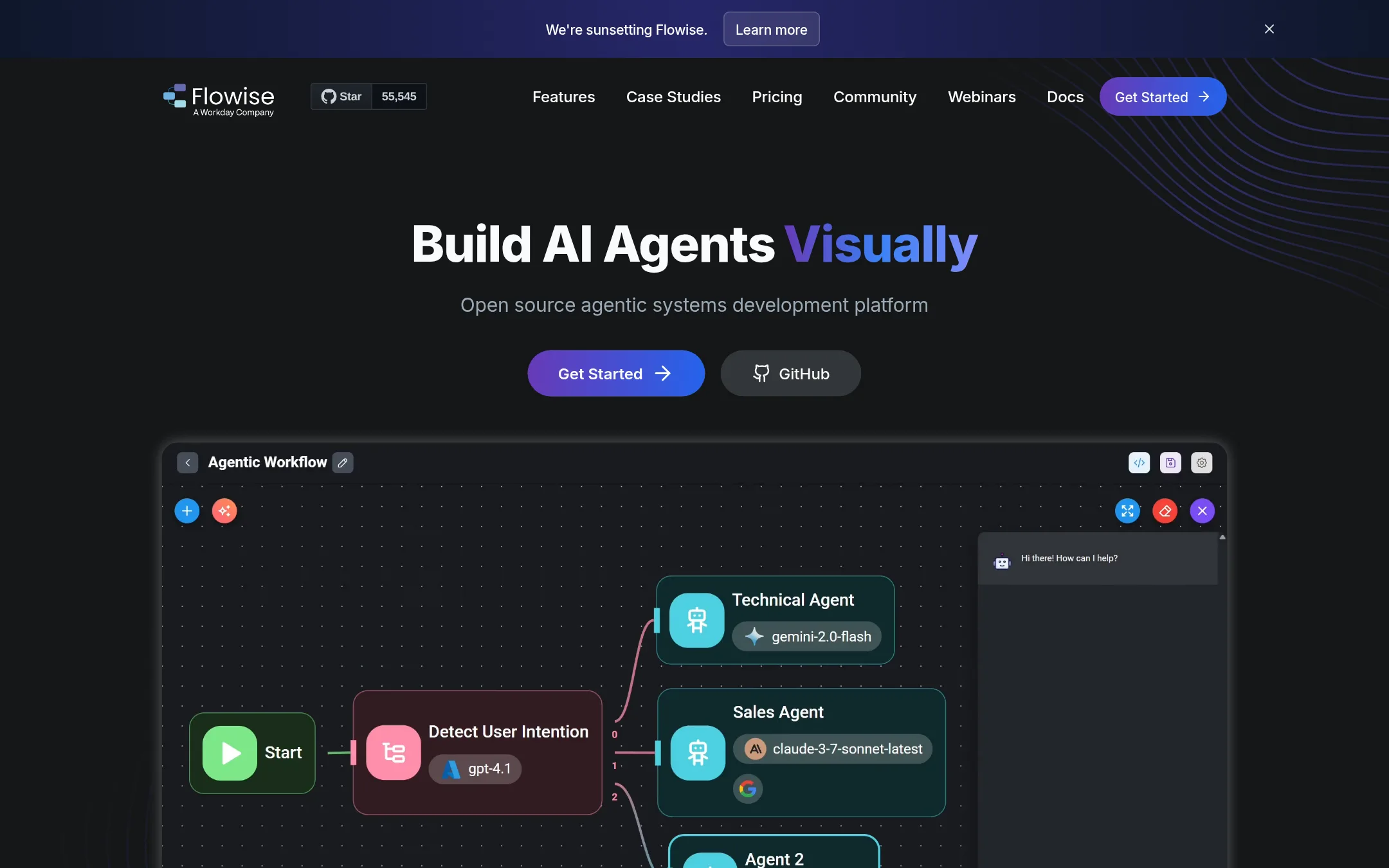
Flowise is a visual, open-source platform for building AI agents and LLM workflows with drag-and-drop blocks. Choose it over AutoGen if you want a no-code/low-code approach to prototyping and deploying chatbots, RAG pipelines, and multi-agent systems without writing orchestration code.
Where it is strong
- Visual drag-and-drop builder for agents and workflows
- Supports multi-agent systems, human-in-the-loop, and execution traces
- Deploy on cloud or on-premises with APIs, SDKs, and embedded chat
Where it falls short
- Pricing details are not publicly listed, so cost planning is unclear
- May be less flexible than code-first frameworks like AutoGen for complex custom logic
- Pricing:
- Pricing is not published on the site.
- Not published
10.Hugging Face
Best for: Teams that want to host, share, and deploy open-source models and datasets with built-in collaboration and GPU compute.
- Pricing
- Not published
- Category
- AI & Machine Learning
Hugging Face is a platform for hosting and collaborating on models, datasets, and ML apps, with a huge open-source community. Choose it over AutoGen when you need a central hub to share, discover, and deploy models rather than a framework for building multi-agent conversations.
Where it is strong
- Host unlimited public models, datasets, and Spaces for free
- GPU compute starts at $0.60/hour for Spaces, with dedicated inference from $0.033/hour
- Team plans start at $20/user/month with enterprise security
Where it falls short
- No built-in multi-agent orchestration like AutoGen
- Free tier has limited private storage and compute quotas
- Pricing:
- Pricing is not published on the site.
- Switching from AutoGen:
- Moving from AutoGen means shifting from a coding framework to a hosted platform, so you would rework your agent logic to run as Spaces or Inference Endpoints.
- Free tier. $8/100k uni
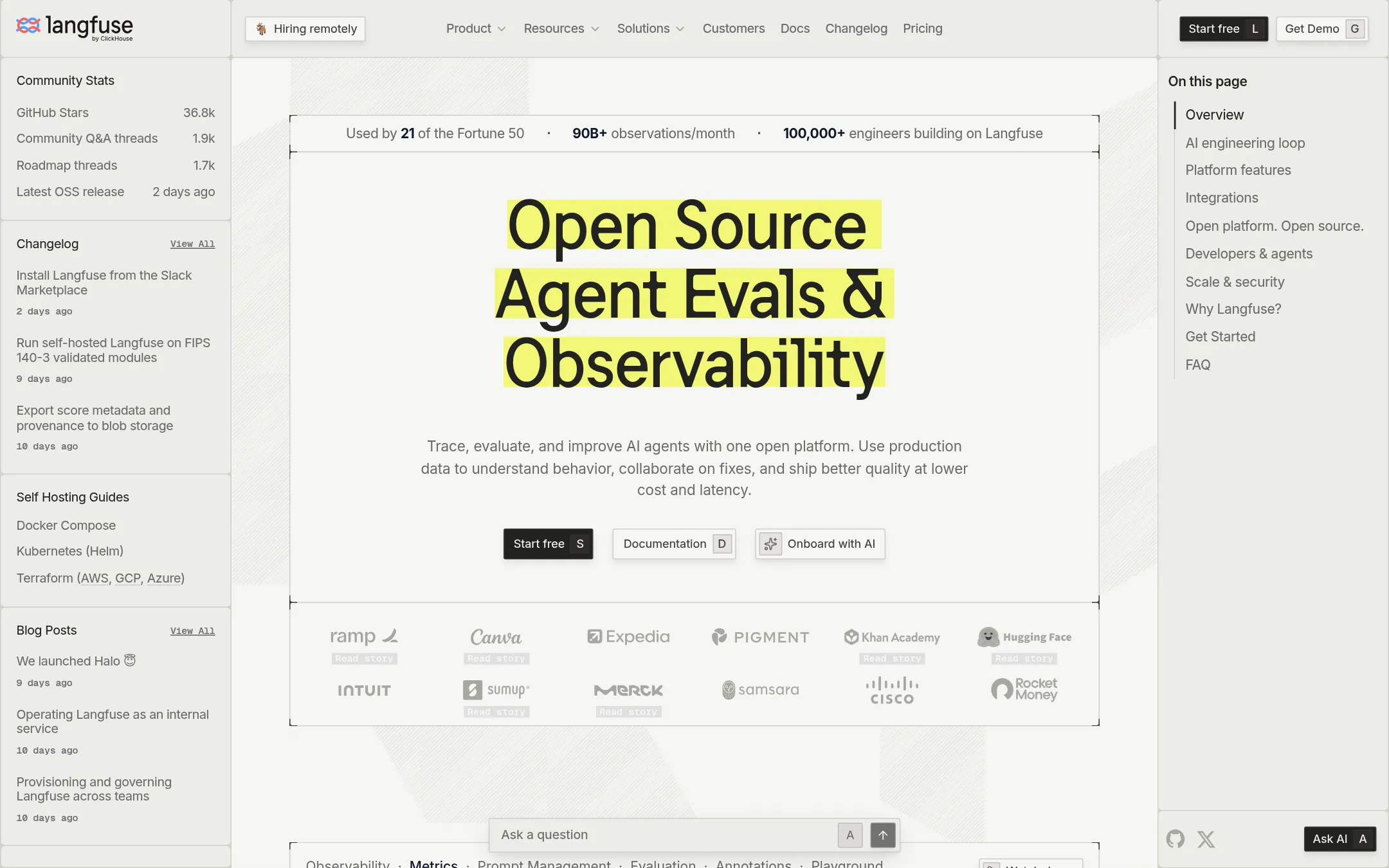
11.Langfuse
Best for: Teams building LLM applications that need end-to-end observability, evaluation, and prompt management with open-source flexibility.
- Pricing
- Free tier. $8/100k uni
- Category
- AI & Machine Learning
Langfuse is an open-source LLM engineering platform for tracing, evaluating, and improving AI agents. Choose it over AutoGen when you need production observability, prompt management, and evals in one place, especially if you want to self-host or avoid vendor lock-in.
Where it is strong
- Open source (MIT) with self-hosting option
- Tracing, evals, and prompt management in one platform
- 100+ integrations and OTel native support
Where it falls short
- Pricing scales with usage, which can get costly at high volume
- Requires setup and instrumentation to get full value
- Pricing:
- Free Hobby plan includes 50k units/month. Core plan starts at $8 per 100k additional units, with volume discounts.
- Switching from AutoGen:
- Moving from AutoGen involves adding Langfuse SDKs or OTel instrumentation to your existing code, then migrating prompts and setting up evals.
- From $1.25/1K credits
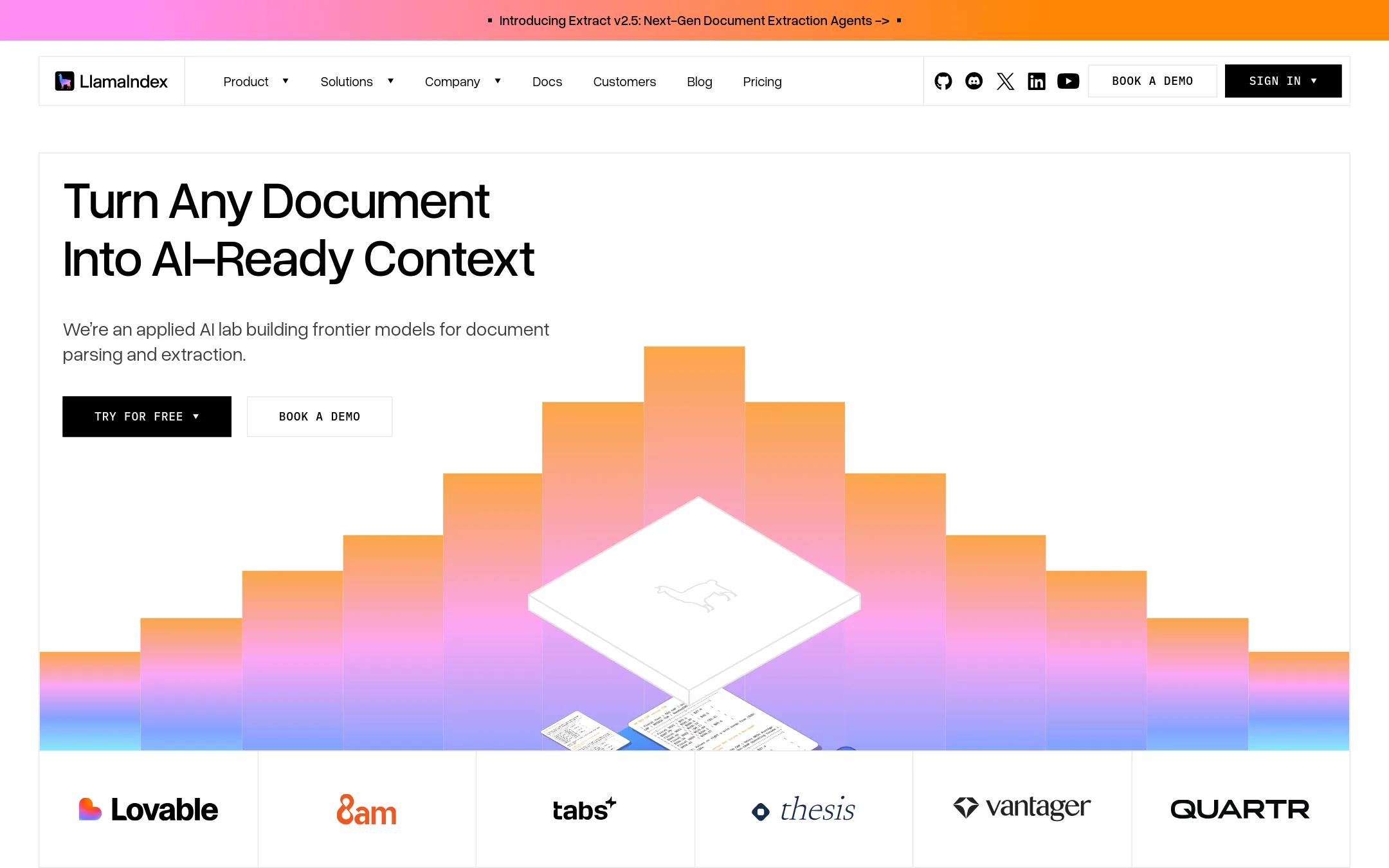
12.LlamaIndex
Best for: Teams in finance, insurance, healthcare, and manufacturing that need accurate parsing of complex documents for AI workflows.
- Pricing
- From $1.25/1K credits
- Category
- AI & Machine Learning
LlamaIndex is a document parsing and extraction platform that turns complex files like PDFs, tables, and handwritten notes into structured, LLM-ready data. Choose it over AutoGen when your work centers on document-heavy workflows, such as invoice processing or RAG pipelines, rather than general multi-agent orchestration.
Where it is strong
- Parses 130+ file formats including handwriting, tables, and charts.
- Free tier includes 10,000 credits monthly (~1,000 pages).
- Offers open-source LiteParse for local, no-cloud parsing.
Where it falls short
- Not open source. The commercial platform is closed.
- Credit-based pricing can get costly for high-volume parsing.
- Pricing:
- Credits cost $1.25 per 1,000. The free plan includes 10,000 credits per month, and paid plans start with 40,000 credits for the Starter tier.
- Switching from AutoGen:
- Moving from AutoGen to LlamaIndex means replacing agent orchestration with document parsing and extraction, so you'd rebuild workflows around LlamaParse's APIs and credit system.
See more comparisons in AI & Machine Learning alternatives.
FAQ
Questions about AutoGen alternatives
What is the best alternative to AutoGen for managing AI costs?
MindsDB is the strongest choice for cost management. It offers one API key and one bill for multiple providers, with per-model budgets and spend alerts. This helps teams control spending across different AI models.
Which alternative is best for production observability of AI agents?
Langfuse is ideal for teams needing tracing, evaluation, and prompt management in one platform. It is open-source and supports self-hosting, making it a good fit for production monitoring without vendor lock-in.
Is there an alternative that provides enterprise-grade governance for multi-agent workflows?
CrewAI offers RBAC, audit trails, and PII redaction for governance. It also includes real-time tracing and human-in-the-loop approval gates, making it suitable for enterprises with strict compliance needs.
Can I self-host any of these alternatives?
Yes, Langfuse is open-source (MIT) and supports self-hosting. Flowise also offers on-premises deployment. LangChain supports self-hosted and hybrid deployment for enterprise plans.
Which alternative is best for teams that prefer a visual, no-code approach?
Flowise is a visual, drag-and-drop platform for building AI agents and workflows. It is open-source and allows quick prototyping and deployment without writing orchestration code, making it ideal for non-developers.
Last updated November 2, 2026.