
Autosana alternatives
8 products compared · Updated November 23, 2026
The short answer
The three strongest alternatives to Autosana are Maestro, Applitools, and Katalon Studio. Maestro suits mobile teams that want open-source, human-readable YAML tests they can run locally and in their own CI. Applitools suits enterprise QA and design-system teams that need visual regression testing across many browsers and devices, with on-prem options. Katalon Studio suits QA teams with mixed skill levels that want manual test management and automation across web, mobile, API, and desktop apps in one platform.
Your shortlist, at a glance
Read the comparisons ↓ TestimNot publishedEngineering teams testing Salesforce orgs or web apps that also want Tricentis tooling and Selenium-compatible grids.
 MablCustom quoteEngineering and QA teams that want one platform for web, mobile, API and performance testing with vendor-managed onboarding
 Katalon StudioNot publishedQA teams with mixed skill levels that need manual test management and automation across web, mobile, API and desktop apps in one platform
- FFunctionizeFree + credit packsTeams that want agent-run validation on every release and need one shared credit pool across several teams.
- AApplitoolsFrom $667Enterprise QA and design-system teams that need visual regression testing across many browsers and devices, with on-prem or private cloud options
 BrowserStackNot publishedEngineering teams that need broad real-device and cross-browser coverage across many platforms and a single vendor for testing tools
- SSauce LabsFrom $39/mo, annualEnterprise QA teams with existing Selenium or Appium suites that need wide device and browser coverage.
- MMaestro$250/device/mo or freeMobile teams that want open-source, human-readable YAML tests they can run locally and in their own CI
About Autosana and its alternatives
Autosana is an AI testing product for mobile and web apps. According to its site, it lets teams write end-to-end tests in a sentence, run them on every pull request, and keep them working when the UI changes. Its tests are described as adapting to UI changes as long as the user journey stays intact, and it offers a CLI and MCP so coding agents can run flows on a developer's machine.
When comparing alternatives in this category, weigh the pricing structure first, since some vendors publish plan prices while others quote only on request. Check which platforms and regions each tool covers, including iOS, Android, web, and real devices. Look at integrations with your CI, issue tracker, and chat tools, the level of support and onboarding included, and the contract terms such as minimums, overage charges, and money-back guarantees.
Explore the alternatives
- Not published
1.Testim
Best for: Engineering teams testing Salesforce orgs or web apps that also want Tricentis tooling and Selenium-compatible grids.
- Pricing
- Not published
- Category
- Developer Tools
Testim is a UI testing platform covering web, mobile, and Salesforce apps, with AI-driven locators that self-heal and agentic test creation from natural language. Teams choose it over Autosana when they need Salesforce-specific testing, or when their work is mainly web and Salesforce rather than mobile apps.
Where it is strong
- Codeless Salesforce test steps built for Lightning, Flows, and permissions testing
- Runs web tests on its cloud or on any Selenium Grid
- Integrates with Jenkins, CircleCI, GitHub, Jira, and Slack
Where it falls short
- Mobile testing is sold as a separate platform purchase, with extra parallel tests and real devices priced on request
- Plan limits and additional capacity require talking to sales
- Pricing:
- Pricing is not published on the site.
- Custom quote
2.Mabl
Best for: Engineering and QA teams that want one platform for web, mobile, API and performance testing with vendor-managed onboarding
- Pricing
- Custom quote
- Category
- Developer Tools
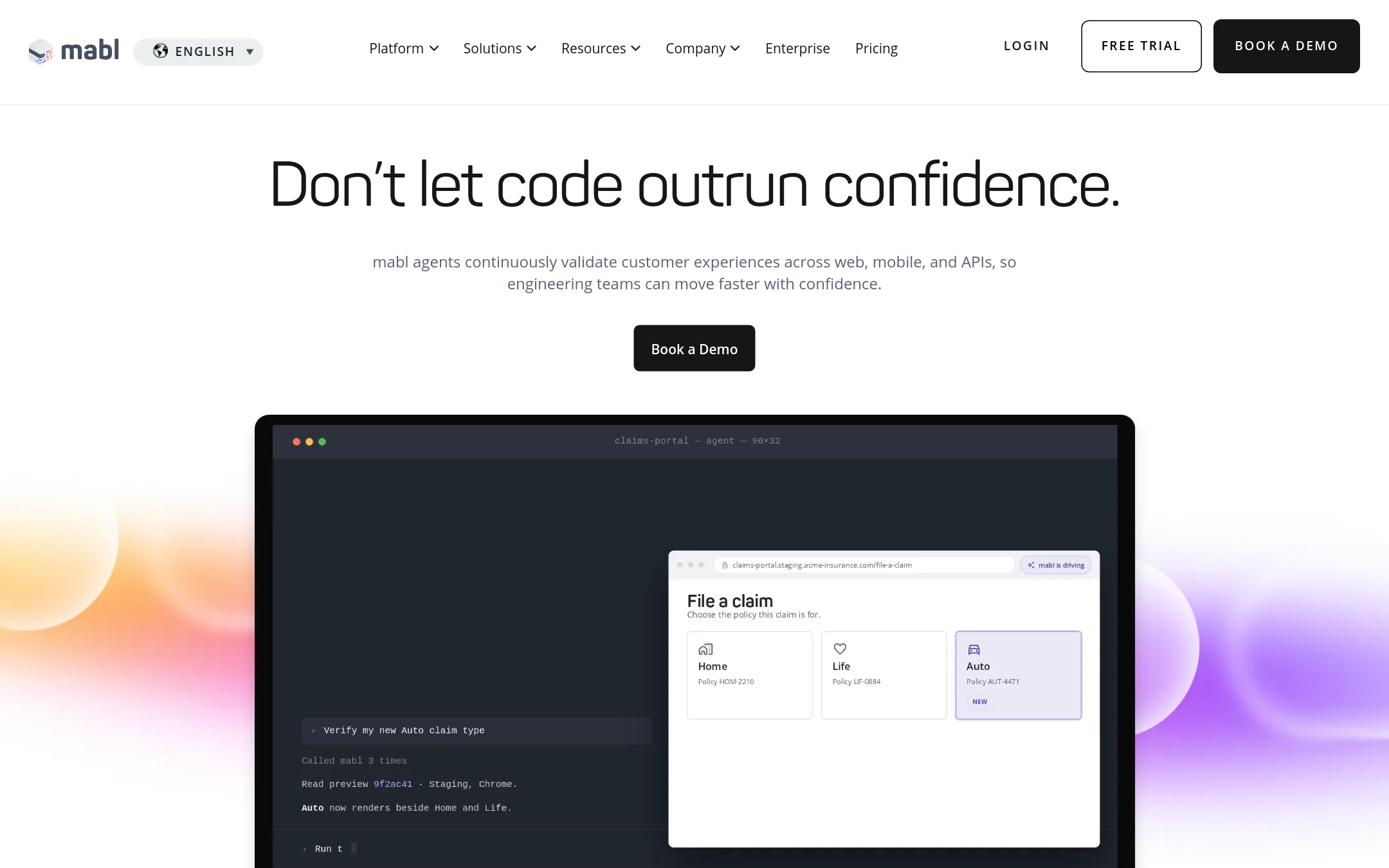
Mabl is an agentic testing platform for web, mobile, API, performance and accessibility testing, so one contract covers much more than Autosana's mobile and web E2E focus. Teams usually pick it over Autosana when they need API, performance or accessibility testing in the same tool, or when they want a vendor-managed Customer Success Manager and live support as part of the buy.
Where it is strong
- Covers web, mobile, API, performance and accessibility testing in one platform
- Auto-healing tests that adapt as the software changes
- Dedicated Customer Success Manager and live support on enterprise plans
Where it falls short
- Pricing is based on credits and quotes rather than a published self-serve tier
- The site does not describe a local agent that runs flows from a coding assistant, as Autosana does through its CLI and MCP
- Pricing:
- Pricing is not published on the site.
- Not published
3.Katalon Studio
Best for: QA teams with mixed skill levels that need manual test management and automation across web, mobile, API and desktop apps in one platform
- Pricing
- Not published
- Category
- Developer Tools
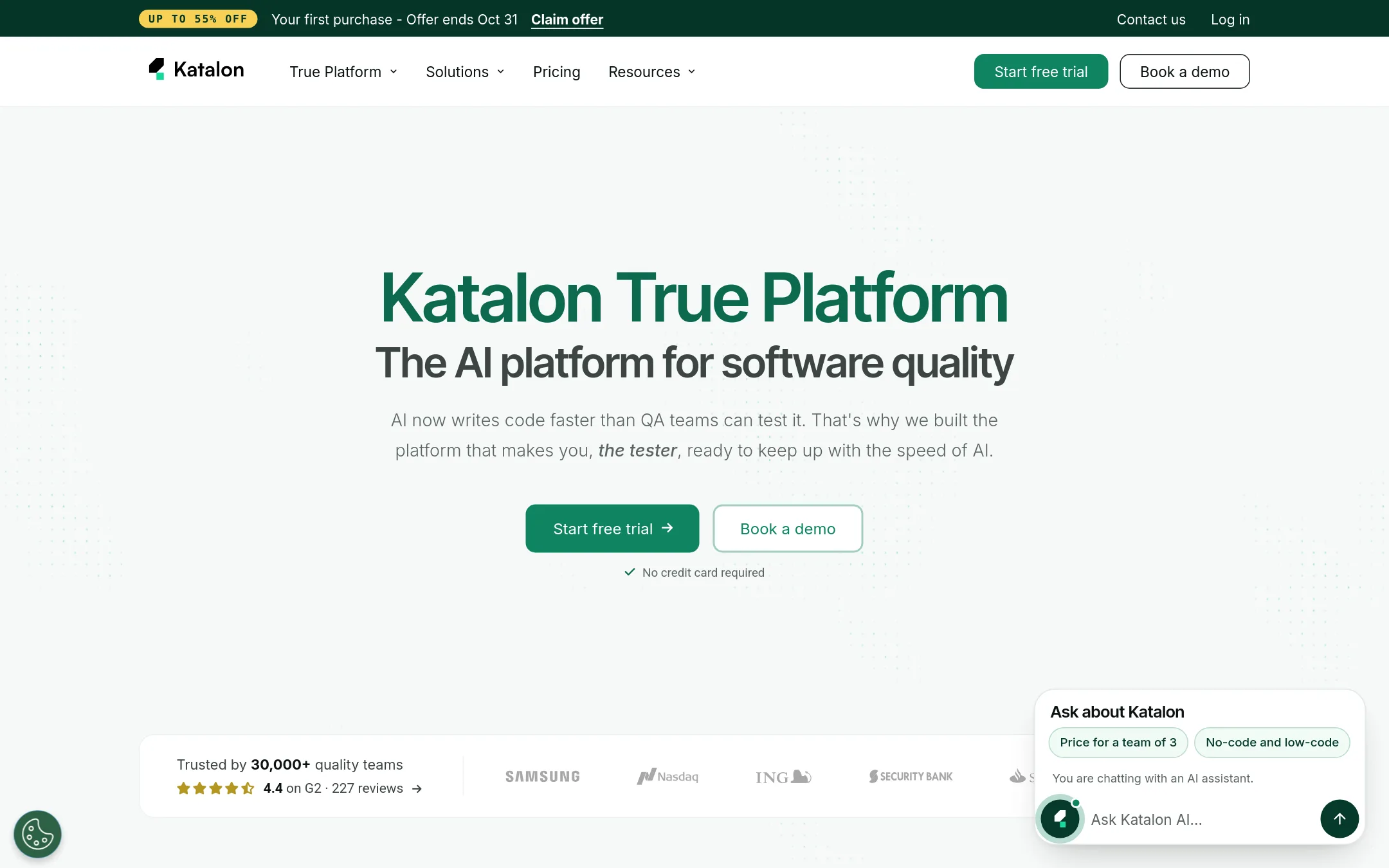
Katalon Studio is a broad testing suite that covers web, mobile, API and desktop apps in one tool, with manual test management, AI-assisted authoring and TestOps reporting. A team would pick it over Autosana when they need one platform for manual and automated tests across all four app types, or want to keep existing Selenium, Appium or Playwright scripts.
Where it is strong
- Covers web, mobile, API and desktop testing in one platform
- Keeps existing Selenium, Appium and Playwright scripts working
- Manual test management and evidence sit alongside automated runs
Where it falls short
- Autosana's flows are written in plain language, while Katalon's broader feature set adds more to learn
- The public pricing page lists plan features but does not show prices, so cost is hard to compare upfront
- Pricing:
- Pricing is not published on the site.
- FFree + credit packs
4.Functionize
Best for: Teams that want agent-run validation on every release and need one shared credit pool across several teams.
- Pricing
- Free + credit packs
- Category
- Other
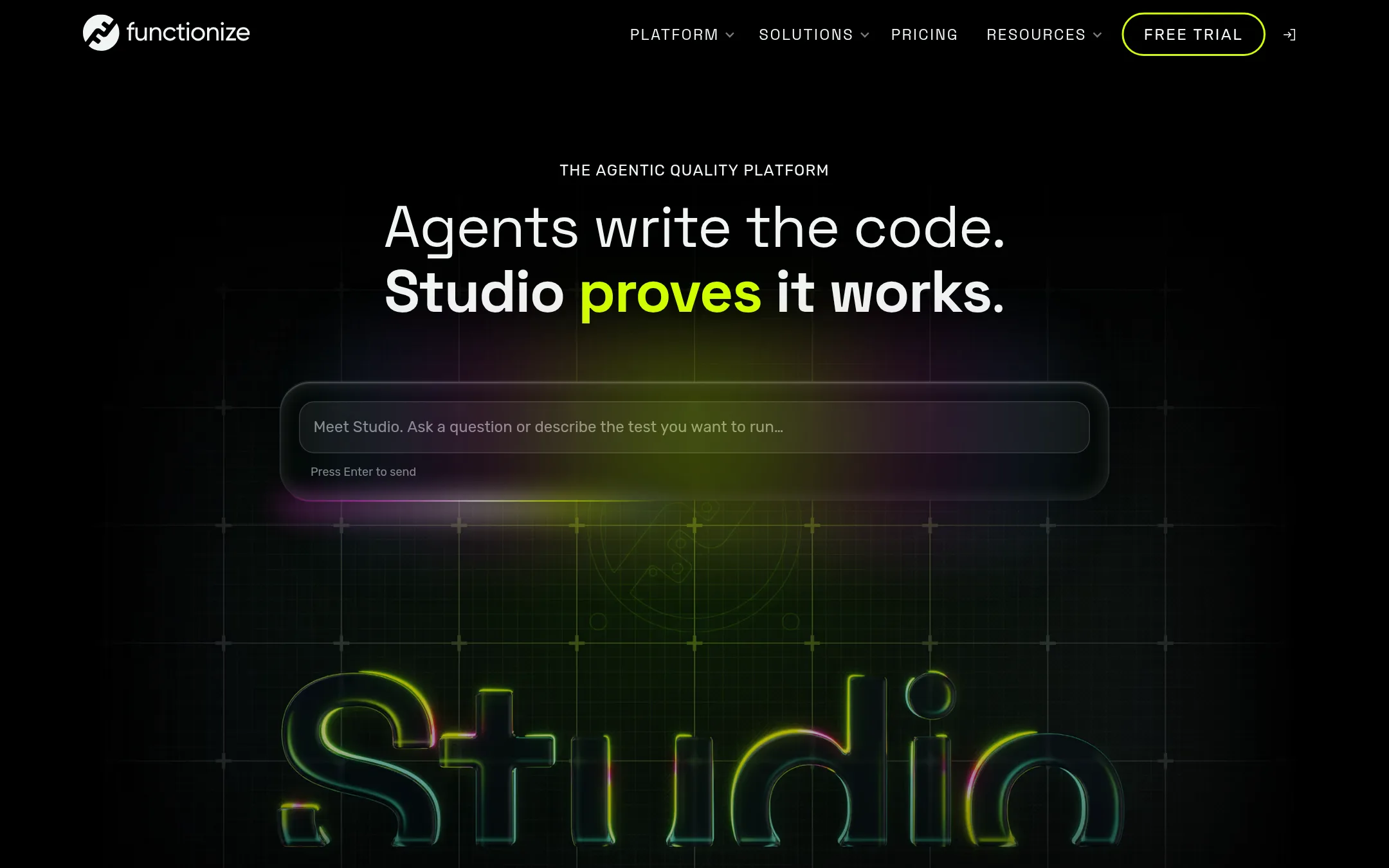
Functionize is an agentic code validation platform that runs tests across releases, including code review, explorations, regressions, and a live app check. Someone would pick it over Autosana when they want validation that covers more than mobile and web end-to-end flows, or when they want a credit pool shared across a whole team.
Where it is strong
- Free plan with all agent capabilities and no credit card needed
- Shared credit pool for the whole team on Growth and Scale
- Work you do yourself, such as editing tests and reading reports, uses no credits
Where it falls short
- Credits are consumed per agent task, so cost depends on how heavy each task is
- Enterprise billing requires invoice or PO and a 12-month minimum
- Pricing:
- Pricing is not published as fixed dollar amounts per tier. The Free plan includes 800,000 credits each month and five parallel runs, and credit packs of 200,000 cost $10 on the Growth and Scale plans.
- AFrom $667
5.Applitools
Best for: Enterprise QA and design-system teams that need visual regression testing across many browsers and devices, with on-prem or private cloud options
- Pricing
- From $667
- Category
- Other
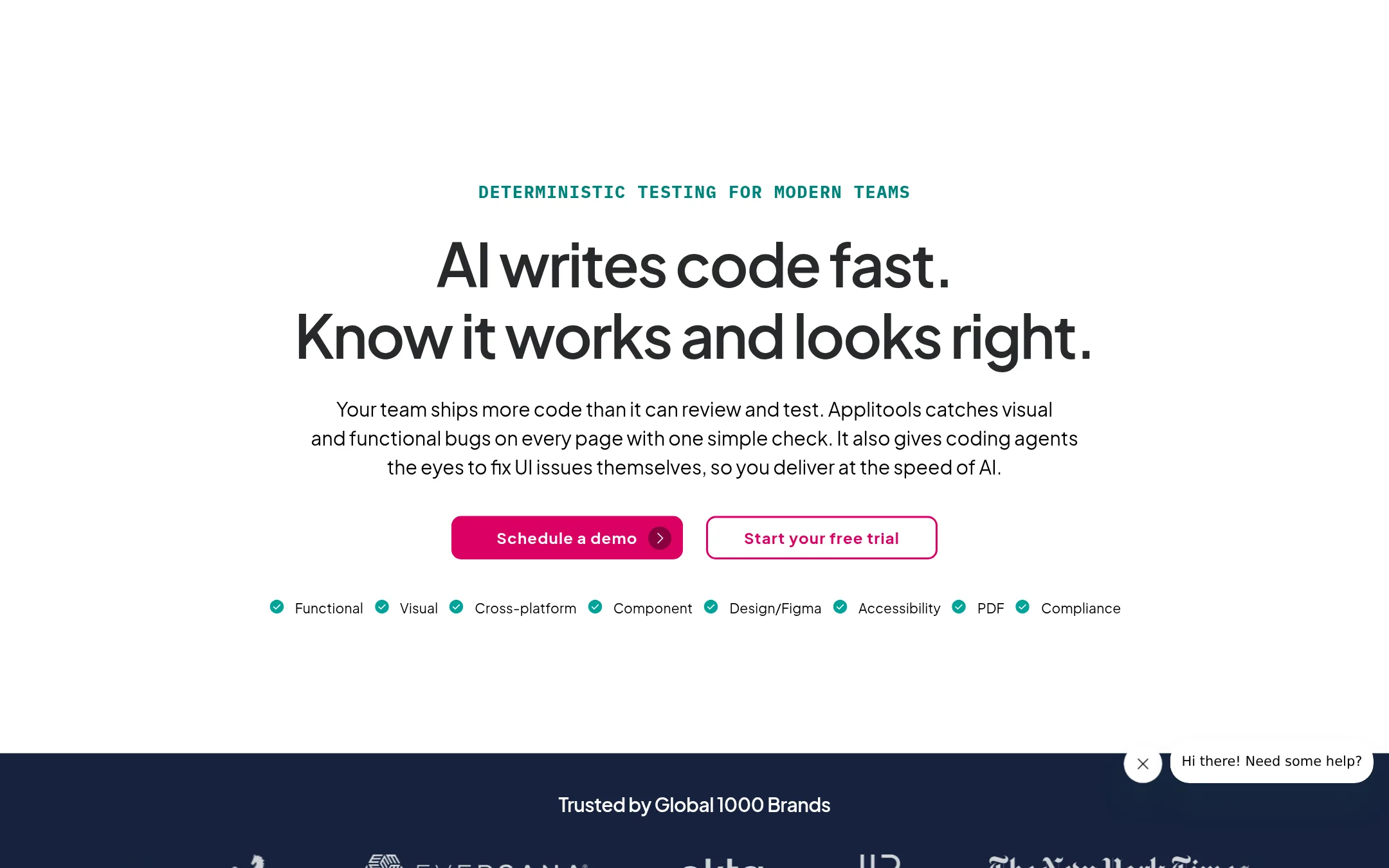
Applitools is an AI testing platform built around Visual AI, which compares screens the way a human eye would and skips noise like dates or small rendering shifts. It also covers functional tests written in plain English, Figma and Storybook checks, and accessibility testing. Pick it over Autosana when your main risk is visual regressions across many browsers and devices, or when you need on-prem deployment, SSO and SOC 2 Type II compliance from the start.
Where it is strong
- Visual AI ignores harmless rendering noise, which cuts false positives from pixel comparison.
- Covers visual, functional, accessibility and component testing in one platform.
- Offers cloud, private cloud and on-premises deployment, plus ISO 27001 and SOC 2 Type II compliance.
Where it falls short
- Autosana's flows are written in plain English per user journey, while Applitools' broader feature set can mean a steeper setup.
- Full Professional and Enterprise pricing is custom and not published on the site.
- Pricing:
- Applitools lists a Starter plan at $667 with Visual AI, Figma and Storybook checks, and CI integrations, while Professional and Enterprise pricing is custom and the site does not publish those figures.
- Not published
6.BrowserStack
Best for: Engineering teams that need broad real-device and cross-browser coverage across many platforms and a single vendor for testing tools
- Pricing
- Not published
- Category
- Developer Tools
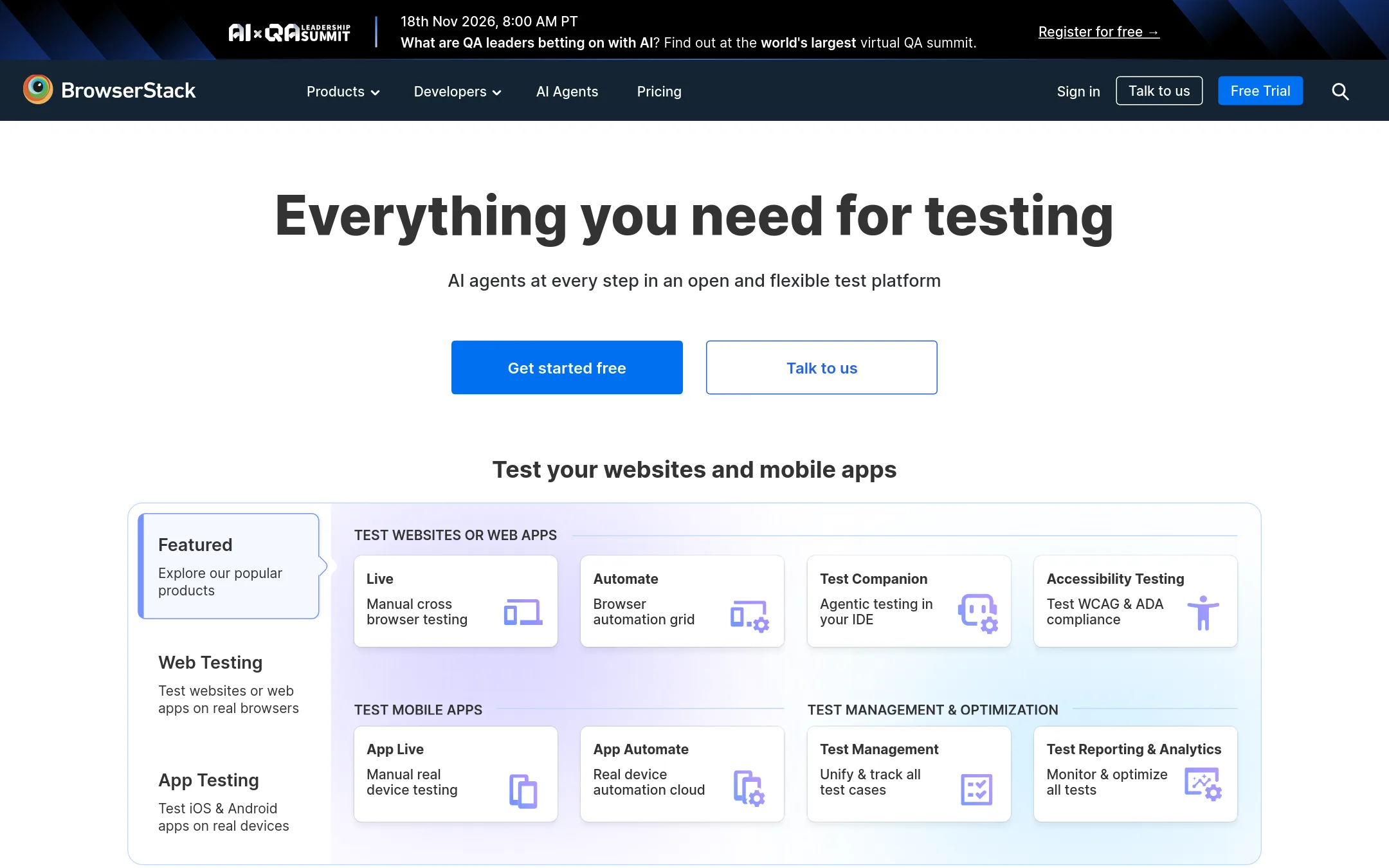
BrowserStack is a broad testing cloud covering cross-browser, real device, visual, and accessibility testing with 35,000+ real iOS and Android devices and 3,500+ browser combinations. Pick it over Autosana when you need wide device and browser coverage for websites and apps, or when your team already relies on tools like Percy, Load Testing, or a manual testing toolkit in one place.
Where it is strong
- Access to 35,000+ real iOS and Android devices and 3,500+ browser combinations
- Covers cross-browser, visual, accessibility, load, and manual testing in one platform
- Connects to 150+ integrations including CI/CD and project management tools
Where it falls short
- Pricing details are not shown on the page, so cost is hard to compare with Autosana's published plans
- Its strength is broad coverage, while Autosana centers on natural-language E2E flows for mobile and web
- Pricing:
- Pricing is not published on the site.
- SFrom $39/mo, annual
7.Sauce Labs
Best for: Enterprise QA teams with existing Selenium or Appium suites that need wide device and browser coverage.
- Pricing
- From $39/mo, annual
- Category
- Other
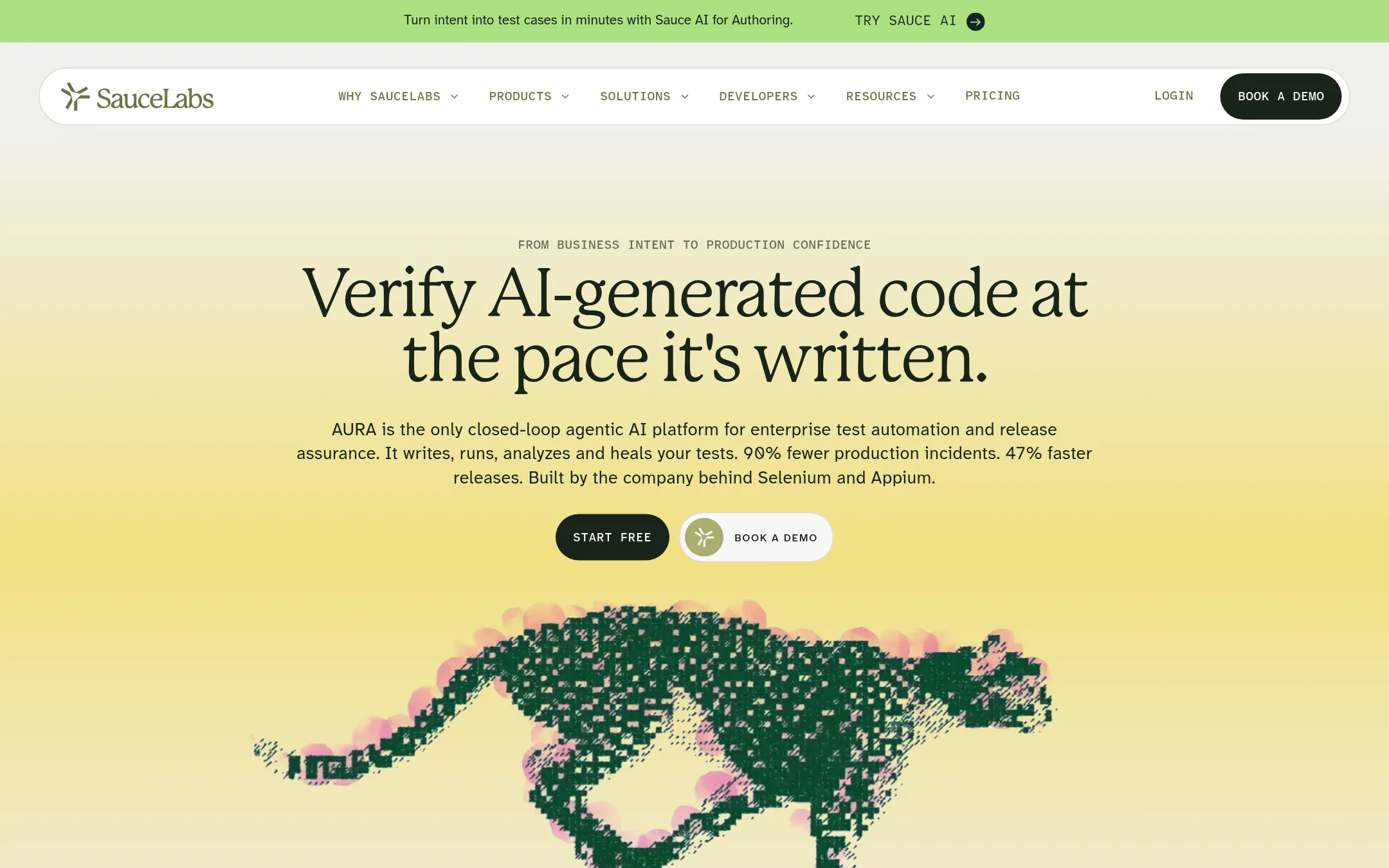
Sauce Labs is a long-running test automation platform that runs tests across real devices, emulators, simulators and browsers, and now adds AI features for test authoring and failure analysis. Teams pick it over Autosana when they need broad cross-browser and device coverage, existing Selenium or Appium suites, or enterprise compliance and dedicated support.
Where it is strong
- Runs on 10,000+ real devices and 3,000+ OS and browser combinations, according to the site
- Works with Selenium, Appium, Cypress, Playwright and other major frameworks
- Holds SOC 2 Type II, ISO 27001 and ISO 42001 certifications and offers SSO on Enterprise
Where it falls short
- Its AI features are described as an add-on tier, and the natural-language test authoring is aimed at its own framework-based approach
- Parallel test limits on the self-serve plan start at 1 to 5 sessions, with higher concurrency sold through sales
- Pricing:
- Live testing starts at $39 per month billed annually ($49 month-to-month) with 1 to 5 parallel tests, and Enterprise pricing is custom.
- M$250/device/mo or free
8.Maestro
Best for: Mobile teams that want open-source, human-readable YAML tests they can run locally and in their own CI
- Pricing
- $250/device/mo or free
- Category
- Other
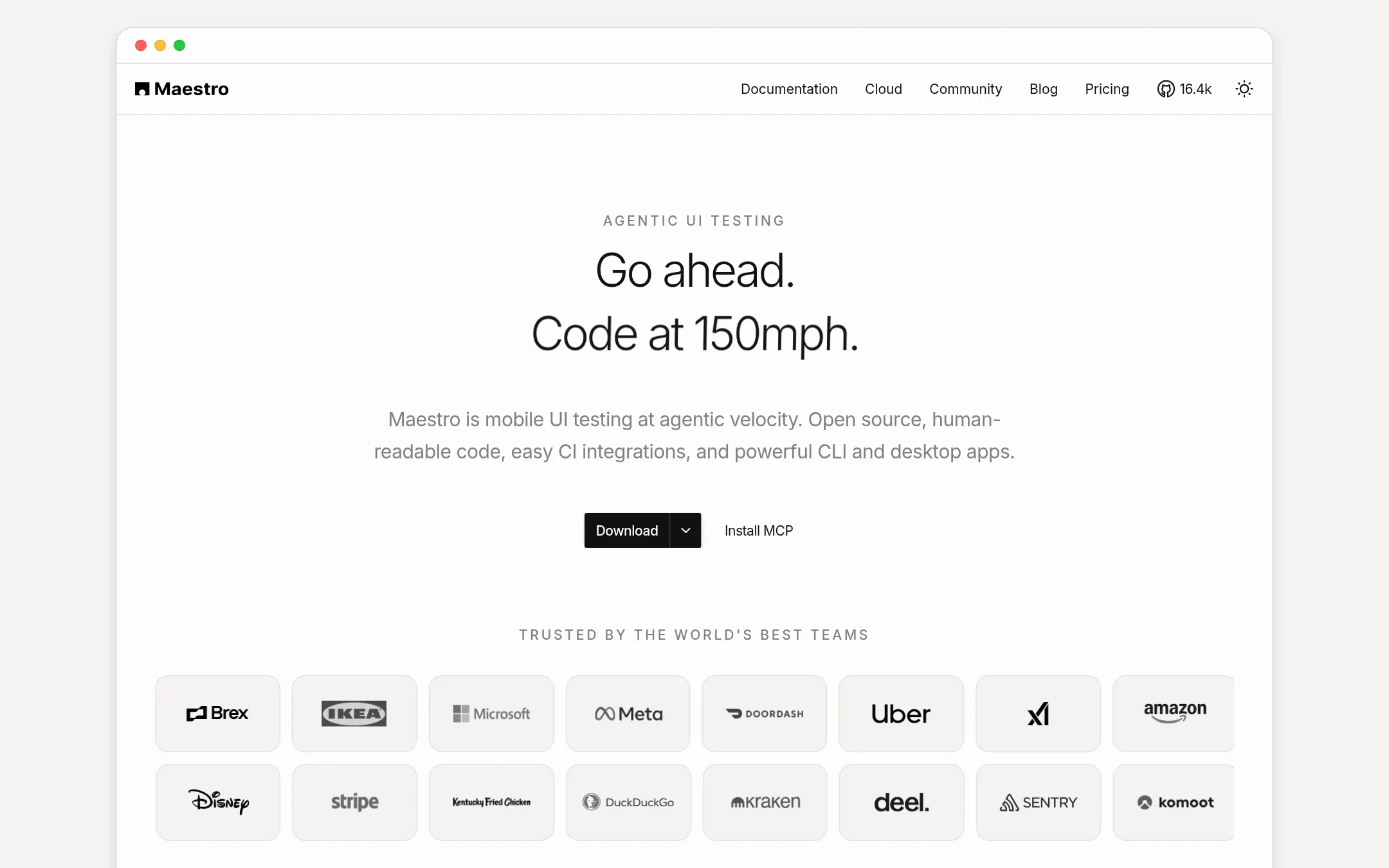
Maestro is an open-source mobile UI testing tool where tests are human-readable YAML files. Teams pick it when they want tests they can read, audit, and keep without vendor lock-in, and when they are comfortable maintaining those flows themselves. Autosana instead writes flows from plain-language descriptions and adapts them when the UI changes, so a team that wants less upkeep would look there.
Where it is strong
- Free and open source for local runs, with no vendor lock-in
- Tests are plain YAML files that are easy to read and review
- Maestro MCP lets coding agents build and verify tests locally
Where it falls short
- Tests are written and maintained by hand in YAML rather than generated from plain-language descriptions
- Cloud device capacity is priced per device, so parallel runs cost more as you scale
- Pricing:
- The local tools, including the CLI and Maestro Studio, are free and open source, while the hosted Cloud device plan is $250 per device per month, and Enterprise Cloud pricing is custom.
- Switching from Autosana:
- Moving from Autosana would mean rewriting your natural-language flows as Maestro YAML flows, since the two use different formats.
See more comparisons in Developer Tools alternatives.
FAQ
Questions about Autosana alternatives
Which alternative is best for a team that wants to keep tests in its own repo?
Maestro is the closest fit on this point, since its tests are plain YAML files that are easy to read and review and can run locally and in your own CI. The tool is free and open source for local runs, with no vendor lock-in. The trade-off is that you write and maintain those flows by hand rather than generating them from plain-language descriptions.
Which option works best if visual bugs are the main concern?
Applitools is built around Visual AI, which compares screens the way a human eye would and ignores harmless noise like dates or small rendering shifts. It also covers functional and accessibility testing, and offers cloud, private cloud, and on-premises deployment. Its Starter plan is listed at $667, while Professional and Enterprise pricing is custom.
Which alternative covers the most platforms in one tool?
Katalon Studio covers web, mobile, API, and desktop apps in one platform, and it keeps manual test management alongside automated runs. It can also keep existing Selenium, Appium, and Playwright scripts working. The public pricing page lists plan features without showing prices, so cost is harder to compare up front.
Which tools publish their pricing openly?
Autosana publishes its plans, including a pay-as-you-go tier with up to 1,000 free AI actions each month. Sauce Labs lists live testing starting at $39 per month billed annually, with Enterprise pricing custom. Testim, Mabl, Katalon Studio, and BrowserStack do not publish pricing on their sites, so you will need to request a quote.
Does Autosana fit teams that need accessibility or performance testing?
Autosana's site centers on mobile and web end-to-end flows, with bug and UX reports and CPU and memory monitoring included in its feature list. If you need API, performance, and accessibility testing in the same contract, Mabl and BrowserStack both cover those areas. Applitools also includes accessibility testing alongside visual checks.
Last updated November 23, 2026.