
Basedash alternatives
10 products compared · Updated November 3, 2026
The short answer
For AI-native self-serve analytics with a managed warehouse, Basedash is the direct option. If you need open-source control and pay-as-you-go pricing, Metabase is the strongest alternative. For embedding analytics into your product with strict multi-tenant isolation, Sisense is the best fit. Large enterprises on Google Cloud should consider Looker for its governed semantic layer.
Your shortlist, at a glance
Read the comparisons ↓ MetabaseFree, usage-basedTeams that want open-source, self-hosted analytics with AI features and granular control over data access.
 LookerCustom quoteLarge enterprises on Google Cloud that need a governed semantic layer and embedded analytics with Gemini-powered agents.
- TTableauSee websiteData visualization and analytics platform
Microsoft Azure CycleCloudConsumption-basedTeams running high-performance computing workloads on Azure that need to orchestrate and scale cluster infrastructure.
 Apache AirflowNot publishedData engineering teams that need full control over pipeline scheduling and monitoring in code
 HexNot publishedData teams that want a collaborative notebook-based analytics workspace with AI assistance and enterprise governance.
 ModeNot publishedData teams that want a central hub for SQL, R, and Python analysis with self-service reporting for business users.
 SisenseNot publishedProduct teams embedding analytics into customer-facing apps, especially in regulated industries that need HIPAA-ready compliance and on-prem deployment.
DomoCustom quoteLarge enterprises that need a governed, credit-based data platform with AI agents, automation, and unlimited users across the organization.
- GGoodDataNot publishedLarge enterprises that need multi-tenant analytics, on-prem or air-gapped deployment, and governed AI agents alongside traditional BI.
About Basedash and its alternatives
Basedash is an AI-native business intelligence platform that combines self-serve BI, embedded analytics, ETL, a managed warehouse, and a semantic layer in one tool. It is known for letting anyone ask questions in plain English and get governed answers with SQL behind them, plus proactive anomaly detection and AI agents.
When comparing alternatives, weigh the pricing structure: Basedash uses a flat $1,000/month team tier plus AI usage, while others like Metabase charge per usage and Domo uses custom credits. Consider deployment regions and options, such as self-hosting with Metabase or on-prem with GoodData. Check integrations with your existing stack, like Google Cloud for Looker or Azure for CycleCloud. Evaluate support and contract terms, since many alternatives require sales-led evaluations with unpublished pricing.
Explore the alternatives
- Free, usage-based
1.Metabase
Best for: Teams that want open-source, self-hosted analytics with AI features and granular control over data access.
- Pricing
- Free, usage-based
- Category
- Analytics & Data
Metabase is an open-source BI tool that lets you query data in plain English with AI, inspect the SQL behind every answer, and embed dashboards in your product. Choose it over Basedash if you want to self-host, avoid a flat $1,000/month fee, and prefer a pay-as-you-go model with optional AI usage.
Where it is strong
- Open source and self-hostable, so you control your data and costs.
- AI on all plans, including free, with your own API key option.
- Granular permissions and SSO on Pro, plus multi-tenant embedding.
Where it falls short
- Advanced embedding features require Pro or Enterprise.
- Air-gapped deployment is Enterprise-only with an additional fee.
- Pricing:
- Open Source is free. Starter and Pro have usage-based pricing: AI at $3.75 per 1M tokens, transforms at $0.01 per run after 1,000 included runs, and storage from $2 per 1M rows. Enterprise is custom.
- Switching from Basedash:
- Moving from Basedash means setting up your own semantic layer in Data Studio and re-creating dashboards, but you can keep your existing data sources.
- Custom quote
2.Looker
Best for: Large enterprises on Google Cloud that need a governed semantic layer and embedded analytics with Gemini-powered agents.
- Pricing
- Custom quote
- Category
- Analytics & Data
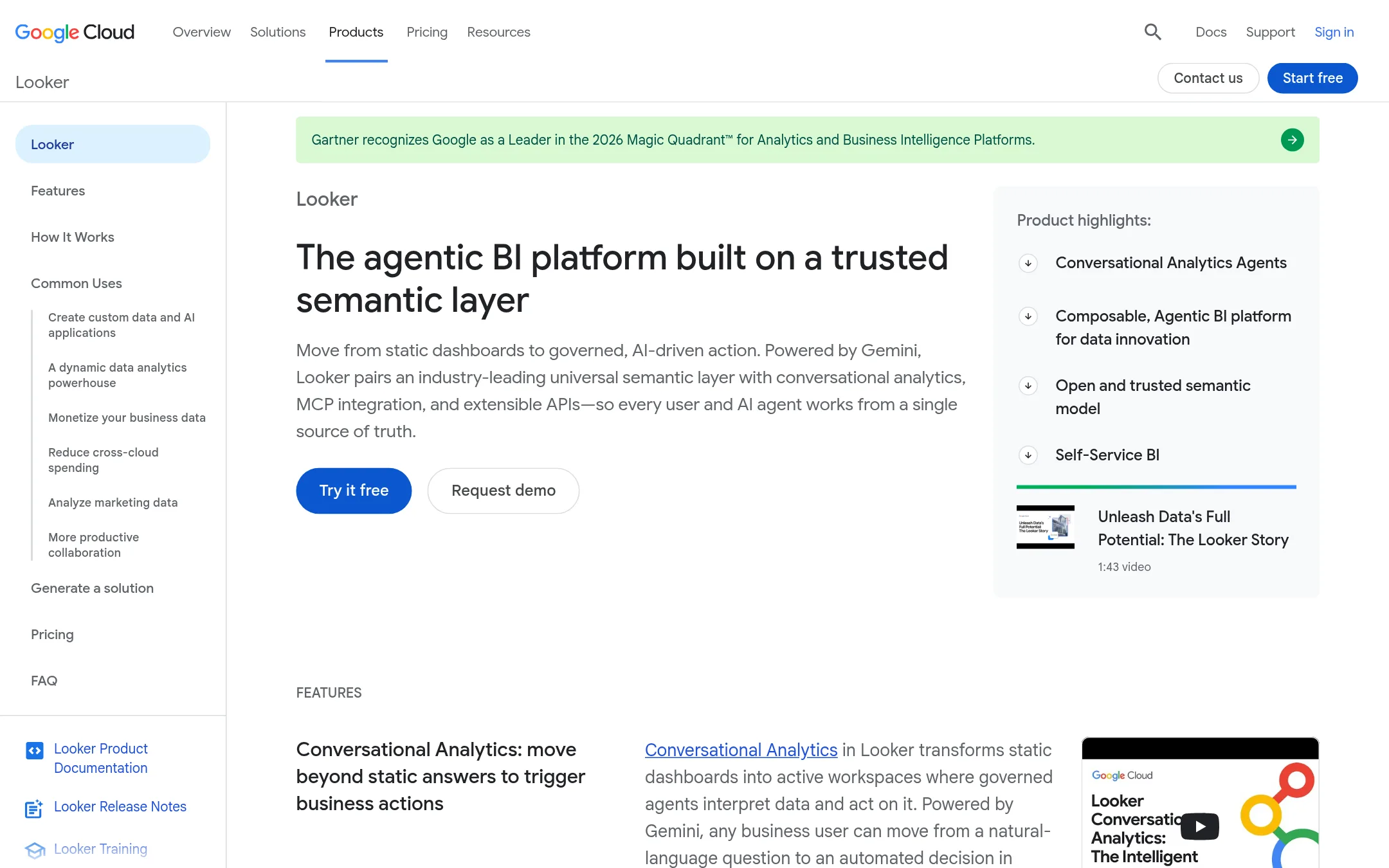
Looker is a Google Cloud enterprise BI platform with a strong semantic layer and embedded analytics. Choose it over Basedash if you are already invested in Google Cloud and need a governed, sales-led BI tool for large organizations.
Where it is strong
- Deep integration with Google Cloud and BigQuery
- Semantic layer for consistent metric definitions
- Embedded analytics with white-labeling
Where it falls short
- Sales-led pricing, no self-serve plan
- Steeper learning curve for non-technical users
- Pricing:
- Pricing is not published on the site.
- TSee website
3.Tableau
Analytics & Data
Widely used self-serve BI and visualization tool, suitable for interactive dashboards and analytics.
- Consumption-based
4.Microsoft Azure CycleCloud
Best for: Teams running high-performance computing workloads on Azure that need to orchestrate and scale cluster infrastructure.
- Pricing
- Consumption-based
- Category
- Developer Tools
Microsoft Azure CycleCloud is an HPC orchestration tool for managing and scaling compute clusters on Azure. Choose it instead of Basedash when your work is about running large-scale simulations, rendering, or other high-performance computing workloads, not about business intelligence or analytics.
Where it is strong
- Native integration with Azure HPC services and VM scale sets
- Supports a wide range of schedulers and HPC workloads
- Scales clusters automatically based on job requirements
Where it falls short
- Requires Azure expertise and infrastructure management
- No built-in analytics or BI features like Basedash
- Pricing:
- Pricing is consumption-based. You pay only for the cloud resources you use, with options like reservations and savings plans for compute. Specific prices are not published on the site.
- Not published
5.Apache Airflow
Best for: Data engineering teams that need full control over pipeline scheduling and monitoring in code
- Pricing
- Not published
- Category
- Analytics & Data
Apache Airflow is an open-source workflow orchestration platform for teams that need to author, schedule, and monitor complex data pipelines in Python. Choose it over Basedash when your priority is custom ETL and infrastructure automation rather than AI-powered self-serve analytics.
Where it is strong
- Pure Python pipelines with dynamic generation
- Extensible with custom operators and integrations
- Open source with active community and self-hosted option
Where it falls short
- Requires Python expertise to build and maintain workflows
- No built-in AI analytics or natural language querying
- Pricing:
- Pricing is not published on the site.
- Switching from Basedash:
- Moving from Basedash means replacing AI-driven analytics with code-defined pipelines, so you'll need to build your own reporting layer on top of Airflow.
- Not published
6.Hex
Best for: Data teams that want a collaborative notebook-based analytics workspace with AI assistance and enterprise governance.
- Pricing
- Not published
- Category
- Analytics & Data
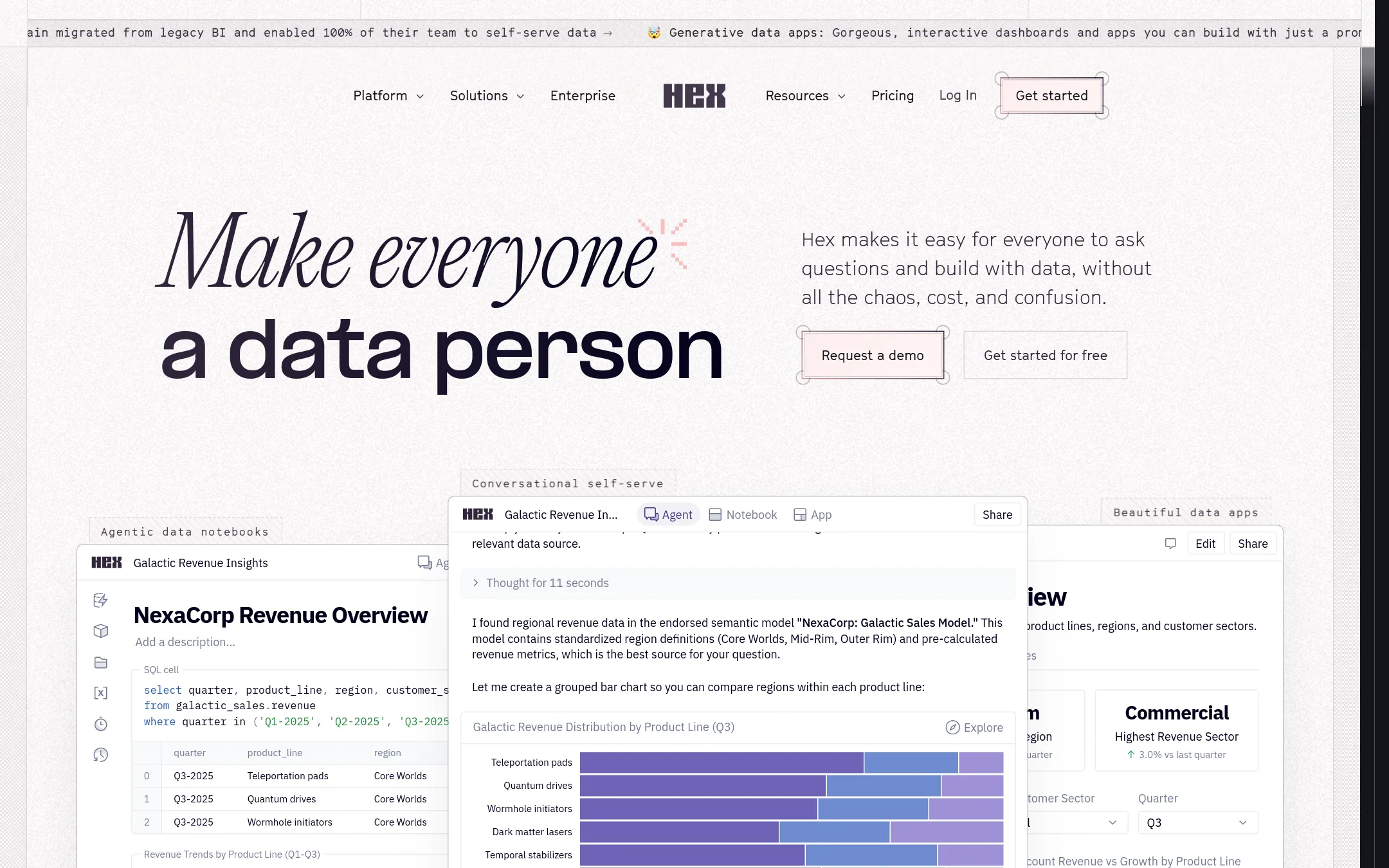
Hex is an AI analytics platform that combines notebooks, conversational analytics, and context management. You would choose it over Basedash if your team wants a more code-friendly, notebook-style environment where analysts and data scientists can build and share data apps, while still having AI-assisted chat and governance.
Where it is strong
- Notebook-style interface for iterative analysis and data apps.
- AI chat grounded in your semantic models and context.
- Enterprise-grade security and governance features.
Where it falls short
- Pricing is not transparent. You must contact sales for plan costs.
- Compute costs are billed per minute, which can add up for heavy usage.
- Pricing:
- Pricing is not published on the site. Plans are Community, Professional, Team, and Enterprise, with compute billed per minute (e.g., Large $0.32/hr, Extra large $0.65/hr).
- Switching from Basedash:
- Moving from Basedash to Hex means shifting from a flat-rate BI platform to a notebook-centric workflow, and you'll need to rebuild dashboards and reports in Hex's environment.
- Not published
7.Mode
Best for: Data teams that want a central hub for SQL, R, and Python analysis with self-service reporting for business users.
- Pricing
- Not published
- Category
- Analytics & Data
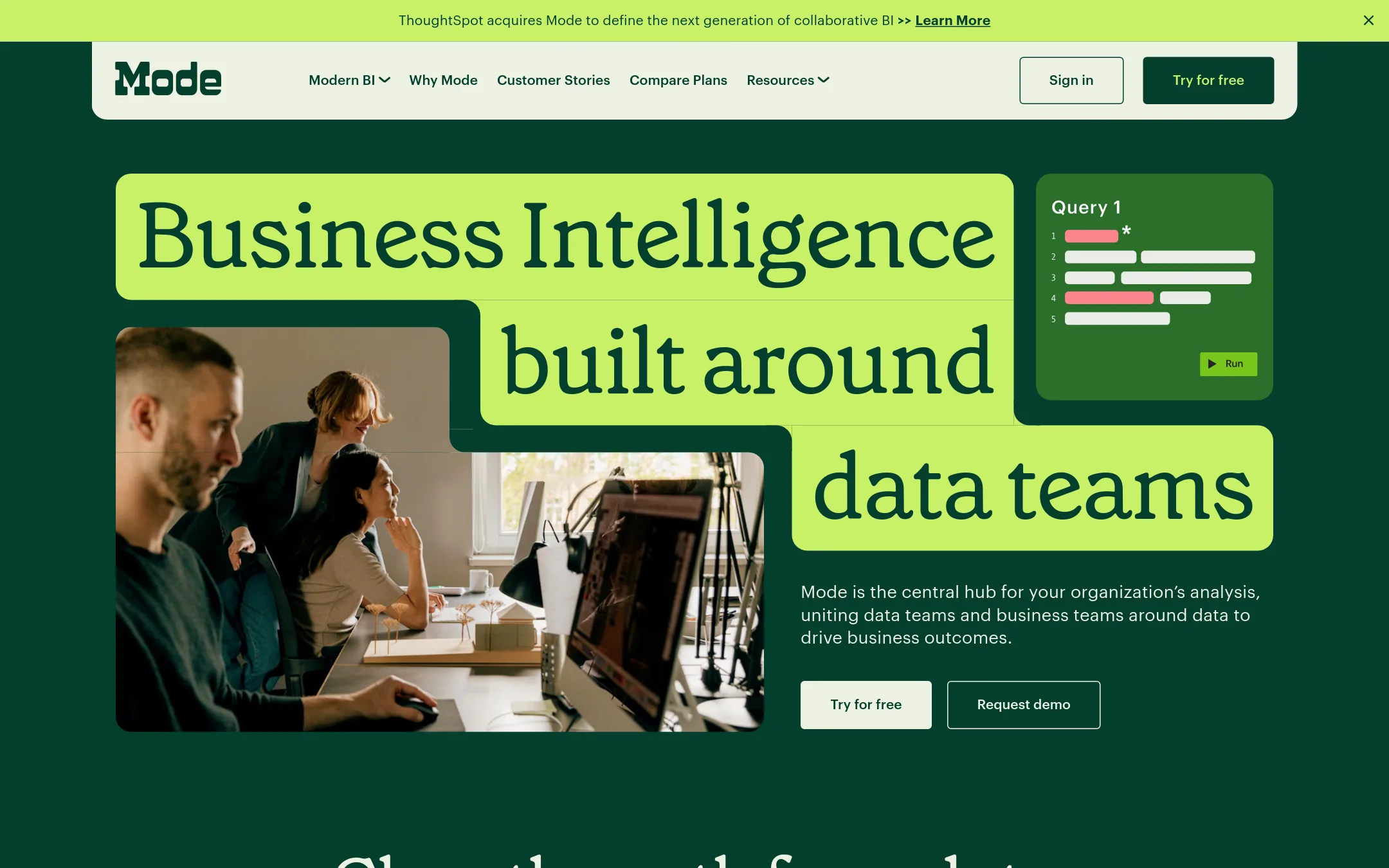
Mode is a collaborative data platform built around SQL, R, and Python, aimed at data teams that need to do deep ad hoc analysis and then share self-service reports with the rest of the company. You would choose it over Basedash if your analysts want to write code directly and you already have a modern data stack, rather than relying on AI-generated queries and a managed warehouse.
Where it is strong
- Supports SQL, R, and Python in one platform for flexible analysis
- Designed for collaborative work between data teams and business users
- Quick to get started, with a 30-minute setup claim
Where it falls short
- No AI-native features like natural language queries or anomaly detection
- Requires a data warehouse and transformation layer already in place
- Pricing:
- Pricing is not published on the site.
- Not published
8.Sisense
Best for: Product teams embedding analytics into customer-facing apps, especially in regulated industries that need HIPAA-ready compliance and on-prem deployment.
- Pricing
- Not published
- Category
- Analytics & Data
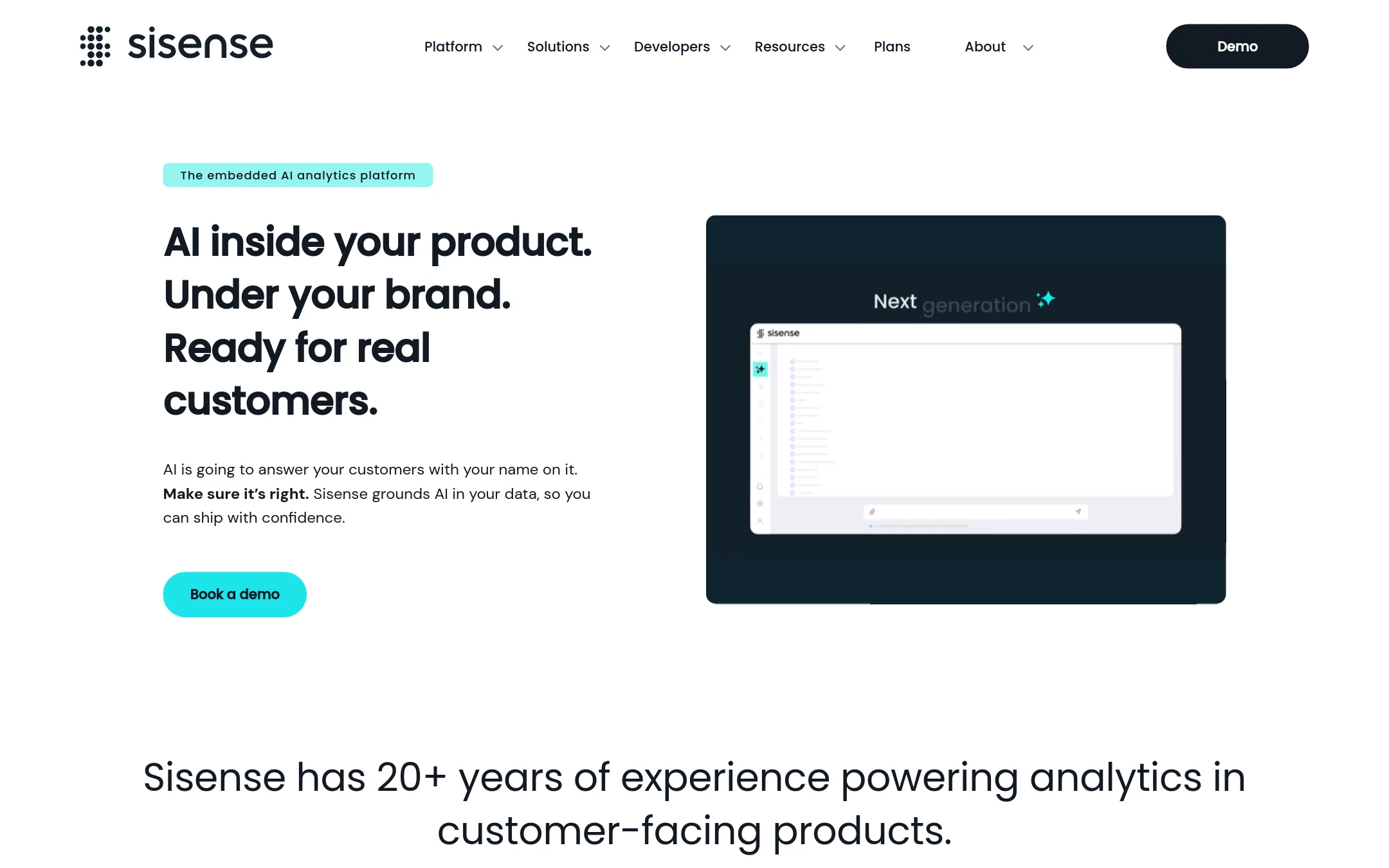
Sisense is an embedded analytics platform that lets you put AI-powered dashboards and natural-language queries inside your own product, under your brand. Choose it over Basedash when you need to ship analytics to external customers with strict multi-tenant isolation and row-level security, not just serve internal teams.
Where it is strong
- Native multi-tenant architecture keeps each customer's data isolated
- Embed with iframe or Compose SDK in any tech stack
- Bring your own LLM for governed AI answers
Where it falls short
- Pricing is not transparent. Requires contacting sales
- Self-Serve plan lacks the enterprise security features like column-level security and SSO Router
- Pricing:
- Pricing is not published on the site. Plans are labeled Enterprise and Self-Serve, with a free trial for Self-Serve.
- Custom quote
9.Domo
Best for: Large enterprises that need a governed, credit-based data platform with AI agents, automation, and unlimited users across the organization.
- Pricing
- Custom quote
- Category
- Analytics & Data
Domo is a full data platform that connects 1,000+ sources, prepares data, and lets you build AI agents and automations on top. Choose it over Basedash when you need a broader data ecosystem with heavy workflow automation and enterprise governance, rather than a focused AI-native BI tool.
Where it is strong
- Unlimited users with no per-seat fees
- Credit-based pricing aligns cost with actual usage
- Built-in AI agents and workflow automation
Where it falls short
- Pricing is custom, not transparent
- Requires a sales-led evaluation and demo to get started
- Pricing:
- Pricing is not published on the site. Domo offers a 30-day free trial and custom credit-based pricing with no per-seat fees.
- Switching from Basedash:
- Moving from Basedash to Domo means setting up a new data platform with a custom contract, so plan for a sales-led onboarding process.
- GNot published
10.GoodData
Best for: Large enterprises that need multi-tenant analytics, on-prem or air-gapped deployment, and governed AI agents alongside traditional BI.
- Pricing
- Not published
- Category
- Other
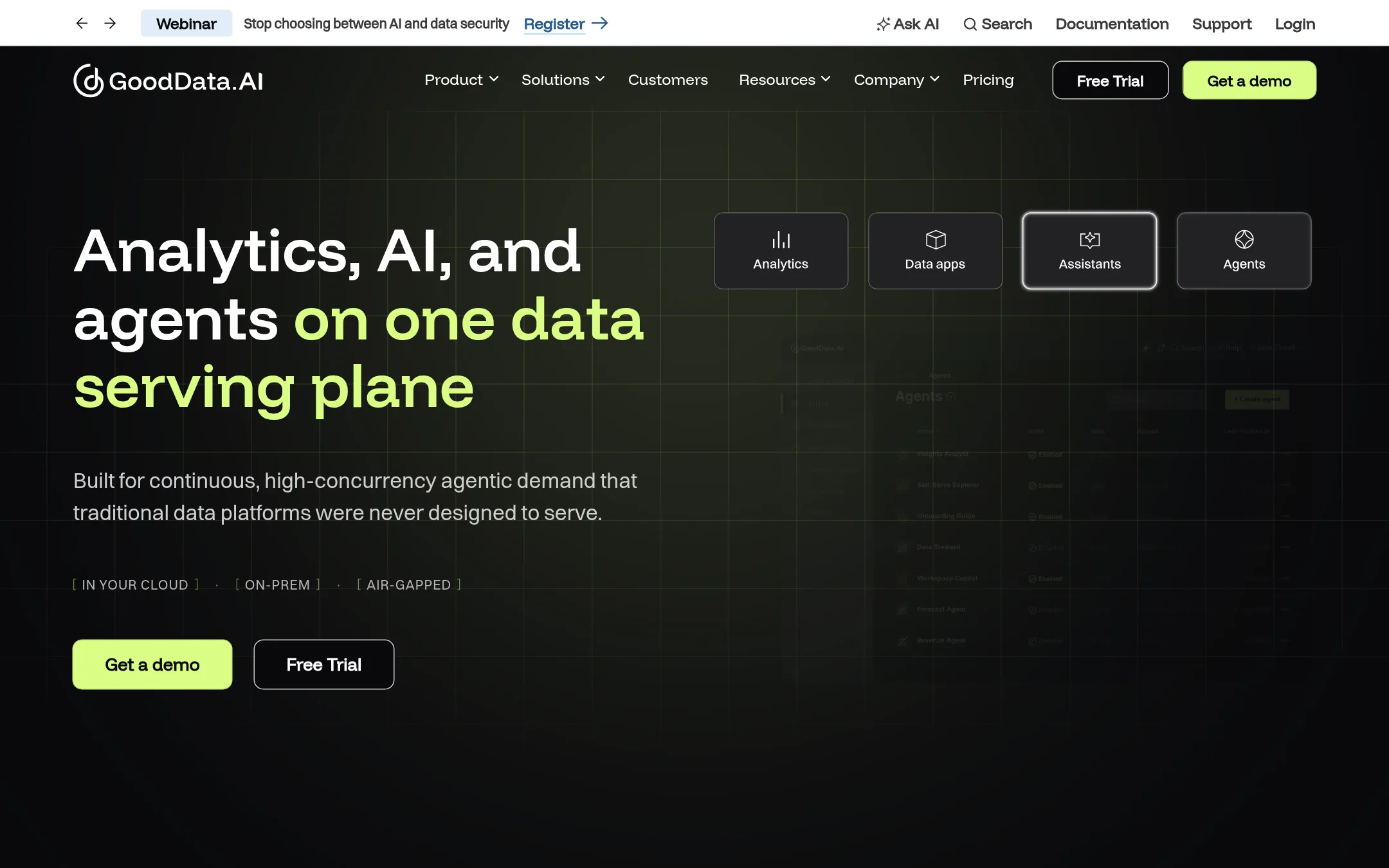
GoodData is a governed analytics platform that also serves AI agents and embedded data applications, with deployment options in your cloud, on-prem, or air-gapped. Choose it over Basedash when you need multi-tenant workspaces, enterprise compliance, and a platform that can run both dashboards and autonomous agents on one foundation.
Where it is strong
- Multi-tenant workspaces with clear data isolation
- Deploy in your cloud, on-prem, or air-gapped
- Migration agents for Power BI, Tableau, and Looker content
Where it falls short
- Pricing requires a sales conversation, no self-serve tiers
- Heavier setup than Basedash's plug-and-play warehouse
- Pricing:
- Pricing is not published on the site. Professional is per-workspace and Enterprise is custom, but no figures are shown.
- Switching from Basedash:
- Migration agents translate Power BI, Tableau, Looker, and other BI content, so moving from Basedash would involve redefining metrics and permissions in GoodData's model.
See more comparisons in Analytics & Data alternatives.
FAQ
Questions about Basedash alternatives
What is the cheapest alternative to Basedash?
Metabase offers a free open-source version, so it is the cheapest if you can self-host. Its paid plans start with usage-based pricing, like AI at $3.75 per 1M tokens and storage from $2 per 1M rows. Basedash starts at $1,000 per month, so Metabase is more budget-friendly for small teams.
Which alternative is best for embedding analytics into my product?
Sisense is built for embedding with native multi-tenant isolation and row-level security, plus iframe or Compose SDK options. Basedash also supports embedding with React and JWT SSO, but Sisense is more focused on external customer-facing analytics. Metabase offers embedding but requires Pro or Enterprise for advanced features.
Can I self-host an alternative to Basedash?
Yes, Metabase is open-source and self-hostable, giving you full control over data and costs. GoodData also offers on-prem or air-gapped deployment for enterprise needs. Basedash does not mention self-hosting on its public site, so these are better for that requirement.
Which alternatives have transparent pricing?
Metabase is the most transparent, with published usage-based pricing for AI, transforms, and storage. Basedash also publishes a flat $1,000 per month plan. Most others, like Looker, Domo, Sisense, and Hex, do not publish prices and require contacting sales.
What if I need a semantic layer for consistent metrics?
Looker is known for its strong semantic layer, which is ideal for large enterprises on Google Cloud. Basedash also has a semantic layer with reusable models and dbt integration. GoodData provides governed multi-tenant workspaces that support consistent definitions across teams.
Last updated November 3, 2026.