7 Best AI Automation Platforms in 2026
Updated November 8, 2026
The short answer
The three strongest picks for AI automation platforms are Tracecat, BotCity and Inkeep. Tracecat suits security and IT teams that want self-hosted AI agents for alert triage, BotCity suits governance and security teams that need to control Python scripts and AI-generated code on endpoints, and Inkeep suits customer support teams where engineers and non-technical staff build agents together.
The shortlist, at a glance
Read the comparisons ↓ ZensorsNot publishedAirports and large enterprise facilities that need visual AI to monitor and automate physical spaces
 BotCityNot publishedIT, governance and security teams that need to control Python scripts and AI-generated code running on endpoints and in production
 InkeepNot publishedCustomer support and CX teams that want engineers and non-technical staff to build and own AI agents together
 TracecatFree OSS, $50k/yr TeamSecurity and IT teams replacing legacy SOAR tools who want to build and own AI agents for alert triage and containment
 ProxisPer seat, not publisheMid-size and enterprise teams that want employees across sales, marketing, and engineering to run AI agents, with strict access controls.
MaiveNot publishedRoofing, HVAC, window and remodeling companies whose in-home sales reps need coaching and automated follow-ups
 OkiNot publishedPrivacy-minded individuals and households who want their personal data kept on a home device rather than in the cloud
About AI Automation Platforms
AI automation platforms let businesses build and run AI agents that carry out repeated work, such as triaging alerts, answering customer questions, updating records, or coaching sales reps. They connect an AI model to company data and tools so the agent can act, not just respond. Most also give teams a way to review, approve, and log what the agent does.
The products on this list differ in approach, scale and pricing. Some are built for a specific job, such as Maive for in-home sales reps at home service companies or Zensors for physical spaces like airports. Others are general platforms for security, customer support or company-wide agent use. Pricing ranges from openly listed plans, as with Tracecat's open source tier and $50,000 per year Team plan, to per-seat or per-project models that require a sales conversation.
The 7 best AI Automation Platforms, compared
- Not published
1.Zensors
Best for: Airports and large enterprise facilities that need visual AI to monitor and automate physical spaces
- Pricing
- Not published
- Category
- AI & Machine Learning
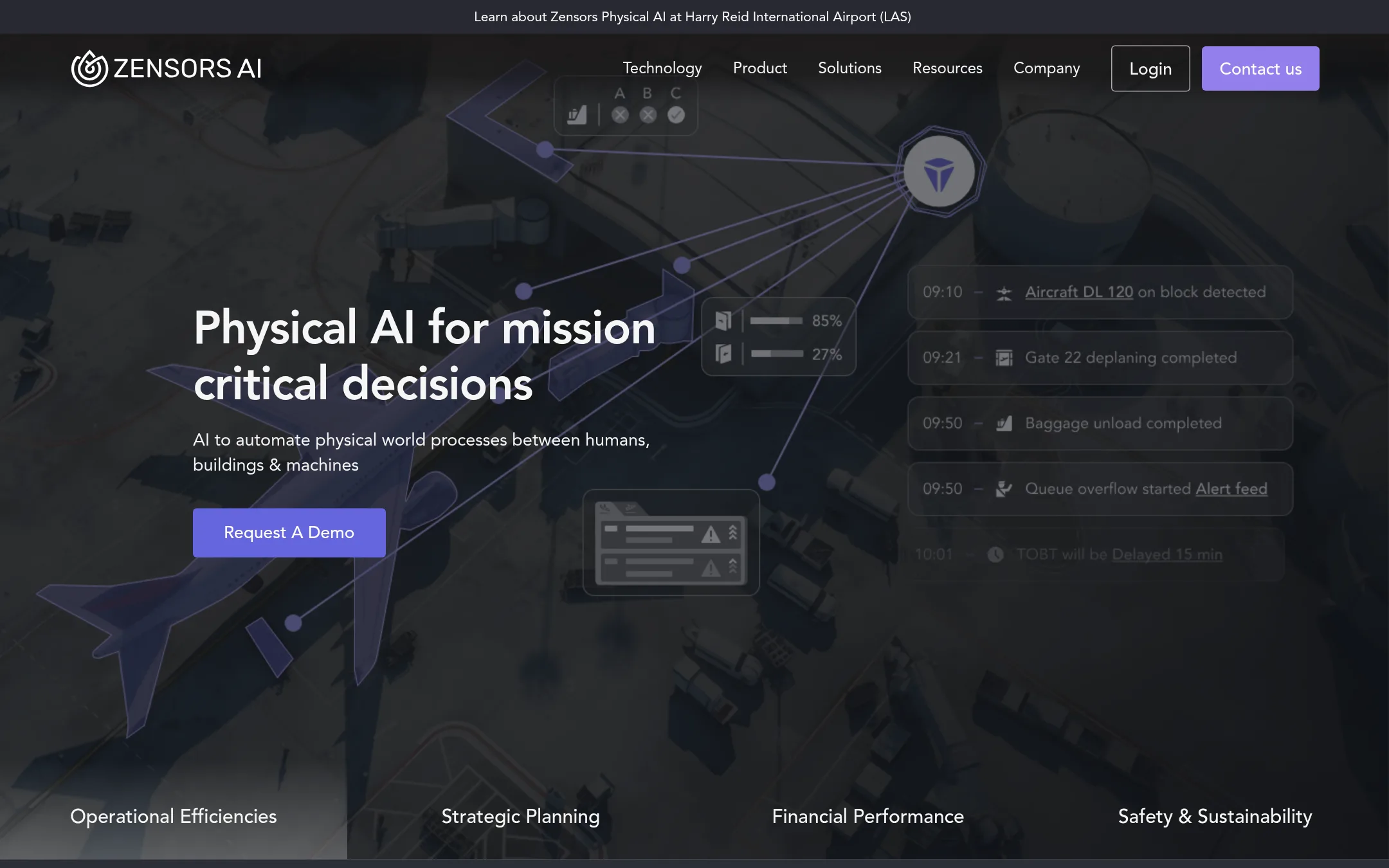
Zensors uses visual AI agents to read and act on physical spaces such as airports and enterprise facilities. It fuses physical world data with multimodal AI and adds a spatial guardrail to keep the system precise over large, complex areas. The company says one platform can replace a dozen point solutions, which is the kind of consolidation operations teams look for.
Where it is strong
- Built for large, complex spaces like airports, not just single rooms
- Combines multimodal AI with a spatial guardrail for precision over wide areas
- Positioned as one platform to replace several separate point solutions
Where it falls short
- Pricing is not published, so budgeting requires a sales conversation
- Its focus on physical facilities makes it a poor fit for software-only workflow automation
- Pricing:
- Pricing is not published on the site.
- Not published
2.BotCity
Best for: IT, governance and security teams that need to control Python scripts and AI-generated code running on endpoints and in production
- Pricing
- Not published
- Category
- Developer Tools
BotCity governs Python scripts and AI-generated code, both the ones business users run on endpoints and the ones running in official pipelines. Its Sentinel layer discovers Python on endpoints, applies policies, and decides before code executes, which fits teams worried about shadow scripts. The site says it is trusted by over 1000 companies in 70+ countries and cites Bayer's citizen developer program as an example.
Where it is strong
- Sentinel discovers Python scripts running on endpoints and applies policies before they execute
- Audit trails show who ran what, when, and which data was accessed, for compliance review
- Orchestrator covers scheduling, monitoring, alerts and isolated runtimes for business-critical automations
Where it falls short
- Pricing is not listed, so you will need to request a quote to compare costs
- Its deepest focus is Python and AI governance, so teams wanting a general automation tool for other languages may find it narrower
- Pricing:
- Pricing is not published on the site.
- Not published
3.Inkeep
Best for: Customer support and CX teams that want engineers and non-technical staff to build and own AI agents together
- Pricing
- Not published
- Category
- AI & Machine Learning
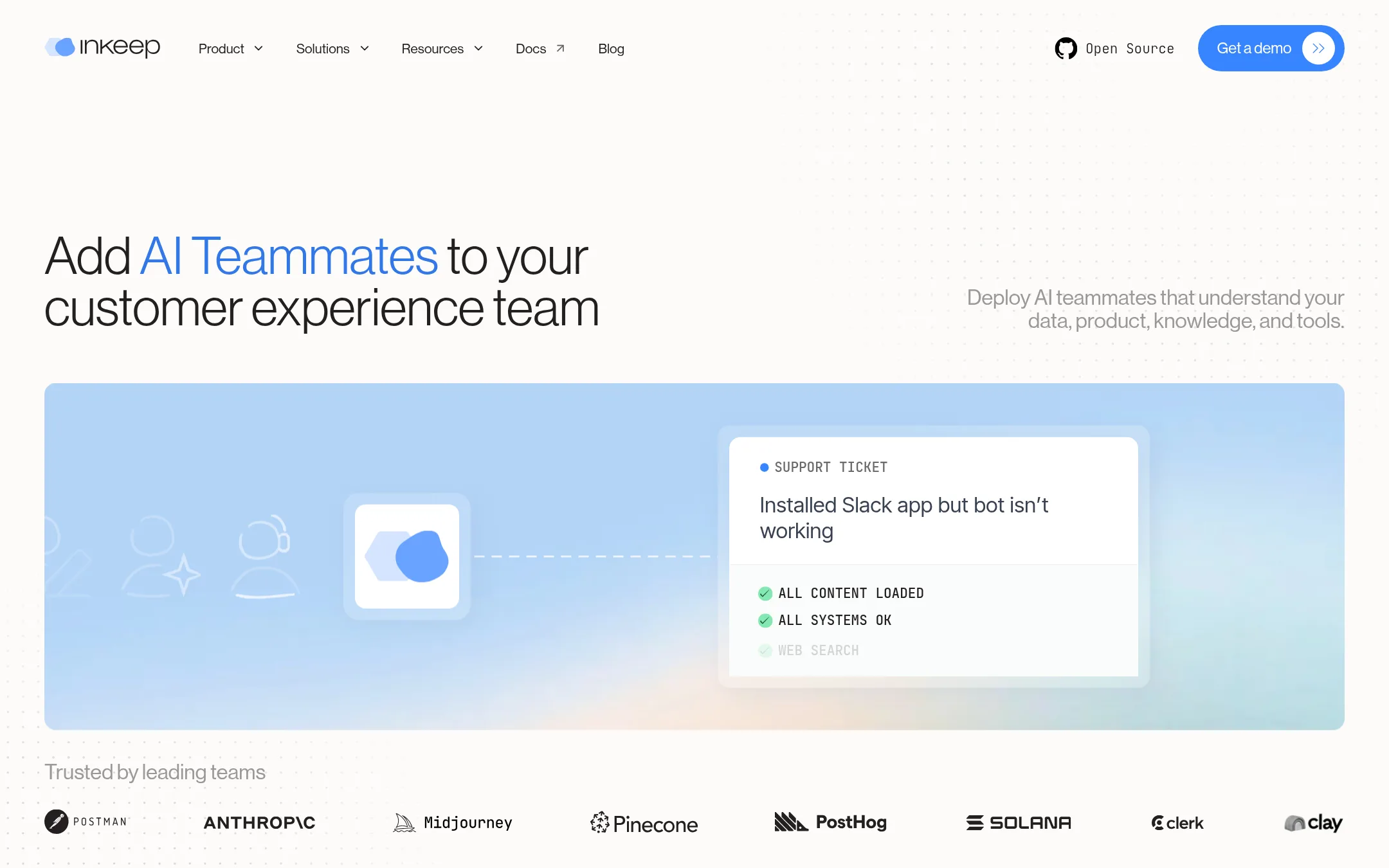
Inkeep builds AI agents for customer experience and operations work, and it lets engineers and business users build the same agents through a no-code visual builder or a TypeScript SDK with two-way sync. Its agents search knowledge bases and pull customer-specific data to answer complex questions, and they can take actions like creating tickets or updating CRMs. The two-way sync between the no-code and code routes is the detail that sets it apart for mixed technical teams.
Where it is strong
- Two-way sync lets no-code builders and developers edit the same agents
- Agents can take real actions such as creating tickets, updating CRMs and sending notifications
- Human approvals let CX staff review agent suggestions before they go out
Where it falls short
- Pricing is not published, so you need to request a demo to compare costs
- The site does not list a full set of integrations, so check your specific tools before committing
- Pricing:
- Pricing is not published on the site.
- Free OSS, $50k/yr Team
4.Tracecat
Best for: Security and IT teams replacing legacy SOAR tools who want to build and own AI agents for alert triage and containment
- Pricing
- Free OSS, $50k/yr Team
- Category
- Security & Privacy
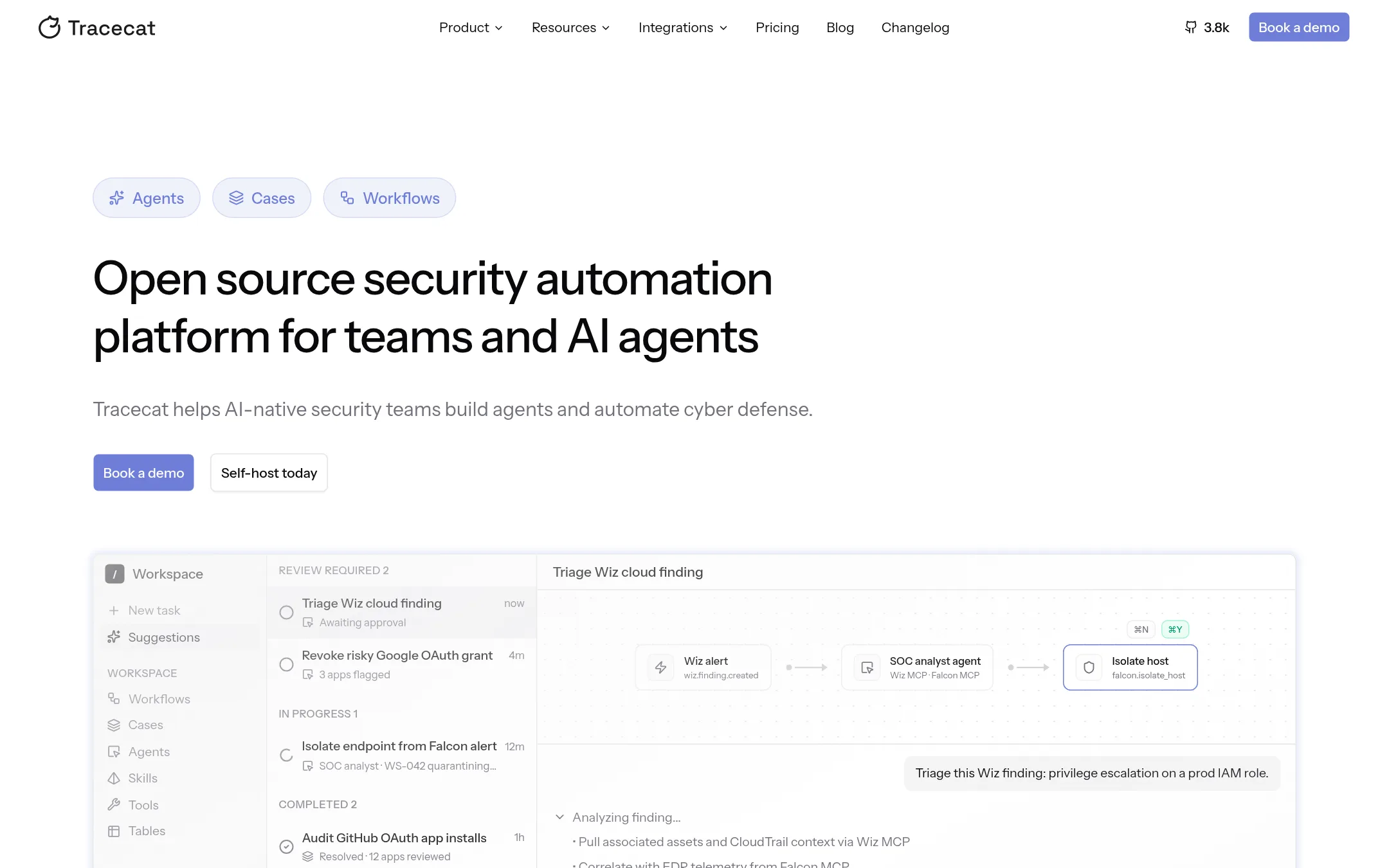
Tracecat is an open source security automation platform built for SOC and IT teams that want AI agents running on their own infrastructure. It combines workflow building, case management and hosted MCP servers, and it can be self-hosted in your own VPC or on-premises. Every prompt, tool call and decision is logged in open source audit logs, which matters when security teams need to see exactly what an agent did.
Where it is strong
- Open source with self-hosting in your own VPC, on-prem, or Tracecat's cloud
- Human approval gates pause workflows before sensitive actions, and each approval is logged
- Git sync keeps prompts, workflows and integrations in your own repo as the source of truth
Where it falls short
- The $50,000 per year Team platform fee is a steep step for small teams
- Agent computers and extra executions above 150k per month are separate costs that need a sales quote
- Pricing:
- The Open Source version is free forever, the Team plan is $50,000 per year including 150k executions per month, Enterprise is custom, and agent computers are a separately priced add-on.
- Per seat, not publishe
5.Proxis
Best for: Mid-size and enterprise teams that want employees across sales, marketing, and engineering to run AI agents, with strict access controls.
- Pricing
- Per seat, not publishe
- Category
- AI & Machine Learning
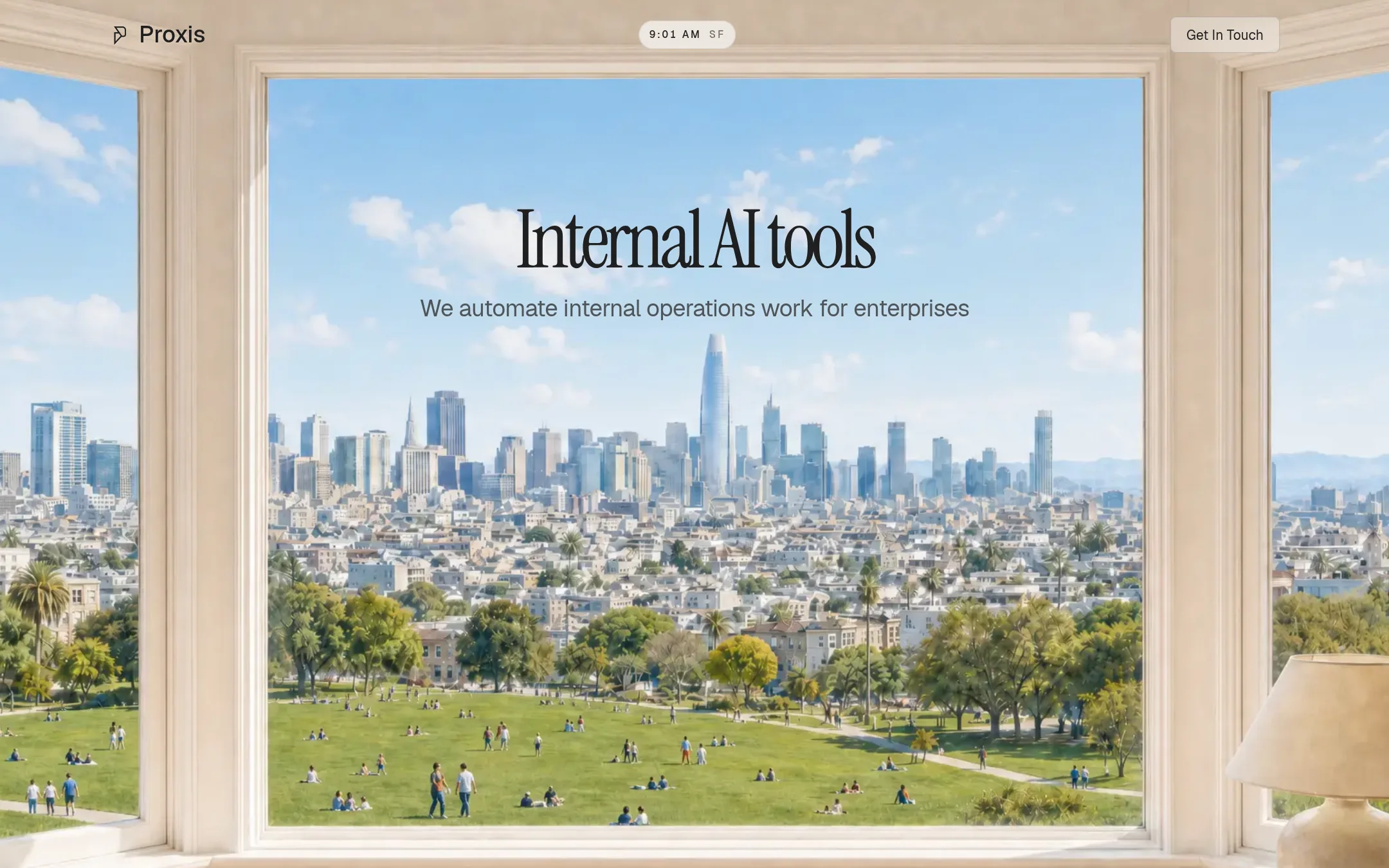
Proxis builds private AI agents for enterprises and connects them to a company's system of record, so agents work with real company context. Its main point of difference is permissions: an agent sees only what the employee using it can see. The company also helps non-technical teams adopt AI tools and manage Claude Skills, which is the kind of work many automation vendors leave out.
Where it is strong
- Agents inherit each employee's permissions, so access stays limited to what that person can see.
- Connects agents to existing systems of record for company context.
- Includes help onboarding non-technical employees, not just developers.
Where it falls short
- The site does not show the per-seat prices, so budgeting requires a sales conversation.
- Seat limits and features differ by tier, and the enterprise capabilities depend on the plan.
- Pricing:
- Pricing is per seat, with Growth, Scale, and Enterprise tiers, but the published page does not show the dollar amounts.
- Not published
6.Maive
Best for: Roofing, HVAC, window and remodeling companies whose in-home sales reps need coaching and automated follow-ups
- Pricing
- Not published
- Category
- AI & Machine Learning
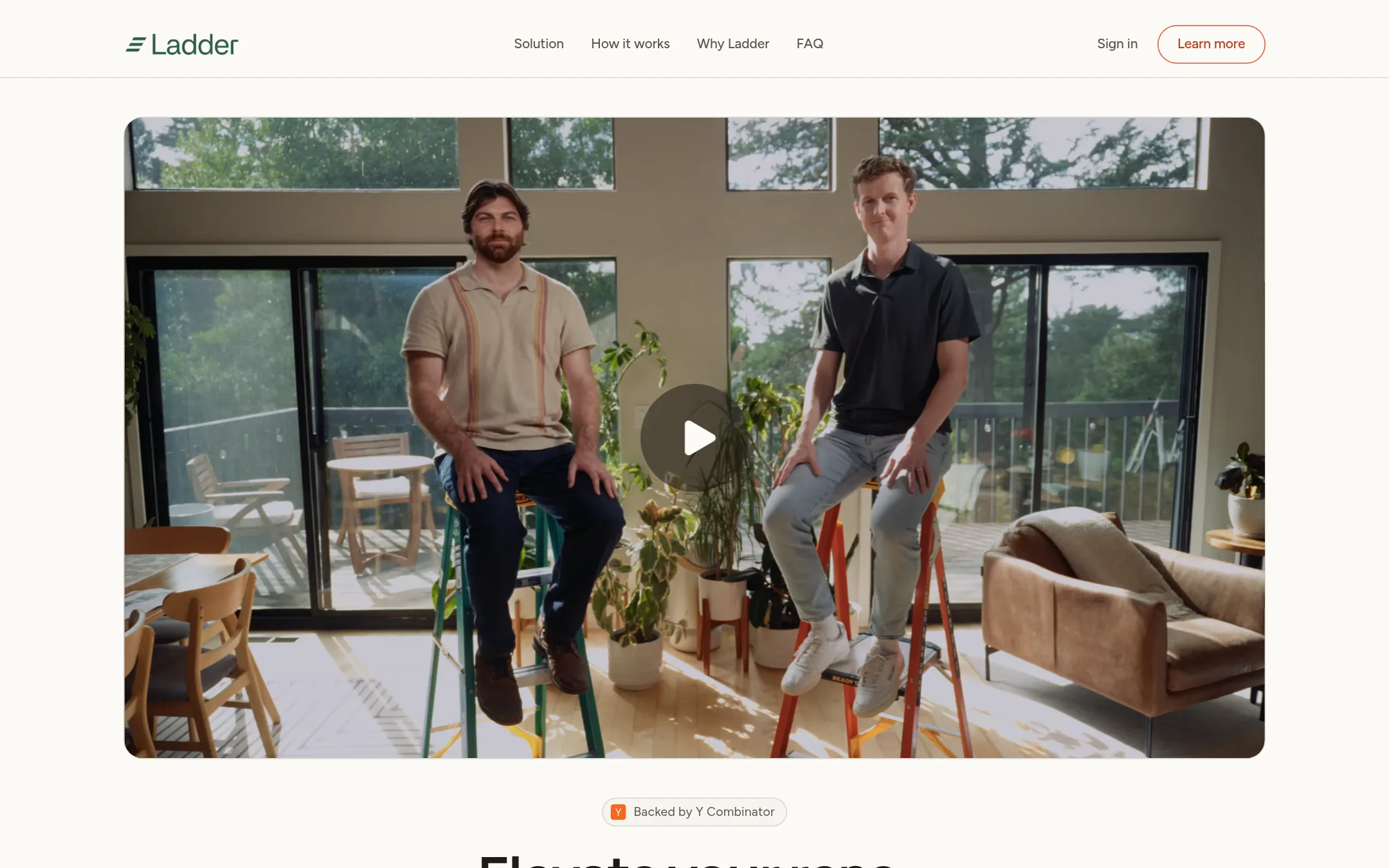
Ladder is an AI assistant built for in-home sales reps at roofing, HVAC, window and remodeling companies. It records sales appointments, coaches reps on what is working, and handles follow-ups, and it integrates with CRMs such as ServiceTitan and AccuLynx. Its focus on home services alone sets it apart from general automation tools.
Where it is strong
- Built only for home services sales reps, not general sales teams
- Integrates with ServiceTitan and AccuLynx, and says most CRMs can be connected in about 2 days
- Gives managers visibility into every appointment, so ride-alongs can focus on the reps who need help
Where it falls short
- Pricing is per sold project and not published, so total cost is hard to estimate before a sales conversation
- Not a fit for businesses outside roofing, HVAC, windows and remodeling
- Pricing:
- Pricing is not published on the site. The site says it bills a flat fee per sold project where Ladder was used, at the end of each month, with no upfront payment.
- Not published
7.Oki
Best for: Privacy-minded individuals and households who want their personal data kept on a home device rather than in the cloud
- Pricing
- Not published
- Category
- Productivity & Project Management
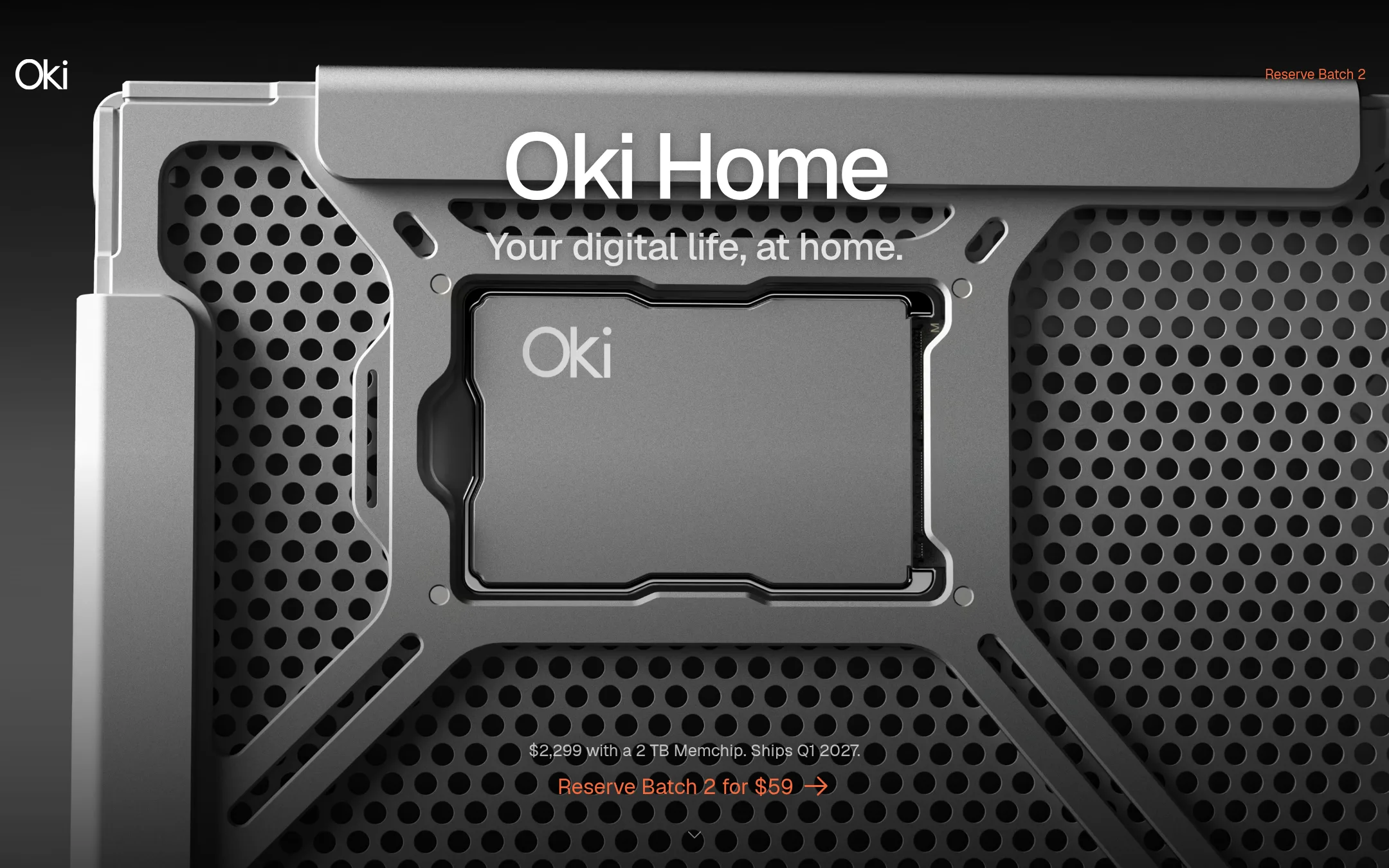
Oki Home is a personal AI computer that stores your photos, messages, and files on hardware you own, with a 27B-parameter model that runs locally around the clock. It can find moments by who, where, or when, and its Oki Desk feature can browse sites and work through multi-step tasks using your own notes and files. It is a credible pick because the model runs on the device itself, so your questions and data stay at home and there is no cloud subscription.
Where it is strong
- The model runs on the device, so questions and data stay at home with no cloud subscription
- Storage is on a swappable Memchip that can be configured from 2 TB up to 16 TB
- Software and model updates only install with your approval
Where it falls short
- Ships in Q1 2027, so it cannot be used yet
- Hardware is a home appliance, which does not suit teams wanting a hosted automation service
- Pricing:
- Pricing is not published on the site.
How to choose AI Automation Platforms
Start with the pricing structure. Some vendors publish plans, while others charge per seat, per project or by quote. Tracecat lists a free open source version and a $50,000 per year Team plan, but notes that agent computers and executions above 150k per month are separate. Ask for every add-on before you compare totals.
Check who the product is built for. Inkeep and Proxis serve mixed teams with both developers and non-technical staff, while BotCity focuses on IT and governance teams. Maive is limited to home services sales, and Zensors targets large physical facilities. A narrow product can be the right choice if it matches your work closely.
Look at integrations and data handling. Proxis connects agents to systems of record and limits them to each employee's permissions. Tracecat can be self-hosted in your own VPC or on-premises, and logs every prompt and tool call. If your data must stay in your environment, confirm where the product runs before you buy.
Review oversight and audit features. Tracecat has human approval gates and open source audit logs. BotCity keeps audit trails of who ran which script and what data it accessed. Inkeep lets staff approve agent suggestions before they go out.
Finally, ask about support and contract terms. Several listings on this page do not publish prices or integration lists, so a demo or quote is the only way to confirm costs and fit. Get those details in writing before you sign.
FAQ
Questions about AI Automation Platforms
What is an AI automation platform?
An AI automation platform lets a business build and run AI agents that carry out tasks such as triaging alerts, answering customers, or updating a CRM. It connects an AI model to company data and tools so the agent can take action. Most include ways to review and log what the agent does.
Which AI automation platform is best for security teams?
Tracecat is built for security and IT teams that want to replace legacy SOAR tools. It is open source, can be self-hosted in your own VPC or on-premises, and logs every prompt, tool call and decision. BotCity is a better fit if the main concern is controlling Python scripts and AI-generated code on endpoints.
How much do AI automation platforms cost?
Costs vary widely. Tracecat lists a free open source version and a Team plan at $50,000 per year, with extra charges for agent computers and high execution volumes. Several other products, including Inkeep, Proxis and Maive, do not publish prices and require a sales conversation.
Can non-technical staff use AI automation platforms?
Yes, some products are designed for mixed teams. Inkeep offers a no-code visual builder that syncs with a TypeScript SDK, so developers and business users can work on the same agents. Proxis also helps non-technical employees adopt AI tools and manage their use.
How do I keep company data safe with an AI automation platform?
Check where the platform runs and who can see what. Tracecat can be self-hosted in your own environment and includes audit logs, while Proxis limits each agent to the permissions of the employee using it. BotCity provides audit trails showing which data was accessed and by whom.
Last updated November 8, 2026.