7 Best AI Operating Systems in 2026
Updated November 8, 2026
The short answer
The strongest AI operating systems on this list are Per Diem for restaurants, cafes and bakeries already on Square that want their own ordering app, Layerup for insurance carriers and lenders that need claims, underwriting or collections automated inside existing systems, and HappyRobot for logistics and operations teams running complex, communication-heavy workflows at enterprise scale. Each one is built for a specific industry, so the right choice depends mostly on which sector you operate in.
The shortlist, at a glance
Read the comparisons ↓ Per DiemFrom $99/moCoffee shops, restaurants, and bakeries already on Square that want their own ordering app instead of relying on third-party delivery platforms
 LayerupNot publishedInsurance carriers, TPAs, and lenders that want to automate claims, underwriting, or collections workflows end to end without replacing their current systems.
 HappyRobotNot publishedLogistics, supply chain, and operations teams that run complex, communication-heavy workflows at enterprise scale.
 ScritchNot publishedVeterinary practices that lose calls to voicemail or after hours and want a receptionist that works inside their practice management system.
 Sandra AINot publishedCar dealerships, especially multi-brand groups, that lose leads when phones go unanswered after hours and want AI coverage across calls, SMS, WhatsApp, and chat.
 EffiGovNot publishedLocal governments such as cities, counties, and special districts that want 24/7 phone answering across several departments without growing the front desk
 burntNot publishedFood distributors that handle sales orders, purchasing and collections across several warehouses or regions and want to cut manual admin work.
About AI Operating Systems
AI operating systems are software platforms that run AI agents on business workflows. Instead of answering a single question, the agents handle recurring work such as taking orders, processing claims, answering calls, or coordinating with suppliers, and they often connect to the systems a business already uses.
The products on this list differ mainly in the industry they serve and how they are priced. Per Diem is built for one point of sale system and publishes its plan prices. Layerup, HappyRobot, Scritch, Sandra AI, EffiGov and burnt are built for specific sectors such as insurance, logistics, veterinary care, car dealerships, local government and food distribution, and none of them publish pricing on their sites.
The 7 best AI Operating Systems, compared
- From $99/mo
1.Per Diem
Best for: Coffee shops, restaurants, and bakeries already on Square that want their own ordering app instead of relying on third-party delivery platforms
- Pricing
- From $99/mo
- Category
- AI & Machine Learning
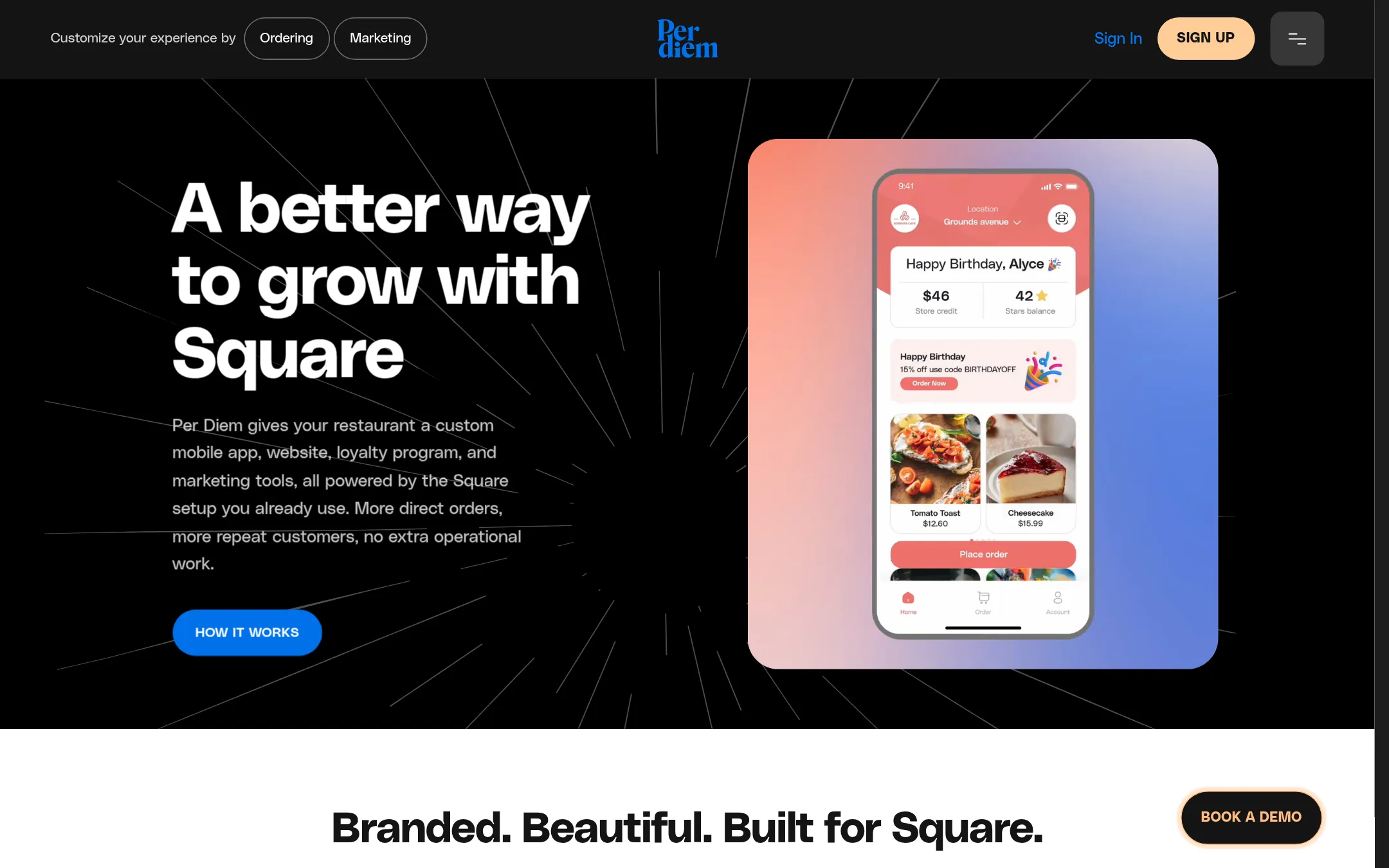
Per Diem builds a branded mobile app, web ordering, and loyalty program for restaurants, cafes, and bakeries that run on Square. Orders go straight into the Square POS, so staff do not copy orders or run a second tool. Customers can pay with Apple Pay or store credit in a few taps.
Where it is strong
- Orders sync directly into Square POS with no manual entry
- Custom app set up in about 24 hours with menus and images imported automatically
- Built-in loyalty with Square Loyalty support, streaks, and birthday perks
Where it falls short
- Built specifically for Square, so it does not suit businesses on other point of sale systems
- Marketing CRM and loyalty usage limits apply, and the top tier adds premium support at a higher price
- Pricing:
- Plans start at $99 per month and include iOS and Android apps, web and QR ordering, and delivery and catering, with higher tiers adding a Marketing CRM, Per Diem Loyalty, and premium support. Email is $1 per 1,000 emails and SMS credits start at $50 for 1,000.
- Not published
2.Layerup
Best for: Insurance carriers, TPAs, and lenders that want to automate claims, underwriting, or collections workflows end to end without replacing their current systems.
- Pricing
- Not published
- Category
- AI & Machine Learning
Layerup deploys AI agents that run in the background inside a company's existing systems and carry workflows like claims, underwriting, lending, and collections through to completion. It targets insurance and financial services specifically, with lines of business such as auto, property, workers' comp, and consumer lending broken out on the site. The agents are built to complete the work rather than just suggest next steps, and the platform includes audit logs and approval controls.
Where it is strong
- Agents run inside existing systems, so there is no rip-and-replace
- Covers many insurance and lending lines, from auto claims to mortgage servicing
- Includes audit logs, reasoning visibility, and approval controls for governance
Where it falls short
- Pricing is not published, so cost has to come from a sales conversation
- Built for insurance and financial services, so it is a poor fit for other industries
- Pricing:
- Pricing is not published on the site.
- Not published
3.HappyRobot
Best for: Logistics, supply chain, and operations teams that run complex, communication-heavy workflows at enterprise scale.
- Pricing
- Not published
- Category
- AI & Machine Learning
HappyRobot builds autonomous AI agents that handle communication-heavy operations work, such as coordinating with carriers, vendors, and customers. Agents are tested end-to-end before going live and audited in production. Context captured by one agent carries over to the others, so the system improves across the whole operation.
Where it is strong
- Agents are tested end-to-end before deployment and audited once live
- Shared context means a fix or learning in one agent improves every agent
- The platform is custom-built and integrates with your existing systems and ways of working
Where it falls short
- Pricing is not published, so you will need to talk to sales to compare costs
- Built for enterprise operations, so it is a poor fit for small teams with simple, low-volume workflows
- Pricing:
- Pricing is not published on the site.
- Not published
4.Scritch
Best for: Veterinary practices that lose calls to voicemail or after hours and want a receptionist that works inside their practice management system.
- Pricing
- Not published
- Category
- AI & Machine Learning
Scritch is an AI receptionist built only for veterinary practices. It answers client calls around the clock, books, moves and cancels appointments in the practice's own management software, and recognizes callers by phone number. Its main claim to credibility is that it works inside existing systems rather than sitting beside them, and one practice quoted in the site's testimonials reports that calls to the human team fell by more than 50%.
Where it is strong
- Built only for veterinary practices, with triage for sick pets and state-specific medical records rules
- Connects to the practice's phone system and practice management software and recognizes clients by phone number
- Fills open slots from after-hours cancellations and leaves tasks for front desk staff on prescription requests
Where it falls short
- Pricing is not published, so you will need to contact the team to compare costs
- It only fits veterinary practices, so it is not a general operating system for other businesses
- Pricing:
- Pricing is not published on the site.
- Not published
5.Sandra AI
Best for: Car dealerships, especially multi-brand groups, that lose leads when phones go unanswered after hours and want AI coverage across calls, SMS, WhatsApp, and chat.
- Pricing
- Not published
- Category
- Other
Sandra AI builds AI employees for car dealerships that answer calls, texts, and website chat around the clock. Its agent connects to the dealership's DMS and CRM, so replies draw on real data and appointments get booked directly in the scheduling tool. For a dealer group, that means every inbound lead gets a response, with a single dashboard to track conversations and KPIs.
Where it is strong
- Answers every incoming call 24/7 and routes leads to the right team
- Connects to DMS and CRM so replies stay accurate to dealership data
- Real-time tracking of calls, texts, and chats with KPI reporting
Where it falls short
- Built only for car dealerships, so it is a poor fit for other industries
- No public pricing, so you need a sales conversation to know the cost
- Pricing:
- Pricing is not published on the site.
- Not published
6.EffiGov
Best for: Local governments such as cities, counties, and special districts that want 24/7 phone answering across several departments without growing the front desk
- Pricing
- Not published
- Category
- AI & Machine Learning
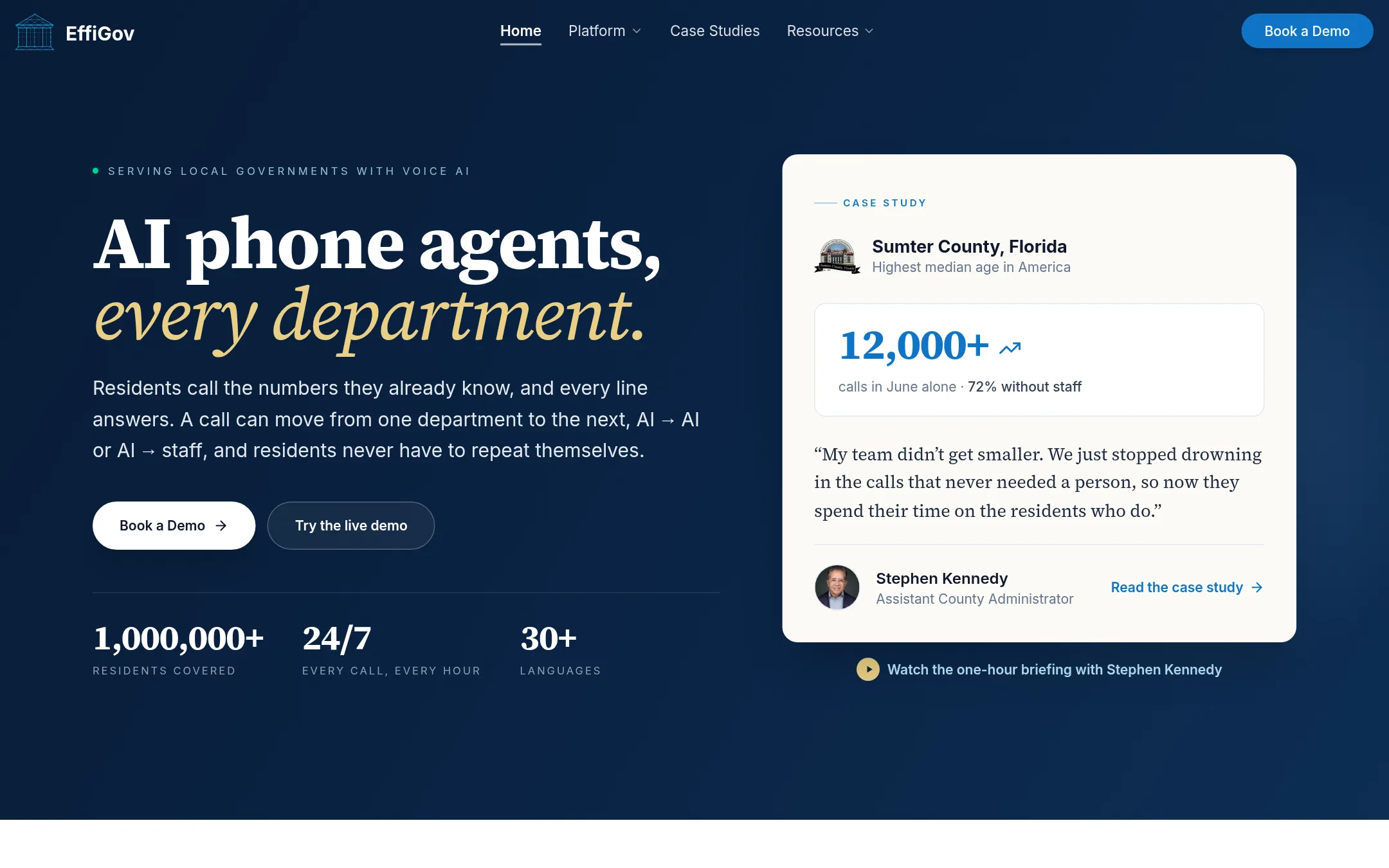
EffiGov runs a separate AI phone agent for each city or county department, and calls can pass between departments without the resident repeating themselves. Staff can step into a call mid-conversation, and every call is audited at hang-up. Sumter County, FL reports handling more than 12,000 calls a month through it, with 72% resolved without staff.
Where it is strong
- Each department gets its own agent, and context carries through handoffs between AI and staff
- Answers in 30+ languages at any hour, with emergencies dispatched to on-call crews
- Files directly into municipal systems of record and works with any phone system
Where it falls short
- Built for local government, so it is not a fit for private businesses outside that sector
- No public pricing, so budgeting requires a sales conversation
- Pricing:
- Pricing is not published on the site.
- Not published
7.burnt
Best for: Food distributors that handle sales orders, purchasing and collections across several warehouses or regions and want to cut manual admin work.
- Pricing
- Not published
- Category
- Other
Burnt is an agentic operating system for food distribution, with separate AI agents for sales and operations, procurement, and credit control that coordinate with each other. It has a conversational layer called Ozai and runs across warehouses and distribution centers from one platform. The team builds from direct experience, with the founder having worked in seafood distribution, spice trading and restaurant supply.
Where it is strong
- Agents for sales, procurement and credit control work together rather than as isolated tools
- Starts with one agent before moving to the full platform
- White-glove onboarding with the team working on-site to configure agents
Where it falls short
- Built specifically for food distribution, so it is a poor fit for other industries
- No pricing is listed, so buyers must request a quote to compare costs
- Pricing:
- Pricing is not published on the site.
How to choose AI Operating Systems
Start with pricing structure. Some products publish a monthly plan with usage limits, such as Per Diem with its per-email and per-SMS charges. Others, including Layerup, HappyRobot, Scritch, Sandra AI, EffiGov and burnt, keep prices off their sites, so you will need a sales conversation before you can compare costs.
Check who the product is built for. Scritch serves only veterinary practices, Sandra AI only car dealerships, EffiGov only local government, and burnt only food distribution. A product that is strong in one sector may not suit a business in another, even when the underlying idea is similar.
Confirm integrations before you commit. Per Diem works with Square POS, Scritch connects to a practice's phone system and practice management software, and Sandra AI connects to a dealership's DMS and CRM. Layerup and HappyRobot are described as working with existing systems, so ask which of your tools they support.
Look at data handling and oversight. Layerup includes audit logs and approval controls, HappyRobot audits its agents in production, and EffiGov audits every call at hang-up. For regulated work such as insurance claims, medical records or public services, ask how each product records what its agents did and who can review it.
Finally, ask about support and contract terms. Per Diem offers premium support on its top tier and onboarding that takes about 24 hours for a custom app, while burnt provides white-glove onboarding with its team on-site. Get the terms in writing before you sign.
FAQ
Questions about AI Operating Systems
What is an AI operating system?
An AI operating system is a platform that runs AI agents on recurring business workflows. The agents take on tasks such as answering calls, processing orders, or handling claims, often by connecting to systems the business already uses.
Which AI operating system is best for restaurants?
Per Diem suits coffee shops, restaurants and bakeries already on Square that want their own branded ordering app. Its plans start at $99 per month and orders sync directly into the Square POS.
How much do AI operating systems cost?
Pricing varies widely. Per Diem publishes plans starting at $99 per month, while Layerup, HappyRobot, Scritch, Sandra AI, EffiGov and burnt do not publish pricing and require a sales conversation to get a quote.
Can an AI operating system work with my existing software?
Several products on this list are designed to connect to existing tools. Per Diem works with Square POS, Scritch connects to practice management software, Sandra AI connects to a dealership's DMS and CRM, and Layerup runs agents inside existing systems.
Are AI operating systems suitable for regulated industries?
Some are built with oversight in mind. Layerup includes audit logs and approval controls, HappyRobot audits agents in production, and EffiGov audits every call. Buyers in regulated sectors should still confirm how each product records agent activity before signing.
Last updated November 8, 2026.