7 Best Clinical Decision Support Systems in 2026
Updated November 7, 2026
The short answer
The strongest picks in this category of clinical decision support systems are Elsevier's ClinicalKey AI, Zynx Health, and Glass Health. ClinicalKey AI suits hospitals and clinicians who want AI answers tied to published clinical guidance. Zynx Health suits hospitals and health systems that need standardized order sets and care plans updated inside their EHR, especially MEDITECH users. Glass Health suits clinics and health systems that want decision support and ambient scribing connected to their existing EHR.
The shortlist, at a glance
Read the comparisons ↓ Wolters KluwerNot publishedHospitals, health systems and clinical teams that want evidence-based decision support content at the point of care.
 ElsevierNot publishedHospitals, health systems and clinicians who want AI answers tied to published clinical guidance and evidence.
 Zynx HealthNot publishedHospitals and health systems that need standardized order sets and care plans updated inside their EHR, especially teams using MEDITECH.
 InVision Medical TechnologyNot publishedHospital cardiology departments and health systems that run high echo volumes and want FDA-cleared AI that fits their existing scanners and PACS.
 Glass HealthFree to $200/moClinics and health systems that want decision support and ambient scribing tied to their existing EHR
 Andy AINot publishedHome health agencies with clinicians who spend evenings charting and want same-day notes and faster coding.
 Vera HealthNot publishedClinicians and clinical teams who need sourced, point-of-care answers to specific medical questions and want evidence quality weighed for them.
About Clinical Decision Support Systems
Clinical decision support systems are software tools that give clinicians information to help with diagnosis, treatment and documentation at the point of care. They may offer evidence-based reference content, order sets and care plans, AI-generated answers, or analysis of medical images such as echocardiograms. Some also handle note-taking and coding.
The products on this list differ in approach, scale and pricing model. Some are large content publishers whose clinical reference material forms the core of their AI answers. Others focus on order sets built into the EHR, cardiac imaging AI that runs on existing scanners, or ambient tools for home health and primary care. Pricing ranges from published monthly tiers with a free option to products where cost must be requested directly from the vendor.
The 7 best Clinical Decision Support Systems, compared
- Not published
1.Wolters Kluwer
Best for: Hospitals, health systems and clinical teams that want evidence-based decision support content at the point of care.
- Pricing
- Not published
- Category
- Healthcare
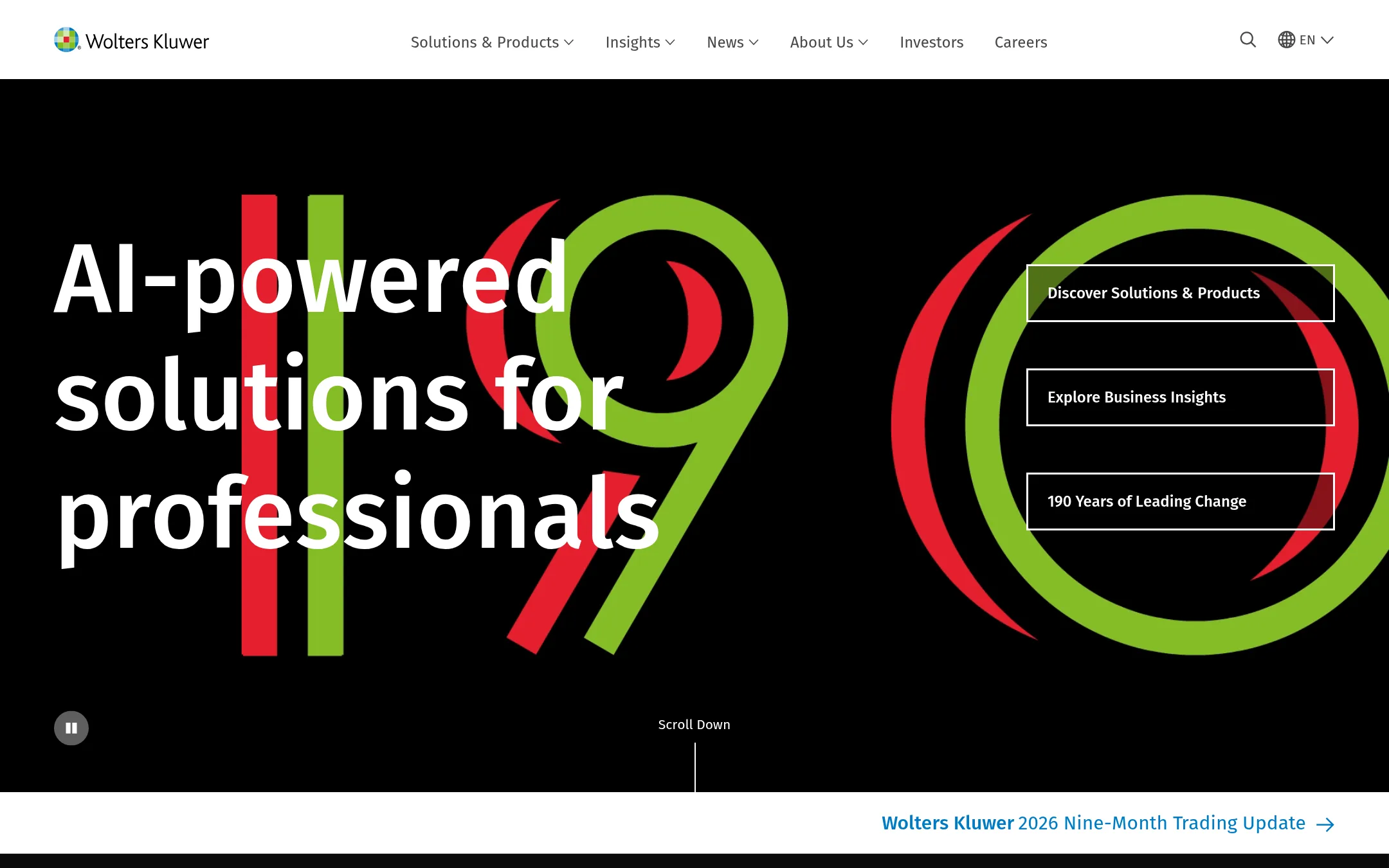
Wolters Kluwer is a large publisher and software company whose health unit offers UpToDate, a clinical decision support resource that clinicians use at the point of care. Its credibility comes from a long record of professional medical content paired with newer AI tools, which the company describes as built around accuracy and governance. Its health offerings sit alongside tax, legal and compliance products, so it is a broad vendor rather than a single-purpose tool.
Where it is strong
- UpToDate is a established clinical reference used by care teams.
- Expert AI is designed with accuracy and governance as stated priorities.
- The company is a global provider with a wide range of professional software.
Where it falls short
- Pricing is not published, so budgeting requires a sales conversation.
- Its breadth across tax, legal and ESG means it can be more than a small clinical team needs.
- Pricing:
- Pricing is not published on the site.
- Not published
2.Elsevier
Best for: Hospitals, health systems and clinicians who want AI answers tied to published clinical guidance and evidence.
- Pricing
- Not published
- Category
- Healthcare
Elsevier is a large publisher of clinical and scientific content, and its ClinicalKey AI product gives clinicians AI-generated answers grounded in its evidence-based clinical content. The homepage says ClinicalKey AI is powered by Elsevier's clinical content ecosystem, and the company says more than 5,500 healthcare institutions in over 85 countries use its solutions. That scale and content base is what makes it a credible pick for clinical decision support.
Where it is strong
- Answers draw on Elsevier's evidence-based clinical content rather than general web sources
- Widely used, with the company citing more than 5,500 healthcare institutions in over 85 countries
- Shares a content base with other Elsevier health tools such as Sherpath AI and Complete Anatomy
Where it falls short
- Pricing is not published, so budgeting requires a sales conversation
- Its clinical content is most useful to teams that already work within the Elsevier ecosystem, and the site does not detail smaller-team plan
- Pricing:
- Pricing is not published on the site.
- Not published
3.Zynx Health
Best for: Hospitals and health systems that need standardized order sets and care plans updated inside their EHR, especially teams using MEDITECH.
- Pricing
- Not published
- Category
- Healthcare
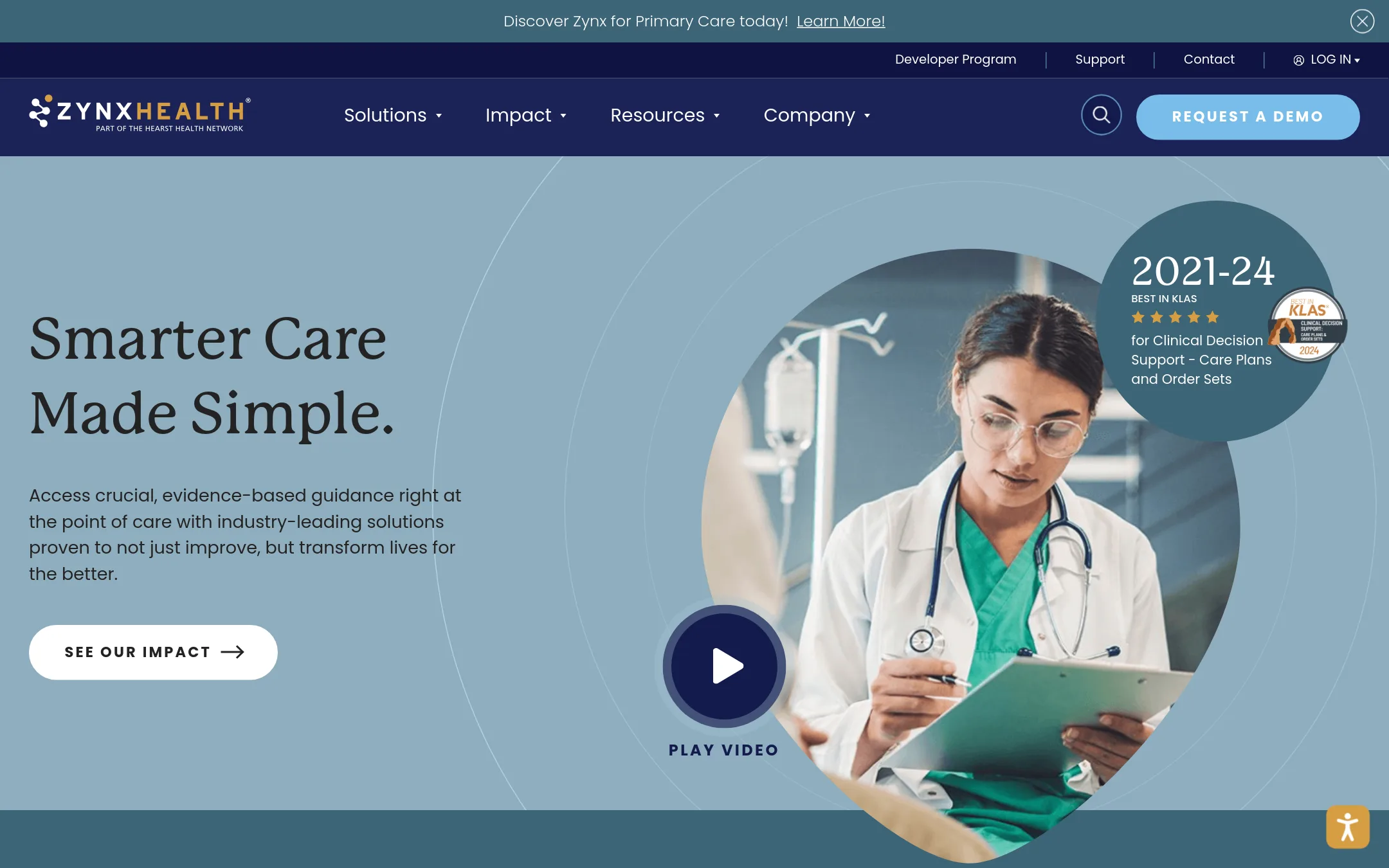
Zynx Health builds evidence-based order sets and care plans that clinical teams load into the EHR at the point of care. The company says it has worked with more than 1,500 US hospitals and has been in the field since 1996, which is a long track record for this category. Its Knowledge Analyzer tool automates updating order set content, and one Goshen Health case study reports about 625 hours saved per update cycle.
Where it is strong
- Content is written by in-house clinical experts who analyze current research and best practices.
- Knowledge Analyzer automates updates to order set content within the EHR, which the Goshen Health case study links to large time savings.
- Upgrades to the utilities are handled automatically, according to a KLAS survey participant, so local installs are not needed.
Where it falls short
- Pricing is not published, so you will need to request a demo or quote to compare costs.
- The site focuses on hospital and primary care settings, so it is a weaker fit for small outpatient practices without an EHR integration team
- Pricing:
- Pricing is not published on the site.
- Not published
4.InVision Medical Technology
Best for: Hospital cardiology departments and health systems that run high echo volumes and want FDA-cleared AI that fits their existing scanners and PACS.
- Pricing
- Not published
- Category
- Healthcare
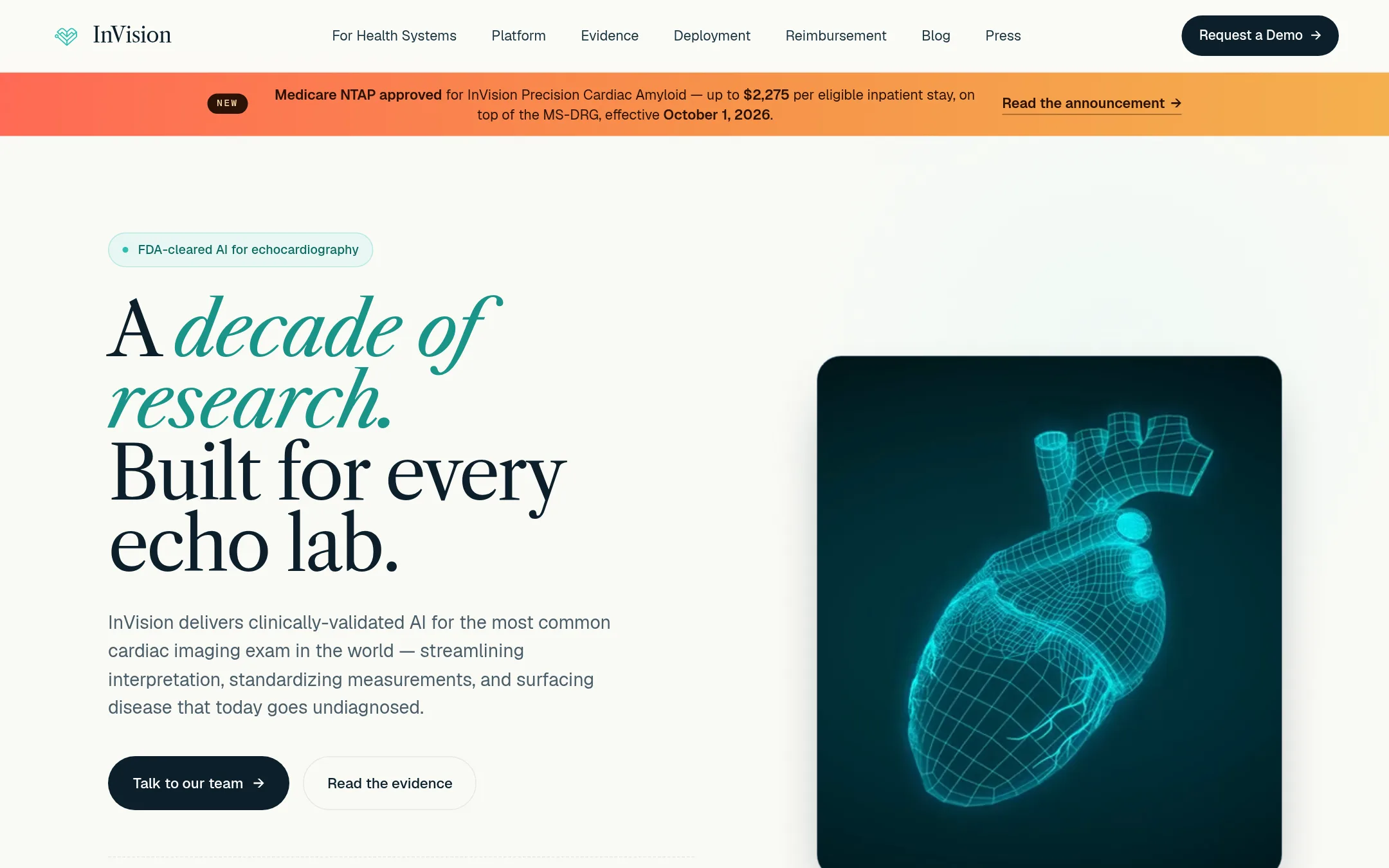
InVision Medical Technology provides FDA-cleared AI for echocardiography, with Precision LVEF and Precision Cardiac Amyloid both holding 510(k) clearance. It reads standard DICOM echo studies from GE, Philips, Siemens, Canon and handheld POCUS, so it works with existing scanners and PACS. The LVEF product is the only AI-echo tool the site says has undergone a blinded, randomized prospective trial, published in Nature.
Where it is strong
- Works with standard DICOM from major scanner brands, with no new hardware or acquisition changes
- Can run on-premise, so patient data never has to leave your network
- Deployment typically takes about four weeks from kick-off to go-live
Where it falls short
- Pricing is not published, so you will need a sales conversation to compare costs
- Aortic valve analysis is still in development, and the wider roadmap items are not yet cleared
- Pricing:
- Pricing is not published on the site.
- Free to $200/mo
5.Glass Health
Best for: Clinics and health systems that want decision support and ambient scribing tied to their existing EHR

- Pricing
- Free to $200/mo
- Category
- Healthcare
Glass Health offers clinical decision support and ambient scribing for clinicians, with its AI grounded in leading medical evidence to help with diagnosis and documentation. It is a credible pick because it covers both decision support and note-taking in one product, and its Max plan connects to Epic, Athena, eCW and Elation.
Where it is strong
- Ambient scribing and clinical decision support sit in one product
- Max plan offers EHR integration with Epic, Athena, eCW and Elation
- Free Lite tier lets students and trainees try it before paying
Where it falls short
- Lite plan carries ad sponsorships and has limited usage
- EHR integration is only listed on the $200 per month Max plan, so smaller practices may not reach it at a lower tier
- Pricing:
- Pricing is published in four tiers: Lite is free and ad-sponsored, Starter is $20, Pro is $90, and Max is $200 per month.
- Not published
6.Andy AI
Best for: Home health agencies with clinicians who spend evenings charting and want same-day notes and faster coding.
- Pricing
- Not published
- Category
- Healthcare
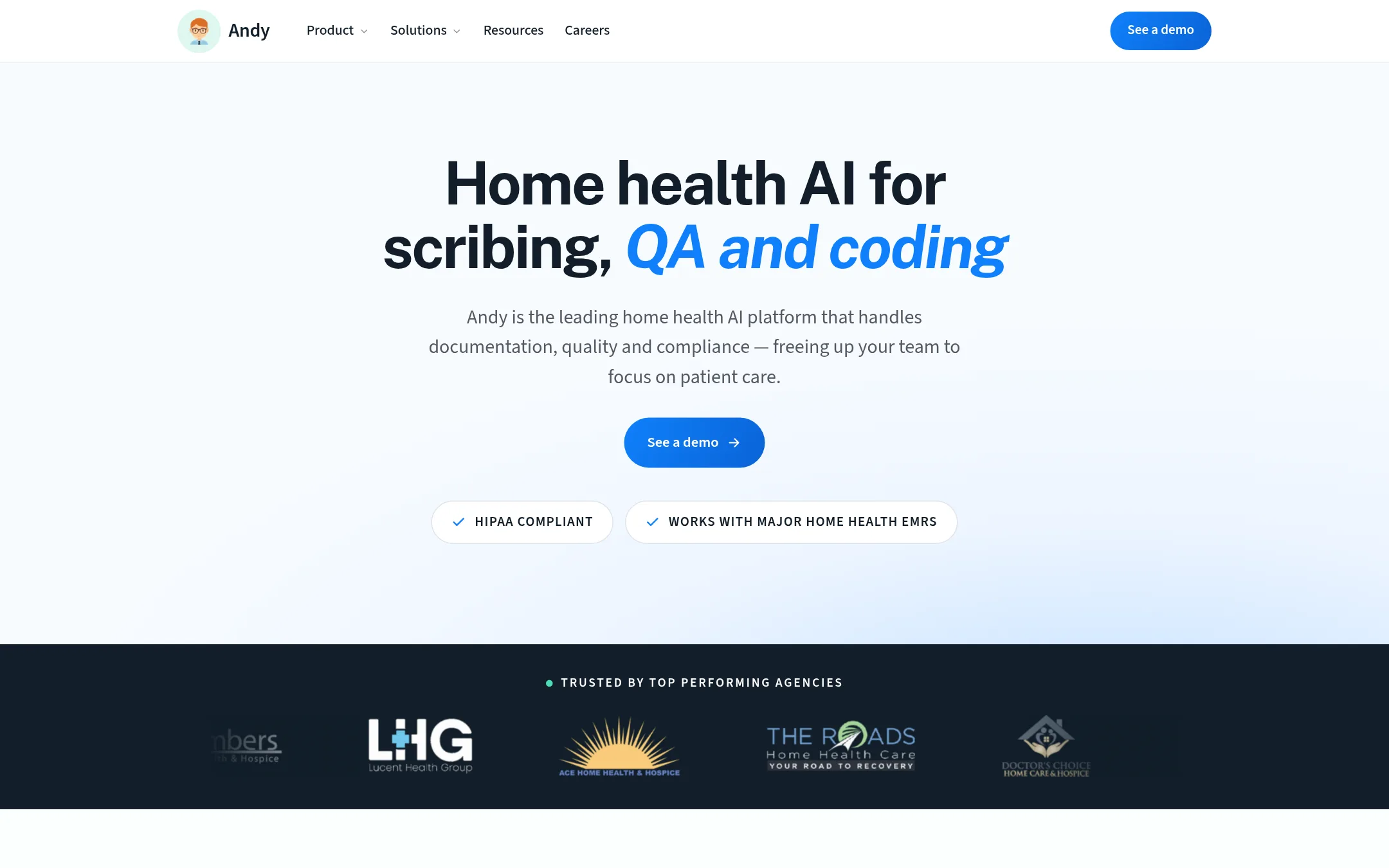
Andy records a home health visit with one tap and drafts the clinical note, including narrative, meds, vitals and OASIS items. Its built-in QA checks each visit against the patient's H&P and prior visits, and coding is AI-drafted and then reviewed by human home health coders. The site reports same-day notes and coding within 48 hours.
Where it is strong
- One-button visit recording that drafts the note, meds and vitals
- QA cross-checks each visit against the patient's history before the chart is finalized
- Coding is AI-drafted and reviewed by human home health coders
Where it falls short
- Pricing is not published, so you need to book a call to compare costs
- The site's results figures come from agencies using Andy and are not independently verified
- Pricing:
- Pricing is not published on the site.
- Not published
7.Vera Health
Best for: Clinicians and clinical teams who need sourced, point-of-care answers to specific medical questions and want evidence quality weighed for them.
- Pricing
- Not published
- Category
- Healthcare
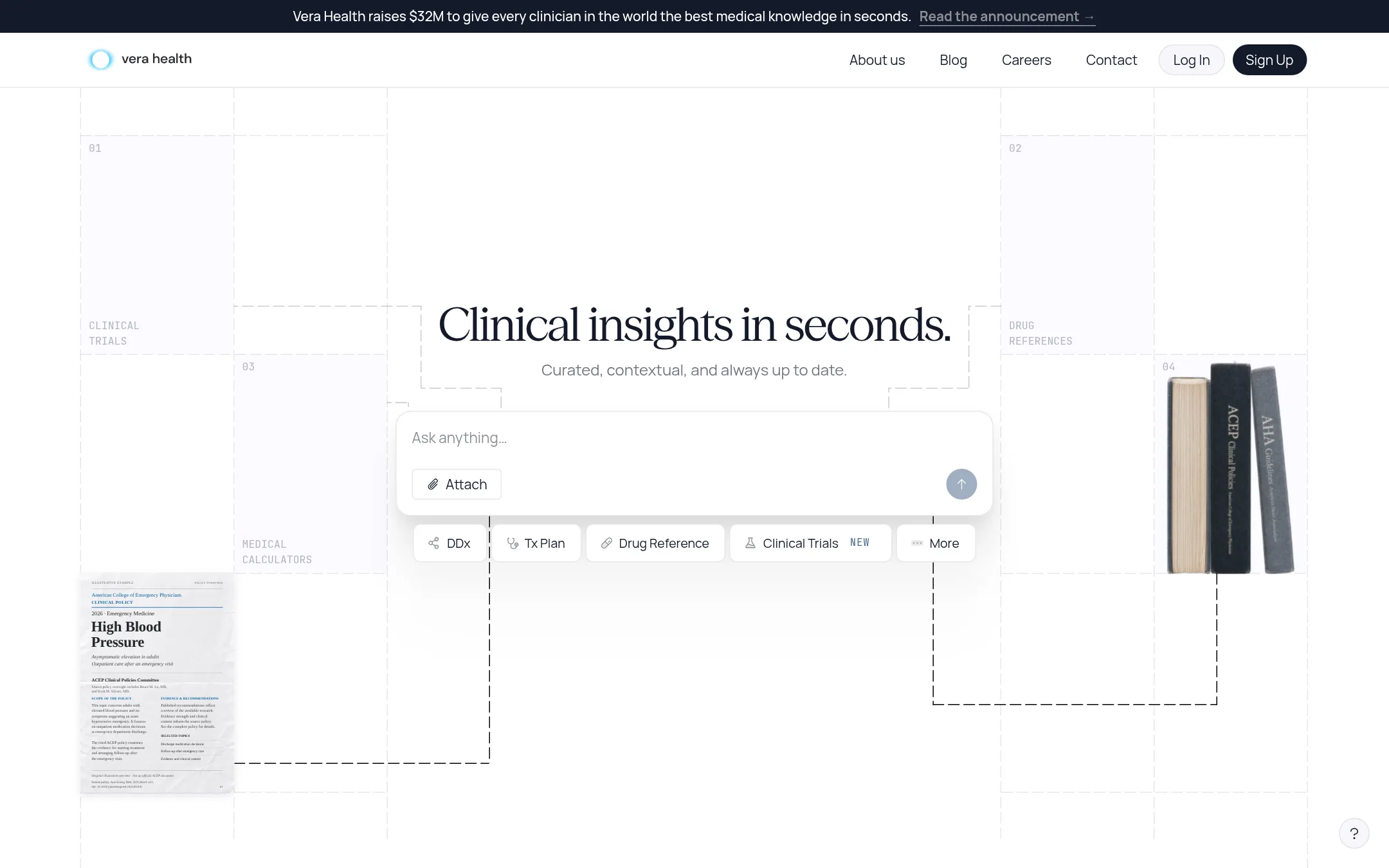
Vera Health searches over 60 million curated peer-reviewed papers, guidelines, drug references, trials, and protocols, then ranks sources by study type, recency, and authority before building an answer. It adapts each response to specialty, patient context, and local guidance. It is an official AI partner of the American College of Emergency Physicians and says more than 800,000 clinicians in 190 countries use it.
Where it is strong
- Searches over 60 million curated medical sources for each question
- Ranks sources by study type, recency, and authority, not just relevance
- Lists compliance with HIPAA, GDPR, SOC 2, and NIST AI RMF
Where it falls short
- Pricing details are not published, so cost has to be confirmed directly with the vendor
- The site does not list the EHR or other tool integrations, so workflow fit needs checking
- Pricing:
- Pricing is not published on the site.
How to choose Clinical Decision Support Systems
Pricing structure varies widely in this category. Several products publish no prices, so you will need a sales conversation or quote to compare costs. Where pricing is published, tiers can differ by features, such as Glass Health's free Lite plan with ads and its paid tiers from $20 to $200 per month.
Decide who the tool is built for before you compare features. Hospital-scale products like Zynx Health and InVision Medical Technology are designed around health systems and departments, while Andy AI is built for home health agencies and Glass Health spans clinics and health systems.
Check integrations early. Zynx Health's content loads directly into the EHR, and Glass Health's EHR connection to Epic, Athena, eCW and Elation is only listed on its top tier. InVision reads standard DICOM echo studies from major scanner brands, so it works with existing equipment and PACS.
Consider data handling and compliance. InVision can run on-premise so patient data stays on your network, and Vera Health lists HIPAA, GDPR, SOC 2 and NIST AI RMF compliance. Verify these claims against the vendor's contract and security documentation before you buy.
Finally, review support and contract terms with the vendor. Ask about implementation time, update processes and what happens when clinical content changes. InVision reports deployment typically takes about four weeks from kick-off to go-live, which is useful for planning.
FAQ
Questions about Clinical Decision Support Systems
What is a clinical decision support system?
A clinical decision support system gives clinicians information to support diagnosis, treatment and documentation at the point of care. Products on this list take several forms, including evidence-based reference content, order sets, AI answers and imaging analysis.
How much do clinical decision support systems cost?
Pricing varies and many vendors do not publish it. Glass Health lists four monthly tiers from free to $200 per month, while Zynx Health, Elsevier, Andy AI and others require a demo or quote to compare costs.
Which tool is best for a hospital?
Zynx Health suits hospitals that need standardized order sets and care plans updated inside the EHR, especially MEDITECH users. InVision Medical Technology suits hospital cardiology departments with high echo volumes that want FDA-cleared AI on existing scanners and PACS.
Do these tools integrate with electronic health records?
Integration varies by product. Zynx Health loads order sets into the EHR, and Glass Health connects to Epic, Athena, eCW and Elation on its top plan. Vera Health does not list its EHR or tool integrations, so you should check workflow fit directly.
How do I know if a clinical decision support system is secure and compliant?
Check the vendor's compliance claims and documentation before buying. Vera Health lists HIPAA, GDPR, SOC 2 and NIST AI RMF compliance, and InVision can run on-premise so patient data stays on your network. Confirm these details in the contract and security review.
Last updated November 7, 2026.