6 Best ERP Software in 2026
Updated October 30, 2026
The short answer
For most growing businesses, Sage Business Cloud is the strongest all-around ERP, covering accounting, HR, and payroll with multi-entity support. If you run a factory, Tiny is built specifically for manufacturing sales, procurement, and production. For food wholesalers, Stockline automates order entry from calls, texts, and WhatsApp, making it the best fit for that niche.
The shortlist, at a glance
Read the comparisons ↓ Sage Business CloudNot publishedMidsize teams that need multi-entity accounting, real-time visibility, and industry-specific ERP features like construction or nonprofit support.
 Rose RocketNot publishedTrucking companies, freight brokers, and 3PLs that need a customizable ERP with automation and real-time visibility.
 RecurrencyNot publishedDistributors that want to automate inventory decisions in their existing ERP without a long implementation.
 Epsilon3Not publishedTeams running complex hardware programs in aerospace, defense, or manufacturing that need audit-ready traceability and secure deployment options.
TinyNot publishedManufacturing teams that want to automate sales, procurement, and production processes in one platform.
 StocklineNot publishedFood wholesalers who get orders by phone, text, or WhatsApp and want to cut manual order entry.
About ERP Software
ERP software, or enterprise resource planning, is a system that ties together core business operations like accounting, inventory, procurement, and production into one platform. It replaces disconnected spreadsheets and separate tools with a single source of truth, so teams can see real-time data and automate repetitive tasks.
The products on this list differ in approach and scale. Some, like Sage Business Cloud, are broad platforms for midsize teams across many industries. Others, like Tiny and Stockline, are built for specific sectors such as manufacturing or food wholesale. Some, like Recurrency, layer AI on top of your existing ERP rather than replacing it. Pricing models vary, with most requiring you to contact sales for a quote.
The 6 best ERP Software, compared
- Not published
1.Sage Business Cloud
Best for: Midsize teams that need multi-entity accounting, real-time visibility, and industry-specific ERP features like construction or nonprofit support.
- Pricing
- Not published
- Category
- Finance & Accounting
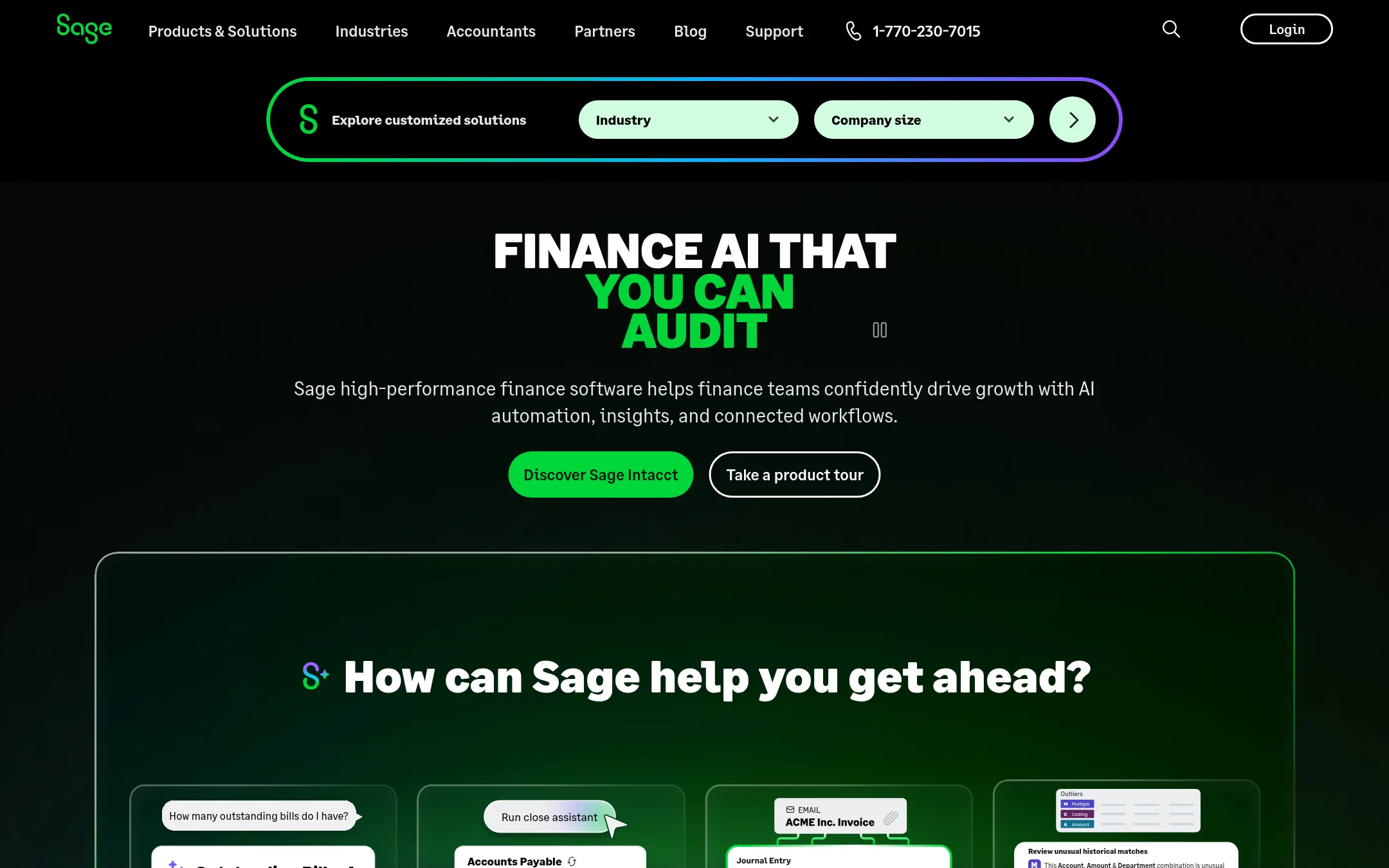
Sage Business Cloud covers accounting, ERP, HR, and payroll for growing businesses. It is a credible pick because it automates up to 90% of manual tasks and is trusted by over 30,000 scaling teams. The platform includes finance AI agents that can answer data questions and flag unusual journal entries.
Where it is strong
- Automates up to 90% of manual finance tasks
- Built-in audit trails and controls
- Industry-specific solutions for construction, healthcare, and more
Where it falls short
- Pricing is not transparent on the site
- May be more than small startups need if they only require basic accounting
- Pricing:
- Pricing is not published on the site.
- Not published
2.Rose Rocket
Best for: Trucking companies, freight brokers, and 3PLs that need a customizable ERP with automation and real-time visibility.

- Pricing
- Not published
- Category
- Productivity & Project Management
Rose Rocket is an AI-native transportation platform for freight brokers, carriers, and 3PLs. It covers dispatch, tendering, invoicing, and other core workflows in one configurable system. Its no-code workflow builder and AI agents that automate repetitive tasks make it a credible pick for trucking companies that want to adapt the software to their own processes.
Where it is strong
- No-code workflow builder lets you customize processes without IT
- AI agents automate repetitive tasks like order entry and route optimization
- Real-time visibility with a live map and custom fields
Where it falls short
- Pricing is not transparent, requires contacting sales
- May be overkill for small operations that only need basic dispatch
- Pricing:
- Pricing is not published on the site.
- Not published
3.Recurrency
Best for: Distributors that want to automate inventory decisions in their existing ERP without a long implementation.

- Pricing
- Not published
- Category
- Finance & Accounting
Recurrency layers AI on top of the ERP you already run, recalculating every SKU nightly and surfacing only the items that need human review. It adapts replenishment levels to real demand and codifies your purchasing logic with customizable rules. Integration takes 30 minutes or less for supported ERP systems.
Where it is strong
- Nightly AI recalculation of every SKU
- Surfaces only exceptions needing human review
- Customizable purchasing rules with 20+ templates
Where it falls short
- Pricing details are not listed on the site
- Requires a supported ERP system for integration
- Pricing:
- Pricing is not published on the site.
- Not published
4.Epsilon3
Best for: Teams running complex hardware programs in aerospace, defense, or manufacturing that need audit-ready traceability and secure deployment options.

- Pricing
- Not published
- Category
- AI & Machine Learning
Epsilon3 is a US-based platform for planning and tracking complex hardware operations across build, test, and sustainment. It replaces paper checklists and scattered spreadsheets with a single connected record for procedures, runs, and deviations. Its AI features propose schedule changes or flag inconsistencies, but nothing applies itself without human approval, and it holds FedRAMP High, SOC 2 Type II, and ITAR compliance.
Where it is strong
- FedRAMP High, SOC 2 Type II, ITAR, and on-prem deployment
- AI answers cited to exact steps, with human approval for changes
- Single platform for procedures, test, and operations
Where it falls short
- Pricing not published, requires contact for quote
- May be overkill for small teams not needing compliance
- Pricing:
- Basic plan for teams up to 50 users, Pro and Enterprise tiers available on annual billing. Pricing details are not published on the site.
- Not published
5.Tiny
Best for: Manufacturing teams that want to automate sales, procurement, and production processes in one platform.

- Pricing
- Not published
- Category
- Productivity & Project Management
Tiny is an agentic ERP system built specifically for factories. It combines sales, procurement, and production into one platform, so manufacturing teams can reduce costs and automate repetitive tasks. The focus on factory operations and agentic automation makes it a credible pick for manufacturers looking to modernize back-office workflows.
Where it is strong
- Built specifically for factories, not generic businesses
- Combines sales, procurement, and production in one place
- Agentic automation handles tedious tasks
Where it falls short
- Pricing is not listed, so you must request a demo
- Aimed at factories, so it may not suit non-manufacturing teams
- Pricing:
- Pricing is not published on the site.
- Not published
6.Stockline
Best for: Food wholesalers who get orders by phone, text, or WhatsApp and want to cut manual order entry.

- Pricing
- Not published
- Category
- E-commerce
Stockline is an AI-native ERP for food wholesalers. It reads orders from WhatsApp, email, phone calls, and text messages, then enters them directly into your ERP. The system learns each customer's habits and can handle messy requests like photos or vague phrases, which makes it a credible pick for food distributors.
Where it is strong
- Automates order entry from calls, texts, WhatsApp, and email
- Handles vague requests like photos or 'the usual'
- Forecasts demand and suggests purchases
Where it falls short
- Pricing is not listed, so budgeting is unclear
- Built specifically for food supply chain, not general ERP use
- Pricing:
- Pricing is not published on the site.
How to choose ERP Software
Pricing structure matters. Most entries do not publish pricing, so you must request a demo or quote. That makes it hard to compare costs upfront. Consider whether the software charges per user, per module, or per transaction, and whether annual billing is required, as with Epsilon3's Pro and Enterprise tiers.
Who the software is built for is critical. Generic ERPs like Sage Business Cloud serve many industries, but specialized tools like Tiny for factories or Stockline for food wholesalers offer workflows that match your operations out of the box. If you are in a niche, a specialized system may save you from heavy customization.
Integrations determine how easily the software fits your existing stack. Recurrency requires a supported ERP system to integrate with, while Stockline reads orders from WhatsApp, email, and phone calls. Check whether the software connects to your current tools, such as accounting platforms, CRMs, or e-commerce systems, before committing.
Data and compliance are non-negotiable for some industries. Epsilon3 holds FedRAMP High, SOC 2 Type II, and ITAR certifications, which are essential for aerospace and defense. Sage Business Cloud includes built-in audit trails and controls. If you handle sensitive data or must meet regulatory standards, verify that the ERP meets those requirements.
Support and contract terms affect your long-term experience. Some entries, like Epsilon3, offer on-prem deployment options, while others are cloud-only. Consider whether you need a long implementation or a quick setup, like Recurrency's 30-minute integration. Look for flexible contracts, clear service-level agreements, and responsive support, especially if the software is mission-critical.
FAQ
Questions about ERP Software
What does ERP software do?
ERP software centralizes core business processes like accounting, inventory, procurement, and production into one system. It replaces separate tools and spreadsheets, giving you a single source of truth. This helps teams see real-time data and automate repetitive tasks.
How much does ERP software cost?
Pricing varies widely and is often not published. Most products on this list require you to contact sales for a quote. Some, like Epsilon3, offer tiered plans with annual billing, while others may charge per user or per module.
Can I use a general ERP for a specific industry?
Yes, but it may require more customization. General ERPs like Sage Business Cloud offer industry-specific features for construction, healthcare, and nonprofits. However, specialized tools like Tiny for manufacturing or Stockline for food wholesale are built with your workflows in mind, which can save time and reduce errors.
How long does it take to implement an ERP?
Implementation time varies. Some tools, like Recurrency, integrate in 30 minutes or less if you already use a supported ERP. Others, like Epsilon3, may require longer setup due to compliance and deployment options. Always ask for a timeline during the demo.
What should I look for in terms of data security and compliance?
Check for certifications like SOC 2, FedRAMP, or ITAR if you handle sensitive data. Epsilon3 holds FedRAMP High, SOC 2 Type II, and ITAR, and offers on-prem deployment. Sage Business Cloud includes built-in audit trails. Ensure the ERP meets your industry's regulatory requirements before purchasing.
Last updated October 30, 2026.