7 Best Game Development Platforms in 2026
Updated October 21, 2026
The short answer
For game development platforms, the strongest picks are Heroic Labs for studios building scalable multiplayer backends, Hyperpad for beginners and educators creating games on iPad without coding, and Rosebud AI for non-coders who want to prototype or ship simple games using AI prompts. Heroic Labs offers an open-source backend with LiveOps, Hyperpad provides a visual no-code engine with App Store export, and Rosebud AI uses plain language and credits for quick game creation.
The shortlist, at a glance
Read the comparisons ↓ Heroic LabsFrom $600/mo (Satori)Game studios building social or multiplayer games that need a scalable backend and LiveOps without building infrastructure from scratch.
 DreamsNot publishedPlayStation owners who want to explore and share user-generated games, music, and art in a single community.
 HyperpadFree Starter, paid verBeginners, educators, and indie developers who want to create games on an iPad without coding.
 DreamCraft Entertainment, Inc.Not publishedIndividual creators and hobbyists who want to build and monetize games without a technical background.
Rosebud AIFree plan, creditsNon-coders and hobbyists who want to prototype or ship simple games quickly using AI prompts.
 Ramen VRNot publishedGame studios that want AI agents to write gameplay code and generate 3D assets directly inside Unreal or Unity.
 StartPlaying.GamesNot publishedPlayers and groups looking for a professional GM to run an online tabletop RPG, whether solo or with friends.
About Game Development Platforms
Game development platforms are software tools that help you create, build, and manage games. They range from full game engines to backend services and AI-assisted editors, covering everything from coding and art to multiplayer and publishing.
The products on this list differ in approach, scale, and pricing. Heroic Labs is a backend and LiveOps stack for serious multiplayer games, while Dreams is a PlayStation-based creative platform for user-generated content. Hyperpad is a visual no-code engine for iPad, DreamCraft targets solo creators with an event-driven editor, Rosebud AI uses AI prompts and credits, Ramen VR provides AI agents inside Unreal or Unity, and StartPlaying.Games is a marketplace for tabletop RPG game masters.
The 7 best Game Development Platforms, compared
- From $600/mo (Satori)
1.Heroic Labs
Best for: Game studios building social or multiplayer games that need a scalable backend and LiveOps without building infrastructure from scratch.
- Pricing
- From $600/mo (Satori)
- Category
- Media & Entertainment
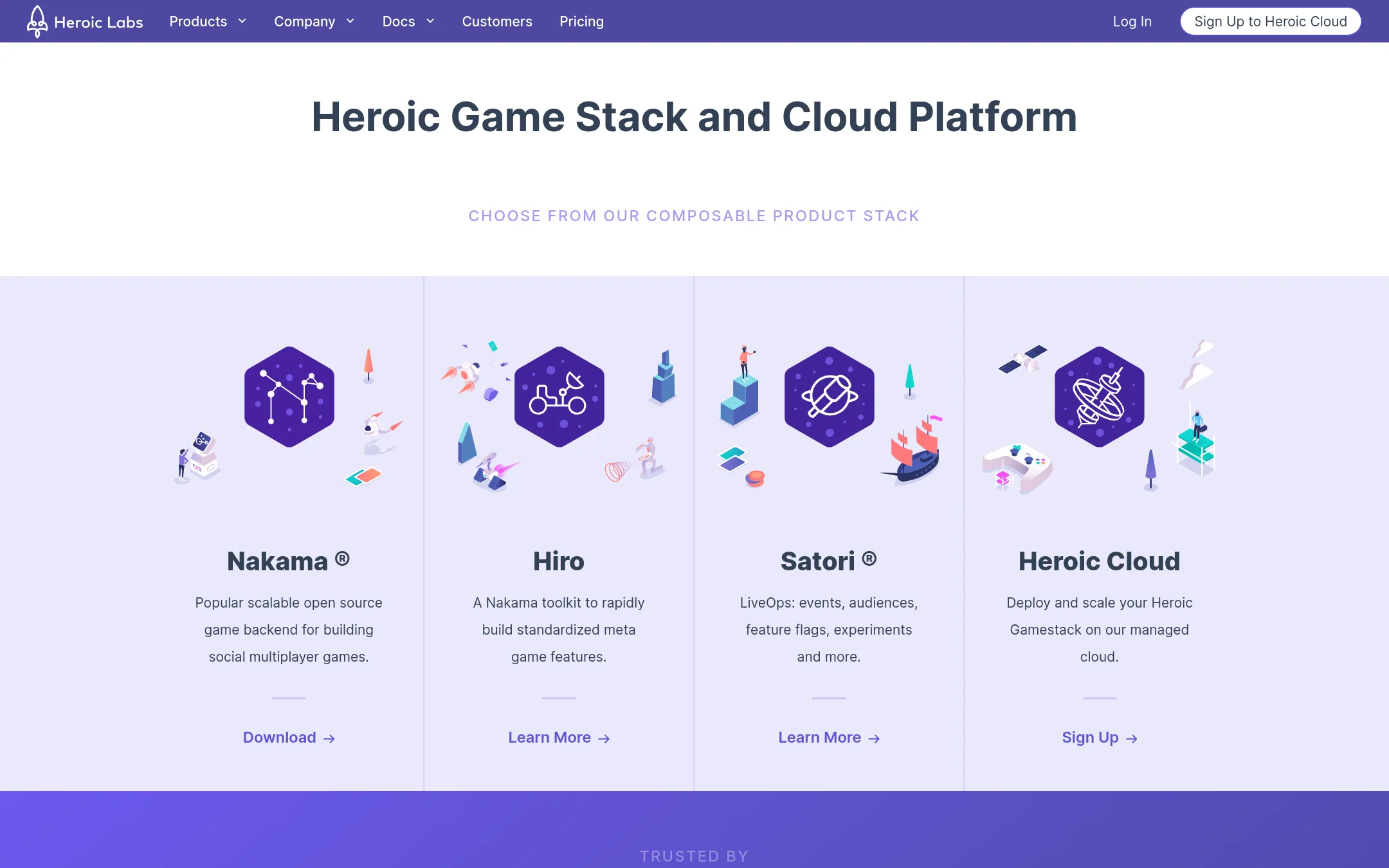
Heroic Labs provides a composable stack for game backends and LiveOps: Nakama for multiplayer, Satori for events and experiments, and Heroic Cloud for managed deployment. It is a credible pick because it is open source, trusted by over 1 million developers, and powers games like FBC: Firebreak and Stellaris.
Where it is strong
- Open source Nakama backend with customization in JavaScript, Go, and Lua
- Satori offers events, audiences, feature flags, and experiments
- SOC 2 Type II certified with managed or private cloud options
Where it falls short
- Nakama pricing on Heroic Cloud is not transparent
- Support packages require contacting sales for bespoke pricing
- Pricing:
- Satori on Heroic Cloud starts from $600/month. Nakama on Heroic Cloud pricing is not published, and support packages vary.
- Not published
2.Dreams
Best for: PlayStation owners who want to explore and share user-generated games, music, and art in a single community.
- Pricing
- Not published
- Category
- Media & Entertainment
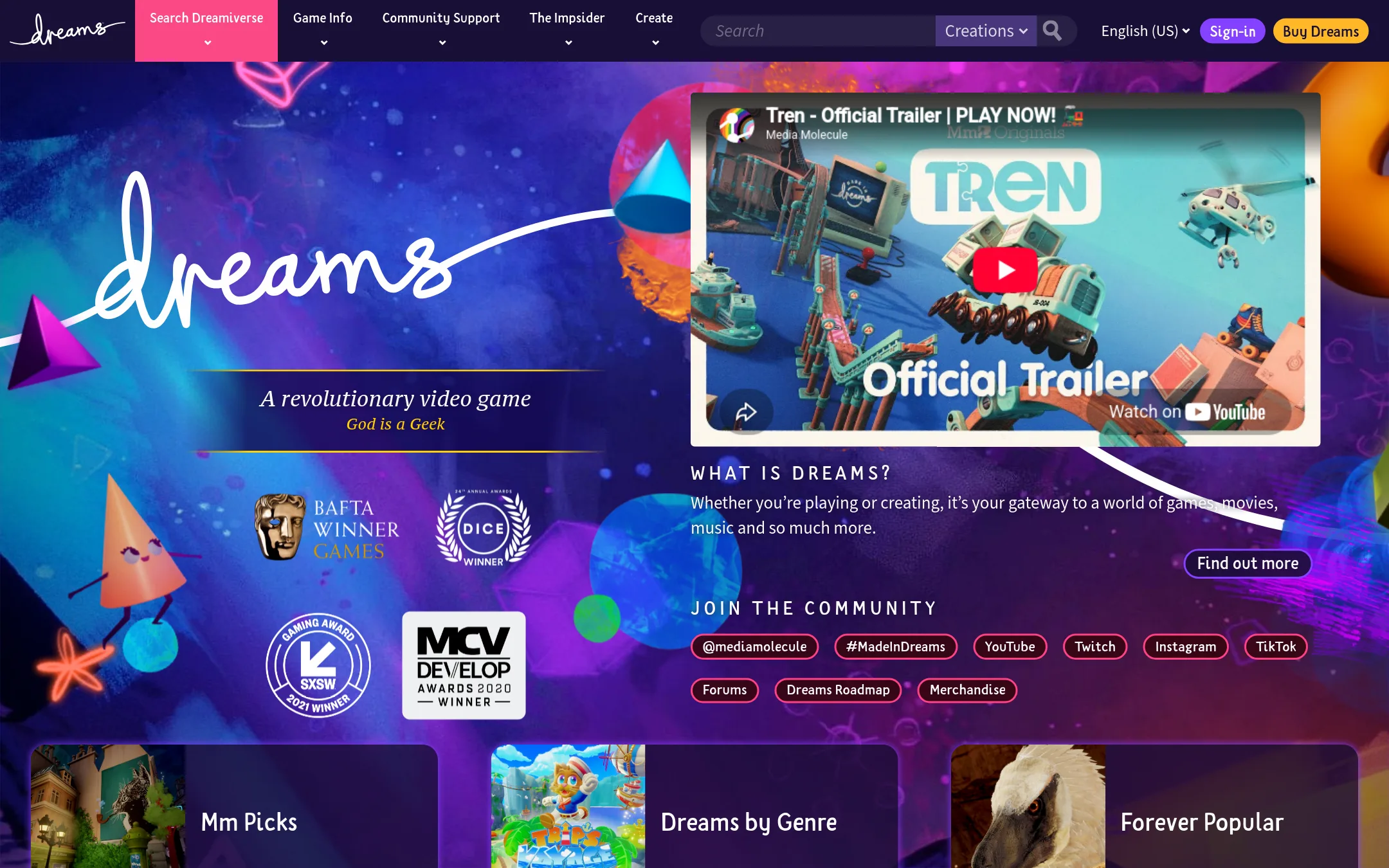
Dreams is a creative platform by Media Molecule where users can play and create games, movies, music, characters, and vehicles in one connected space. Indreams is its official companion site, serving as the online sharing portal for all creations made in Dreams. It is a credible pick because it is backed by Sony and has received high scores from major outlets, including a 10/10 from IGN and Push Square.
Where it is strong
- Official companion site with direct access to the Dreamiverse community
- Curated content like Mm Picks and genre playlists help you find quality creations
- Supports sharing and browsing games, music, movies, and more
Where it falls short
- Requires the Dreams game on PlayStation to create or play content
- No pricing information is available on the site
- Pricing:
- Pricing is not published on the site.
- Free Starter, paid ver
3.Hyperpad
Best for: Beginners, educators, and indie developers who want to create games on an iPad without coding.

- Pricing
- Free Starter, paid ver
- Category
- Design & Creative
Hyperpad is a visual no-code game engine for the iPad. It lets you build 2D games, interactive apps, and playable stories without writing code. You can test your game in real time and export it to the App Store, keeping 100% of royalties.
Where it is strong
- Drag-and-drop visual coding system
- Real-time game testing on iPad
- Export to App Store with 100% royalties
Where it falls short
- Only runs on iPad, not other platforms
- Paid version required for App Store export
- Pricing:
- A free Starter version is available for learning, while the paid version unlocks the full engine and App Store export. Educational pricing is offered for schools.
- Not published
4.DreamCraft Entertainment, Inc.
Best for: Individual creators and hobbyists who want to build and monetize games without a technical background.

- Pricing
- Not published
- Category
- Media & Entertainment
DreamCraft is a game development platform bundled with a game editor that simplifies the process for people without programming or art skills. It uses a high-level, event-driven framework that handles multiplayer, cross-platform, performance, and publishing, so creators can focus on gameplay mechanics. The platform has raised over $15 million in funding and has seen solo developers generate millions of downloads and revenue.
Where it is strong
- Event-driven editor lowers the barrier for non-programmers
- Handles multiplayer, cross-platform, and publishing automatically
- Includes a wide range of art assets and supports 2D and 3D visuals
Where it falls short
- Pricing is not disclosed, so cost is unclear
- Best for solo creators, not large teams needing deep control
- Pricing:
- Pricing is not published on the site.
- Free plan, credits
5.Rosebud AI
Best for: Non-coders and hobbyists who want to prototype or ship simple games quickly using AI prompts.

- Pricing
- Free plan, credits
- Category
- Design & Creative
Rosebud AI lets you create playable games by describing your idea in plain language or picking a template, with no coding required. It is a credible pick because it covers multiple game types like RPG, multiplayer obby, and city builder, and the editor shows exactly how many credits each AI action uses.
Where it is strong
- No coding required, describe games in plain language
- Free plan with weekly credit refills
- Export Windows builds and download code on Pro and higher
Where it falls short
- Credits can run out quickly with premium models or heavy asset generation
- Commercial rights only on 10x Dev and higher plans
- Pricing:
- Free plan starts with 8,000 credits and weekly refills in eligible regions. Paid plans start with Pro, which includes code download and Windows export. Pricing is credit-based, not a flat monthly fee.
- Not published
6.Ramen VR
Best for: Game studios that want AI agents to write gameplay code and generate 3D assets directly inside Unreal or Unity.

- Pricing
- Not published
- Category
- AI & Machine Learning
Ramen VR builds AI agents that work inside game engines like Unreal and Unity. The agents handle gameplay code, 3D assets, and levels, which are the hardest parts of game development. It is a credible pick because the company publishes research and open-sources tools like the Unity MCP, showing real technical depth.
Where it is strong
- Works inside Unreal and Unity engines
- Handles gameplay code, 3D assets, and levels
- Open-sources tools like the Unity MCP
Where it falls short
- Pricing is not listed, so cost is unclear
- No public details on deployment or support for non-Unity/Unreal engines
- Pricing:
- Pricing is not published on the site.
- Not published
7.StartPlaying.Games
Best for: Players and groups looking for a professional GM to run an online tabletop RPG, whether solo or with friends.

- Pricing
- Not published
- Category
- Media & Entertainment
StartPlaying is a marketplace that connects players with professional game masters for tabletop RPGs like D&D and Pathfinder. It is credible because it has over 5,000 GMs and 100,000 players, and you can filter by game system, platform, and genre to find a match.
Where it is strong
- Large network of 5,000+ vetted GMs
- Filter by system, platform, and genre
- Options for corporate events and kids' games
Where it falls short
- No published pricing. Each GM sets their own rate
- All games are online only, no local games yet
- Pricing:
- Pricing is not published on the site.
How to choose Game Development Platforms
Pricing structure varies widely. Some platforms like Rosebud AI use credit-based pricing, where you pay per AI action, and free plans may have limits. Others like Heroic Labs have published prices for some services but require contacting sales for others. Hyperpad offers a free starter version and paid upgrades for full features and App Store export. Always check if the pricing model fits your budget and usage patterns.
Consider who the platform is built for. Heroic Labs suits game studios needing scalable multiplayer backends, while Hyperpad is for beginners and educators on iPad. DreamCraft is for solo creators without technical backgrounds, and Rosebud AI is for non-coders who want quick prototypes. Ramen VR targets studios using Unreal or Unity, and StartPlaying.Games is for players seeking GMs, not developers.
Integrations matter. Heroic Labs integrates with game engines and offers customization in JavaScript, Go, and Lua. Ramen VR works inside Unreal and Unity. Hyperpad exports to the App Store, and Rosebud AI allows code download and Windows export on higher plans. Check if the platform supports the engines or platforms you need.
Data and compliance are critical for multiplayer games. Heroic Labs is SOC 2 Type II certified and offers managed or private cloud options. If you handle user data, ensure the platform meets your security and privacy requirements. Other platforms may not publish such details, so verify before committing.
Support and contract terms can affect your experience. Heroic Labs requires contacting sales for bespoke support packages, and pricing is not transparent for Nakama. DreamCraft and Ramen VR do not publish pricing, so you must inquire. For platforms like Rosebud AI, check commercial rights and credit limits. Always review the terms, especially for monetization and ownership of your creations.
FAQ
Questions about Game Development Platforms
What is a game development platform?
A game development platform is software that helps you create games, whether through coding, visual editors, or AI assistance. It can include engines, backends, or tools for publishing and managing games.
Do I need coding skills to use these platforms?
No, many platforms are designed for non-coders. Hyperpad uses drag-and-drop visual coding, Rosebud AI lets you describe games in plain language, and DreamCraft uses an event-driven editor. Heroic Labs and Ramen VR require more technical expertise.
How much do these platforms cost?
Pricing varies. Hyperpad has a free starter version and paid upgrades. Rosebud AI offers a free plan with credits and paid plans starting at Pro. Heroic Labs charges from $600/month for Satori, but Nakama pricing is not published. Others like Dreams and DreamCraft do not list pricing.
Can I publish my game to app stores?
Yes, some platforms support publishing. Hyperpad lets you export to the App Store with 100% royalties, and Rosebud AI allows Windows export on Pro and higher. Heroic Labs provides backend services for multiplayer games, but publishing depends on your engine.
Are these platforms suitable for large teams?
It depends. Heroic Labs is built for game studios and handles scalable multiplayer backends. Ramen VR targets studios using Unreal or Unity. DreamCraft is best for solo creators, and Hyperpad is for individuals or educators. StartPlaying.Games is for players, not development teams.
Last updated October 21, 2026.