6 Best Mining Software in 2026
Updated November 8, 2026
The short answer
The strongest mining software picks for operators are Deswik, Datamine Studio and Micromine. Deswik suits mining planning teams running underground metals, open pit, coal or bulk rail who need mine design and scheduling in one system. Datamine Studio suits geology and planning teams that want one data backbone linking exploration, modeling, scheduling and production reconciliation. Micromine suits mining companies that want one vendor across exploration through production, including geology, planning and fleet operations.
The shortlist, at a glance
Read the comparisons ↓ DeswikNot publishedMining operators and planning teams running underground metals, open pit, coal, or bulk rail operations who need mine design and scheduling in one system.
 StratumAINot publishedMining operators in production or brownfield expansion who want better grade control and drill targeting from sparse data.
 Datamine StudioNot publishedMining geology and planning teams that need one data backbone linking exploration, modeling, scheduling and production reconciliation.
 MicromineNot publishedMining companies running exploration through to production that want one vendor across geology, planning and fleet operations.
 Maptek VulcanNot publishedMining teams that need geological modelling, resource estimation and ore control tied to mine planning and reserves work
 Hexagon MiningNot publishedOperators and survey teams that need precise 3D capture and digital twins of physical sites and assets.
About Mining Software
Mining software helps mining companies model ore bodies, plan and schedule mines, and track production. These tools cover jobs such as geological modeling, resource estimation, mine design, scheduling, ore control and fleet management. They are built for the specific workflows of mining rather than general business operations.
The products on this list differ in scope and approach. Some cover the full mining lifecycle from exploration to production, while others focus on one stage such as grade control, or on precision site measurement and digital twins. Scale also varies, with some tools aimed at large operations running several mine types and others suited to teams with a narrower need. Pricing models differ too, and most vendors on this list do not publish prices, so buyers will need a quote to compare costs.
The 6 best Mining Software, compared
- Not published
1.Deswik
Best for: Mining operators and planning teams running underground metals, open pit, coal, or bulk rail operations who need mine design and scheduling in one system.
- Pricing
- Not published
- Category
- Other
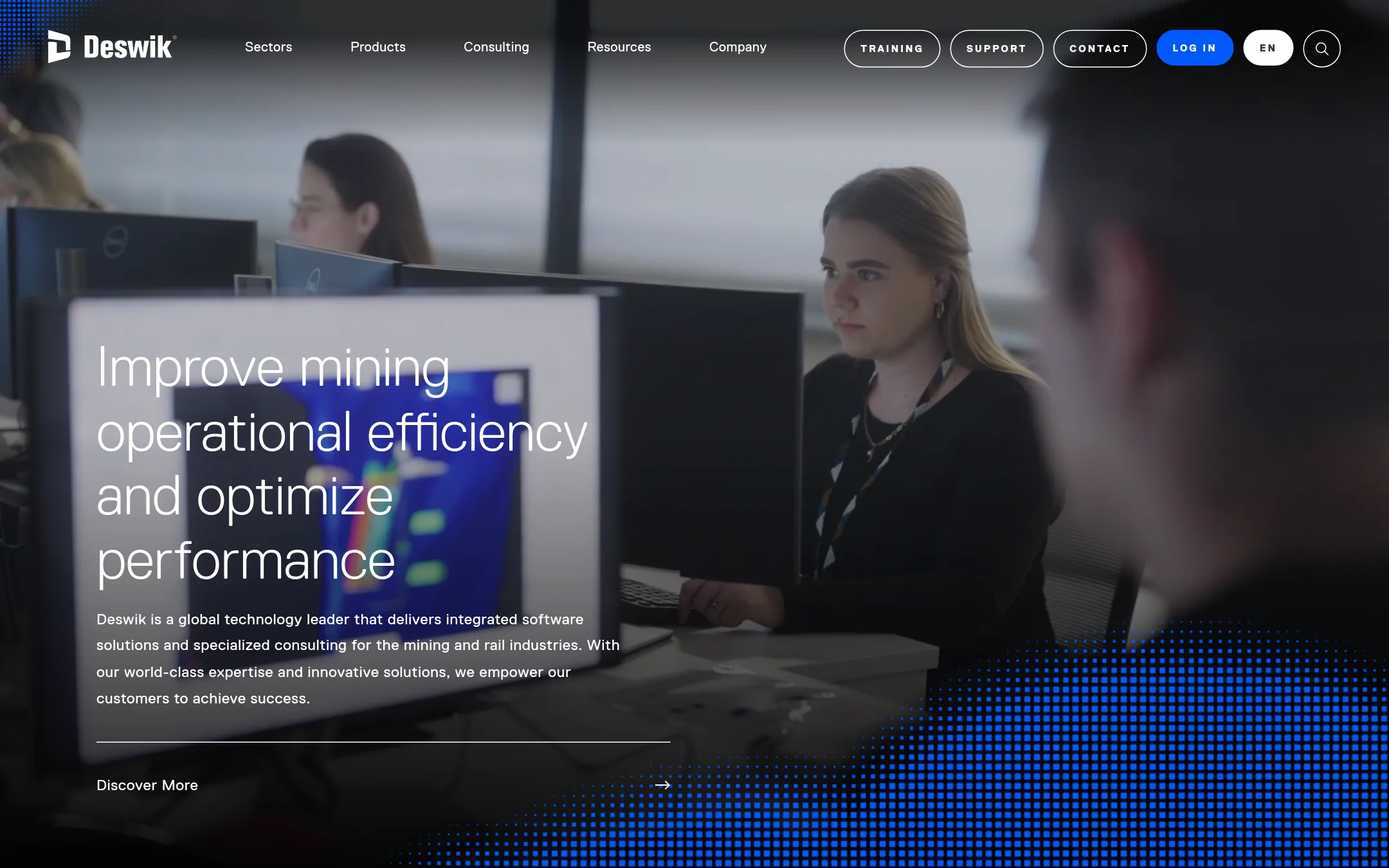
Deswik covers mining operations from mine design through scheduling and optimization, with separate solutions for underground metals, open pit metals, coal, and bulk rail. Its planning tool handles long and short-term horizons in a single schedule, and its optimizers use mathematical modeling to maximize Net Present Value. That breadth in mining-specific planning is what makes it a serious option among mining software.
Where it is strong
- Covers underground metals, open pit, coal, and bulk rail in one vendor
- Links mine design and schedules so changes flow through the plan
- Optimization tools aim to maximize Net Present Value
Where it falls short
- Built for mining specialists, so it is a poor fit for general operations teams
- No pricing is listed, so you need a quote to compare costs
- Pricing:
- Pricing is not published on the site.
- Not published
2.StratumAI
Best for: Mining operators in production or brownfield expansion who want better grade control and drill targeting from sparse data.
- Pricing
- Not published
- Category
- AI & Machine Learning
StratumAI uses its SAIGE AI engine to model resource, grade control, geometallurgical, and geotechnical outputs. It learns from high-density multivariate geostatistics data and applies that to lower-density drilling, which is useful when a mine has sparse data. It focuses on production and brownfield expansion decisions where choices move the economics most.
Where it is strong
- Models lower-density drilling data using patterns learned from high-density datasets
- Covers resource, grade control, geometallurgical, and geotechnical models in one platform
- Includes drill targeting and dynamic reconciliation to correct errors over time
Where it falls short
- Pricing is not published, so cost must be confirmed with the vendor
- Its stated focus is production and brownfield expansion, so it is a weaker fit for early-stage exploration teams
- Pricing:
- Pricing is not published on the site.
- Not published
3.Datamine Studio
Best for: Mining geology and planning teams that need one data backbone linking exploration, modeling, scheduling and production reconciliation.
- Pricing
- Not published
- Category
- Other
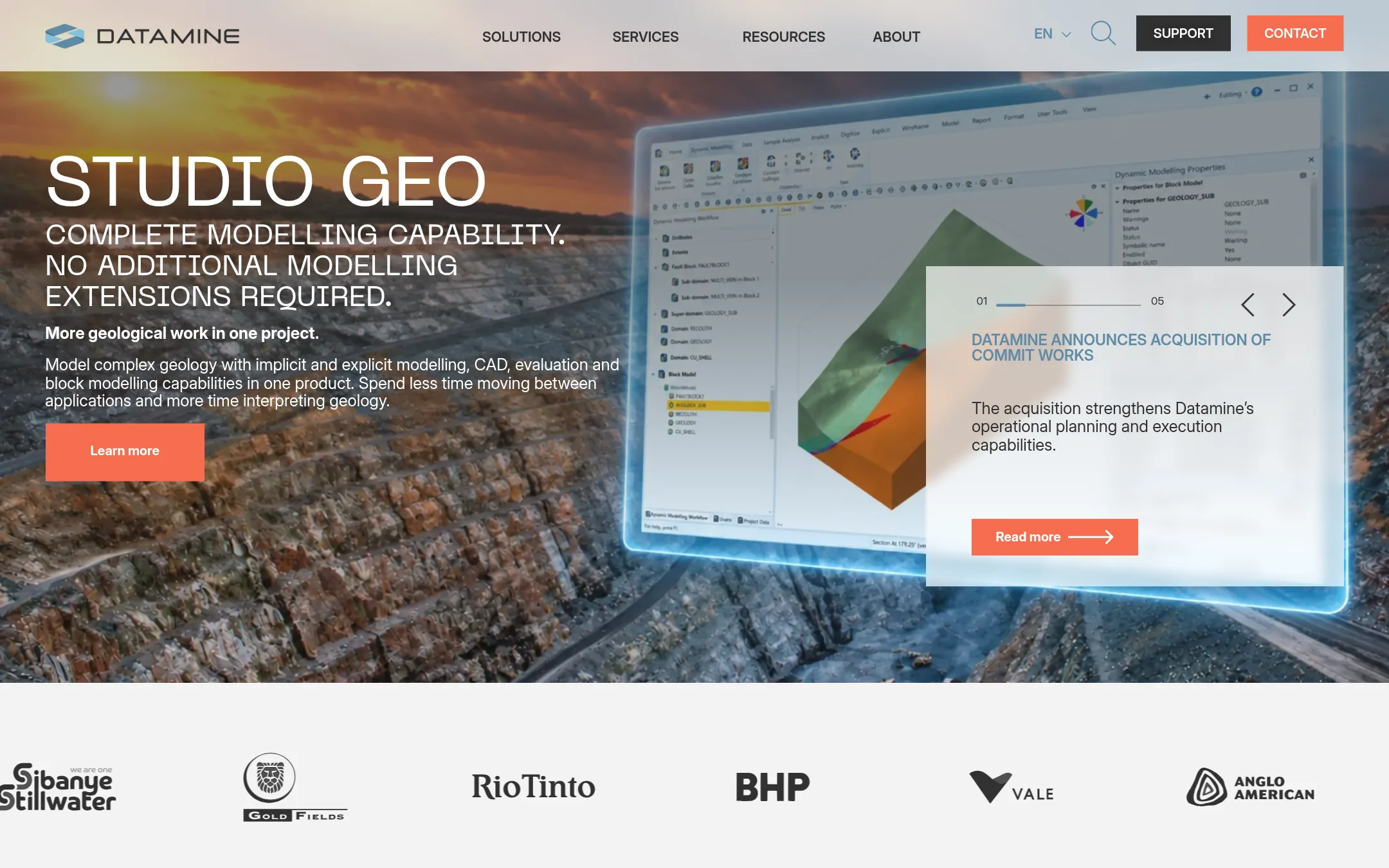
Datamine Studio is built for geology, planning and production teams who need accurate models and shared data. It covers the chain from exploration and modeling through reserve evaluation and production reconciliation, and the company's MineTrust data backbone connects those roles. Its MineScape module handles unified design, scheduling and simulation in one place.
Where it is strong
- Covers exploration, modeling, reserve evaluation and production reconciliation in one suite.
- Role-based bundles for geologists, planners and production teams.
- MineScape supports execution-ready design, scheduling and simulation.
Where it falls short
- Pricing is not published, so budgeting requires a sales conversation.
- Its breadth suits larger operations more than small exploration outfits that need only a single tool.
- Pricing:
- Pricing is not published on the site.
- Not published
4.Micromine
Best for: Mining companies running exploration through to production that want one vendor across geology, planning and fleet operations.
- Pricing
- Not published
- Category
- Other
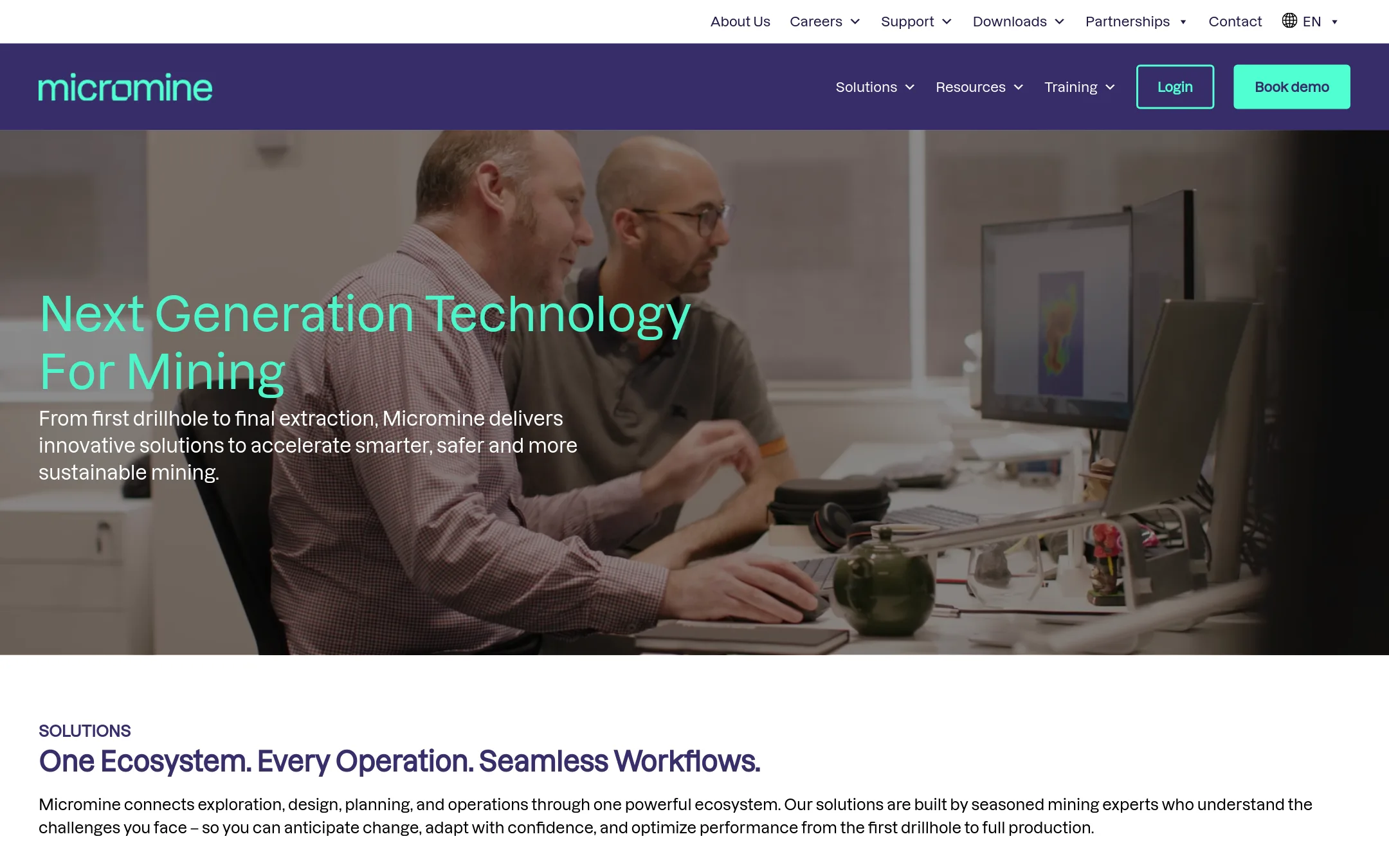
Micromine covers the full mining lifecycle, from exploration and geological modeling in Micromine Origin to mine planning, fleet management and cloud data sharing through Micromine Nexus. Its credibility rests on track record: the company reports 39+ years in mining tech and 3,200+ active projects worldwide. One concrete example is Çayeli Bakır İşletmeleri, where Micromine Pitram reportedly increased productivity by 18%.
Where it is strong
- Covers exploration, planning and fleet management in one ecosystem
- Reports 3,200+ active projects and presence in 120+ countries
- Offers specialist training and a learning management system to get more from the licence
Where it falls short
- Pricing is not published, so budgeting requires a sales conversation
- Its scope is built for mining operations, so it is not a fit for teams outside the sector
- Pricing:
- Pricing is not published on the site.
- Not published
5.Maptek Vulcan
Best for: Mining teams that need geological modelling, resource estimation and ore control tied to mine planning and reserves work
- Pricing
- Not published
- Category
- Other
Maptek Vulcan handles mine planning and geological modelling, covering drillhole management, resource estimation and ore control. It sits inside a wider Maptek suite that links geology to scheduling and blast design, which matters if you want one data chain from exploration to production. Maptek reports more than 30,000 users in 95 countries after 45 years in the business.
Where it is strong
- Covers drillhole management, geological modelling, resource estimation and ore control in one tool
- Connects with GeologyCore for implicit geological modelling and Evolution for scheduling
- Supports coal seam modelling and mine design, planning and reserves workflows
Where it falls short
- Pricing is not published, so you will need to request a quote to compare costs
- Most of its value depends on running the wider Maptek stack, so it is less useful as a standalone buy for a small operation
- Pricing:
- Pricing is not published on the site.
- Not published
6.Hexagon Mining
Best for: Operators and survey teams that need precise 3D capture and digital twins of physical sites and assets.
- Pricing
- Not published
- Category
- Other
Hexagon is a measurement and positioning company, and its mining relevance comes from precision sensors, scanners, and digital twins that capture physical sites in 3D. Its homepage cites Hexagon technology used on more than 350,000 construction sites and 800,000 square kilometres of the world captured in 3D, which gives it real scale in site measurement. It is a different category from pure mine-planning software, so buyers should expect hardware-led surveying and digital twin workflows.
Where it is strong
- Covers precision measurement, positioning, and 3D site capture under one vendor.
- Scale claims are specific: 350,000 construction sites and 800,000 square kilometres mapped in 3D.
- Includes AI-driven spatial intelligence for turning scan data into operational insights.
Where it falls short
- The site does not publish pricing, so budgeting requires a sales conversation.
- Its strength is measurement and digital twins rather than dedicated mine planning or production scheduling.
- Pricing:
- Pricing is not published on the site.
How to choose Mining Software
Start with pricing structure. None of the products here publish prices, so ask each vendor how licences are charged, whether by seat, role, module or project, and what the total cost looks like once you add training and support. Role-based bundles, such as those offered for geologists and planners, can change the cost picture considerably.
Check who the software is built for. Some tools target specialist mining teams and are a poor fit for general operations staff. Others are designed for larger operations that run several mine types, while smaller exploration outfits may need only a single tool. Match the product's scope to the stage and size of your operation.
Look closely at integrations and how well the tools connect. Several products on this list are strongest when used as part of a wider stack, so value depends on whether the software links geology, scheduling, blast design and fleet data. Ask how changes in one area flow into the plan.
Consider data handling and where your data sits. Some vendors offer cloud data sharing and shared data backbones, and these can make it easier for different roles to work from the same model. Confirm how data is stored, shared and reconciled over time.
Finally, weigh support and contract terms. Specialist training, learning systems and the depth of vendor support can determine how much value you get from a licence. Ask about training included, support levels and the terms of the contract before you commit.
FAQ
Questions about Mining Software
What is mining software used for?
Mining software is used to model ore bodies, plan and schedule mines, and track production. Tools on this list cover tasks such as geological modeling, resource estimation, mine design, scheduling, ore control and fleet management. Some products focus on a single stage, while others cover the full lifecycle from exploration to production.
Which mining software is best for underground and open pit operations?
Deswik is built for mining operators and planning teams running underground metals, open pit, coal or bulk rail operations who need mine design and scheduling in one system. Its planning tool handles long and short-term horizons together. Teams should still confirm fit against their own operation before choosing.
How much does mining software cost?
None of the products on this list publish their pricing on their sites. You will need to request a quote from each vendor to compare costs. Ask how licences are charged, whether by seat, role, module or project, and include training and support in your estimate.
Can mining software work with exploration and drilling data?
Several products cover this. Datamine Studio links exploration, modeling, reserve evaluation and production reconciliation through one data backbone. StratumAI models lower-density drilling data using patterns learned from high-density datasets. Maptek Vulcan handles drillhole management and resource estimation.
Is mining software suitable for small exploration teams?
Some tools here are better suited to larger operations. Datamine Studio's breadth suits larger operations more than small exploration teams that only need a single tool. Maptek Vulcan is less useful as a standalone buy for a small operation, since much of its value depends on the wider Maptek suite. Smaller teams should weigh scope against need before buying.
Last updated November 8, 2026.