6 Best Personal Finance Apps in 2026
Updated November 13, 2026
The short answer
The three strongest personal finance apps on this list are Copilot, Quicken and MoneyLion. Copilot suits individuals and couples who want automated budgeting and net worth tracking on Apple devices or the web. Quicken suits people who want budgeting, investments and light business bookkeeping in one product, including freelancers and small landlords. MoneyLion suits individuals who want banking, small cash advances and credit building in one app.
The shortlist, at a glance
Read the comparisons ↓ CopilotNot publishedIndividuals and couples who want an iPhone, iPad, Mac, or web app that automates budgeting and tracks net worth across checking, cards, and investments.
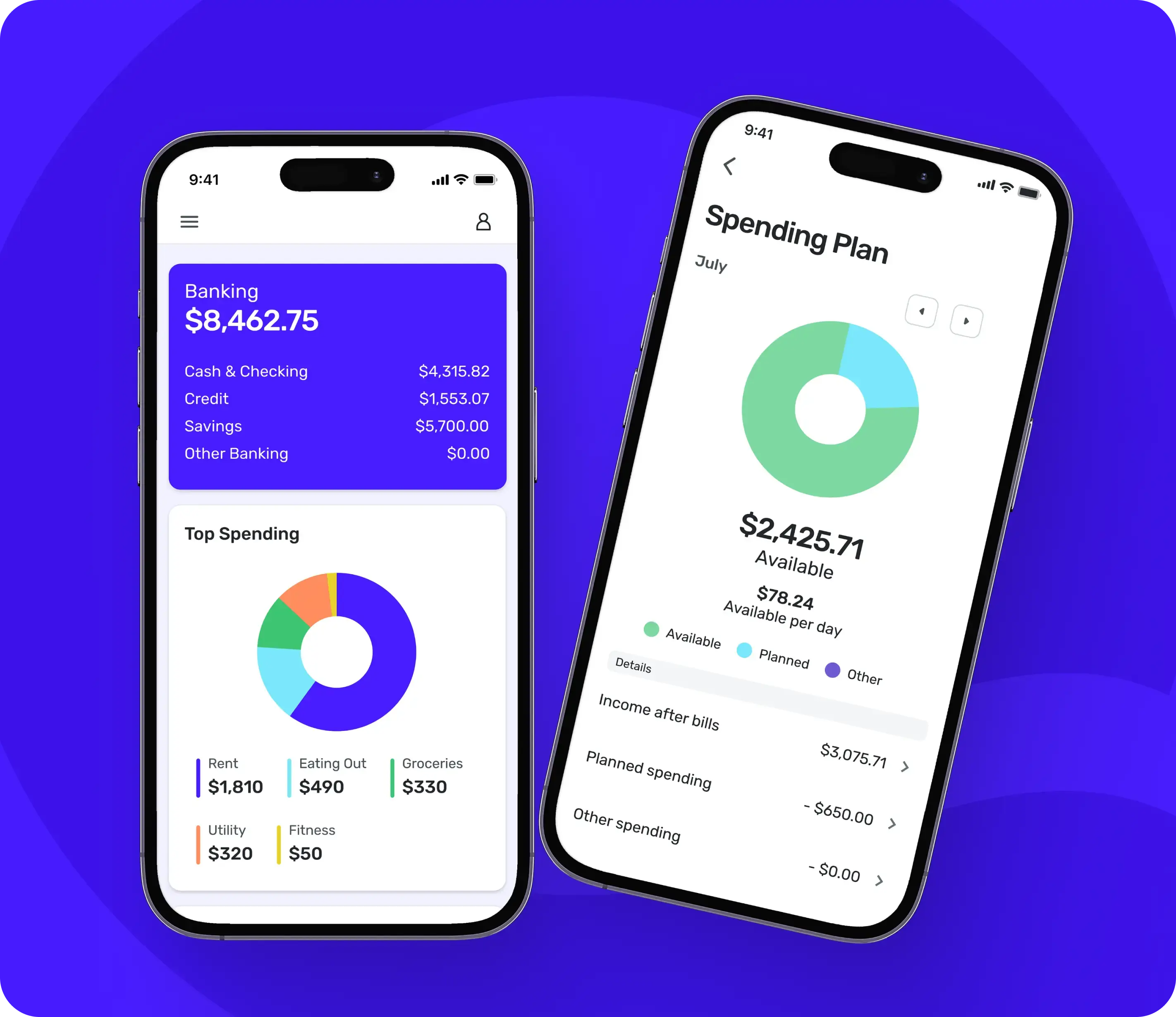 QuickenNot publishedIndividuals and couples who want one place to track budgets, savings, investments and net worth, or freelancers and small landlords who need light business bookkeeping alongside personal finances.
MoneyLionFree tier, from $19.99Individuals who want one app for everyday banking, small cash advances and credit building, rather than a dedicated budgeting or wealth tool.
 FinkuNot publishedIndividuals in Indonesia who want to track spending and budgets without manual entry, and businesses that want to offer financial wellness training to employees.
 CashboardFrom $19/moFinance teams that already use Claude or ChatGPT for reporting and need consistent metrics and permissions across them
PINAFree, 2Jt/bln, 1Jt/blnIndividuals in Indonesia who want a certified financial planner's advice combined with budgeting and automatic monthly investing in one app.
About Personal Finance Apps
Personal finance apps help individuals and households track spending, set budgets, monitor savings and investments, and see their overall net worth. Some also bring in banking, lending or planning services, so the category covers a wide range of tools.
The products on this list differ mainly in approach and scope. Copilot focuses on automated categorization and budgeting for Apple devices and the web, while Quicken covers budgeting, investments and business bookkeeping with a classic desktop option. MoneyLion goes further into banking and credit products, and Cashboard is aimed at finance teams using AI tools for reporting. Pricing models also vary, with some products listing costs and others not publishing them.
The 6 best Personal Finance Apps, compared
- Not published
1.Copilot
Best for: Individuals and couples who want an iPhone, iPad, Mac, or web app that automates budgeting and tracks net worth across checking, cards, and investments.
- Pricing
- Not published
- Category
- Finance & Accounting
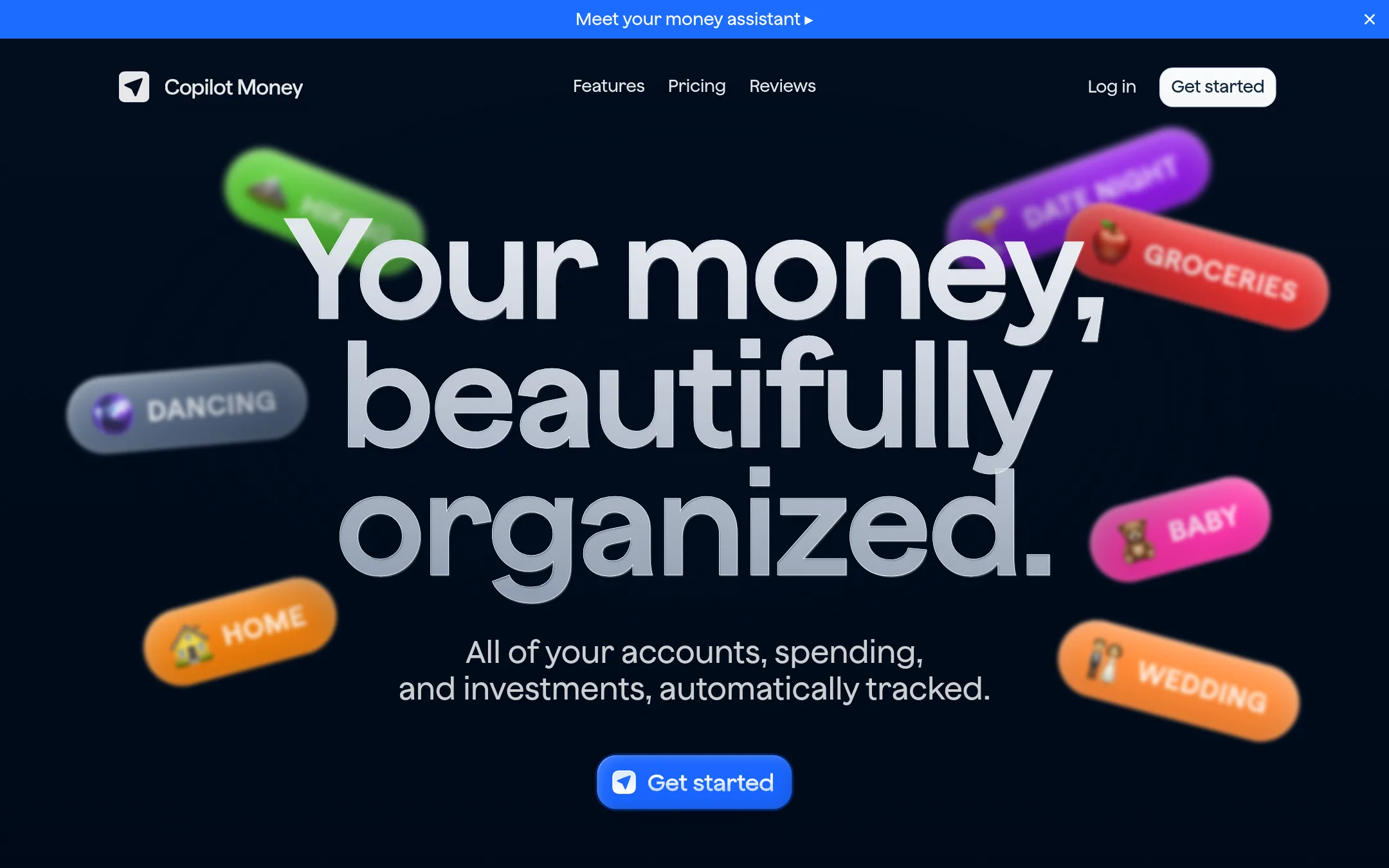
Copilot connects to over 16,000 institutions and sorts bank data into categories, catching things like unmatched refunds and miscategorized charges without manual cleanup. Its assistant watches spending trends and suggests budget changes you approve before they take effect. It is also a Apple Design Awards finalist with 31,000+ ratings averaging 4.8 stars.
Where it is strong
- Connects to over 16,000 institutions, including Chase, Fidelity, Vanguard, and Coinbase.
- Assistant suggests budget changes but never acts without your approval.
- Shares access with up to 3 people on one account at no extra cost.
Where it falls short
- Available only on iPhone, iPad, Mac, and Web, with no Android app mentioned.
- Pricing is not published, so cost comparison requires signing up for the trial.
- Pricing:
- Pricing is not published on the site.
- Not published
2.Quicken
Best for: Individuals and couples who want one place to track budgets, savings, investments and net worth, or freelancers and small landlords who need light business bookkeeping alongside personal finances.

- Pricing
- Not published
- Category
- Finance & Accounting
Quicken brings budgeting, investments, net worth tracking and business bookkeeping into one app, with both cloud-based web and mobile tools and a classic desktop version that keeps data stored locally. The company says it has been trusted for over 40 years and counts more than 20 million customers, which gives it a longer track record than most newer apps in this category.
Where it is strong
- Covers personal budgeting, investments, retirement planning and business bookkeeping in one product
- Offers both cloud web and mobile apps and a classic desktop version for Windows and Mac with local data storage
- Has been around for over 40 years and reports more than 20 million customers
Where it falls short
- Pricing is not published, so you will need to check the site or contact sales to compare costs
- Business plans are aimed at freelancers, self-employed people, small businesses and rental owners, so larger companies may need dedicated ac
- Pricing:
- Pricing is not published on the site.
- Free tier, from $19.99
3.MoneyLion
Best for: Individuals who want one app for everyday banking, small cash advances and credit building, rather than a dedicated budgeting or wealth tool.
- Pricing
- Free tier, from $19.99
- Category
- Finance & Accounting
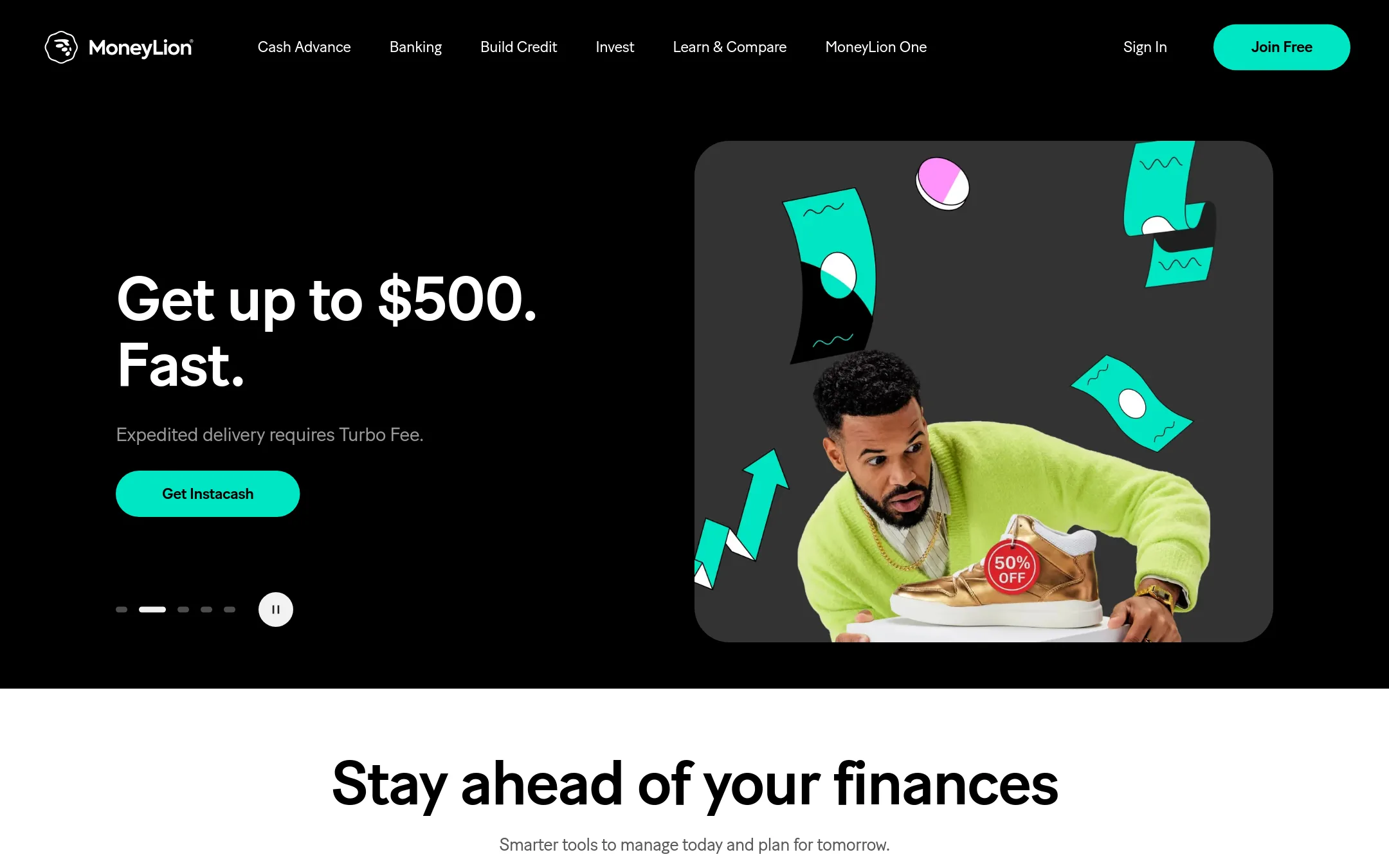
MoneyLion puts banking, cash advances, personal loans, investing and credit building in one app, which is a wider set than most budgeting-first tools. It is backed by a Pathward-issued checking account with FDIC insurance on deposits, and the site reports over 18M customers and a 4.7 App Store rating. Free credit monitoring alerts come with the app, and Instacash advances go up to $500.
Where it is strong
- Covers banking, cash advances, loans and investing in one app
- Free credit monitoring alerts are included
- Deposits are FDIC insured through the partner bank once funds arrive
Where it falls short
- Instacash and Turbo delivery add fees on top of the advance
- Credit Builder Plus loans carry APRs from 5.99% to 29.99%, which can be costly for the credit-building benefit alone
- Pricing:
- Instacash charges 7.5% of the advance, capped at $14.99, for standard delivery, and Credit Builder Plus costs $19.99 per month plus loan payments.
- Not published
4.Finku
Best for: Individuals in Indonesia who want to track spending and budgets without manual entry, and businesses that want to offer financial wellness training to employees.
- Pricing
- Not published
- Category
- Finance & Accounting
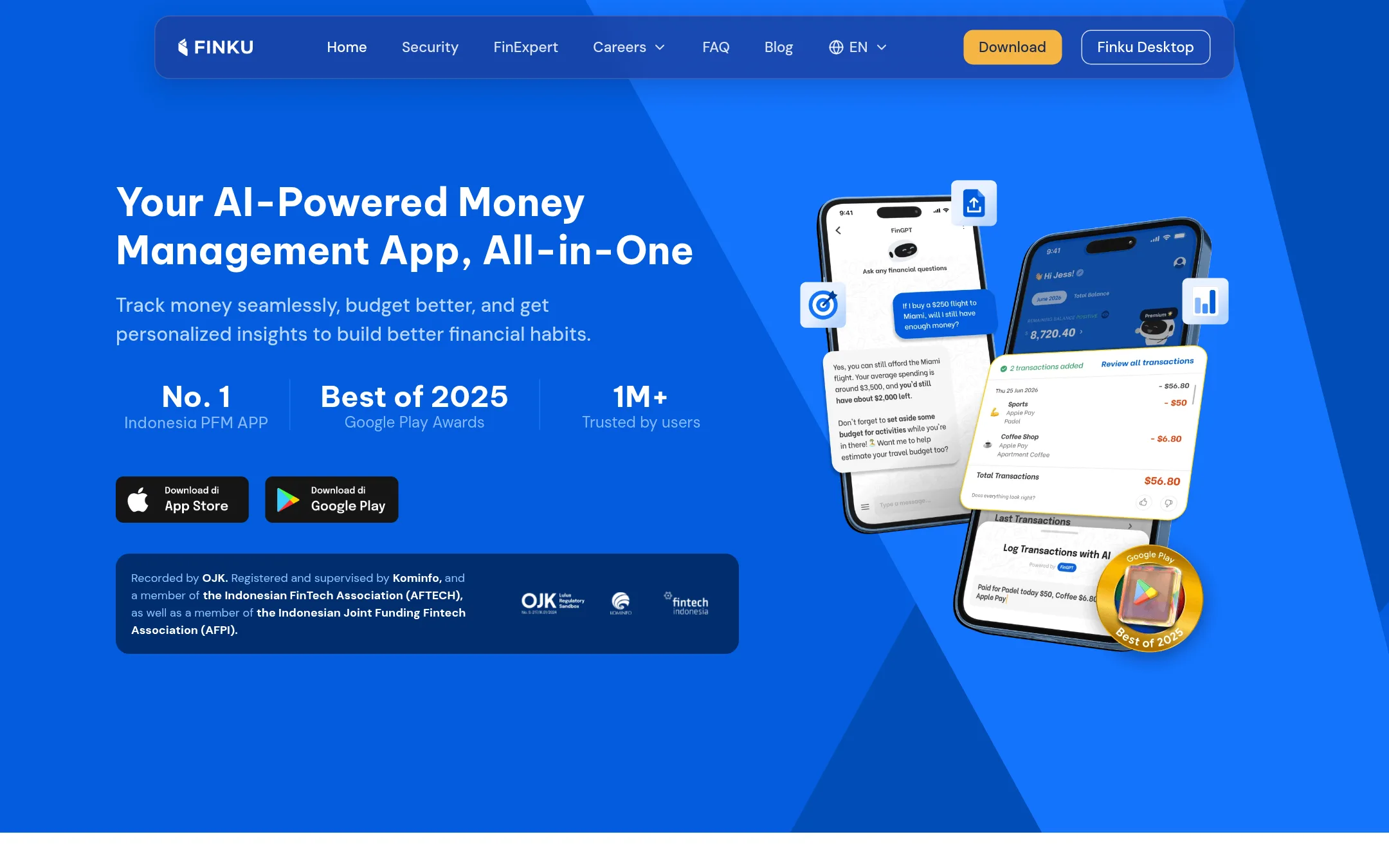
Finku is an AI-powered personal finance app built for Indonesia. Users can log transactions by hand, chat with its FinGPT assistant, or scan bank e-statements and shopping receipts, and charts update from those records. The site reports over 20 million automatically recorded transactions and a Google Play Award, which gives it a credible track record among local options.
Where it is strong
- Imports bank e-statements and scans receipts to log transactions automatically
- FinGPT chat lets users record transactions, set budgets and ask finance questions
- Free plan covers manual tracking and budgeting, with usage quotas per account
Where it falls short
- Built for Indonesia, so it is a weak fit for users outside the country
- Free plan limits scans and chat through quotas, and the Premium plan's price is not listed
- Pricing:
- Pricing is not published on the site.
- From $19/mo
5.Cashboard
Best for: Finance teams that already use Claude or ChatGPT for reporting and need consistent metrics and permissions across them
- Pricing
- From $19/mo
- Category
- Finance & Accounting
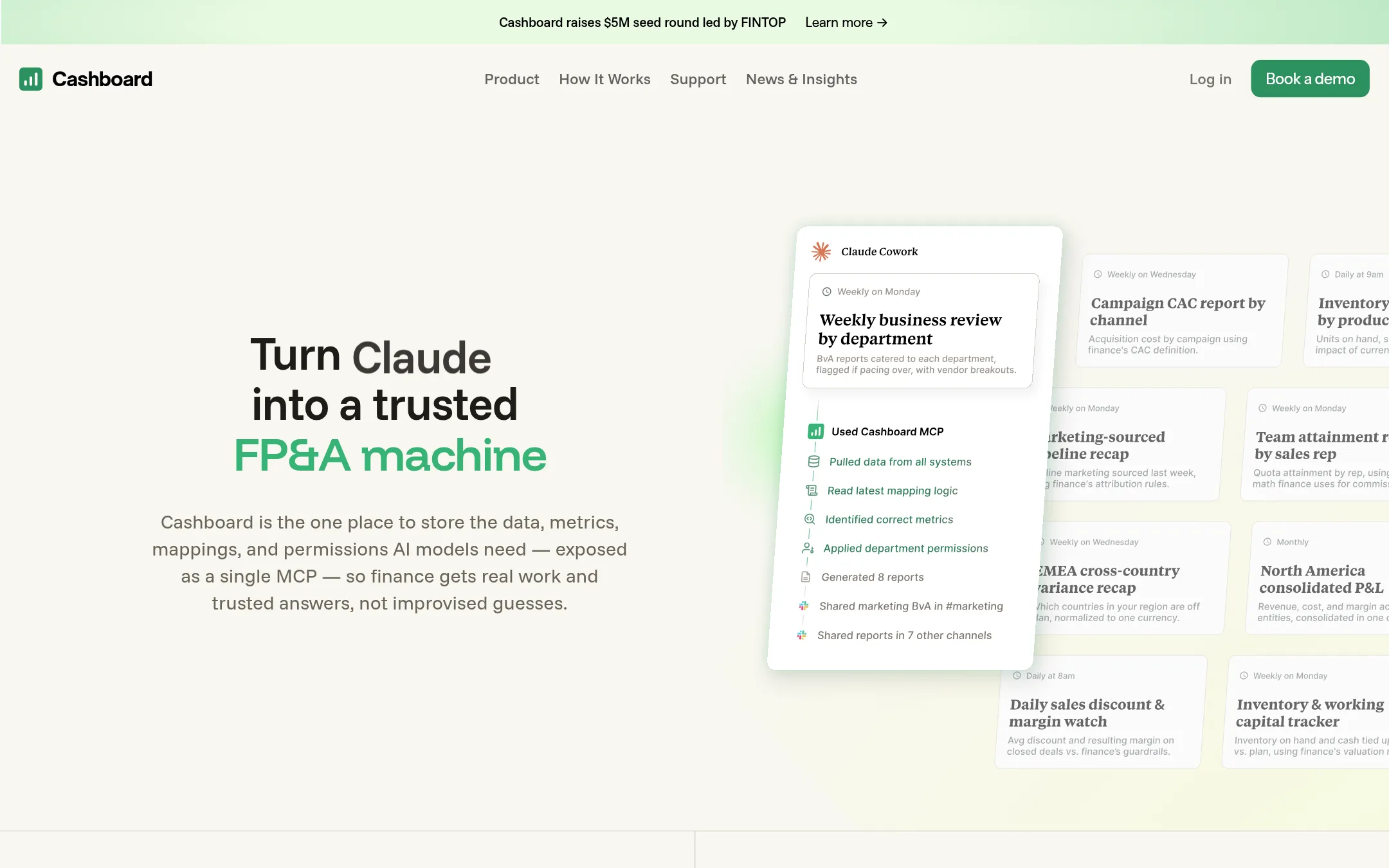
Cashboard is a finance data platform that gives AI tools like Claude and ChatGPT one governed source of truth for metrics, mappings, and permissions, exposed through a single MCP. It connects to 900+ integrations and enforces row- and column-level permissions across every AI tool, so reports stay consistent. Its pitch is aimed at finance teams that want recurring reporting handled by agents.
Where it is strong
- Connects to 900+ integrations, including NetSuite, Stripe, and Salesforce
- Enforces row- and column-level permissions across every connected AI tool
- Includes free professional onboarding that cleans source data before setup
Where it falls short
- The pricing page reads like a generic project tool template, so plan details are unclear for finance buyers
- Built around AI agents and MCP, so it is a poor fit for teams that just want a simple budgeting app
- Pricing:
- Cashboard lists a free tier and paid plans from $19 per month, with details on which features each plan includes.
- Free, 2Jt/bln, 1Jt/bln
6.PINA
Best for: Individuals in Indonesia who want a certified financial planner's advice combined with budgeting and automatic monthly investing in one app.
- Pricing
- Free, 2Jt/bln, 1Jt/bln
- Category
- Finance & Accounting
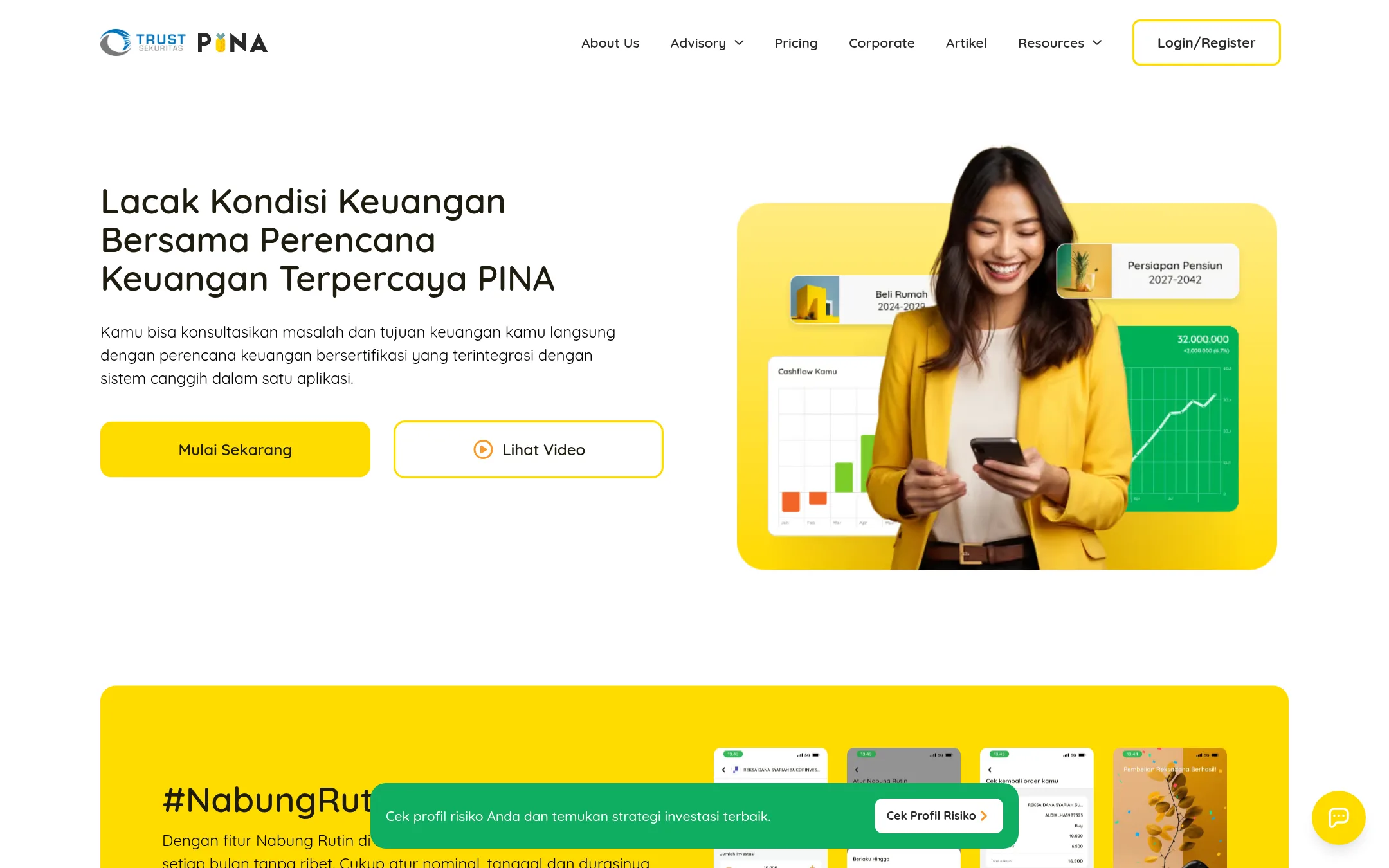
PINA is an Indonesian wealth management platform that pairs an app with access to certified financial planners, including a free 30-minute consultation. It covers budgeting, net worth tracking, and automatic monthly saving through its Nabung Rutin feature, so users can both plan and act on their money in one place.
Where it is strong
- Access to certified financial planners, with a free 30-minute consultation to start
- Automatic monthly saving through Nabung Rutin, with no manual transfers each month
- Financial health check and investment risk profile test that take minutes to complete
Where it falls short
- The site does not publish a clear feature split between tiers beyond the investment plan and goal count, so check what the free plan include
- Content and service are aimed at Indonesian users, so it is not a fit for teams or people based outside Indonesia
- Pricing:
- The site lists a free tier, a monthly plan at 2 million rupiah, and a six-month plan at 1 million rupiah per month, billed as 6 million rupiah once.
How to choose Personal Finance Apps
Start with pricing structure. Several products on this list do not publish their costs, so you will need to sign up for a trial or contact sales to compare. Where prices are listed, check whether the cost is a flat subscription, a fee per transaction such as the Instacash charge at MoneyLion, or a tiered plan that changes what features you receive.
Next, check who the product is built for. Copilot targets individuals and couples on Apple devices and the web, Quicken adds business bookkeeping for freelancers and small landlords, and Finku and PINA are built for users in Indonesia. A product designed for a different market or user type may not fit your needs even if it looks strong.
Confirm which accounts and tools it connects to. Copilot lists over 16,000 institutions, and Cashboard lists 900+ integrations, including accounting and payments systems. Check that your own banks, cards, brokerages and business tools are supported before committing.
Review how the product handles your data and whether it is covered by deposit insurance or other safeguards. MoneyLion states that its deposits are FDIC insured through its partner bank, and Quicken offers a desktop version that keeps data stored locally. Read the privacy and security terms for each product you consider.
Finally, look at support and contract terms. Some products offer free onboarding or consultations, and some plans include shared access for more than one person. Note any fees, usage quotas or limits on features before you sign up.
FAQ
Questions about Personal Finance Apps
What do personal finance apps do?
They help track spending, set budgets, monitor savings and investments, and view net worth in one place. Some also offer banking, cash advances, loans or financial planning services alongside tracking.
Which personal finance app is best for Apple users?
Copilot is available on iPhone, iPad, Mac and the web, and it connects to over 16,000 institutions. It is designed for individuals and couples who want automated budgeting and net worth tracking. It does not list an Android app.
Do personal finance apps cost money?
Some do and some do not, and several products on this list do not publish their pricing. Where costs are listed, they vary from free tiers to monthly subscriptions and per-transaction fees, so check the pricing details for each product.
Are personal finance apps safe for my money?
Safety depends on the product and how it stores and protects data. MoneyLion says its deposits are FDIC insured through its partner bank once funds arrive, and Quicken offers a desktop version that keeps data stored locally. Read each product's privacy and security terms before connecting accounts.
Can businesses use personal finance apps?
Some can. Quicken includes business bookkeeping for freelancers, self-employed people, small businesses and rental owners. Cashboard is aimed at finance teams that use AI tools for reporting, so it suits business use more than personal budgeting.
Last updated November 13, 2026.