
Better Auth alternatives
12 products compared · Updated November 4, 2026
The short answer
For a self-hosted auth framework with no limits, SuperTokens is the strongest alternative. For a managed backend with auth built in, Supabase is a solid choice. For enterprise identity with SSO and governance, Okta is the best fit.
Your shortlist, at a glance
Read the comparisons ↓ Auth0Not publishedTeams that need a production-ready, managed auth platform with enterprise features like SSO, SCIM, and fine-grained authorization, without operating their own infrastructure.
 ClerkFrom $25/mo + usageReact and Next.js teams that want a fully managed auth layer with prebuilt sign-in components and a dashboard, without maintaining auth infrastructure.
 SupabaseFrom $25/mo + usageStartups and small teams that want a Postgres database, auth, and APIs in one managed platform without running their own infrastructure.
- RRecordBookNot publishedSmall business owners who want a mobile-friendly, Airtable-like tool to manage records without writing code.
 NeutralinoJSNot publishedDevelopers building small, portable desktop apps who want a minimal footprint and don't need cloud-managed authentication.
- PPassport.jsNot publishedNode.js/Express teams that need a simple, strategy-based auth layer and prefer to manage user data and sessions in their own code.
- LLuciaNot publishedDevelopers looking for a simple, educational reference implementation of auth sessions in TypeScript, not a production-ready framework.
- WWorkOSFree up to 1M usersB2B SaaS teams that need to add enterprise SSO, SCIM, and audit logs without building or self-hosting the infrastructure themselves.
SuperTokensFrom $100/mo + $0.02/MStartups and enterprises that want to self-host auth without limits but may buy managed services for specific features like MFA or multi-tenancy.
 OktaFrom $6/user/moLarge enterprises that need managed workforce and customer identity with SSO, MFA, and governance at scale.
 KeycloakNot publishedOrganizations that need a centralized, self-hosted identity provider with support for OpenID Connect, OAuth 2.0, SAML, and LDAP/Active Directory integration.
- AAuthgearNot publishedTeams that need a self-hosted or private-cloud auth system with enterprise features like RBAC and SAML SSO, and want the option to escape vendor lock-in.
About Better Auth and its alternatives
Better Auth is an open source authentication framework for TypeScript that lives inside your app. It is known for being composable, plugin-based, and self-hosted, with optional managed infrastructure for dashboards, audit logs, and security detection.
When comparing alternatives, weigh pricing structure, such as per-user or per-monthly-active-user costs, and whether you need a self-hosted or managed service. Consider regional availability, integrations with your stack, support levels, and contract terms like minimums or annual billing.
Explore the alternatives
- Not published
1.Auth0
Best for: Teams that need a production-ready, managed auth platform with enterprise features like SSO, SCIM, and fine-grained authorization, without operating their own infrastructure.
- Pricing
- Not published
- Category
- Security & Privacy
Auth0 is a hosted identity platform that handles the full auth lifecycle, from login and MFA to enterprise SSO and fine-grained authorization. You would choose it over Better Auth when you want a managed service with built-in fraud detection, 99.99% uptime, and support for AI agents, rather than running and self-hosting your own auth code.
Where it is strong
- Managed service with 99.99% uptime and 23 billion authentications per month
- Built-in adaptive MFA, bot detection, and fraud blocking
- Supports AI agent identities and fine-grained authorization
Where it falls short
- Pricing is opaque and requires contacting sales
- Less control than self-hosting your auth code, as with Better Auth
- Pricing:
- Pricing is not published on the site.
- From $25/mo + usage
2.Clerk
Best for: React and Next.js teams that want a fully managed auth layer with prebuilt sign-in components and a dashboard, without maintaining auth infrastructure.
- Pricing
- From $25/mo + usage
- Category
- Security & Privacy
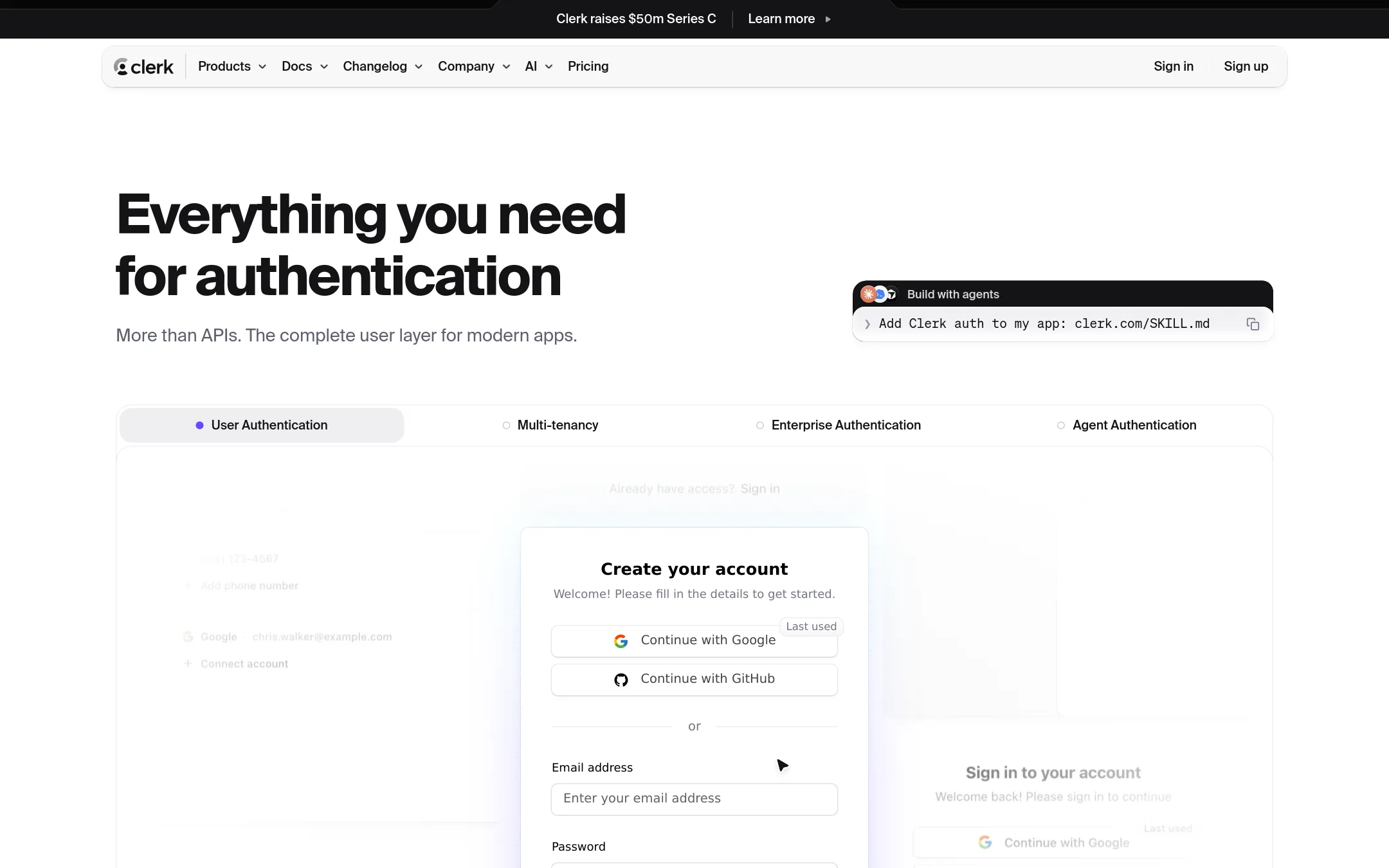
Clerk is a hosted auth and user management platform with prebuilt UIs and a dashboard, so you don't run auth code in your own app. Choose it when you want a managed service with social login, MFA, and user analytics out of the box, rather than self-hosting a framework like Better Auth.
Where it is strong
- Prebuilt UI components for sign-up, sign-in, and user profile
- Unlimited applications on every plan
- Includes social login, MFA, passkeys, and bot detection
Where it falls short
- Hosted service means user data lives on Clerk's infrastructure, not your own
- Free plan caps at 50,000 monthly active users per app and 1-day log retention
- Pricing:
- Hobby is free, Pro starts at $25/mo ($20/mo billed annually), and Business at $300/mo ($250/mo billed annually), with overage fees per MRU and per SMS.
- Switching from Better Auth:
- Moving from Better Auth means replacing your in-code auth logic with Clerk's hosted APIs and prebuilt components, which requires reworking your auth flows and user data storage.
- From $25/mo + usage
3.Supabase
Best for: Startups and small teams that want a Postgres database, auth, and APIs in one managed platform without running their own infrastructure.
- Pricing
- From $25/mo + usage
- Category
- Developer Tools
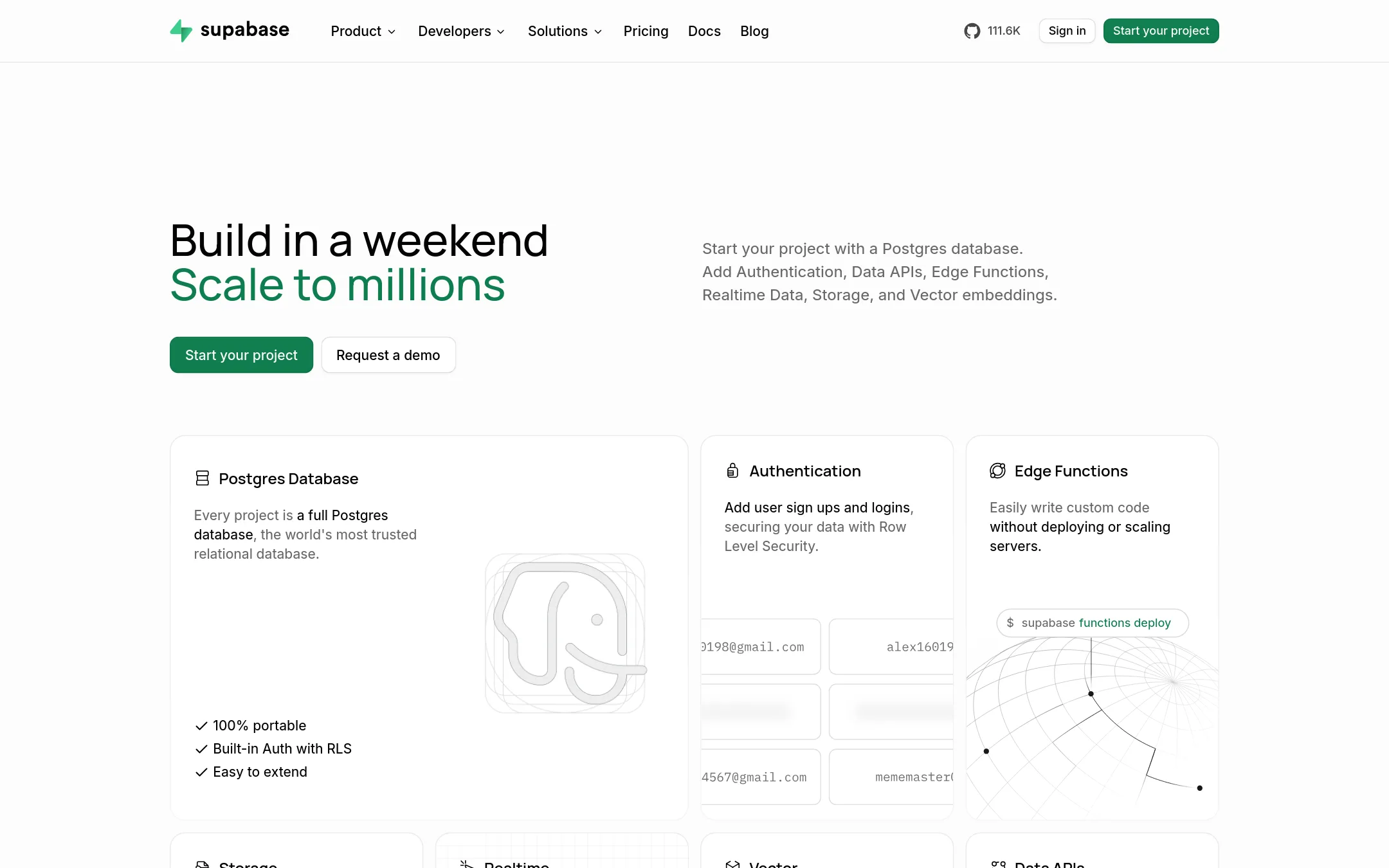
Supabase is a full Postgres-backed platform that includes authentication, database, storage, and realtime features. You would choose it over Better Auth when you want a managed backend with auth built in, rather than a self-hosted auth framework that lives inside your app.
Where it is strong
- Includes Postgres database, auth, storage, and realtime in one product
- Free tier supports up to 50,000 monthly active users
- Row Level Security integrates auth with database permissions
Where it falls short
- Auth is tied to Supabase's managed platform, not self-hosted
- Advanced features like SSO and SOC2 require the $599/month Team plan
- Pricing:
- Free plan includes 50,000 monthly active users and 500 MB database. Pro starts at $25/month, then $0.00325 per MAU beyond 100,000. Team plan is $599/month. Compute instances start at $10/month.
- Switching from Better Auth:
- Moving from Better Auth means replacing your in-code auth with Supabase's hosted auth and adapting your database schema to use their Postgres instance.
- RNot published
4.RecordBook
Best for: Small business owners who want a mobile-friendly, Airtable-like tool to manage records without writing code.
- Pricing
- Not published
- Category
- Productivity & Project Management
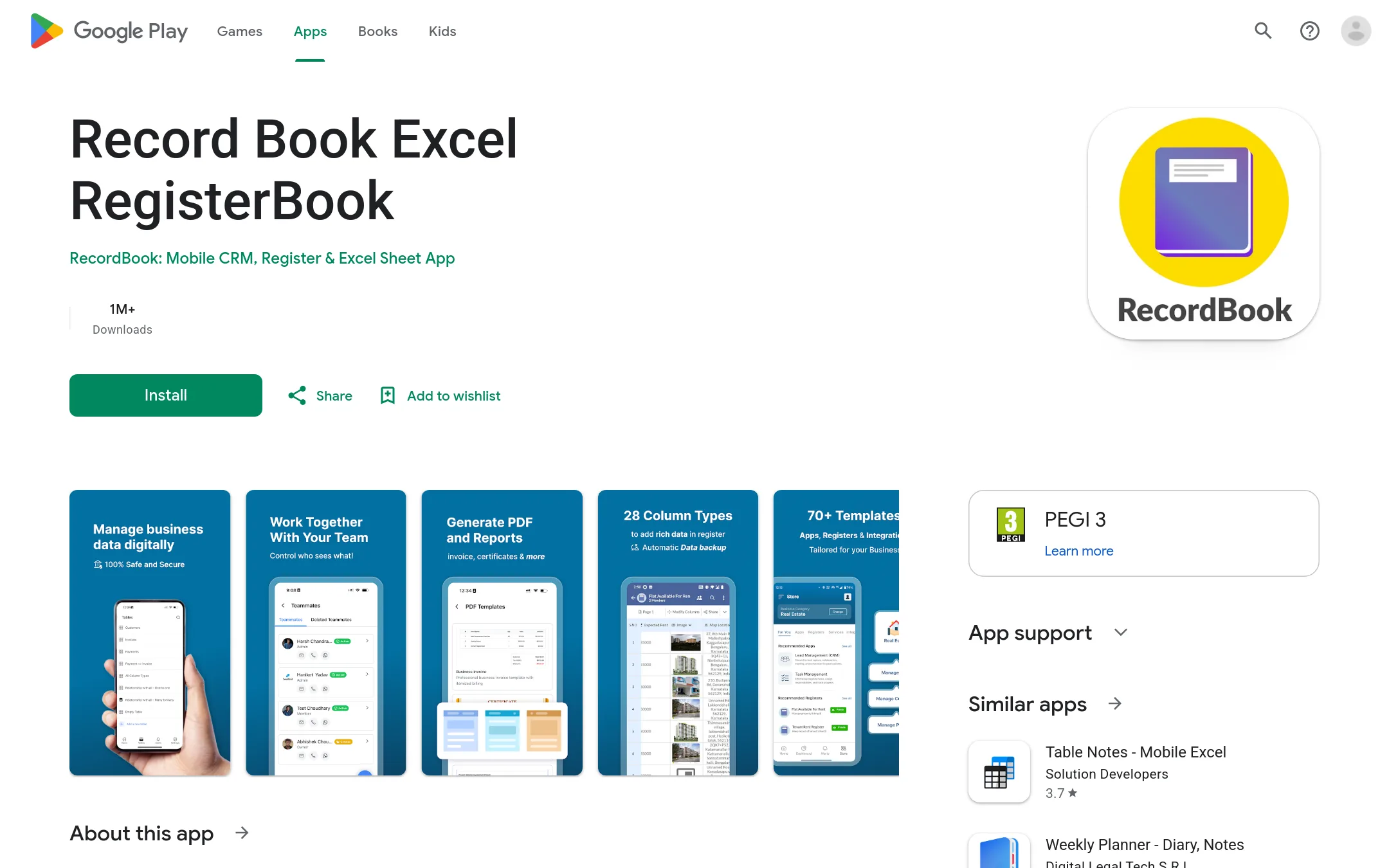
RecordBook is a mobile app that positions itself as a no-code database tool for small businesses, similar to Airtable. You would choose it over Better Auth if you are an SMB owner who needs to organize records and workflows on a phone, not a developer building authentication into a TypeScript app.
Where it is strong
- Mobile-first design for on-the-go record keeping
- No-code approach suits non-technical users
- Airtable-like flexibility for custom data structures
Where it falls short
- No authentication or security features
- Android-only availability limits reach
- Pricing:
- Pricing is not published on the site.
- Not published
5.NeutralinoJS
Best for: Developers building small, portable desktop apps who want a minimal footprint and don't need cloud-managed authentication.
- Pricing
- Not published
- Category
- Developer Tools
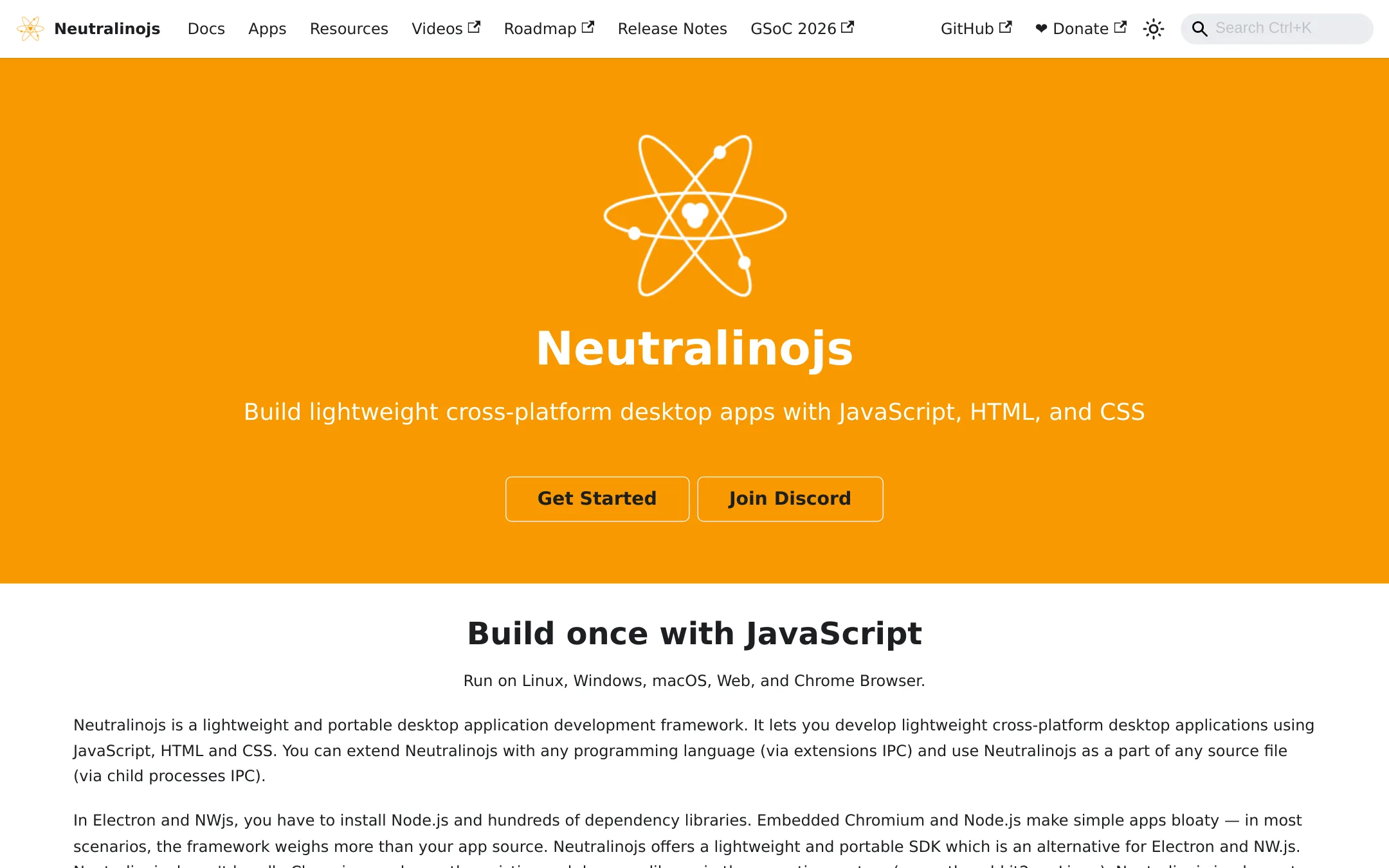
NeutralinoJS is a lightweight framework for building cross-platform desktop apps with web technologies, using the OS's native webview instead of bundling Chromium. Choose it over Better Auth when your project is a desktop application that needs local authentication or simple user identity, not a web service with server-side auth infrastructure.
Where it is strong
- Apps are tiny, around 2MB uncompressed, because it doesn't bundle Chromium or Node.js.
- Runs on Linux, Windows, macOS, Web, and Chrome from a single codebase.
- Works with any frontend framework and can be extended with any backend language via IPC.
Where it falls short
- Not an authentication framework, so you'd need to build or integrate auth yourself.
- Relies on the OS's webview, which can behave differently across platforms.
- Pricing:
- Pricing is not published on the site.
- PNot published
6.Passport.js
Best for: Node.js/Express teams that need a simple, strategy-based auth layer and prefer to manage user data and sessions in their own code.
- Pricing
- Not published
- Category
- Other
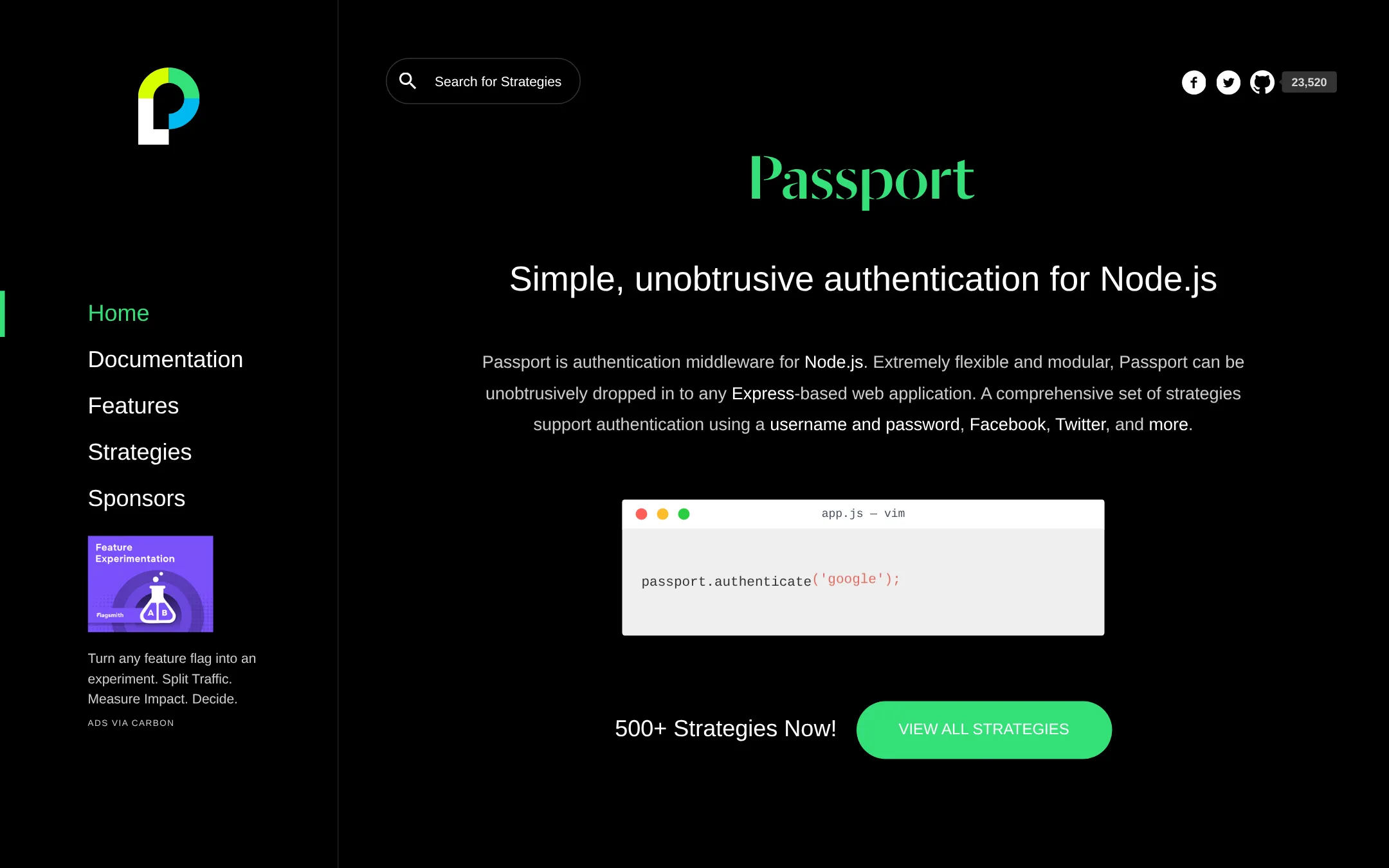
Passport.js is a minimal authentication middleware for Node.js and Express apps. It handles the request flow for over 500 strategies, letting you plug in social logins or local credentials without a full framework. Choose it when you want a lightweight, battle-tested library and are comfortable wiring up sessions and routes yourself.
Where it is strong
- 500+ strategies for social and local auth
- Unobtrusive, works with any Express app
- Long-standing, widely adopted library
Where it falls short
- No built-in user management or dashboard
- You must handle sessions, tokens, and security yourself
- Pricing:
- Pricing is not published on the site.
- LNot published
7.Lucia
Best for: Developers looking for a simple, educational reference implementation of auth sessions in TypeScript, not a production-ready framework.
- Pricing
- Not published
- Category
- Other
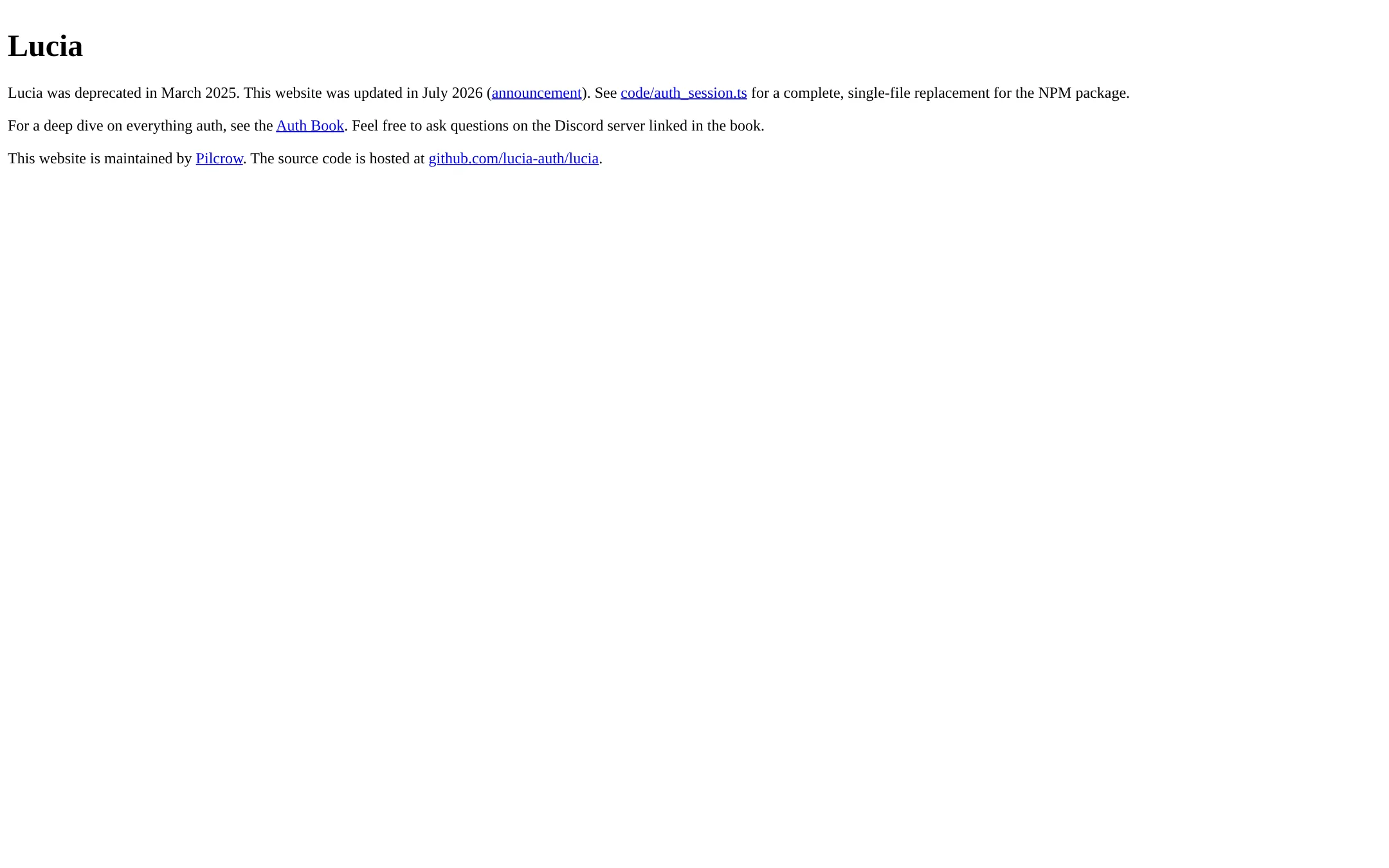
Lucia is a deprecated authentication library that has been replaced by a single-file reference implementation. You would choose it only if you want to learn from a minimal, educational code example or need to migrate an existing Lucia-based project. It is not a maintained alternative to Better Auth for production use.
Where it is strong
- Single-file replacement is easy to read and understand
- Auth Book provides deep educational content on authentication
- Open source and free to use
Where it falls short
- Deprecated since March 2025, no longer maintained
- No managed infrastructure, dashboard, or enterprise features like Better Auth
- Pricing:
- Pricing is not published on the site.
- Switching from Better Auth:
- Moving from Better Auth to Lucia means abandoning a maintained framework for a deprecated library, so only consider it if you are migrating away from Lucia, not toward it.
- WFree up to 1M users
8.WorkOS
Best for: B2B SaaS teams that need to add enterprise SSO, SCIM, and audit logs without building or self-hosting the infrastructure themselves.
- Pricing
- Free up to 1M users
- Category
- Other
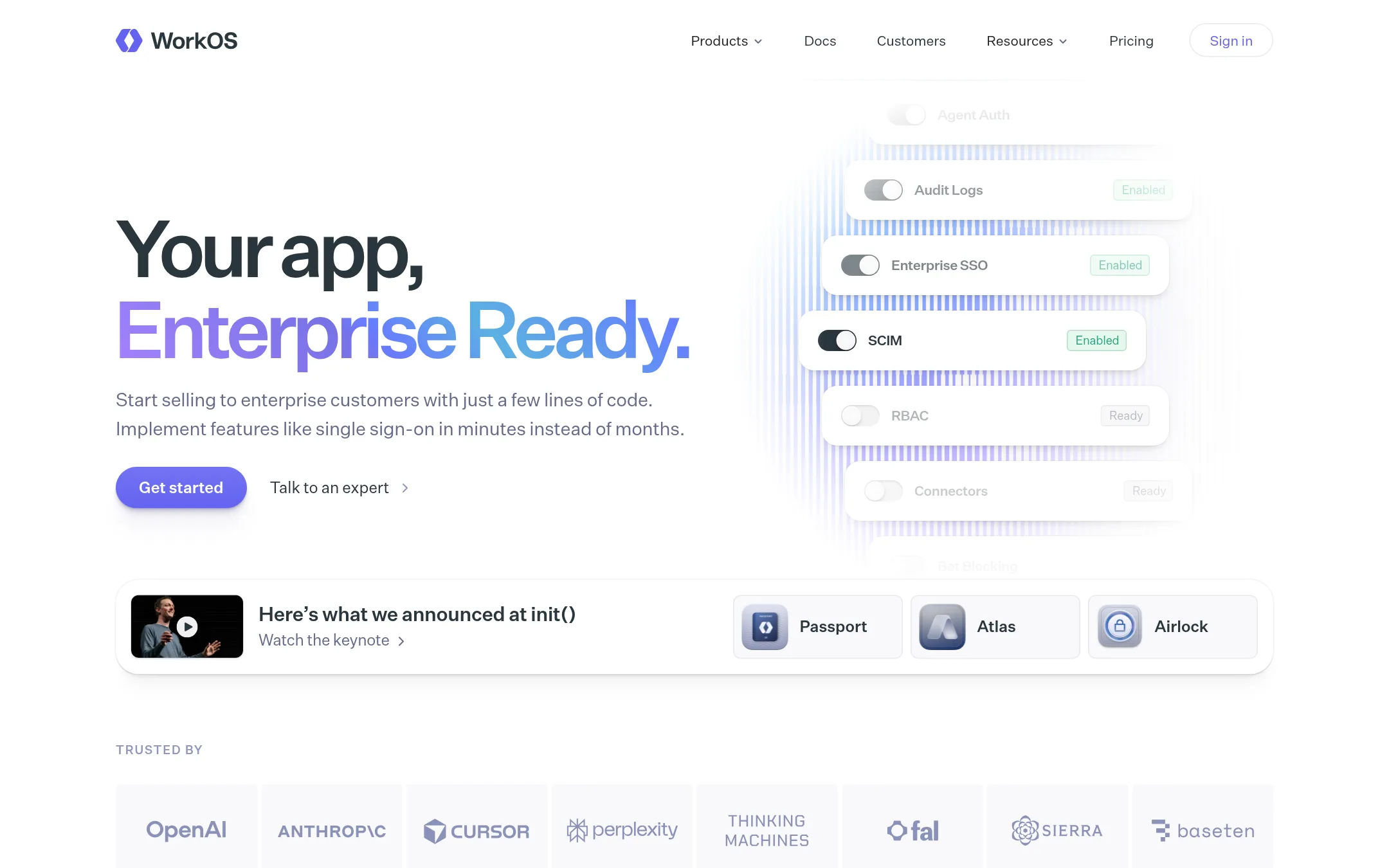
WorkOS is a hosted set of building blocks for adding enterprise features like SSO, Directory Sync, and Audit Logs to your app. Choose it over Better Auth when you need to support enterprise customers quickly with a managed service, rather than self-hosting an open-source framework.
Where it is strong
- Supports 20+ enterprise services with a single integration point
- Admin Portal lets IT admins self-configure SSO and directory sync
- Transparent usage-based pricing with volume discounts
Where it falls short
- Hosted service, not self-hosted, so auth lives outside your codebase
- Enterprise features like SSO and Directory Sync are paid add-ons
- Pricing:
- AuthKit is free for up to 1 million users, then $2,500 per additional 1 million users per month. SSO connections start at $125 each, with volume discounts. Directory Sync and Audit Logs are priced separately.
- Switching from Better Auth:
- Moving from Better Auth to WorkOS means replacing your self-hosted auth with a hosted API, so you'll need to migrate user data and update your frontend and backend integrations.
- From $100/mo + $0.02/M
9.SuperTokens
Best for: Startups and enterprises that want to self-host auth without limits but may buy managed services for specific features like MFA or multi-tenancy.
- Pricing
- From $100/mo + $0.02/M
- Category
- Security & Privacy
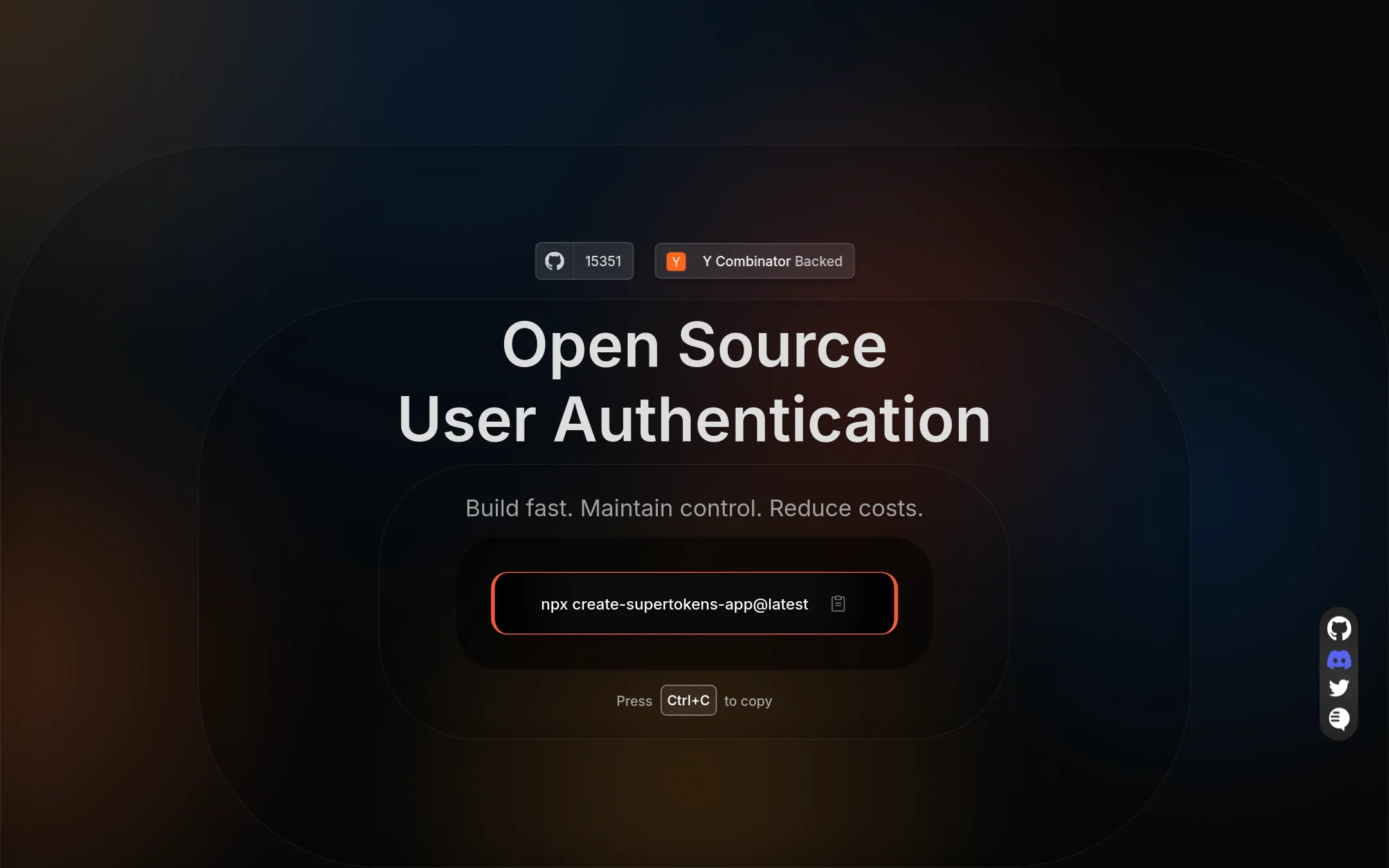
SuperTokens is an open source authentication framework you can self-host for free, with a managed service on top. Choose it when you want the control of self-hosting but still need a vendor for support and paid add-ons like MFA and account linking.
Where it is strong
- Self-hostable with no limits on open source features
- Prebuilt UI and frontend SDKs for quick setup
- Transparent per-MAU pricing with a calculator
Where it falls short
- Paid add-ons like MFA and account linking cost extra
- No SOC2 compliance for self-hosted deployments
- Pricing:
- Self-hosting the open source features is free without limits. Managed service starts at $0.02 per MAU with a $100 monthly minimum, plus $0.01 per MAU for MFA and $0.005 per MAU for account linking.
- Switching from Better Auth:
- Moving from Better Auth means reimplementing your auth flows with SuperTokens' SDKs and migrating user data, since the two frameworks are not drop-in compatible.
- From $6/user/mo
10.Okta
Best for: Large enterprises that need managed workforce and customer identity with SSO, MFA, and governance at scale.
- Pricing
- From $6/user/mo
- Category
- Security & Privacy
Okta is a full enterprise identity platform covering workforce and customer identity, SSO, MFA, lifecycle management, and governance. Choose it when you need a managed, compliance-ready identity solution for a large organization, rather than a self-hosted auth framework you embed in your own code.
Where it is strong
- Covers both workforce and customer identity in one platform
- Includes governance, lifecycle management, and threat protection
- Recognized as a leader by Gartner for access management
Where it falls short
- Per-user pricing gets expensive at scale
- Heavier and more complex than a code-embedded auth framework
- Pricing:
- Starter is $6 per user per month, Core Essentials is $14 per user per month, and Essentials is $17 per user per month. Professional and Enterprise require contacting sales for pricing.
- Switching from Better Auth:
- Moving from Better Auth to Okta means replacing your in-code auth with a hosted service, so you will need to rework authentication flows and migrate user data.
- Not published
11.Keycloak
Best for: Organizations that need a centralized, self-hosted identity provider with support for OpenID Connect, OAuth 2.0, SAML, and LDAP/Active Directory integration.
- Pricing
- Not published
- Category
- Security & Privacy
Keycloak is a standalone identity and access management server that handles single sign-on, social login, user federation, and fine-grained authorization. Choose it over Better Auth when you need a self-hosted, protocol-based IAM solution that centralizes authentication across multiple applications and services.
Where it is strong
- Supports standard protocols: OpenID Connect, OAuth 2.0, and SAML
- Built-in user federation with LDAP and Active Directory
- Centralized admin console for managing users, sessions, and authorization policies
Where it falls short
- Requires running and maintaining a separate server, unlike Better Auth's in-app framework
- No managed infrastructure or dashboard, so you handle scaling and uptime yourself
- Pricing:
- Pricing is not published on the site.
- ANot published
12.Authgear
Best for: Teams that need a self-hosted or private-cloud auth system with enterprise features like RBAC and SAML SSO, and want the option to escape vendor lock-in.
- Pricing
- Not published
- Category
- Other
Authgear is an open-source auth platform that you can run in their cloud, as a private cloud, or on your own servers. Choose it over Better Auth if you want a managed identity solution with built-in passkeys, WhatsApp OTP, and SAML SSO, without having to assemble plugins yourself.
Where it is strong
- Every plan includes all features, no feature gates
- Open source with data export and self-hosting options
- Supports passkeys, WhatsApp OTP, and SAML SSO out of the box
Where it falls short
- EU data region for cloud is not yet available, only private cloud or self-hosting
- Pricing details are not transparent on the site, requiring contact for Business and Enterprise plans
- Pricing:
- Pricing is not published on the site. Plans start at $0/month for Free, with Developer and Business tiers available, but no specific dollar amounts are listed.
- Switching from Better Auth:
- Switching from Better Auth means moving from a code-first framework to a hosted or self-hosted platform, so you'd need to migrate your user database and re-implement any custom auth logic using Authgear's hooks and Admin API.
See more comparisons in Security & Privacy alternatives.
FAQ
Questions about Better Auth alternatives
What is the best free alternative to Better Auth?
SuperTokens offers self-hosting with no limits on open source features, making it a strong free option. Keycloak is also free and self-hosted, but requires running a separate server. Both are viable if you want to avoid vendor lock-in.
Which alternative is easiest to integrate with a React or Next.js app?
Clerk is designed for React and Next.js teams, with prebuilt sign-in components and a dashboard. It is a hosted service, so you don't manage auth infrastructure. Supabase also works well with these frameworks, but it includes a full backend, not just auth.
Which alternative is best for enterprise SSO and SCIM?
Okta is a full enterprise identity platform with SSO, MFA, and governance, but it is priced per user. WorkOS offers SSO and Directory Sync as add-ons with transparent pricing, starting at $125 per connection. Both are managed services, so you don't self-host.
Can I self-host any of these alternatives?
SuperTokens and Keycloak are self-hostable. Authgear also supports self-hosting or private cloud. Supabase is managed, but you can self-host the open source version, though it requires more setup. Better Auth itself is self-hosted, so these are alternatives if you want a different approach.
What are the pricing differences between these alternatives?
SuperTokens is free for self-hosted open source, with paid add-ons like MFA. Supabase has a free tier up to 50,000 MAU, then Pro starts at $25/month. Okta charges per user, starting at $6 per user per month. Clerk has a free Hobby plan and Pro at $25/month. WorkOS is free up to 1 million users, then $2,500 per million.
Last updated November 4, 2026.