
Blue Onion alternatives
10 products compared · Updated October 16, 2026
The short answer
For e-commerce finance teams, Stripe is the strongest alternative if your focus is payments and billing infrastructure. QuickBooks Payroll suits small businesses needing payroll and bookkeeping in one tool. Xero is best for straightforward accounting and tax compliance without e-commerce-specific reconciliation.
Your shortlist, at a glance
Read the comparisons ↓- NNetSuiteSee websiteCloud ERP and financial management platform
 QuickBooks PayrollNot publishedSmall and growing businesses that need payroll, tax compliance, and bookkeeping in one tool.
 XeroFrom $27/moSmall businesses and self-employed operators in the UK or US that need straightforward accounting, invoicing, and tax compliance without e-commerce-specific reconciliation.
 Sage Business CloudNot publishedMidsized teams in construction, healthcare, or professional services that need automated accounting, payroll, and multi-entity consolidation.
 BlackLineNot publishedLarge enterprises that need automated financial close and intercompany processes across multiple systems.
 AvalaraFrom $699/moBusinesses of any size that need automated sales tax compliance across multiple states or countries.
 ChargebeeNot publishedSaaS and AI companies that need flexible billing for subscription, usage-based, or hybrid pricing models.
 Stripe2.9% + 30¢Businesses of any size that need to accept payments online or in person and want flexible billing and payout infrastructure.
 ShopifyFrom $29/mo + 2.9%Entrepreneurs and small businesses that need a complete e-commerce platform to launch and run an online store.
 WorkivaCustom quotePublic companies and large enterprises that need auditable financial reporting, risk management, and sustainability disclosures in one platform.
About Blue Onion and its alternatives
Blue Onion is a financial intelligence platform for e-commerce. It turns fragmented transaction data into a clean, reconciled source of truth, so finance teams can close faster, see clear margins, and use AI-ready data. It connects natively to systems like Shopify and works on day one without engineering.
When comparing alternatives in this category, weigh pricing structure, since some are transaction-based or tiered. Consider which regions and currencies you operate in, and whether integrations cover your stack. Check support options and contract terms, as some products require sales conversations and custom quotes.
Explore the alternatives
- NSee website
1.NetSuite
Productivity & Project Management
Oracle NetSuite is a full-suite ERP used by many mid-market retailers for order management, accounting, and financial reporting. It offers native ecommerce connectors but often requires additional reconciliation modules or manual journal work for complex payment and return flows. Compared with Blue Onion, NetSuite lacks the specialized order-to-payout matching engine and daily automated subledger entries, so finance teams frequently layer Blue Onion on top to reach 99% accuracy without extra ERP fees.
- Not published
2.QuickBooks Payroll
Best for: Small and growing businesses that need payroll, tax compliance, and bookkeeping in one tool.
- Pricing
- Not published
- Category
- Finance & Accounting
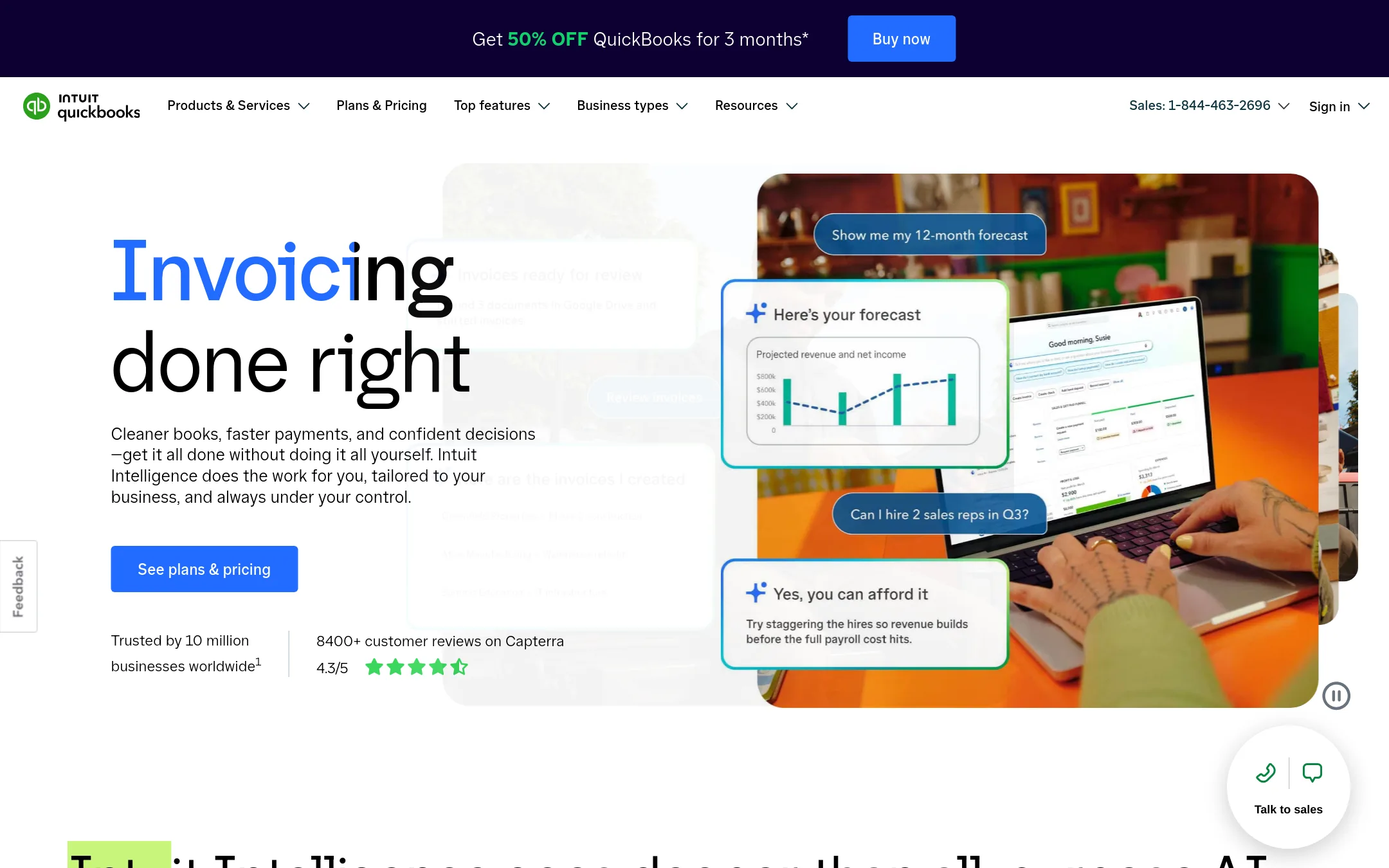
QuickBooks Payroll is a full-service payroll and accounting platform that handles payroll, tax filing, and team management. Choose it over Blue Onion if you need an integrated payroll solution for a small or growing business, rather than a financial data layer for e-commerce analytics.
Where it is strong
- Full-service payroll with automatic tax filing
- AI-powered automation for bookkeeping and invoicing
- Over 800 integrations with third-party apps
Where it falls short
- Not built for e-commerce financial data reconciliation
- Lacks Blue Onion's deep e-commerce margin and cash recovery insights
- Pricing:
- Pricing is not published on the site.
- From $27/mo
3.Xero
Best for: Small businesses and self-employed operators in the UK or US that need straightforward accounting, invoicing, and tax compliance without e-commerce-specific reconciliation.

- Pricing
- From $27/mo
- Category
- Finance & Accounting
Xero is a general-purpose cloud accounting platform for small businesses, covering invoicing, bank reconciliation, payroll, and VAT or sales tax. Choose it over Blue Onion if you need a full bookkeeping system for day-to-day operations rather than a specialized e-commerce financial data layer for AI-driven analysis.
Where it is strong
- Handles invoicing, bills, bank feeds, and payroll in one system.
- HMRC-recognized for UK MTD Income Tax, with VAT filing included.
- Smart document capture reads receipts and invoices automatically.
Where it falls short
- Not built for e-commerce-specific reconciliation or AI-ready data layers.
- Pricing tiers limit invoices, bills, and payroll users. Advanced features cost more.
- Pricing:
- In the United States, plans start at $27 per month (Early), then $59 per month (Growing), and $97 per month (Established), with 80% off for the first 3 months.
- Not published
4.Sage Business Cloud
Best for: Midsized teams in construction, healthcare, or professional services that need automated accounting, payroll, and multi-entity consolidation.

- Pricing
- Not published
- Category
- Finance & Accounting
Sage Business Cloud is a full accounting and ERP suite for growing businesses that need multi-entity management, payroll, and industry-specific workflows. Choose it over Blue Onion if you want a complete back-office system rather than a financial data layer focused on e-commerce reconciliation.
Where it is strong
- Automates up to 90% of manual finance tasks with AI agents.
- Built-in audit trails and controls for compliance.
- Handles multi-entity accounting and real-time visibility.
Where it falls short
- No e-commerce-specific reconciliation or cash recovery features like Blue Onion.
- Pricing requires contacting sales, so no self-serve plans.
- Pricing:
- Pricing is not published on the site.
- Not published
5.BlackLine
Best for: Large enterprises that need automated financial close and intercompany processes across multiple systems.
BlackLine is an agentic AI platform for financial close, intercompany, and invoice-to-cash operations. Choose it over Blue Onion if you need a broad financial operations suite for a large enterprise, not just e-commerce data reconciliation.
Where it is strong
- Covers financial close, intercompany, and invoice-to-cash in one platform.
- Uses agentic AI to automate manual finance workflows.
- Built for enterprise-scale operations.
Where it falls short
- No e-commerce-specific data layer or margin analysis like Blue Onion.
- Likely requires significant implementation and is not a day-one plug-in.
- Pricing:
- Pricing is not published on the site.
- From $699/mo
6.Avalara
Best for: Businesses of any size that need automated sales tax compliance across multiple states or countries.

- Pricing
- From $699/mo
- Category
- Finance & Accounting
Avalara automates sales tax calculation, returns, and filing across many jurisdictions. Choose it over Blue Onion if your main need is tax compliance rather than a general financial data layer for e-commerce.
Where it is strong
- Handles tax calculation, returns, and filing in one platform.
- Integrates with 1,400+ partners, including ERPs and e-commerce platforms.
- AI agents trained on billions of transactions for accurate, audit-defensible results.
Where it falls short
- Pricing is volume-based and can scale up with transaction counts and jurisdictions.
- Focused on tax compliance, not broader e-commerce financial reconciliation like Blue Onion.
- Pricing:
- In the United States, the Tax Calculation and Returns Compliance Package starts at $699, with License Guidance as low as $119 and Sales Tax Registration at $403 per location.
- Not published
7.Chargebee
Best for: SaaS and AI companies that need flexible billing for subscription, usage-based, or hybrid pricing models.
- Pricing
- Not published
- Category
- Finance & Accounting
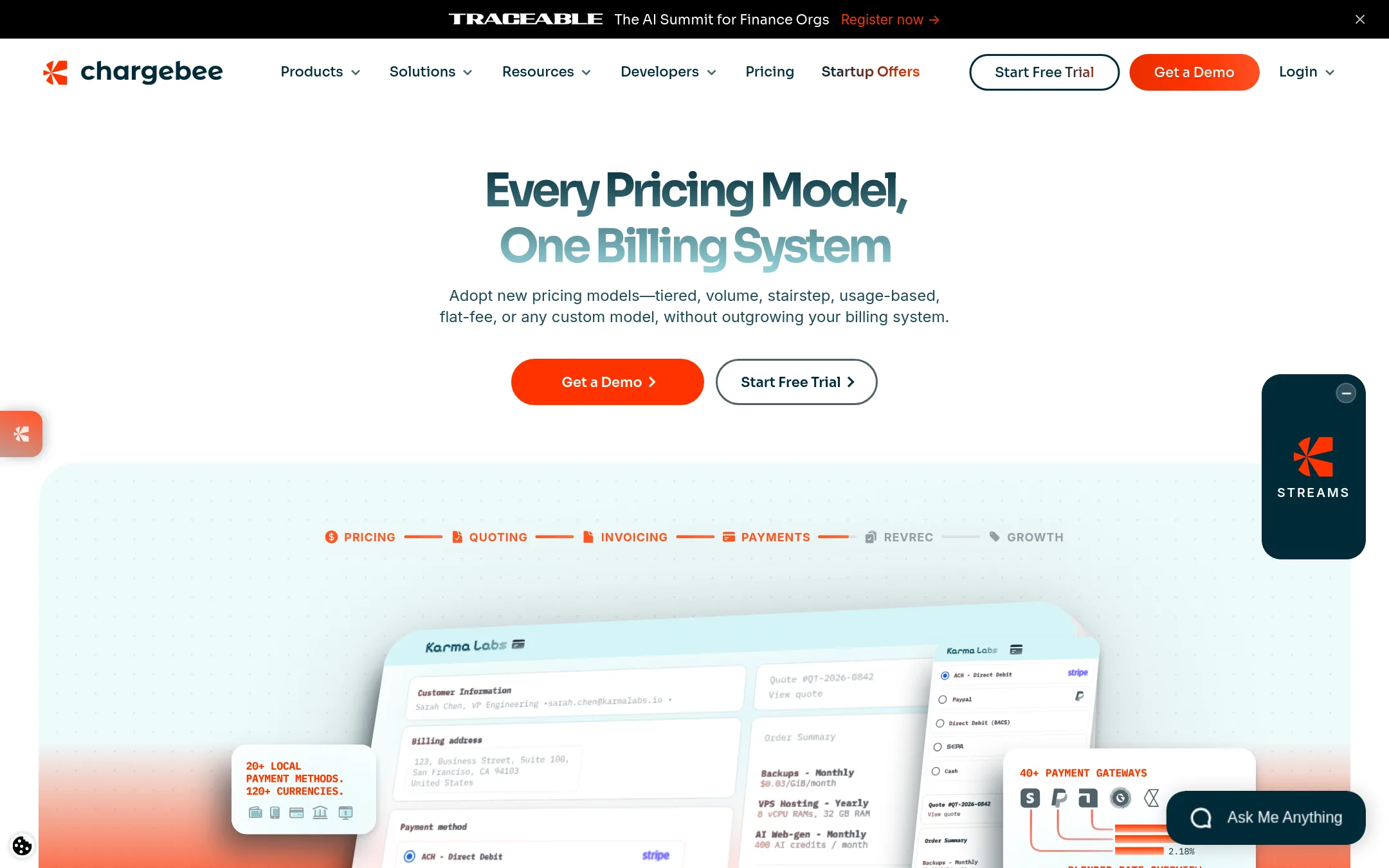
Chargebee is a billing and monetization platform for SaaS and AI companies, handling subscriptions, usage-based pricing, and revenue operations. Choose it over Blue Onion if your core need is automating billing, invoicing, and revenue recognition rather than reconciling e-commerce financial data.
Where it is strong
- Supports subscription, usage-based, and hybrid billing models in one system.
- Integrates with 40+ payment gateways and 50+ payment methods across 150+ countries.
- Includes revenue recognition (RevRec) and receivables automation for finance teams.
Where it falls short
- No native e-commerce reconciliation or financial data layer like Blue Onion.
- Pricing is not transparent, likely requiring a sales conversation.
- Pricing:
- Pricing is not published on the site.
- 2.9% + 30¢
8.Stripe
Best for: Businesses of any size that need to accept payments online or in person and want flexible billing and payout infrastructure.

- Pricing
- 2.9% + 30¢
- Category
- Finance & Accounting
Stripe is a payments platform that handles transactions, billing, and money movement. You would choose it instead of Blue Onion if your main need is accepting payments and managing revenue operations, not reconciling e-commerce financial data for accounting close.
Where it is strong
- Supports 135+ currencies and payment methods globally.
- Handles thousands of transactions per second with high uptime.
- Offers prebuilt integrations and no-code options for quick setup.
Where it falls short
- Pricing is transaction-based, which can add up for high-volume businesses.
- Does not provide the e-commerce-specific financial reconciliation and close automation that Blue Onion does.
- Pricing:
- Standard pricing is 2.9% + 30¢ per successful transaction for domestic cards, with custom pricing for other features.
- From $29/mo + 2.9%
9.Shopify
Best for: Entrepreneurs and small businesses that need a complete e-commerce platform to launch and run an online store.

- Pricing
- From $29/mo + 2.9%
- Category
- E-commerce
Shopify is a full commerce platform for building and running an online store, not a financial data layer. You would choose it instead of Blue Onion if you need to sell products and manage your storefront, payments, and shipping, rather than reconcile and analyze financial data.
Where it is strong
- Includes storefront, payments, and shipping in one platform.
- AI assistant Sidekick helps with store tasks.
- App Store offers 21,000+ extensions for added features.
Where it falls short
- Not a financial reconciliation or reporting tool.
- Transaction fees add up on top of the monthly plan.
- Pricing:
- Plans start at $29/mo (paid yearly) for Basic, with card rates from 2.9% + 30¢ USD. Plus starts at $2,300/mo.
- Custom quote
10.Workiva
Best for: Public companies and large enterprises that need auditable financial reporting, risk management, and sustainability disclosures in one platform.
- Pricing
- Custom quote
- Category
- Finance & Accounting
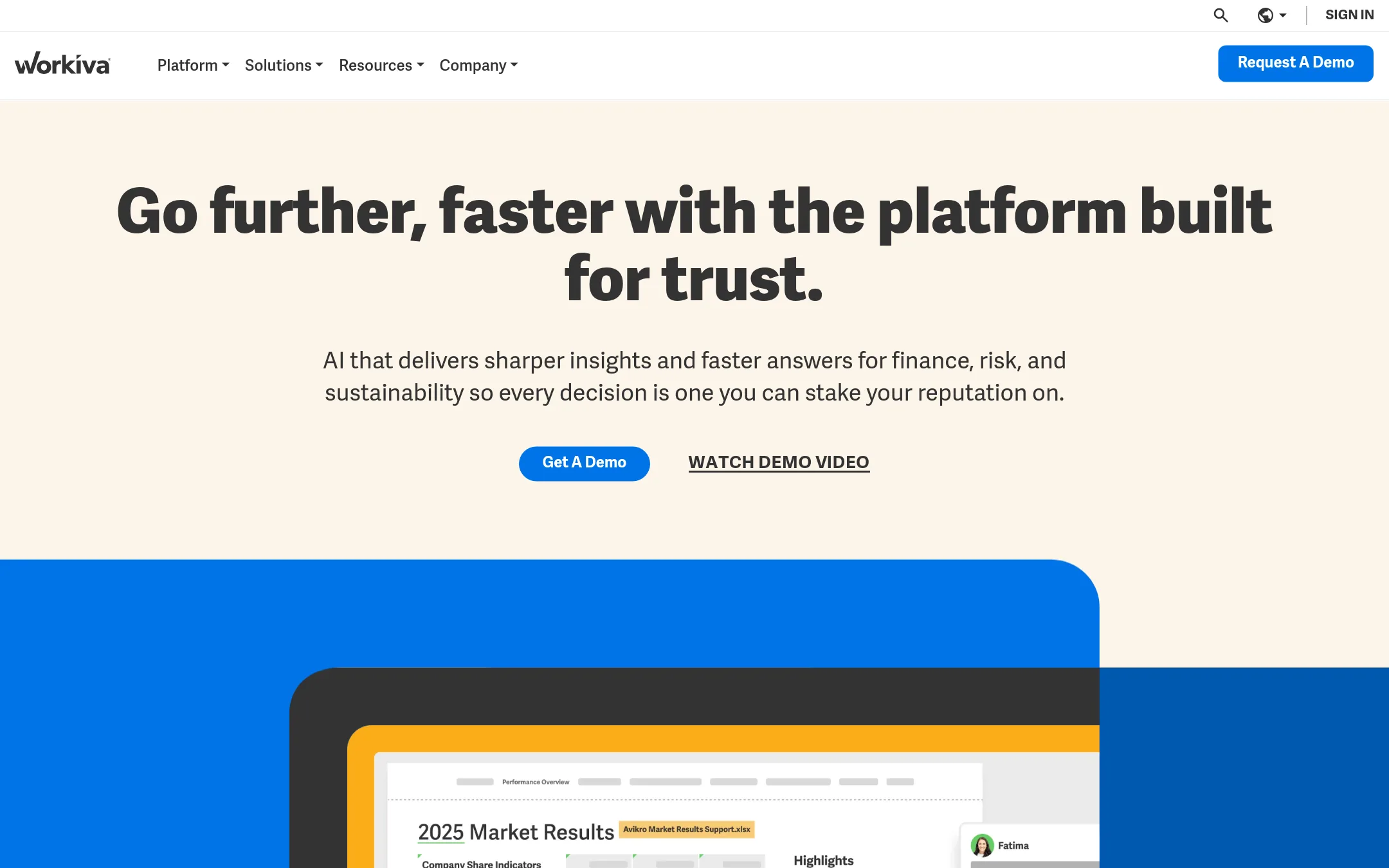
Workiva is a governance-focused platform for finance, risk, and sustainability reporting, with strong audit trails and XBRL tagging. Choose it over Blue Onion when you need to produce regulated filings like SEC reports or SOX compliance, not just e-commerce financial data cleanup.
Where it is strong
- Unlimited seats or users on all plans
- 70+ connectors to systems like Oracle, Salesforce, and Workday
- Built-in XBRL tagging and audit trail for regulatory filings
Where it falls short
- Pricing is opaque and enterprise-focused, not for small e-commerce teams
- Heavier emphasis on reporting and compliance, not on e-commerce transaction reconciliation
- Pricing:
- Pricing is not published on the site. You must contact sales for a custom quote based on your needs.
- Switching from Blue Onion:
- Moving from Blue Onion means shifting from an e-commerce-specific data layer to a broader governance platform, so you'd need to rebuild your reconciliation workflows and adapt to Workiva's reporting-centric model.
See more comparisons in Finance & Accounting alternatives.
FAQ
Questions about Blue Onion alternatives
What is Blue Onion best for?
Blue Onion is best for e-commerce businesses that need to reconcile financial data across systems and prepare it for AI analysis. It focuses on faster close, clearer margins, and cash recovery, not on payments or general accounting.
Which alternative is best for accepting payments?
Stripe is the strongest choice for accepting payments. It handles transactions, billing, and money movement with support for 135+ currencies and high-volume processing. Pricing is transaction-based, so it can add up for high-volume businesses.
Which alternative is best for small business accounting?
Xero is a good fit for small businesses needing invoicing, bank reconciliation, and tax compliance. Plans start at $27 per month in the US. It is not built for e-commerce-specific reconciliation or AI-ready data layers.
Which alternative handles payroll?
QuickBooks Payroll is the option for payroll, tax filing, and bookkeeping in one tool. It is suited for small and growing businesses. Pricing is not published, and it lacks e-commerce-specific financial reconciliation.
Which alternative is best for tax compliance?
Avalara automates sales tax calculation, returns, and filing across jurisdictions. It integrates with 1,400+ partners and starts at $699 for the Tax Calculation and Returns Compliance Package in the US. It is focused on tax, not broader e-commerce reconciliation.
Last updated October 16, 2026.