
Boundary alternatives
8 products compared · Updated November 9, 2026
The short answer
The three strongest alternatives to Boundary are Langfuse, Helicone, and Arize AI, all of which add tracing and observability to existing code rather than requiring a new programming language. Langfuse suits teams that want open source observability and evals they can self-host. Helicone suits startups already calling LLM APIs directly that want request logging, cost tracking, and provider fallbacks without changing their code. Arize AI suits AI engineering teams already running agents in production that want tracing and evals without rewriting them.
Your shortlist, at a glance
Read the comparisons ↓- LLangChainFrom $0 + usageTeams already building agents in Python or TypeScript that want tracing, evals and deployment without rewriting their code in a new language
 LangfuseFree, then $8/100k uniTeams running LLM apps or agents in production that want open source observability and evals they can self-host
- AArize AIFrom $0 / $50/moAI engineering teams that already run agents in production and want tracing and evals without rewriting their code
- HHeliconeTiered, usage-basedStartups and teams already calling LLM APIs directly that want request logging, cost tracking and provider fallbacks without changing their code
 BraintrustVolume-based / 25% savEnterprise talent teams that need to hire at volume or outsource operational work without adding recruiter headcount
- WWeights & BiasesNot publishedMachine learning teams that already track training runs and need certified, enterprise-grade experiment tracking
 DatadogNot publishedEngineering and operations teams running large cloud or hybrid stacks that need infrastructure, application, and log monitoring in one tool
 StrongDMNot publishedSecurity and platform teams that need zero standing privilege across cloud, on-premise and AI agent access
About Boundary and its alternatives
Boundary is a programming language for AI, known on its site for BAML, a language with built-in telemetry that covers AI calls, function profiles, errors, queries, dashboards, alerts, and experiments in one toolchain. BAML is open source and free to use, and the site says cloud features are coming later this year. The stack is in private beta, with access by a call with the founders.
When comparing alternatives in this category, weigh the pricing structure, including whether a free tier is metered by traces, units, or requests, and whether pricing is published at all. Check regional availability, since some products offer different features by region. Look at integrations, especially OpenTelemetry support and compatibility with your current framework. Also consider support levels and contract terms, and whether you need to rewrite code or only add instrumentation.
Explore the alternatives
- LFrom $0 + usage
1.LangChain
Best for: Teams already building agents in Python or TypeScript that want tracing, evals and deployment without rewriting their code in a new language
- Pricing
- From $0 + usage
- Category
- AI & Machine Learning
LangChain offers open source agent frameworks plus LangSmith, a platform for tracing, evaluating, deploying and monitoring agents. A team would pick it over Boundary when it wants a framework it can build agents with in any model provider and a hosted observability layer that works with those frameworks, rather than adopting a new programming language.
Where it is strong
- Open source frameworks with a choice of model providers
- LangSmith covers tracing, evals, deployment and monitoring in one place
- Plans with a free Developer tier and a clear base trace allowance
Where it falls short
- Observability is tied to LangSmith's trace model and billing units, which adds a metering layer to track
- Some features such as Engine and Deployment are reserved for the Plus or Enterprise plans
- Pricing:
- Pricing is published by tier: Developer includes up to 5k base traces per month and 1 seat, Plus includes up to 10k base traces per month with unlimited seats, and Enterprise is custom.
- Switching from Boundary:
- Moving from Boundary means rewriting agent functions in LangChain's frameworks or sending traces through LangSmith, since the two use different languages and toolchains.
- Free, then $8/100k uni
2.Langfuse
Best for: Teams running LLM apps or agents in production that want open source observability and evals they can self-host
- Pricing
- Free, then $8/100k uni
- Category
- AI & Machine Learning
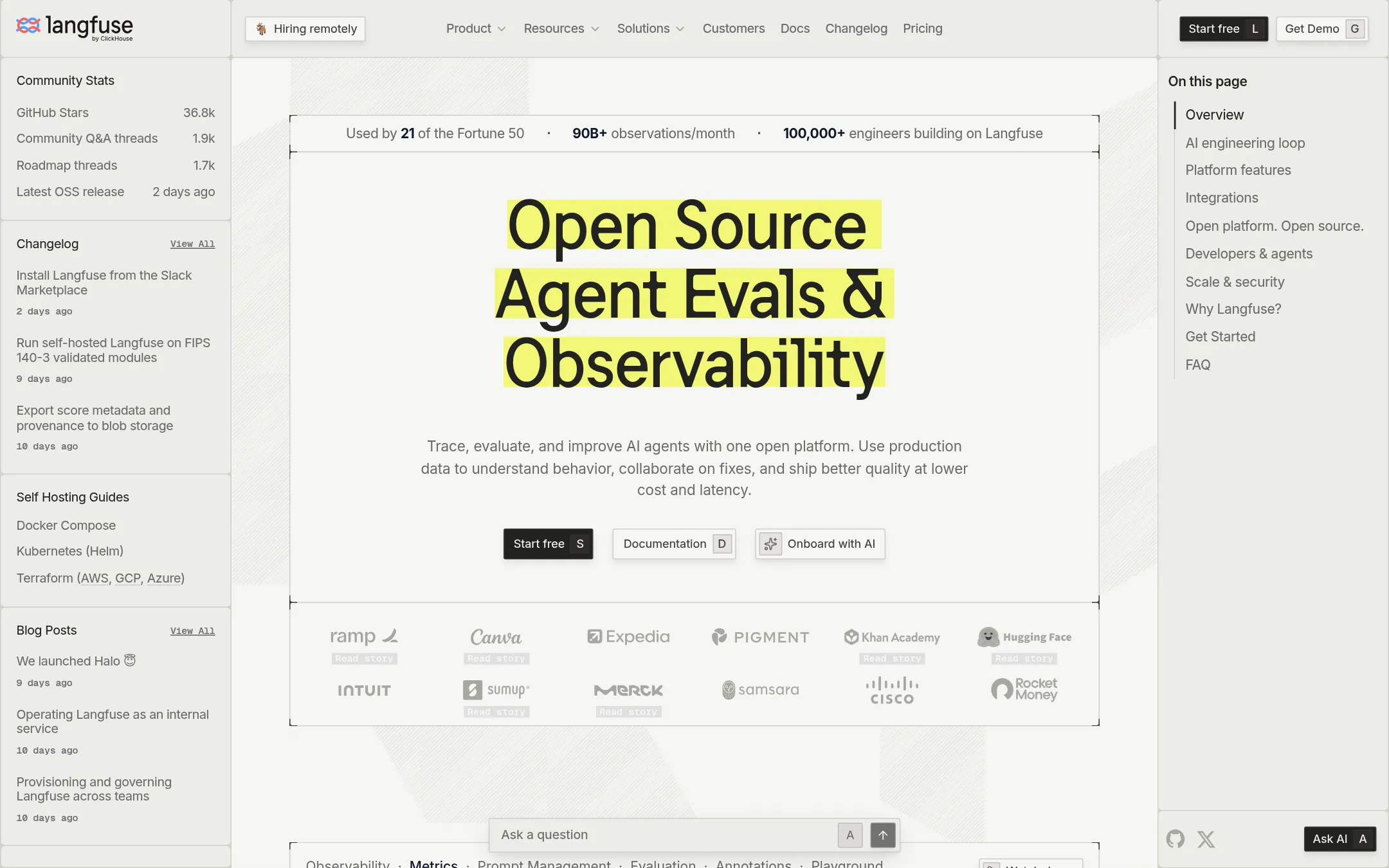
Langfuse is an open source platform for tracing, evaluating, and managing prompts for LLM apps and agents. You can self-host it under the MIT license or use the cloud version, and it works with OpenTelemetry and many frameworks. Choose it over Boundary if you want an open platform with self-hosting and data portability, rather than a programming language that you write your agents in.
Where it is strong
- Open source under the MIT license, and you can self-host it.
- Works with OpenTelemetry, so existing traces can be sent in without rewriting code.
- Covers tracing, evals, prompt management, datasets, and human annotation in one place.
Where it falls short
- It is an observability and evals platform, not a programming language, so you will not write your agent logic in it the way you would with B
- Free-tier limits on data access and rate limits may constrain larger teams until they move to paid plans.
- Pricing:
- The Hobby plan is free with 50k units per month, and the Core plan starts with 100k units per month and extra usage at $8 per 100k units.
- Switching from Boundary:
- Boundary's BAML is a language for writing agent functions, so moving to Langfuse usually means keeping your code and adding its SDK or OpenTelemetry exporter for tracing, rather than migrating functions out of a new language. The source does not describe a mig
- AFrom $0 / $50/mo
3.Arize AI
Best for: AI engineering teams that already run agents in production and want tracing and evals without rewriting their code
- Pricing
- From $0 / $50/mo
- Category
- Other
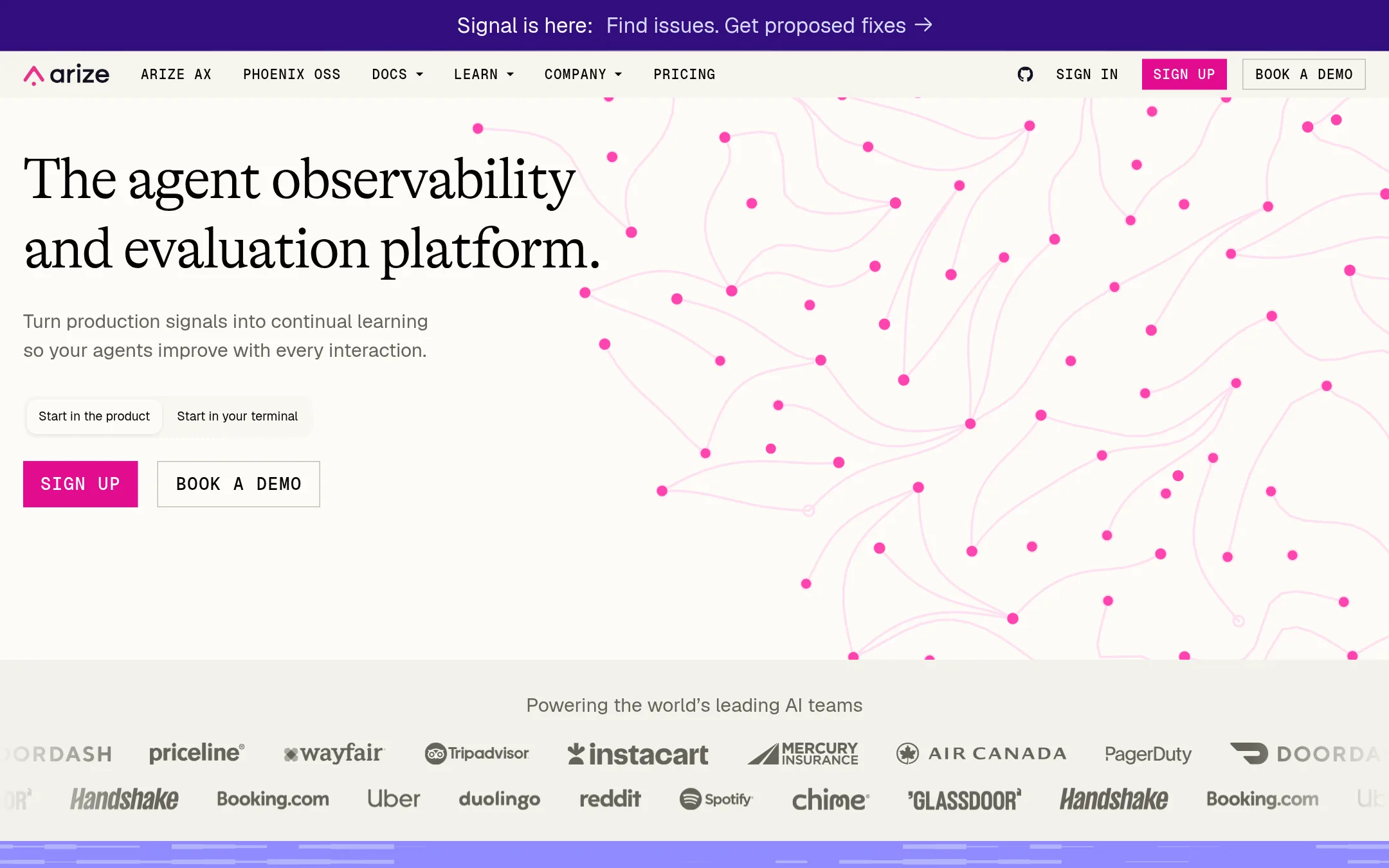
Arize AI is an agent observability and evaluation platform. It traces what an agent did, runs evals at scale, and tests prompt changes before they reach production, and its open-source Phoenix tool can run locally. A team would pick Arize over Boundary if they want to keep their existing code and framework and add tracing and evals on top, rather than rewriting agent logic in BAML.
Where it is strong
- Works with existing frameworks like LangChain, LlamaIndex and CrewAI
- Phoenix is open source and can run locally
- Built on OpenTelemetry and OpenInference standards
Where it falls short
- Tracing comes from instrumentation, not a single language with telemetry built in
- Free tier limits spans and retention to 15 days
- Pricing:
- Arize has a free tier with 25k trace spans and 1 GB of ingestion per month, a Pro plan at $50 per month, and custom Enterprise pricing.
- Switching from Boundary:
- Moving from Boundary to Arize means keeping your app code and adding Arize instrumentation to send traces, rather than moving logic out of BAML.
- HTiered, usage-based
4.Helicone
Best for: Startups and teams already calling LLM APIs directly that want request logging, cost tracking and provider fallbacks without changing their code
- Pricing
- Tiered, usage-based
- Category
- AI & Machine Learning
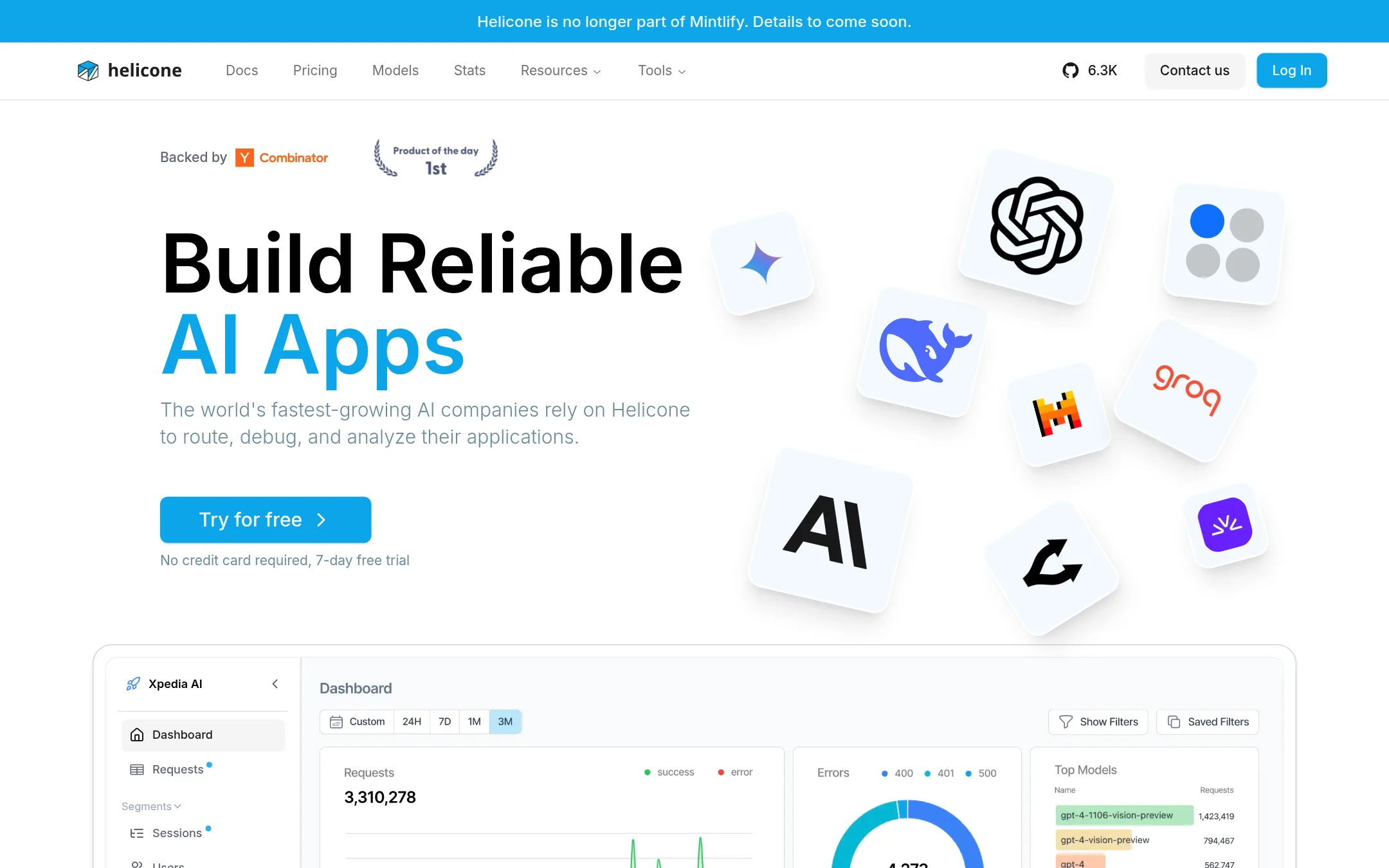
Helicone is an LLM observability and gateway product. It logs requests, tracks costs and sessions, and adds caching, rate limits and automatic fallbacks between model providers. Teams pick it over Boundary when they want to keep their existing code and add monitoring to it, rather than rewrite agent logic in a new language.
Where it is strong
- Works with your existing LLM provider and code, with a one-line integration
- Includes a gateway with caching, rate limits and automatic fallbacks
- Has an open-source option and a free starting tier with 10,000 requests per month
Where it falls short
- The homepage notes it is no longer part of Mintlify, with details still to come
- Does not offer a language-level runtime or built-in function profiling like BAML
- Pricing:
- Pricing is not published on the site for a specific amount per plan, but the page lists a Hobby tier, Pro and Team on 7-day free trials, Enterprise on request, and a 50% first-year discount for startups under two years old with $5M or less in funding.
- Switching from Boundary:
- Moving from Boundary to Helicone means keeping your app code and adding Helicone's logging on top, rather than moving agent functions into a new language.
- Volume-based / 25% sav
5.Braintrust
Best for: Enterprise talent teams that need to hire at volume or outsource operational work without adding recruiter headcount
- Pricing
- Volume-based / 25% sav
- Category
- Other
Braintrust is a hiring and talent platform, not a developer tool. Its Talent Marketplace matches companies with vetted professionals, AIR runs conversational AI interviews for screening, and Nexus builds AI agents for operational work like onboarding and support. Someone would pick it over Boundary when the goal is hiring people or automating business operations rather than building and observing AI software.
Where it is strong
- Covers sourcing, AI screening, and operational automation in one vendor
- Talent Marketplace offers vetted candidates in as little as 48 hours
- Nexus is priced on measured savings, with no upfront development cost
Where it falls short
- Does not offer programming language, tracing, or observability tools that Boundary provides
- AIR has no public per-interview price, so budgeting requires a sales conversation
- Pricing:
- AIR is priced on interview volume with no public per-interview price, Talent Marketplace has no platform fees for talent, and Nexus takes 25% of measured savings.
- WNot published
6.Weights & Biases
Best for: Machine learning teams that already track training runs and need certified, enterprise-grade experiment tracking

- Pricing
- Not published
- Category
- Other
Weights & Biases is an AI developer platform for tracking experiments, training runs, and model evaluation, and it has added Weave for tracing GenAI applications. Teams already running model training on it, or needing ISO 27001, SOC 2 or HIPAA-aligned tooling, may pick it over Boundary. Boundary fits better when the goal is one language and toolchain for building agents with built-in tracing, not a separate platform.
Where it is strong
- Certified under ISO 27001, SOC 2 and HIPAA standards, with dedicated deployment options
- Free for academic research, with a mobile app for monitoring training runs
- Weave adds tracing for GenAI applications through a single line of code
Where it falls short
- Its core strength is experiment tracking, so it does not replace a programming language for building agents
- Pricing details for plans sit behind a separate CoreWeave Forge page, and the site points to a product transition
- Pricing:
- Pricing is not published on the site.
- Not published
7.Datadog
Best for: Engineering and operations teams running large cloud or hybrid stacks that need infrastructure, application, and log monitoring in one tool
- Pricing
- Not published
- Category
- Analytics & Data
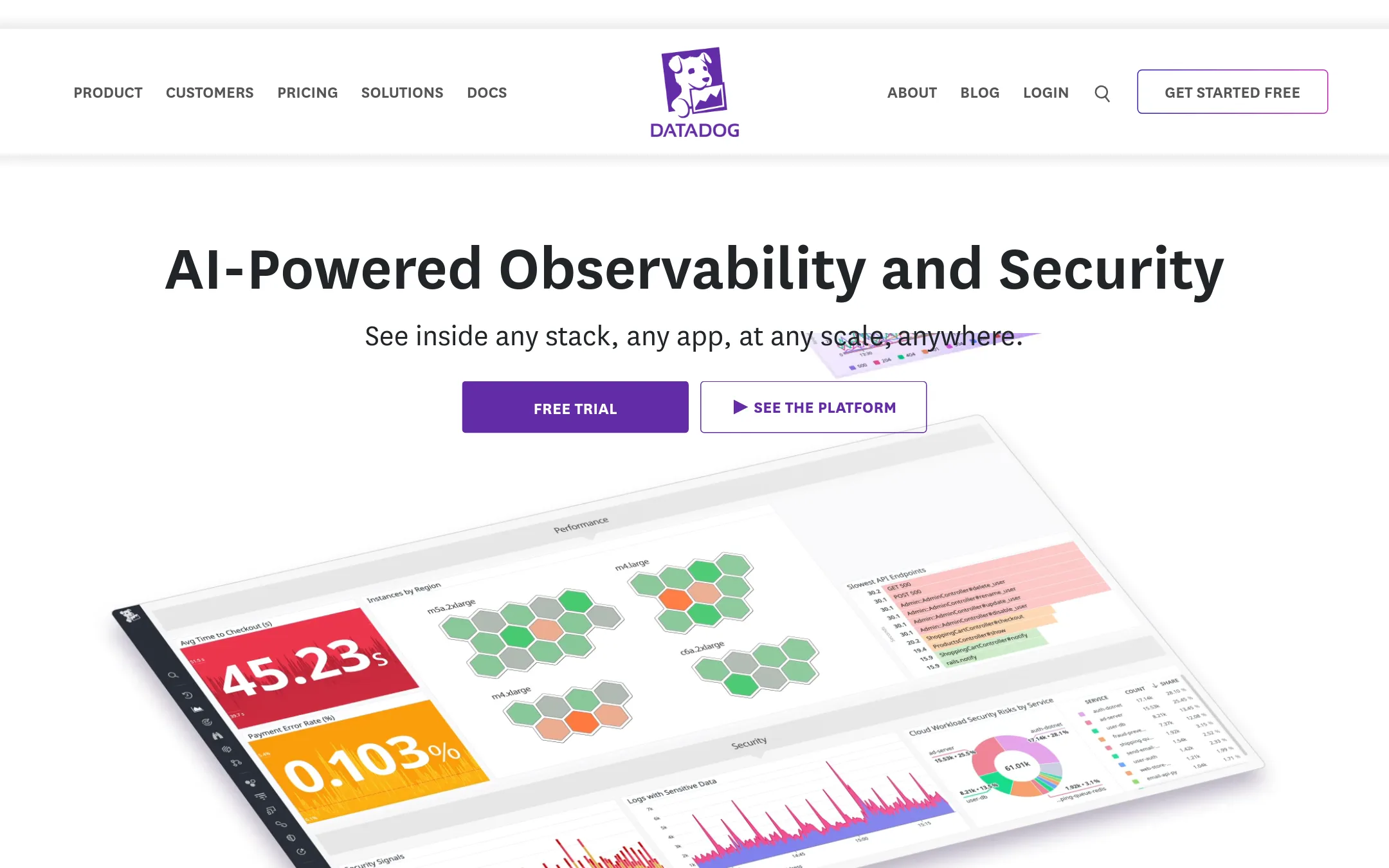
Datadog is a monitoring and observability platform that collects metrics, logs, traces, and security signals from infrastructure, applications, and cloud services in one place. A team would pick it over Boundary when they want to watch a whole production stack, including servers, databases, and cloud costs, rather than instrument their AI code in a new programming language.
Where it is strong
- Covers infrastructure, applications, logs, security, and digital experience in one platform
- Offers integrations with major clouds, Kubernetes, and many common services
- Has published OpenTelemetry support, so existing instrumentation can feed it
Where it falls short
- Its AI-specific features, such as AI Guard and Agent Observability, are not available on the US-FED site
- It does not offer a language for writing AI functions, which is Boundary's core product
- Pricing:
- Pricing is not published on the site.
- Not published
8.StrongDM
Best for: Security and platform teams that need zero standing privilege across cloud, on-premise and AI agent access
- Pricing
- Not published
- Category
- Security & Privacy
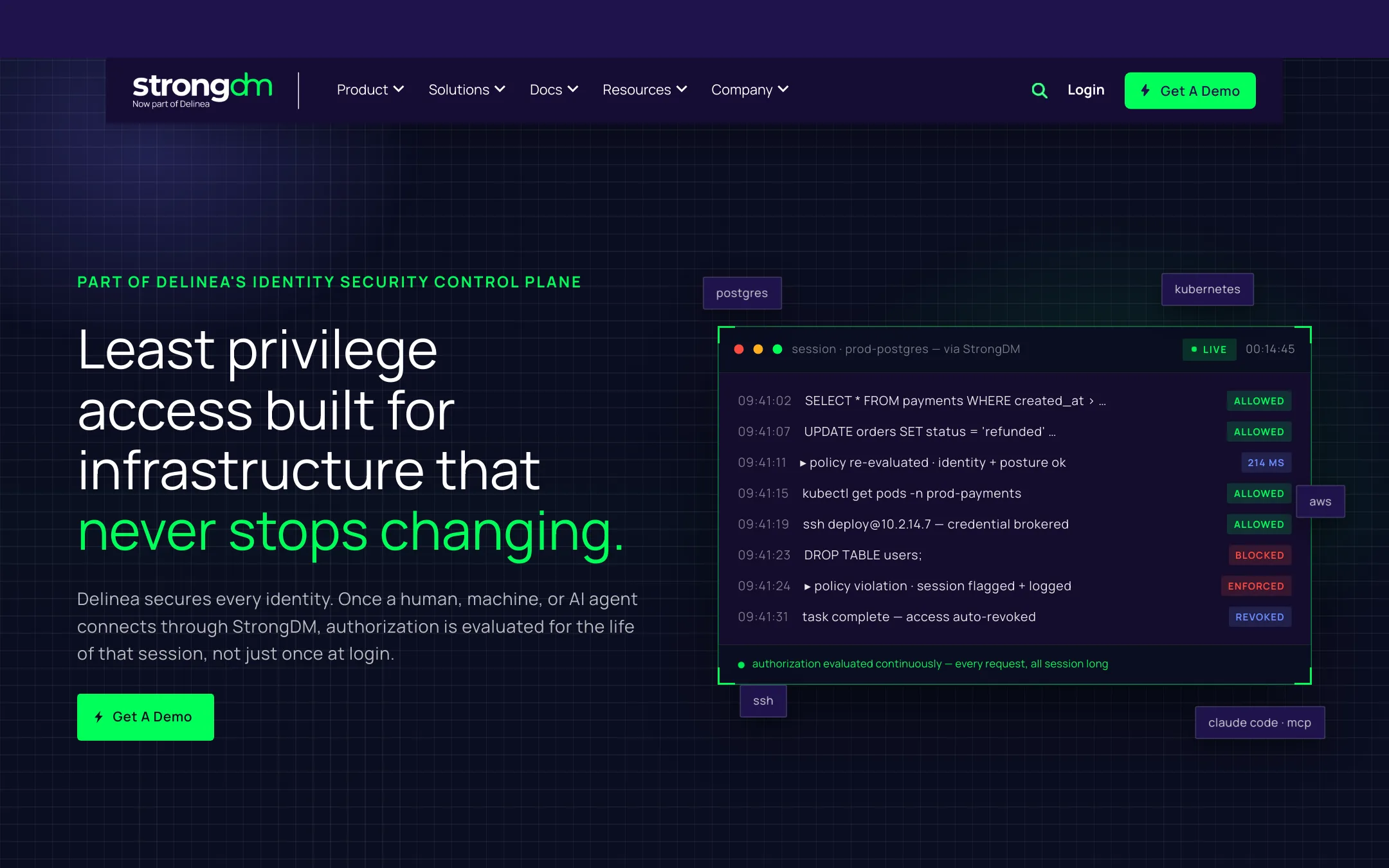
StrongDM, now part of Delinea, is a Zero Trust privileged access platform. It governs human, AI agent and machine identities, enforcing just-in-time, time-bound access to cloud infrastructure, databases, containers and CI/CD pipelines. Someone would pick it over Boundary when their main problem is controlling and auditing who or what can reach production systems, rather than building and observing AI agent code.
Where it is strong
- Covers human, AI agent and machine identities under one policy and audit layer
- Session recording and audit-ready evidence across identities
- Just-in-time access that can be added without replacing the existing stack
Where it falls short
- Focused on access control and security, not on tracing, profiling or testing AI code the way Boundary is
- Now part of Delinea, so the product roadmap and packaging may still be changing
- Pricing:
- Pricing is not published on the site.
See more comparisons in AI & Machine Learning alternatives.
FAQ
Questions about Boundary alternatives
What is the main difference between Boundary and Langfuse?
Boundary asks you to write your AI logic in BAML, a programming language with telemetry built in. Langfuse is an open source platform for tracing, evaluating, and managing prompts that works with OpenTelemetry and many frameworks, so you keep your existing code. Langfuse can be self-hosted under the MIT license.
Which alternative is best if I want to keep my existing code?
Helicone and Arize AI are both built to sit on top of code you already have. Helicone offers a one-line integration with your existing LLM provider, plus caching, rate limits, and fallbacks. Arize AI traces agents built with frameworks like LangChain, LlamaIndex, and CrewAI, and its open source Phoenix tool can run locally.
Do any of these alternatives publish clear pricing?
Yes, to varying degrees. Langfuse lists a free Hobby plan with 50k units per month and Core from 100k units at $8 per 100k extra. Arize AI lists a free tier and a $50 per month Pro plan. Datadog, StrongDM, Braintrust's AIR product, and Weights & Biases do not publish pricing on their sites.
Should I choose a monitoring tool like Datadog instead of an AI-specific one?
Choose Datadog if you need to watch a whole production stack, including servers, databases, logs, and cloud costs, in one place. It has published OpenTelemetry support, but its AI-specific features are not available on the US-FED site. If your main concern is tracing and evaluating AI calls and agents, a purpose-built option like Langfuse, Helicone, or Arize AI will fit more directly.
Are any of these alternatives not really in the same category as Boundary?
Yes. Braintrust is a hiring and talent platform, and StrongDM is a Zero Trust privileged access platform, so neither is a developer tool for building or observing AI code. They appear here because some buyers evaluate them for related goals such as staffing or access control. Weights & Biases is closer, focusing on experiment tracking and model evaluation, which may suit teams already training models on it.
Last updated November 9, 2026.