
Buildah alternatives
11 products compared · Updated November 1, 2026
The short answer
Podman is the strongest alternative for teams that need a Docker-compatible, daemonless container runtime and can also build images. Docker suits teams wanting an integrated development platform with desktop tooling and enterprise support. containerd is best for Kubernetes-focused teams that need a stable runtime and can pair it with a separate image builder like Buildah.
Your shortlist, at a glance
Read the comparisons ↓PodmanNot publishedTeams that need a Docker-compatible container runtime without a daemon, especially those working with Kubernetes or using VS Code for development.
 DockerNot publishedTeams that want a complete container development workflow with desktop tooling, Docker Hub, and enterprise governance features.
 GitHub ProjectsNot publishedDevelopment teams already on GitHub that want lightweight project tracking without leaving their codebase.
 CRI-ONot publishedKubernetes clusters that want a lightweight, OCI-compliant container runtime without Docker.
 HashiCorp NomadNot publishedTeams that need to schedule and orchestrate mixed workloads, including non-containerized applications, across multiple environments.
 KubernetesNot publishedTeams running production container workloads that need automated rollouts, scaling, and self-healing across on-premises, hybrid, or public cloud infrastructure.
 LXDNot publishedTeams running Ubuntu-based infrastructure that need both system containers and VMs managed through a single tool.
 OpenShiftNot publishedEnterprises that need a managed or self-managed Kubernetes platform with integrated developer and operations tooling across hybrid cloud.
 RancherRequest pricingTeams running or adopting Kubernetes across many clusters who need centralized management, security, and DevOps tooling.
 SingularityNot publishedHPC and AI/ML teams that need to run containerized workloads on shared, multi-tenant clusters with strict security requirements.
- ccontainerdNot publishedTeams running Kubernetes or other container orchestration platforms that need a stable, graduated CNCF runtime for container execution.
About Buildah and its alternatives
Buildah is an open-source tool for building OCI container images without a full container runtime or daemon. It is known for its daemonless approach, which makes it lightweight and secure, and for its ability to build images standalone, even on Kubernetes clusters.
When comparing alternatives, weigh the pricing structure, as some tools like Rancher require a sales call for quotes. Consider regional availability, integrations with your existing stack, and the level of support offered, especially for enterprise needs. Also check contract terms, as some tools like OpenShift require a Red Hat subscription.
Explore the alternatives
- Not published
1.Podman
Best for: Teams that need a Docker-compatible container runtime without a daemon, especially those working with Kubernetes or using VS Code for development.
- Pricing
- Not published
- Category
- Developer Tools
Podman is a daemonless container engine that can build, run, and manage containers and pods, with a CLI that is compatible with Docker. You would choose it over Buildah when you need a full container runtime for running workloads, not just building images, and want a free, open-source tool that works well with Kubernetes.
Where it is strong
- Daemonless architecture improves security and simplicity.
- Docker-compatible CLI makes migration easy.
- Supports pods and Kubernetes workflows directly.
Where it falls short
- No built-in image building features as extensive as Buildah's.
- Requires a container runtime, unlike Buildah which can build images standalone.
- Pricing:
- Pricing is not published on the site.
- Not published
2.Docker
Best for: Teams that want a complete container development workflow with desktop tooling, Docker Hub, and enterprise governance features.
- Pricing
- Not published
- Category
- Developer Tools
Docker is a full software development platform that includes a daemon-based runtime, CLI, desktop app, and cloud services for building, running, and managing containers. Choose it over Buildah when you want an integrated experience with a GUI, orchestration, and enterprise support, rather than a minimal daemon-less image builder.
Where it is strong
- Includes Docker Desktop, CLI, Compose, and Kubernetes integration
- Offers Docker Hub with 20B+ monthly pulls and trusted content
- Provides enterprise plans with SSO, audit logs, and support SLAs
Where it falls short
- Requires a daemon, unlike Buildah's daemon-less approach
- Pricing page lacks clear per-user costs. Contact sales for Business
- Pricing:
- Pricing is not published on the site.
- Not published
3.GitHub Projects
Best for: Development teams already on GitHub that want lightweight project tracking without leaving their codebase.
- Pricing
- Not published
- Category
- Productivity & Project Management
GitHub Projects is a project management layer built into GitHub, so issues, pull requests, and tasks live next to your code. Choose it over Buildah when your team needs planning and tracking rather than container image building.
Where it is strong
- Tight integration with GitHub repos and pull requests
- Free tier includes unlimited repositories and 2,000 CI/CD minutes
- AI-powered tools like Copilot are bundled in Enterprise plans
Where it falls short
- No container image building capabilities
- Limited to GitHub ecosystem. Not for non-GitHub workflows
- Pricing:
- Pricing is not published on the site.
- Not published
4.CRI-O
Best for: Kubernetes clusters that want a lightweight, OCI-compliant container runtime without Docker.
- Pricing
- Not published
- Category
- Developer Tools
CRI-O is a container runtime for Kubernetes, not an image builder. It implements the Kubernetes CRI to run OCI-compliant containers using runc or Kata Containers. Choose it instead of Buildah when you need a lightweight, Kubernetes-native runtime and are not focused on building images.
Where it is strong
- Designed specifically for Kubernetes, passes Kubernetes tests
- Supports any OCI-compliant runtime, including runc and Kata Containers
- Pulls images from any compliant registry
Where it falls short
- Does not build container images, so you still need a tool like Buildah
- Requires Kubernetes and CNI setup, not a standalone tool
- Pricing:
- Pricing is not published on the site.
- Not published
5.HashiCorp Nomad
Best for: Teams that need to schedule and orchestrate mixed workloads, including non-containerized applications, across multiple environments.
- Pricing
- Not published
- Category
- Developer Tools
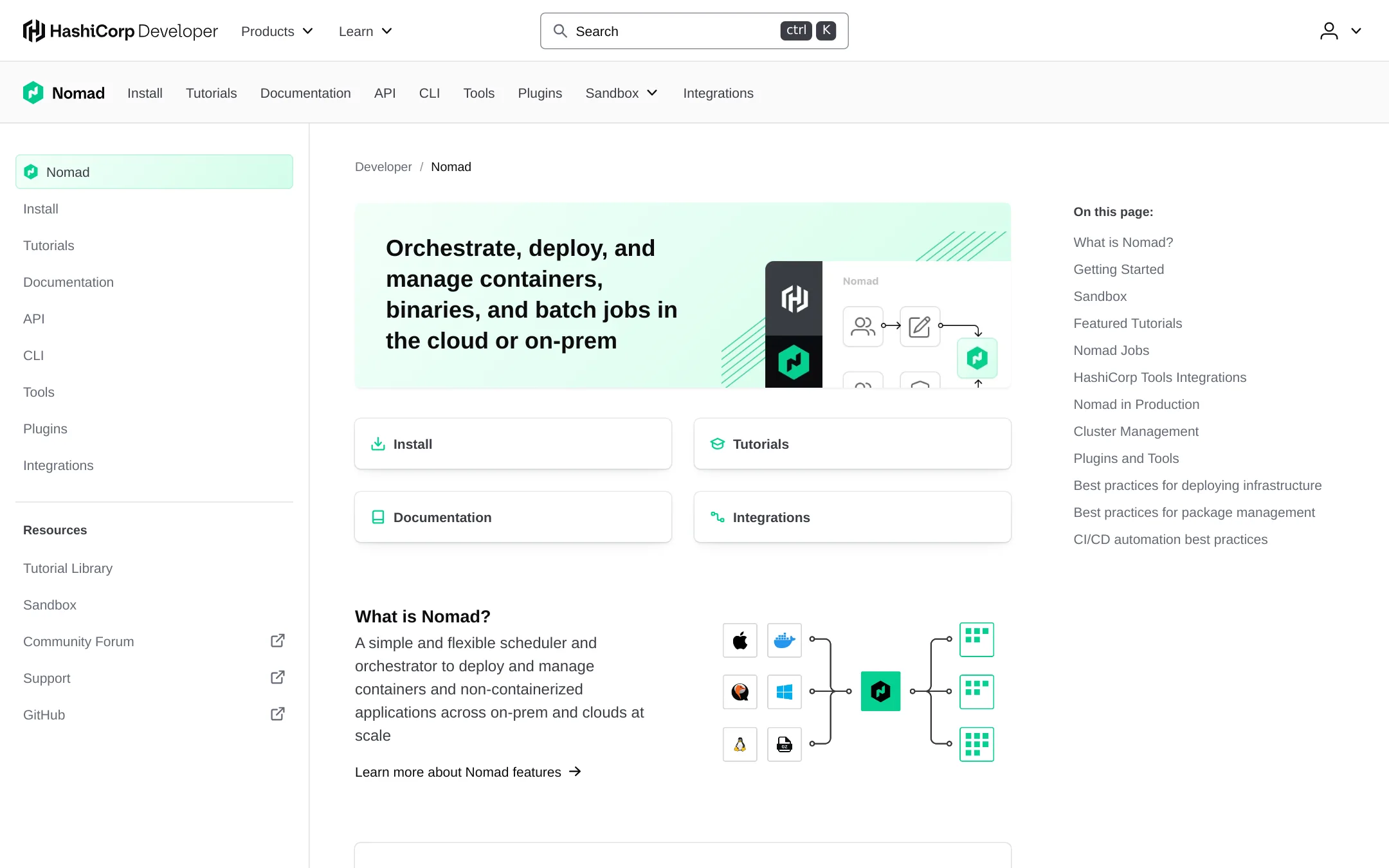
HashiCorp Nomad is a scheduler and orchestrator for containers, binaries, and batch jobs across cloud and on-prem. You would choose it instead of Buildah when you need to deploy and manage workloads at scale, not just build container images.
Where it is strong
- Schedules containers, binaries, and batch jobs in one system.
- Works on-prem and in the cloud.
- Integrates with Consul and Vault for service discovery and secrets.
Where it falls short
- Not a container image builder. You still need a tool like Buildah.
- Requires cluster setup and ongoing operations management.
- Pricing:
- Pricing is not published on the site.
- Not published
6.Kubernetes
Best for: Teams running production container workloads that need automated rollouts, scaling, and self-healing across on-premises, hybrid, or public cloud infrastructure.
- Pricing
- Not published
- Category
- Developer Tools
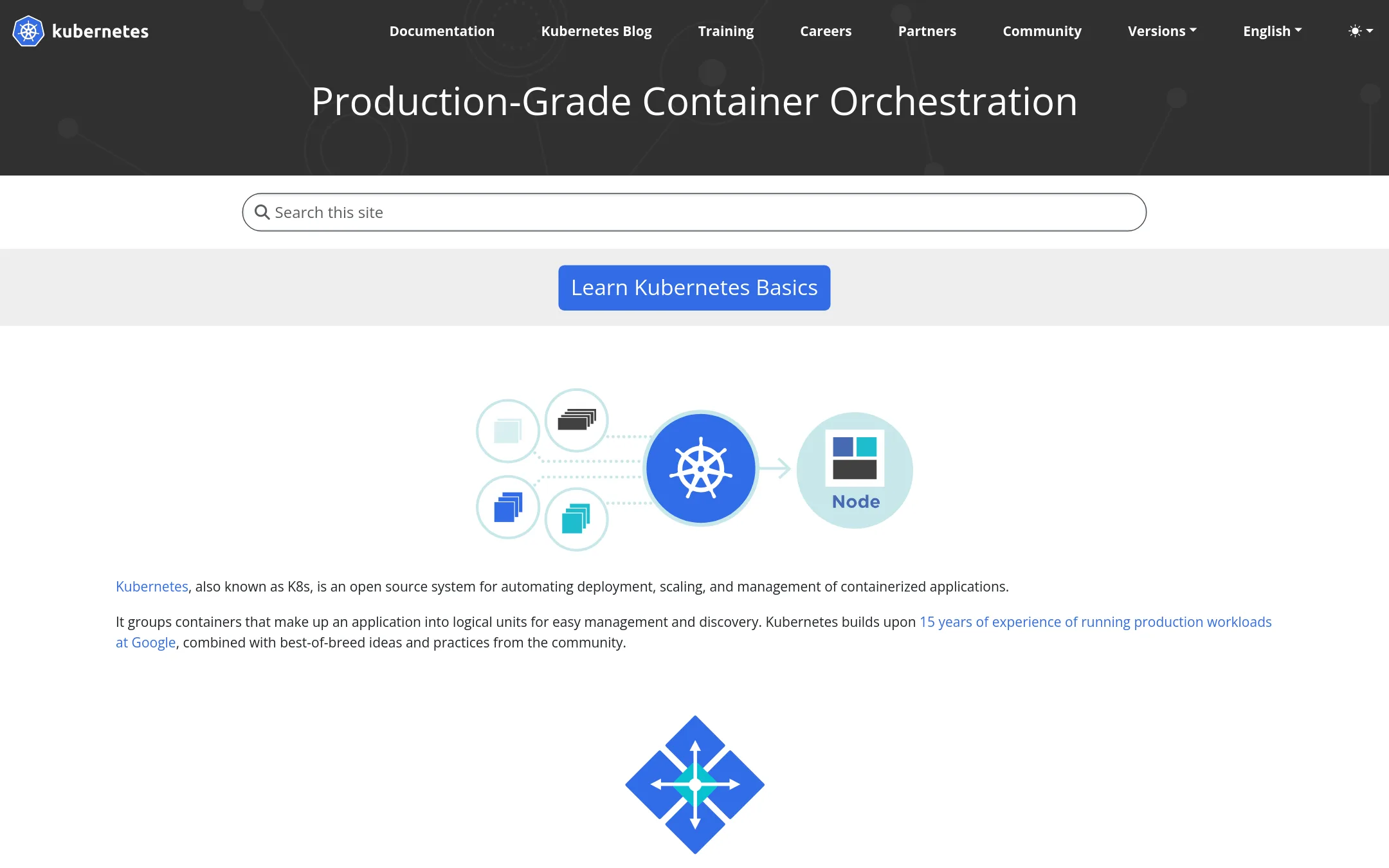
Kubernetes is a container orchestration platform that automates deployment, scaling, and management of containerized applications. Choose it over Buildah when you need to run and manage container workloads across clusters, not just build images.
Where it is strong
- Automated rollouts and rollbacks
- Service discovery and load balancing
- Self-healing and horizontal scaling
Where it falls short
- Steep learning curve for operators
- Requires a cluster to run, unlike Buildah's standalone image building
- Pricing:
- Pricing is not published on the site.
- Not published
7.LXD
Best for: Teams running Ubuntu-based infrastructure that need both system containers and VMs managed through a single tool.
- Pricing
- Not published
- Category
- Developer Tools
LXD is a system container and virtual machine manager from Canonical, focused on running full Linux environments rather than just building OCI images. Choose it over Buildah when you need to manage long-lived containers or VMs as part of your infrastructure, not just build images for deployment.
Where it is strong
- Manages both containers and VMs with one tool
- Backed by Canonical with long-term support options
- Designed for running full Linux system workloads
Where it falls short
- Not focused on building OCI images like Buildah
- Tied closely to the Ubuntu ecosystem
- Pricing:
- Pricing is not published on the site.
- Not published
8.OpenShift
Best for: Enterprises that need a managed or self-managed Kubernetes platform with integrated developer and operations tooling across hybrid cloud.
- Pricing
- Not published
- Category
- Developer Tools
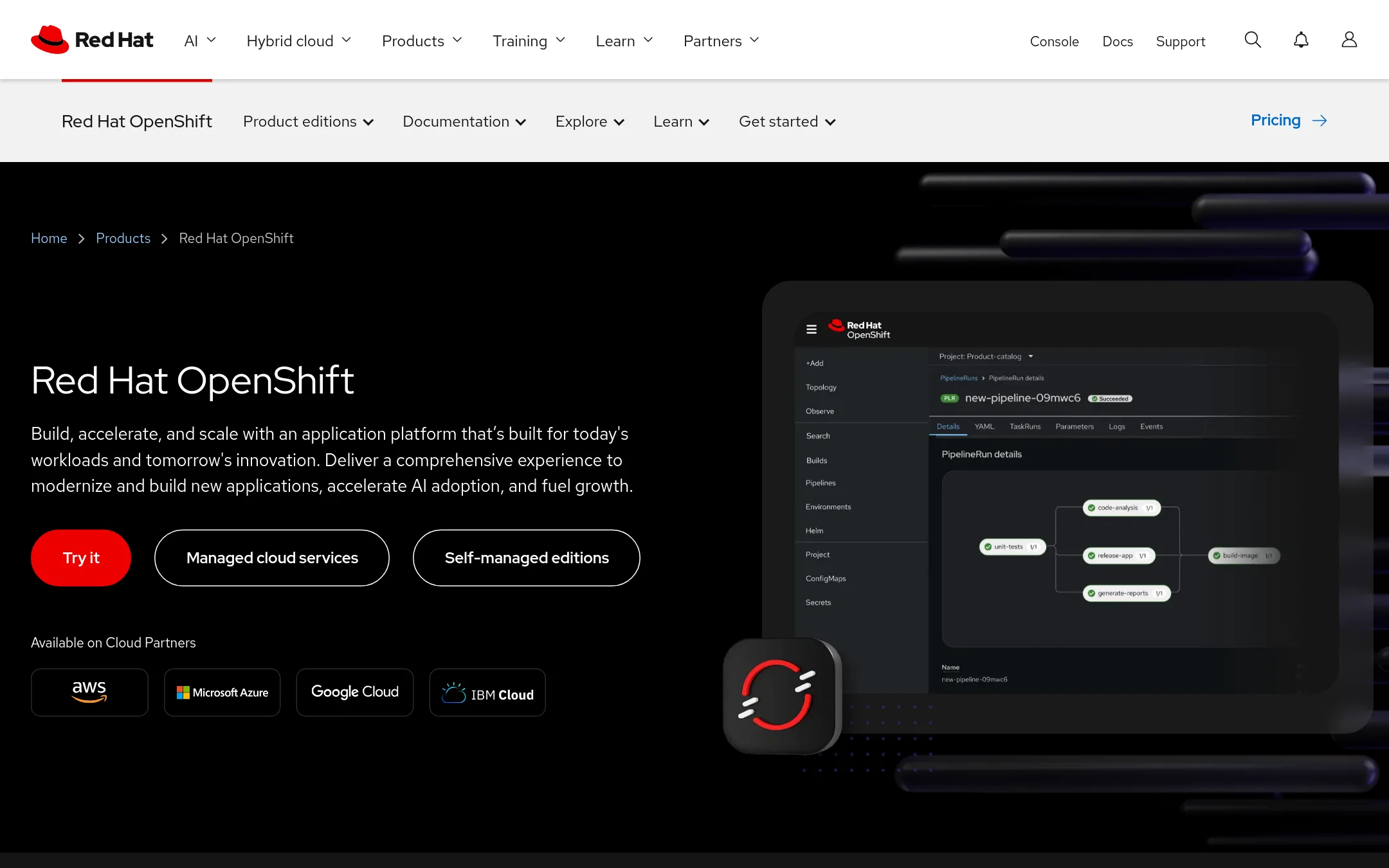
OpenShift is a full enterprise Kubernetes platform for building, deploying, and managing containerized applications at scale, including AI workloads. Choose it instead of Buildah when you need a complete platform with built-in CI/CD, security, and hybrid cloud management, not just a tool for building OCI images.
Where it is strong
- Managed and self-managed editions for AWS, Azure, Google Cloud, and on-prem
- Includes CI/CD, GitOps, and security features
- Supports AI/ML workloads and edge computing
Where it falls short
- Heavier and more complex than a standalone image builder
- Requires a Red Hat subscription for full support
- Pricing:
- Pricing is not published on the site.
- Request pricing
9.Rancher
Best for: Teams running or adopting Kubernetes across many clusters who need centralized management, security, and DevOps tooling.
- Pricing
- Request pricing
- Category
- Developer Tools
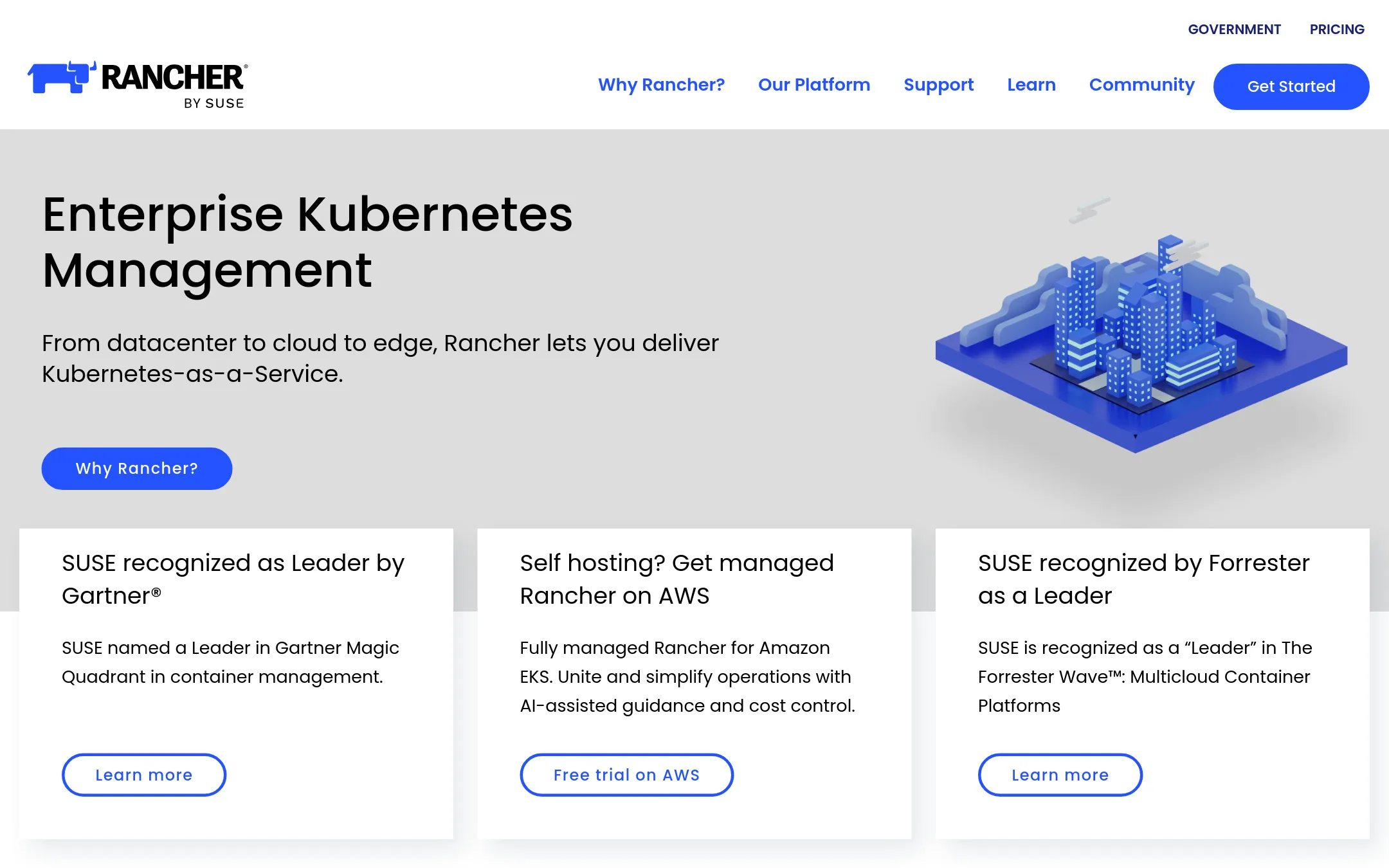
Rancher is a platform for managing multiple Kubernetes clusters across datacenter, cloud, and edge. Choose it over Buildah when your focus is operating Kubernetes at scale, not just building container images.
Where it is strong
- Manages multiple Kubernetes clusters from one control plane
- Open source with a large community and enterprise support
- Includes security and operational tooling for containerized workloads
Where it falls short
- Pricing is not transparent and requires a sales call
- Heavier than Buildah if you only need to build images
- Pricing:
- Pricing is not published on the site. You must request a quote from the regional sales team.
- Not published
10.Singularity
Best for: HPC and AI/ML teams that need to run containerized workloads on shared, multi-tenant clusters with strict security requirements.

- Pricing
- Not published
- Category
- Developer Tools
Singularity is a container platform built for high-performance computing, AI/ML, and edge workloads. Choose it over Buildah when you need to run containers on HPC clusters with a focus on security, portability, and reproducibility, rather than building images from scratch.
Where it is strong
- Designed for HPC and edge environments
- Strong security and portability focus
- Supports reproducible container workflows
Where it falls short
- Site is currently unreachable, so details are hard to verify
- Less focused on image building compared to Buildah
- Pricing:
- Pricing is not published on the site.
- cNot published
11.containerd
Best for: Teams running Kubernetes or other container orchestration platforms that need a stable, graduated CNCF runtime for container execution.
- Pricing
- Not published
- Category
- Developer Tools
containerd is a container runtime that manages the full lifecycle of containers, from image pull to execution. You would choose it over Buildah when you need a runtime to actually run containers, not just build images, especially in a Kubernetes node environment.
Where it is strong
- Graduated CNCF project with a mature ecosystem.
- Manages container lifecycle, not just image building.
- Supports OCI image and runtime specs.
Where it falls short
- No built-in image building features. You'd pair it with Buildah or another tool.
- More complex to set up than a simple image builder.
- Pricing:
- Pricing is not published on the site.
See more comparisons in Developer Tools alternatives.
FAQ
Questions about Buildah alternatives
What is the main difference between Buildah and Podman?
Buildah is focused solely on building OCI images without a daemon. Podman is a full container engine that can build, run, and manage containers and pods, also without a daemon. Choose Podman if you need to run workloads, not just build images.
Can Docker replace Buildah for image building?
Docker can build images, but it requires a daemon, which Buildah avoids. Docker offers a complete development platform with desktop tooling and enterprise features, but it is heavier. Choose Docker if you want an integrated workflow, not just a minimal builder.
Is containerd a good alternative for building images?
containerd is a runtime that manages container lifecycle, not an image builder. It does not have built-in image building features. You would need to pair it with Buildah or another tool. It suits Kubernetes teams that need a stable runtime.
Which alternative is best for Kubernetes clusters?
containerd and CRI-O are both designed for Kubernetes. containerd is a graduated CNCF project, while CRI-O is Kubernetes-native and passes Kubernetes tests. Both require a separate image builder like Buildah. Podman also supports Kubernetes workflows directly.
Are there any free alternatives to Buildah?
Podman is free and open-source, with no published pricing. Buildah itself is also free. Docker has a free tier but enterprise plans require contact. Rancher is open-source but enterprise support requires a quote.
Last updated November 1, 2026.