
Buxfer alternatives
12 products compared · Updated October 15, 2026
The short answer
For a free, straightforward budgeting tool with bank sync, Mint is the strongest alternative. YNAB suits those who want a disciplined, rule-based budgeting system with strong support. Tiller Money is best for spreadsheet-savvy users who want full control over their financial data in their own spreadsheets.
Your shortlist, at a glance
Read the comparisons ↓ MintNot publishedIndividuals and families who want a free, straightforward budgeting tool with bank sync and spending insights.
 YNAB (You Need A Budget)$109/yearIndividuals and couples who want a disciplined, envelope-style budgeting system with strong support and education.
 Personal CapitalNot publishedIndividuals and families with significant investable assets who want free financial tools plus optional paid wealth management advice.
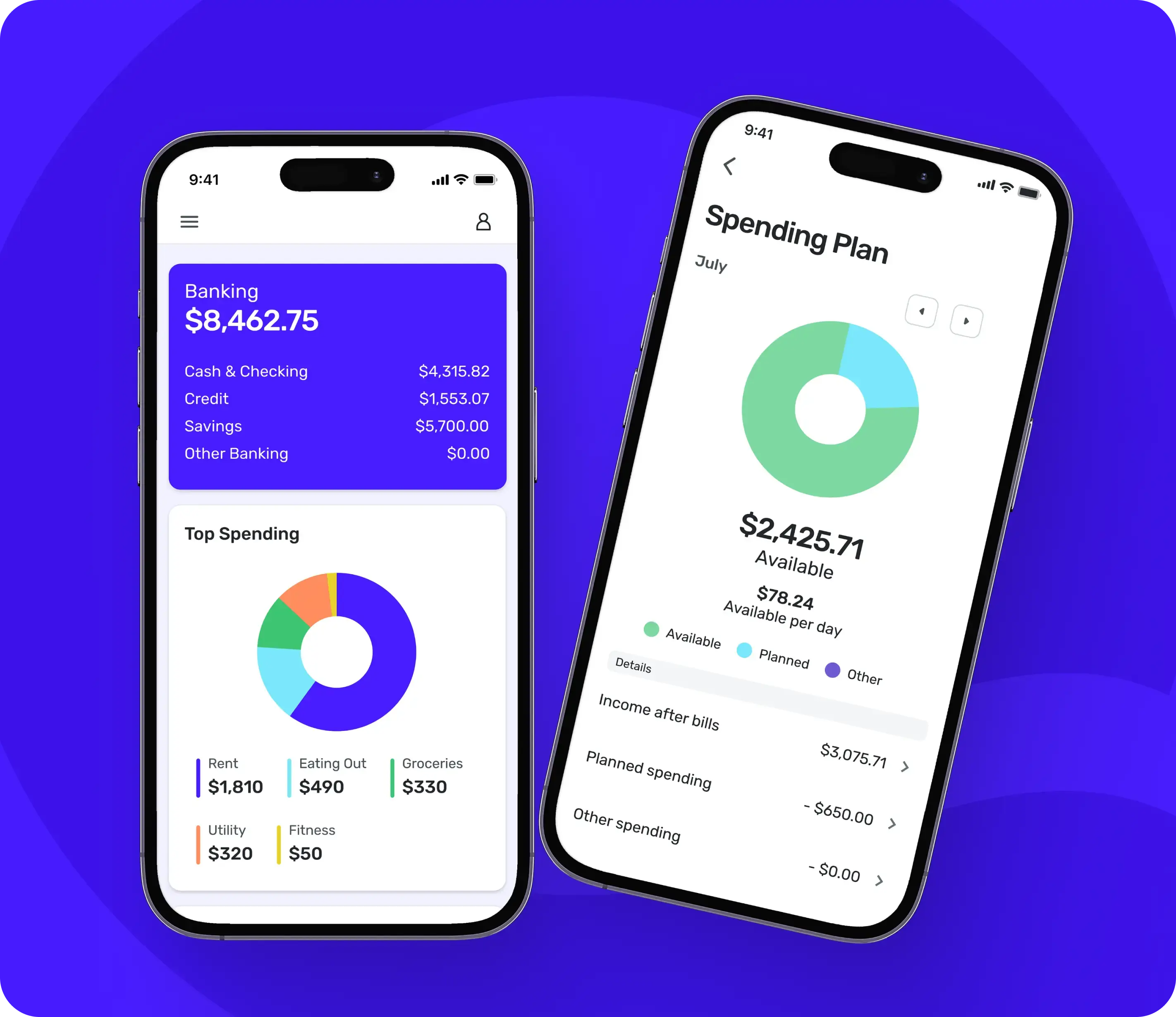 QuickenNot publishedIndividuals and couples who want a desktop-based finance manager with AI insights and business bookkeeping features.
 PocketGuard$6.25/mo (annual)Individuals and households in the US, Canada, and the UK who want an easy-to-use budgeting app with automatic categorization and bill tracking.
Money DashboardNot publishedUK lenders and credit marketplaces that need categorized transaction data for risk assessment and affordability checks
 Tiller Money$99/yearSpreadsheet-savvy individuals and solo business owners who want their finances in a customizable spreadsheet format.
 CopilotNot publishedIndividuals and families on Apple devices who want a beautifully designed, AI-powered budgeting app with automatic transaction tagging.
 SpendeeSee websiteThe only app that gets your money into shape
- CCountAboutSee websiteOther
- FFudgetSee websiteOther
- HHomeBudget with SyncSee websiteOther
About Buxfer and its alternatives
Buxfer is a personal finance app that tracks spending, income, and expenses with budgeting, forecasting, investment tracking, and retirement planning. It is known for its flexibility, detailed tagging, multi-currency support, and a full-featured API for power users.
When comparing alternatives, weigh the pricing structure (annual vs monthly, free tiers), the regions where bank sync works, the depth of features like forecasting or investment tracking, the level of support and educational content, and the contract terms such as trials and money-back guarantees.
Explore the alternatives
- Not published
1.Mint
Best for: Individuals and families who want a free, straightforward budgeting tool with bank sync and spending insights.

- Pricing
- Not published
- Category
- Finance & Accounting
Mint is a free budgeting and net worth tracker that aggregates accounts from over 17,000 financial institutions. It's a good choice if you want a simple, no-cost way to monitor spending and see all your accounts in one place, and you don't need advanced forecasting or investment tracking.
Where it is strong
- Free to use with no subscription fees.
- Connects to over 17,000 financial institutions.
- Tracks spending by category and monthly net worth.
Where it falls short
- No forecasting or retirement planning features.
- Limited customization compared to Buxfer's tags and rules.
- Pricing:
- Pricing is not published on the site.
- Switching from Buxfer:
- Mint has been reimagined on Credit Karma, so moving to Buxfer means importing your transaction history from Credit Karma or your bank statements.
- $109/year
2.YNAB (You Need A Budget)
Best for: Individuals and couples who want a disciplined, envelope-style budgeting system with strong support and education.
- Pricing
- $109/year
- Category
- Other
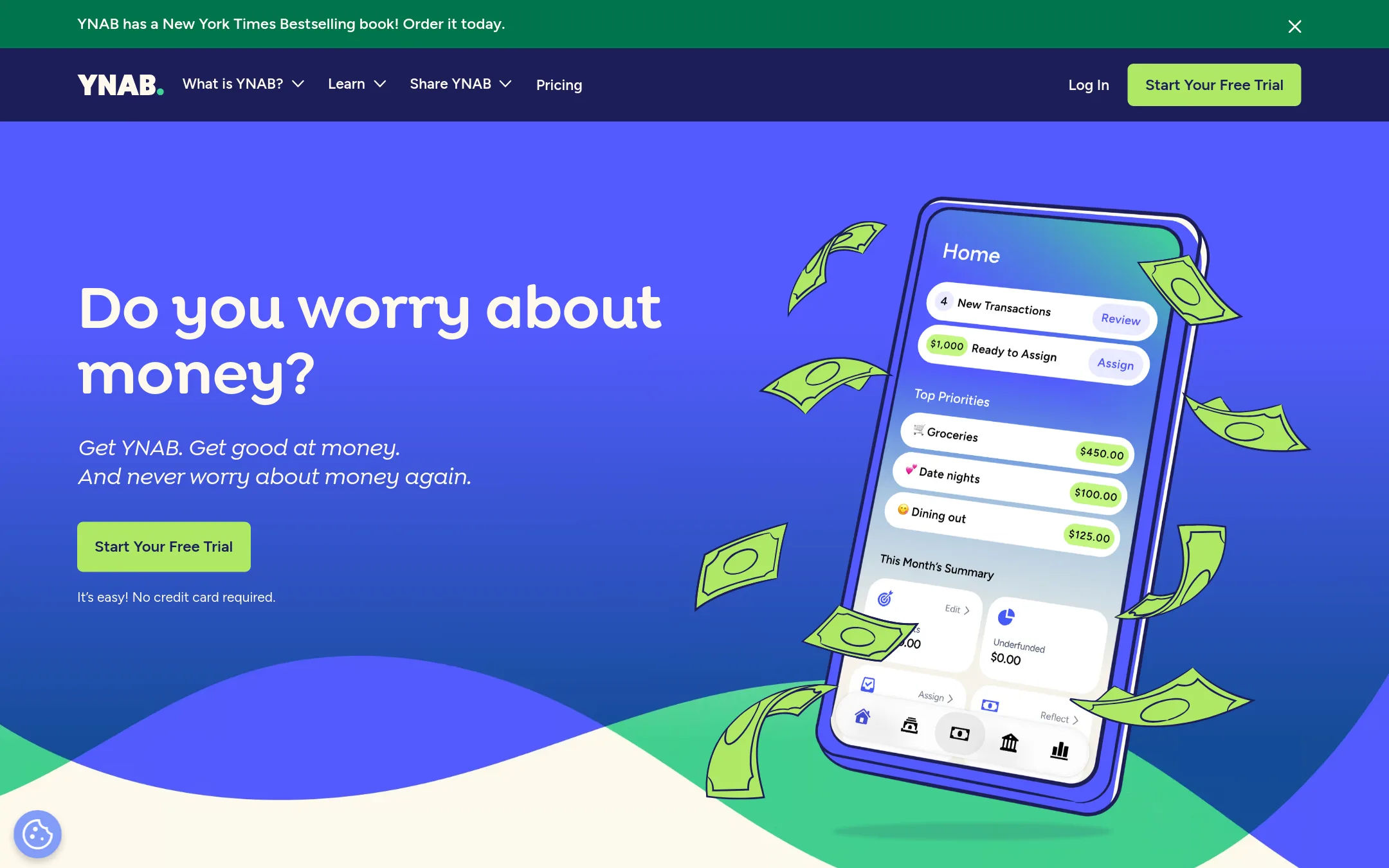
YNAB is a budgeting app that focuses on giving every dollar a job and helping you plan spending before it happens. It is a good choice if you want a structured, rule-based budgeting method and are willing to follow its four rules. Buxfer offers more flexibility with tags, forecasting, and investment tracking, but YNAB is simpler and more guided for personal budgeting.
Where it is strong
- Proven method that helps users save an average of $600 in the first month.
- Real-time syncing across devices and sharing for up to six people.
- Strong educational content and community support.
Where it falls short
- Bank import only supports select US, Canadian, UK, and EU banks. Other regions must use file-based import.
- Less flexible for tracking investments or multiple currencies compared to Buxfer.
- Pricing:
- YNAB costs $109 per year, with a free 34-day trial. College students get a free 365-day trial.
- Switching from Buxfer:
- Moving from Buxfer to YNAB involves manually exporting your transactions from Buxfer and importing them into YNAB, as YNAB does not offer a direct import from Buxfer.
- Not published
3.Personal Capital
Best for: Individuals and families with significant investable assets who want free financial tools plus optional paid wealth management advice.

- Pricing
- Not published
- Category
- Finance & Accounting
Personal Capital is a financial dashboard and wealth management service focused on net worth tracking, retirement planning, and investment analysis. Choose it over Buxfer if you want a tool that emphasizes investment oversight and access to human advisors, rather than manual budgeting and expense tracking.
Where it is strong
- Free net worth, retirement, and fee analyzer tools
- Optional human wealth management for larger portfolios
- Strong focus on investment tracking and allocation
Where it falls short
- No published pricing for advisory services
- Less suited for hands-on budgeting and expense tagging compared to Buxfer
- Pricing:
- Pricing is not published on the site.
- Not published
4.Quicken
Best for: Individuals and couples who want a desktop-based finance manager with AI insights and business bookkeeping features.

- Pricing
- Not published
- Category
- Finance & Accounting
Quicken is a desktop-first personal finance manager that tracks budgets, investments, and business bookkeeping in one place. Choose it over Buxfer if you prefer a traditional installed app with AI-powered guidance and a long track record.
Where it is strong
- AI-powered financial guidance and alerts
- Handles personal and business finances
- Trusted for over 40 years with human support
Where it falls short
- No published pricing on the site
- Desktop-first, less mobile-focused than Buxfer
- Pricing:
- Pricing is not published on the site.
- $6.25/mo (annual)
5.PocketGuard
Best for: Individuals and households in the US, Canada, and the UK who want an easy-to-use budgeting app with automatic categorization and bill tracking.
- Pricing
- $6.25/mo (annual)
- Category
- Finance & Accounting
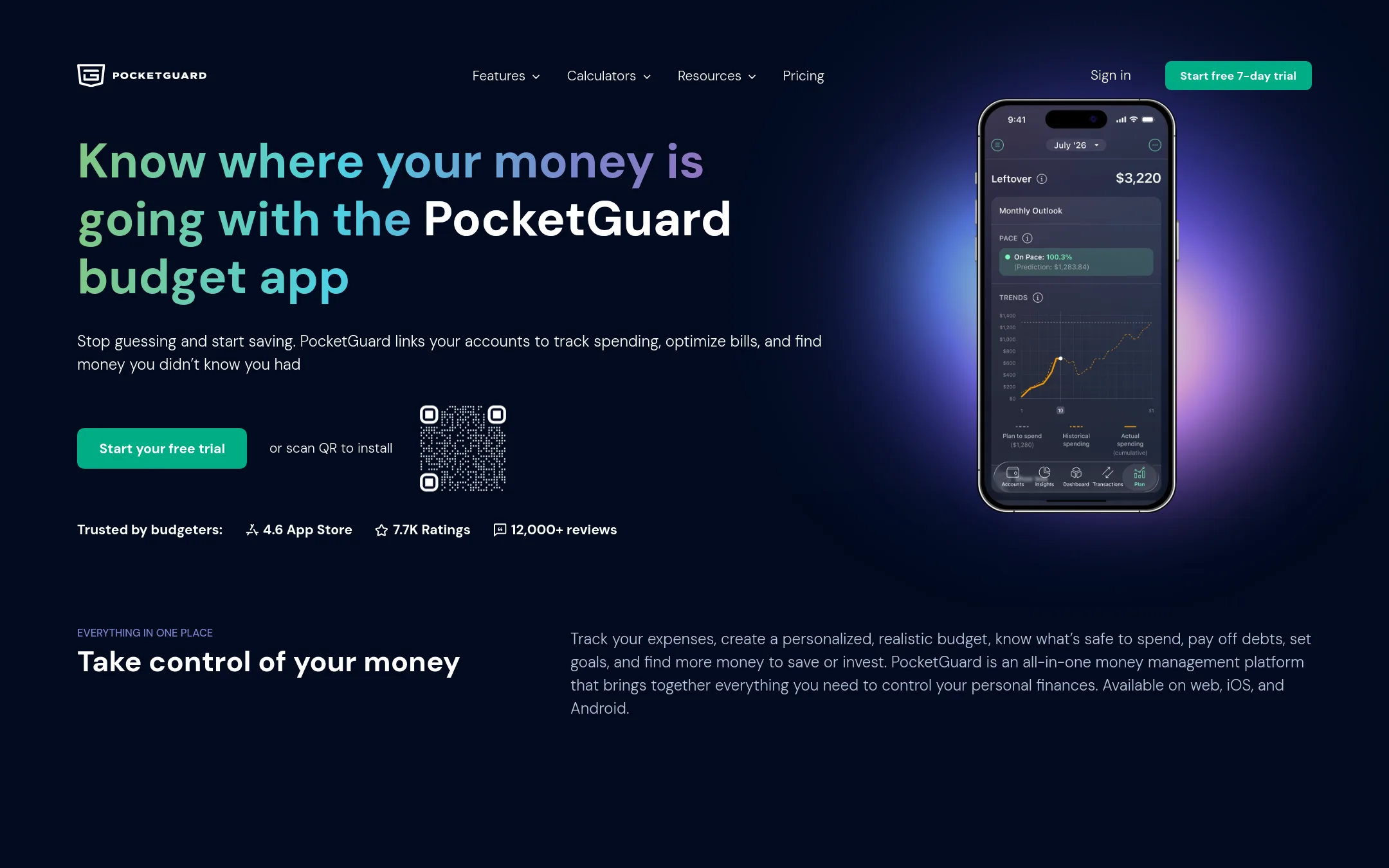
PocketGuard is a budgeting app that links your accounts, tracks spending, and shows how much you can safely spend after bills and savings. It is a good choice if you want a simpler, more automated budgeting tool than Buxfer, with a focus on avoiding overspending and finding subscriptions to cancel.
Where it is strong
- Shows a clear 'Leftover' amount you can safely spend after bills and savings.
- Includes subscription tracking and a debt payoff planner.
- Offers multiple budgeting methods: custom, zero-based, 50/30/20, and envelope.
Where it falls short
- Bank connectivity is limited to the US and Canada, unlike Buxfer's global reach.
- Lacks investment tracking and retirement planning features that Buxfer offers.
- Pricing:
- PocketGuard Premium costs $6.25 per month billed annually ($74.99/year), $12.99 per month billed monthly, or $149.99 for a lifetime plan. All prices are in US dollars.
- Switching from Buxfer:
- Moving from Buxfer to PocketGuard is straightforward: export your transactions from Buxfer and import them into PocketGuard, then link your bank accounts to start automatic tracking.
- Not published
6.Money Dashboard
Best for: UK lenders and credit marketplaces that need categorized transaction data for risk assessment and affordability checks
- Pricing
- Not published
- Category
- Finance & Accounting
Money Dashboard is an open banking data platform for lenders, not a personal budgeting app. It turns raw bank transactions into categorized insights for credit risk, affordability, and account verification. Choose it instead of Buxfer if you are a UK lender or marketplace that needs bank-grade financial data for underwriting, not personal finance tracking.
Where it is strong
- Categorisation engine trained on 13 billion transactions over 12 years
- API-first design for fast integration with existing systems
- Access to the UK's largest open banking enabled marketplace
Where it falls short
- Focused on lending use cases, not personal budgeting or expense tracking
- No consumer-facing app or multi-currency support like Buxfer
- Pricing:
- Pricing is not published on the site.
- $99/year
7.Tiller Money
Best for: Spreadsheet-savvy individuals and solo business owners who want their finances in a customizable spreadsheet format.
- Pricing
- $99/year
- Category
- Other
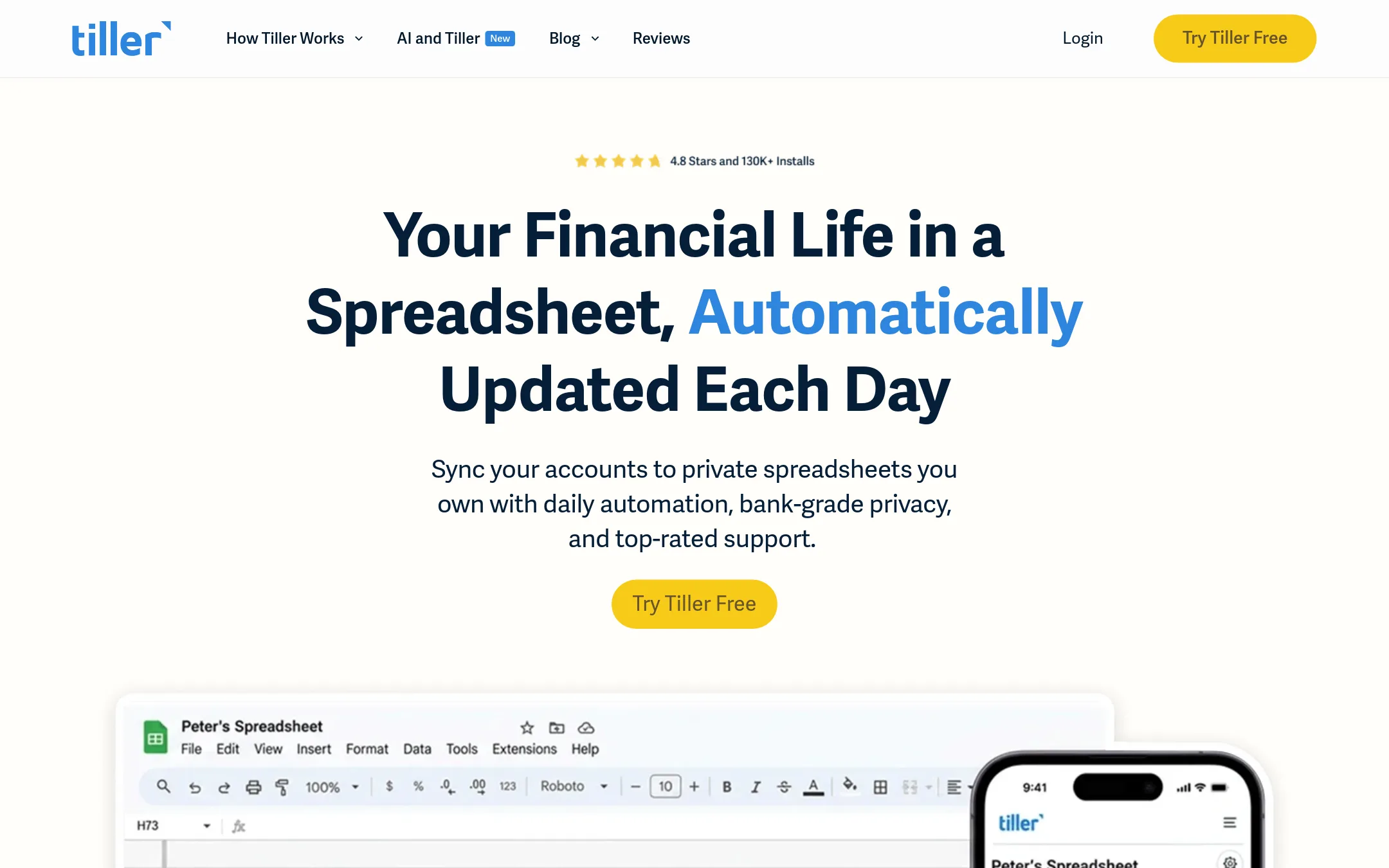
Tiller Money syncs your bank accounts into Google Sheets or Excel spreadsheets that you own, updating daily. It is a good fit if you already live in spreadsheets and want full control over your financial data, or if you want to use AI tools on your own data without linking them to your bank.
Where it is strong
- Data lives in your own Google Sheets or Excel files, so you own it.
- Daily automatic syncing of balances and transactions.
- Flexible templates and full customization, including AI integration options.
Where it falls short
- Requires comfort with spreadsheets. Not a guided app experience.
- No built-in investment tracking or retirement planning features.
- Pricing:
- Tiller costs $99/year after a 30-day free trial, with a 30-day money-back guarantee.
- Switching from Buxfer:
- Moving from Buxfer involves exporting your transactions and setting up Tiller's spreadsheet templates, since the workflow is spreadsheet-based rather than app-based.
- Not published
8.Copilot
Best for: Individuals and families on Apple devices who want a beautifully designed, AI-powered budgeting app with automatic transaction tagging.
- Pricing
- Not published
- Category
- Finance & Accounting
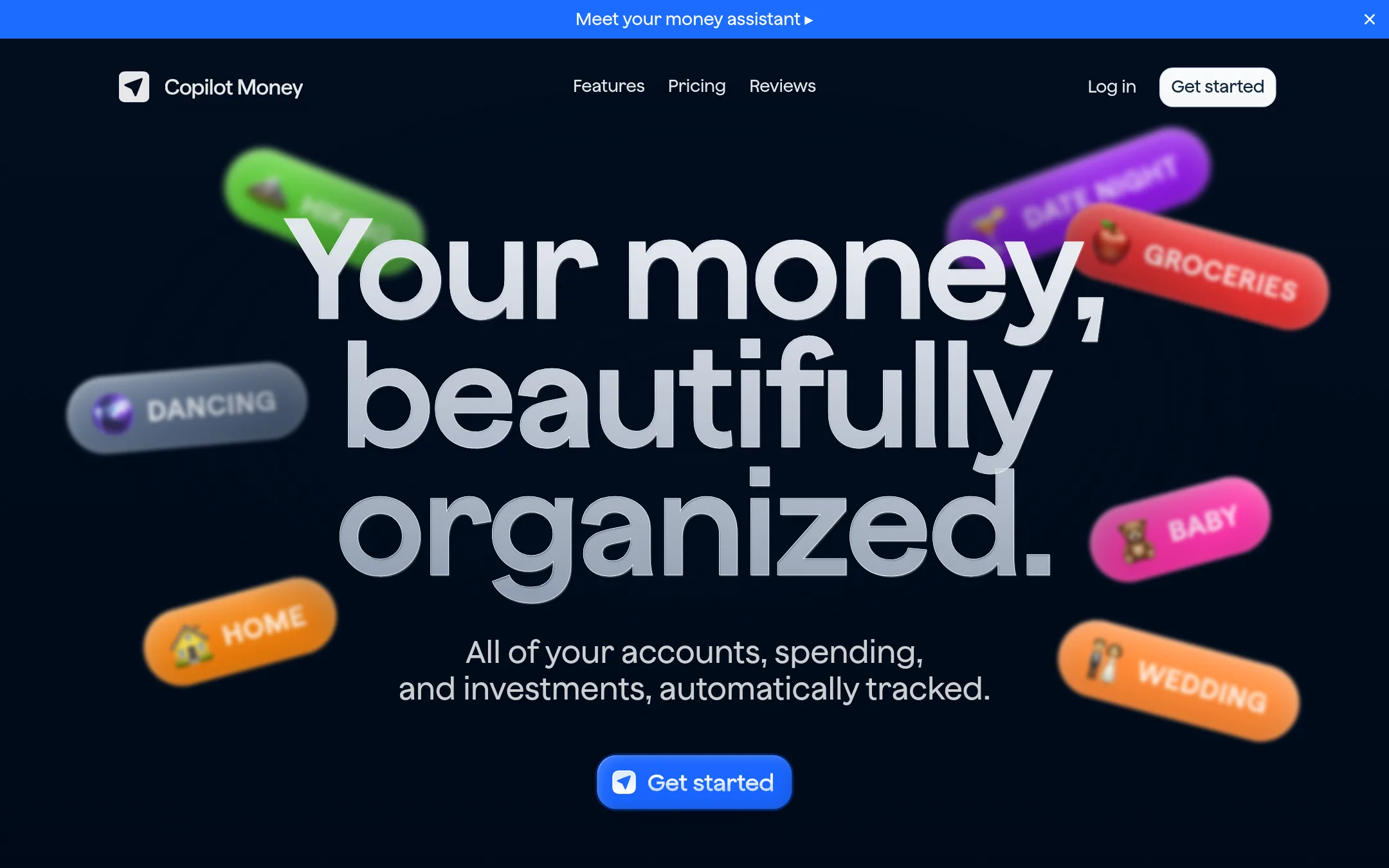
Copilot is a personal finance app for iPhone, iPad, Mac, and Web that automatically tracks spending, budgets, investments, and net worth. It uses AI to tag transactions and offers features like budget rollovers and cash flow summaries. You would choose Copilot over Buxfer if you prefer a polished, Apple-first experience with strong automation and a focus on day-to-day money management.
Where it is strong
- AI automatically tags transactions and learns your spending patterns.
- Budget rollovers let you save unused funds for bigger purchases.
- Available on iPhone, iPad, Mac, and Web with a clean interface.
Where it falls short
- No mention of bank sync coverage or multi-currency support.
- No API or advanced features like forecasting or retirement planning.
- Pricing:
- Pricing is not published on the site.
- See website
9.Spendee
Finance & Accounting
The only app that gets your money into shape
- CSee website
10.CountAbout
Other
- FSee website
11.Fudget
Other
- HSee website
12.HomeBudget with Sync
Other
See more comparisons in Other alternatives.
FAQ
Questions about Buxfer alternatives
Which alternative is best for a free budgeting tool?
Mint is the strongest free option. It connects to over 17,000 financial institutions and tracks spending by category and net worth. However, it lacks forecasting and retirement planning features that Buxfer offers.
What if I want a disciplined budgeting method?
YNAB is built around a rule-based system that gives every dollar a job. It costs $109 per year and includes a free 34-day trial. It has strong support and education, but bank import is limited to select US, Canadian, UK, and EU banks.
Is there an alternative for spreadsheet users?
Tiller Money syncs your bank accounts into Google Sheets or Excel files you own, updating daily. It costs $99/year after a 30-day free trial. It requires comfort with spreadsheets and lacks built-in investment tracking or retirement planning.
Which alternative offers investment tracking and human advice?
Personal Capital focuses on net worth tracking, retirement planning, and investment analysis. It offers free tools plus optional paid wealth management for larger portfolios. Pricing is not published on the site.
Are there any alternatives with no published pricing?
Mint, Quicken, Personal Capital, and Copilot do not publish pricing on their sites. Mint is free, but Quicken and Personal Capital likely have paid tiers. Copilot is an Apple-first app with AI tagging but no mention of bank sync coverage or multi-currency support.
Last updated October 15, 2026.