
CareMessage alternatives
8 products to explore · 2026
Your shortlist, at a glance.
Read the comparisons ↓
Check each product’s website for current pricing and features. A verified badge indicates a verified listing, not a ranking.
About CareMessage and its alternatives
Users searching for CareMessage alternatives are typically safety-net providers such as FQHCs and free clinics looking for patient engagement tools that address health equity, SDOH screening, and value-based care outcomes without high per-message costs. CareMessage stands out as the only nonprofit platform proven at scale for low-income populations, with patented data segmentation, EHR interoperability, and a mission to reinvest revenue into impact rather than shareholder returns. Alternatives often focus on general medical practices or higher-income segments, lacking CareMessage’s depth in precision messaging for underserved communities, flexible SDOH workflows, or human-touch automation that reduces staff burden while improving access and clinical quality measures. When evaluating replacements, organizations should compare integration breadth, nonprofit pricing models, and documented results in 45 states serving 22 million patients.
Explore the alternatives
1.Relatient
HealthcareRelatient provides patient engagement and scheduling automation primarily for health systems and medical groups. It excels at appointment reminders and self-scheduling but targets a wider mix of practices rather than safety-net organizations exclusively. Compared with CareMessage, Relatient lacks the nonprofit model, deep SDOH workflow specialization, and documented scale among FQHCs serving low-income populations across 45 states.
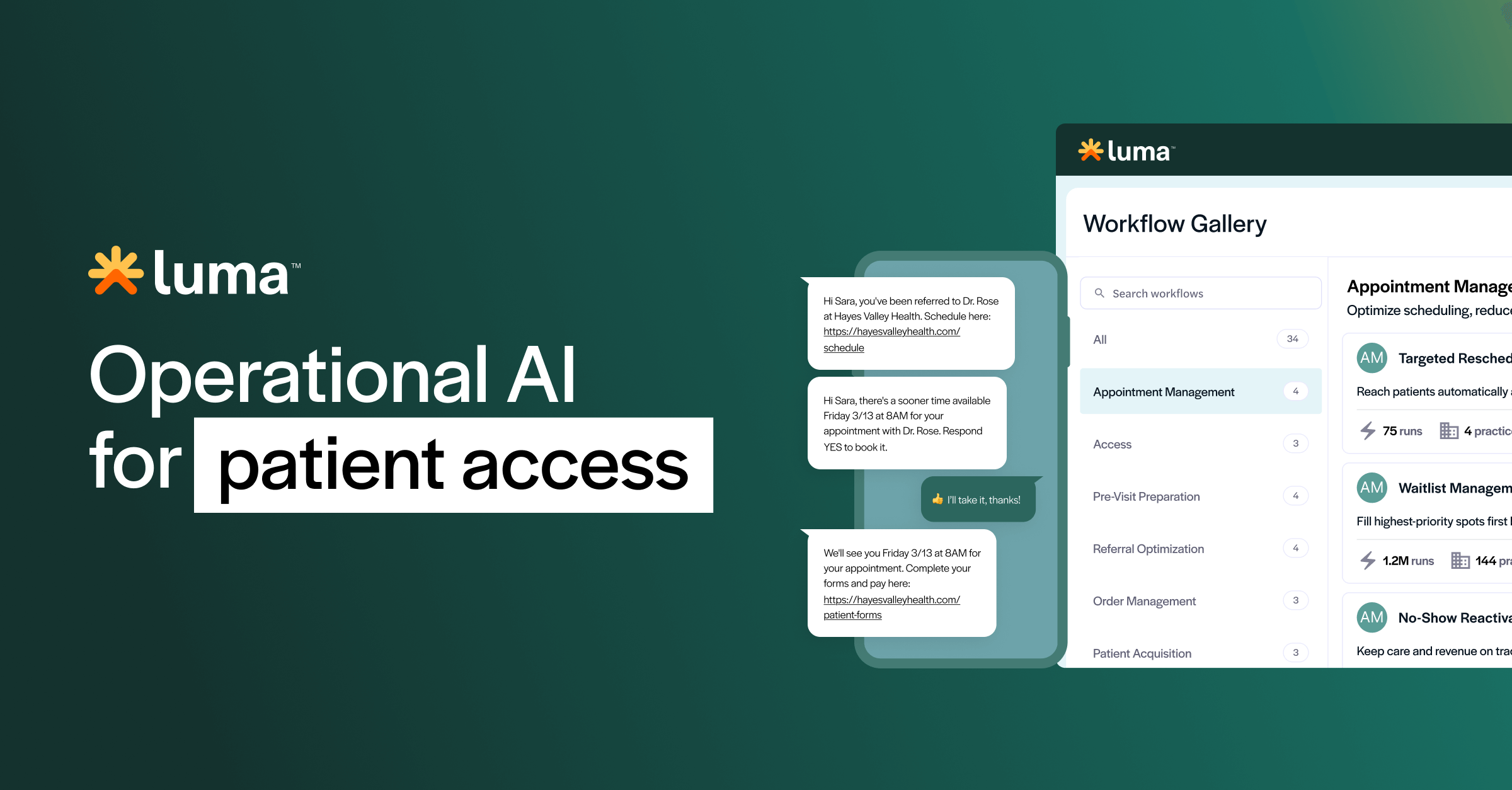
2.Luma Health
HealthcareLuma Health offers digital patient access and engagement tools focused on orchestration across scheduling, reminders, and telehealth. It serves many large systems and has strong EHR integrations. Unlike CareMessage, Luma does not emphasize health equity outcomes, SDOH screening at scale, or a nonprofit structure reinvesting in underserved communities.

3.Solutionreach
HealthcareSolutionreach delivers patient relationship management with messaging, reviews, and marketing automation aimed at private practices. Its feature set is broad yet oriented toward revenue-generating specialties rather than safety-net quality metrics. CareMessage differentiates through patented segmentation for low-income cohorts and proven results in free clinics and tribal health settings.

4.Phreesia
HealthcarePhreesia focuses on patient intake, registration, and payments with some engagement capabilities. It is widely used in ambulatory settings and emphasizes revenue cycle. CareMessage offers deeper population outreach and health coaching automation tailored to SDOH and clinical outcome improvement in resource-limited organizations.

5.TigerConnect
HealthcareTigerConnect provides clinical communication and secure messaging for hospitals and care teams. While strong in real-time provider coordination, it is less focused on patient-facing lifecycle messaging and SDOH workflows. CareMessage’s platform is purpose-built for safety-net patient engagement at national scale.
6.OhMD
HealthcareOhMD offers HIPAA-compliant texting and patient engagement for smaller practices and clinics. It is simple and affordable but lacks the advanced data analytics, EHR depth, and population health tools CareMessage provides to FQHCs managing value-based care contracts.
7.Epic
HealthcareEpic MyChart is the patient portal embedded in Epic EHR systems used by many large health organizations. It offers robust features within the Epic ecosystem but requires significant implementation and is less flexible for non-Epic safety-net providers seeking standalone engagement with SDOH focus.

8.Athenahealth
HealthcareAthenahealth combines EHR, billing, and patient engagement tools aimed at independent practices. Its messaging capabilities are solid yet geared toward revenue optimization rather than health equity or nonprofit scaling models that define CareMessage’s approach to low-income populations.
See more comparisons in Healthcare alternatives.
Questions about CareMessage alternatives
What are the best CareMessage alternatives for FQHCs focused on SDOH and health equity?
FQHCs seeking CareMessage alternatives should prioritize platforms with strong EHR integrations, SDOH screening tools, and proven results in safety-net settings. Most commercial options target broader ambulatory markets and may lack CareMessage’s nonprofit focus and patented segmentation for low-income populations.
How does CareMessage nonprofit model compare to paid patient messaging platforms?
CareMessage reinvests revenue into platform development and impact, unlike for-profit vendors. This can translate to more affordable scaling for free clinics and FQHCs, though commercial alternatives sometimes offer faster feature rollouts or broader marketing automation.
Can CareMessage alternatives handle closed-loop referrals and appointment lifecycle messaging?
Several alternatives support referrals and reminders, yet few match CareMessage’s end-to-end lifecycle automation combined with data-powered segmentation specifically tuned for safety-net quality measures and value-based care reporting.
Which patient engagement platforms integrate with the same EHRs as CareMessage?
CareMessage supports HL7, FHIR, API and SFTP connections to all major EHRs. Leading alternatives also claim broad interoperability, but real-world implementation depth and ongoing maintenance support vary significantly by vendor and health center size.
Are there CareMessage alternatives with AI-backed precision messaging for diabetes population health?
Wellness Copilot is CareMessage’s AI-backed diabetes module. Some commercial platforms offer similar chronic care automation, but CareMessage’s version is tailored to safety-net workflows and has published evidence matching human counseling outcomes in physical activity coaching.