
Causal alternatives
12 products compared · Updated October 31, 2026
The short answer
The strongest alternatives to Causal are Pigment, Cube, and Datarails. Pigment suits enterprise teams needing AI-assisted planning across multiple functions. Cube suits FP&A teams that live in Excel and Google Sheets but want AI agents and a governed data layer. Datarails suits finance teams that rely on Excel and want to keep those models while adding live data connections and version control.
Your shortlist, at a glance
Read the comparisons ↓ AnaplanCustom quoteLarge enterprises with complex planning needs across finance, supply chain, sales, and HR that require a single AI-driven platform.
- AAdaptive InsightsNot publishedLarge enterprises in finance, healthcare, higher education, and other industries that need AI-powered, driver-based planning and workforce modeling across the entire organization.
 WorkdayNot publishedLarge enterprises that need a single platform to manage HR, finance, and IT with AI-driven automation and agentic workflows.
- OOracle Cloud HPCNot publishedTeams running compute-intensive workloads like simulations, rendering, or data processing that need scalable cloud infrastructure.
- SSAPNot publishedLarge enterprises that need an integrated ERP and planning platform across finance, supply chain, and HR.
- JJedoxNot publishedFinance teams in mid-size to large organizations that want an Excel-like interface with AI-assisted planning and the ability to integrate data from ERP, CRM, and other enterprise systems.
- BBoardCustom quoteLarge enterprises that need integrated financial and operational planning across finance, supply chain, retail, and sales with AI-driven scenario modeling.
- PProphixNot publishedMid-market finance teams that need a governed, auditable platform for FP&A and consolidation across multiple entities.
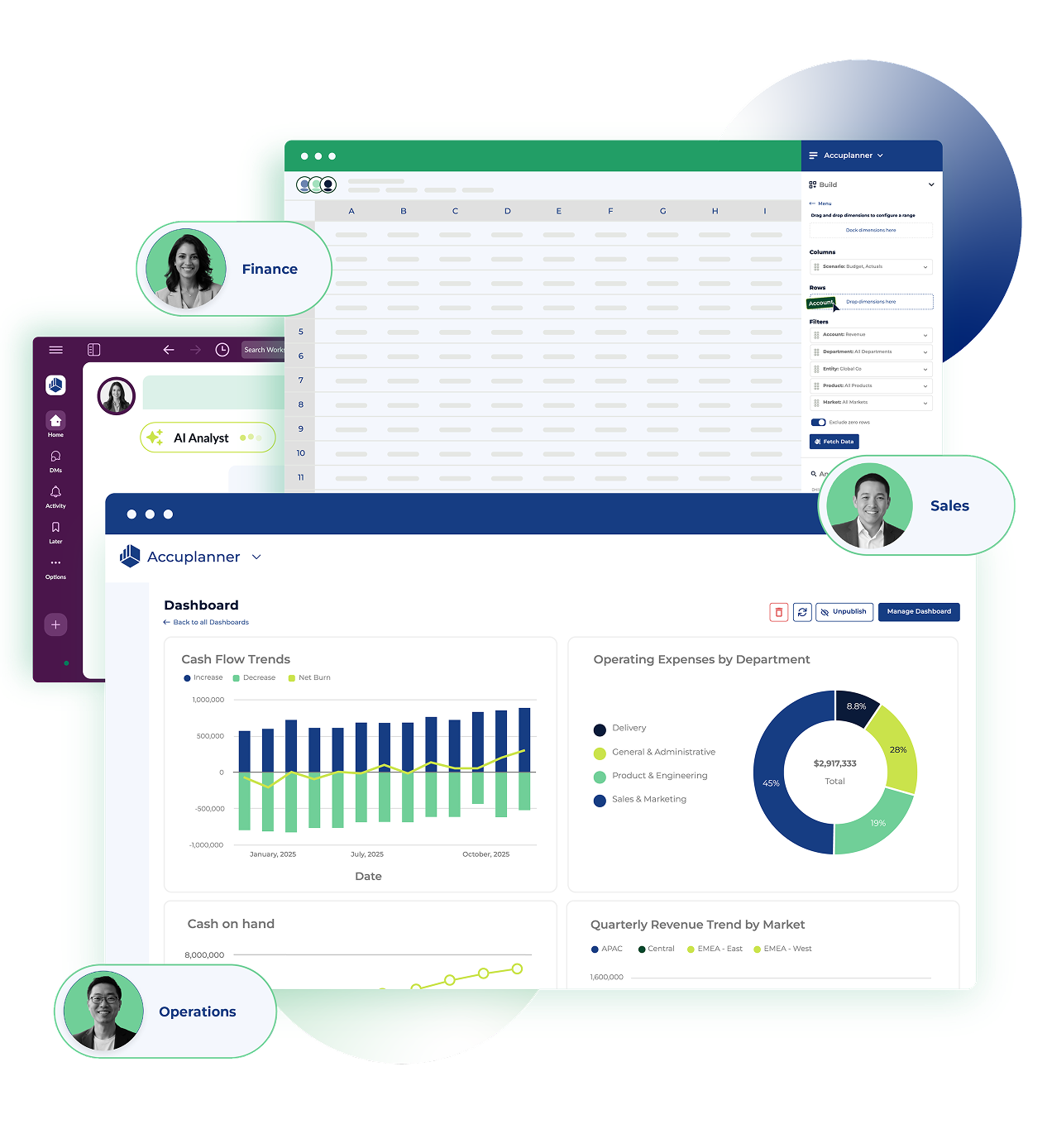 CubeCustom quoteFP&A teams that live in Excel and Google Sheets but want AI agents to handle data pulls, reconciliations, and report assembly on top of a governed data layer.
- DDatarailsCustom quoteFinance teams that rely on Excel and want to add AI-powered reporting, planning, and close workflows without leaving their spreadsheets.
 AbacumNot publishedFinance teams that want AI-assisted FP&A with 700+ integrations and collaborative planning workflows.
 PigmentNot publishedEnterprise teams that need AI-assisted planning across multiple functions, such as FP&A, supply chain, and sales, with live scenario modeling.
About Causal and its alternatives
Causal is an Extended Planning & Analysis (xP&A) software that unifies financial and operational planning. It is known for dynamic multi-dimensional modeling, scenario planning, and natural language formulas, and it integrates real-time data from accounting systems, HRIS, ERP, and CRMs.
When comparing alternatives, weigh pricing structure, because most vendors do not publish prices and require a sales conversation. Consider integrations with your existing source systems, support channels and hours, and contract terms such as add-ons for multicurrency or premium features.
Explore the alternatives
- Custom quote
1.Anaplan
Best for: Large enterprises with complex planning needs across finance, supply chain, sales, and HR that require a single AI-driven platform.
- Pricing
- Custom quote
- Category
- Finance & Accounting
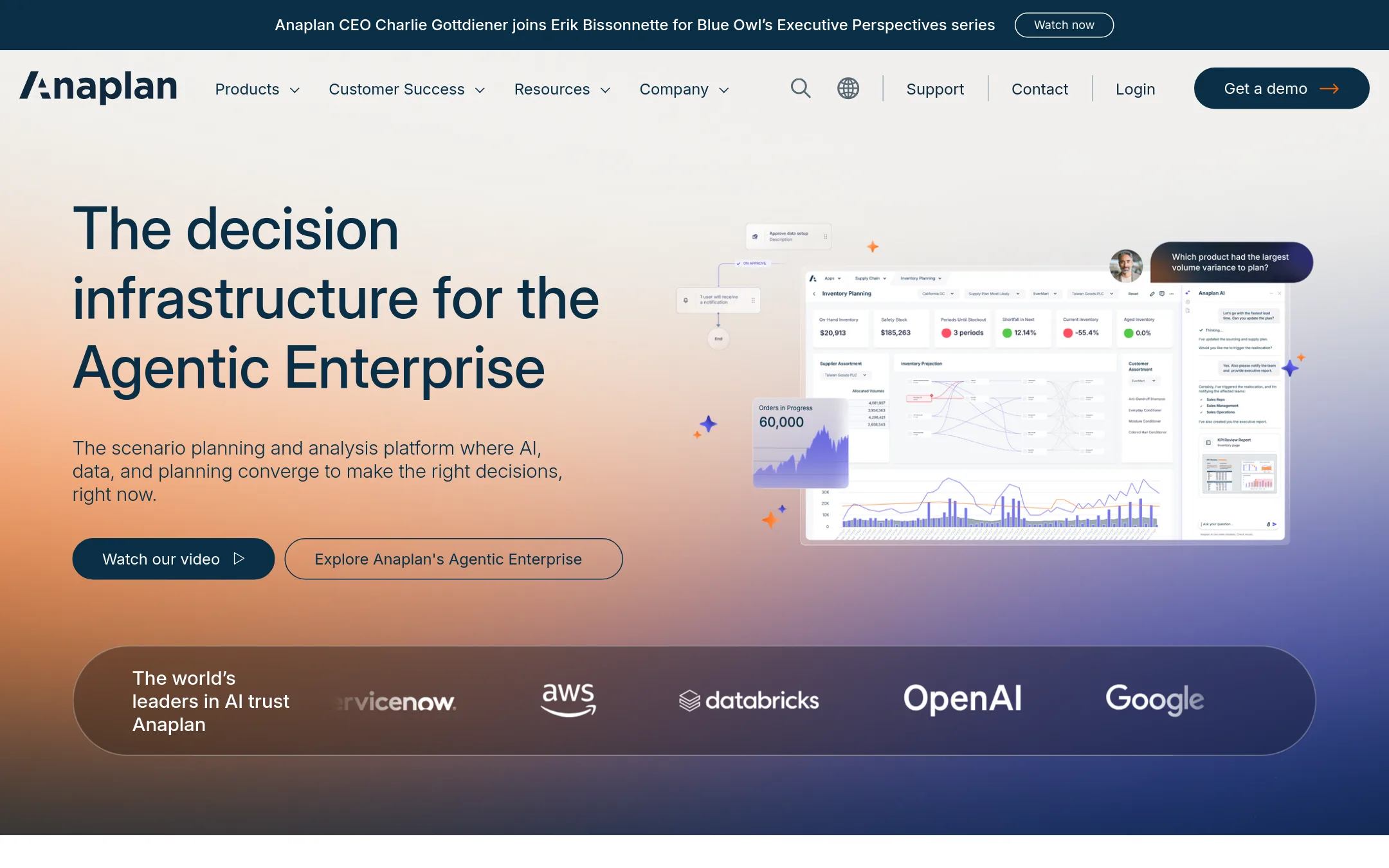
Anaplan is a large enterprise planning platform that combines deterministic calculations with AI for scenario planning across finance, supply chain, sales, and workforce. You would choose it over Causal when you need a unified decision infrastructure for multiple business functions at a very large scale, with role-based agents and deep integration into existing enterprise systems.
Where it is strong
- Combines deterministic calculations with AI for auditable answers.
- Covers finance, supply chain, sales, HR, and retail planning in one platform.
- Trusted by over 2,800 large brands, including many Fortune 50 companies.
Where it falls short
- Pricing is not transparent and requires a sales conversation.
- Heavyweight platform may be overkill for smaller teams or simpler planning needs.
- Pricing:
- Pricing is not published on the site. Contact sales for a quote.
- ANot published
2.Adaptive Insights
Best for: Large enterprises in finance, healthcare, higher education, and other industries that need AI-powered, driver-based planning and workforce modeling across the entire organization.
Adaptive Insights is a cloud-based FP&A platform that unifies financial, workforce, and operational planning with AI-driven forecasting. You would choose it over Causal when you need a mature, enterprise-grade planning tool with deep industry-specific modeling and strong governance, rather than a lightweight, spreadsheet-like modeling tool.
Where it is strong
- AI built directly into the platform for forecasting and scenario analysis
- Unified planning across finance, workforce, and operations with no storage limits
- Industry-specific models for financial services, healthcare, retail, and more
Where it falls short
- Pricing is not transparent, likely enterprise-only
- May be overkill for small teams or simple modeling needs compared to Causal
- Pricing:
- Pricing is not published on the site.
- Switching from Causal:
- Moving from Causal to Adaptive Insights involves migrating your models and data into a more structured, enterprise platform, which may require more setup and training.
- Not published
3.Workday
Best for: Large enterprises that need a single platform to manage HR, finance, and IT with AI-driven automation and agentic workflows.
- Pricing
- Not published
- Category
- HR & Recruiting
Workday is an enterprise AI platform that unifies HR, finance, and IT with intelligent agents, whereas Causal is a focused xP&A tool for financial and operational planning. You would choose Workday if you need a broad system of record for HR, payroll, and finance across a large organization, not just planning and analysis.
Where it is strong
- Unifies HR, finance, and IT on one platform with AI agents.
- Trusted by 11,500+ organizations, including Fortune 500 leaders.
- Provides full business context and audit trails for AI actions.
Where it falls short
- Pricing is not public, likely enterprise-only and expensive.
- Heavier and more complex than Causal for standalone planning tasks.
- Pricing:
- Pricing is not published on the site.
- Switching from Causal:
- Moving from Causal to Workday involves migrating planning models and data into a broader ERP-like system, which requires significant implementation effort.
- ONot published
4.Oracle Cloud HPC
Best for: Teams running compute-intensive workloads like simulations, rendering, or data processing that need scalable cloud infrastructure.
- Pricing
- Not published
- Category
- Developer Tools
Oracle Cloud HPC provides high-performance computing infrastructure on Oracle Cloud, which is a different category from Causal's financial planning and analysis. You would choose it instead of Causal if you need raw compute power for simulations, engineering workloads, or scientific research, not for budgeting or forecasting.
Where it is strong
- High-performance computing on Oracle Cloud
- Scalable infrastructure for demanding workloads
- Direct access to Oracle sales and support
Where it falls short
- No financial planning or analysis features
- Site was down during review, so details are limited
- Pricing:
- Pricing is not published on the site.
- SNot published
5.SAP
Best for: Large enterprises that need an integrated ERP and planning platform across finance, supply chain, and HR.
- Pricing
- Not published
- Category
- Productivity & Project Management
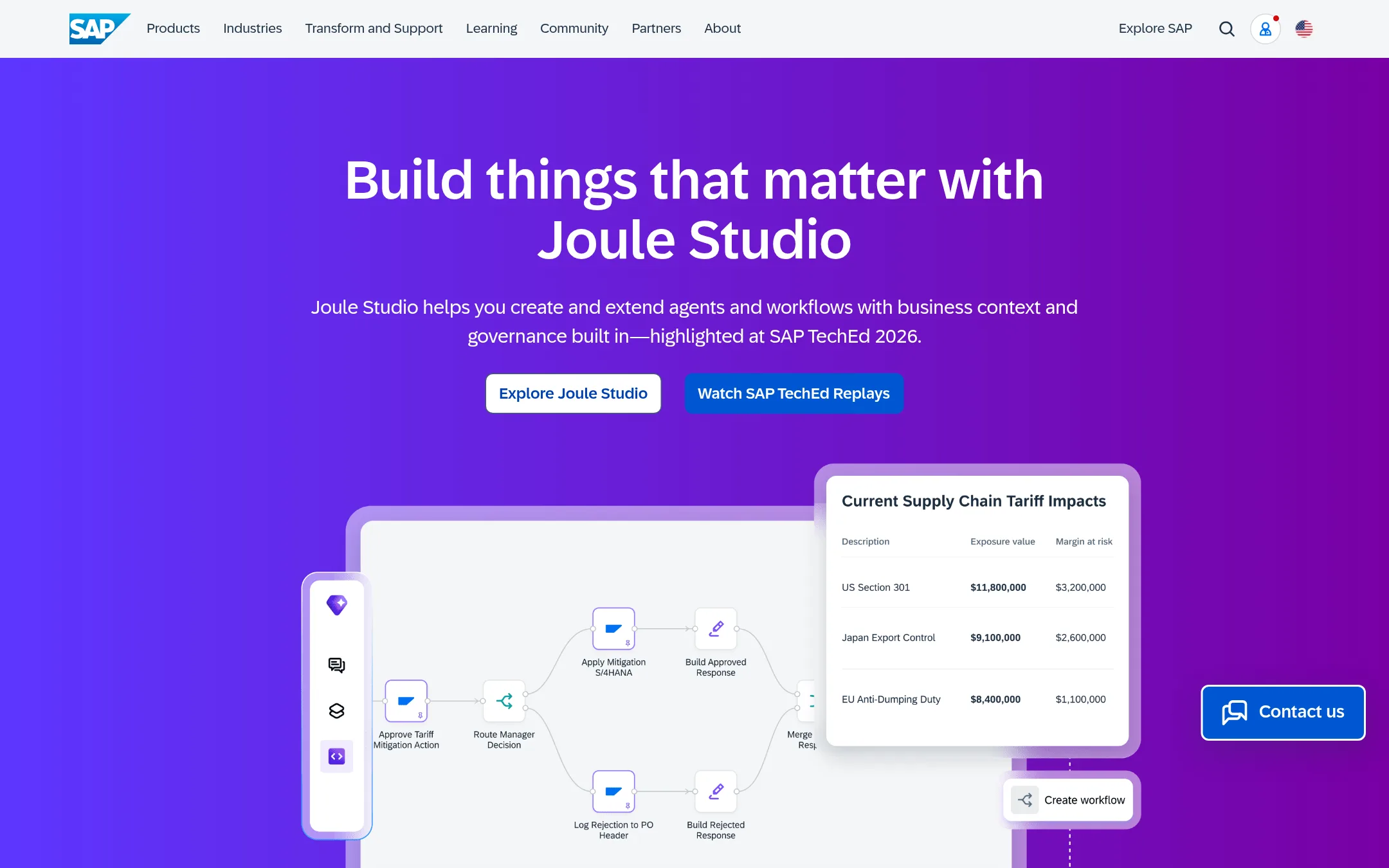
SAP is a full enterprise suite covering ERP, finance, supply chain, HR, and more, while Causal focuses specifically on financial and operational planning. You would choose SAP if you need a single vendor for your entire business operations and are already standardized on SAP, rather than a dedicated planning tool.
Where it is strong
- Covers ERP, finance, supply chain, HR, and CX in one platform
- Strong AI and automation capabilities across business functions
- Extensive partner ecosystem for implementation and extensions
Where it falls short
- Pricing is not public. Typically requires enterprise sales engagement
- Heavyweight implementation compared to a focused planning tool like Causal
- Pricing:
- Pricing is not published on the site.
- JNot published
6.Jedox
Best for: Finance teams in mid-size to large organizations that want an Excel-like interface with AI-assisted planning and the ability to integrate data from ERP, CRM, and other enterprise systems.
- Pricing
- Not published
- Category
- Other
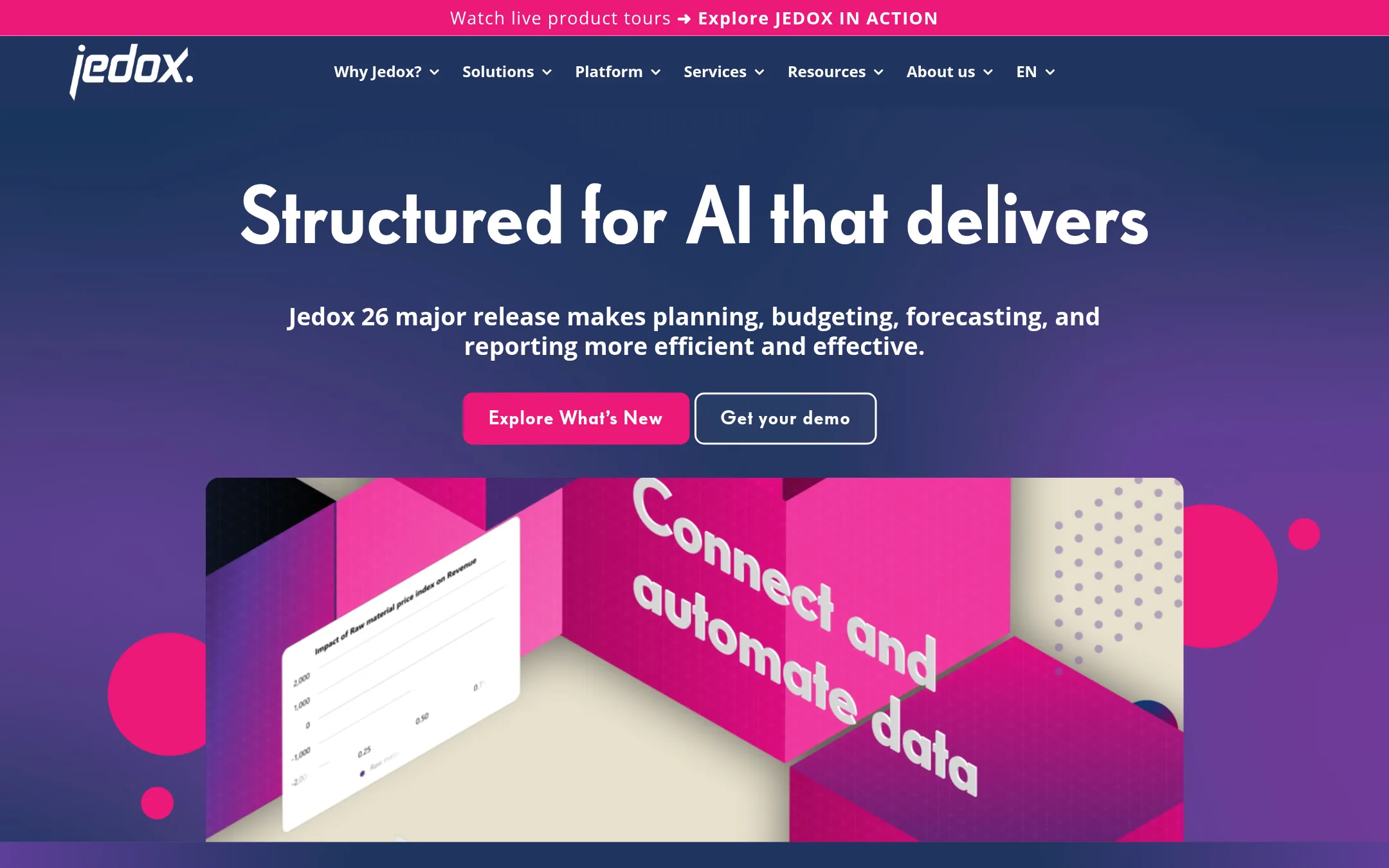
Jedox is an adaptable FP&A platform that combines Excel-like modeling with AI-driven planning and forecasting. You would choose it over Causal when you need a broader, enterprise-grade planning suite that connects financial and operational data across many source systems, especially if your team is already comfortable with Excel.
Where it is strong
- Excel Add-in for 365 keeps a familiar workflow for finance teams
- JedoxAI provides explainable forecasts and a digital twin for what-if analysis
- No-code modeling and drag-and-drop dashboards speed adoption
Where it falls short
- Pricing is not transparent, requiring a sales conversation
- May be more complex than Causal for simple planning use cases
- Pricing:
- Pricing is not published on the site. Plans are available as Essential, Business, and Professional packages, with add-ons for extra users and premium features.
- Switching from Causal:
- Moving from Causal to Jedox involves migrating your models and data into a more enterprise-oriented platform, with a steeper setup but broader integration options.
- BCustom quote
7.Board
Best for: Large enterprises that need integrated financial and operational planning across finance, supply chain, retail, and sales with AI-driven scenario modeling.
- Pricing
- Custom quote
- Category
- Other
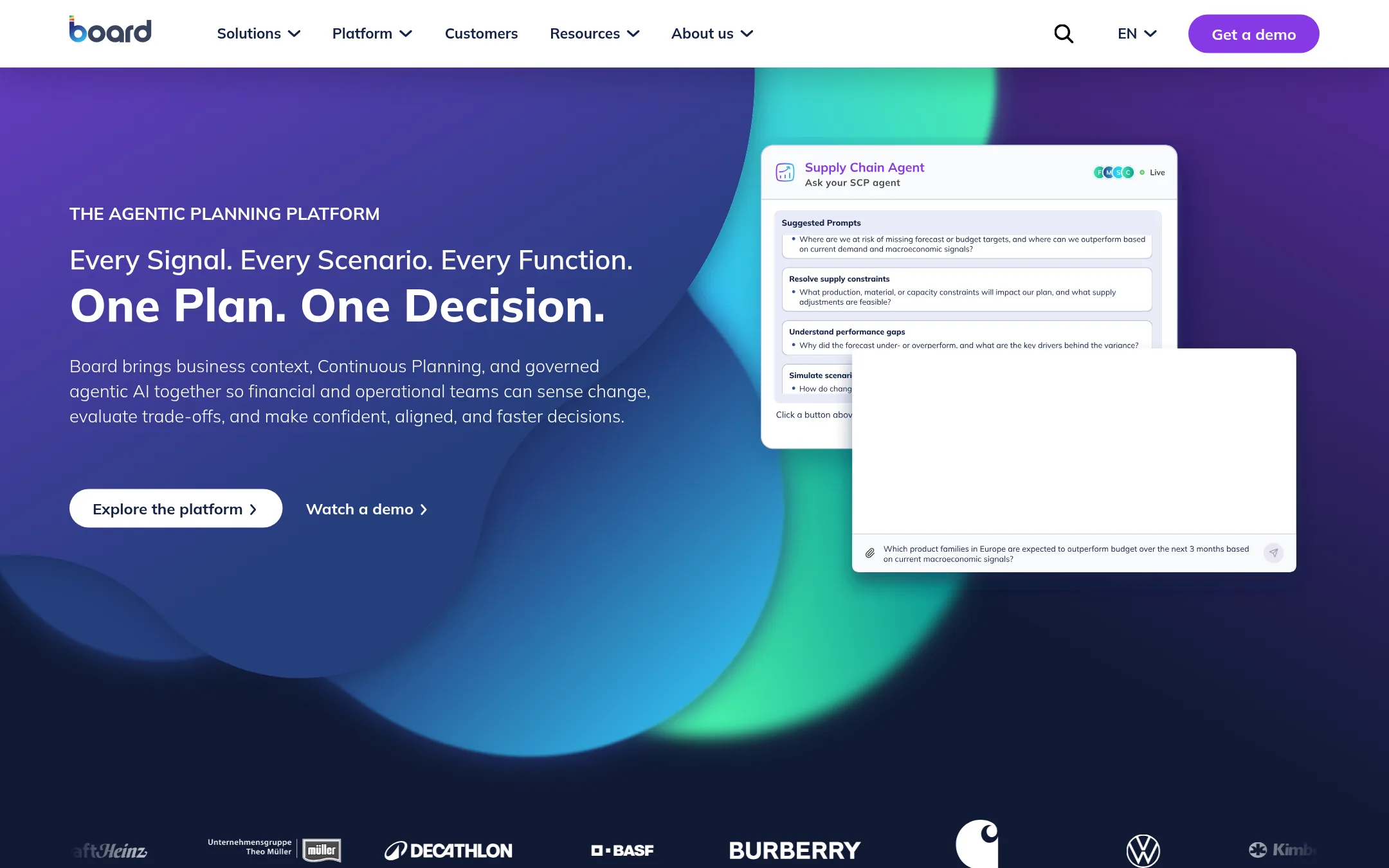
Board is an enterprise planning platform that unifies financial and operational planning with agentic AI and continuous planning capabilities. Choose Board over Causal if you need a full-scale, governed planning solution with deep supply chain, retail, and sales planning modules, and you're willing to engage with a sales-led vendor.
Where it is strong
- Unified platform for financial and operational planning
- Agentic AI with governance and human oversight
- Recognized as a Leader in Gartner Magic Quadrant for Financial Planning Software
Where it falls short
- Pricing is not transparent and requires a sales conversation
- May be overkill for smaller teams or simpler planning needs
- Pricing:
- Pricing is not published on the site. Board offers customized quotes based on your specific needs.
- Switching from Causal:
- Moving from Causal to Board involves a more complex implementation and likely a longer sales cycle, given the enterprise focus and custom pricing.
- PNot published
8.Prophix
Best for: Mid-market finance teams that need a governed, auditable platform for FP&A and consolidation across multiple entities.
- Pricing
- Not published
- Category
- Other
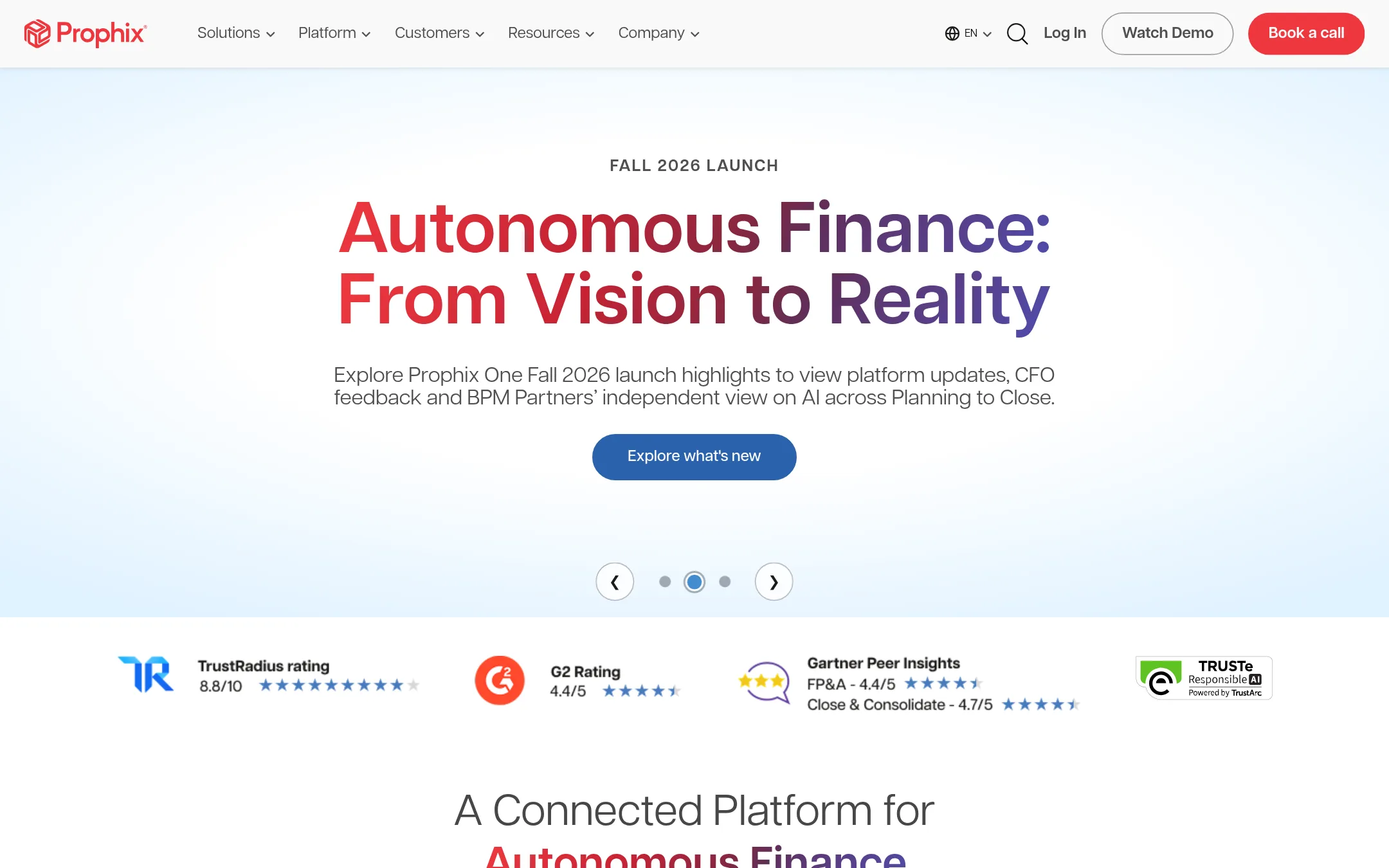
Prophix is a corporate performance management platform for budgeting, forecasting, planning, and reporting, aimed at mid-market companies. You would choose it over Causal if you need a unified platform that connects financial workflows from plan to close, with built-in consolidation, multi-currency, and audit trails.
Where it is strong
- Unifies planning, consolidation, and reporting in one platform
- Built-in multi-currency, multi-lingual, and multi-GAAP support
- AI-powered matching for GL and intercompany reconciliations
Where it falls short
- Pricing is not transparent, requires contacting sales
- May be heavier than Causal for simple, spreadsheet-based planning
- Pricing:
- Pricing is not published on the site.
- Switching from Causal:
- Moving from Causal to Prophix involves migrating your models and data into a structured, driver-based platform, which may require rethinking your planning workflows.
- Custom quote
9.Cube
Best for: FP&A teams that live in Excel and Google Sheets but want AI agents to handle data pulls, reconciliations, and report assembly on top of a governed data layer.
- Pricing
- Custom quote
- Category
- Finance & Accounting
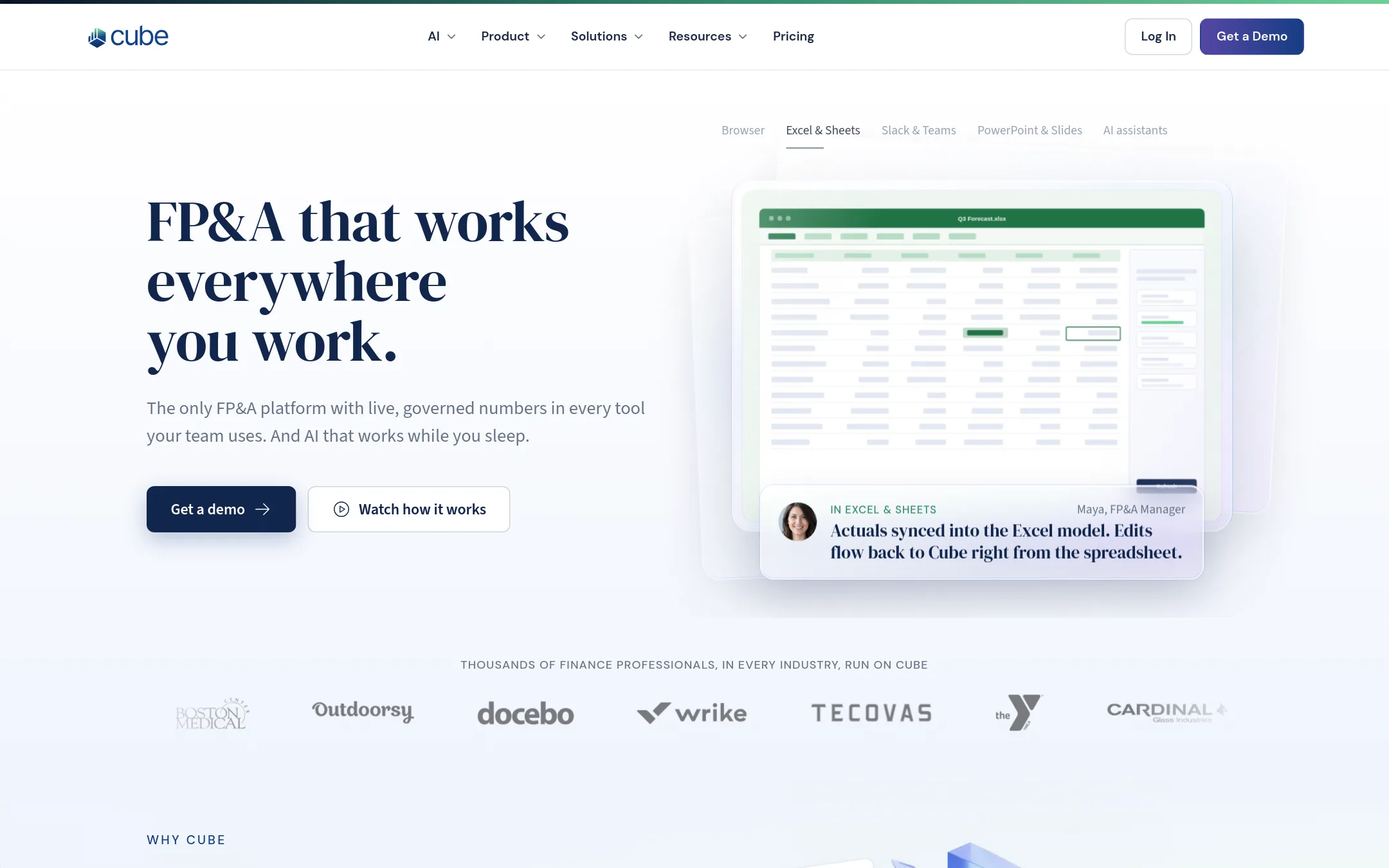
Cube is an agentic FP&A platform that unifies business data into a governed layer and serves it across spreadsheets, chat, and slides. Choose it over Causal if your team wants AI agents that automate data reconciliation, variance explanation, and forecast updates while keeping every number traceable for auditors.
Where it is strong
- AI agents work across data, reports, plans, and business partners, automating month-end tasks
- Every AI insight traces back to the transaction or assumption, making it audit-ready
- Native Excel and Google Sheets integration with live, governed numbers
Where it falls short
- Pricing requires a sales conversation. No self-serve tiers
- Multicurrency consolidation is only an add-on, not included in base plans
- Pricing:
- Pricing is not published on the site. Plans are quoted based on legal entities, users, data sources, and AI features, with Bronze, Silver, and Gold tiers.
- Switching from Causal:
- Moving from Causal involves connecting your existing data sources to Cube's governed layer and rebuilding models in its spreadsheet-native environment, with AI agents taking over recurring workflows.
- DCustom quote
10.Datarails
Best for: Finance teams that rely on Excel and want to add AI-powered reporting, planning, and close workflows without leaving their spreadsheets.
- Pricing
- Custom quote
- Category
- Other
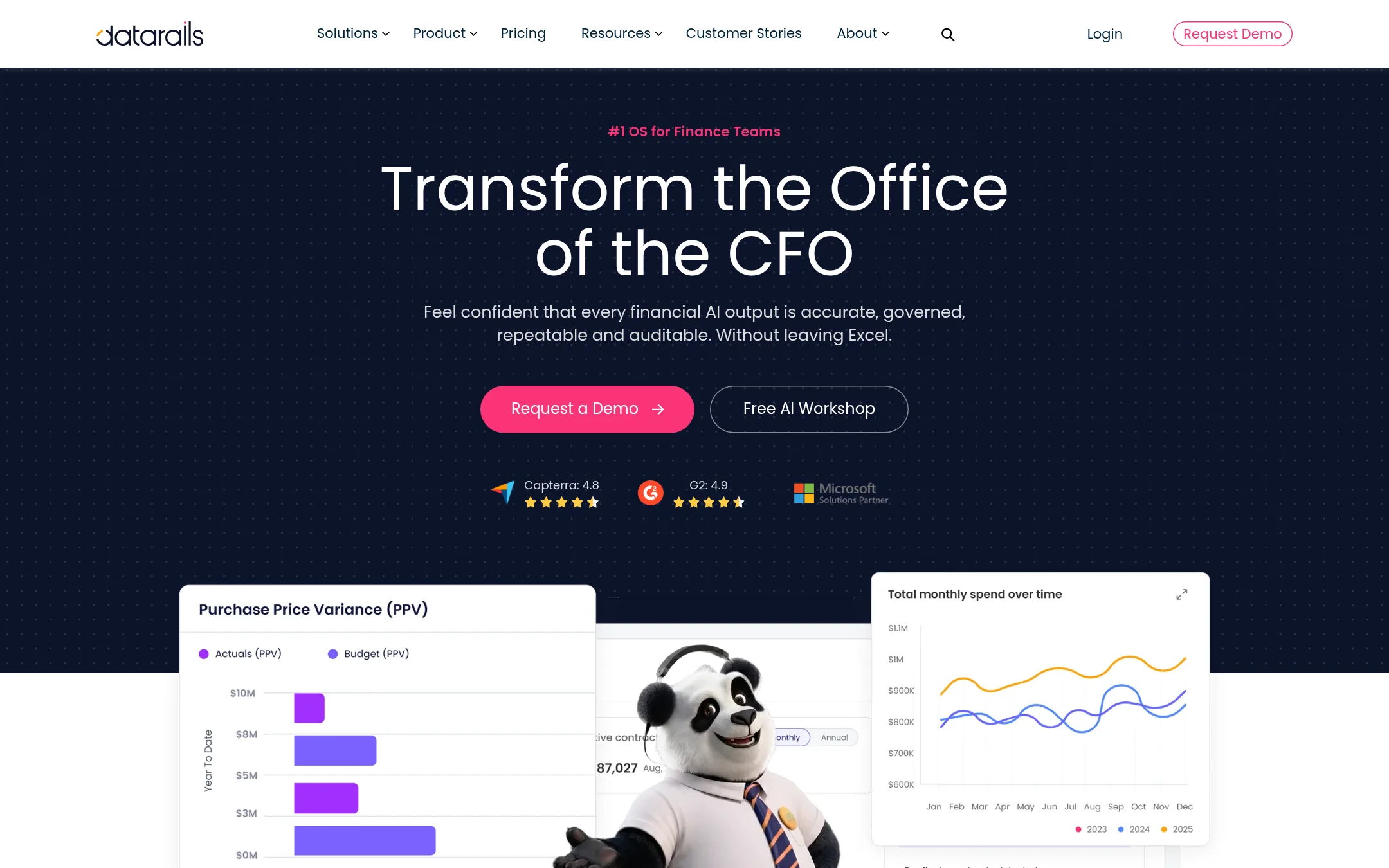
Datarails is an AI-powered finance operating system that connects to your existing Excel models and live data from 600+ sources, providing version control, audit trails, and governed AI outputs. You'd choose it over Causal if your team lives in Excel and wants to keep those models while fixing data chaos, rather than adopting a new planning platform.
Where it is strong
- Keeps your existing Excel models while adding live data connections and version control.
- AI outputs are governed, repeatable, and auditable, with a connector to tools like Claude.
- Modules for cash, spend, month-end close, and FP&A cover the full CFO office.
Where it falls short
- Pricing requires a custom quote, so no transparent starting point.
- Designed around Excel workflows, which may not suit teams wanting to move away from spreadsheets.
- Pricing:
- Pricing is not published on the site. Plans are custom-quoted with no consultant fees.
- Switching from Causal:
- Moving from Causal means adapting your planning models to Excel-based workflows and reconnecting data sources through Datarails' integrations.
- Not published
11.Abacum
Best for: Finance teams that want AI-assisted FP&A with 700+ integrations and collaborative planning workflows.
- Pricing
- Not published
- Category
- Finance & Accounting
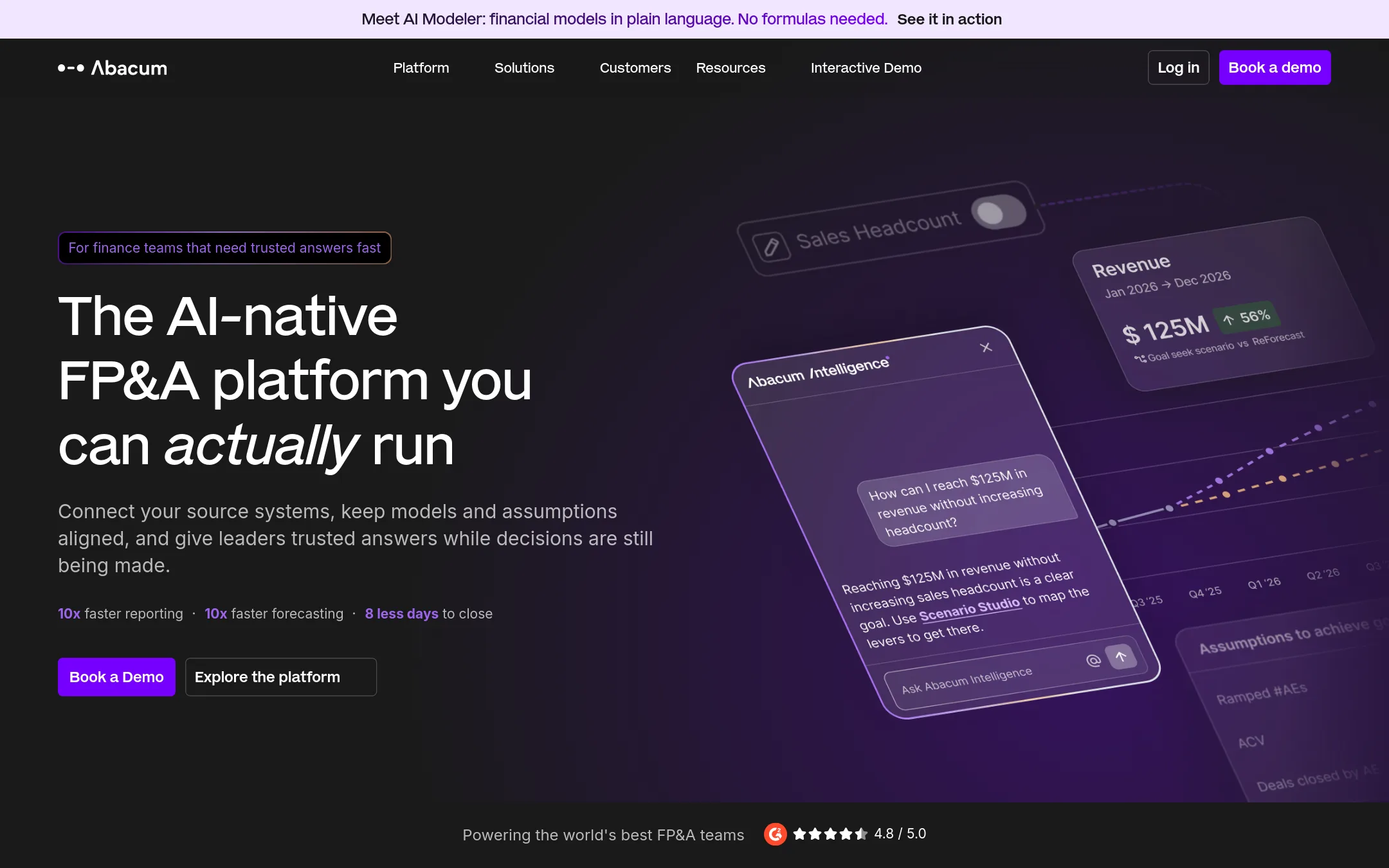
Abacum is an AI-native FP&A platform that connects source systems, keeps models and assumptions aligned, and gives leaders trusted answers fast. Choose it over Causal if you need self-service integrations, AI-assisted data cleaning and modeling, and collaborative planning without heavy IT involvement.
Where it is strong
- AI features for data cleaning, anomaly detection, and scenario planning
- Self-service integrations and ETL without technical tickets
- Collaborative planning with workflow management and driver-based modeling
Where it falls short
- Pricing not disclosed, likely enterprise-focused
- May be more complex than Causal for simple modeling needs
- Pricing:
- Pricing is not published on the site.
- Switching from Causal:
- Moving from Causal involves reconnecting your data sources and rebuilding models in Abacum's environment, though the AI tools may reduce manual setup.
- Not published
12.Pigment
Best for: Enterprise teams that need AI-assisted planning across multiple functions, such as FP&A, supply chain, and sales, with live scenario modeling.
- Pricing
- Not published
- Category
- Finance & Accounting
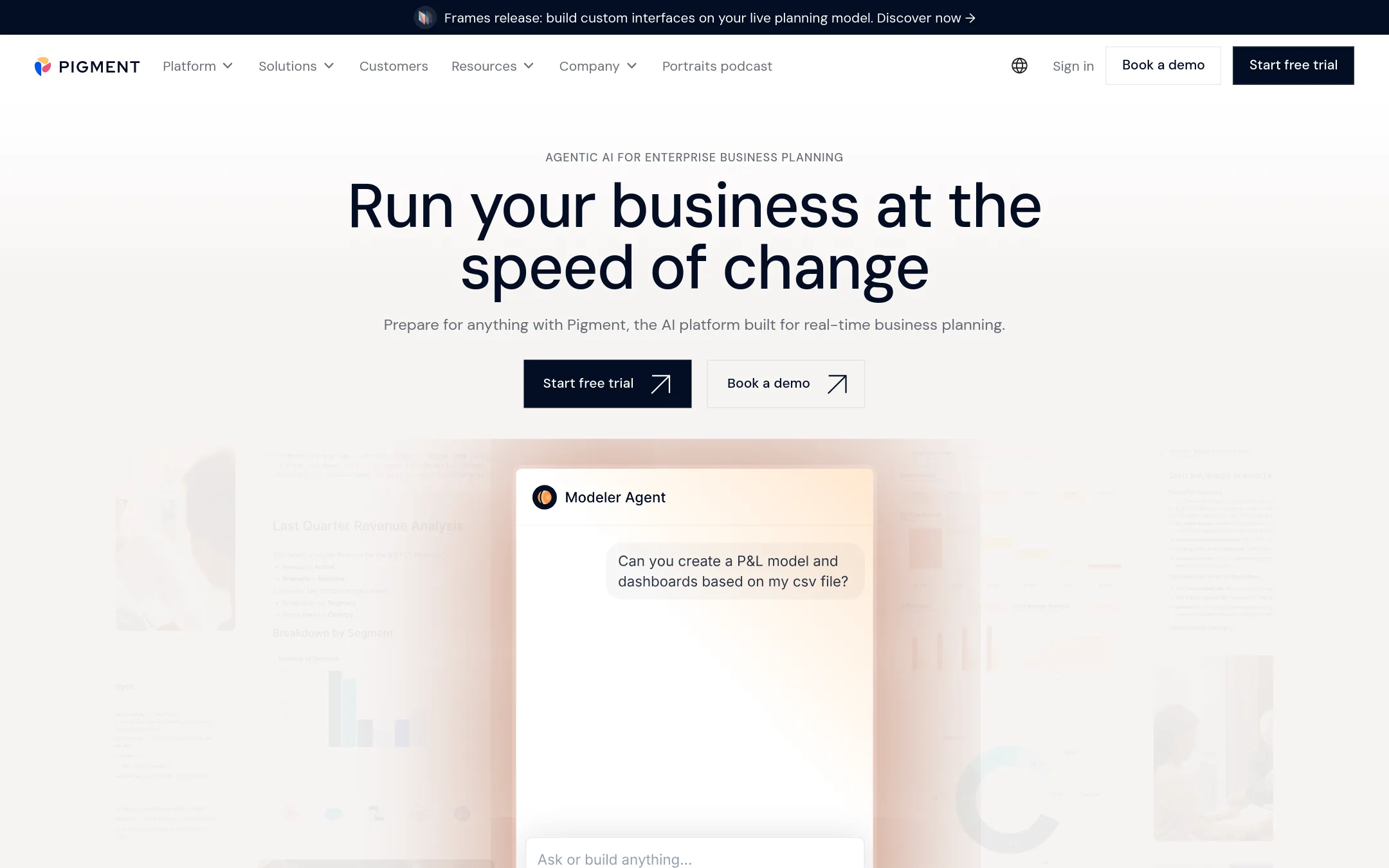
Pigment is an agentic AI planning platform that lets finance, sales, HR, and operations teams model and simulate scenarios in real time. Choose it over Causal when you need a highly flexible tool that adapts to your existing structures and supports cross-functional planning at enterprise scale.
Where it is strong
- AI agents (Modeler, Analyst, Planner) automate model building and analysis
- Real-time collaboration across departments on a single shared model
- Flexible modeling that adapts to your business without rebuilding
Where it falls short
- Pricing is not public, likely enterprise-focused
- May be overkill for small teams needing simple financial planning
- Pricing:
- Pricing is not published on the site.
See more comparisons in Finance & Accounting alternatives.
FAQ
Questions about Causal alternatives
What is Causal and what does it do?
Causal is an Extended Planning & Analysis (xP&A) software that unifies financial and operational planning. It provides dynamic multi-dimensional modeling, scenario planning, and natural language formulas, and integrates real-time data from accounting systems, HRIS, ERP, and CRMs.
How do Causal alternatives compare in pricing?
Most alternatives do not publish pricing and require a sales conversation. Some, like Cube, offer tiers (Bronze, Silver, Gold) but still quote based on legal entities, users, data sources, and AI features. Jedox has Essential, Business, and Professional packages with add-ons.
Which alternative is best for teams that rely on Excel?
Datarails is best for teams that rely on Excel because it keeps existing Excel models while adding live data connections and version control. Cube also integrates natively with Excel and Google Sheets, providing governed numbers. Jedox offers an Excel Add-in for 365.
Which alternative is best for large enterprises with complex planning needs?
Anaplan is best for large enterprises with complex planning needs across finance, supply chain, sales, and HR. Board also suits large enterprises needing integrated financial and operational planning with AI-driven scenario modeling. Workday is an option for those needing a broad system of record for HR, finance, and IT.
Do any alternatives offer AI features?
Yes, many alternatives offer AI features. Abacum has AI for data cleaning, anomaly detection, and scenario planning. Pigment has AI agents (Modeler, Analyst, Planner) that automate model building and analysis. Cube and Datarails provide governed AI outputs with audit trails.
Last updated October 31, 2026.