
Cedana alternatives
6 products compared · Updated November 19, 2026
The short answer
For teams that want to get more tokens out of GPUs they already own, the strongest Cedana alternatives are CRIU, Volcano, and SkyPilot. CRIU suits platform engineers who want a free, self-hosted checkpoint and restore tool for Linux containers and can build the GPU handling themselves. Volcano suits platform teams running batch jobs on Kubernetes who need queues and fair scheduling. SkyPilot suits AI infrastructure teams running several Kubernetes or Slurm clusters across clouds who need one scheduler for all of them.
Your shortlist, at a glance
Read the comparisons ↓- CCRIUNot publishedPlatform engineers who run Linux containers and want self-hosted checkpoint and restore without a vendor contract
- RRun:aiNot publishedTeams that want to evaluate Run:ai's GPU scheduling for their own clusters before comparing it with Cedana's checkpoint and migrate approach.
 NVIDIA Base Command PlatformNot publishedEnterprises and research teams already committed to NVIDIA hardware who want first-party AI infrastructure software
- VVolcanoNot publishedPlatform teams running batch training and data jobs on Kubernetes that need queues and fair scheduling across shared clusters
- SSkyPilotNot publishedAI infrastructure teams running several Kubernetes or Slurm clusters across multiple clouds who need one scheduler and quota system for all of them
- AAnyscaleFrom $0.5682/hr (T4)AI teams running distributed training, data curation or batch inference on Ray who want to pool GPUs across AWS, GCP, Azure, Nebius or CoreWeave.
About Cedana and its alternatives
Cedana is a compute platform for frontier inference. According to its site, it increases tokens per GPU-hour and expands usable GPU-hours through transparent checkpoint, migrate, and resume, along with real-time GPU virtualization. The site says this turns GPU-hours lost to cold starts, failures, idle windows and stranded placement into delivered tokens.
When comparing alternatives in this category, weigh what each tool actually does. Some handle checkpointing and recovery, some handle scheduling across clusters, and some are vendor platforms with little public detail. Also check pricing structure, which regions and clouds are supported, how well it integrates with your existing stack, what support is included, and what contract terms apply.
Explore the alternatives
- CNot published
1.CRIU
Best for: Platform engineers who run Linux containers and want self-hosted checkpoint and restore without a vendor contract
- Pricing
- Not published
- Category
- Other
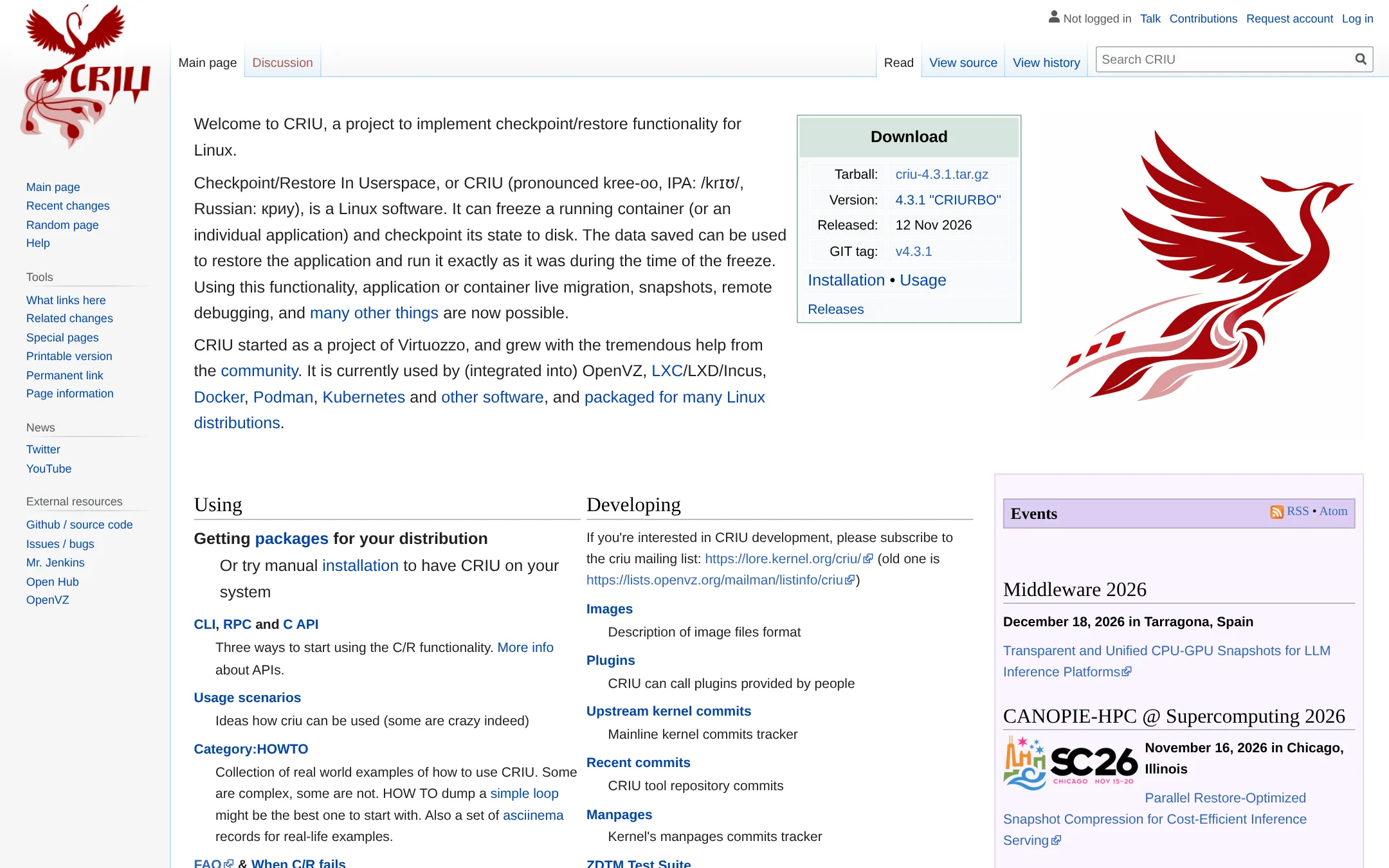
CRIU is an open source Linux project that can freeze a running process or container, save its state to disk, and restore it later exactly as it was. It is built into tools like Docker, Podman, LXC and Kubernetes. Choose it over Cedana if you want a free, self-hosted checkpoint and restore tool and can build the GPU handling and fleet scheduling yourself.
Where it is strong
- Open source Linux project with a long history and many distributions packaging it
- Already integrated into Docker, Podman, Kubernetes and LXC, so it may fit existing container setups
- Documentation covers installation, usage examples and known cases where checkpointing fails
Where it falls short
- The site describes CPU process and container checkpointing, and does not describe GPU live migration as Cedana does
- Teams must run and operate it themselves, with no managed fleet tooling mentioned on the site
- Pricing:
- Pricing is not published on the site.
- RNot published
2.Run:ai
Best for: Teams that want to evaluate Run:ai's GPU scheduling for their own clusters before comparing it with Cedana's checkpoint and migrate approach.

- Pricing
- Not published
- Category
- Other
Run:ai is an alternative to Cedana that the supplied material does not describe. The site could not be reached when it was checked, so its product scope is unknown. A team weighing it against Cedana would need to open the vendor site directly and compare what it offers on GPU scheduling, checkpointing and inference throughput.
Where it is strong
- Listed in the Other category of AI and machine learning tools.
- Shares the goal of getting more use out of GPU capacity, based on its positioning against Cedana.
- Worth a direct demo request if your GPU fleet is the constraint.
Where it falls short
- The site could not be reached when checked, so its features could not be confirmed.
- No pricing or public product description is available for comparison.
- Pricing:
- Pricing is not published on the site.
- Not published
3.NVIDIA Base Command Platform
Best for: Enterprises and research teams already committed to NVIDIA hardware who want first-party AI infrastructure software
- Pricing
- Not published
- Category
- AI & Machine Learning
NVIDIA Base Command Platform is NVIDIA's own offering for AI computing, sold as part of its data center and accelerated computing stack. Someone would choose it over Cedana if they want to stay inside NVIDIA's ecosystem and buy into its hardware and software roadmap. Cedana instead focuses on squeezing more tokens out of GPUs you already own, through checkpoint, migration and resume.
Where it is strong
- Comes from NVIDIA, the company that builds the GPUs and much of the AI software stack
- Covers a wide range of workloads, from AI and HPC to design simulation and networking
- Backed by published benchmark results such as MLPerf training and inference wins
Where it falls short
- The site does not describe checkpoint, migration or live GPU recovery features like Cedana's
- Its public pages focus on the broad NVIDIA platform, so it is harder to tell what a team would get for one workload
- Pricing:
- Pricing is not published on the site.
- VNot published
4.Volcano
Best for: Platform teams running batch training and data jobs on Kubernetes that need queues and fair scheduling across shared clusters
- Pricing
- Not published
- Category
- Other
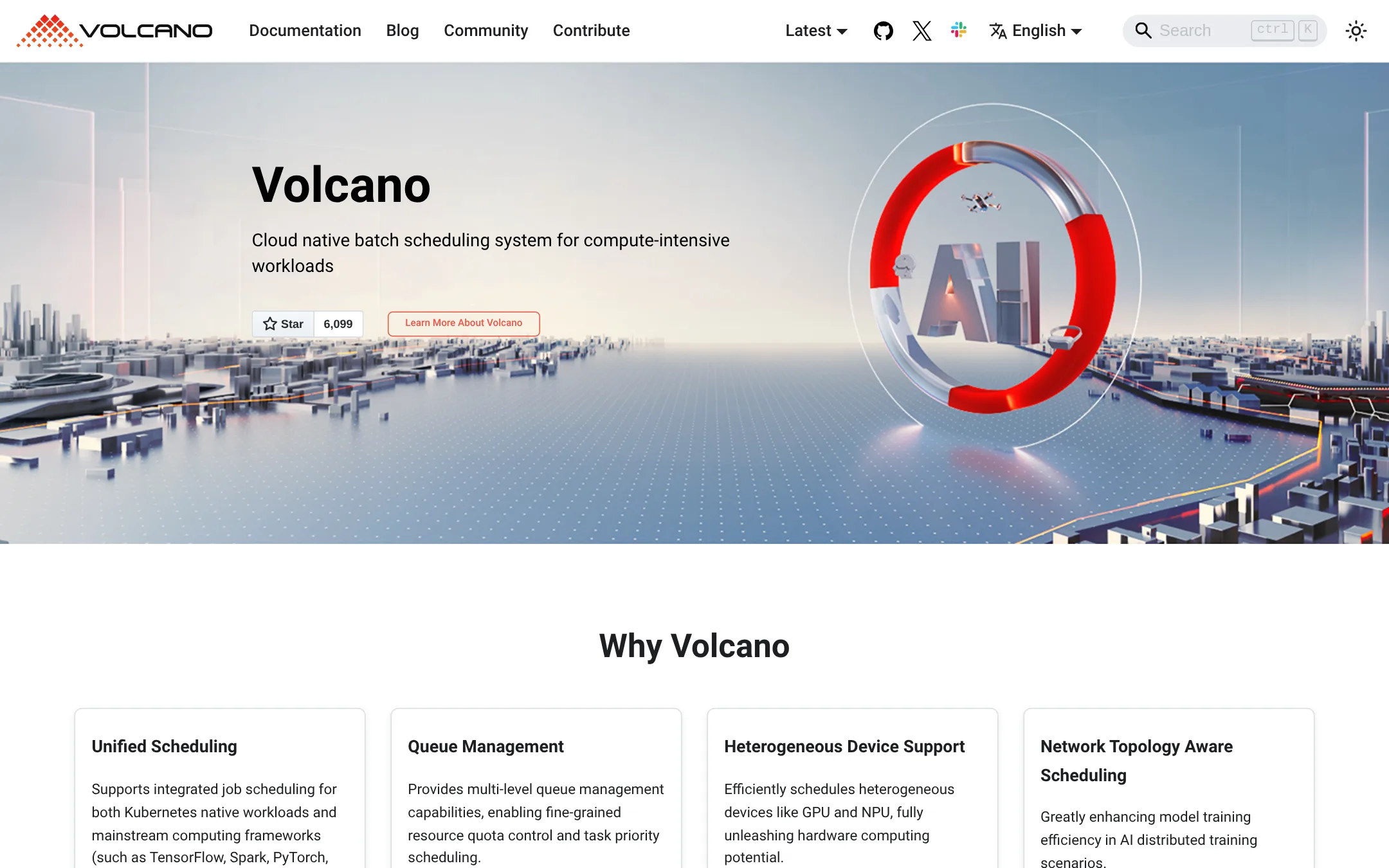
Volcano is an open source, Kubernetes-native batch scheduler for compute-heavy jobs. It handles queues, gang scheduling, and placement across AI, big data, and scientific frameworks such as PyTorch, Ray, Spark, and MPI. Choose it over Cedana when your main problem is scheduling many batch jobs across a Kubernetes cluster, not recovering or moving GPU workloads in flight.
Where it is strong
- Open source project with a visible release history, including v1.16
- Supports many frameworks, from PyTorch and TensorFlow to Spark, Flink and Ray
- Covers queue management, heterogeneous devices and multi-cluster scheduling
Where it falls short
- The site does not describe checkpoint, live migration or GPU virtualization, which are Cedana's core features
- Its focus is scheduling and job placement, so it does not claim to increase tokens per GPU-hour
- Pricing:
- Pricing is not published on the site.
- SNot published
5.SkyPilot
Best for: AI infrastructure teams running several Kubernetes or Slurm clusters across multiple clouds who need one scheduler and quota system for all of them
- Pricing
- Not published
- Category
- Other
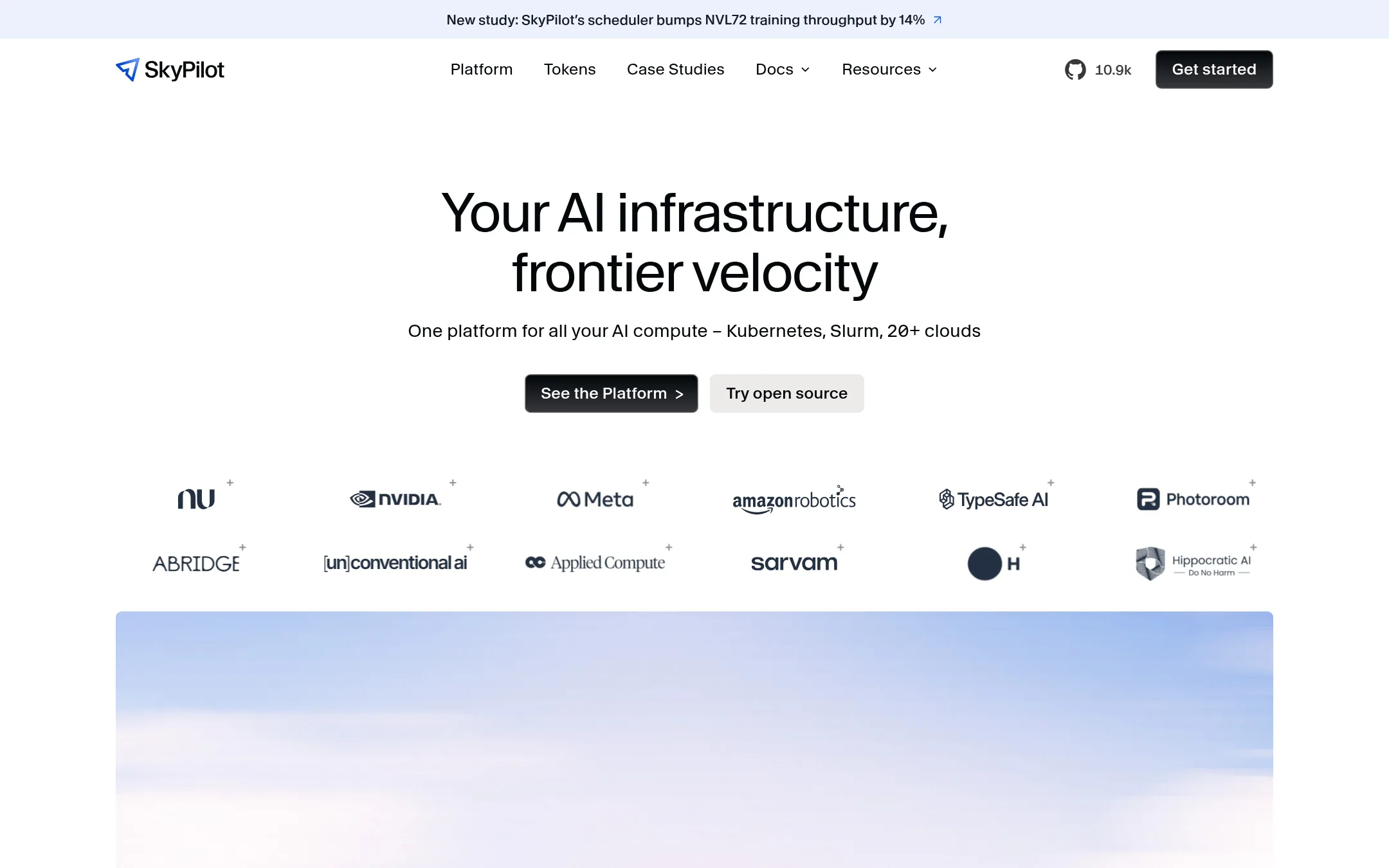
SkyPilot is an AI compute platform that brings Kubernetes, Slurm, VMs and on-prem machines under one interface, and runs the full AI lifecycle on them, from development and pre-training to batch inference and endpoints. Teams would pick it over Cedana when the main problem is fragmented compute across many clusters and clouds, and they need one control plane for scheduling, quotas and GPU health rather than a runtime that speeds up checkpoint, migrate and resume on GPUs they already run.
Where it is strong
- Runs on Kubernetes, Slurm, VMs and on-prem under one interface
- Covers the whole lifecycle, from development and pre-training to batch inference and endpoints
- Includes priority queueing, GPU sharing, quotas and GPU healthchecks with auto-remediation
Where it falls short
- Its focus is orchestration across clusters, not the checkpoint, migrate and GPU virtualization primitives Cedana sells
- The site does not publish pricing, so cost comparison requires a conversation
- Pricing:
- Pricing is not published on the site.
- AFrom $0.5682/hr (T4)
6.Anyscale
Best for: AI teams running distributed training, data curation or batch inference on Ray who want to pool GPUs across AWS, GCP, Azure, Nebius or CoreWeave.
- Pricing
- From $0.5682/hr (T4)
- Category
- Other
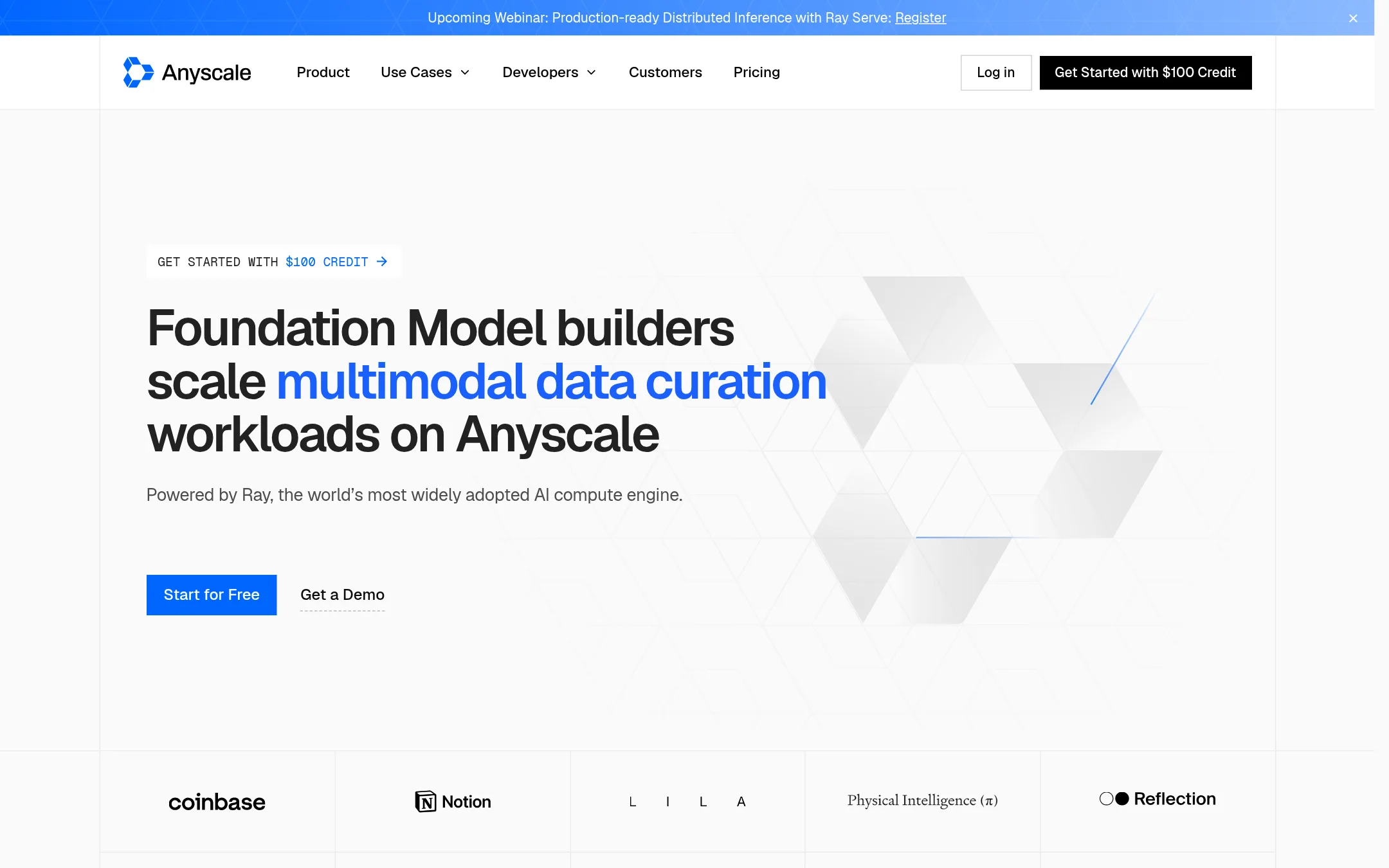
Anyscale is a managed platform built on Ray, the open-source Python compute engine, for running data-heavy AI jobs like multimodal data curation, distributed training, batch embedding generation and post-training. Teams pick it over Cedana when the problem is orchestrating distributed Python workloads across GPU clusters, possibly spanning several clouds, rather than squeezing more tokens out of inference GPUs through checkpoint and migration.
Where it is strong
- Built on Ray, which has over 500M downloads and is widely used for distributed Python.
- Runs the same code across AWS, GCP, Azure, Nebius and CoreWeave without cloud-specific rewrites.
- Offers SSO, SAML, SCIM and audit logs for multi-team governance.
Where it falls short
- Its focus is data-intensive pipelines and training, not checkpoint, migrate and resume for inference fleets the way Cedana is.
- The hosted tier has limited regions and business-hours-only support, with 24x7 support on enterprise plans.
- Pricing:
- Anyscale uses pay-as-you-go usage billing, with listed compute rates such as $0.5682 per hour for an NVIDIA T4 and $4.9591 per hour for the top-tier H/B/GB GPU families, plus volume discounts as usage grows.
See more comparisons in AI & Machine Learning alternatives.
FAQ
Questions about Cedana alternatives
What is the closest alternative to Cedana if I want free, self-hosted checkpoint and restore?
CRIU is an open source Linux project that freezes a running process or container, saves its state, and restores it later. It is built into Docker, Podman, LXC and Kubernetes. Its public pages describe CPU process and container checkpointing rather than GPU live migration, so you would need to build GPU handling yourself.
Which alternative is best for scheduling batch jobs on Kubernetes?
Volcano is an open source, Kubernetes-native batch scheduler that handles queues, gang scheduling and placement for frameworks such as PyTorch, Ray, Spark and MPI. It is a fit when your main problem is scheduling many jobs across a shared cluster. Its site does not describe checkpoint, live migration or GPU virtualization.
Which tool helps if my GPUs are spread across several clusters and clouds?
SkyPilot brings Kubernetes, Slurm, VMs and on-prem machines under one interface and covers the AI lifecycle from development through batch inference and endpoints. It includes priority queueing, GPU sharing, quotas and GPU healthchecks. Its site does not publish pricing, so cost comparison requires a conversation.
Are there alternatives for teams that already run Ray or need multi-cloud GPU pooling?
Anyscale is a managed platform built on Ray for distributed training, data curation and batch embedding generation. It runs the same code across AWS, GCP, Azure, Nebius and CoreWeave, with pay-as-you-go billing and listed rates such as $4.9591 per hour for top-tier GPU families. Its focus is data-intensive pipelines rather than inference checkpoint and migrate.
Can I rely on NVIDIA Base Command Platform or Run:ai as Cedana alternatives?
NVIDIA Base Command Platform suits teams committed to NVIDIA hardware, but its public pages do not describe checkpoint or live GPU recovery, and pricing is not published. Run:ai could not be reached when checked, so its features are unconfirmed. Request a demo from the vendor before comparing it with Cedana.
Last updated November 19, 2026.