
Cerebrium alternatives
7 products compared · Updated November 17, 2026
The short answer
Beam suits teams running coding agents or untrusted code that need isolated sandboxes or persistent VMs alongside GPU work. Modal suits AI teams running RL training, agent sandboxes, or large parallel batch jobs across many GPUs. RunPod suits teams that want a wide choice of GPU types for training, fine-tuning and inference and prefer to pick the hardware themselves.
Your shortlist, at a glance
Read the comparisons ↓ Modal$0.001097/sec (H100)AI teams running RL training, agent sandboxes, or massively parallel batch jobs that need GPU capacity without quota requests
 RunPodFrom $1.99/hr (H100)Teams that need a range of GPU types for training, fine-tuning and inference and want to pick the card themselves
- RReplicateFrom $0.000100/secProduct teams that want to add image, video or audio generation to an app quickly using ready-made models
- BBasetenNot publishedProduct teams running custom or fine-tuned LLMs in production that need high uptime and dedicated capacity without managing GPU infrastructure
 BeamFrom $1.83/hr (H100)Teams running coding agents or untrusted LLM-generated code that need isolated sandboxes or persistent VMs alongside GPU workloads
- BBananaNot publishedAI teams that run high-throughput inference and want GitHub-driven deployments with CI/CD and rolling releases
- LLambda GPU Cloud$4.69/GPU/hrTeams training or serving large models that need dedicated, single-tenant GPU clusters with predictable capacity
About Cerebrium and its alternatives
Cerebrium is a serverless infrastructure platform for AI workloads. According to its site, it runs voice agents, video models and LLMs on serverless GPUs, with sub-second cold starts, instant autoscaling and per-second billing. It is known for running code as-is from a Dockerfile or entry point, with no custom SDK.
When comparing alternatives, weigh how each product prices compute, including whether billing is per second or per hour and whether idle time is charged. Check which regions and GPU types are available, what integrations and deployment tooling come with it, how support is delivered, and what the contract terms and compliance commitments are for your workload.
Explore the alternatives
- $0.001097/sec (H100)
1.Modal
Best for: AI teams running RL training, agent sandboxes, or massively parallel batch jobs that need GPU capacity without quota requests
- Pricing
- $0.001097/sec (H100)
- Category
- AI & Machine Learning
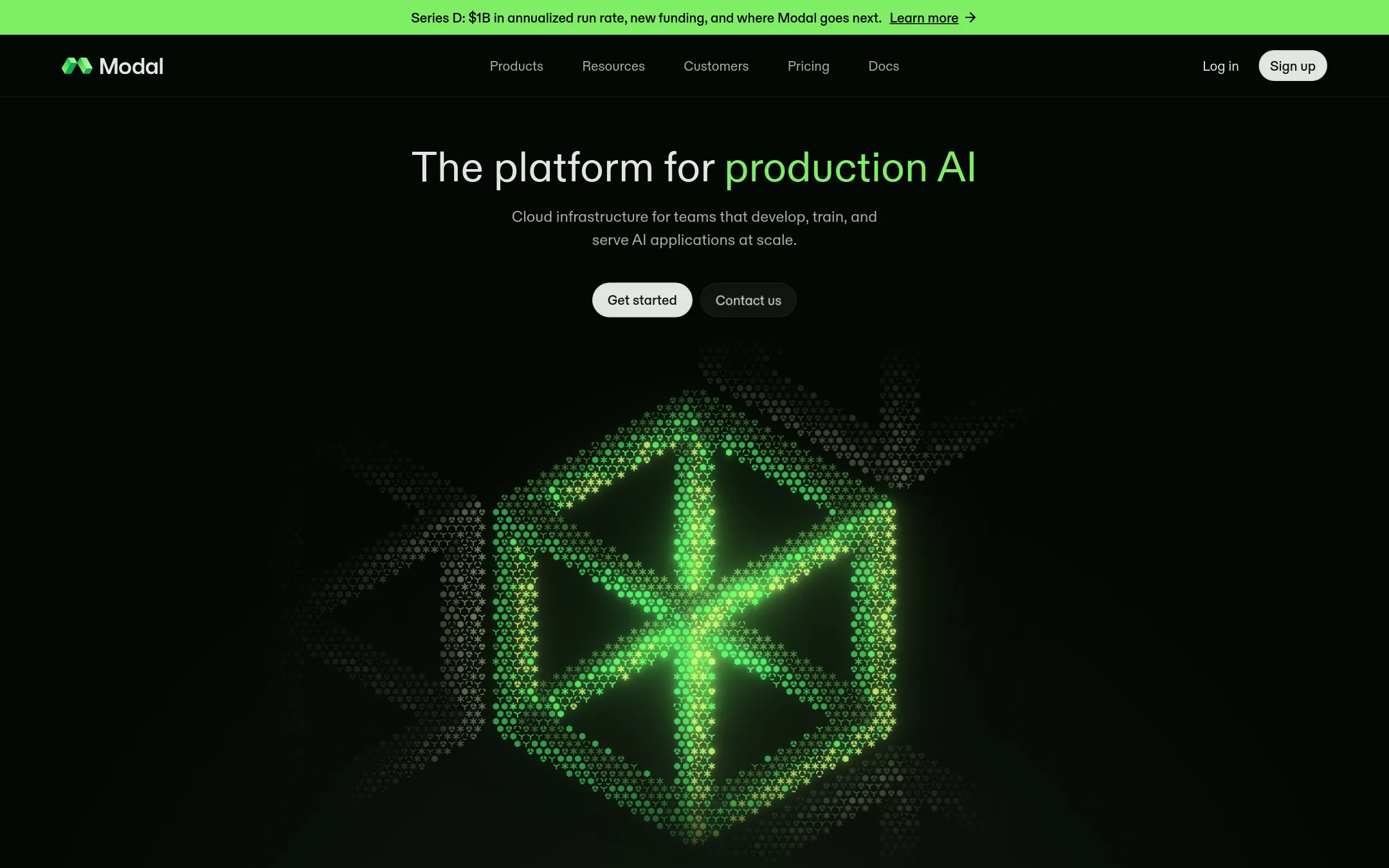
Modal is a general serverless platform for running Python code, inference, training, and sandboxes for AI agents, with a container runtime that is designed for large images and GPU scheduling. Teams choose it over Cerebrium when they want to fan out across thousands of GPUs, run untrusted agent code in Sandboxes, or need capacity spread across 20+ clouds with automatic routing.
Where it is strong
- Fans out a single job across thousands of GPUs without you writing job orchestration
- Sandboxes start in under a second and can run up to a million concurrently
- Capacity is drawn from more than 20 clouds, with routing handled automatically
Where it falls short
- Its Sandbox and Functions model is a different programming pattern from Cerebrium's bring-your-own-Dockerfile approach
- Its published SOC 2 and HIPAA details sit on the Enterprise tier, with audit logs and Okta SSO listed there
- Pricing:
- Pricing is metered per second, with a Starter plan that includes $30 per month in free credits and a Team plan that includes $100 per month in free credits. An H100 SXM5 is listed at $0.001097 per second.
- Switching from Cerebrium:
- Moving from Cerebrium would mean rewriting your deployment around Modal's Functions or Sandboxes, since the site describes it as a different model from running an existing container as-is.
- From $1.99/hr (H100)
2.RunPod
Best for: Teams that need a range of GPU types for training, fine-tuning and inference and want to pick the card themselves
- Pricing
- From $1.99/hr (H100)
- Category
- AI & Machine Learning
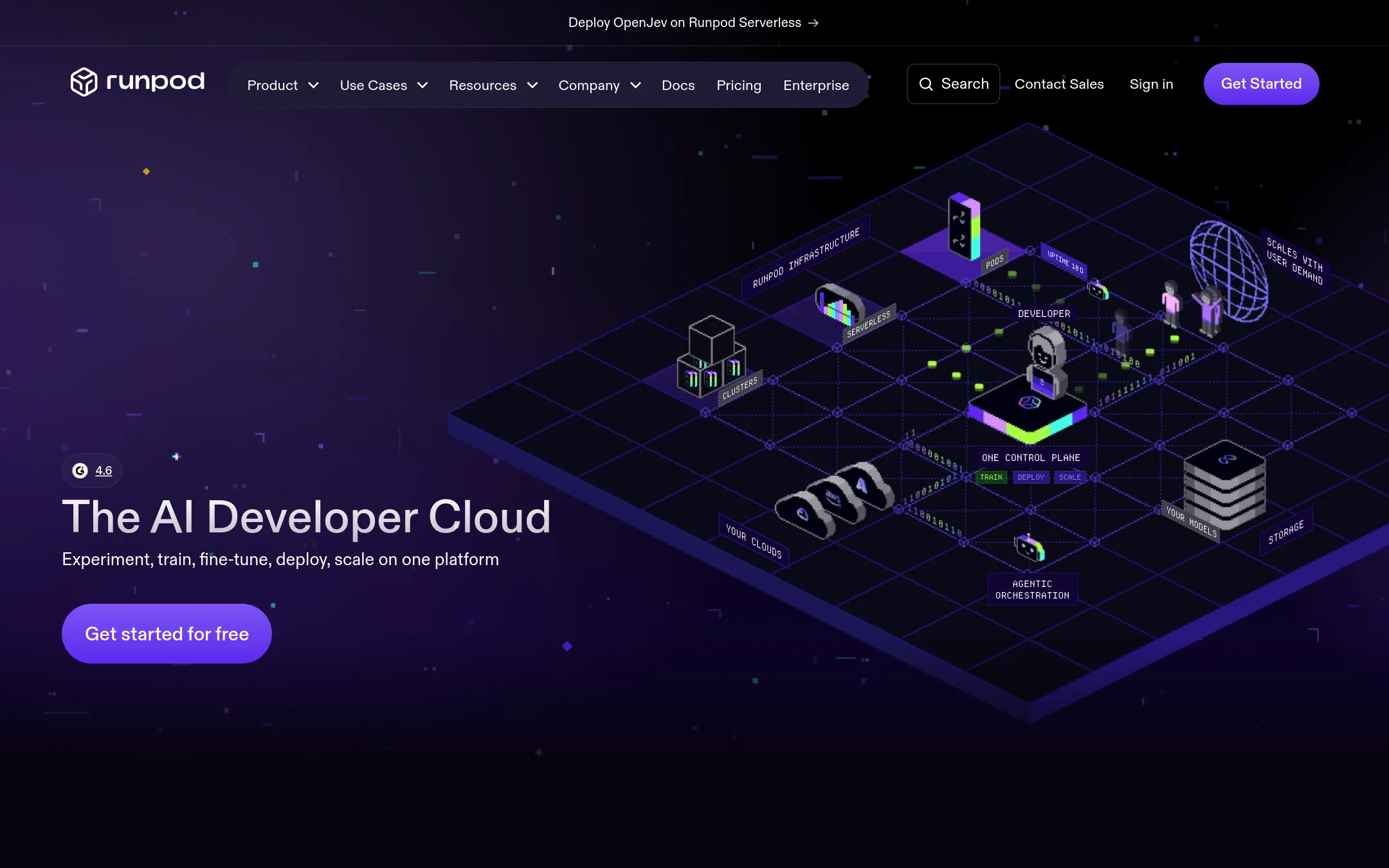
RunPod is a GPU cloud with three products: Pods for dedicated GPU instances, Serverless for autoscaling inference endpoints that scale to zero, and Clusters for multi-GPU jobs. A team would pick it over Cerebrium when they want a wide GPU catalog and direct control over pod instances, or when they want to rent GPUs by the hour for training and development alongside inference.
Where it is strong
- Pods, Serverless and Clusters run on one account, so a project can move from experiment to production without a migration.
- Serverless endpoints scale to zero when idle and the site lists sub-200ms cold starts.
- Storage is listed from $0.05/GB/mo, with persistent network storage for pipelines.
Where it falls short
- Community Cloud capacity is cheaper but is a lower-priced tier with fewer guarantees than Secure Cloud.
- The site lists 31 regions, but a team with strict data residency needs will still need to check which regions and SKUs apply to them.
- Pricing:
- Pricing is not published on the site in a single table. Pods, Serverless and Clusters are billed differently, with example H100 PCIe at $2.89/hr on Secure Cloud and from $1.99/hr on Community Cloud.
- RFrom $0.000100/sec
3.Replicate
Best for: Product teams that want to add image, video or audio generation to an app quickly using ready-made models
- Pricing
- From $0.000100/sec
- Category
- Other
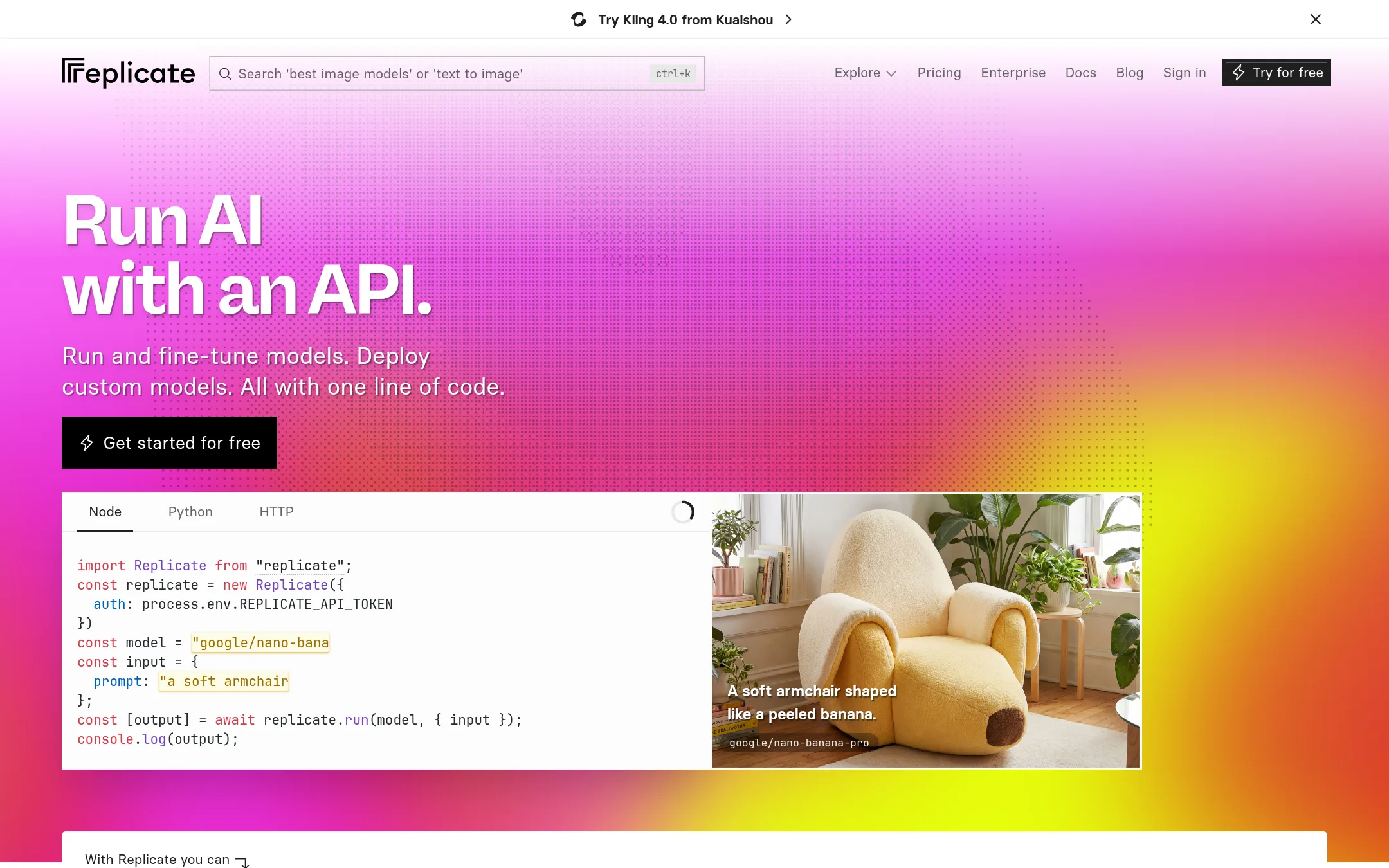
Replicate is a hosted API for running machine learning models, with thousands of community-published models that can be called with one line of code. Teams choose it over Cerebrium when they want to use existing open-source or proprietary models such as image and video generators without deploying the model themselves, or when they want to package their own model with the open-source Cog tool.
Where it is strong
- Thousands of ready-to-run models, including recent image and video generators, callable through one API line
- Scales to zero when idle, so you do not pay for GPUs sitting unused on public models
- Open-source Cog tool lets you package and deploy your own custom models
Where it falls short
- Private models run on dedicated hardware and bill for idle time, unlike fast-booting fine-tunes
- Its strength is model hosting, so it is a weaker fit than Cerebrium for running arbitrary application code like a custom voice agent backend
- Pricing:
- Public models are billed by run time at hardware rates such as $0.000225 per second on an Nvidia T4 GPU and $0.001400 per second on an Nvidia A100 (80GB), while some models are billed by input and output instead.
- BNot published
4.Baseten
Best for: Product teams running custom or fine-tuned LLMs in production that need high uptime and dedicated capacity without managing GPU infrastructure
- Pricing
- Not published
- Category
- Other
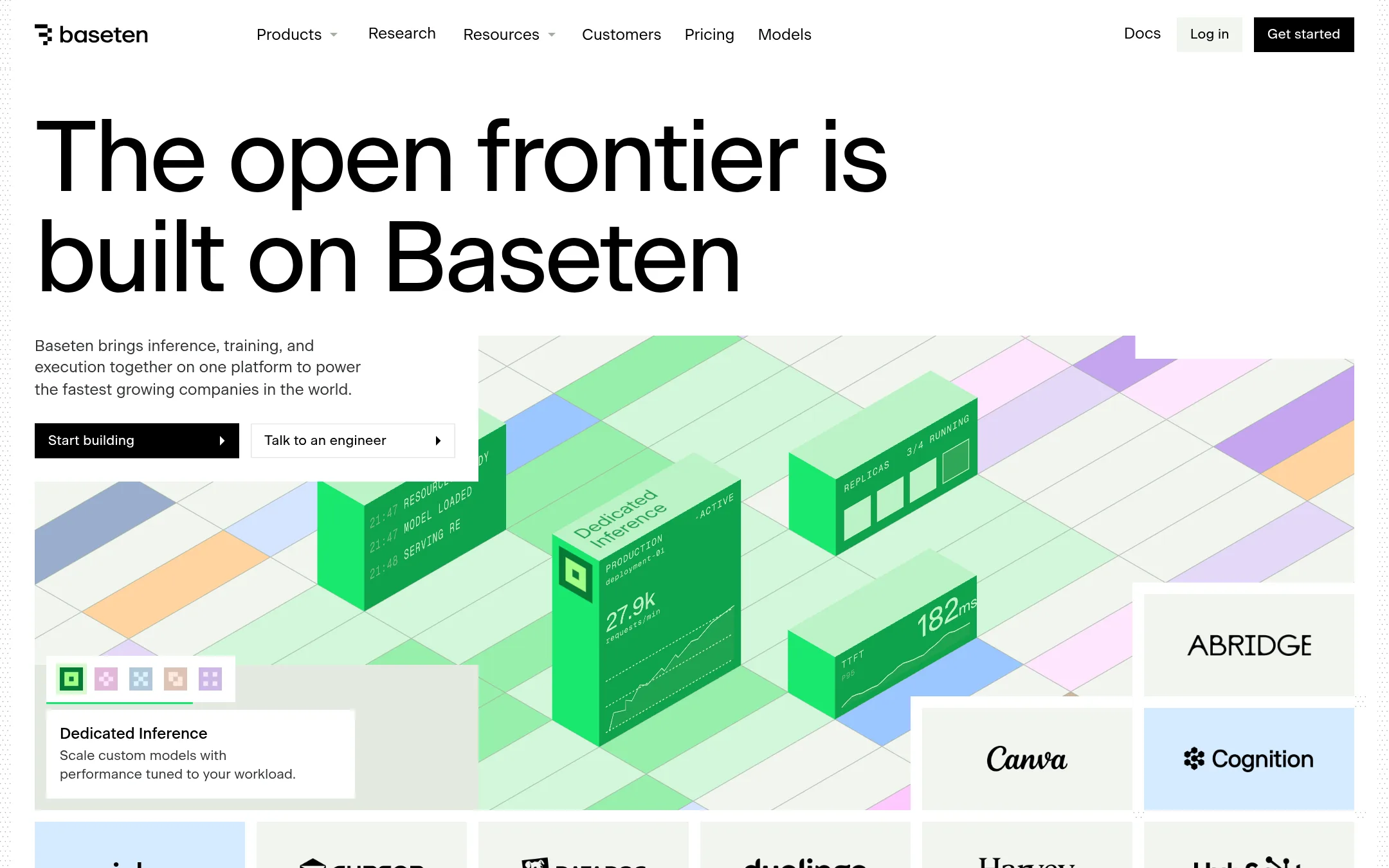
Baseten is an inference, training, and execution platform for serving open-source and custom models, with dedicated inference, model APIs, and sandboxes for agents. Teams pick it over Cerebrium when they want a managed platform with engineers working alongside them, and when they need multi-cloud capacity with failover for high-uptime serving.
Where it is strong
- Covers inference, training, and agent sandboxes on one platform
- Multi-cloud capacity with failover for high availability
- Custom pricing, reserved compute, and volume discounts for production workloads
Where it falls short
- Published pricing covers token and compute tiers, but a clear bill for a typical workload is harder to estimate upfront than Cerebrium's per
- Its strongest offerings, like dedicated capacity and SLAs, are negotiated rather than self-serve
- Pricing:
- Pricing is not published on the site.
- From $1.83/hr (H100)
5.Beam
Best for: Teams running coding agents or untrusted LLM-generated code that need isolated sandboxes or persistent VMs alongside GPU workloads
- Pricing
- From $1.83/hr (H100)
- Category
- AI & Machine Learning
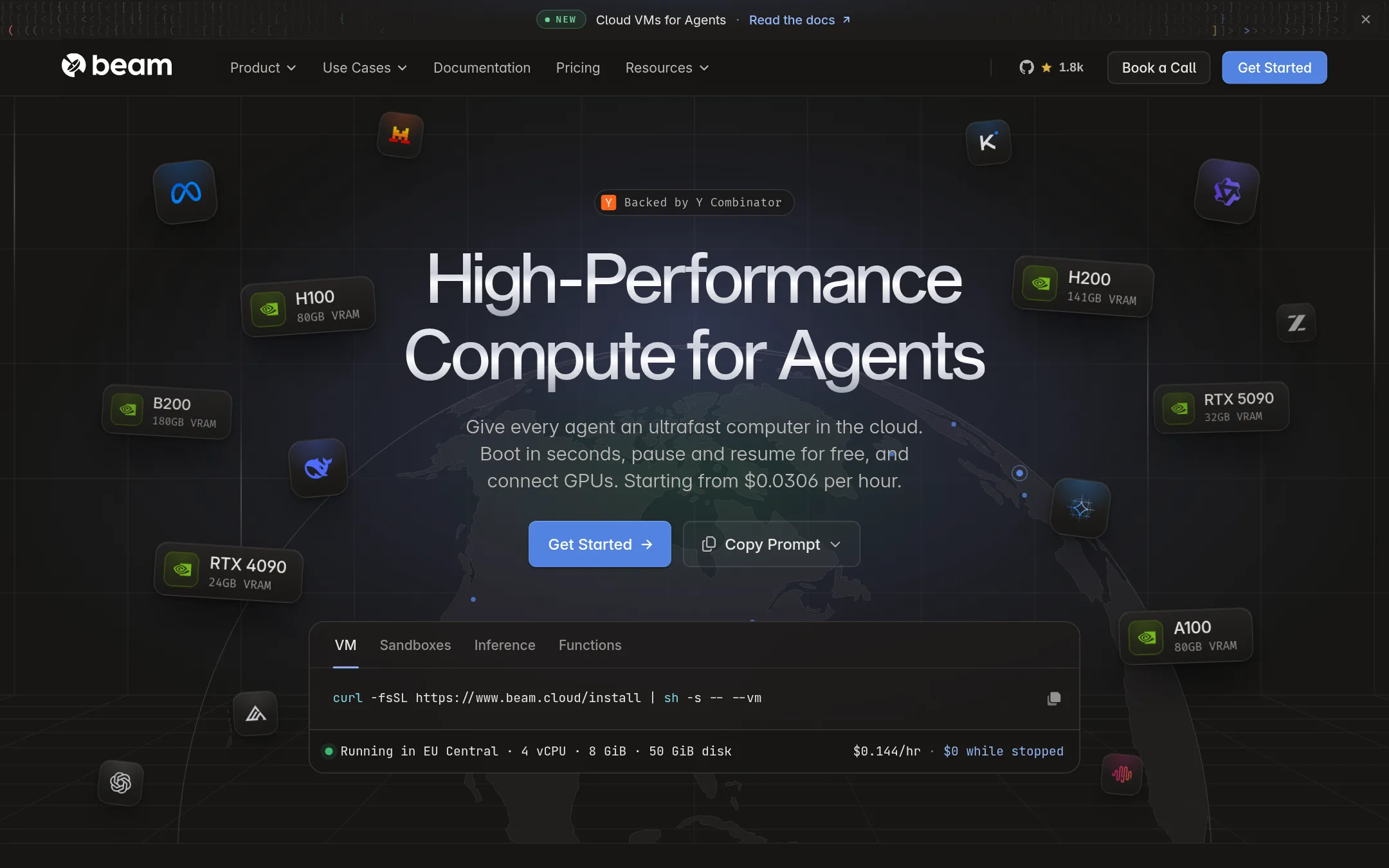
Beam runs bare-metal servers as VMs, sandboxes, task queues, functions and endpoints, and bills compute only while code runs. Teams choose it over Cerebrium when they want persistent Linux VMs or isolated sandboxes for coding agents and untrusted code, not just GPU model serving.
Where it is strong
- Sandboxes start in about half a second and can be paused, snapshotted and restored.
- Persistent Linux VMs are billed only while running, with no compute charges while stopped.
- Offers a bring-your-own-cloud option on AWS, GCP and Azure, with Beam handling orchestration.
Where it falls short
- Storage pricing is not yet billed, and the planned rate is still to come.
- Eight-GPU InfiniBand clusters are priced by quote rather than published.
- Pricing:
- Compute is billed per second with no egress fees, H100s start from $1.83 per hour, and storage is not billed yet.
- BNot published
6.Banana
Best for: AI teams that run high-throughput inference and want GitHub-driven deployments with CI/CD and rolling releases
- Pricing
- Not published
- Category
- Other
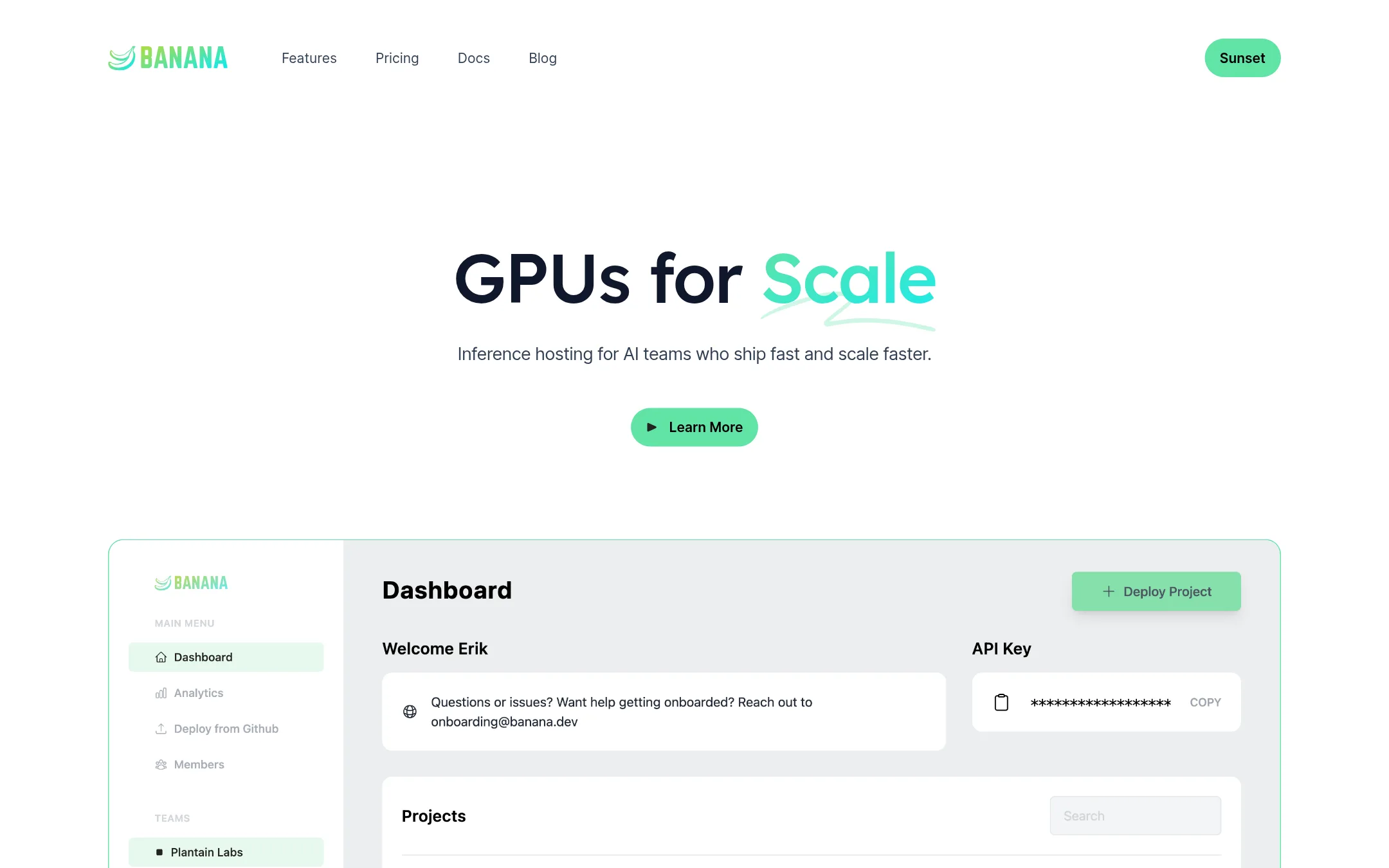
Banana is an inference hosting platform for AI teams that want autoscaling GPUs with pass-through pricing and no markup on compute. It bundles GitHub integration, CI/CD, a CLI, rolling deploys, logs, tracing and business analytics. A team would pick it over Cerebrium if they want a fuller DevOps workflow and an open automation API, and are comfortable with a flat monthly platform fee plus raw GPU cost.
Where it is strong
- Autoscales GPUs up and down based on demand
- Pass-through GPU pricing with no compute markup, plus a flat monthly platform fee
- Built-in GitHub integration, CI/CD, CLI, rolling deploys, logs and tracing
Where it falls short
- Pricing details are not published on the site, so costs are hard to estimate upfront
- Parallel GPU limits and custom queues are tied to plan tiers, with the highest limits in Enterprise
- Pricing:
- Pricing is not published on the site.
- L$4.69/GPU/hr
7.Lambda GPU Cloud
Best for: Teams training or serving large models that need dedicated, single-tenant GPU clusters with predictable capacity
- Pricing
- $4.69/GPU/hr
- Category
- Other
Lambda GPU Cloud sells dedicated NVIDIA GPU capacity, from single instances to large clusters and superclusters, with self-serve instances for quick tests. Pick it over Cerebrium when you want single-tenant hardware you control, such as training foundation models or running large clusters, rather than serverless containers that scale to zero.
Where it is strong
- Single-tenant clusters with hardware-level isolation for sensitive workloads
- Clusters range from 16 GPUs to over 2,000 with managed orchestration
- Self-serve instances can be launched in minutes for prototyping
Where it falls short
- Billed by the hour for reserved hardware, so idle time still costs money, unlike per-second serverless billing
- Serverless features like sub-second autoscaling and scale to zero are not part of the offer
- Pricing:
- Instances list NVIDIA H100 SXM at $4.69 per GPU per hour, and 1-Click Clusters of NVIDIA B200 or H100 GPUs are priced per GPU per hour with volume tiers, with reserved capacity available at lower rates.
See more comparisons in AI & Machine Learning alternatives.
FAQ
Questions about Cerebrium alternatives
What is Cerebrium best known for?
According to its site, Cerebrium is known for serverless GPU infrastructure for real-time AI, including voice agents, video models and LLMs. It advertises sub-second cold starts, autoscaling and pay-per-second pricing, with no Kubernetes to manage.
Which alternative is best if I need sandboxes for coding agents?
Beam is the strongest fit for this need. Its entry notes that sandboxes start in about half a second and can be paused, snapshotted and restored, and that it suits teams running untrusted LLM-generated code. Modal is also a candidate, since its Sandboxes can run up to a million concurrently.
How do I pick between per-second serverless billing and renting GPUs by the hour?
Per-second serverless billing, as used by Cerebrium and Modal, charges only while your code runs. Hourly dedicated capacity, as with Lambda GPU Cloud, bills reserved hardware even when idle. Choose by how bursty your traffic is and whether you need single-tenant hardware.
Which option works if I want to choose the exact GPU myself?
RunPod is the best fit here. Its entry describes Pods for dedicated GPU instances, Serverless for autoscaling endpoints and Clusters for multi-GPU jobs, across a wide GPU catalog. Lambda GPU Cloud is another option if you want dedicated NVIDIA hardware for large clusters.
Which alternative is simplest if I only want to call existing models?
Replicate suits product teams that want to add image, video or audio generation through a one-line API call using thousands of ready-made models. It is a weaker fit than Cerebrium for running arbitrary application code, such as a custom voice agent backend.
Last updated November 17, 2026.