
Chamber alternatives
6 products compared · Updated November 25, 2026
The short answer
PagerDuty suits engineering and SRE teams that need on-call scheduling and incident coordination across many services. Kubeflow Pipelines suits platform teams already running Kubernetes that want open source, self-managed ML pipelines. Weights & Biases suits research and ML teams whose main need is tracking experiments and comparing training runs. Chamber's own page centres on GPU fleets, so these three cover different needs rather than direct replacements for it.
Your shortlist, at a glance
Read the comparisons ↓- WWeights & BiasesNot publishedResearch and ML teams that mainly need to track experiments, compare training runs and share dashboards
- RRun:aiNot publishedML platform teams that want GPU scheduling and resource management software rather than autonomous ops agents
- DDetermined AINot publishedML research teams that mainly need distributed training and experiment management on their own GPUs
- KKubeflow PipelinesNot publishedPlatform teams already running Kubernetes that want open source, self-managed ML pipelines across on-premises and cloud.
- KKomodorNot publishedSRE and platform teams running Kubernetes production that need incident triage, RCA and cloud cost control
- PPagerDutyFrom $2,800 / yearEngineering and SRE teams that need on-call scheduling, alert routing and incident coordination across many services
About Chamber and its alternatives
Chamber is an AIOps platform for ML teams. According to its site, it runs agents that diagnose failed training jobs, reclaim idle GPUs and keep nodes healthy, with a human in the loop when risk is high. The site says it is built for GPU fleets rather than general chat, and it deploys into the buyer's own cluster.
When comparing alternatives in this category, weigh the pricing structure first. Some products publish tiers, while others keep pricing behind a sales conversation. Check which regions and clouds each tool supports, which integrations it offers with your existing stack, how support is delivered, and what the contract terms require.
Explore the alternatives
- WNot published
1.Weights & Biases
Best for: Research and ML teams that mainly need to track experiments, compare training runs and share dashboards
- Pricing
- Not published
- Category
- Other
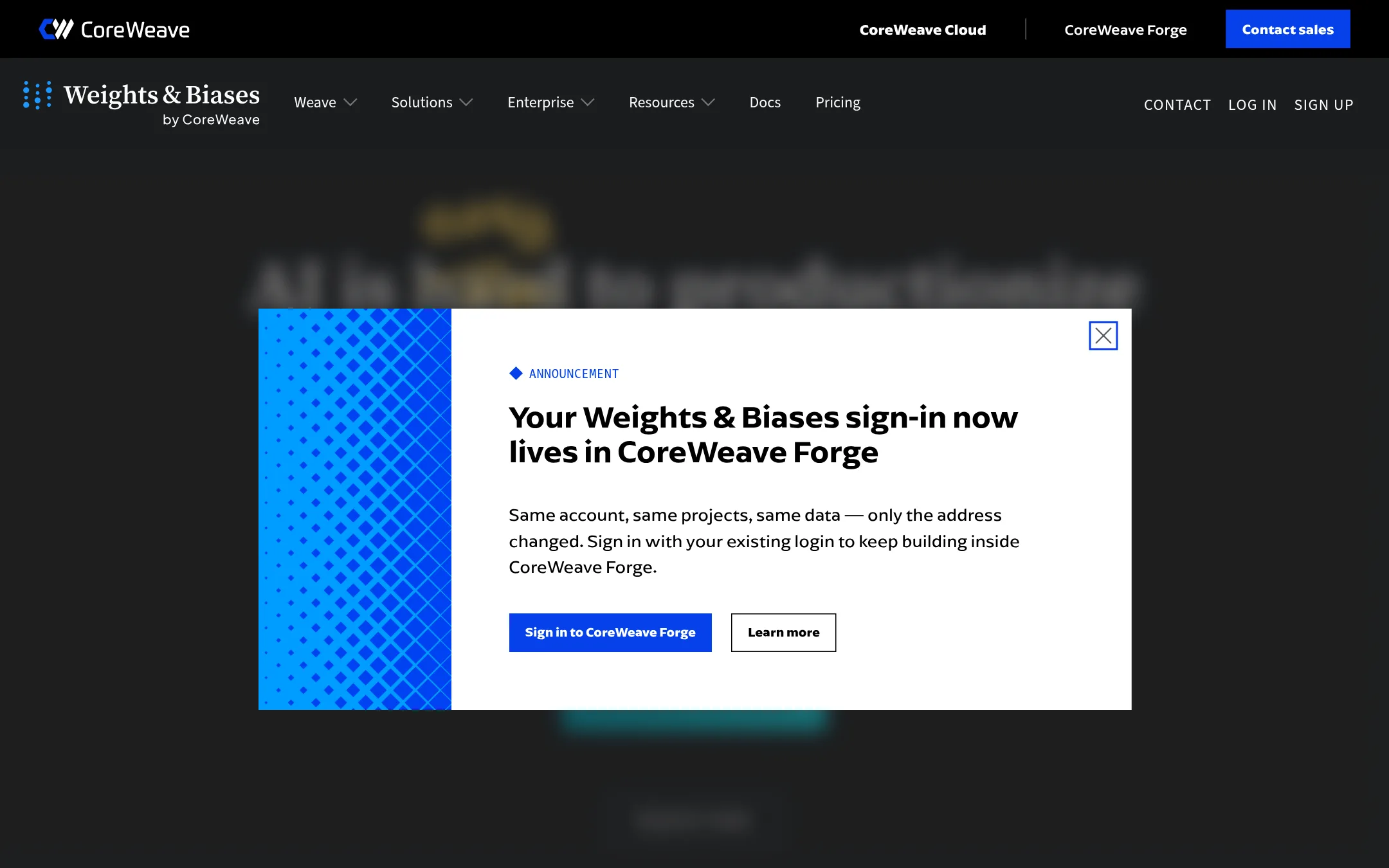
Weights & Biases is an experiment tracking and AI developer platform for logging training runs, comparing models, and building dashboards. Teams pick it when their main need is visibility into model development rather than operating the GPU cluster itself. Chamber focuses on the infrastructure side, diagnosing failed jobs and reclaiming idle GPUs.
Where it is strong
- Lightweight experiment tracking with collaborative Reports dashboards
- Free forever for academic research
- Compliance certifications including ISO 27001 and SOC 2, plus HIPAA and GDPR alignment
Where it falls short
- Focuses on tracking experiments, not on automatically fixing failed jobs or packing GPUs
- Now part of CoreWeave Forge, so product direction and packaging are in flux
- Pricing:
- Pricing is not published on the site.
- RNot published
2.Run:ai
Best for: ML platform teams that want GPU scheduling and resource management software rather than autonomous ops agents

- Pricing
- Not published
- Category
- Other
Run:ai is a GPU orchestration platform for AI and ML workloads. The facts available here are thin because its website could not be reached, so the rest of this entry relies only on the name and category. Teams might pick it over Chamber if they want to manage GPU scheduling and sharing directly rather than adopt AIOps agents that diagnose failures and remediate on their own.
Where it is strong
- Known in the GPU orchestration category
- Focused on scheduling and sharing GPU capacity
- Suits teams wanting a dedicated resource scheduler
Where it falls short
- Its website could not be reached when this entry was prepared, so features are unverified
- No published pricing to compare against Chamber
- Pricing:
- Pricing is not published on the site.
- DNot published
3.Determined AI
Best for: ML research teams that mainly need distributed training and experiment management on their own GPUs

- Pricing
- Not published
- Category
- Other
Determined AI is a platform for training deep learning models, with experiment tracking and distributed training on GPU clusters. Its homepage could not be loaded for this review, so the rest of this entry covers only what is known about its category. A team would pick it over Chamber if the main need is running and managing training experiments rather than keeping the GPU cluster itself healthy.
Where it is strong
- Built around the training experiment workflow
- Runs on GPU clusters that the team already owns
- Focused on model training rather than general infrastructure triage
Where it falls short
- The site could not be reached for this review, so current features are unverified
- No published pricing to compare against Chamber
- Pricing:
- Pricing is not published on the site.
- KNot published
4.Kubeflow Pipelines
Best for: Platform teams already running Kubernetes that want open source, self-managed ML pipelines across on-premises and cloud.
- Pricing
- Not published
- Category
- Other
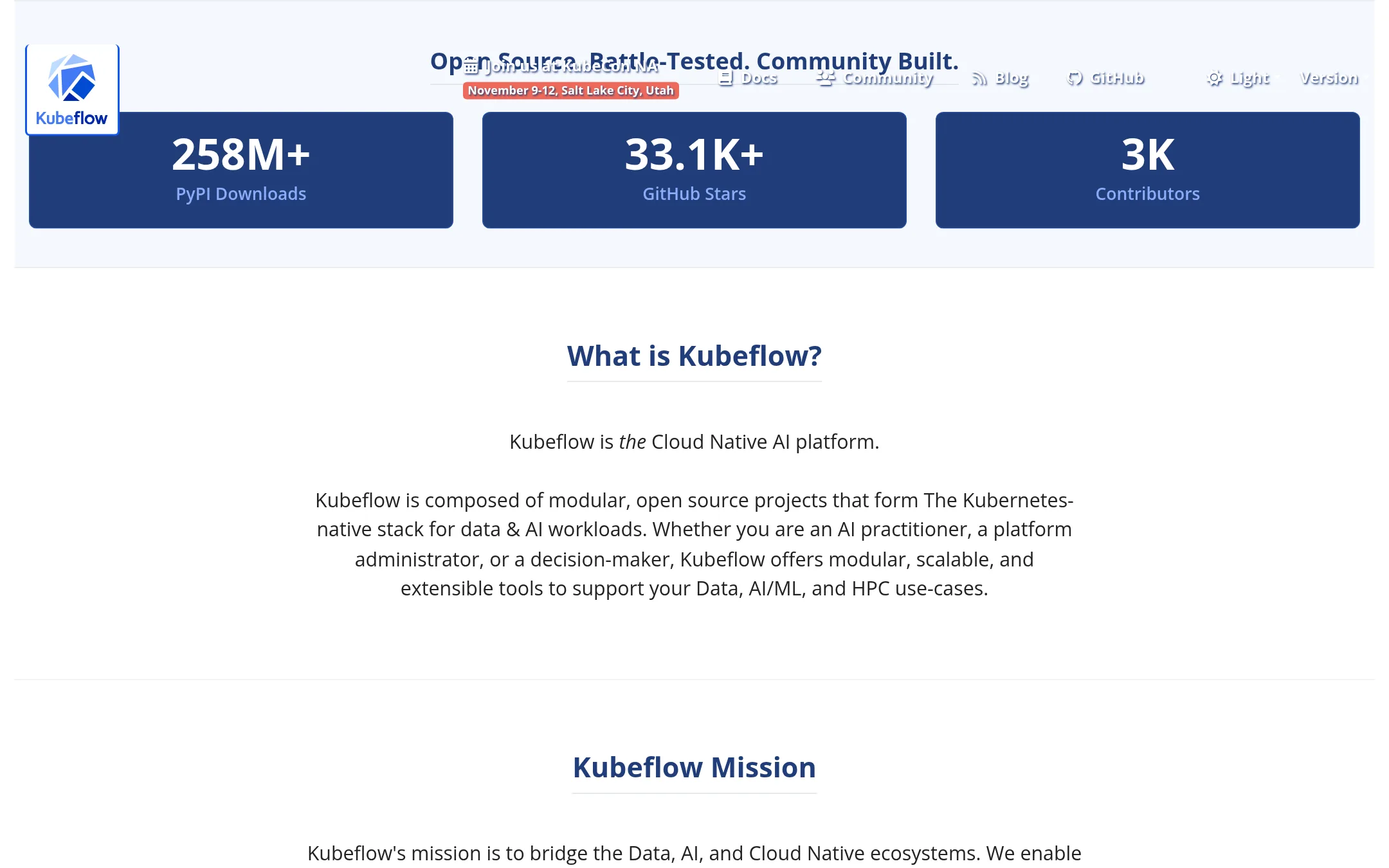
Kubeflow Pipelines is an open source platform for building and running portable ML workflows on Kubernetes. Pick it over Chamber when you want to own the pipeline layer yourself, keep everything open source, and run workflows the same way on a laptop, on-premises, or in any cloud, rather than hand ops work to a hosted agent.
Where it is strong
- Open source and community built, with no license fee listed on the site
- Runs the same code on a laptop, on-premises, or any cloud
- Modular subprojects cover training, tuning, notebooks, and a model registry
Where it falls short
- Chamber's autonomous GPU triage, failure pattern matching and idle-GPU packing are not described as part of Kubeflow Pipelines
- Your team has to operate Kubernetes and the Kubeflow stack itself
- Pricing:
- Pricing is not published on the site.
- KNot published
5.Komodor
Best for: SRE and platform teams running Kubernetes production that need incident triage, RCA and cloud cost control
- Pricing
- Not published
- Category
- Other
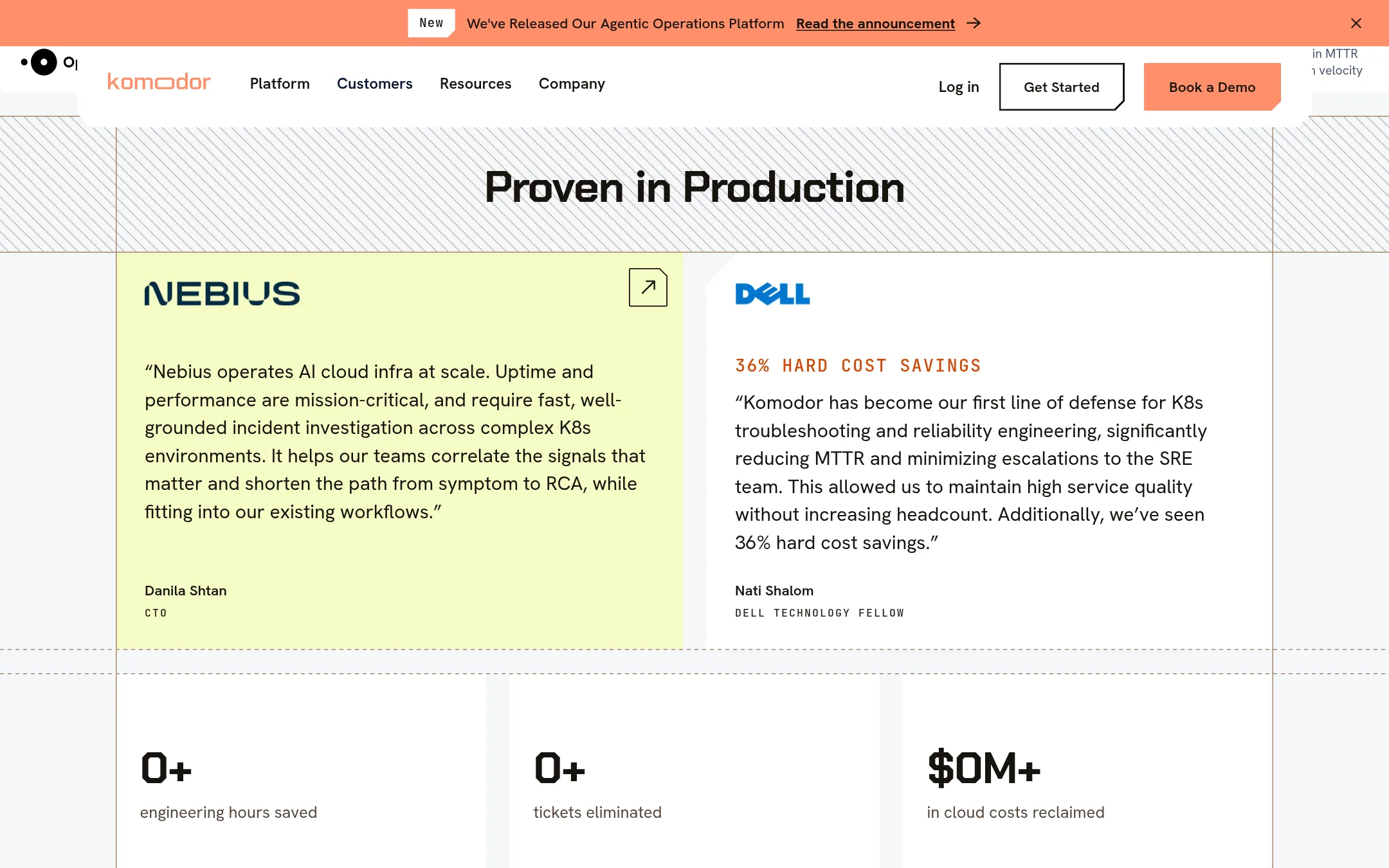
Komodor is an operations platform for Kubernetes and cloud infrastructure. It covers alert noise, incident management, root cause analysis, cloud and Kubernetes cost, and CI/CD health, and it now also lets teams build, run and govern their own AI agents. Someone would pick Komodor over Chamber if the main problem is general production reliability and cloud spend across Kubernetes, rather than GPU-specific work like failed training jobs and idle accelerators.
Where it is strong
- Covers alerts, incident management, RCA, cloud cost and CI/CD health in one platform
- Lets teams bring their own agents built with LangChain, Google ADK or Claude Agent SDK
- Policy checks, approval gates and a full audit trail for agent actions
Where it falls short
- Focus is general production operations, with no GPU training-job or accelerator packing features listed
- Pricing details are not published, so cost has to come from a sales conversation
- Pricing:
- Pricing is not published on the site.
- PFrom $2,800 / year
6.PagerDuty
Best for: Engineering and SRE teams that need on-call scheduling, alert routing and incident coordination across many services
- Pricing
- From $2,800 / year
- Category
- Other
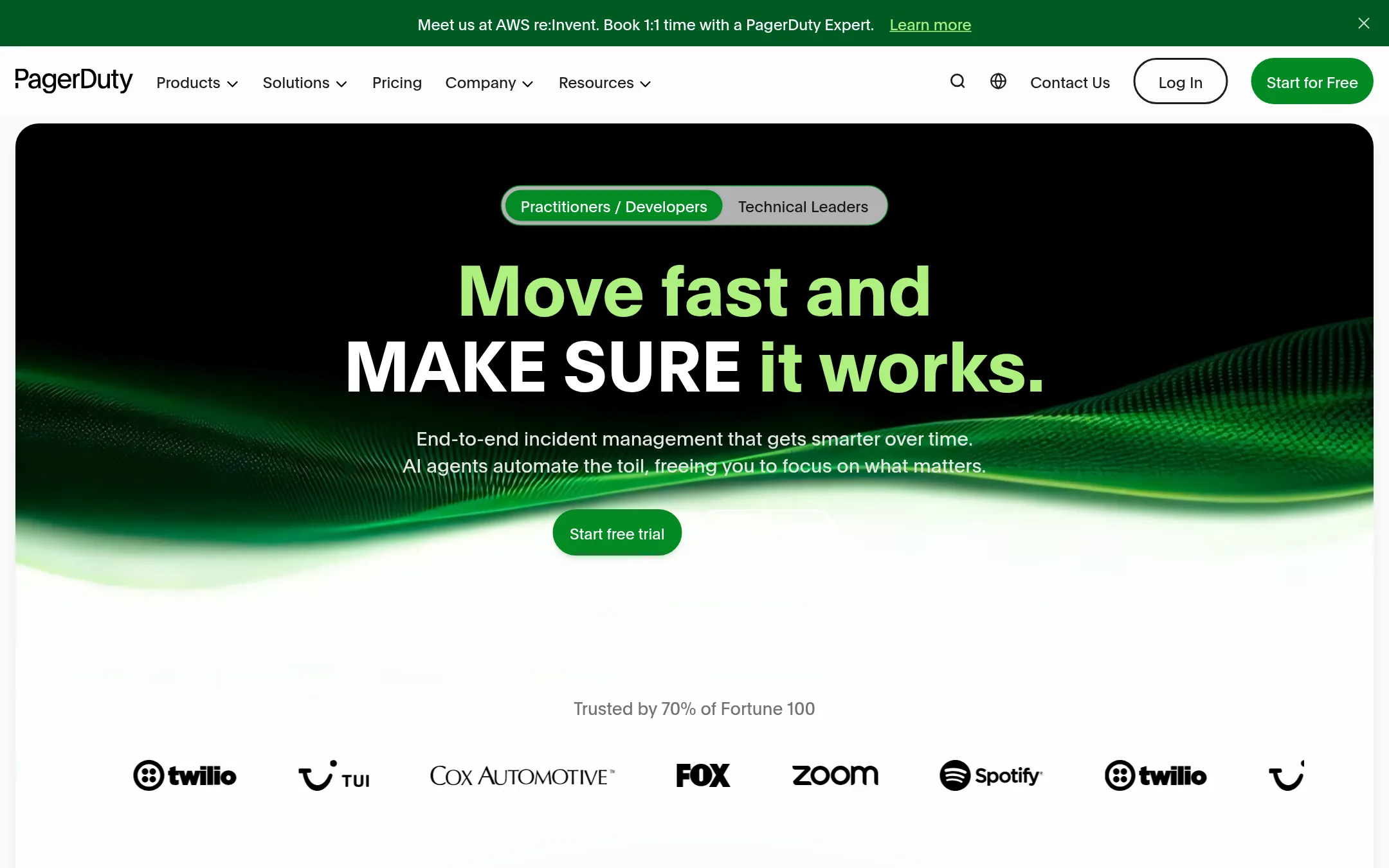
PagerDuty is an incident response platform that routes alerts, coordinates responders and runs post-incident reviews across hundreds of tools. Someone would pick it over Chamber when the problem is human on-call coordination and alerting across a whole engineering org, not GPU-specific job failures or cluster packing.
Where it is strong
- Integrates with over 750 tools out of the box
- Covers incident response from detection through post-incident reviews
- Tiered plans scale from small teams to enterprise
Where it falls short
- Built for general incident management, not GPU fleets or ML training jobs
- Pricing for the top tier is custom and the site does not publish a figure
- Pricing:
- Pricing is listed for the PD Reliability Platform: Starter at $2,800 per year, Essential at $12,000 per year and Plus at $48,000 per year, with Ultimate on custom pricing.
See more comparisons in AI & Machine Learning alternatives.
FAQ
Questions about Chamber alternatives
What is the main difference between Chamber and PagerDuty?
PagerDuty focuses on human on-call coordination, alert routing and incident reviews across many tools. Chamber focuses on GPU-specific work such as diagnosing failed training jobs and packing idle accelerators. A team with a general engineering on-call problem would look at PagerDuty, while a team with GPU fleet problems would look at Chamber.
Can I use Kubeflow Pipelines if I want to avoid a hosted ops agent?
Yes. Kubeflow Pipelines is open source and runs the same workflows on a laptop, on-premises or in any cloud. Your team operates Kubernetes and the Kubeflow stack itself, and the site does not list autonomous failure triage or idle-GPU packing as features.
Is Weights & Biases a replacement for Chamber?
Not directly. Weights & Biases is built for tracking experiments, comparing training runs and sharing dashboards. Chamber works on the infrastructure side, diagnosing failed jobs and reclaiming idle GPUs, so teams sometimes need both kinds of tool.
How much do these alternatives cost compared with Chamber?
PagerDuty publishes plans starting at $2,800 per year, with its top tier on custom pricing. Kubeflow Pipelines and Weights & Biases do not publish pricing on their sites, and Komodor and Run:ai also keep pricing out of public view. Chamber's pricing page asks buyers to talk to the founders for a plan based on fleet size.
Which alternative should I check first if I run Kubernetes in production?
Komodor covers incident triage, root cause analysis, cloud cost and CI/CD health for Kubernetes production, and it can run custom AI agents with policy checks and an audit trail. It does not list GPU training-job or accelerator packing features, so it fits general reliability work better than GPU-specific work. The Run:ai and Determined AI entries could not be verified because their sites did not load.
Last updated November 25, 2026.