
CircleCI alternatives
12 products to explore · 2026
Your shortlist, at a glance.
Read the comparisons ↓

Check each product’s website for current pricing and features. A verified badge indicates a verified listing, not a ranking.
About CircleCI and its alternatives
Teams evaluating CircleCI alternatives often seek platforms that match its autonomous validation capabilities and AI-speed automation without sacrificing enterprise control. CircleCI stands out for its focus on intelligent, agent-powered CI/CD that validates every change with minimal oversight, supporting complex use cases from mobile apps to LLM pipelines and RAG workflows. Searchers comparing options typically want robust integrations with GitHub, GitLab, and Kubernetes alongside autoscaling and build optimization. Alternatives may differ in pricing transparency, ease of self-hosting, or depth of AI-native features like prompt engineering support and model evaluation. Understanding these distinctions helps engineering teams choose tools that maintain production confidence while scaling with AI-driven development cycles.
Explore the alternatives
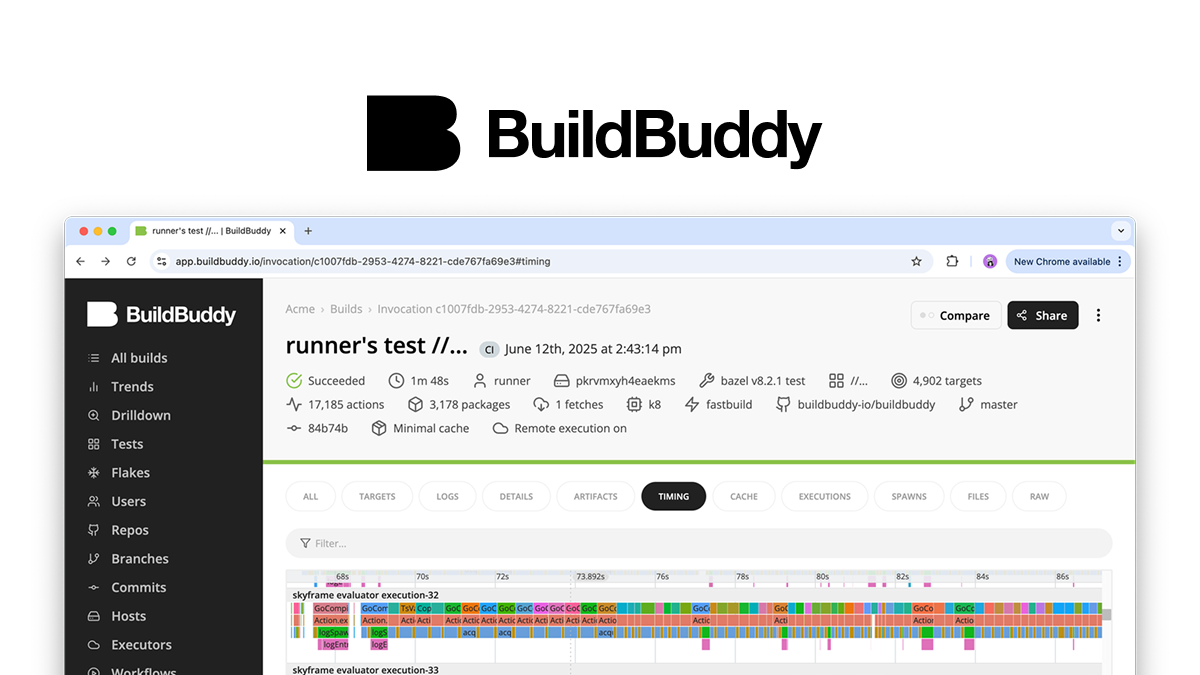
1.BuildBuddy
Developer ToolsBuildBuddy provides enterprise features for Bazel — the open source…

2.CodeNow
Developer ToolsOur mission is to diversify the talent pipeline of students who…
- R
3.Runway
Developer ToolsEasier and more reliable mobile app releases for teams.

4.AWS ParallelCluster
Developer ToolsReliable, scalable cloud computing services from startups to enterprises.

5.Argo CD
Developer ToolsDeclarative continuous delivery with a fully-loaded UI for Kubernetes GitOps.
6.Azure DevOps
Developer ToolsAzure. Your intelligent cloud for DevOps and application development.

7.Bitrise
Developer ToolsHosted Continuous Integration and Delivery for mobile apps
8.Codemagic
Developer ToolsCI/CD for Flutter, React Native, iOS and Android apps
9.Fastlane
Developer ToolsApp automation done right: the easiest way to build and release mobile apps.

10.Firebase
Developer ToolsGoogle’s mobile and web app development platform for building scalable apps and games

11.GitHub Projects
Developer ToolsPlan and track work seamlessly next to your code with AI-powered tools.
- G
12.GitLab
Developer ToolsFinally, AI for the entire software lifecycle.
See more comparisons in Developer Tools alternatives.
Questions about CircleCI alternatives
What makes CircleCI different from traditional CI/CD tools for AI workloads?
CircleCI emphasizes autonomous validation and agent-powered automation specifically designed for AI-speed development, including support for MCP agents, model evaluation, and RAG pipelines with minimal human intervention.
How does CircleCI pricing compare to open-source alternatives like Jenkins?
CircleCI offers a freemium model with free compute credits for startups and usage-based scaling, whereas Jenkins is free but requires significant self-hosted maintenance and lacks built-in AI automation features.
Is CircleCI suitable for enterprises needing security and compliance in AI projects?
Yes, CircleCI targets security engineers and enterprise teams with compliance-focused features, role-based access, and trusted rollback capabilities for regulated AI and production environments.
Can I migrate from CircleCI to GitHub Actions without losing AI-specific features?
GitHub Actions provides strong GitHub integration but offers less specialized autonomous validation and AI agent tooling compared to CircleCI's MCP server and prompt engineering support.
What are the best CircleCI alternatives for startups with limited budgets?
Startups often consider GitLab CI or Buildkite for cost-effective scaling, though they may trade off CircleCI's advanced autoscaling and AI-era autonomous validation capabilities.
Does CircleCI support deployment to serverless and edge environments?
CircleCI supports diverse execution environments including Kubernetes, AWS, and Netlify, enabling deployments across serverless, edge, and traditional infrastructure with consistent validation.