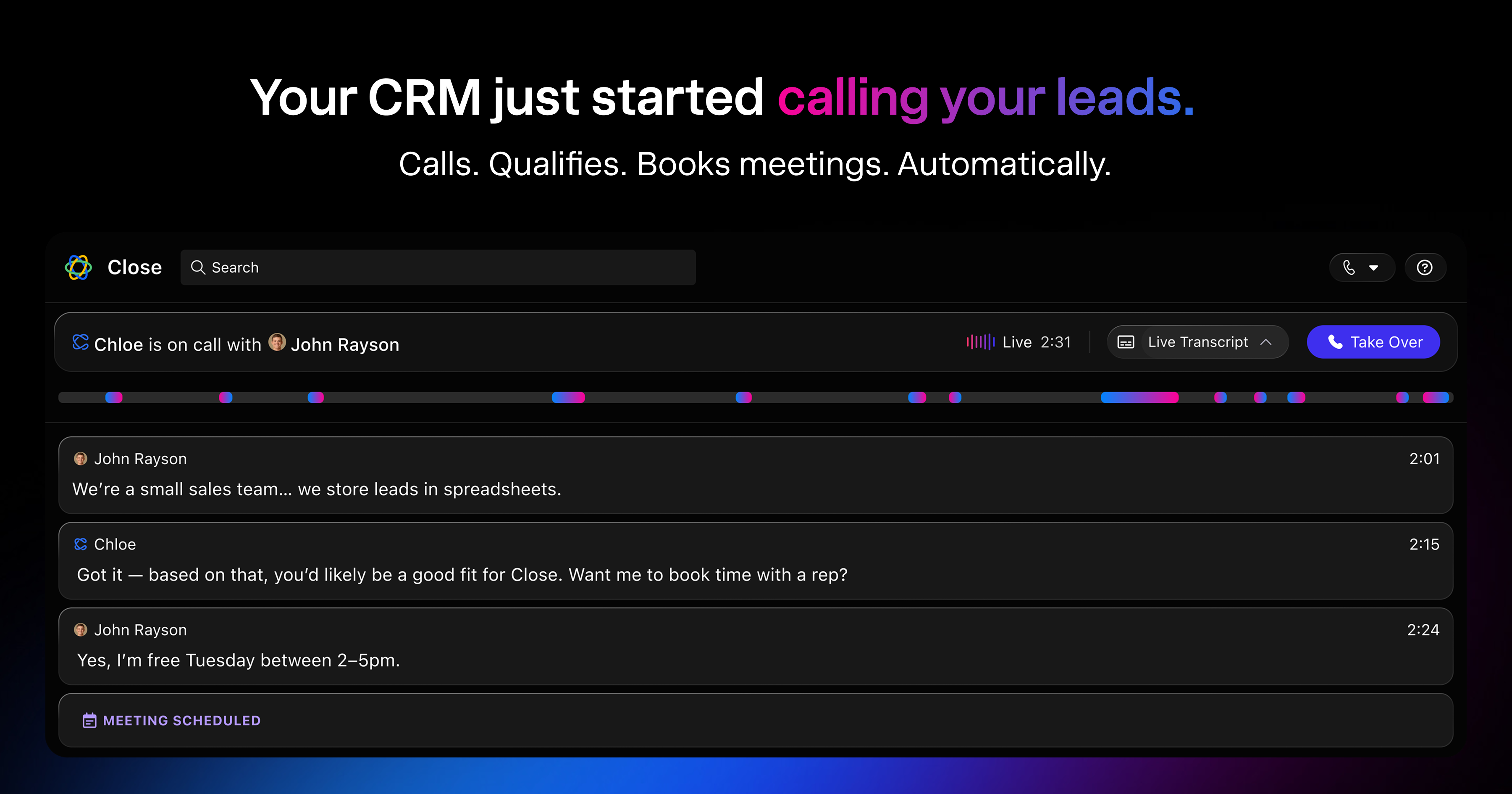
Close alternatives
11 products compared · Updated October 9, 2026
The short answer
For a dedicated sales CRM with built-in calling and an AI agent, Close is the strongest choice. If you need a broader platform that includes marketing and service, HubSpot CRM is a solid alternative. For enterprise-scale revenue orchestration with AI forecasting, consider Outreach or Salesloft.
Your shortlist, at a glance.
Read the comparisons ↓| Product | Best for | Pricing |
|---|---|---|
 SalesforceThe #1 Agentic AI CRM for humans and agents driving customer success SalesforceThe #1 Agentic AI CRM for humans and agents driving customer success | Large organizations that need a unified CRM platform across sales, service, and marketing with deep customization. | Custom quote |
 HubSpot CRMAll-in-one AI-powered CRM for marketing, sales, and service teams HubSpot CRMAll-in-one AI-powered CRM for marketing, sales, and service teams | Teams that want one platform for marketing, sales, and service, with AI agents across the board. | From SGD 28/mo/seat |
 PipedriveThe easy and effective CRM for closing deals PipedriveThe easy and effective CRM for closing deals | Sales teams that want a visual pipeline CRM with 500+ integrations and AI-assisted deal management. | Not published |
 Zoho MeetingCloud software suite for businesses of all sizes, built with privacy and long-term commitment. Zoho MeetingCloud software suite for businesses of all sizes, built with privacy and long-term commitment. | Teams already using Zoho apps that need integrated video conferencing and webinar capabilities. | Not published |
| FFreshsalesModern CRM built for growing sales teams | Growing sales teams that also need a unified customer support and service platform beyond just outbound calling. | Not published |
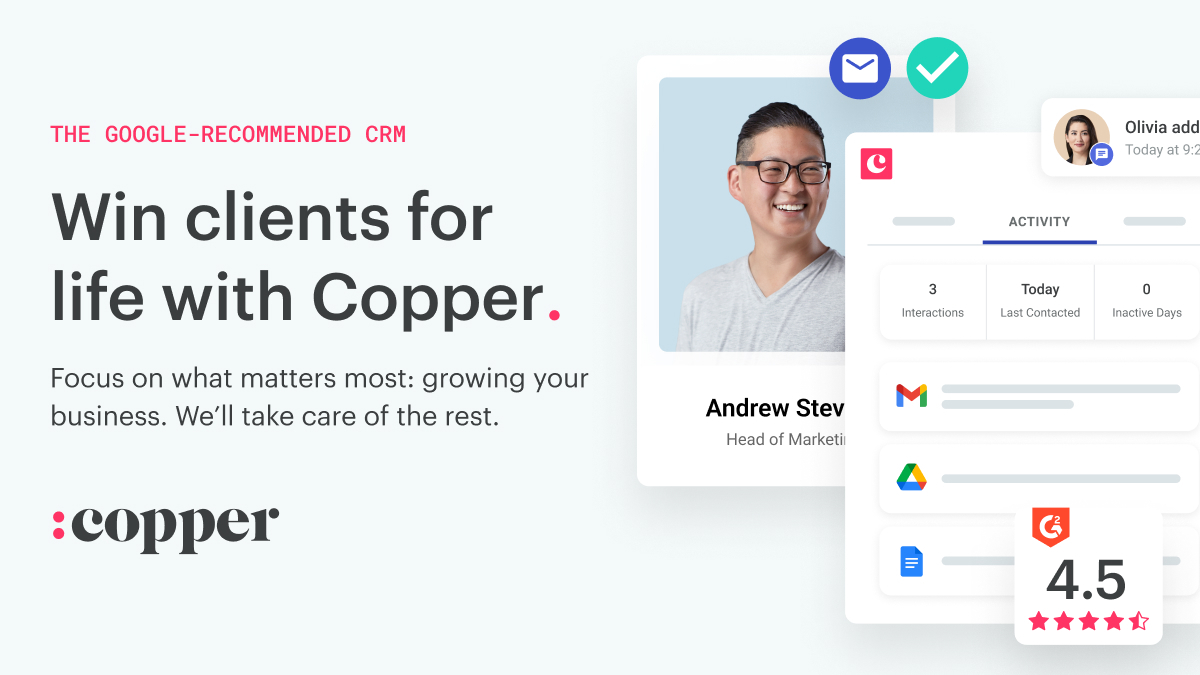 CopperGoogle Workspace-native CRM for service businesses to manage contacts, deals, and projects in one place. CopperGoogle Workspace-native CRM for service businesses to manage contacts, deals, and projects in one place. | Service businesses and consulting teams that work inside Gmail and Google Calendar and want a CRM that follows them there. | Not published |
| OOutreachAgentic AI Platform for Revenue Teams | Enterprise revenue teams that need AI agents for forecasting, deal health, and multi-channel engagement at scale. | Custom quote |
| SSalesloftThe Leading AI Revenue Orchestration Platform | Enterprise revenue teams that need signal-based prioritization and orchestration across sales, marketing, and customer success. | Not published |
 Monday.comThe AI Work Platform for People & Agents Monday.comThe AI Work Platform for People & Agents | Teams that want a flexible work platform with AI agents across marketing, IT, product, sales, and HR, and don't need a dedicated sales-first CRM. | From $9/seat/mo |
 KeapSmall Business CRM & Automation to put growth on autopilot KeapSmall Business CRM & Automation to put growth on autopilot | Small businesses that need marketing automation, lead capture, and invoicing alongside a CRM, rather than a sales-focused calling tool. | From $299/mo |
 Zitara Technologies, Inc.Predictive battery management software for electrified fleets Zitara Technologies, Inc.Predictive battery management software for electrified fleets | Utilities, IPPs, and operators of battery energy storage systems that need accurate energy availability signals and rack-level balancing insights. | Not published |
- SalesforceCustom quoteLarge organizations that need a unified CRM platform across sales, service, and marketing with deep customization.
- HubSpot CRMFrom SGD 28/mo/seatTeams that want one platform for marketing, sales, and service, with AI agents across the board.
- PipedriveNot publishedSales teams that want a visual pipeline CRM with 500+ integrations and AI-assisted deal management.
- Zoho MeetingNot publishedTeams already using Zoho apps that need integrated video conferencing and webinar capabilities.
- FFreshsalesNot publishedGrowing sales teams that also need a unified customer support and service platform beyond just outbound calling.
- CopperNot publishedService businesses and consulting teams that work inside Gmail and Google Calendar and want a CRM that follows them there.
- OOutreachCustom quoteEnterprise revenue teams that need AI agents for forecasting, deal health, and multi-channel engagement at scale.
- SSalesloftNot publishedEnterprise revenue teams that need signal-based prioritization and orchestration across sales, marketing, and customer success.
- KeapFrom $299/moSmall businesses that need marketing automation, lead capture, and invoicing alongside a CRM, rather than a sales-focused calling tool.
- Zitara Technologies, Inc.Not publishedUtilities, IPPs, and operators of battery energy storage systems that need accurate energy availability signals and rack-level balancing insights.
Pricing is a snapshot from each product’s website on the date shown; check the site before you decide. A verified badge means a verified listing, not a ranking.
About Close and its alternatives
Close is a sales CRM built for teams that sell. It combines calling, email, SMS, pipeline management, reporting, and an AI sales agent named Chloe into a single platform. Close is known for its built-in dialer, AI-powered lead qualification, and automatic CRM updates.
When comparing alternatives, weigh pricing structure (per seat, credits, or custom quotes), regional availability, integration depth, support options, and contract terms. Some tools are sales-only, while others cover marketing and service. Consider whether you need a dedicated sales CRM or a broader platform.
Explore the alternatives
1.Salesforce
Best for: Large organizations that need a unified CRM platform across sales, service, and marketing with deep customization.
- Pricing
- Custom quote
- Category
- Customer Support
Salesforce is a broad CRM platform with AI agents, sales, service, marketing, and commerce tools. Choose it when you need a customizable, enterprise-grade system that can grow across departments, not just a sales-focused CRM for small teams.
Where it is strong
- Extensive ecosystem with apps, integrations, and add-ons
- Strong AI and automation capabilities via Agentforce
- Scalable from small business to enterprise
Where it falls short
- Pricing is opaque and often requires talking to sales
- Complex setup and administration compared to Close
- Pricing:
- Pricing is not published on the site. You must contact sales for quotes.
- Switching from Close:
- Moving from Close to Salesforce involves migrating your data and rebuilding workflows, which can be time-consuming due to Salesforce's complexity.
2.HubSpot CRM
Best for: Teams that want one platform for marketing, sales, and service, with AI agents across the board.
- Pricing
- From SGD 28/mo/seat
- Category
- Customer Support
HubSpot CRM is a broad platform that combines marketing, sales, service, content, and data tools. You would choose it over Close if you need a full customer platform that goes beyond sales calls and pipeline, especially for marketing automation and customer service.
Where it is strong
- Covers marketing, sales, service, content, and data in one platform.
- AI agents handle customer inquiries, prospecting, and data analysis.
- Over 2,000 integrations with tools you may already use.
Where it falls short
- Higher tiers require significant one-time onboarding fees.
- Pricing is in SGD, which may not suit teams outside Singapore.
- Pricing:
- Pricing starts at SGD 28 per month per seat for Starter, with Professional at SGD 1,246 per month and Enterprise at SGD 5,100 per month, plus one-time onboarding fees for higher tiers.
- Switching from Close:
- Moving from Close means giving up the built-in dialer and call-focused workflows, and you will need to set up HubSpot's sales tools and AI agents from scratch.
3.Pipedrive
Best for: Sales teams that want a visual pipeline CRM with 500+ integrations and AI-assisted deal management.
- Pricing
- Not published
- Category
- Customer Support
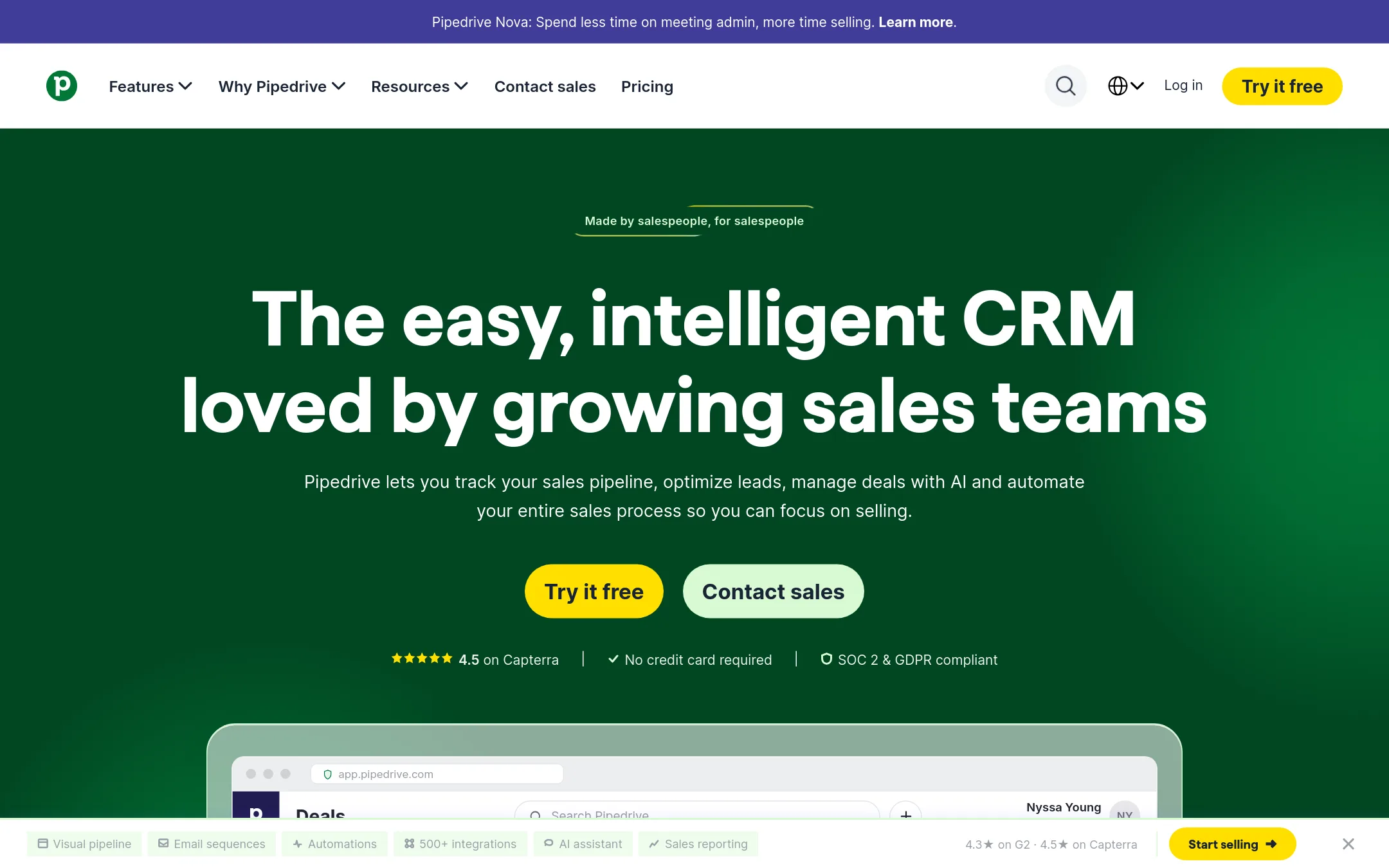
Pipedrive is a sales CRM focused on pipeline management and automation. It suits teams that want a visual, kanban-style pipeline and a large ecosystem of integrations, rather than Close's built-in calling and AI agent.
Where it is strong
- Kanban-style pipeline visualization
- 500+ integrations via Marketplace
- AI Sales Assistant predicts deal outcomes
Where it falls short
- No built-in calling or AI agent like Close's Chloe
- Pricing not disclosed on the website
- Pricing:
- Pricing is not published on the site.
- Switching from Close:
- Moving from Close means losing the built-in dialer and AI calling agent, and you'll need to set up your own calling and automation integrations.
4.Zoho Meeting
Best for: Teams already using Zoho apps that need integrated video conferencing and webinar capabilities.
- Pricing
- Not published
- Category
- Communication & Collaboration
Zoho Meeting is a web conferencing tool for online meetings, webinars, and screen sharing, part of the larger Zoho suite. You would choose it over Close if your priority is video meetings and collaboration rather than sales pipeline management and AI-driven outreach.
Where it is strong
- Integrates with the broader Zoho ecosystem for CRM, mail, and support.
- Supports webinars, meetings, and screen sharing in one tool.
- Privacy-focused company with no ad-based business model.
Where it falls short
- No built-in sales CRM features like pipelines or deal tracking.
- Lacks an AI sales agent like Chloe for calling and lead qualification.
- Pricing:
- Pricing is not published on the site.
- F
5.Freshsales
Best for: Growing sales teams that also need a unified customer support and service platform beyond just outbound calling.
- Pricing
- Not published
- Category
- Customer Support
Freshsales is a CRM from Freshworks that focuses on AI-powered sales and support, with built-in email, chat, SMS, and voice. You would choose it over Close if you want a broader customer service platform that also handles IT and employee service, not just outbound sales.
Where it is strong
- Unified platform for sales, support, and IT service
- AI agents that auto-triage and suggest replies
- 50+ prebuilt workflows and automations
Where it falls short
- Pricing not transparent on the website
- Less focused on outbound calling than Close's built-in dialer
- Pricing:
- Pricing is not published on the site.
6.Copper
Best for: Service businesses and consulting teams that work inside Gmail and Google Calendar and want a CRM that follows them there.
- Pricing
- Not published
- Category
- Customer Support
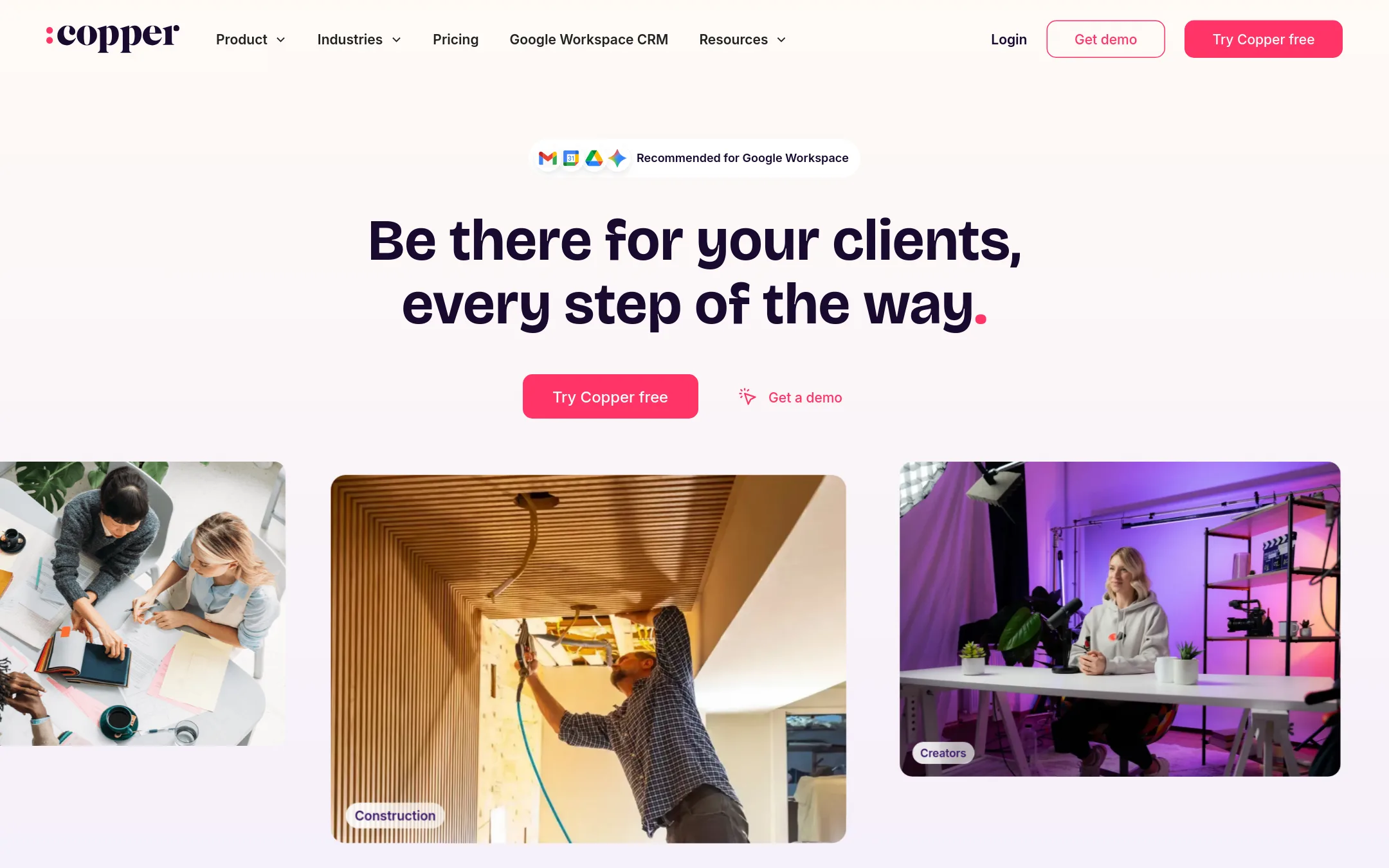
Copper is a CRM built natively on Google Workspace, so it lives inside Gmail, Calendar, and Drive. Choose it if your team already runs on Google and wants to manage contacts, deals, and projects without switching tabs. It suits service businesses that need project delivery and repeat business tracking, not just sales calls.
Where it is strong
- Native Gmail and Google Calendar integration means leads and emails are captured without manual entry.
- Turn closed deals into projects directly, so handoff documents are unnecessary.
- AI email templates and rewriter help craft messages in your brand voice.
Where it falls short
- Pricing is not listed, so you need to contact sales for a quote.
- No built-in calling or AI sales agent like Close's Chloe. It relies on integrations for phone and SMS.
- Pricing:
- Pricing is not published on the site.
- Switching from Close:
- Moving from Close means giving up the built-in dialer and AI calling agent, and instead adapting to a Gmail-centric workflow where calls and SMS are logged via integrations.
- O
7.Outreach
Best for: Enterprise revenue teams that need AI agents for forecasting, deal health, and multi-channel engagement at scale.
- Pricing
- Custom quote
- Category
- Marketing & Sales
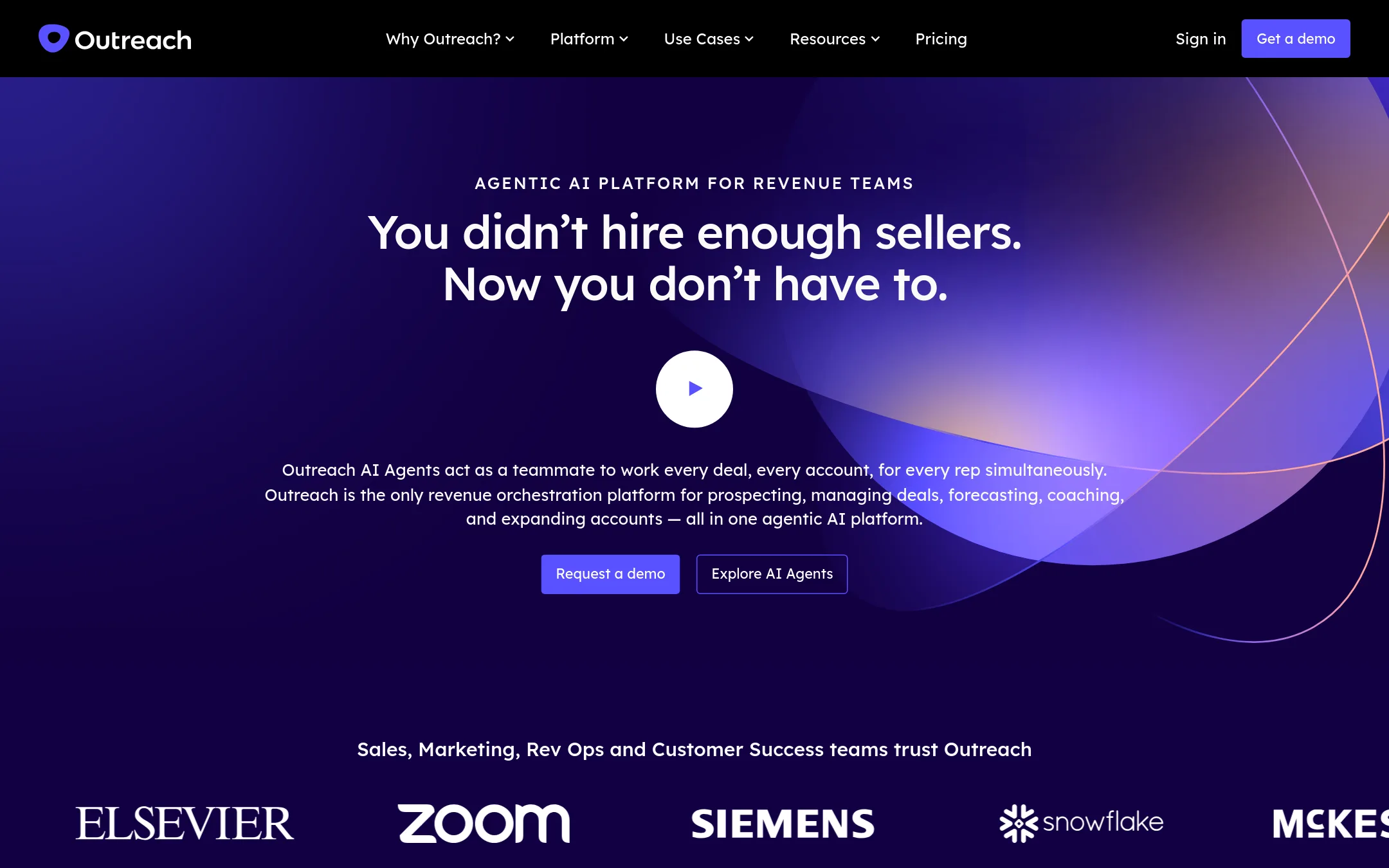
Outreach is an agentic AI platform for revenue teams, covering sales, marketing, and customer success. It focuses on AI agents for deal management, forecasting, and coaching, and is built for larger enterprises with complex revenue operations. Choose it over Close if you need a full revenue platform with advanced forecasting and enterprise controls, not just a sales CRM.
Where it is strong
- AI agents for forecasting, deal risk, and meeting prep
- Built-in conversation intelligence and live coaching
- Integrates with Slack and major meeting platforms
Where it falls short
- Pricing is not published. Requires a sales conversation
- Heavier platform, likely overkill for small sales teams
- Pricing:
- Pricing is custom, based on team size, AI usage, and platform capabilities. No public numbers are listed.
- Switching from Close:
- Moving from Close means replacing a simple CRM with a multi-module revenue platform, so expect a longer setup and a shift to seat- and consumption-based pricing.
- S
8.Salesloft
Best for: Enterprise revenue teams that need signal-based prioritization and orchestration across sales, marketing, and customer success.
- Pricing
- Not published
- Category
- Marketing & Sales
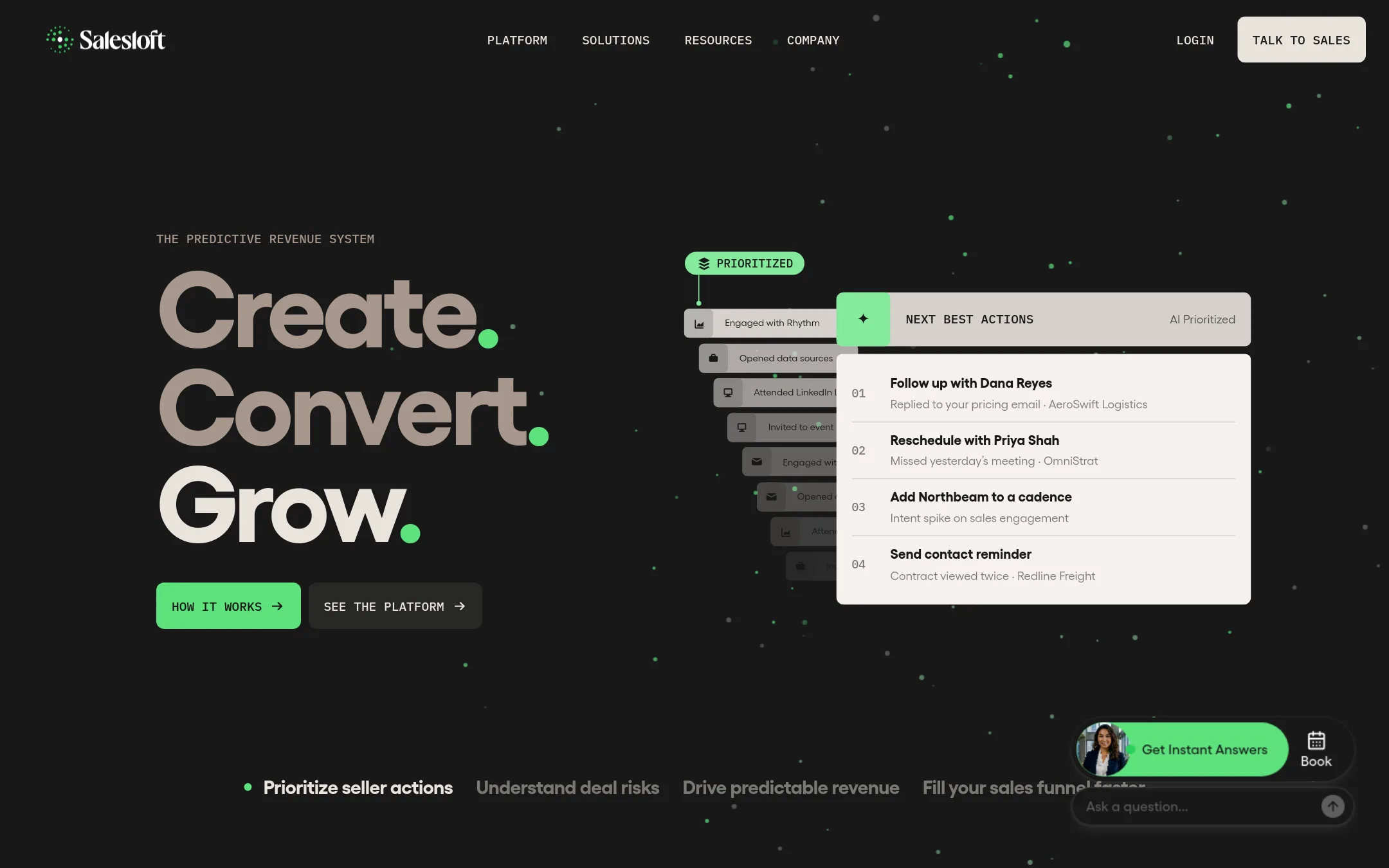
Salesloft is an AI revenue orchestration platform for enterprise sales teams. It captures buyer signals across your stack, prioritizes them, and triggers actions or agents to move deals forward. Choose it over Close if you need a system that coordinates multiple revenue teams and large-scale sales motions, not just a CRM with built-in calling and AI outreach.
Where it is strong
- Captures and prioritizes revenue signals across your entire stack
- AI agents and human workflows trigger next best actions automatically
- Trusted by large enterprises, with Gartner and Forrester recognition
Where it falls short
- No transparent pricing. Requires booking a demo
- Built for enterprise scale, not lightweight SMB use
- Pricing:
- Pricing is not published on the site.
- Switching from Close:
- Moving from Close means shifting from a self-contained CRM with built-in calling and AI to a platform that orchestrates signals and actions across multiple tools, likely with a longer onboarding and integration effort.
9.Monday.com
Best for: Teams that want a flexible work platform with AI agents across marketing, IT, product, sales, and HR, and don't need a dedicated sales-first CRM.
- Pricing
- From $9/seat/mo
- Category
- Productivity & Project Management
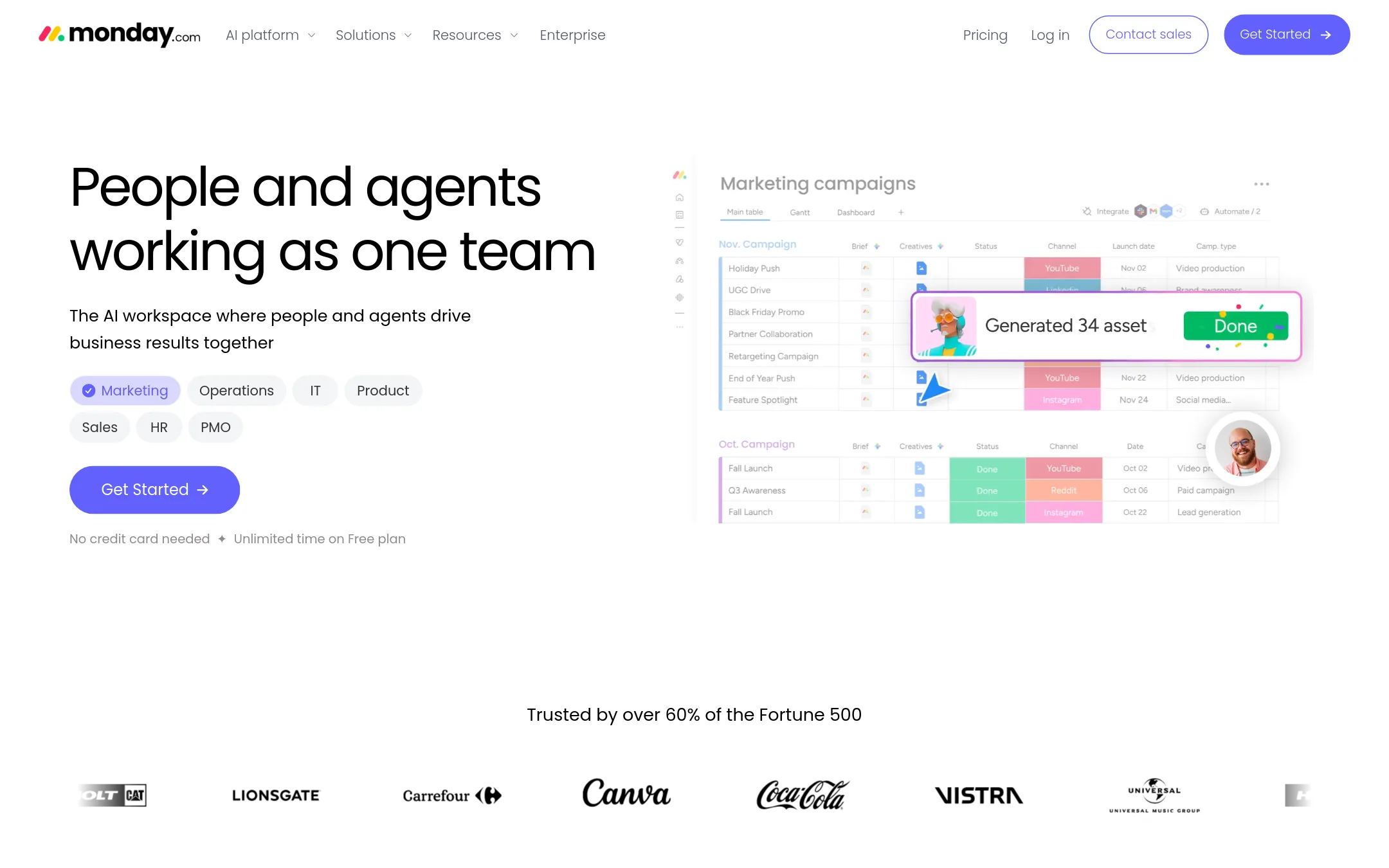
Monday.com is a work platform that lets teams build custom boards and workflows, and it now includes AI agents that can handle tasks like lead outreach and meeting prep. You would choose it over Close if you need a general-purpose work management tool that also covers sales, rather than a dedicated sales CRM with built-in calling and pipeline management.
Where it is strong
- Flexible boards and 200+ templates for any workflow
- AI agents for outreach, lead sourcing, and meeting prep
- Enterprise-grade security and compliance
Where it falls short
- Not a dedicated sales CRM. Lacks built-in calling and SMS
- AI credits are limited on lower plans
- Pricing:
- Free plan for up to 2 seats. Paid plans start at $9 per seat per month billed annually, with AI credits included.
- Switching from Close:
- Moving from Close means giving up the built-in dialer and sales-focused pipeline, and rebuilding your sales process as boards and automations in Monday.com.
10.Keap
Best for: Small businesses that need marketing automation, lead capture, and invoicing alongside a CRM, rather than a sales-focused calling tool.
- Pricing
- From $299/mo
- Category
- Marketing & Sales
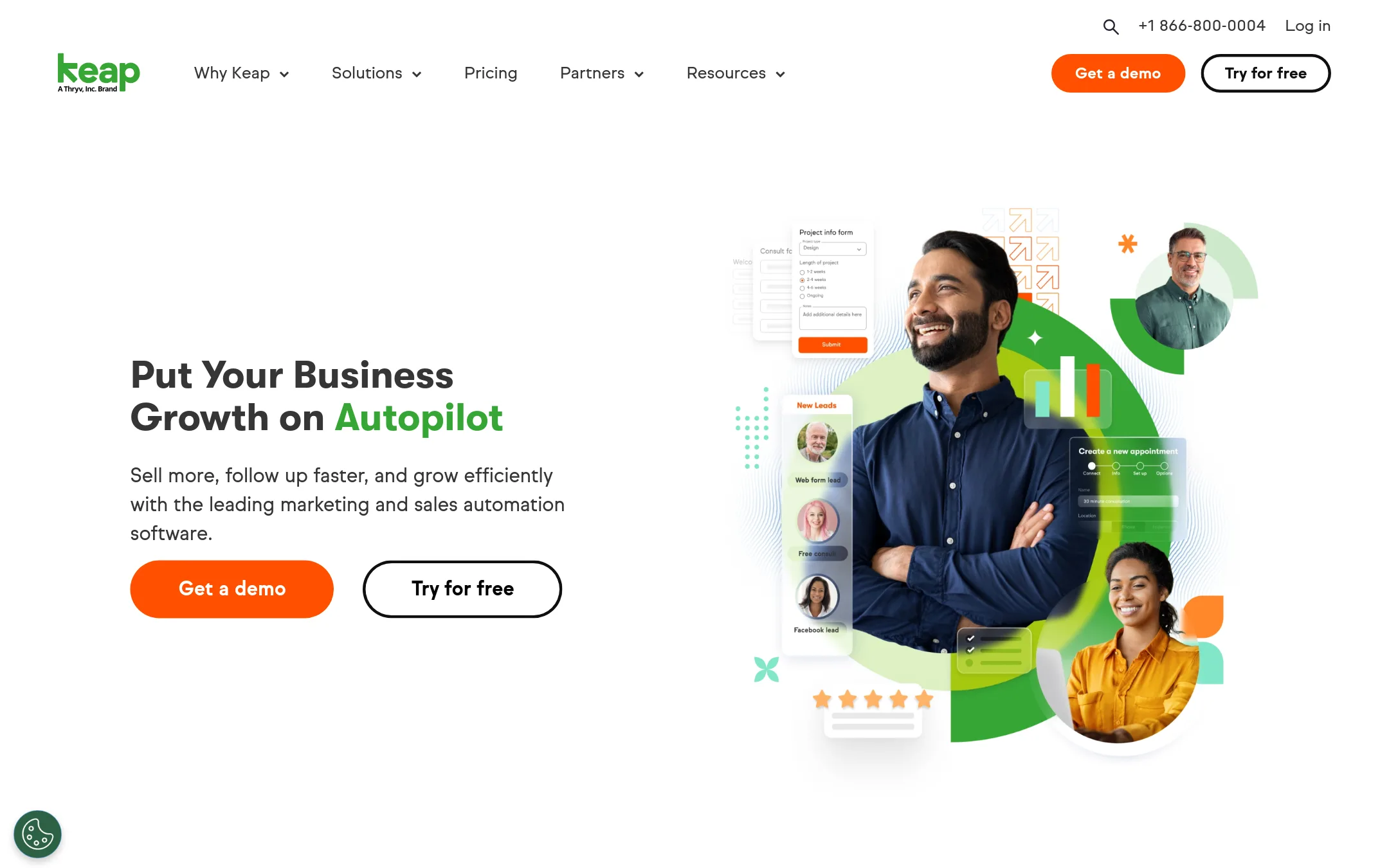
Keap is a CRM and automation platform for small businesses that want to automate marketing, sales, and follow-up without building complex workflows. Choose it over Close if your priority is drag-and-drop automation across the whole customer lifecycle, not just outbound sales calls.
Where it is strong
- Drag-and-drop automation for marketing, sales, and follow-up
- Includes landing pages, forms, and appointment scheduling
- Over 5,000 integrations to connect your existing tools
Where it falls short
- Implementation services are required, adding cost and setup time
- No built-in AI sales agent like Close's Chloe for calling leads
- Pricing:
- Keap starts at $299 per month, billed annually at $2,988 per year, with implementation services required.
- Switching from Close:
- Moving from Close means replacing its built-in dialer and AI calling with Keap's automation and email/text workflows, and you'll need to migrate your pipeline data and set up new automation rules.
11.Zitara Technologies, Inc.
Best for: Utilities, IPPs, and operators of battery energy storage systems that need accurate energy availability signals and rack-level balancing insights.
- Pricing
- Not published
- Category
- Other
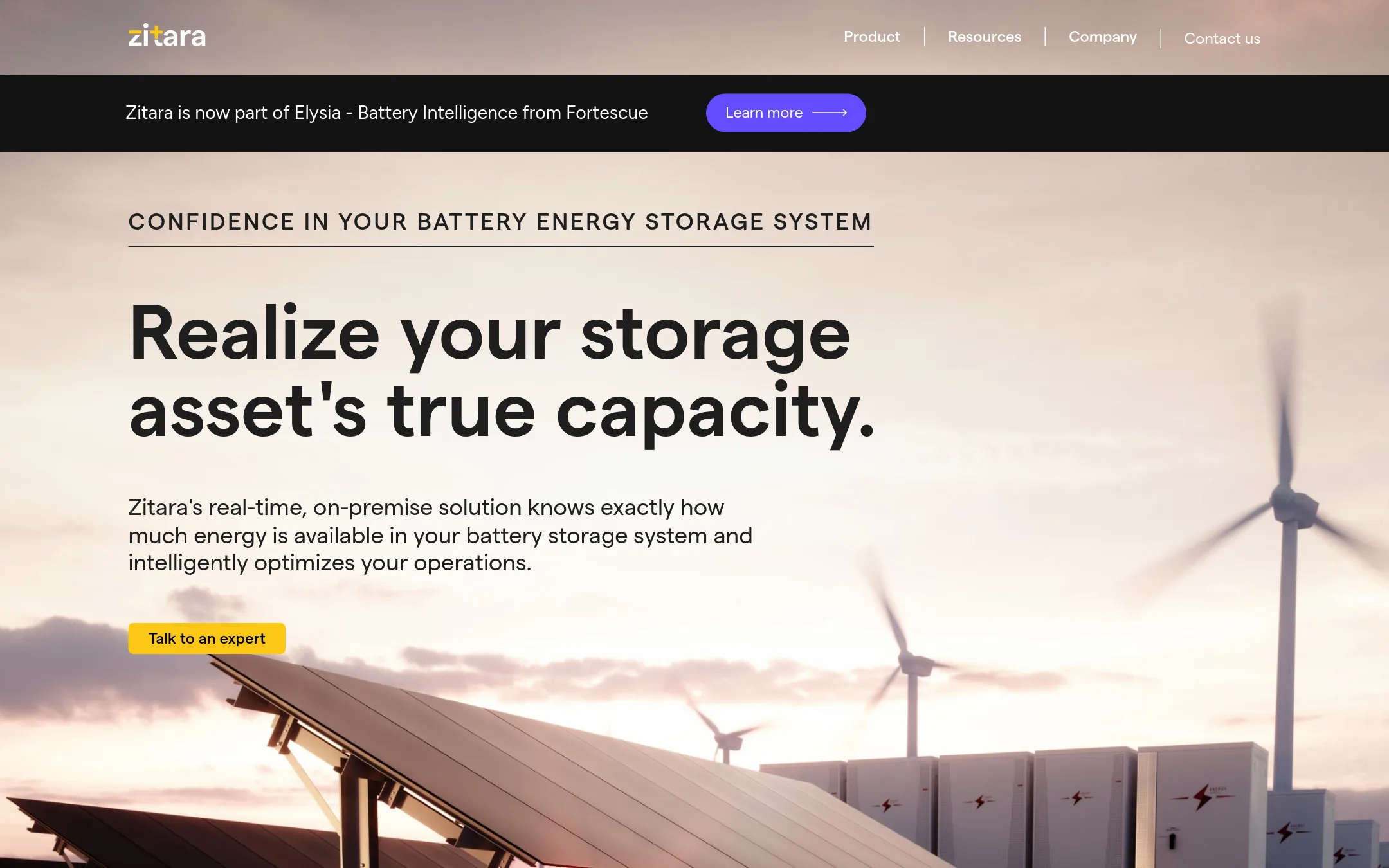
Zitara provides predictive battery management software for utility-scale energy storage systems. It uses cell-level data to deliver accurate state-of-power and state-of-energy signals, enabling more aggressive trading and smarter balancing. Choose Zitara over Close if you operate battery storage assets and need to maximize dispatchable capacity and avoid surprise shutdowns.
Where it is strong
- Unlocks up to 15% additional capacity with accurate power and balance algorithms.
- Provides rack-level imbalance visibility to prioritize balancing activities.
- Integrates with existing battery management systems and works across multiple OEMs.
Where it falls short
- Designed specifically for battery storage, not general-purpose sales or support.
- Requires on-premise deployment and integration with your existing BMS.
- Pricing:
- Pricing is not published on the site.
How we chose and when this was updated
Each entry is written from the product's published site and pricing pages. Verified listings are marked, and sponsored placements are labelled and do not change the write-up. Last updated October 9, 2026.
See more comparisons in Customer Support alternatives.
Questions about Close alternatives
Which alternative is best for a small sales team that wants a simple pipeline?
Pipedrive offers a visual kanban-style pipeline with 500+ integrations and an AI Sales Assistant. It is a good fit if you want a straightforward sales CRM without built-in calling or an AI agent like Close's Chloe.
I need a CRM that works inside Gmail. What should I choose?
Copper is built natively on Google Workspace, so it lives inside Gmail, Calendar, and Drive. It captures leads and emails automatically, making it ideal for service businesses that rely on Google tools.
Which alternative covers marketing and service, not just sales?
HubSpot CRM combines marketing, sales, service, content, and data in one platform. It includes AI agents for customer inquiries and prospecting, but higher tiers require significant one-time onboarding fees.
What is the most enterprise-ready alternative?
Salesforce is a broad CRM platform with deep customization and AI via Agentforce. It scales from small business to enterprise, but pricing is opaque and setup is complex compared to Close.
Is there an alternative with transparent pricing?
Monday.com offers a free plan for up to 2 seats and paid plans starting at $9 per seat per month billed annually. Keap starts at $299 per month but requires implementation services. Most other alternatives do not publish pricing.