Cloudthread alternatives
6 products compared · Updated November 3, 2026
The short answer
The strongest alternatives to Cloudthread are Vantage for startups and engineering teams that want a free tier and AI-assisted cost analysis, Kubecost for Kubernetes-native cost visibility, and CloudZero for finance and platform teams that need to tie AI and cloud spend to business outcomes.
Your shortlist, at a glance
Read the comparisons ↓- CCloudZeroCustom quoteFinance, engineering, and platform teams that need to tie AI and cloud spend to business outcomes like customer, product, or P&L.
- VVantageFree / $30/mo / $200/mStartups and engineering teams that want a multi-cloud FinOps tool with a free entry point and AI-assisted cost analysis.
- KKubecostNot publishedPlatform and engineering teams running Kubernetes who want cost visibility and savings without leaving the K8s ecosystem.
- CCloudHealth by VMwareNot publishedEnterprises with multi-cloud estates that need cost governance, rightsizing, and compliance reporting across AWS, Azure, and GCP.
- CCloudabilityNot publishedEnterprise FinOps teams that need full cost allocation, forecasting, and commitment management across AWS, Azure, and Google Cloud.
 Amazon BusinessNot publishedTeams that need a centralized purchasing system with approval controls and spend reporting for office, IT, and operational supplies.
About Cloudthread and its alternatives
Cloudthread is a cloud cost optimization platform that aims to eliminate cloud waste, attribute and track savings, and engage engineers. Its site is currently unreachable, so the details below come from the alternative products' own published pages.
When comparing alternatives in this category, weigh pricing structure (free tiers, per-spend caps, or custom quotes), cloud provider coverage (AWS, Azure, GCP, Kubernetes), integrations with existing tools like Slack or ITSM, support options, and contract terms like monthly overages or enterprise minimums.
Explore the alternatives
- CCustom quote
1.CloudZero
Best for: Finance, engineering, and platform teams that need to tie AI and cloud spend to business outcomes like customer, product, or P&L.
- Pricing
- Custom quote
- Category
- Other
CloudZero is a financial control plane for AI and cloud spend, attributing costs to customers, products, and outcomes. Choose it over Cloudthread if you need deep AI cost allocation and board-ready ROI reporting, not just waste elimination.
Where it is strong
- Unlimited cost sources, users, dimensions, and dashboards
- Streaming telemetry with anomaly signals in seconds
- Tiered pricing with no monthly overages
Where it falls short
- Pricing is not transparent and requires a sales conversation
- Setup may require data provisioning for special projects
- Pricing:
- Pricing is not published on the site. It requires a custom quote.
- VFree / $30/mo / $200/m
2.Vantage
Best for: Startups and engineering teams that want a multi-cloud FinOps tool with a free entry point and AI-assisted cost analysis.
- Pricing
- Free / $30/mo / $200/m
- Category
- Other
Vantage is a self-service cloud cost platform for AWS, Azure, and GCP that helps developers analyze, report, and optimize spend. Choose it over Cloudthread if you need multi-cloud support, AI-powered cost interaction via LLMs, and a free tier to start small.
Where it is strong
- Supports 40+ providers including AWS, Azure, and GCP
- Free tier for small spend, with clear paid tiers
- AI-enabled FinOps via MCP server for ChatGPT or Claude
Where it falls short
- Paid tiers cap tracked cloud spend, so larger accounts need Enterprise
- No mention of direct savings attribution like Cloudthread's engineer engagement focus
- Pricing:
- Starter is free for up to $2,500 of cloud spend, Pro is $30/month for $7,500 spend, Business is $200/month for $20,000 spend, and Enterprise is custom.
- Switching from Cloudthread:
- Moving from Cloudthread to Vantage means reconfiguring cost allocation and alerting in a new platform, but Vantage's Terraform provider can automate setup.
- KNot published
3.Kubecost
Best for: Platform and engineering teams running Kubernetes who want cost visibility and savings without leaving the K8s ecosystem.
- Pricing
- Not published
- Category
- Other
Kubecost is a Kubernetes-native cost monitoring tool that gives real-time visibility into cluster spend by team, namespace, or workload. Choose it over Cloudthread if you run Kubernetes and need deep allocation, showback, and optimization built specifically for that environment.
Where it is strong
- Free tier includes unlimited clusters up to 250 cores and 15-day metric retention
- Reconciles costs with your cloud bill for accurate showback and chargeback
- Automates cost optimization with request sizing and namespace turndown
Where it falls short
- Free tier limits metric retention to 15 days, which may be short for trend analysis
- Enterprise features like multi-cluster view and RBAC require a paid plan
- Pricing:
- Pricing is not published on the site.
- Switching from Cloudthread:
- Moving from Cloudthread to Kubecost means reconfiguring your cost data pipeline, but Kubecost can be installed in under 5 minutes and integrates directly with your Kubernetes clusters.
- CNot published
4.CloudHealth by VMware
Best for: Enterprises with multi-cloud estates that need cost governance, rightsizing, and compliance reporting across AWS, Azure, and GCP.

- Pricing
- Not published
- Category
- Other
CloudHealth by VMware is a mature cloud cost management platform for AWS, Azure, and GCP. Choose it over Cloudthread if you need broad multi-cloud governance, rightsizing, and compliance reporting rather than a focus on engineering engagement and savings attribution. It suits larger organizations that already run on VMware or need enterprise-grade reporting at scale.
Where it is strong
- Covers AWS, Azure, and GCP in one platform
- Includes compliance and governance features beyond cost tracking
- Backed by VMware, so it fits existing VMware shops
Where it falls short
- No public pricing, so budgeting requires a sales call
- Heavier setup and UI compared to leaner tools like Cloudthread
- Pricing:
- Pricing is not published on the site.
- CNot published
5.Cloudability
Best for: Enterprise FinOps teams that need full cost allocation, forecasting, and commitment management across AWS, Azure, and Google Cloud.
- Pricing
- Not published
- Category
- Other
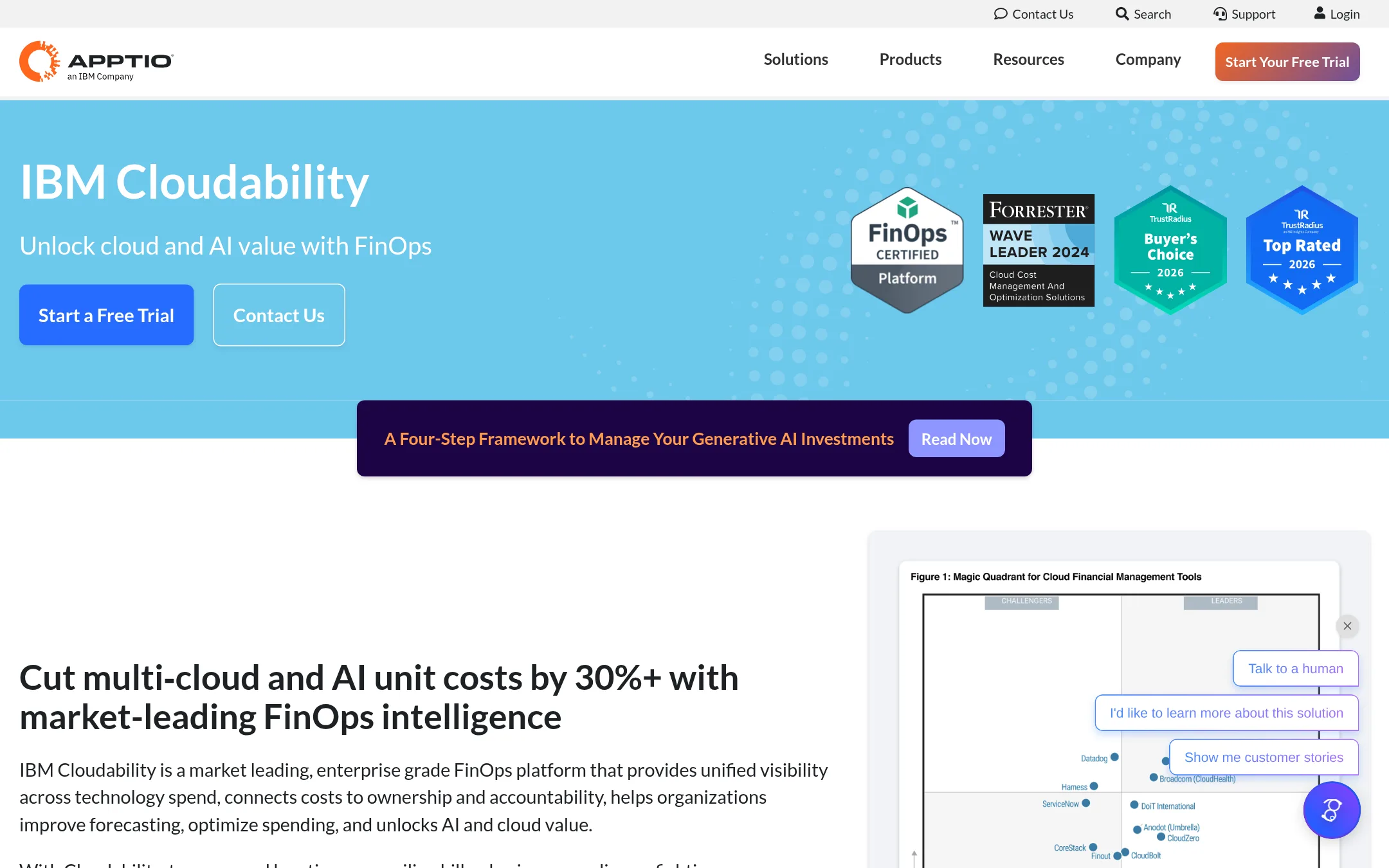
IBM Cloudability is an enterprise-grade FinOps platform that gives a single view of cloud and AI spend, with cost allocation, forecasting, and optimization. Choose it over Cloudthread when you need deep multi-cloud cost management, chargeback, and commitment planning across large organizations.
Where it is strong
- Covers multi-cloud and AI cost tracking with resource-level analytics
- Automates cost allocation and chargeback without spreadsheets
- Provides rightsizing and commitment recommendations with ITSM integration
Where it falls short
- Pricing not public. Likely enterprise contract only
- May be heavier than needed for small teams focused on AWS waste
- Pricing:
- Pricing is not published on the site.
- Switching from Cloudthread:
- Moving from Cloudthread means adopting IBM's broader FinOps framework, including its cost allocation and forecasting workflows, which may require reconfiguring your tagging and mapping.
- Not published
6.Amazon Business
Best for: Teams that need a centralized purchasing system with approval controls and spend reporting for office, IT, and operational supplies.

- Pricing
- Not published
- Category
- E-commerce
Amazon Business is a procurement platform for buying supplies, equipment, and services through Amazon's marketplace, with approval workflows, spend analytics, and bulk discounts. Choose it over Cloudthread when your focus is purchasing and supplier management, not cloud cost optimization.
Where it is strong
- Approval workflows and purchasing guardrails
- Pre-built and custom spend reports
- Bulk quantity discounts and case packs
Where it falls short
- No cloud cost attribution or savings tracking
- Tied to Amazon's marketplace and supplier network
- Pricing:
- Pricing is not published on the site.
See more comparisons in Analytics & Data alternatives.
FAQ
Questions about Cloudthread alternatives
Which alternative is best for a small startup with limited cloud spend?
Vantage is the strongest fit because it offers a free tier for up to $2,500 of cloud spend and clear paid tiers starting at $30 per month. It supports 40+ providers, so you can start small and scale as you grow.
Which alternative works best if we run everything on Kubernetes?
Kubecost is built specifically for Kubernetes and gives real-time cost visibility by team, namespace, or workload. It has a free tier for unlimited clusters up to 250 cores, though metric retention is limited to 15 days.
Which alternative is best for tying cloud costs to business outcomes?
CloudZero attributes costs to customers, products, and outcomes, making it ideal for finance and platform teams that need board-ready ROI reporting. It supports unlimited cost sources and dimensions, but pricing requires a custom quote.
Do any of these alternatives have transparent pricing?
Only Vantage publishes clear pricing tiers. The others, including CloudHealth, Cloudability, Kubecost, and CloudZero, require a sales call for pricing, which can complicate budgeting.
Which alternative is best for multi-cloud environments?
CloudHealth by VMware and Cloudability both cover AWS, Azure, and GCP. CloudHealth is a good fit for enterprises already using VMware, while Cloudability offers automated cost allocation and commitment planning for large FinOps teams.
Last updated November 3, 2026.