
CombineHealth alternatives
6 products compared · Updated November 9, 2026
The short answer
The three strongest CombineHealth alternatives are Waystar, AKASA, and Infinitus. Waystar suits U.S. health systems and large provider groups that want one platform across patient access, claims, denials, and payments. AKASA suits health systems with heavy inpatient volume that want autonomous coding trained on their own documentation. Infinitus suits healthcare teams that need AI agents to handle payer, patient, and provider phone calls at volume.
Your shortlist, at a glance
Read the comparisons ↓ FathomNot publishedSales, customer success, and operations teams that want automatic notes, summaries, and action items from their meetings
- IInfinitusNot publishedHealthcare teams that need AI agents to handle payer, patient and provider phone calls at volume.
- AAKASANot publishedHealth systems with large inpatient volume that want autonomous coding trained on their own documentation
 WaystarNot publishedHealth systems and large provider groups in the U.S. that want one platform across patient access, claims, denials and payments
- RR1 RCMSee websiteOther
- SSmarter TechnologiesNot publishedTeams that want to evaluate Smarter Technologies directly, since its product scope could not be verified from the site.
About CombineHealth and its alternatives
CombineHealth is an AI workforce platform for healthcare revenue cycle management. According to its site, it is known for AI employees that handle coding, claim management, and denial management, with stated results including 97% or higher coding accuracy and fewer denials.
When comparing alternatives in this category, weigh the pricing structure, since most vendors in this set do not publish prices and quote on volume or contract terms. Check which part of the revenue cycle the product covers, whether that is inpatient coding, claim submission, phone work, or a full suite. Also consider which regions and EHR or practice management integrations are supported, the level of support and onboarding, and the contract terms.
Explore the alternatives
- Not published
1.Fathom
Best for: Sales, customer success, and operations teams that want automatic notes, summaries, and action items from their meetings
- Pricing
- Not published
- Category
- Productivity & Project Management
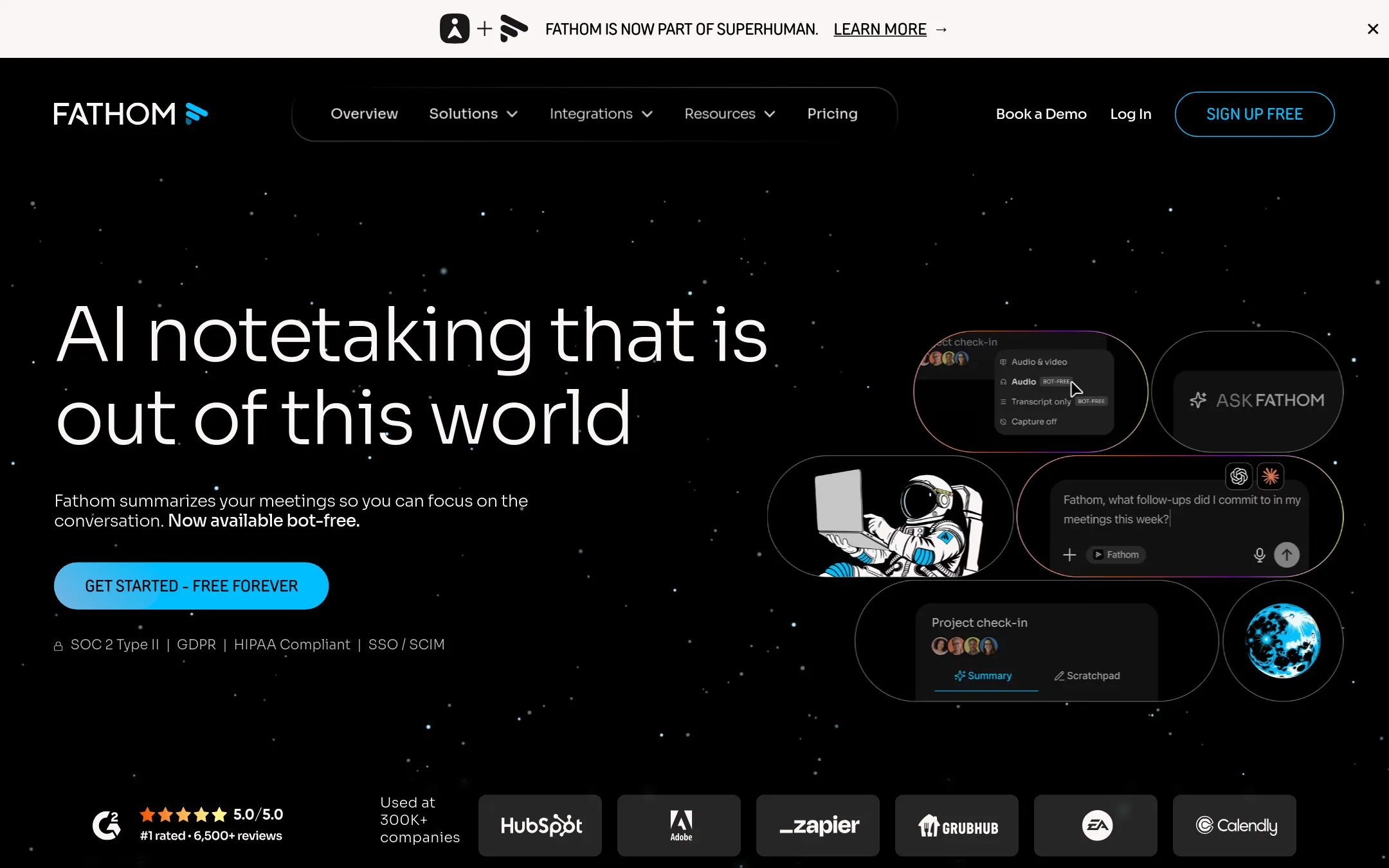
Fathom is an AI meeting notetaker that records calls, writes summaries, and pulls out action items so people can stay focused on the conversation. Someone would pick it over CombineHealth when the problem is internal meeting follow-up and team knowledge, not revenue cycle work like coding, claims, or denials.
Where it is strong
- Works with or without a bot, so teams can choose how calls are captured
- Syncs notes and action items to tools like Slack, Salesforce, HubSpot, and Asana
- Has a free plan with unlimited recordings and instant call summaries
Where it falls short
- Built for meetings and sales conversations, so it does not handle coding, claims, or denial management
- Paid tiers add features like CRM field sync and HIPAA compliance only at higher plans, and the site lists some of these without full detail
- Pricing:
- Pricing is not published on the site.
- INot published
2.Infinitus
Best for: Healthcare teams that need AI agents to handle payer, patient and provider phone calls at volume.
- Pricing
- Not published
- Category
- Other
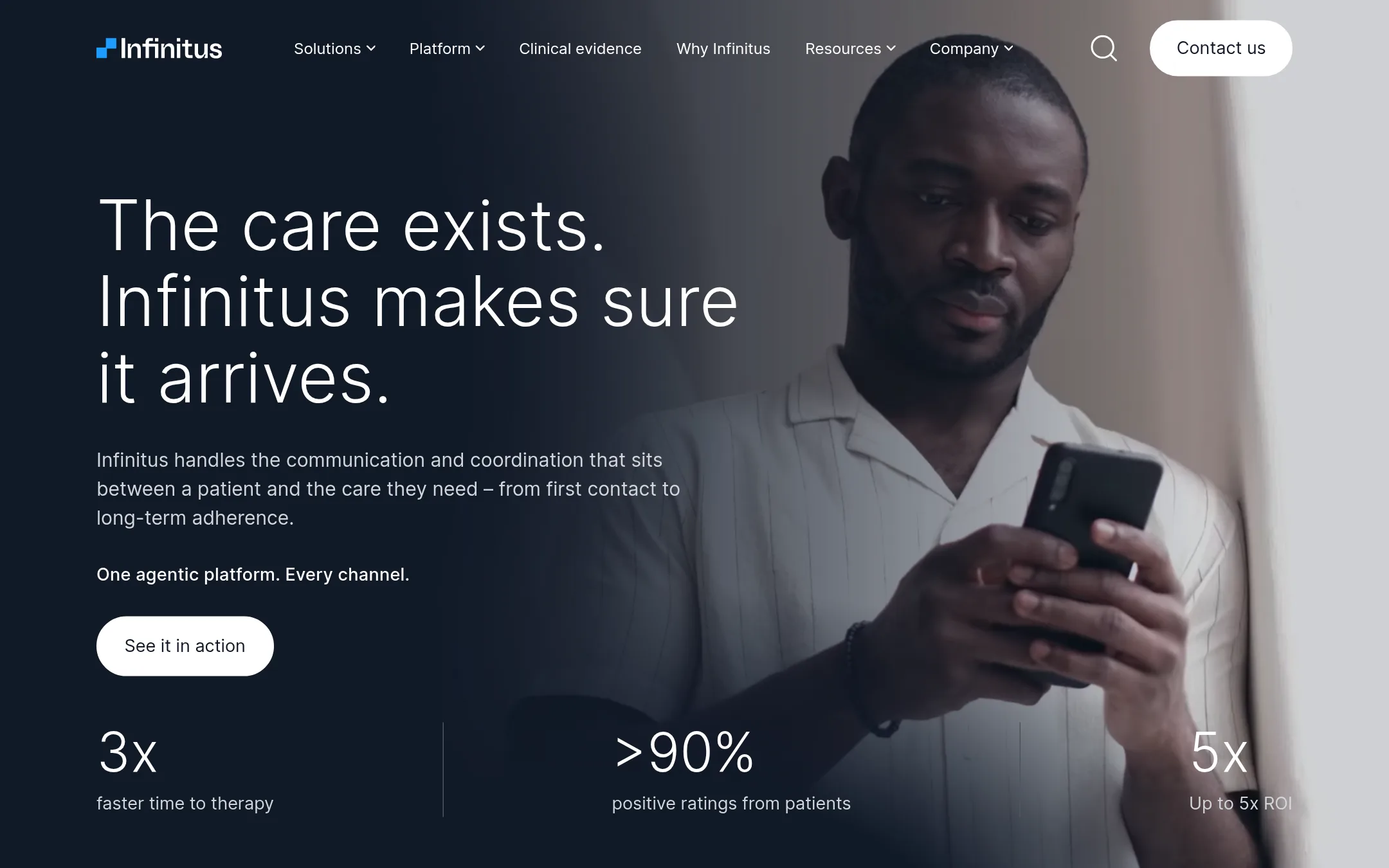
Infinitus is an agentic AI platform for patient support and healthcare phone work. Its AI agents handle calls with payers, patients and providers, such as checking copay and out-of-pocket details or opening billing reviews. A team would pick it over CombineHealth when the main problem is outbound and inbound calls to payers and patients rather than coding, claim quality and denial management.
Where it is strong
- AI agents place and take calls with payers, patients and providers.
- Handles patient support from first contact through adherence.
- Offers an AI copilot that helps staff get past IVR menus and hold times.
Where it falls short
- Its public material centres on calls and patient communication, not on coding accuracy or claim scrubbing.
- Pricing depends on volume and contract terms, so there is no published figure to compare against CombineHealth.
- Pricing:
- Pricing is not published on the site, though Infinitus says it offers annual platform and license fees combined with per-task or per-minute usage, and subscriptions.
- ANot published
3.AKASA
Best for: Health systems with large inpatient volume that want autonomous coding trained on their own documentation
- Pricing
- Not published
- Category
- Other
AKASA is built for autonomous inpatient coding at health systems. It reads the full patient record, applies the system's own coding standards, and codes the encounter with supporting evidence, with CDI, documentation and authorization tools alongside. Choose it over CombineHealth if your main problem is inpatient coding volume and you want a model trained on your own documentation and coding decisions.
Where it is strong
- Autonomous inpatient coding across all specialties, with evidence behind each code
- Custom model trained on each health system's own clinical documentation and coding decisions
- Bundles CDI, documentation, and authorization tools with coding
Where it falls short
- Built around inpatient care, so it is a weaker fit for outpatient or physician-group billing
- Pricing and onboarding details are not published, so cost is hard to judge upfront
- Pricing:
- Pricing is not published on the site.
- Not published
4.Waystar
Best for: Health systems and large provider groups in the U.S. that want one platform across patient access, claims, denials and payments

- Pricing
- Not published
- Category
- Healthcare
Waystar is a broad end-to-end revenue cycle platform used by large health systems, covering patient access, claims, denials, payments and analytics in one suite. Choose it over CombineHealth when you want a full platform from front-desk payments through collections, rather than AI agents focused on coding, claim quality and denial work.
Where it is strong
- Covers the full revenue cycle, from insurance verification and patient payments to denials and analytics
- Large installed base, with the site citing use across a broad share of the U.S. patient population
- Named case studies from health systems, ASCs and specialty practices show how it is used in practice
Where it falls short
- The site emphasizes platform breadth, so teams that only need coding automation may find it more than they require
- Pricing is not published, so budgeting requires a sales conversation
- Pricing:
- Pricing is not published on the site.
- RSee website
5.R1 RCM
Other
A large revenue cycle management technology and services provider covering coding, claims and denials, competing for the same buyer budget.
- SNot published
6.Smarter Technologies
Best for: Teams that want to evaluate Smarter Technologies directly, since its product scope could not be verified from the site.

- Pricing
- Not published
- Category
- Other
Smarter Technologies is listed as an alternative, but the site returned a connection error when I tried to read it, so I cannot confirm what the product does. Choose it only after you have checked its website directly against your revenue cycle needs.
Where it is strong
- Listed in the category of alternatives to CombineHealth
- Pricing details were not found on the site
- Its website could not be reached at the time of review
Where it falls short
- Its site could not be reached, so features are unverified
- No published pricing to compare against CombineHealth
- Pricing:
- Pricing is not published on the site.
See more comparisons in Healthcare alternatives.
FAQ
Questions about CombineHealth alternatives
Which alternative is best for a large health system?
Waystar is built for health systems and large provider groups in the U.S. that want one platform across patient access, claims, denials, and payments. AKASA is also aimed at health systems, especially those with large inpatient volume that want autonomous coding trained on their own documentation.
Is there a tool that focuses on coding automation like CombineHealth?
AKASA is the closest fit for autonomous coding, reading the full patient record and coding encounters with supporting evidence. Its focus is inpatient care, so it is a weaker fit for outpatient or physician-group billing.
Which option handles phone calls with payers and patients?
Infinitus uses AI agents to place and take calls with payers, patients, and providers, such as checking copay and out-of-pocket details. Its public material centres on calls and patient communication rather than coding accuracy or claim scrubbing.
Do these products publish prices?
Waystar, AKASA, and Infinitus do not publish pricing on their sites, so budgeting requires a sales conversation. Infinitus says its pricing combines annual platform and license fees with per-task or per-minute usage and subscriptions, but no figures are listed.
Can I rely on Smarter Technologies as an alternative?
The Smarter Technologies site could not be reached during review, so its features and scope are unverified. Check its website directly against your revenue cycle needs before considering it.
Last updated November 9, 2026.