
ConsenSys alternatives
12 products compared · Updated November 1, 2026
The short answer
The strongest ConsenSys alternatives are QuickNode, Infura, and Kaleido. QuickNode suits developers needing multi-chain RPC and data services. Infura fits teams wanting simple, managed Ethereum API access with a free tier. Kaleido is best for enterprises deploying blockchain networks and tokenization without building infrastructure from scratch.
Your shortlist, at a glance
Read the comparisons ↓- CChainstackNot publishedDevelopment teams and enterprises that need reliable, low-latency RPC access across many blockchains without building and maintaining their own node infrastructure.
- IInfuraFree, $50/mo, $225/moWeb3 developers and small teams that need quick, managed API access to multiple blockchain networks with a free tier to start.
 QuicknodeFrom $34/moDevelopers and startups building multi-chain applications that need low-latency RPC, real-time event streams, and historical data queries without running their own infrastructure.
 MoralisFrom $10/mo + $1/GBTeams building dApps or analytics tools that need real-time and historical blockchain data across multiple chains without running their own indexers.
- KKaleidoNot publishedEnterprises and network operators that need to deploy permissioned or public blockchain networks and tokenize assets without building the underlying infrastructure from scratch.
- RR3 CordaNot publishedBanks, asset managers, and market infrastructure operators that need permissioned, regulated blockchain networks for tokenized assets and interbank workflows.
- HHyperledger FabricNot publishedEnterprises and consortiums building permissioned blockchain networks that require privacy and controlled membership.
- HHederaNot publishedEnterprises and regulated industries like finance, carbon markets, and tokenized assets that need a compliant, high-performance public ledger.
- AAvalancheNot publishedFinancial institutions and enterprises that need a private, compliant, and scalable blockchain with instant finality and EVM compatibility.
 Protocol LabsNot publishedTeams building decentralized storage solutions or exploring AI, robotics, and neurotech applications on web3 infrastructure.
 ArweaveNot publishedTeams building permanent archives, public records, or decentralized web apps that need one-time, durable storage without ongoing hosting costs.
 SiaNot publishedBuilders and teams that need encrypted, decentralized storage with SDKs or S3-compatible access, rather than blockchain development tools.
About ConsenSys and its alternatives
ConsenSys is a blockchain software company founded in 2014 by Ethereum co-founder Joseph Lubin. It provides infrastructure, tools, and advisory services for financial institutions building digital market systems on Ethereum. Its offerings include Besu, Teku, Web3Signer, and Lineth, with a focus on institutional-grade reliability and regulatory alignment.
When comparing alternatives, weigh pricing structure, regional availability, integrations, support, and contract terms. Some products publish transparent pricing, while others require contacting sales. Consider whether you need managed services, advisory, or just node access. Check which chains and networks are supported, and whether the tool fits your compliance and deployment needs.
Explore the alternatives
- CNot published
1.Chainstack
Best for: Development teams and enterprises that need reliable, low-latency RPC access across many blockchains without building and maintaining their own node infrastructure.
- Pricing
- Not published
- Category
- Other
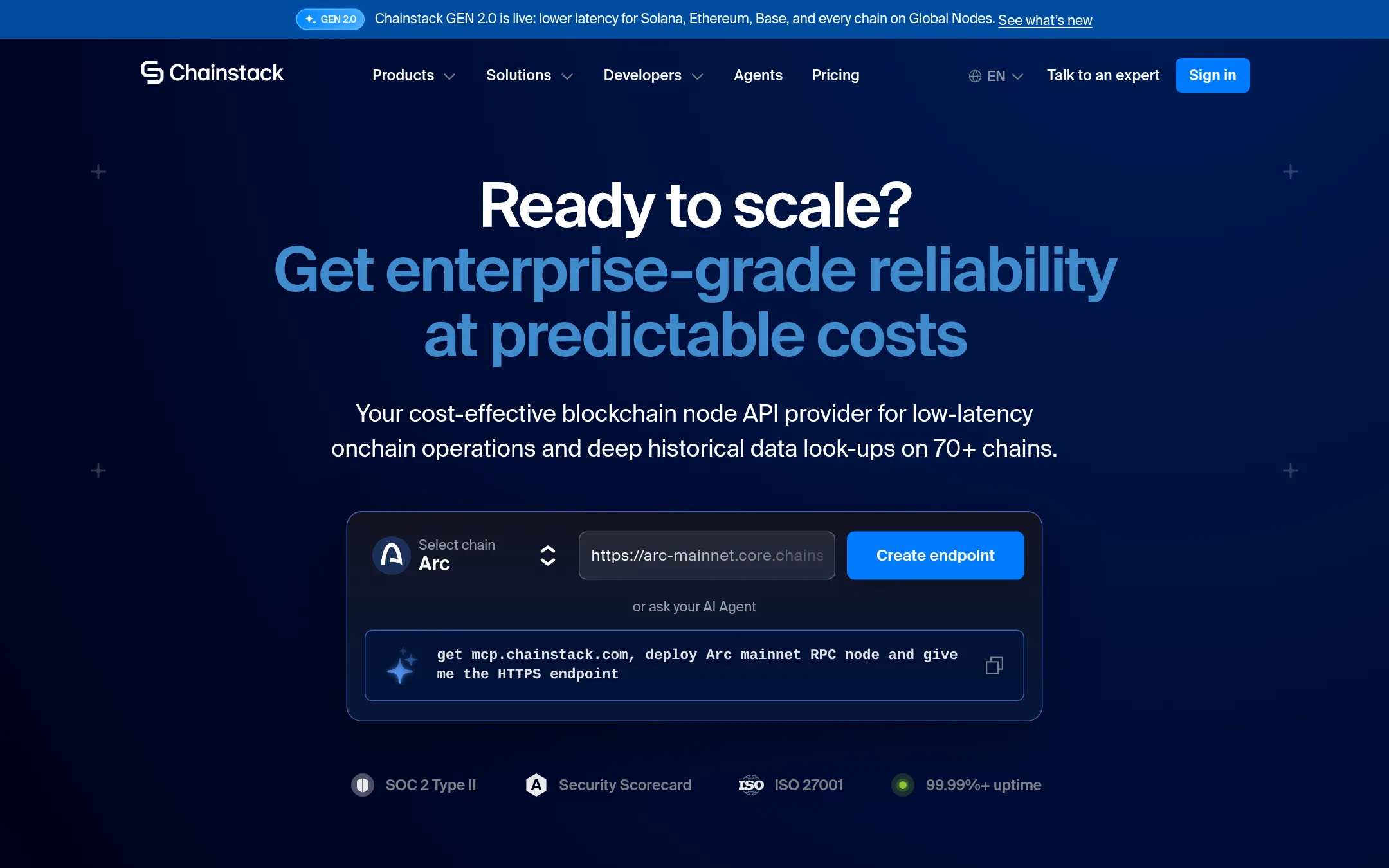
Chainstack provides managed blockchain node infrastructure with RPC access to 70+ chains, including dedicated and self-hosted node options. Choose it instead of ConsenSys when you need fast, cost-effective node APIs and deep historical data for trading, DeFi, or analytics, rather than full digital market infrastructure and advisory services.
Where it is strong
- Access to 70+ blockchain protocols through a single geo-balanced endpoint.
- Flexible deployment options: global nodes, dedicated nodes, or self-hosted on your own infrastructure.
- Free tier includes 3 million request units per month with 25 RPS for testing.
Where it falls short
- Pricing details are not transparently listed on the site, requiring contact for enterprise plans.
- No advisory or managed services for building full digital market infrastructure like ConsenSys offers.
- Pricing:
- Pricing is not published on the site.
- Switching from ConsenSys:
- Moving from ConsenSys to Chainstack involves shifting from a full-service blockchain infrastructure and advisory provider to a self-service node API platform, which may require more in-house development and operations work.
- IFree, $50/mo, $225/mo
2.Infura
Best for: Web3 developers and small teams that need quick, managed API access to multiple blockchain networks with a free tier to start.
- Pricing
- Free, $50/mo, $225/mo
- Category
- Other
Infura is a hosted blockchain API service that gives developers instant access to Ethereum and other networks without running their own nodes. It is a good fit for teams that need reliable, scalable node infrastructure and want to avoid the operational overhead of ConsenSys's full suite of enterprise tools.
Where it is strong
- Access to 40+ supported networks from a single API.
- Free tier with 3 million daily credits for testing.
- Crypto payments accepted on custom plans.
Where it falls short
- Credit-based pricing can be complex to estimate for high usage.
- Advanced features like archive data and streaming require paid plans.
- Pricing:
- Pricing starts at a free tier with 3 million credits per day, then Developer at $50/month, Team at $225/month, and Enterprise with custom pricing.
- Switching from ConsenSys:
- Moving from ConsenSys to Infura is straightforward if you only need node APIs, but you lose ConsenSys's broader advisory and managed services.
- From $34/mo
3.Quicknode
Best for: Developers and startups building multi-chain applications that need low-latency RPC, real-time event streams, and historical data queries without running their own infrastructure.
- Pricing
- From $34/mo
- Category
- Developer Tools
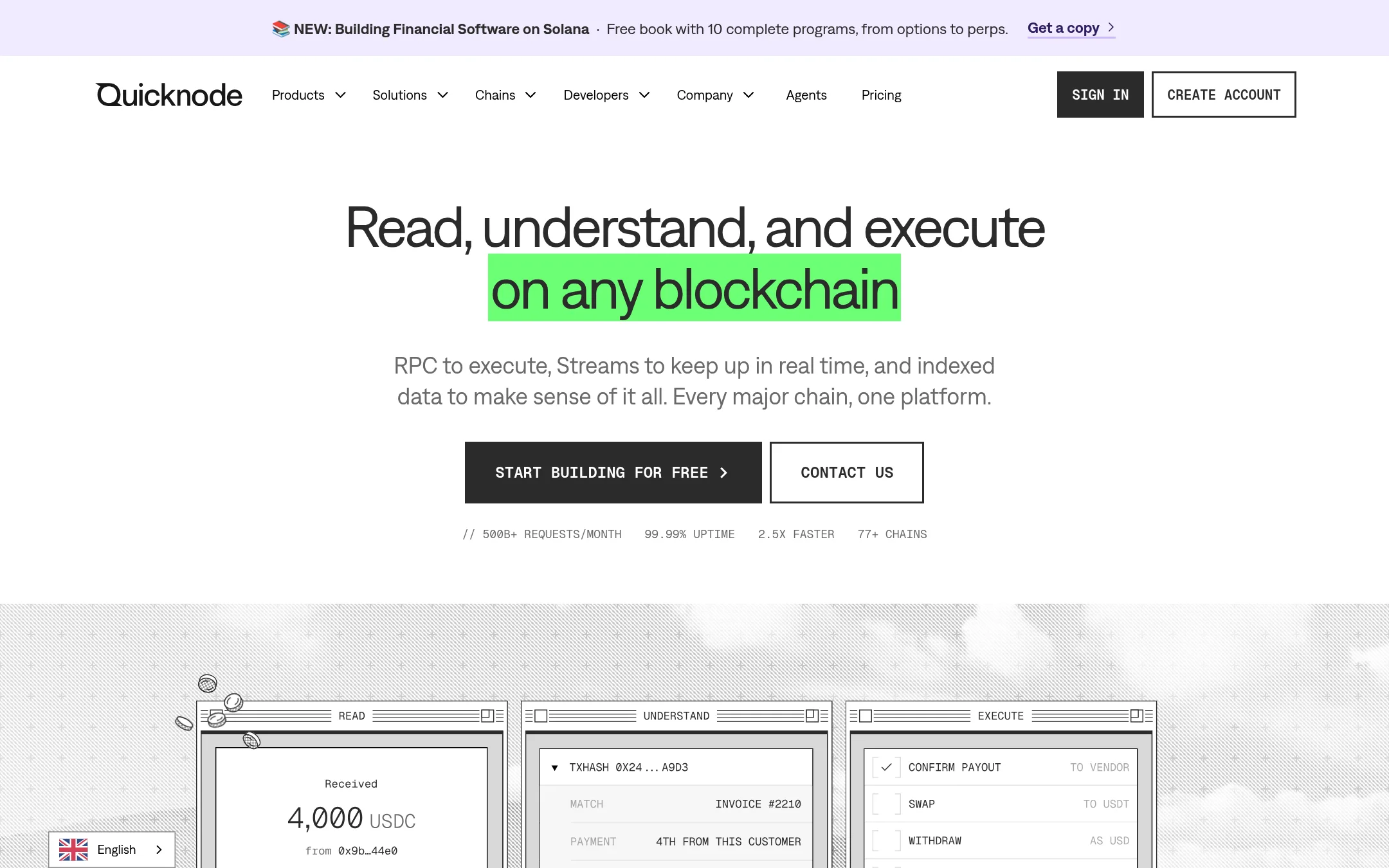
Quicknode is a blockchain development platform that provides RPC access, real-time data streams, and indexed data across 77+ chains. Choose it instead of ConsenSys if you are a developer or team that needs fast, reliable node infrastructure and data services without managing your own nodes or building indexers.
Where it is strong
- Supports 77+ chains and 130+ networks, including full and archive nodes.
- Offers Streams for real-time event ingestion with reorg handling and guaranteed delivery.
- Includes SQL Explorer to query blockchain history like a database, no indexer to build.
Where it falls short
- Pricing is credit-based, which can be complex to estimate for varied workloads.
- Advanced features like dedicated clusters and SSO are only available on Enterprise plans.
- Pricing:
- Pricing starts with a free trial of 10M credits, then Build at $34/month (billed annually) for 80M credits, Accelerate at $212/month for 450M credits, and Scale at $424/month for 950M credits. Enterprise plans are custom-priced.
- Switching from ConsenSys:
- Moving from ConsenSys to Quicknode involves replacing your node management and data infrastructure with Quicknode's API-based services, which may require reconfiguring your applications to use Quicknode endpoints and data formats.
- From $10/mo + $1/GB
4.Moralis
Best for: Teams building dApps or analytics tools that need real-time and historical blockchain data across multiple chains without running their own indexers.

- Pricing
- From $10/mo + $1/GB
- Category
- Developer Tools
Moralis provides APIs and data feeds that deliver decoded blockchain data across 40+ chains, so teams can skip building their own indexers. Choose it over ConsenSys when you need quick, reliable access to wallet, token, NFT, and price data without managing infrastructure.
Where it is strong
- Covers 40+ chains including EVM, Solana, and Bitcoin
- Data Feeds can deliver decoded data directly into your database
- SOC 2 Type II and ISO 27001 compliance
Where it falls short
- Attribution required on Starter and Pro plans
- Full archive data only on Business plan and above
- Pricing:
- Data Feeds Starter is $10 per month for 10 GB, with overage at $1 per GB. API plans start at $149 per month for 2 million Compute Units, $249 for 100 million, and $749 for 500 million. Enterprise is custom.
- Switching from ConsenSys:
- Moving from ConsenSys involves setting up Moralis APIs or Data Feeds and migrating your data queries, but the process is supported by their engineering team.
- KNot published
5.Kaleido
Best for: Enterprises and network operators that need to deploy permissioned or public blockchain networks and tokenize assets without building the underlying infrastructure from scratch.
- Pricing
- Not published
- Category
- Other
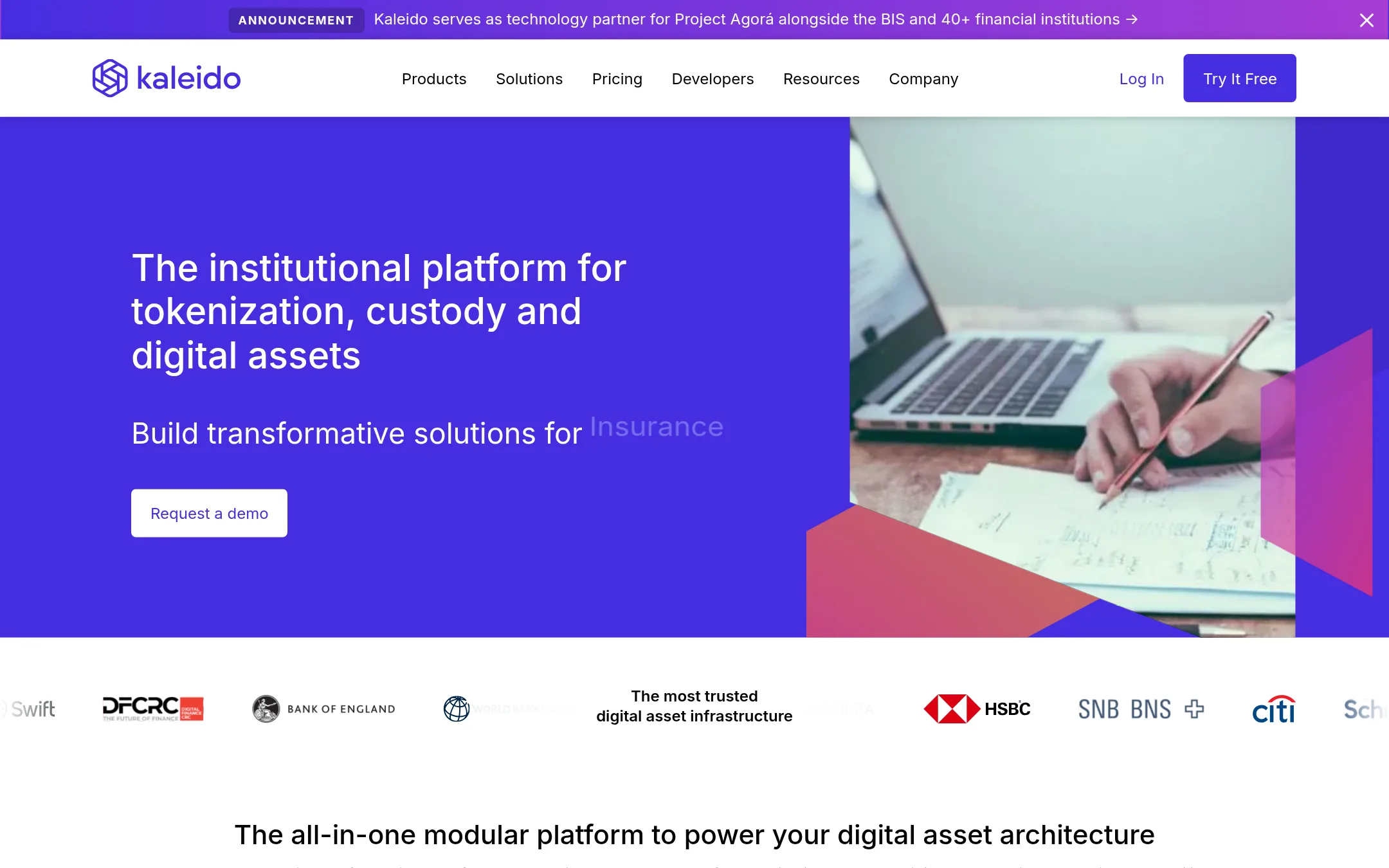
Kaleido is a modular platform for building blockchain and digital asset solutions, with pre-integrated products for tokenization, custody, and chain infrastructure. Choose it over ConsenSys when you want a managed, self-service platform to launch networks quickly, rather than assembling ConsenSys's open-source components yourself.
Where it is strong
- Free Starter plan to test blockchain networks.
- Modular products for custody, tokenization, and interoperability.
- Deploy in your own cloud or on Kaleido's infrastructure.
Where it falls short
- Specific pricing only available by contacting sales.
- Less focus on Ethereum core protocol development compared to ConsenSys.
- Pricing:
- Pricing is not published on the site. The page describes Starter, Developer, Business, and Enterprise plans but does not list specific prices.
- Switching from ConsenSys:
- Moving from ConsenSys to Kaleido means shifting from assembling open-source tools like Besu and Teku to using a managed platform, so you can redeploy existing Ethereum nodes on Kaleido's infrastructure.
- RNot published
6.R3 Corda
Best for: Banks, asset managers, and market infrastructure operators that need permissioned, regulated blockchain networks for tokenized assets and interbank workflows.
- Pricing
- Not published
- Category
- Other
R3 Corda is a distributed ledger platform built for regulated financial institutions. It focuses on private, permissioned networks for tokenizing real-world assets and interbank transactions. Choose it over ConsenSys if you need compliance-first infrastructure for banking and capital markets rather than public Ethereum tooling.
Where it is strong
- Designed for regulated finance with privacy and compliance built in.
- Proven in production with over 90% of Italian banks using it for interbank data.
- Supports public-private network convergence for hybrid deployments.
Where it falls short
- Pricing is not public. You must contact sales for a quote.
- Focused on financial institutions, so it is less suited for general-purpose Ethereum dApp development.
- Pricing:
- Pricing is not published on the site.
- Switching from ConsenSys:
- Moving from ConsenSys to Corda means shifting from public Ethereum infrastructure to a permissioned, private ledger, which requires re-architecting your network and workflows.
- HNot published
7.Hyperledger Fabric
Best for: Enterprises and consortiums building permissioned blockchain networks that require privacy and controlled membership.
- Pricing
- Not published
- Category
- Other
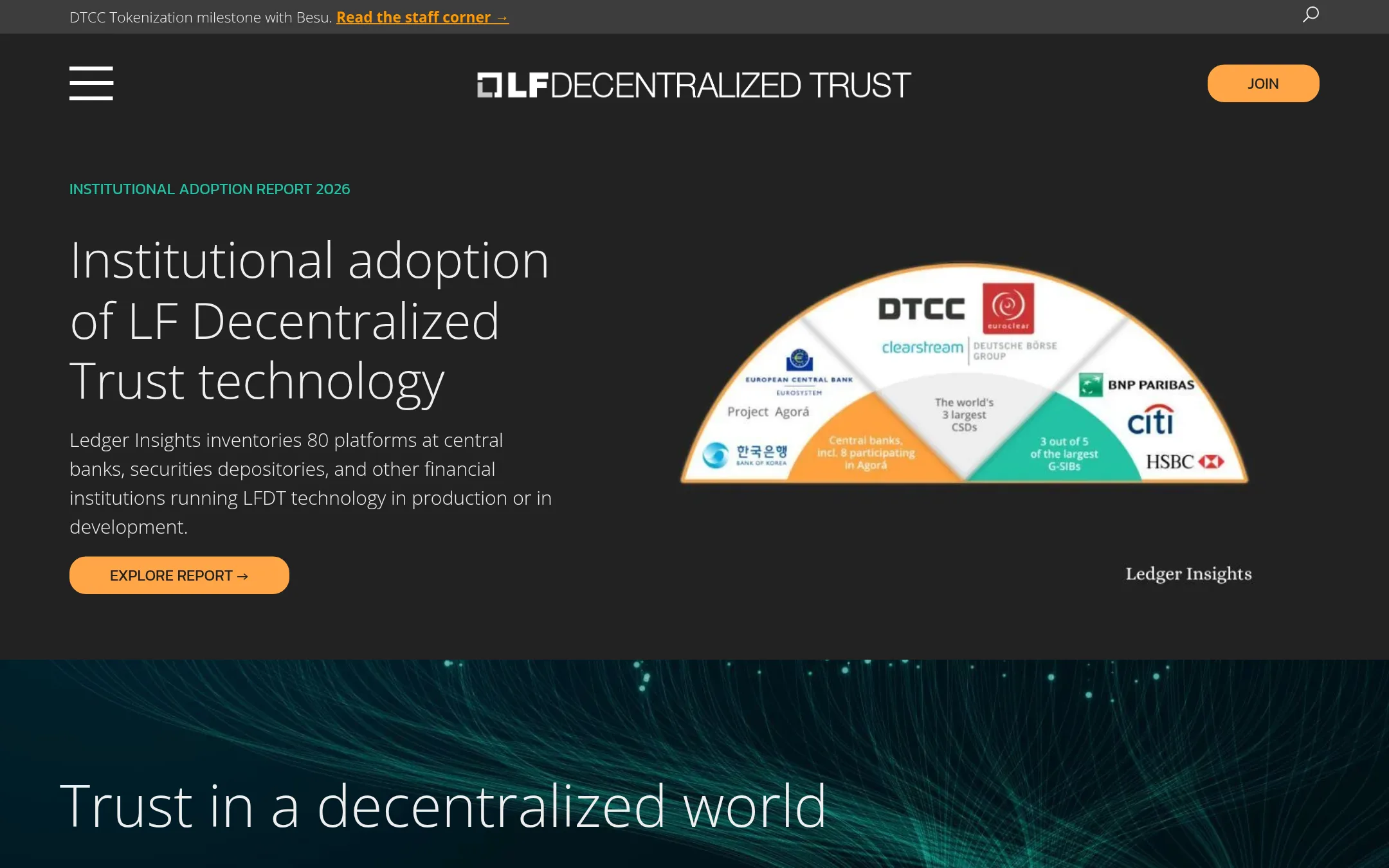
Hyperledger Fabric is an open-source permissioned blockchain framework hosted by LF Decentralized Trust. It is a good fit for enterprises that need private, controlled networks with modular consensus, rather than the public Ethereum infrastructure ConsenSys provides.
Where it is strong
- Open source with a large community and vendor support.
- Modular architecture allows custom consensus and membership services.
- Certifications available for Besu and Fabric to validate expertise.
Where it falls short
- Not a public blockchain. Requires network setup and governance.
- No managed service or hosted offering directly from the foundation.
- Pricing:
- Pricing is not published on the site.
- Switching from ConsenSys:
- Moving from ConsenSys to Hyperledger Fabric means shifting from public Ethereum tools to a permissioned network, which requires redesigning the network architecture and governance model.
- HNot published
8.Hedera
Best for: Enterprises and regulated industries like finance, carbon markets, and tokenized assets that need a compliant, high-performance public ledger.
- Pricing
- Not published
- Category
- Other
Hedera is a distributed ledger platform built for enterprise use, with a permissioned network governed by major institutions. It offers fast transaction finality and compliance-focused features, making it a strong choice for regulated industries that need a public ledger with institutional oversight. Choose Hedera over ConsenSys if you want a turnkey network rather than building on Ethereum infrastructure.
Where it is strong
- Institutional governance with a council of Fortune 1000 companies
- Transaction fees set in USD starting at $0.0001
- Fast finality in seconds, suitable for real-world applications
Where it falls short
- Permissioned model may not suit fully decentralized use cases
- Smaller ecosystem compared to Ethereum-based tools
- Pricing:
- Pricing is not published on the site.
- ANot published
9.Avalanche
Best for: Financial institutions and enterprises that need a private, compliant, and scalable blockchain with instant finality and EVM compatibility.
- Pricing
- Not published
- Category
- Other
Avalanche is a high-performance blockchain platform for businesses that need fast finality, EVM compatibility, and the ability to launch their own L1 with custom tokenomics and validator sets. Choose it over ConsenSys if you want a full network with built-in compliance tools (KYC, AML, OFAC) rather than a suite of Ethereum infrastructure services.
Where it is strong
- Instant finality in seconds, reducing counterparty risk.
- EVM compatible, so existing Ethereum tools and contracts work natively.
- Launch a dedicated L1 with your own fee token and validator set.
Where it falls short
- No advisory or managed services like ConsenSys offers.
- Requires managing your own L1 infrastructure if you need full control.
- Pricing:
- Pricing is not published on the site.
- Not published
10.Protocol Labs
Best for: Teams building decentralized storage solutions or exploring AI, robotics, and neurotech applications on web3 infrastructure.
- Pricing
- Not published
- Category
- Developer Tools
Protocol Labs is an innovation network behind IPFS, Filecoin, and libp2p, focused on decentralized storage and broader web3 infrastructure. Choose it over ConsenSys if you need open-source protocols for data storage and retrieval rather than Ethereum-focused institutional tools.
Where it is strong
- Owns IPFS and Filecoin, the leading decentralized storage protocols.
- Network of 750+ startups, funds, and open source projects.
- Expands beyond Ethereum into AI, robotics, and neurotech.
Where it falls short
- Not focused on Ethereum or institutional digital asset markets.
- No managed services or advisory for regulated financial institutions.
- Pricing:
- Pricing is not published on the site.
- Not published
11.Arweave
Best for: Teams building permanent archives, public records, or decentralized web apps that need one-time, durable storage without ongoing hosting costs.
- Pricing
- Not published
- Category
- Other
Arweave is a permanent data storage network, not a blockchain infrastructure suite like ConsenSys. Choose it when you need immutable, low-cost storage for data or web apps, rather than Ethereum tooling for financial institutions. It is a simpler, single-purpose protocol with a decentralized ecosystem.
Where it is strong
- One-time payment for permanent storage, no recurring fees
- Permissionless and community-driven, no central operator
- Stable and mature protocol with broad ecosystem adoption
Where it falls short
- No Ethereum-focused tooling or smart contract infrastructure
- Limited to storage. Lacks advisory, managed services, or enterprise support
- Pricing:
- Pricing is not published on the site.
- Not published
12.Sia
Best for: Builders and teams that need encrypted, decentralized storage with SDKs or S3-compatible access, rather than blockchain development tools.
- Pricing
- Not published
- Category
- Other
Sia is a decentralized encrypted cloud storage network. You would choose it instead of ConsenSys when your project needs private, verifiable data storage rather than Ethereum infrastructure and tooling. It is a fit for builders who want to keep control of encryption keys and store data across independent providers.
Where it is strong
- Encrypts data in your application before upload, keys never leave your device.
- Erasure coding splits files into 30 shards across independent providers. Any 10 rebuild the chunk.
- Includes a local S3 gateway (S3d) so existing S3 tools can store on Sia unchanged.
Where it falls short
- No pricing details are listed, so cost planning is unclear.
- Storage performance depends on a network of independent providers, which may vary compared to ConsenSys's Ethereum infrastructure.
- Pricing:
- Pricing is not published on the site.
See more comparisons in Other alternatives.
FAQ
Questions about ConsenSys alternatives
What is the best free option for Ethereum node access?
Infura offers a free tier with 3 million credits per day, which is good for testing and small projects. QuickNode also has a free trial of 10M credits. For production, you will need a paid plan.
Which alternative supports the most blockchains?
QuickNode supports 77+ chains and 130+ networks, including full and archive nodes. Moralis covers 40+ chains including EVM, Solana, and Bitcoin. Infura provides access to 40+ networks.
Are there alternatives with transparent pricing?
Yes. QuickNode lists plans from $34/month, Infura from $50/month, and Moralis from $10/month for data feeds. Others like Chainstack and Kaleido do not publish specific prices and require contacting sales.
Which alternative is best for regulated financial institutions?
R3 Corda is designed for regulated finance with privacy and compliance built in. Avalanche offers built-in KYC, AML, and OFAC tools. Hedera has institutional governance with a council of Fortune 1000 companies.
Do any alternatives offer managed services or advisory?
ConsenSys itself offers advisory and managed services. Among alternatives, Kaleido provides a managed platform for deploying networks, but most others like QuickNode and Infura focus on self-service infrastructure without advisory.
Last updated November 1, 2026.