Constructable alternatives
6 products compared · Updated November 3, 2026
The short answer
For construction teams comparing alternatives to Constructable, the strongest options are Procore for large firms needing a mature platform with extensive integrations, Autodesk Construction Cloud for BIM-heavy workflows, and Buildertrend for residential builders. Fieldwire suits teams wanting a simple field-focused tool, while eSUB is tailored for trade contractors.
Your shortlist, at a glance
Read the comparisons ↓ ProcoreCustom quoteLarge construction firms and owners that need a mature platform with 500+ integrations and unlimited users.
- AAutodesk Construction CloudCustom quoteLarge general contractors, specialty contractors, and owners that need BIM-heavy workflows, model coordination, and a wide ecosystem of integrations.
 BuildertrendNot publishedHome builders and remodelers who need client portals, online payments, and tight integration with QuickBooks or Xero.
- CCMiCNot publishedLarge construction firms that need a full ERP suite and are comfortable with a traditional enterprise software engagement.
- eeSUB Construction SoftwareNot publishedSubcontractors in commercial construction who need field-friendly tools for RFIs, submittals, change orders, and daily reports.
 FieldwireNot publishedConstruction teams of 10 to 10,000 that want a simple, field-focused tool with unlimited projects and sheets on paid plans.
About Constructable and its alternatives
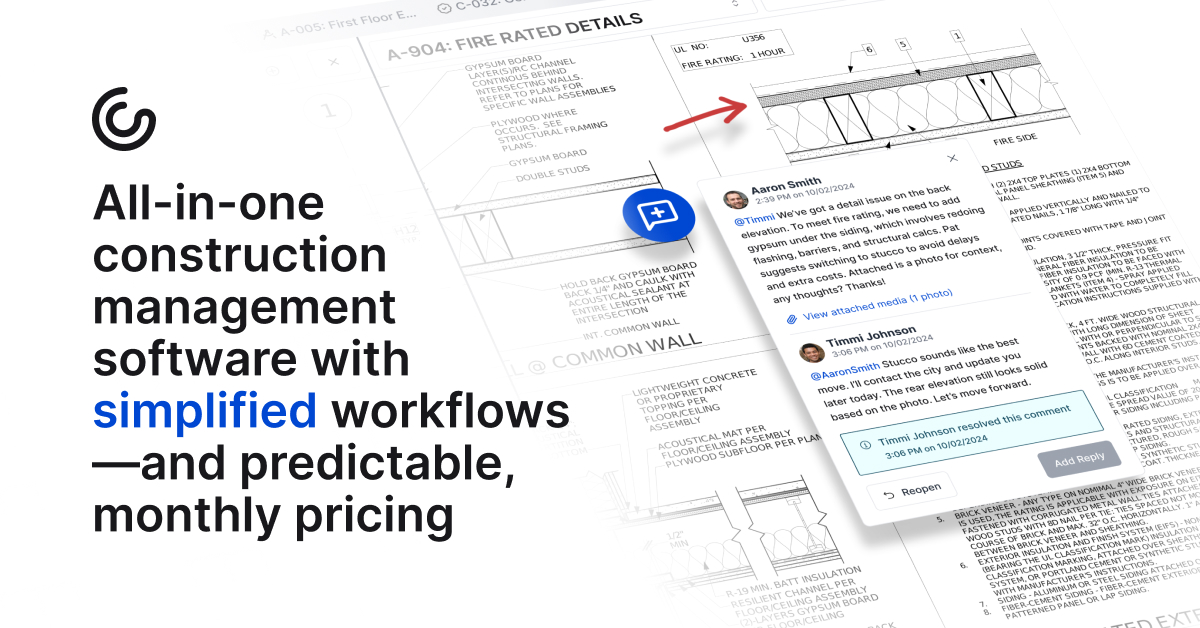
Constructable is an AI-powered construction management platform that aims to replace traditional tools like Procore. It offers flat monthly pricing, free data migration, and a focus on ease of use, with features spanning field, project, and financial management.
When comparing alternatives, weigh pricing structure (flat vs. volume-based), regional availability, integrations with accounting and other tools, support quality, and contract terms. Some vendors publish pricing, while others require quotes. Consider whether you need BIM capabilities, residential-specific features, or a lightweight field tool.
Explore the alternatives
- Custom quote
1.Procore
Best for: Large construction firms and owners that need a mature platform with 500+ integrations and unlimited users.
- Pricing
- Custom quote
- Category
- Productivity & Project Management
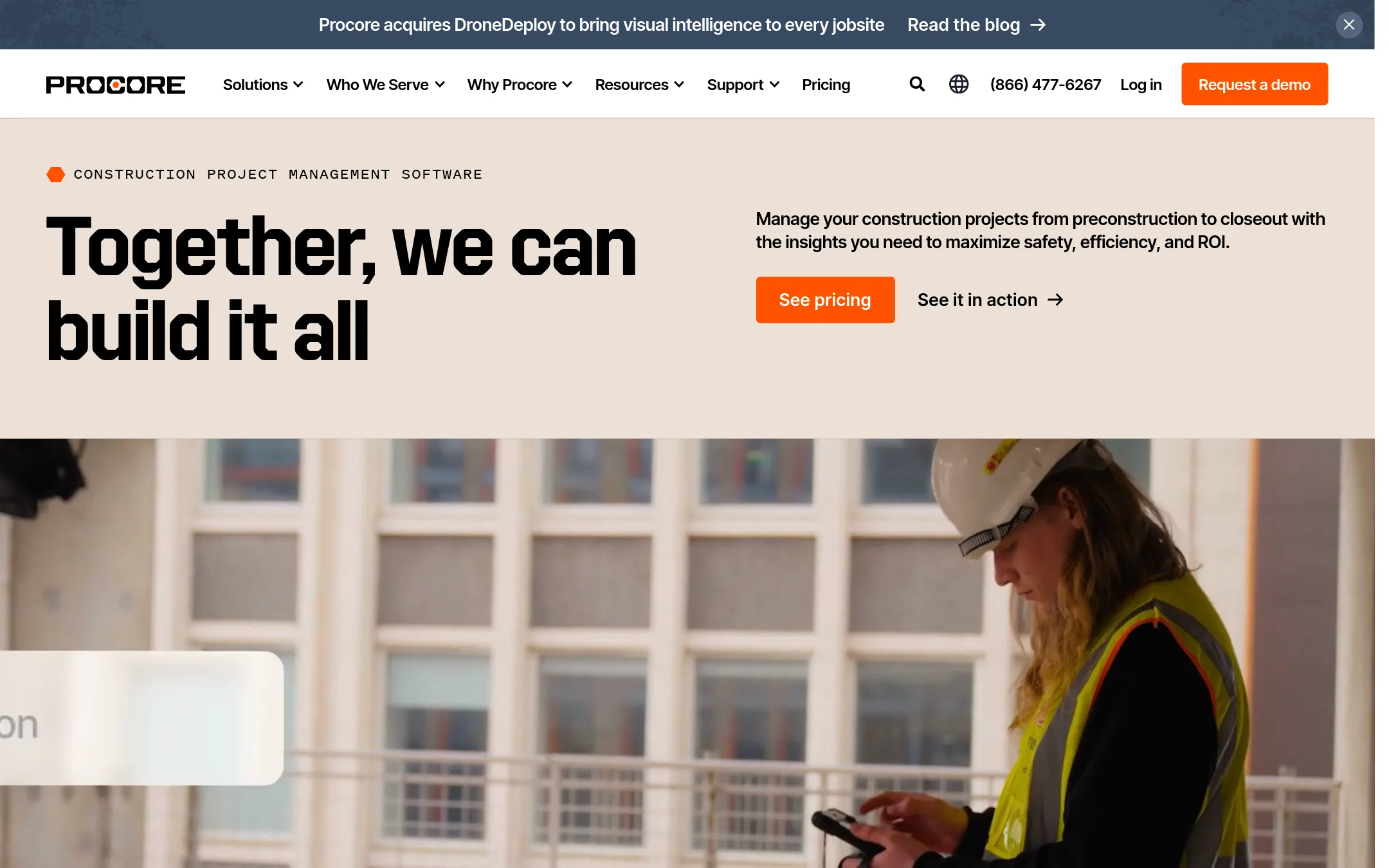
Procore is a broad construction management platform used by owners, main contractors, and subcontractors to connect site and office work. Choose it over Constructable when you need a widely adopted platform with a large integration marketplace and enterprise-grade support across many project types.
Where it is strong
- Unlimited users and data included
- 500+ out-of-the-box integrations
- 24/7 live support and free training
Where it falls short
- Pricing is opaque and volume-based
- May be overkill for smaller teams
- Pricing:
- Pricing is not published on the site. Procore charges an upfront annual fee based on the products you need and your Annual Construction Volume.
- ACustom quote
2.Autodesk Construction Cloud
Best for: Large general contractors, specialty contractors, and owners that need BIM-heavy workflows, model coordination, and a wide ecosystem of integrations.
- Pricing
- Custom quote
- Category
- Productivity & Project Management
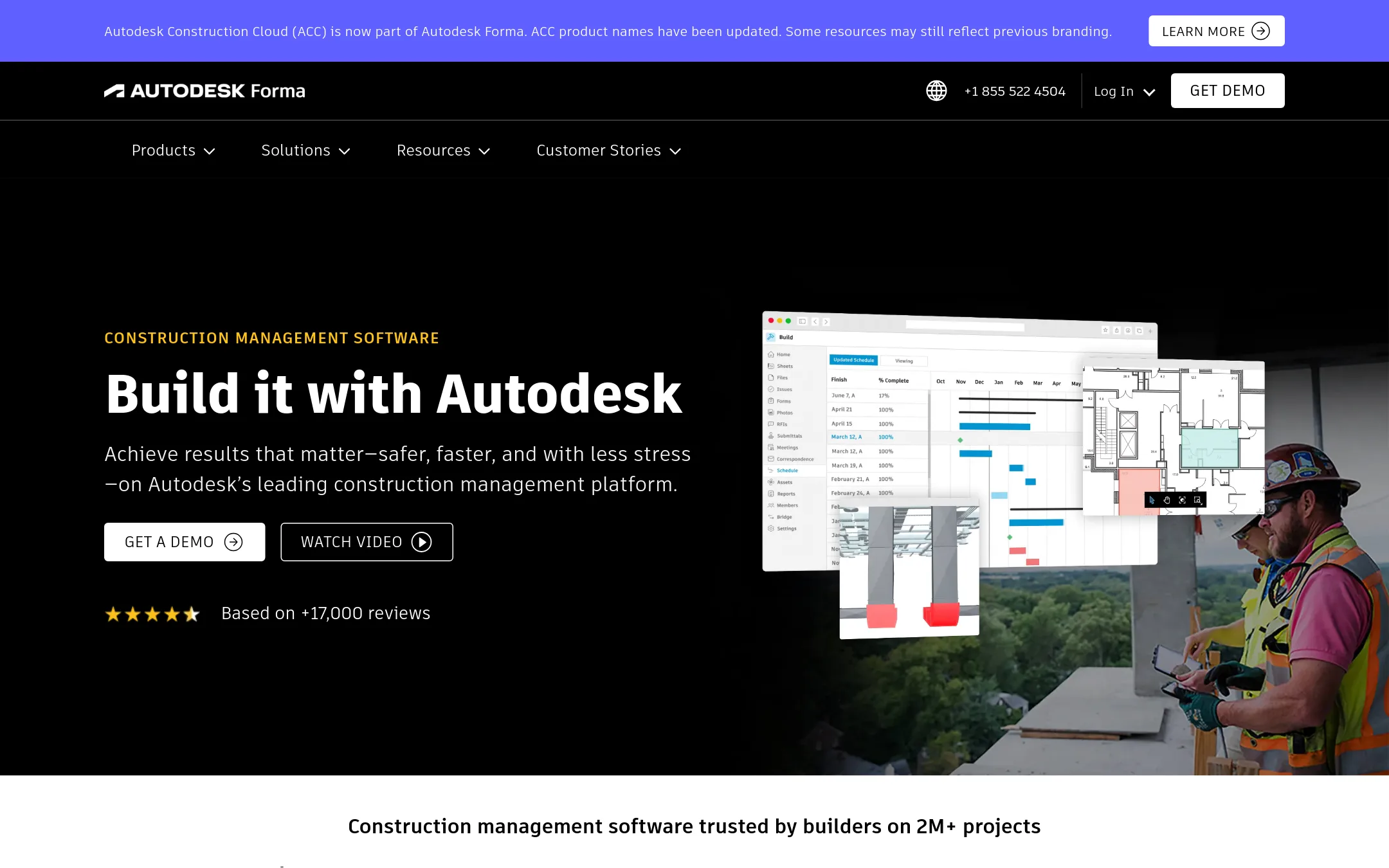
Autodesk Construction Cloud is a broad platform for construction project management, covering design, preconstruction, and field operations. Choose it when you need deep BIM and model coordination capabilities across a large portfolio, or when you want a suite that spans the whole project lifecycle from design to handover.
Where it is strong
- Strong BIM and model coordination tools built in
- Over 400 pre-built integrations with ERPs, CRMs, and more
- Enterprise-grade security and 24/5 support
Where it falls short
- Pricing is quote-based, not transparent
- May be overkill for smaller teams that only need field and project management
- Pricing:
- Pricing is not published on the site. Autodesk offers flexible user, project, and account-based pricing with a quote request.
- Switching from Constructable:
- Moving from Constructable involves migrating your project data and workflows to Autodesk's platform, which may require more setup time and training due to its broader feature set.
- Not published
3.Buildertrend
Best for: Home builders and remodelers who need client portals, online payments, and tight integration with QuickBooks or Xero.
- Pricing
- Not published
- Category
- Productivity & Project Management
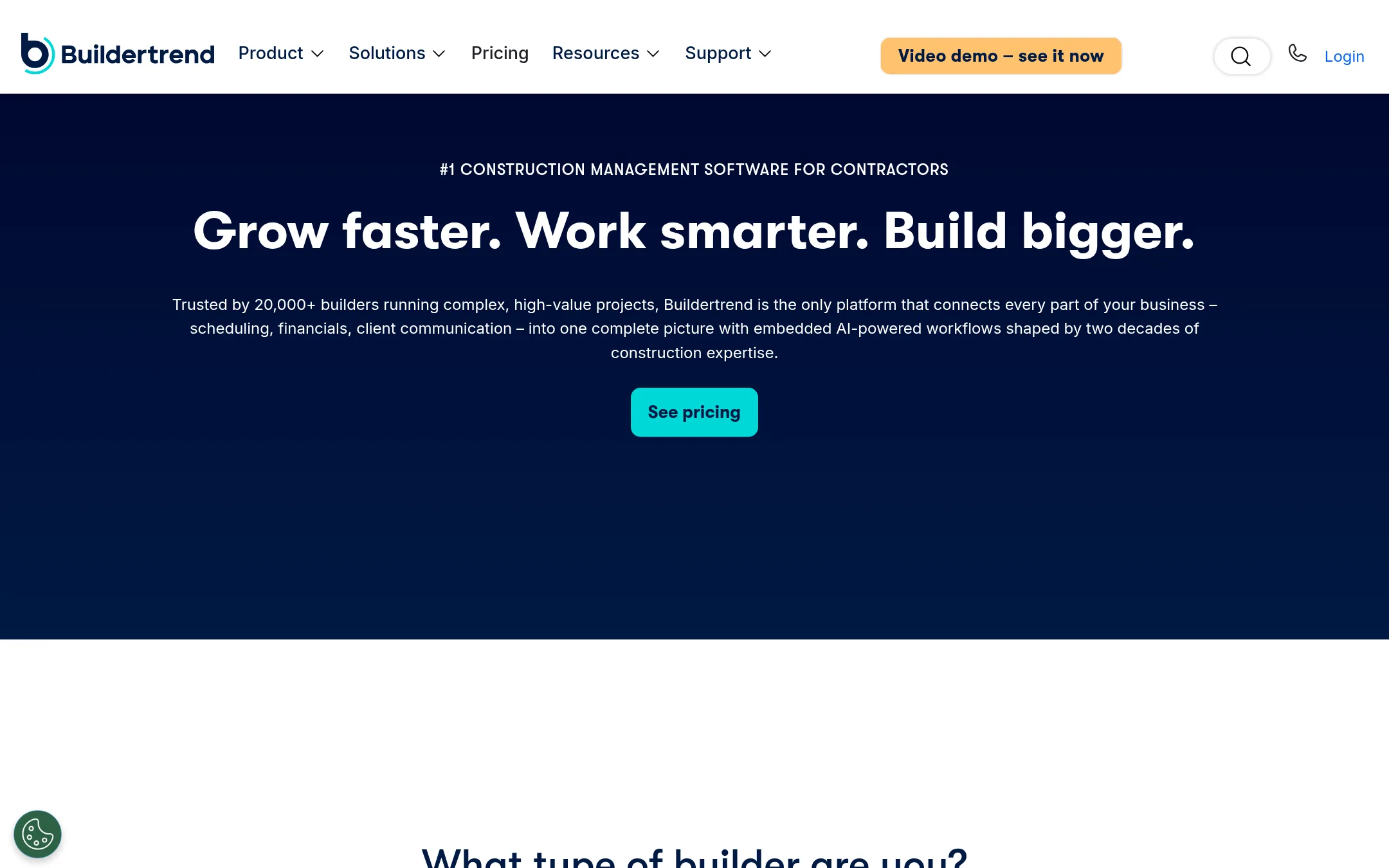
Buildertrend is a construction management platform for home builders, remodelers, and trade contractors. It connects scheduling, financials, and client communication in one system. Choose it over Constructable if you focus on residential projects and want a platform with a large established user base and embedded AI workflows.
Where it is strong
- Client portal with AI-generated updates and online payments
- Job costing, forecasting, and WIP reporting built in
- Onboarding includes setup with real data and accounting connection
Where it falls short
- No public pricing, so you must contact sales for a quote
- Positioned for residential builders, not general contractors on large commercial jobs
- Pricing:
- Pricing is not published on the site.
- CNot published
4.CMiC
Best for: Large construction firms that need a full ERP suite and are comfortable with a traditional enterprise software engagement.

- Pricing
- Not published
- Category
- Other
CMiC is an enterprise construction ERP that handles financials, project management, and operations in one system. Choose it over Constructable if you are a large contractor that needs deep ERP functionality and is willing to work with a vendor that requires a sales conversation.
Where it is strong
- Covers financials, project management, and operations in one system.
- Built for large, complex construction enterprises.
- Long-standing vendor with deep industry experience.
Where it falls short
- Pricing is not public, so budgeting requires a sales call.
- Website was unreachable during review, which may signal availability issues.
- Pricing:
- Pricing is not published on the site.
- eNot published
5.eSUB Construction Software
Best for: Subcontractors in commercial construction who need field-friendly tools for RFIs, submittals, change orders, and daily reports.
- Pricing
- Not published
- Category
- Other
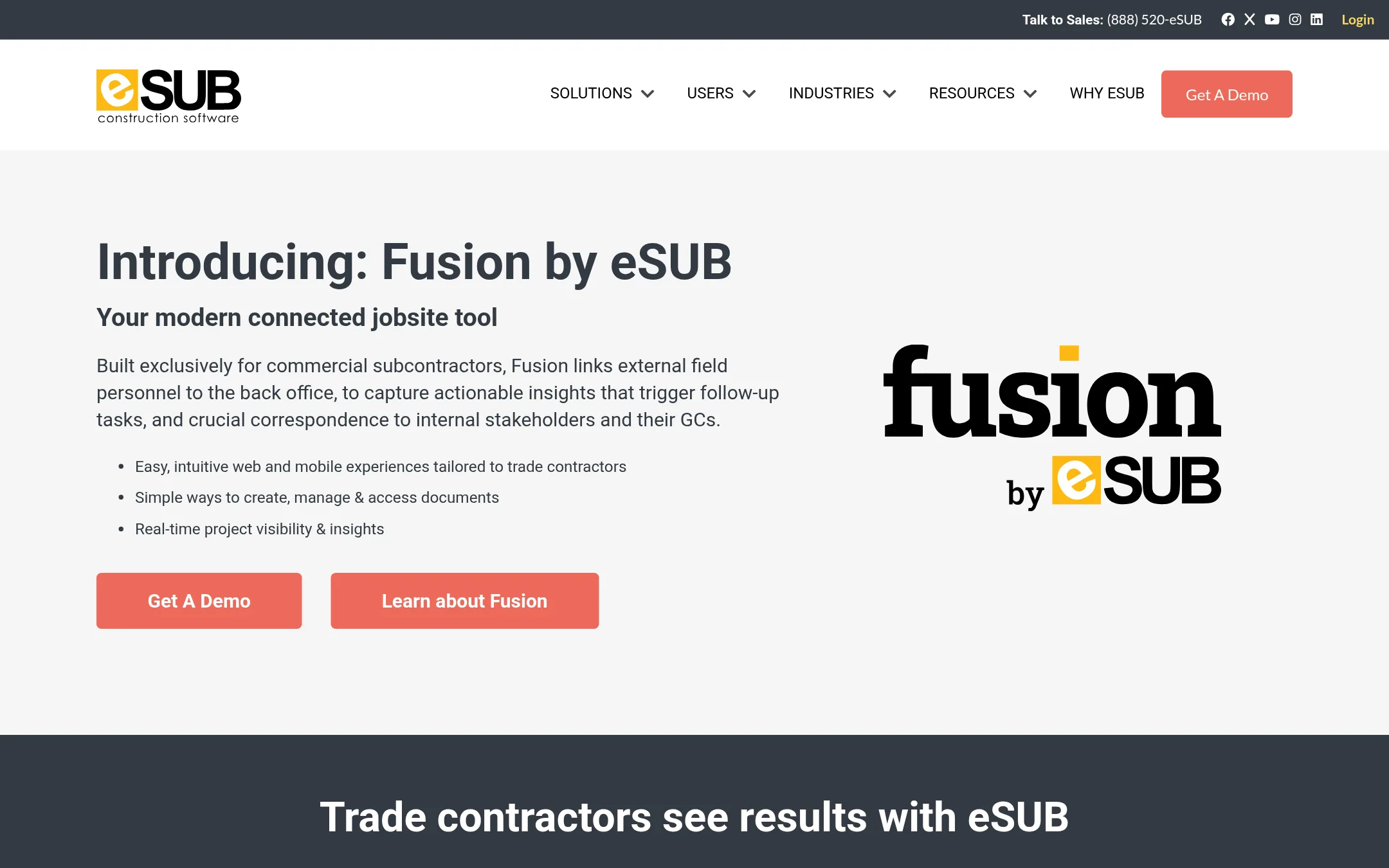
eSUB is construction management software built specifically for trade contractors like concrete, drywall, glazing, and steel firms. It focuses on field communications, document management, and QuickBooks Online integration. Choose eSUB if you are a subcontractor that wants a simple, trade-focused tool rather than a general construction management platform.
Where it is strong
- Built specifically for trade contractors, not general contractors
- Includes unlimited cloud storage for project documents
- Integrates with QuickBooks Online for financial workflows
Where it falls short
- Pricing is not published, so you must contact sales
- No mention of AI features or automated drawing reviews
- Pricing:
- Pricing is not published on the site.
- Not published
6.Fieldwire
Best for: Construction teams of 10 to 10,000 that want a simple, field-focused tool with unlimited projects and sheets on paid plans.
- Pricing
- Not published
- Category
- Productivity & Project Management
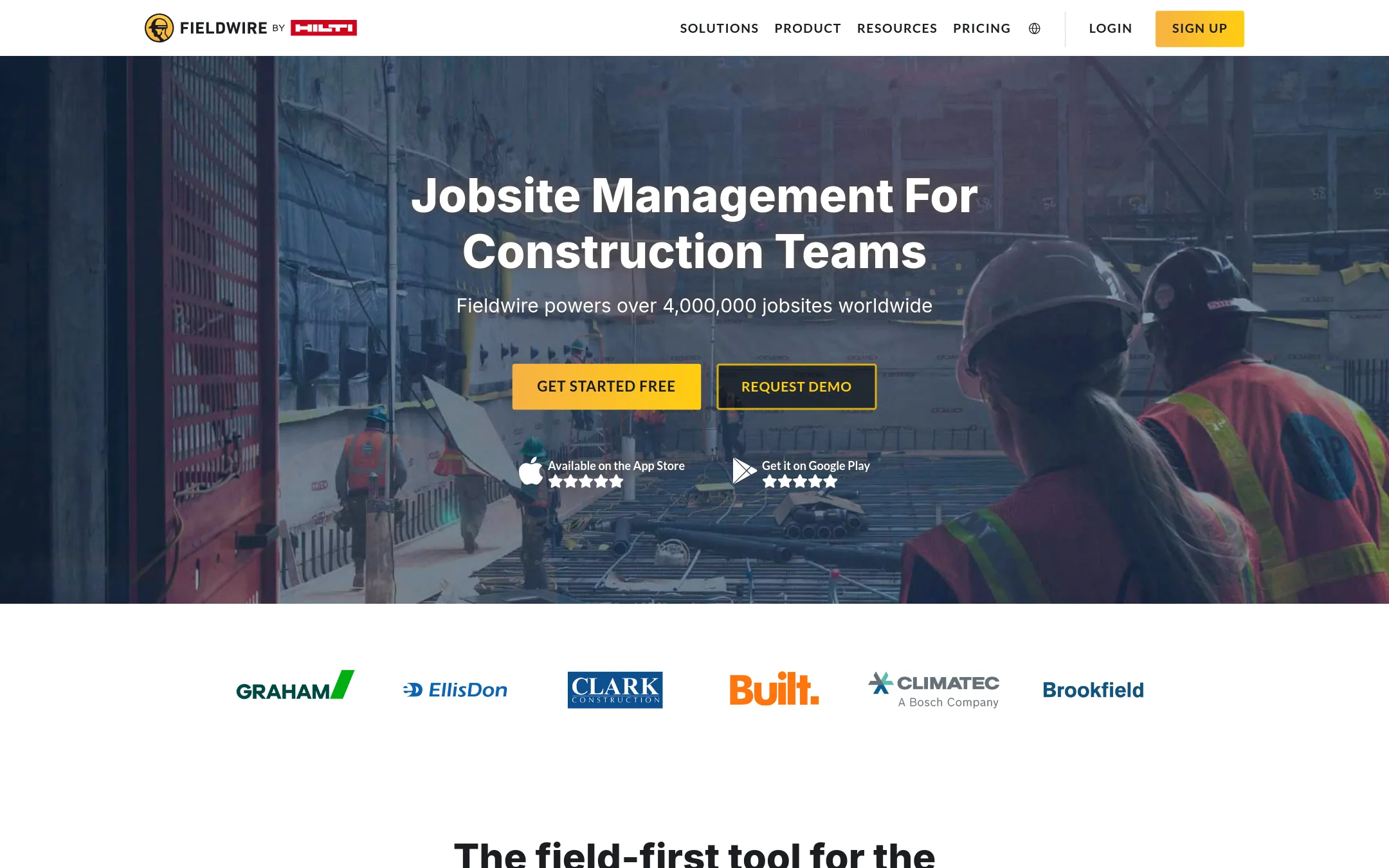
Fieldwire is a field-first jobsite management tool for construction teams that need task tracking, drawing markups, and real-time communication on any device. Choose it over Constructable if your priority is lightweight, easy-to-adopt field collaboration rather than full project and financial management with AI features.
Where it is strong
- Unlimited projects and sheets on all paid plans
- Works offline on mobile for markups and as-builts
- Set up in minutes with no training required
Where it falls short
- No financial management or budgeting features
- Advanced features like API and SSO require a custom contract
- Pricing:
- Pricing is not published on the site. Plans are Basic, Pro, Business, and Business Plus, with custom contracts for enterprise features.
See more comparisons in Productivity & Project Management alternatives.
FAQ
Questions about Constructable alternatives
Which alternative is best for large construction firms?
Procore is a strong choice for large firms due to its unlimited users, 500+ integrations, and 24/7 support. Autodesk Construction Cloud also suits large firms needing BIM-heavy workflows. Both have quote-based pricing, so budget planning requires a sales call.
Which alternative has transparent pricing?
None of the alternatives publish pricing on their sites. Constructable itself offers flat monthly pricing, but among the alternatives, you must contact sales for quotes. Fieldwire lists plans but not prices, so you still need to engage sales.
Which alternative is best for residential builders?
Buildertrend is designed for home builders and remodelers, with client portals, online payments, and QuickBooks integration. It is positioned for residential projects, not large commercial jobs. Other alternatives like Procore and Autodesk are more general-purpose.
Which alternative has the most integrations?
Procore has 500+ out-of-the-box integrations, while Autodesk Construction Cloud offers over 400. Both support ERP and CRM connections. Fieldwire and eSUB have fewer integrations, with eSUB focusing on QuickBooks Online.
Which alternative is easiest to adopt?
Fieldwire is designed for quick setup, with no training required and offline mobile support. Constructable also emphasizes ease of use and fast migration. Procore and Autodesk may require more onboarding due to their breadth.
Last updated November 3, 2026.