Crustdata alternatives
8 products compared · Updated November 12, 2026
The short answer
Startup OG lists nine alternatives to Crustdata. Clay suits GTM engineers and sales ops teams who want to combine many data vendors and AI research on one visual canvas. Apollo.io suits sales teams running outbound email and calling campaigns from one tool. Harmonic suits venture investors who want to find early-stage startups and founders before they show up in other databases.
Your shortlist, at a glance
Read the comparisons ↓- CClayFrom $54/moGTM engineers and sales ops teams that want to mix many data vendors and AI research on a visual canvas
 Apollo.ioFree, Basic, Pro, CustSales teams running outbound email and calling campaigns who want contact data and sequencing in the same tool
ZoomInfoFree start + creditsSales, marketing and RevOps teams that want one platform for prospecting, CRM data hygiene and account targeting, rather than building their own data pipeline.
- PPeople Data LabsNot publishedTeams that need bulk workforce data feeds or enrichment at scale, including HR tech platforms and researchers
 AffinityNot publishedCompliance and HR teams at regulated companies, such as fintechs and banks, that need policy management and employee training
- HHarmonicNot publishedVenture investors and deal sourcing teams that want to find early-stage startups and founders before they appear in other databases
PitchBookNot publishedInvestment firms and analysts who need deal history, fund performance and private market benchmarks
 Lusha1 credit/email, 5/phonOutbound sales teams that need verified work emails and direct phone numbers for prospect lists
About Crustdata and its alternatives
Crustdata is a real-time B2B data provider. According to its site, it offers an API over more than 1 billion people and 60 million companies, used to power sales, recruiting and investment workflows, and it is known for live search, enrichment and signal watchers that AI agents can call directly.
When comparing alternatives, weigh how each product is priced, including whether it charges per seat, per credit or by custom enterprise quote. Check regional coverage, which integrations it offers with your CRM or agent setup, the level of support, and the contract terms, such as whether credits expire or roll over.
Explore the alternatives
- CFrom $54/mo
1.Clay
Best for: GTM engineers and sales ops teams that want to mix many data vendors and AI research on a visual canvas
- Pricing
- From $54/mo
- Category
- AI & Machine Learning
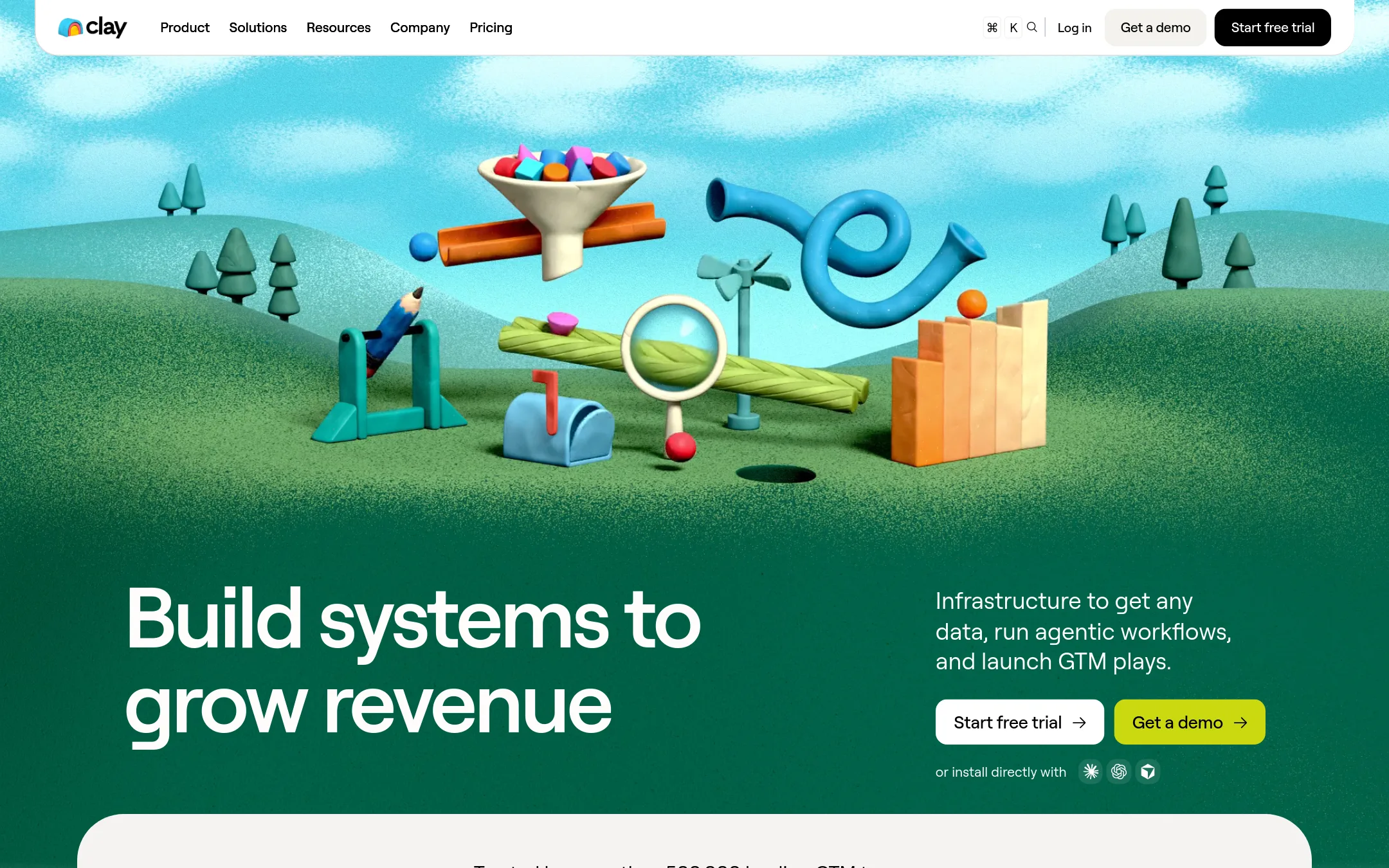
Clay is a visual GTM workbench where teams build enrichment, signal, and outreach workflows across 150+ data providers and a marketplace of vendors. Someone would choose Clay over Crustdata when they want to combine many data sources, run custom AI research agents, and route leads or push ad audiences inside one canvas, rather than query a single people and company graph through an API.
Where it is strong
- Pulls from 150+ data providers and a marketplace of 200+ vendors under one contract
- Claygent AI agent does custom web research and generates bespoke data points
- Visual canvas makes workflows easy to inspect, troubleshoot, and reuse
Where it falls short
- Free plan caps tables at 200 rows and excludes phone number enrichment
- Costs can climb as you add signals, enrichment, and CRM sync across higher tiers
- Pricing:
- Clay's Free plan has unlimited seats and tables with up to 200 rows per table, paid plans start at $54/mo or $185/mo depending on tier, and Enterprise pricing is custom.
- Free, Basic, Pro, Cust
2.Apollo.io
Best for: Sales teams running outbound email and calling campaigns who want contact data and sequencing in the same tool
- Pricing
- Free, Basic, Pro, Cust
- Category
- Marketing & Sales
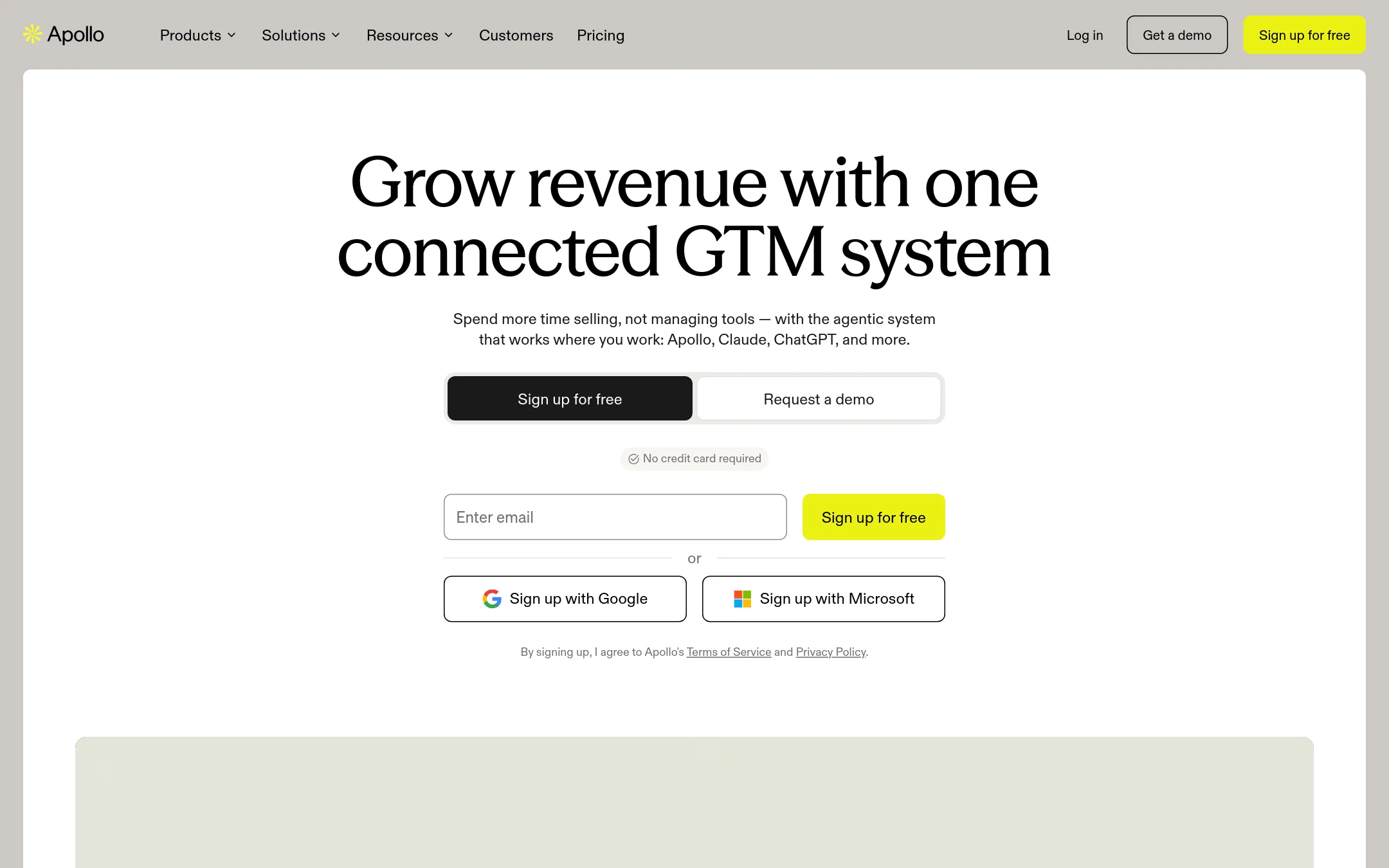
Apollo.io is a sales engagement and prospecting platform that combines a large contact database, email sequencing, a dialer and CRM-style pipeline tools. A team would pick it over Crustdata when the main job is running outbound sequences and calls from one place, not building live, signal-driven data feeds for their own agents or internal tools.
Where it is strong
- Contact database with 240M+ contacts and 30M+ accounts, per the site
- Email sequencing and a built-in dialer in one workspace
- Free plan available, and a free trial covers most features on paid plans
Where it falls short
- Credits reset each billing cycle and do not roll over, so heavy usage can run short
- All seats on an account must share the same plan level
- Pricing:
- Pricing is not published on the site in a way that lists per-seat amounts, though the page describes Free, Basic, Professional and Custom plans with credits pooled across the team and reset each billing cycle.
- Free start + credits
3.ZoomInfo
Best for: Sales, marketing and RevOps teams that want one platform for prospecting, CRM data hygiene and account targeting, rather than building their own data pipeline.
- Pricing
- Free start + credits
- Category
- Marketing & Sales
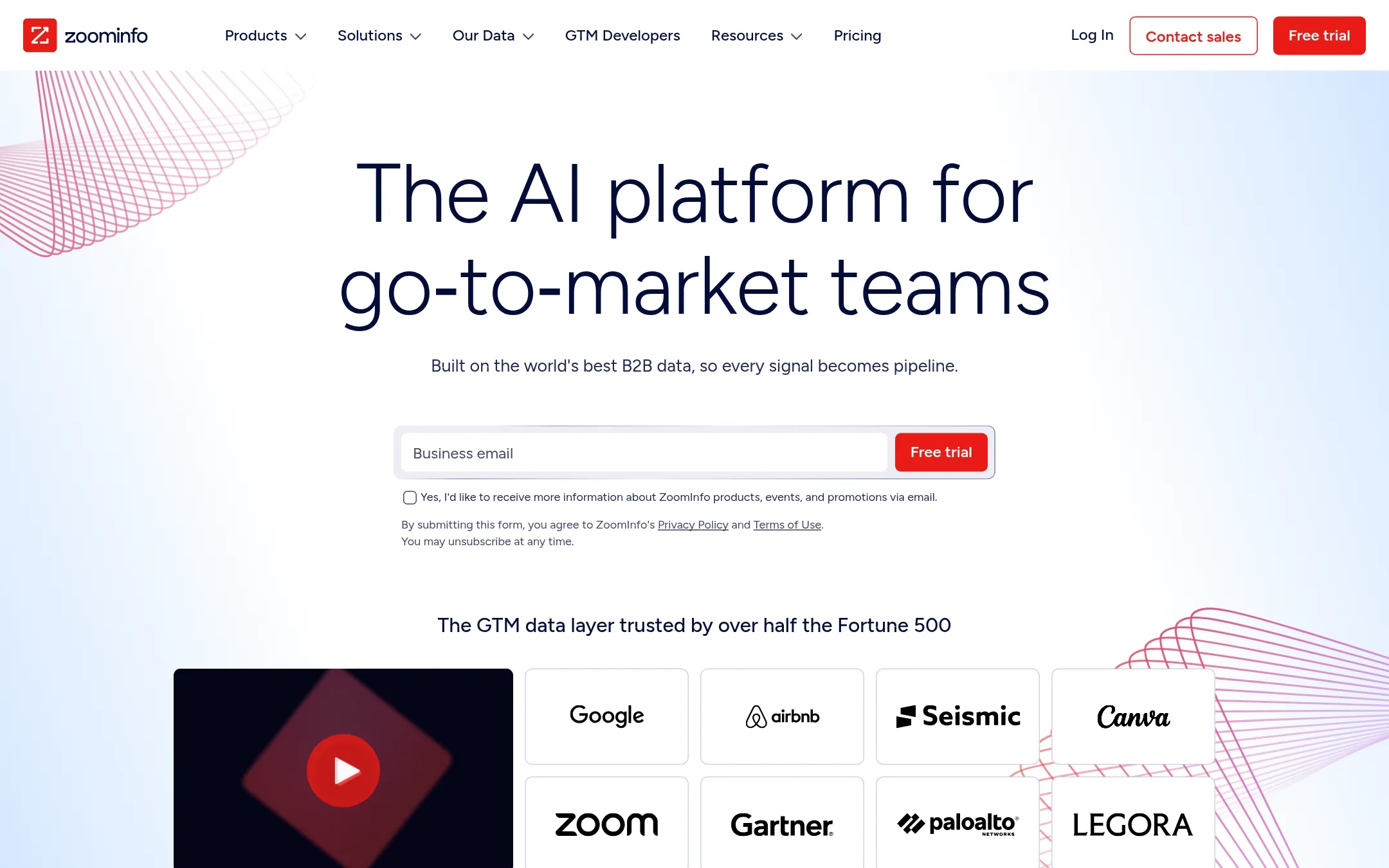
ZoomInfo is a B2B go-to-market platform built on a large contact and company database, with intent data, CRM sync and sales engagement features. A team would pick it over Crustdata when they want a finished sales workflow tool with verified contact data, native CRM integrations and rep-facing features rather than a raw API for building their own agents.
Where it is strong
- Covers contacts, companies, intent signals and org charts in one platform
- Native integrations with Salesforce, HubSpot and Microsoft Dynamics 365
- Free permanent Lite plan with no credit card needed
Where it falls short
- Built as a rep-facing workflow platform, so it is less suited to developers who want a raw API for custom agents than Crustdata
- Credit-based pricing means cost depends on usage and the exact rates are not shown in the text provided
- Pricing:
- In the United States, ZoomInfo is free to start with consumption credits based on usage, and it does not use fixed seat tiers, though the site does not list specific credit prices in the text provided.
- PNot published
4.People Data Labs
Best for: Teams that need bulk workforce data feeds or enrichment at scale, including HR tech platforms and researchers
- Pricing
- Not published
- Category
- Other
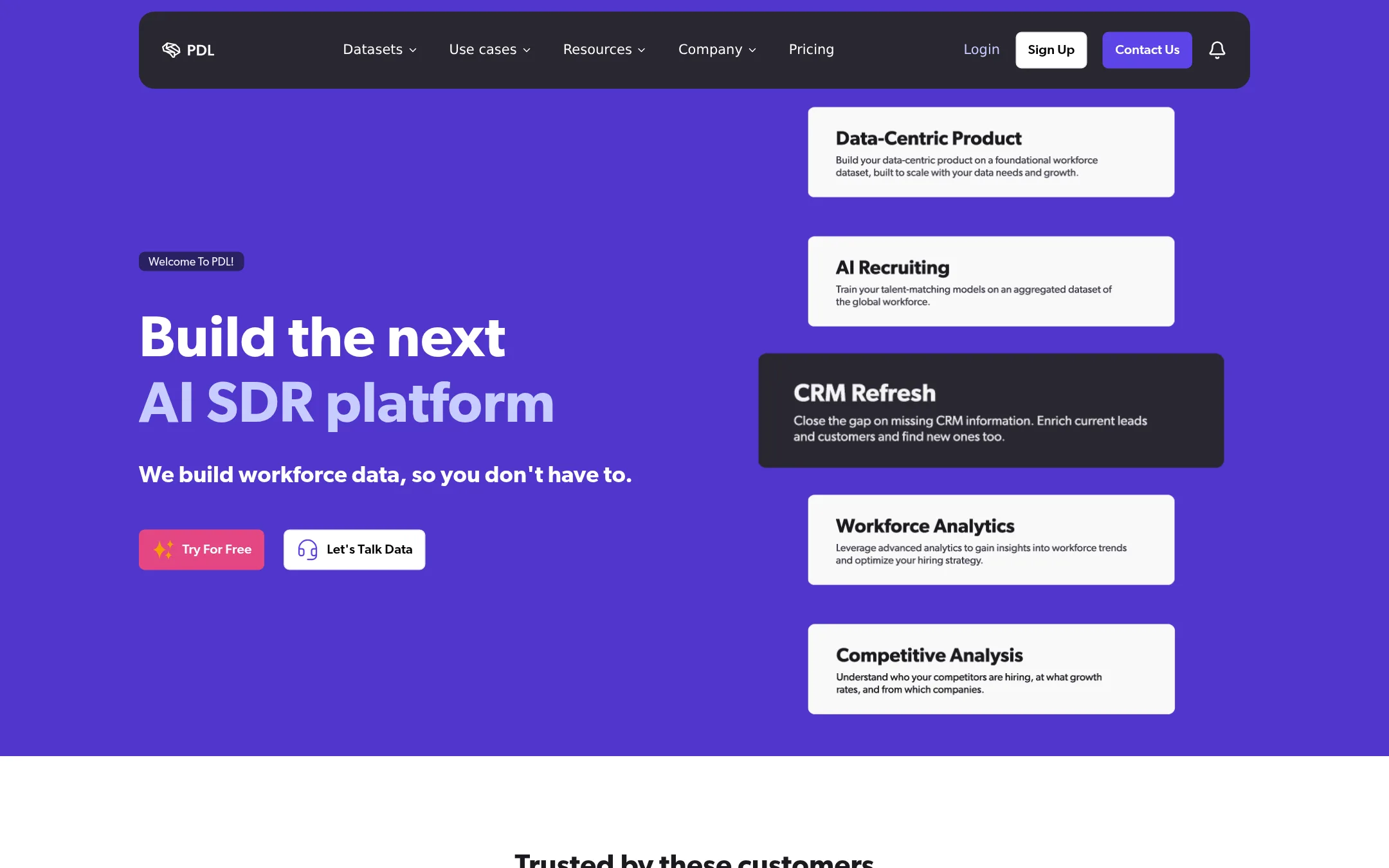
People Data Labs sells person, company and job posting datasets through APIs and data feeds, with a large workforce dataset that covers over 70 million companies. Teams pick it when they want bulk or feed-based access to workforce data for enrichment, talent sourcing or research, rather than Crustdata's live search and watcher workflow.
Where it is strong
- Person, company and job posting datasets in one vendor
- Delivery through APIs and Data License Feeds
- ISO and SOC 2 Type 2 compliance is listed
Where it falls short
- The site shows no pricing, so costs must be quoted before you can compare
- Its homepage does not describe live search or real-time watchers the way Crustdata does
- Pricing:
- Pricing is not published on the site.
- Not published
5.Affinity
Best for: Compliance and HR teams at regulated companies, such as fintechs and banks, that need policy management and employee training
- Pricing
- Not published
- Category
- Education
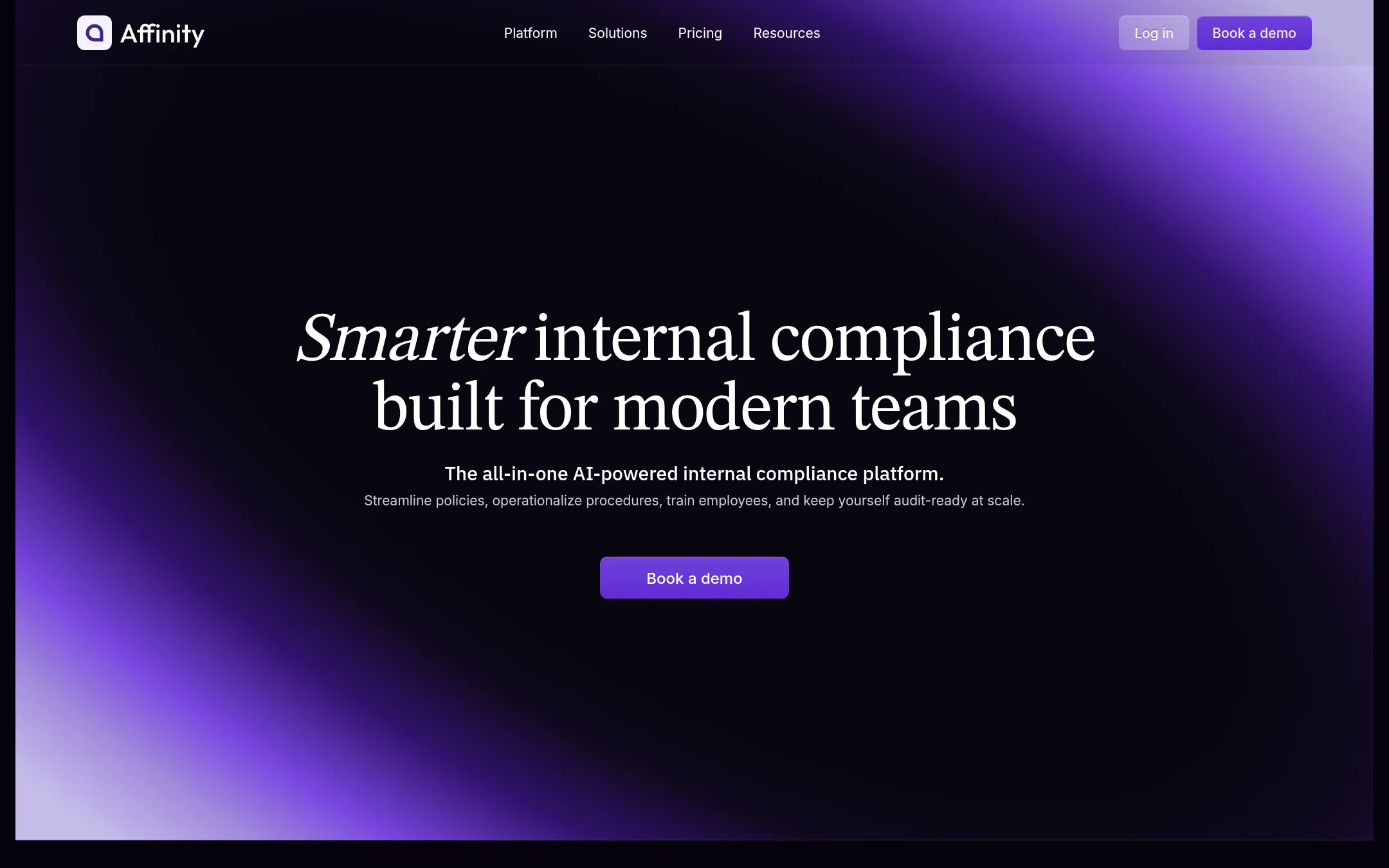
Affinity is a compliance and training platform for internal policies, procedures and employee training. A team would choose it over Crustdata when the real need is managing company policies and audit-ready training rather than finding or enriching people and company data.
Where it is strong
- Central hub for policies, owners, versions and approvals
- Off-the-shelf training on fintech regulation, infosec and HR
- Audit-friendly tracking and one-click reports for auditors and regulators
Where it falls short
- It does not provide people or company data for sales, recruiting or investing
- Pricing is not published on the site, so costs need to be confirmed directly
- Pricing:
- Pricing is not published on the site.
- HNot published
6.Harmonic
Best for: Venture investors and deal sourcing teams that want to find early-stage startups and founders before they appear in other databases
- Pricing
- Not published
- Category
- Other
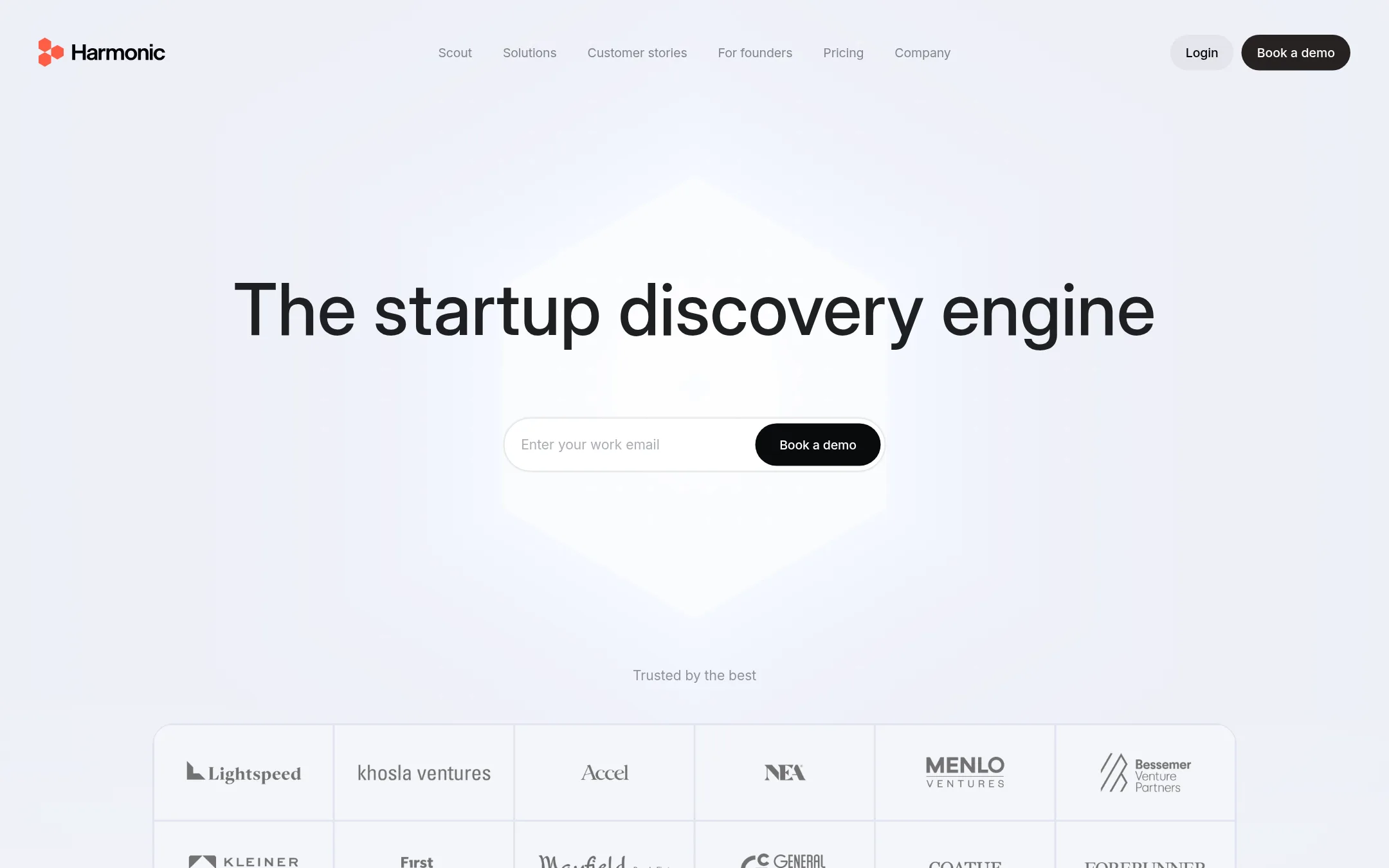
Harmonic is a startup database covering 35M+ companies and 195M+ people, built for investors and sourcing teams. Someone would pick it over Crustdata when the main job is finding early-stage companies and founders, mapping team changes, and checking connections across a firm's network.
Where it is strong
- Tracks companies at their earliest stages of formation, according to the site
- Maps team composition and changes, and syncs connections across a team's network
- Offers a Chrome Extension, API and integrations so data can be used in existing workflows
Where it falls short
- The site does not publish plan prices, so costs must be discussed with sales
- Its stated focus is investors and startup sourcing, so it is less clearly aimed at sales and recruiting workflows than Crustdata's live sear
- Pricing:
- Pricing is not published on the site.
- Not published
7.PitchBook
Best for: Investment firms and analysts who need deal history, fund performance and private market benchmarks
- Pricing
- Not published
- Category
- Other
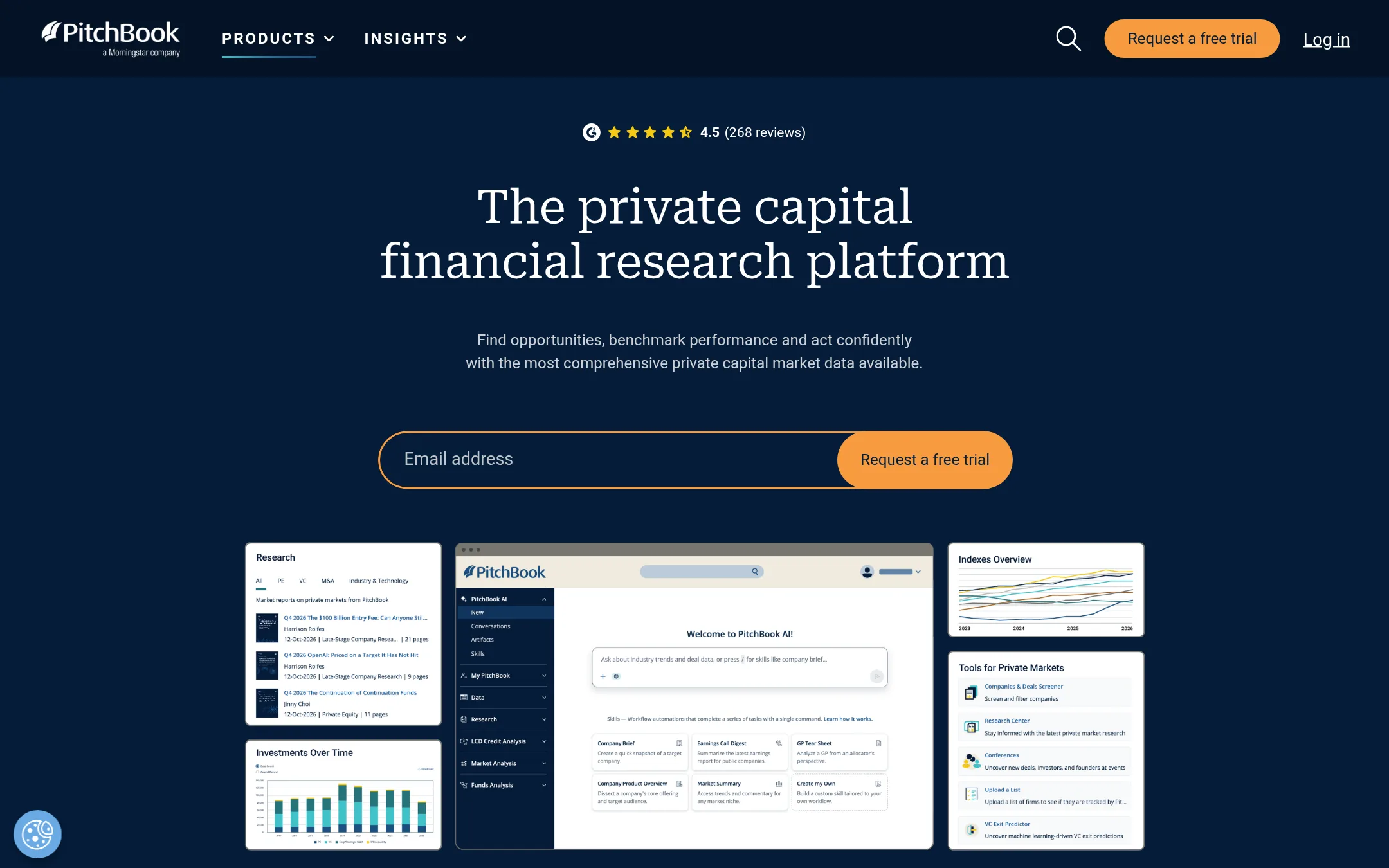
PitchBook is a private capital market data platform covering deals, funds, investors and company financials. A team would pick it over Crustdata when the work centres on private market research, fund benchmarking or deal history rather than live people and company signals for outreach or recruiting.
Where it is strong
- Broad coverage of private market deals, funds and investors
- Benchmarking tools for private capital performance
- Research content and reports alongside the data platform
Where it falls short
- Built around investment research, so it is a weaker fit for live sales or recruiting signals than Crustdata
- Pricing is not published, so cost has to be checked directly with the vendor
- Pricing:
- Pricing is not published on the site.
- 1 credit/email, 5/phon
8.Lusha
Best for: Outbound sales teams that need verified work emails and direct phone numbers for prospect lists
- Pricing
- 1 credit/email, 5/phon
- Category
- Marketing & Sales
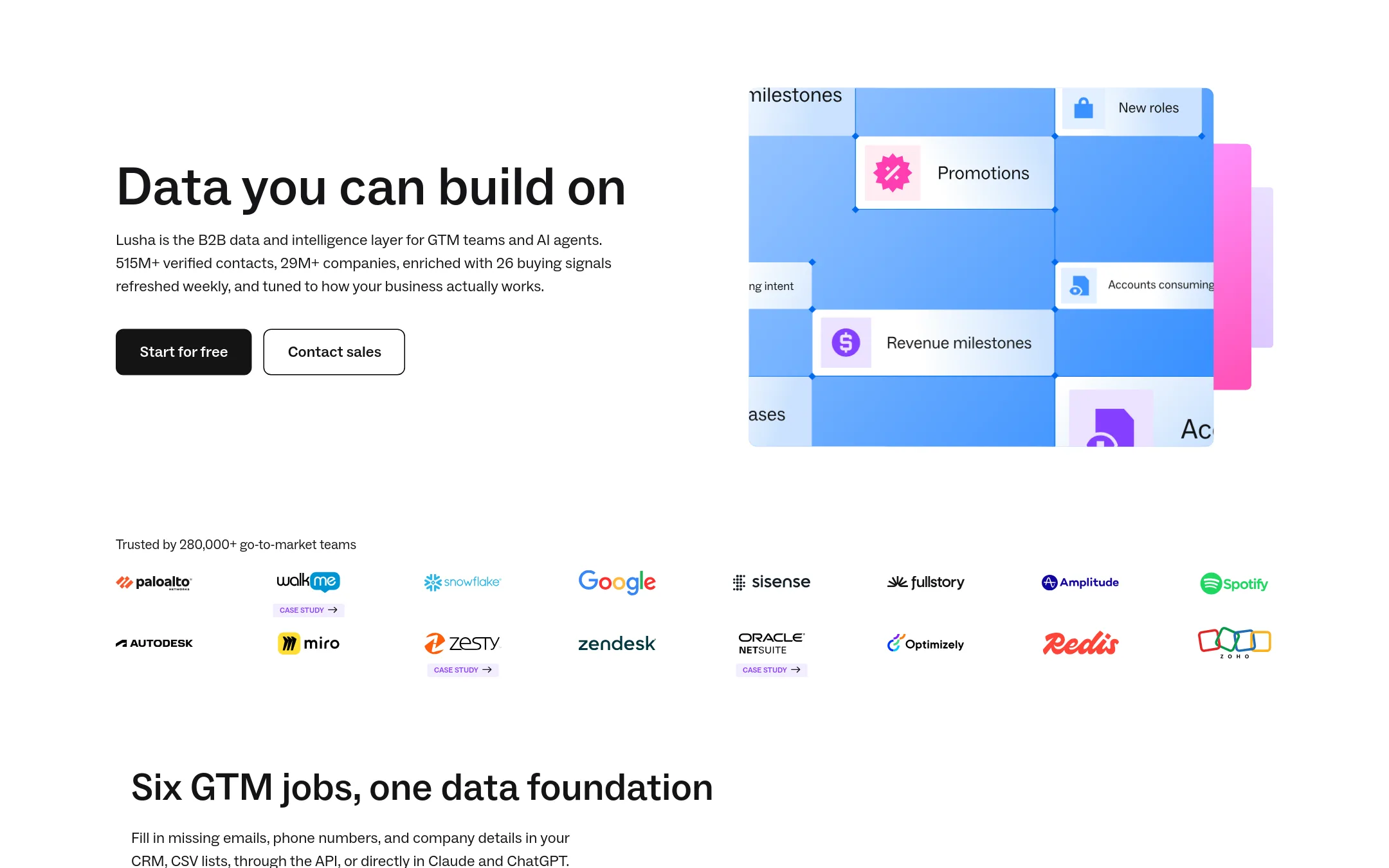
Lusha is a B2B contact and company data platform with 515M+ contacts and 29M+ companies, plus buying-signal tracking. Teams pick it over Crustdata when they mainly want verified emails and phone numbers for outbound prospecting, and they work in a CRM, a Chrome extension or an AI chat rather than building against a raw API.
Where it is strong
- Verified emails come with a confidence score, and phone and email fields show when they were last updated.
- Works in Claude and ChatGPT through MCP, as well as Salesforce, HubSpot and other CRMs.
- Publishes its accuracy figures and certifications, including GDPR, CCPA and SOC 2 Type II.
Where it falls short
- Its core strength is contact data, so it has less depth on the per-person work history and developer activity that Crustdata exposes.
- The credit model means phone reveals get expensive quickly for large lists.
- Pricing:
- Pricing is not published in the supplied page text beyond a credit system where a verified email costs 1 credit and a phone number costs 5 credits, and a free plan includes up to 40 credits per month.
- Switching from Crustdata:
- Moving from Crustdata means remapping your search filters and enrichment calls onto Lusha's contact-focused fields and credit model, which the supplied facts do not detail further.
See more comparisons in Analytics & Data alternatives.
FAQ
Questions about Crustdata alternatives
What is the best Crustdata alternative for sales outreach?
Apollo.io is the closest fit for sales teams that want contact data, email sequencing and a dialer in one workspace. Its credits reset each billing cycle and do not roll over, so heavy usage can run short. Clay is another option if you want to combine many data sources on a canvas.
Which alternative is built for investors?
Harmonic is built for venture investors and sourcing teams. The site describes it as a startup database covering 35M+ companies and 195M+ people, with tools for finding early-stage founders and mapping team changes. PitchBook is an alternative when the work centres on private market deal history and fund benchmarking.
Which alternatives offer a developer API like Crustdata?
People Data Labs sells person, company and job posting datasets through APIs and data feeds, which suits teams that need bulk workforce data. Clay offers a visual workbench rather than a raw API, so it fits teams that want no-code workflows. Crustdata's own pitch centres on a single API and MCP server for agents, which is narrower than most of these tools.
How does Crustdata compare with ZoomInfo?
ZoomInfo is a finished go-to-market platform with native CRM integrations for Salesforce, HubSpot and Microsoft Dynamics 365, plus intent data and a free Lite plan. Crustdata is better suited to developers who want a raw API for custom agents. Costs with ZoomInfo depend on consumption credits, and the exact rates are not shown in the text provided.
Which alternative should a compliance team consider?
Affinity is a compliance and training platform for managing internal policies, procedures and employee training, with audit-friendly reports. It does not provide people or company data for sales, recruiting or investing. Pricing is not published on the site, so costs need to be confirmed directly with the vendor.
Last updated November 12, 2026.